How to Grow and Care for a Japanese Fern Tree
Learn Japanese fern tree care, from sun and drainage to planting, watering, pruning, cold protection, and the limits of growing this tropical tree indoors.
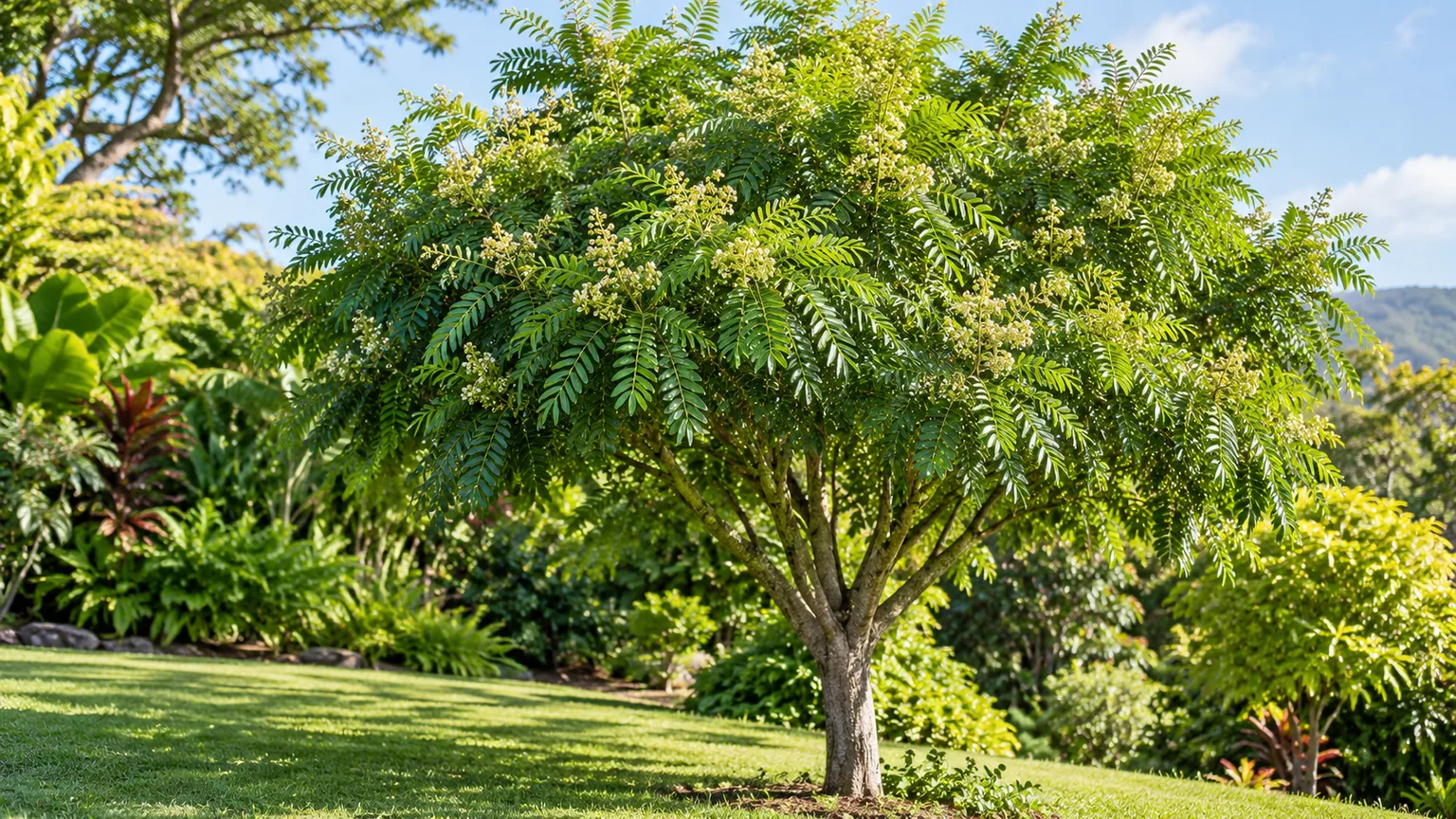
The Japanese fern tree (Filicium decipiens) is best treated as a small tropical landscape tree, not as a fern for a living-room shelf. It can spend part of its early life in a large container, but its long-term requirements—warmth, strong light, root room, and a rounded canopy that may reach several yards across—make an ordinary indoor setup a poor match. If your garden rarely freezes and has room for a small evergreen tree, it can be a graceful specimen; if your winters are cold, consider another plant or commit to moving a young container tree into a very bright protected space.
Before planting, resolve three questions: does your site stay warm enough, can the mature crown fit, and does water drain through the root zone? Those choices prevent more trouble than a fertilizer routine or frequent pruning. The sources available also disagree on exact soil pH and canopy width, so the practical guidance below separates dependable care principles from details that should be checked locally.
The Short Answer: A Tropical Tree, Not a Typical Houseplant
Although the common name includes “fern,” Filicium decipiens is a woody evergreen flowering tree in the soapberry family, Sapindaceae. Its compound leaves look feathery, but it does not grow like a true fern: it develops a trunk, a branching canopy, small flowers, and fruit. Kew’s Plants of the World Online accepts the botanical name Filicium decipiens, while the National Parks Board Singapore species profile describes it as a medium tree that can reach 30 meters in its cultivated landscape setting.
For most readers, that makes the outdoor question more important than a detailed indoor watering schedule. A bright, tall conservatory could hold a young specimen for a while, and a container can make it movable, but neither changes the species into a compact houseplant. Buy it only if you can provide a warm outdoor site or a realistic container-and-winter plan.
What a Japanese Fern Tree Actually Is
The name is doubly misleading. The species is not a fern and not native to Japan; Kew’s distribution record lists it from the Comoros, Ethiopia, India, Kenya, Madagascar, Malawi, Mozambique, Sri Lanka, Tanzania, and Zimbabwe. It is grown for its evergreen, fern-like foliage and dense, naturally rounded crown, not for showy flowers. UF/IFAS describes fern tree as a slow-growing ornamental with a dense rounded canopy, small white flowers, and clusters of purple, olive-like fruits in its South Florida shade-tree listing.
The leaves are pinnate—many narrow leaflets arranged along a central stalk—so the overall texture is finer than that of broad-leaved shade trees. In a warm climate, that delicate look can soften a driveway or anchor a garden bed without looking like a palm or a true tree fern. The species can be sold under names such as fern tree, fern-leaf tree, or Japanese fern tree, so check that the nursery label includes Filicium decipiens before using a care sheet for a different “fern tree.”
Check Climate Before You Buy
This is a frost-sensitive tropical tree. Regional references place it in warm areas commonly associated with USDA zones 10 to 11, though published zone limits vary; the Port St. Lucie Botanical Gardens profile lists zones 10A to 11 and says the tree does not tolerate cold or freezing conditions, while Horticopia places it in zones 10B to 11. Those zone labels are only a starting point. A sheltered urban courtyard, exposed inland yard, coastal site, and low frost pocket can behave differently even within the same mapped zone.
A useful decision rule is simple: if your normal winter includes frost, do not plan to leave a Japanese fern tree permanently in the ground outdoors. A brief cold snap may be survivable for some established specimens, but the sources do not establish one dependable minimum temperature for every tree and site. Treat freezing weather as a serious risk rather than trusting a single nursery number. In a marginal climate, use a movable container while the tree is young and decide in advance where it will go during cold periods.
The tree’s tropical origin also affects summer care. It can handle warm conditions and, once established, some dry spells, but a newly planted tree cannot draw water from soil its roots have not reached. Warmth is not a substitute for establishment watering; conversely, daily irrigation is not automatically helpful in a poorly drained bed.
Plan for the Mature Canopy
Published dimensions do not agree on the exact spread. UF/IFAS gives a mature height of about 20 to 35 feet, while the Port St. Lucie garden profile lists 20 to 30 feet tall and a narrower width; Horticopia’s species record lists a 20- to 25-foot spread. Because local growing conditions and pruning history change the outline, use a generous footprint rather than designing around the smallest figure on a plant tag. Leave room for an approximately 20-foot crown where possible, then confirm the expected size with the nursery that supplied your tree.
Look upward as well as outward. The naturally rounded canopy needs overhead space away from low wires, roof eaves, and narrow passages. A specimen planted too close to a wall can be repeatedly cut on one side, losing its balanced form. For a pair along a drive or a small garden bed, sketch the mature crown on the ground before digging; the nursery pot is a misleading measure of the eventual footprint.
Choose Sun or Partial Shade by Climate
Japanese fern tree grows in full sun to partial shade. NParks categorizes it as a full-sun tree, while UF/IFAS lists sun or shade in South Florida, a reminder that exposure recommendations are often regional rather than absolute. In a humid tropical or coastal garden, a bright open position can build a dense, even crown. In an intensely hot, dry location, light afternoon shade can reduce stress on a young tree without placing it in deep shade all day.
Judge the actual site rather than counting only midday hours. A sunny yard with reflective paving or a west-facing wall can be hotter and drier than an open lawn; a bright tree canopy may still shade the lower trunk for part of the day. Avoid planting beneath a dense evergreen canopy where the tree will receive little direct light and compete with established roots. If a potted tree has been grown under shade cloth, introduce it to stronger outdoor sun gradually so that its foliage can acclimate.
Soil, Drainage, and the Conflicting pH Advice
The consistent soil instruction is to provide drainage. Keep the root zone moist enough during establishment, but do not leave roots sitting in saturated soil. Waterlogged ground deprives roots of oxygen and raises the risk of root decline; a low point that stays wet after rain is a poor planting site unless drainage is corrected or a local horticulturist confirms the tree suits those conditions.
The exact pH advice is less certain than many short plant profiles suggest. Port St. Lucie Botanical Gardens lists strongly alkaline soil, even giving a pH of 8.6 to 9.0, whereas Horticopia’s database lists a broader range from acidic through slightly alkaline. UF/IFAS landscape references emphasize the tree’s performance in South Florida but do not establish one universal pH target. That is a meaningful disagreement, not a reason to pour lime or sulfur around the roots. If the soil is not known to be strongly alkaline, test it first and ask a local extension office or experienced tropical-tree nursery how the species performs in your region.
Start with the site’s native soil and improve the whole planting area only when a soil test or drainage assessment justifies it. The RHS tree-planting guide recommends placing the root flare at the soil surface, watering thoroughly, and mulching without piling material against the trunk. Fine Gardening’s Fine Gardening tree-planting guidance also explains why a tree should be planted at the right depth and why excessive fertilizer or rich amended backfill can interfere with root establishment. A small planting hole filled with a very different mix can trap water or encourage roots to circle instead of moving into surrounding soil.
Planting a Japanese Fern Tree Correctly
Plant during a mild period when the ground is workable and the tree is not under heat or drought stress. For a container-grown specimen, water the root ball before planting, then remove the pot and inspect the outer roots. Gently loosen any roots circling the edge; do not pull the tree out by its trunk or tear apart the entire root mass. If the root flare is buried under nursery mix, brush away enough material to find where the trunk widens into its main roots.
Dig a hole wider than the root ball but no deeper than the distance from its bottom to the root flare. Set the tree so the flare finishes level with or slightly above the surrounding grade, then backfill with the soil that came out of the hole unless local soil testing supports another plan. Avoid burying the trunk to make the tree look stable. Water slowly to settle the soil and check that the tree remains upright; stake it only if wind rocks the root ball, and use a loose support that can be removed once the roots anchor it.
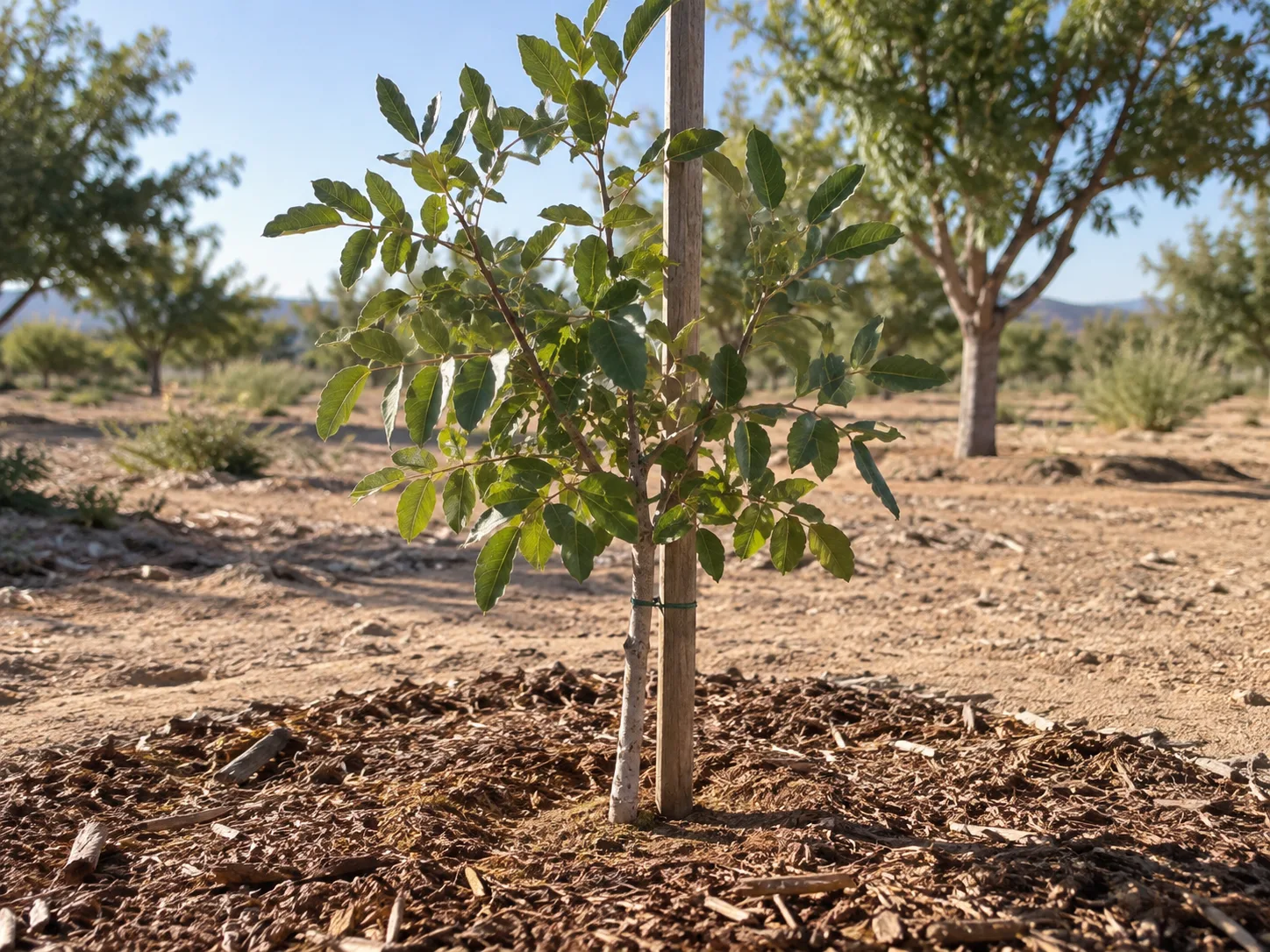
Apply a shallow, broad mulch ring to conserve moisture and reduce turf competition, but leave a clear gap around the trunk. A thick mound touching the bark can keep the trunk damp, hide a buried root flare, and make later inspection harder. For a newly planted tree, check soil several inches below the surface and the original root ball itself; the surrounding ground may look moist while the container-grown core has dried, or rain may have soaked heavy ground while the root ball remains dry.
Watering During Establishment and Afterward
Water thoroughly after planting, then monitor the root ball instead of following a fixed weekly schedule. During the first growing season, the goal is even moisture with air still moving through the soil. How often that requires irrigation depends on rainfall, wind, temperature, soil texture, container size, and the tree’s root-ball size. The RHS aftercare guidance recommends regular watering for new trees for at least a year or two, especially in dry spells; the exact interval still needs to respond to local conditions.
When the surface is dry, check below it with a finger or narrow trowel. If the root zone is beginning to dry, apply water slowly enough to soak the root ball and nearby soil rather than producing a brief runoff. If the soil is still wet and the tree is wilting, do not automatically add more water. Check drainage, the trunk base, and root condition first. Mulch helps slow evaporation, but it does not fix compacted or waterlogged soil.
Once the tree is established, it is more tolerant of moderate drought than a recent transplant, as the Port St. Lucie profile notes. That does not mean it never needs supplemental water: extended hot, dry weather can reduce growth and stress a tree in sandy soil. A mature tree in rainy tropical conditions may need little irrigation, while the same species in a paved, windy courtyard may dry faster. Use new growth, soil moisture, and recent rainfall together rather than interpreting one yellow leaflet as proof of drought.
Growing It in a Container or Indoors
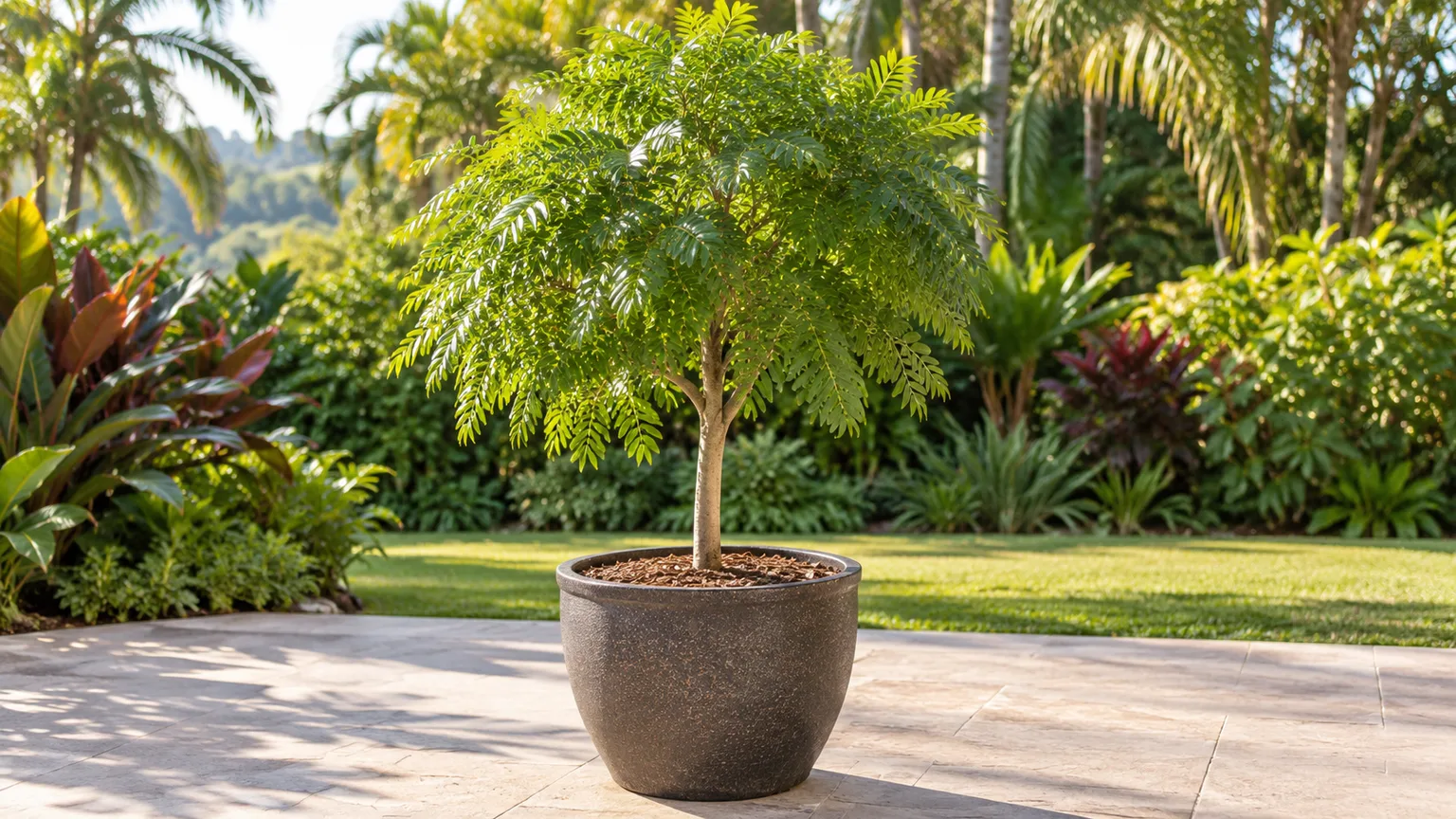
A large, well-drained container is useful when you want to grow the tree on a patio or protect a young specimen during cold weather. Horticopia includes container use among landscape applications, and the Taipei botanical garden notes that young plants can be grown in pots. Choose a stable, heavy container with several unobstructed drainage holes and enough volume for the existing root ball plus future growth; do not move a small nursery plant straight into an enormous pot full of wet mix. A pot that is only modestly larger than the root ball is easier to water evenly and move safely.
Use a free-draining potting mix intended for trees or outdoor container plants, not dense garden soil by itself. A saucer can catch runoff on a patio, but empty it after watering so roots do not sit in standing water. Containers heat and dry faster than the ground, so check them more often during warm, windy weather and less often during cool, cloudy periods. Repot when roots crowd the drainage holes, circle densely around the pot, or the mix loses structure—not simply because a calendar year has passed.
Can it live indoors? Only with caveats. A young plant can be brought into a very bright, warm sunroom or conservatory temporarily, but most ordinary rooms do not offer the combination of strong light, ceiling height, and root space a tree needs over time. A tree kept indoors in low light may become thin and unbalanced; moving it directly into harsh outdoor sun can scorch foliage. If you must overwinter it inside, use the brightest suitable space, keep it away from cold drafts and heating vents, reduce watering as growth slows, and move it back outdoors gradually when conditions are warm.
A container does not guarantee a naturally miniature tree. Restricted roots usually slow growth, but the crown still needs light and regular maintenance, and repeated hard pruning can spoil its natural rounded shape. If you want a permanent indoor foliage plant, choose a species sold and grown for indoor conditions rather than trying to keep a tropical shade tree in a pot indefinitely.
Fertilizer: Feed Only When There Is a Reason
There is no strong, consistent species-specific basis for a rigid three-times-a-year fertilizer schedule. The Port St. Lucie garden profile recommends composted cow manure when preparing a planting site, but that local instruction should not be generalized into a concentrated amendment placed against every tree’s roots. UF/IFAS lists fern tree as a low-maintenance ornamental, and the tree’s slow-to-moderate growth does not by itself prove that it needs frequent feeding.
First let a new tree establish. If growth is weak after you have checked light, drainage, moisture, root flare, and cold exposure, use a soil test or local extension guidance to determine whether nutrients are actually lacking. Apply a suitable fertilizer at the labeled rate over the root zone, not against the trunk, and water it in when the label directs. Do not try to correct yellow leaves with fertilizer until you have ruled out waterlogged roots, drought, or cold damage; added salts can stress roots that are already struggling.
Pruning, Flowers, and Unwanted Seedlings
The crown naturally tends toward a rounded shape, so the best pruning is usually limited to dead, damaged, crossing, or poorly attached branches. Remove a low branch only when it interferes with a walkway, driveway sight line, or the intended trunk clearance. Make cuts just outside the branch collar rather than leaving a long stub or cutting flush to the trunk. Avoid topping or shearing the whole canopy into a tight ball; repeated heavy reduction can create weak regrowth and more maintenance than the tree would otherwise need.
Small pale flowers are not the main reason to grow this tree, but they may be followed by small, dark fruit. If seedlings appear where you do not want them, pull them while they are small or remove fruit clusters before they mature. The Port St. Lucie botanical-garden profile specifically notes seed propagation and self-seeding, while UF/IFAS describes the fruits as clustered and olive-like. In places where the species is not native, prevent unwanted seedlings from spreading beyond the managed garden and follow local guidance on non-native ornamentals. This is especially relevant in Hawaii: Kew lists the species as introduced there, and the Kaua‘i Invasive Species Committee reports naturalized populations on several islands and seedlings near cultivated trees in its distribution report. That record supports removing volunteers and checking current local recommendations; it does not mean the tree behaves invasively in every climate.
Propagating from Fresh Seed
Seed is the most clearly documented home-propagation route. The Taipei botanical garden profile notes that fresh seed has better germination and lists both seed and cuttings as possible methods, while the Port St. Lucie garden profile emphasizes seed. That conflicts with care summaries that say cuttings cannot work, so it is more accurate to treat cuttings as a less-documented option rather than an impossibility. The references do not provide a reliable germination percentage or a universal cutting protocol.
If you can collect ripe fruit from a healthy tree, remove the fleshy covering and sow the fresh seed in a clean, well-drained propagation mix while it is still viable. Keep the mix lightly and evenly moist, warm, and bright without leaving the container waterlogged. Do not bury the seed deeply; check for seedlings over the following weeks and keep them protected from cold as they develop. If seed is not available locally, ask a tropical-tree nursery whether fresh seed or a rooted young plant is more realistic. Cuttings are best attempted only by growers with a warm propagation space and a willingness to accept variable results.
Troubleshooting Yellow Leaves, Root Rot, and Scale
A single yellow leaflet is not a diagnosis. Older leaves can age and drop, but widespread yellowing or yellow leaves paired with wilt, stalled growth, or a soft trunk base deserve inspection. Start by asking what changed: Did the weather turn cold? Was the tree moved from shade into strong sun? Has the root ball dried, or has the soil stayed wet for days? A pattern across many leaves is more useful than one leaf at the bottom of the crown.
The species is generally described as having few serious pest or disease problems, but scale insects are noted in the Taipei botanical-garden cultivation guidance. Inspect the undersides of leaflets, stems, and the central leaf stalk for small fixed bumps or sticky residue. If you find scale, confirm the identification before treatment; prune only badly affected material and ask a local extension office about suitable controls for the site and plant. Avoid applying oils or other products automatically in hot sun, since heat and product labels can affect whether treatment is safe.
Diagnose the Root Zone Before Changing Care
Root trouble is more likely when the soil remains wet, drainage is poor, the trunk base darkens or softens, and the canopy loses vigor. In a container, slide the root ball out only if you can do so without breaking the trunk or major roots. Healthy roots should feel firm; mushy, dark, foul-smelling roots and persistently saturated mix indicate serious decline. Improve drainage and remove decayed roots only when damage is confirmed; simply adding fertilizer or more water will not restore rotted tissue.
If the root ball is dry and has pulled away from the pot edge, rewet it slowly so water reaches the center, then resume moisture checks. If the soil is wet but leaves wilt, pause watering and investigate oxygen loss or root damage. Sun scorch usually affects the most exposed leaves; cold damage may follow a cold night and appear across outer foliage; nutrient issues require more evidence than yellow color alone. Change one factor at a time and give the tree time to show whether the correction helped.
Seasonal Care and Cold Protection
In warm climates, the main seasonal shift is often rainfall. During a rainy period, reduce irrigation and make sure the site drains freely; during a prolonged dry spell, pay closer attention to newly planted trees and container specimens. Check mulch each season, pull seedlings if they are unwanted, and remove broken branches after storms. A mature tree can be lower-maintenance than a young one, but it still benefits from occasional inspection of its crown and trunk.
Before a cold front, move a potted tree to a sheltered bright location if it is small enough to handle safely. For an established in-ground tree, a temporary cover may reduce exposure during a brief chill, but it cannot make a tropical species reliably cold-hardy. Do not wrap the canopy for long periods or allow plastic to press against wet foliage. If freezes are a normal part of your winter, the reliable choice is to grow a hardier tree outdoors rather than depend on emergency covers every year.
Conclusion
Japanese fern tree care begins with choosing the right place: a warm, frost-free climate, enough room for a rounded canopy, bright sun or partial shade suited to local heat, and soil that drains. Filicium decipiens is a genuine tree in the soapberry family, not a fern and not a Japanese native; its size and cold sensitivity make a normal living room a poor long-term home. A large pot can help with patio growing or temporary winter protection, but it adds watering and space demands instead of solving them permanently.
Plant at the correct depth, establish the root ball with attentive but not calendar-based watering, and do not alter soil pH or add fertilizer without a reason. Where references conflict—especially on alkaline soil, exact canopy width, and minimum temperature—use local nursery or extension advice for your soil and climate. With those decisions made before planting, the tree’s fine-textured evergreen crown can become an elegant focal point without forcing it into conditions it was never suited to.



