Indoor Hyacinth Care Before and After Flowering
Plan indoor hyacinth care with the right bulbs, chill period, soil or water setup, cool light, bloom troubleshooting, and after-flowering steps.

An indoor hyacinth is a seasonal bulb display, not a permanent foliage houseplant. For reliable flowers, start with a firm bulb sold for forcing, give an ordinary bulb a long cool period, and then grow it in bright light and a cool room; once the flowers fade, keep the leaves until they finish so the bulb can recover.
The common garden hyacinth is Hyacinthus orientalis, also called Dutch hyacinth. It is different from grape hyacinth (Muscari) and purple hyacinth bean, whose care and growth habits do not match this guide. If you buy a pot that is already blooming, skip the forcing schedule and go straight to the bloom-care and after-flowering sections.
Indoor hyacinth care at a glance
| Stage | What to do | What to avoid |
|---|---|---|
| Choose | Buy large, firm bulbs labeled for indoor forcing; check whether they are already chilled | Soft, cut, moldy, or undersized bulbs |
| Chill | Give an unchilled bulb about 10–13 weeks in steady cold, roughly 35–48°F | Freezing the bulb or storing it beside ripening fruit |
| Plant | Use a drainage-hole pot and loose potting mix, or a forcing vase | Letting bulb tissue sit in water or waterlogged mix |
| Grow | Move rooted shoots into bright light at about 60–65°F | Hot windowsills, radiators, or a warm room |
| After bloom | Remove the flower stalk, keep green leaves in light, and water while they remain active | Cutting or tying green foliage to tidy the pot |
Those ranges are planning targets, not a guarantee that every cultivar opens on the same date. Virginia Cooperative Extension lists Dutch hyacinths at 10–13 weeks of cooling followed by roughly two to three weeks to bloom, while gardening references vary with cultivar, prior bulb treatment, and room conditions. For a purchased bulb, the supplier’s instructions take priority; the Virginia Tech forcing guide and Purdue Extension’s forcing guide explain the sequence and why cold comes before warmth.
Choose bulbs intended for indoor forcing
Start with the bulb label. A bulb sold for outdoor spring planting may need weeks of cold treatment before it will flower indoors. A bulb sold as prepared, pre-cooled, or for Christmas flowering may already have received some treatment, but those terms are not used identically by every supplier. Check whether the package says the cooling period is complete or whether it still requires a root-and-shoot phase after planting.
Choose a bulb that feels firm and heavy for its size, with intact outer scales and no soft base, leaking tissue, deep cut, or spreading mold. Larger bulbs generally have more stored resources for a full flower spike. Virginia Cooperative Extension likewise recommends large, unblemished bulbs for forcing; a discount bulb that is small or damaged can grow leaves without producing the display you expected.
If timing matters, buying a prepared bulb is often the simplest route. A flowering hyacinth from a grocery or garden center has already been forced, so it is ready to enjoy but no longer at the beginning of its cold-treatment cycle. You can care for it and try to save it afterward, but you cannot restart its cold period to create a second bloom that same season.
Plan the bloom date by counting backward
For an ordinary, untreated bulb, work backward from the week you want flowers. Allow about 10–13 weeks for cooling and root development, then roughly two to four more weeks for the shoots and buds to develop after the pot comes out of the cold. Add a little margin: a cultivar, bulb that was not fully dormant, or warmer-than-ideal room can shift the date, and forcing is not a precise holiday timer.
For example, if you want a display around late February, begin chilling an untreated bulb in late October or early November. A pre-treated bulb may need a shorter path, but follow its label rather than borrowing the schedule for a raw garden bulb. If you want several waves of bloom, chill separate pots a couple of weeks apart; the flowers will still vary, but staggered starts reduce the chance that every pot peaks at once.
The calendar also depends on where the bulb is coming from. A nursery bulb that has already been stored cool has accumulated some of its cold time. If the supplier gives a treatment record, use it. If it does not, treat the date as an estimate and watch the plant’s roots and shoots instead of moving it solely because a certain number of days passed.
Give the bulb a real cooling period
Cold treatment is the seasonal signal that lets a spring bulb establish roots and prepare its flower stem before the warmer display stage. For most unchilled hyacinths, aim for a steady 35–48°F for about 10–13 weeks; an unheated garage, cool basement, cold frame, or suitable refrigerator can work if the temperature remains in range and the bulb does not freeze. The RHS recommends 10–12 weeks for prepared bulbs planted for Christmas flowering, while Virginia Tech’s table gives Dutch hyacinths a 10–13 week cooling range. Gardening Know How’s forcing guide gives a similar 12–14 week target, which is a reasonable conservative plan if the bulb label does not provide a clearer schedule.
If you plant first, water the pot once to settle the mix, then keep it barely moist throughout chilling. The bulb is not dormant in the sense of doing nothing: roots are developing, and the pot must not dry to dust or remain saturated. Check it every week or two, especially in a refrigerator or dry garage. If roots emerge from the drainage holes and a short shoot appears, that is a useful sign that the pot has been cold long enough, though the bulb may still need more time to meet its cultivar’s requirement.
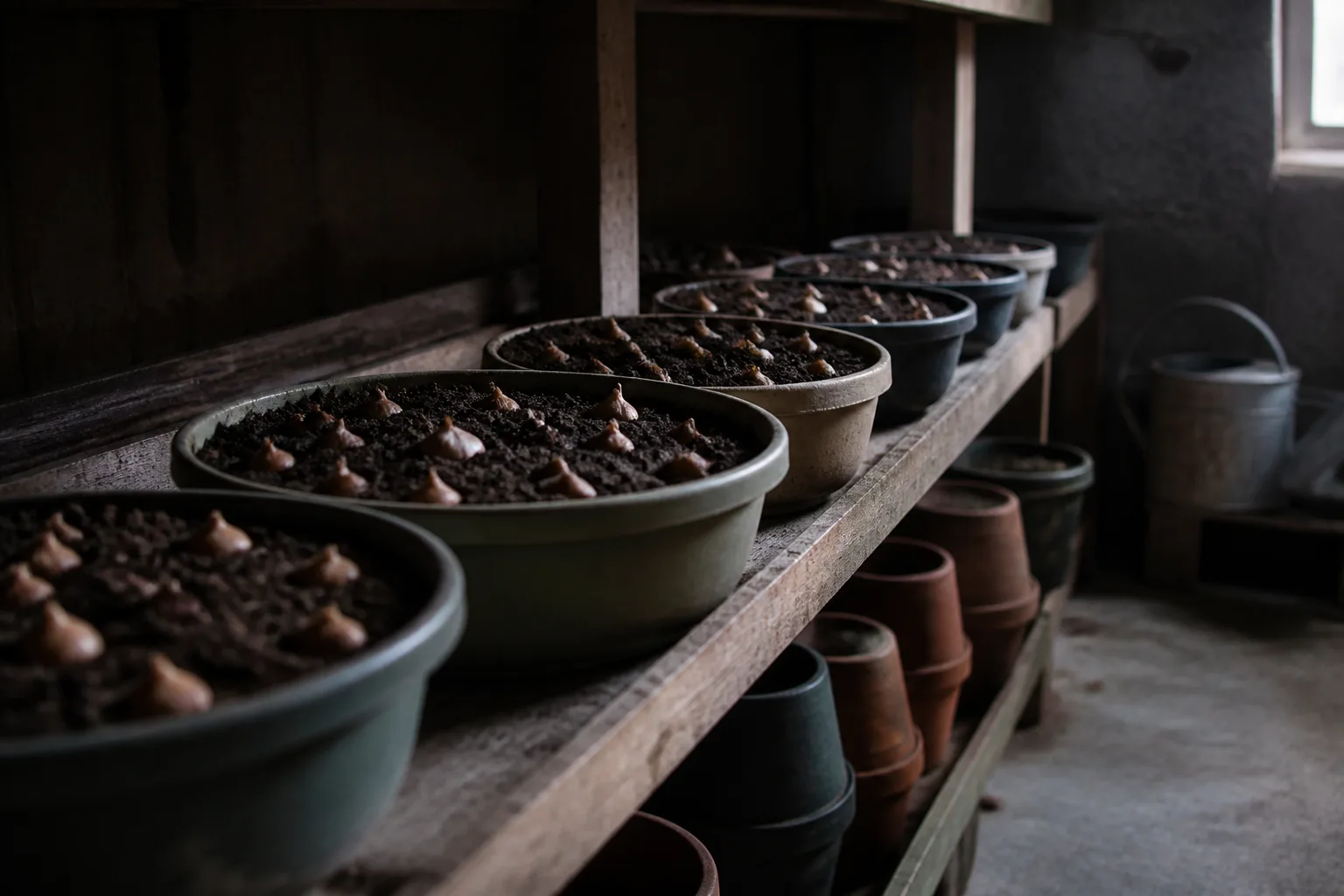
Where to chill bulbs safely
A refrigerator can work, but keep bulbs away from apples, pears, and other ripening fruit. Fruit releases ethylene, a gas that can interfere with flower development; Virginia Cooperative Extension specifically warns against storing bulbs near fruit. Use a paper bag with ventilation for loose bulbs, or a pot that fits without being crushed. Do not seal bulbs in a damp plastic bag, where trapped moisture encourages mold.
Avoid the freezer, a heated basement, and a garage that swings from cold to warm every day. The goal is a stable cool period, not the coldest place you can find. If your only cool area gets below freezing, choose a different location or buy a bulb that has already been prepared; a frozen bulb is damaged, not better chilled.
Choose a growing method: soil or water
Soil is the more forgiving option if you may try to grow the bulb outdoors after flowering. A potting mix around the roots gives the plant a familiar moisture buffer and allows you to keep the bulb and its leaves together after the display. Water culture is chosen mainly for the clear view of roots and a clean glass presentation; the bulb itself is not meant to live underwater.
Both methods need the same basic sequence: cold first, then a gradual move into light and moderate warmth. In either setup, choose one large bulb per forcing vase or leave space between bulbs in a pot. Crowding them so tightly that the bulbs press against each other can trap moisture and makes watering harder to control.
Plant hyacinths in potting mix
Use a clean container with drainage holes and enough depth for roots to form below the bulb. Fill it with fresh, free-draining potting mix. Set the bulb with its broad root plate down and pointed nose up; leave the upper tip visible above the mix rather than burying the whole bulb. In a group pot, bulbs can sit close for a fuller display, but leave a small gap so they do not touch.
Water slowly until excess water drains from the bottom, then empty the saucer. During chilling, keep the mix lightly moist, not wet. Once the pot is growing indoors, check the top inch of mix with a finger and water when it begins to dry. A fixed daily schedule is less useful than this check because room temperature, pot size, and humidity all change how quickly the mix dries.
Skip fertilizer during the forcing cycle. The bulb already contains the stored resources for this bloom, and extra fertilizer will not make up for a short chill, poor bulb quality, or a pot without drainage. If you later plant a forced bulb outdoors, follow local bulb-care guidance for that recovery phase instead of treating fertilizer as a way to guarantee another indoor flower.
Force hyacinths in a water vase
Use a purpose-made hyacinth glass with a narrow neck that holds the bulb above the reservoir. Fill it so the water sits just below the bulb’s base, leaving a small air gap; the roots will grow down to the water. If the bulb bottom rests in water, it can rot before the flower opens. The RHS guidance for prepared bulbs gives the same waterline rule and recommends moving the vase from a cool, dark place into light gradually.
During chilling, check the level every few days because evaporation can expose roots. Top up with clean water without wetting the bulb. Once roots are established and the shoot begins to emerge, move the vase to a cool, bright location. Change the water if it becomes cloudy or develops an odor; avoid adding fertilizer, which is unnecessary for a bulb forcing in water.
A shallow pebble bowl can support bulbs if the stones hold them upright, but it is less controlled than a narrow forcing glass. Keep the bulb above the waterline and add only enough water for the roots to reach it. Pebbles are a support, not a way to bury the bulb in standing water.
Move rooted bulbs into light gradually
After the cold period, do not shift a pot straight from a dark refrigerator to a hot, sunny window. Start in a cool, dim-to-bright location for several days, then give the shoots bright indirect light. A room around 60–65°F supports steady growth; warmer temperatures can make the stem elongate quickly and shorten the flowering period. Turn the pot a quarter-turn every few days if the shoot leans toward the window.
The root-and-shoot stage matters. If the bulb has no visible roots and the shoot is still tiny, leave it in the cold a little longer rather than trying to force it with heat. Once the flower cluster is visible and beginning to color, a bright cool room helps the flowers open without racing through the display. Virginia Tech recommends a cool, indirect-light area after cooling, and the Royal Horticultural Society’s guide notes that warmth can cause the flower stem to remain short or flop.
Care for hyacinths while they flower
Keep the pot in bright light and a cool part of the home, away from radiators, fireplaces, sunny heating vents, and hot appliances. A cooler room does more to extend the flower display than adding fertilizer or watering more often. The blooms have a strong fragrance; if it feels overpowering in a small room, move the pot to a cooler, ventilated area rather than depriving it of light.
For soil-grown hyacinths, water when the surface begins to dry and let excess drain freely. Do not keep the pot standing in a saucer of water. For vase-grown bulbs, maintain the water below the bulb and keep it clean. Hyacinths in either setup need attention, but they do not need daily watering if the mix or reservoir is still at the right level.
Keep flowers upright and fresh
A leaning stem usually signals warmth, insufficient light, or a heavy flower head, not a need for a large fertilizer dose. First move the plant to a cooler, brighter spot and rotate it so the shoot receives even light. If the spike still leans, add a slim support beside it and tie loosely; do not push the stake through the bulb, which can damage the storage tissue.
Remove individual flowers or the whole faded spike once the display is over, using clean scissors. A flower spike may last around two weeks in a cool room, sometimes longer, but a hot room can shorten that window. Keep the leaves intact even when the flowers are gone; those leaves are the part that continues to replenish the bulb.
Troubleshoot weak stems, leaves, or no flowers
Leaves but no flower usually means the bulb did not receive enough chilling, was not large or mature enough, or had been damaged or stored poorly. If fruit was stored beside the bulb during its cold period, ethylene exposure is another possibility. There is no reliable rescue once the bulb has started growing; let the leaves complete their cycle, then try again with a fresh or correctly prepared bulb and a full, uninterrupted chill.
A flower buried among leaves or a short stem often points to a warm forcing location or incomplete root development. Move the pot to a cooler room and give it time rather than placing it close to a heater to “speed it up.” A flower that has already opened within the leaf rosette may not lengthen much, but cooler conditions can prevent further rapid stretching.
A floppy or sharply leaning stem can come from warmth, one-sided light, or a naturally heavy bloom. Correct the temperature and rotate the pot before staking. A small support is reasonable if the stem needs it; tying leaves together or using a rigid stake through the bulb creates new problems.
Soft bulbs, sour smells, or spreading fuzzy mold point to excess moisture or poor air movement. Remove a rotting bulb from a group pot so the damage does not sit against healthy bulbs, let the mix drain, and improve ventilation. A bulb that is mushy at the base is not a good candidate for saving; no watering adjustment can restore damaged tissue.
What to do after flowering indoors
When the flowers fade, snip off the flower stalk but leave every green leaf attached. Move the pot to a bright place and keep watering modestly while the foliage is green, allowing the mix to dry slightly between waterings. The leaves are still photosynthesizing and returning energy to the bulb; they may look untidy, but cutting them now removes the bulb’s recovery system.
Once the leaves turn yellow and wither naturally, reduce or stop watering and let the bulb enter dormancy. A soil-grown bulb can then be planted outside in a suitable fall planting window, where a normal outdoor cycle gives it a chance to recover. In warm-winter climates, local guidance may call for extra chilling. For specific storage and outdoor replanting steps, see our guide to what to do with hyacinth bulbs after flowering.
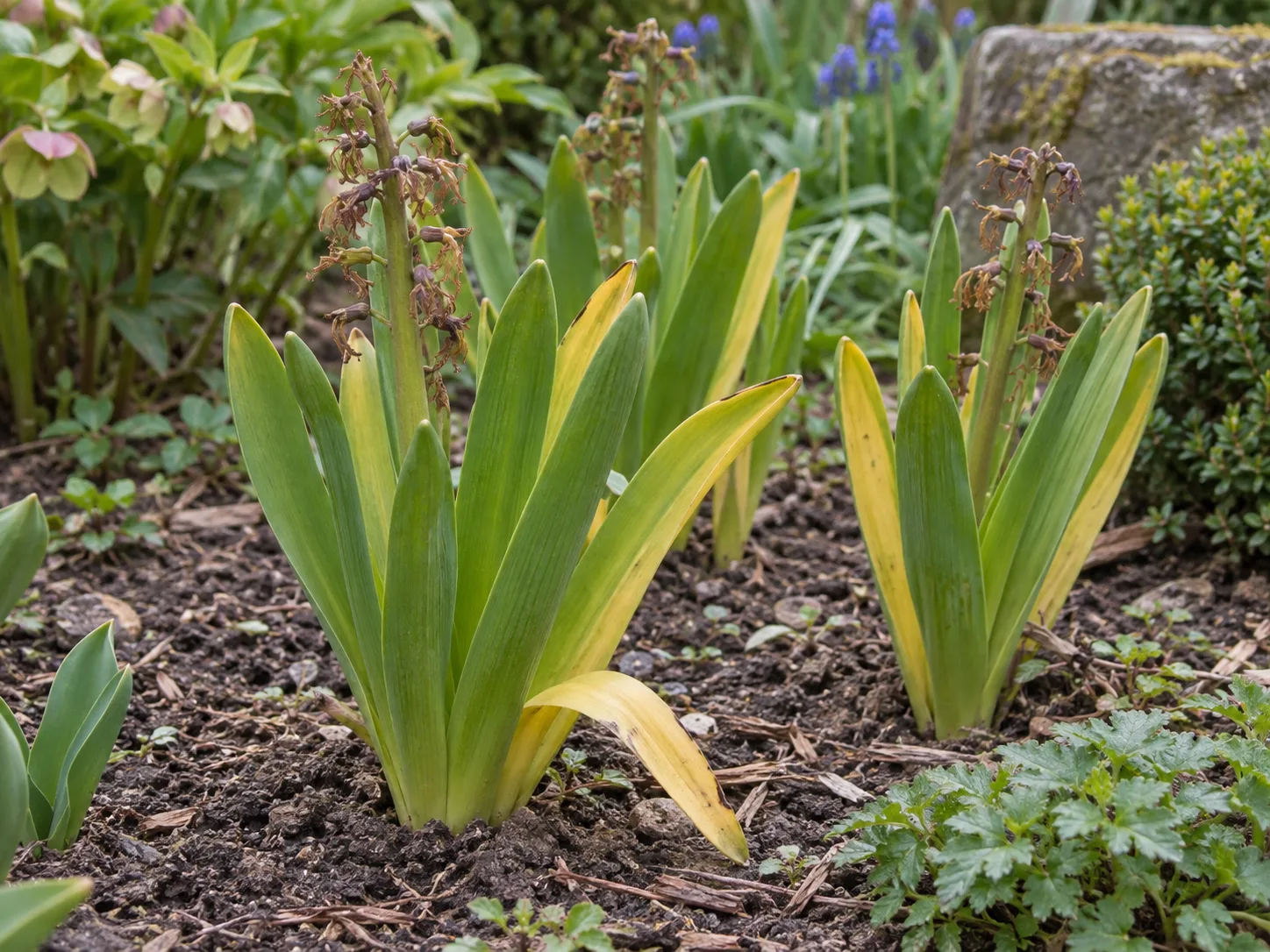
Can a forced bulb bloom again?
It may, but a forced hyacinth is not a dependable candidate for another timed indoor display. Forcing spends stored energy to produce an unusually early flower, and a bulb grown in water has no potting mix to support a long recovery period. Virginia Cooperative Extension describes saving forced hyacinths as uncertain; BHG’s post-bloom guide likewise notes that store-bought forced bulbs often do not flower well again because of the stress of forcing and how they were grown for sale.
If the bulb is still firm and its leaves are green, let the foliage finish, then plant it outdoors in a climate and site suited to hyacinths. The next season may bring leaves without a strong spike, or no return at all. If your goal is a reliable winter centerpiece, start with a new bulb; treat a saved bulb as a low-cost outdoor experiment rather than a promise.
Protect pets and sensitive skin
Keep bulbs, leaves, and water from a forcing vase out of reach of cats and dogs. The ASPCA lists garden hyacinth as toxic to dogs, cats, and horses, with gastrointestinal and other clinical signs possible after ingestion. Store dormant bulbs in a closed, pet-inaccessible cupboard or a secured refrigerator area, and do not leave trimmed plant parts where an animal can chew them.
Some people develop itching or irritation after handling hyacinth bulbs. Wear gloves when potting, avoid rubbing your eyes, and wash your hands and tools afterward. If a pet eats any part of the plant or bulb, contact a veterinarian promptly; do not wait for symptoms to appear.
Conclusion
The most reliable indoor hyacinth routine is simple once the stages are in the right order: choose a suitable bulb, confirm how much cold it has already received, chill it long enough to root, and then grow it cool and bright. Soil is the practical choice for someone who may replant the bulb later; a forcing glass is the cleanest way to watch roots, as long as the bulb stays above the water.
After the flowers fade, remove the spike and let green leaves finish before reducing water. A saved forced bulb may flower outdoors again, but it is not a dependable indoor rebloomer. For next winter’s display, use a fresh prepared bulb and plan its cold period before the date you want the flowers.



