How to Grow and Care for Persian Violets Indoors
Persian violet care is easier when you balance light and water. Learn when to feed, deadhead, repot, propagate, and let this short-lived bloomer finish.
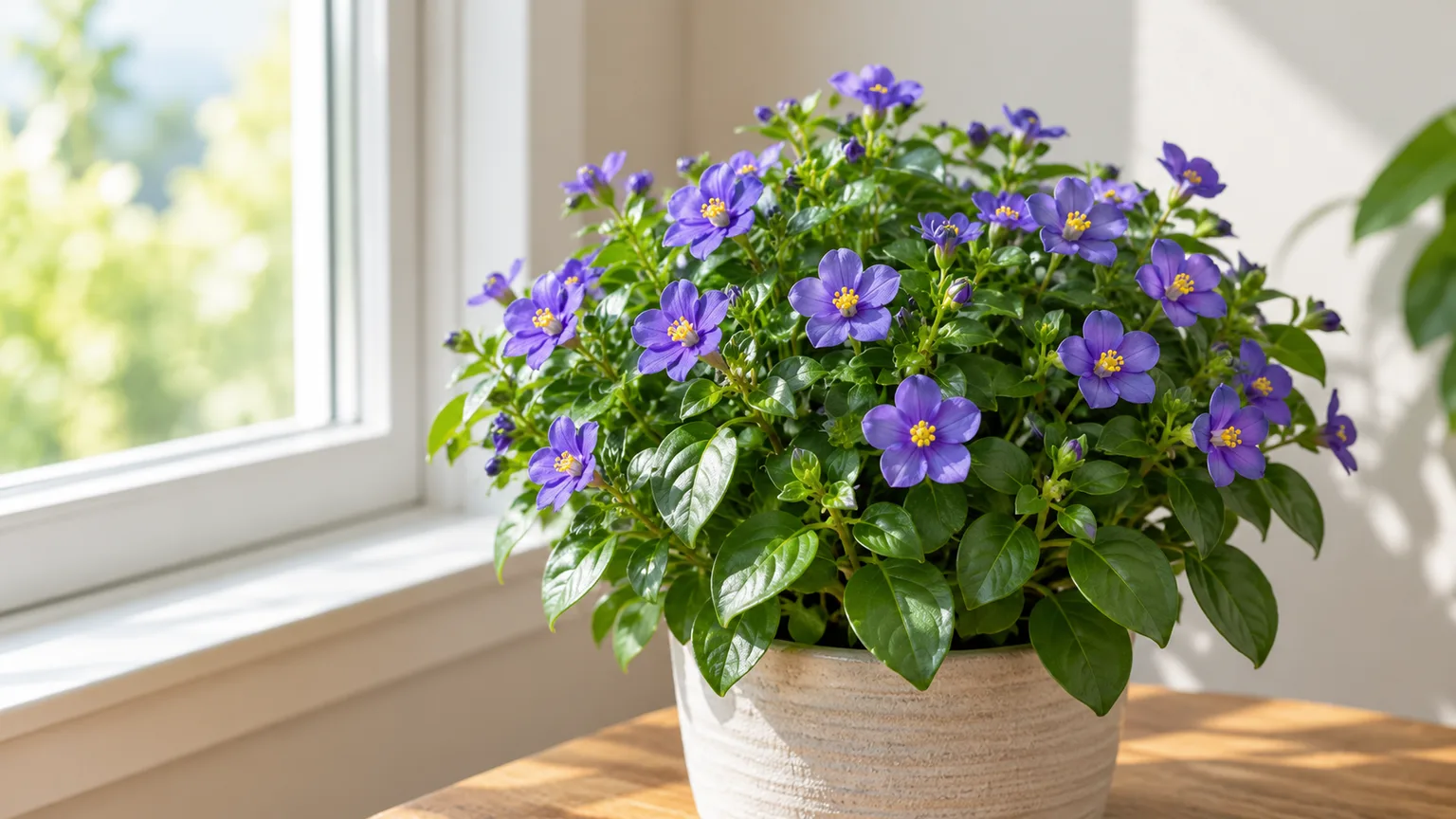
A Persian violet can arrive from the garden center already covered in fragrant blue-purple flowers, then wilt or drop buds soon after you bring it home. The fix is rarely a rigid watering schedule. This plant does best when you balance bright but filtered light with a root ball that stays lightly moist and drains freely—and when you understand that its flowering display is often a season, not a permanent houseplant phase.
Persian violet is the common name for Exacum affine, a compact member of the gentian family. It is not a true violet, and it behaves more like a short-lived flowering annual or biennial than a foliage houseplant you can keep indefinitely. The NC State Extension Plant Toolbox describes it as a short-lived perennial that is usually grown as an annual outside its warm native range; UF/IFAS Extension lists it as an annual or biennial. That life-cycle context helps set realistic expectations: good care can lengthen the current display, but it cannot guarantee a second full season.
Understand the plant and its short life cycle
Persian violet forms a neat, rounded mound of small, glossy leaves. Its five-petaled flowers are usually blue to deep violet with conspicuous yellow centers, and many cultivars have a noticeable sweet fragrance. NC State Extension places the plant in the Gentianaceae family and lists a typical height of about 6 to 18 inches, so it can work on a bright table, a sheltered patio, or at the front of a warm-climate border.
The name can mislead new growers. Exacum affine is not in the genus Viola and is not an African violet; it is a different flowering plant with its own needs. It is native to Yemen, including Socotra, and is tender to cold. In places where winter freezes, grow it as a container plant or seasonal annual and bring it indoors before temperatures fall sharply. The RHS plant profile also describes it as a bushy, fragrant plant and recommends seed sowing in early spring.
One practical consequence of its short life is that a plant bought in bloom may already be well into its reproductive stage. A Persian violet can keep producing flowers for an extended period under stable conditions, but once flowering wanes, it may not respond to more fertilizer or a larger pot the way a long-lived perennial would. Enjoy the plant you have, remove spent flowers, and decide whether you want to try seed or cuttings before discarding it.
Choose a plant with a long display ahead
When shopping, look for a compact plant with firm green leaves, several open flowers, and plenty of visible unopened buds. A plant with buds at different stages has more of its display still ahead than one whose flowers are all fully open or beginning to fade. Check the foliage undersides and stem joints for fine webbing, stippling, sticky residue, or clusters of insects before bringing it near other houseplants.
Avoid a specimen that is already limp while its potting mix is wet, has a sour smell, or has blackened stems at the soil line. Those signs can indicate damaged roots or rot, which is difficult to reverse in a plant that is already under stress. If the nursery plant is in a decorative sleeve, lift it out and confirm that the inner pot has drainage holes; a sleeve that traps runoff can leave the roots sitting in water.
Give it bright, filtered light
Set a Persian violet close to a bright east-facing window, or a little back from a south- or west-facing window where hot afternoon rays will not strike it. A sheer curtain can soften intense light. The target is enough brightness to support compact growth and flower production without heating the leaves and petals against the glass.
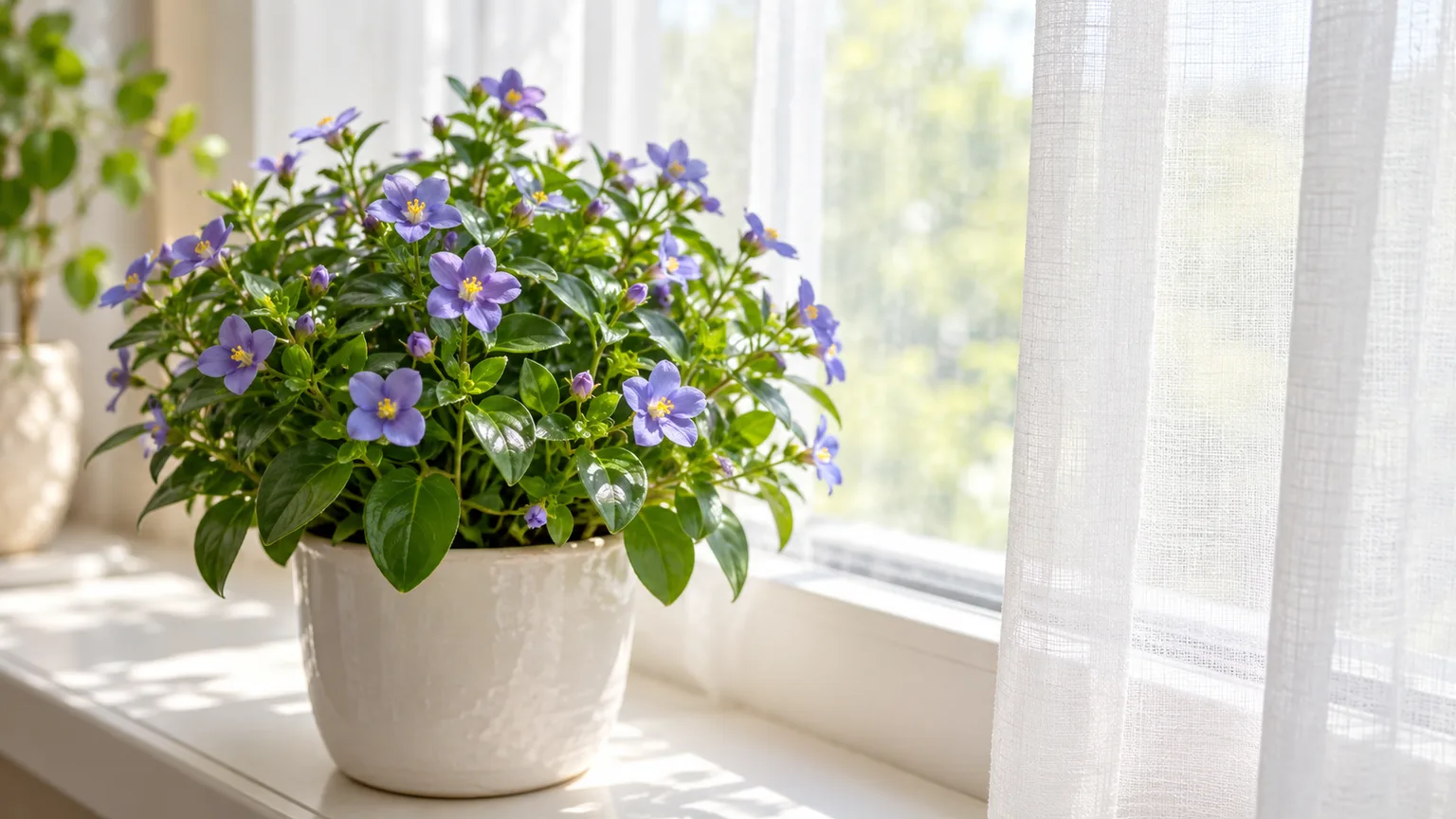
Care references differ on outdoor exposure: NC State Extension and UF/IFAS describe partial shade, while the RHS profile lists full sun in its growing conditions. That difference is a reason to use local conditions, not to put a flowering pot in the harshest available sun. In a cool garden, gentle morning sun may be tolerated; behind warm window glass or in a hot climate, filtered light is the safer starting point. If stems stretch and blooms thin out, move the plant closer to a brighter window gradually rather than jumping straight into full sun.
If your only bright window gets direct afternoon sun, place the pot several feet back or use a light curtain. Rotate it a quarter-turn every few days if it leans toward the glass. A grow light can help in a dim home, but keep it far enough away that foliage remains cool and use a consistent daytime schedule rather than leaving the lamp on overnight.
Keep the root ball evenly moist, not soggy
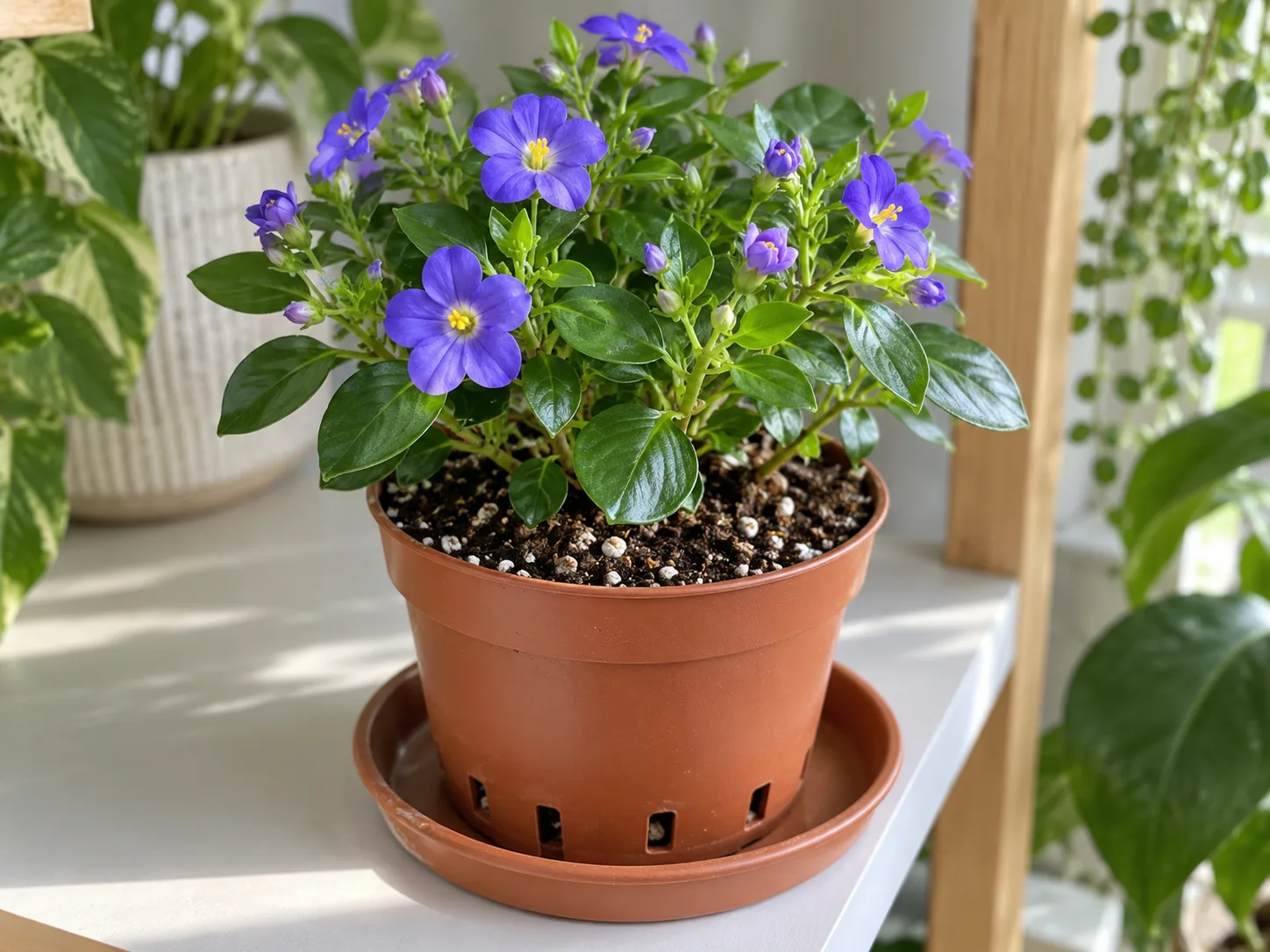
Check the potting mix with a fingertip instead of watering by weekday. When the top layer is beginning to dry but the mix just below it still feels cool and faintly damp, water thoroughly at the soil line until a little drains from the bottom. Empty the saucer after the pot has finished draining; the plant likes moisture around its roots, not a reservoir that keeps them oxygen-starved.
The Gardener’s Path care guide recommends consistent moisture and room-temperature water. That is useful, but it does not mean the surface should stay glossy-wet all day. A small pot in a warm room may need checking daily during active bloom, while a larger or cooler pot can dry more slowly. Pot size, root density, airflow, and the amount of light all change the interval.
Water slowly enough that the mix absorbs it rather than letting it race down a gap along the pot wall. If the peat-based mix has become so dry that water runs straight through, set the pot in a shallow basin for several minutes until the root ball rewets, then drain it completely. Avoid repeated light sprinkles that wet only the surface and leave the lower roots dry. Do not routinely mist flowers: droplets can mark petals and, in still air, keep foliage wet longer than needed.
Use a light mix and a pot that drains
Choose a moisture-retentive but airy potting medium. A packaged African violet mix is a convenient starting point, or use a peat- or coir-based houseplant mix amended with perlite if it stays compact after watering. The UF/IFAS plant profile specifically calls for a light, well-drained soil with peat and perlite; the main goal is to retain enough water for this thirsty bloomer while allowing excess to escape quickly.
A drainage hole matters more than an elaborate soil recipe. Use a pot only slightly wider than the root ball, because a large volume of wet mix around a small root system dries slowly. If you like a decorative cachepot, keep the plant in its perforated nursery pot and pour out any water that collects in the outer container. Never add gravel at the bottom to “improve drainage”; it does not replace a hole and can leave a saturated layer where the roots sit.
Keep temperatures mild and humidity steady
A comfortable room is usually easier for Persian violet than a hot window ledge or a cold draft. Aim for a stable range around 60 to 75°F when possible, and avoid placing the plant directly over a heater, beside an air conditioner, or where a door repeatedly blasts it with cold air. The Gardener’s Path guide gives an indoor range of 60 to 80°F; NC State’s outdoor notes emphasize warm nights in its suitable climates. Treat sharp temperature swings as a greater risk than a small difference in the thermometer reading.
Moderate humidity helps keep flowers and leaves from drying quickly, especially in winter-heated rooms. If the air is very dry, group plants together or run a room humidifier nearby. A pebble tray can add a little moisture immediately around the pot, but it will not transform the humidity of an entire room. Keep the base of the pot above the waterline, and do not compensate for dry air by leaving the roots permanently wet.
Feed lightly while it is growing and flowering
A freshly purchased blooming plant may already have fertilizer in its nursery mix, so do not feed it immediately just because the label says flowering plants need food. If new growth continues and flowers are still forming, apply a balanced, water-soluble fertilizer at the label rate for container plants, or at a reduced concentration if the label allows. The UF/IFAS profile describes its fertilization needs as moderate, not heavy.
Do not fertilize dry roots; water first if the mix is dry, then feed at a later watering. Salt buildup can burn roots and leaf edges, while excess nitrogen can favor soft foliage over a tidy mound of flowers. Pause feeding when flowering and growth have clearly stalled. More fertilizer will not reverse the natural end of a short-lived plant’s cycle.
Deadhead carefully to extend the display
Pinch or snip a faded flower at the base of its short stalk once the petals shrivel. Removing spent blooms keeps the plant tidy and may encourage continued flowering while it is still actively growing. Use clean fingertips or small scissors, and avoid pulling on neighboring stems, which can break the compact canopy.
Do not hard-prune a healthy blooming plant to force new growth. Remove yellowing or collapsed leaves as they appear, but preserve firm green stems and buds. If you want to collect seed, leave a few flowers to mature instead of deadheading every bloom; seed formation competes with continued flowering, so choose the goal that matters more.
Know what to expect after flowering
Persian violet is commonly sold as a flowering seasonal plant because it can be hard to maintain after its main bloom. Some gardeners keep a plant through a quieter phase and attempt to restart growth, but the result is uncertain. NC State Extension notes that it is difficult to keep growing after flowering, while a Guide to Houseplants care profile describes it as a biennial often treated as an annual.
When the display fades, first check whether the plant is still producing healthy new leaves or buds. If it is, keep the same stable care and remove spent flowers. If stems yellow or collapse despite a reasonable moisture routine, do not keep escalating fertilizer or repotting in an attempt to make it perennial. You can either compost the exhausted plant or use a healthy tip cutting or saved seed to start another generation.
Grow it outdoors only in suitable weather
In a warm, frost-free climate, Persian violet can grow as a compact bedding plant, border accent, or container specimen. In cooler areas, use it outdoors for a spring or summer display after nights are reliably mild, then bring the pot inside before cold weather or treat it as an annual. The plant is tender to cold, so a light frost is not a safe “hardening off” test.
Choose a sheltered position with good drainage and protection from scorching afternoon sun. A container is easier to manage than a garden bed because you can move it during heat, heavy rain, or a cold snap. Outdoor plants dry faster in wind and bright weather, so check the root zone more often, but do not leave a saucer full of rainwater under the pot.
The plant’s hardiness labels can be confusing because sources describe different uses and climates. The RHS gives a UK hardiness rating that permits summer placement outdoors, while NC State lists it for warm USDA zones as a possible short-lived perennial. For a home gardener, the safe rule is simple: keep it frost-free, treat it as seasonal outside tropical climates, and bring container plants in before nights turn cold.
Repot only when the plant needs it
Repotting during bloom can jostle roots and trigger flower or bud loss, so leave a healthy nursery plant alone unless its container has no drainage or the root ball is severely crowded. If you need a decorative display, slip the nursery pot into a cachepot and remove it for watering. This gives you the look of a larger planter without disturbing a plant that may only have a few months of flowering ahead.
If roots are tightly circling the pot and the mix dries almost immediately after watering, move it up one pot size after the bloom, keeping the crown at the same height. Use fresh airy mix and water it in once, then let the pot drain. A very large pot can stay wet too long, so do not jump several sizes. Many Persian violets will finish their cycle before they need routine repotting.
Propagate Persian violets if you want another crop
You can start Exacum affine from seed or stem cuttings, though buying a new flowering plant is often the simpler option. Propagation makes most sense if you enjoy raising small plants, want to preserve a particular color, or have a healthy plant that is fading after bloom. Do not expect a cutting or seedling to flower immediately; it needs time to build roots and foliage first.
Sow the tiny seeds on the surface
Persian violet seed is extremely fine. Fill a clean shallow tray or small pots with a fine-textured seed-starting medium that is damp but not saturated, then scatter the seed over the surface and press lightly. Leave it uncovered by soil because the seeds need light to germinate. A clear dome or loose cover helps prevent the surface from drying, but open it briefly for air exchange and remove it once seedlings emerge.
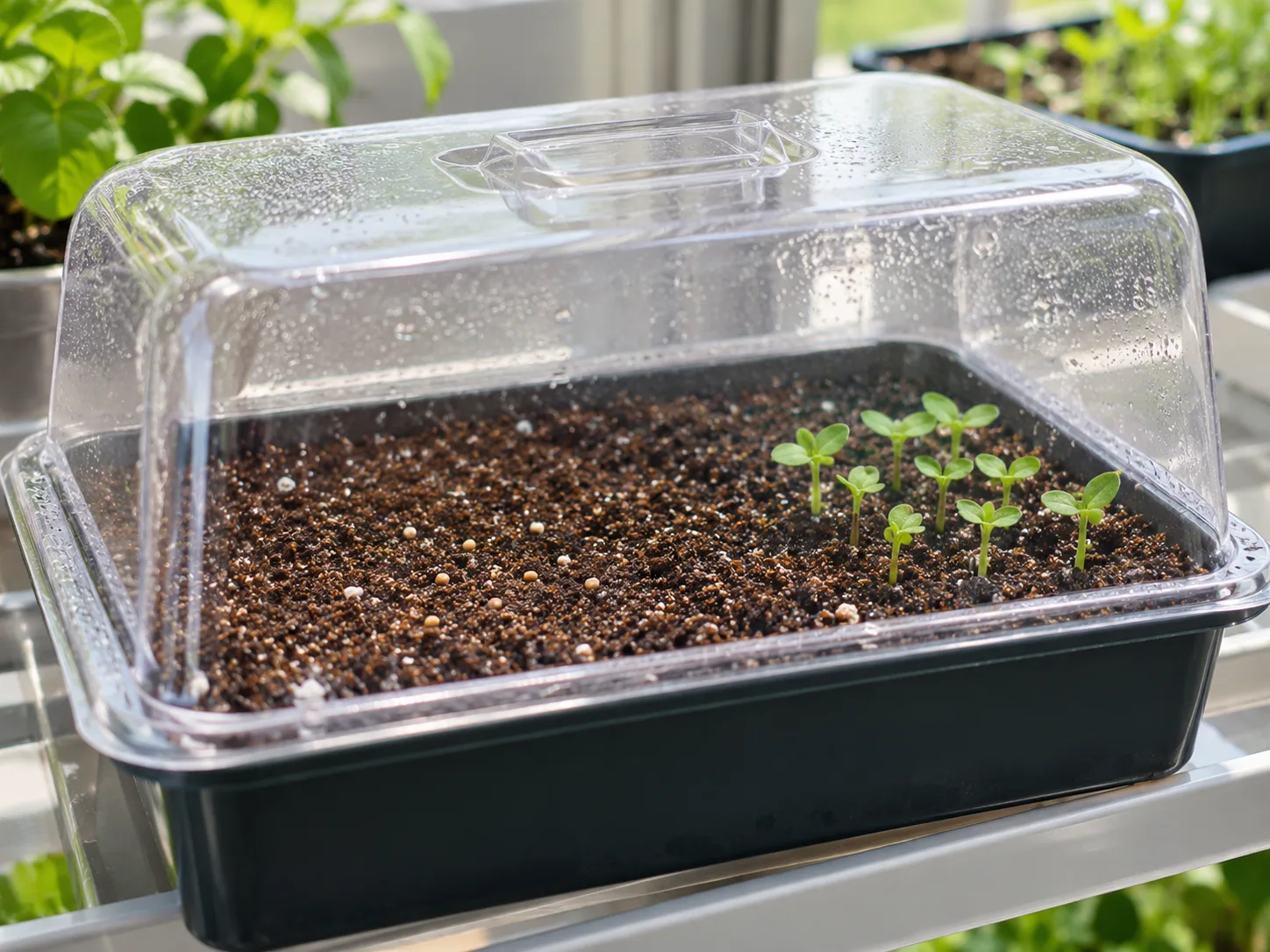
The RHS recommends sowing in early spring at 18–20°C, and UF/IFAS notes that the seeds are tiny and can germinate in two to three weeks. Keep the tray warm, bright, and evenly moist—not waterlogged. When seedlings have several true leaves and are large enough to handle, separate them gently into small pots. Keep the mix moist while they establish, then gradually expose them to the brighter, lower-humidity conditions of a normal room.
Root a stem cutting for a quicker start
Take a 3- to 4-inch tip cutting from a healthy, nonflowering shoot if one is available. Remove leaves from the lower part of the stem, insert the bare section into a small pot of damp, airy propagation mix, and cover the pot loosely with a clear bag or propagation dome. The cover should not press against the leaves. Set it in bright indirect light and keep the medium slightly moist, not swampy.
Check for resistance with a very gentle tug after a few weeks rather than repeatedly unpotting the cutting. Once roots have formed and new growth begins, remove the cover gradually over several days. Cutting success is not guaranteed, particularly from a plant that is already declining, but it avoids the tiny seed-handling step. NC State Extension lists stem cuttings as a viable propagation strategy.
Troubleshoot fading or wilting plants
Start by checking the root zone and the plant’s recent conditions, not by applying water, fertilizer, or pesticide immediately. A wilted Persian violet may have dry mix, waterlogged roots, heat stress, or root damage; the same symptom can come from opposite causes. Look at the soil, pot drainage, leaf texture, and recent changes together before choosing a fix.
Diagnose a wilt before you water
If the mix is dry several centimeters down and the pot feels unusually light, water slowly until the root ball is evenly damp and let excess drain. A thirsty plant may regain firmness within hours, although buds already dried out may not recover. If the mix is wet, the pot is heavy, or the plant smells sour, adding more water is likely to worsen the problem.
For a wet-soil wilt, slide the root ball out gently and inspect the roots. Healthy roots are firm; soft brown or black roots and a sour smell suggest rot. Trim only clearly dead tissue with clean scissors, move surviving roots into fresh, airy mix if enough healthy root remains, and let the pot drain. Advanced rot may not be recoverable, so discard a plant whose crown and most roots have collapsed rather than keeping it in a sealed, wet environment.
Check bud drop, yellowing, and weak flowering
A few buds may fall after a move from the greenhouse to a dry or dim home because the plant is adjusting. Keep it in one bright, indirect-light location, protect it from vents, and maintain even moisture for a couple of weeks before making another change. Avoid repotting or repeatedly rotating it while it settles in.
If stems stretch and flowers are sparse, increase light gradually. If leaves bleach or petals brown on the window side, filter the sun or move the plant back. Yellowing across the whole plant can also signal aging after the main bloom, while isolated lower leaves may simply be old; compare the pattern with soil moisture and root condition before deciding. A plant that is finishing its flowering cycle will not necessarily respond to more food.
Watch for mites, aphids, and gray mold
Inspect the undersides of leaves and new growth once a week. Spider mites can leave fine stippling and webbing; aphids cluster on soft tips and buds. Isolate an affected pot, rinse pests off gently if the plant can dry quickly, and repeat inspection over the next several days. If you use an insecticidal soap or other treatment, follow the product label and test a small area first; delicate petals and foliage can be sensitive.
Gray mold is more likely when dead flowers and leaves stay damp in still air. Remove spent or decaying material, improve airflow without exposing the plant to a cold draft, and water the soil rather than repeatedly wetting the canopy. UF/IFAS identifies gray mold as a problem for Persian violet seed, while Gardener’s Path discusses aphids, spider mites, and root rot. Prevention through clean trays, drainage, and prompt cleanup is more useful than trying to rescue a plant after extensive decay.
Conclusion
Persian violet care comes down to a few linked decisions: give Exacum affine bright filtered light, keep the root ball consistently but lightly moist, and make sure every excess drop of water can drain away. Stable room temperatures, modest feeding, and regular deadheading can preserve a longer display, while protection from hot sun, cold drafts, and soggy soil prevents the setbacks that often end it early.
Treat the plant as a seasonal flowering companion rather than assuming it will live forever on a windowsill. If it fades after its bloom, that may be its life cycle reaching its natural finish—not proof that you failed. Save seed or try a cutting if you want another round, and begin again with a compact plant that still has unopened buds.



