How to Grow and Care for Coleus Indoors Year-Round
Grow coleus indoors with practical light, watering, soil, pruning, and seasonal advice, plus clear fixes for drooping leaves, pests, and leggy growth.
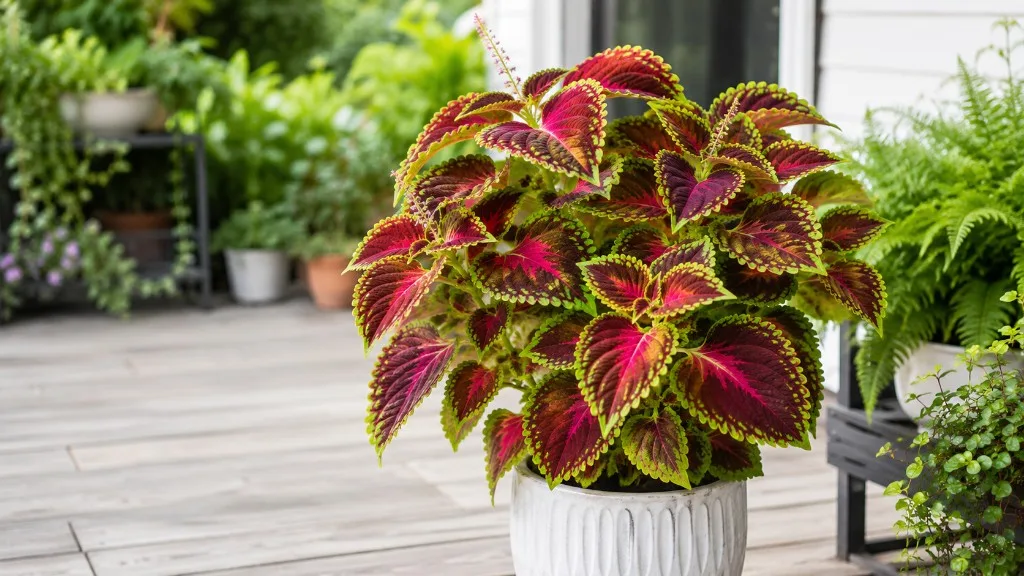
Coleus is grown for foliage that can combine lime, burgundy, pink, red, orange, and green on a single plant. It can live indoors year-round, but it usually looks its best when the room provides more light than many “low-light houseplant” labels suggest. The practical balance is bright light, a potting mix that stays lightly moist without remaining soggy, warmth, and occasional pinching to keep stems from stretching.
The care routine should respond to the plant and its room. A small pot in a sunny window may dry in a day or two; a larger pot several feet back from a window may remain damp for much longer. Check the mix before watering, rotate the pot if growth leans, and change one condition at a time when leaves fade or droop. That approach is more reliable than following a fixed weekly schedule.
Is Coleus a Good Indoor Plant?
The ornamental coleus most often sold for colorful foliage is Coleus scutellarioides, also encountered under older names such as Plectranthus scutellarioides and Solenostemon scutellarioides. It belongs to the mint family, Lamiaceae, and is cultivated in many leaf colors and growth habits. Some varieties stay compact; others become upright, broad, or trailing. Labels may use “coleus” for hybrids and selections, so the exact cultivar matters when comparing light and mature size.
Indoors, coleus offers fast, visible growth and responds well to pruning. That responsiveness is useful if a stem gets lanky: a healthy plant can branch after its growing tip is pinched, and the cutting can become another plant. The tradeoff is that rapid growth can create frequent trimming, and a plant that receives too little light may lose its dense shape. Extension sources describe coleus as a warm-season ornamental and note that it is commonly grown as an annual outdoors in cool climates; indoors, it can persist longer if warmth and light are adequate. (NC State Extension Plant Toolbox; UF/IFAS Gardening Solutions)
Think of indoor coleus as a foliage plant that prefers active growing conditions, not a plant that thrives in a dark corner with no maintenance. If your brightest window is shaded by buildings or trees, a small grow light can help. If you want a plant that tolerates very low light, coleus is probably not the easiest fit.
Give Coleus Bright Light Without Scorching the Leaves
Place coleus close to a bright window where it receives strong ambient daylight. An east-facing window often supplies gentle morning sun; a south- or west-facing window can work if sheer curtains, distance, or a nearby position softens the most intense direct rays. North-facing light varies substantially with hemisphere, season, latitude, and obstructions, so judge the actual brightness at the plant rather than relying on compass direction alone.
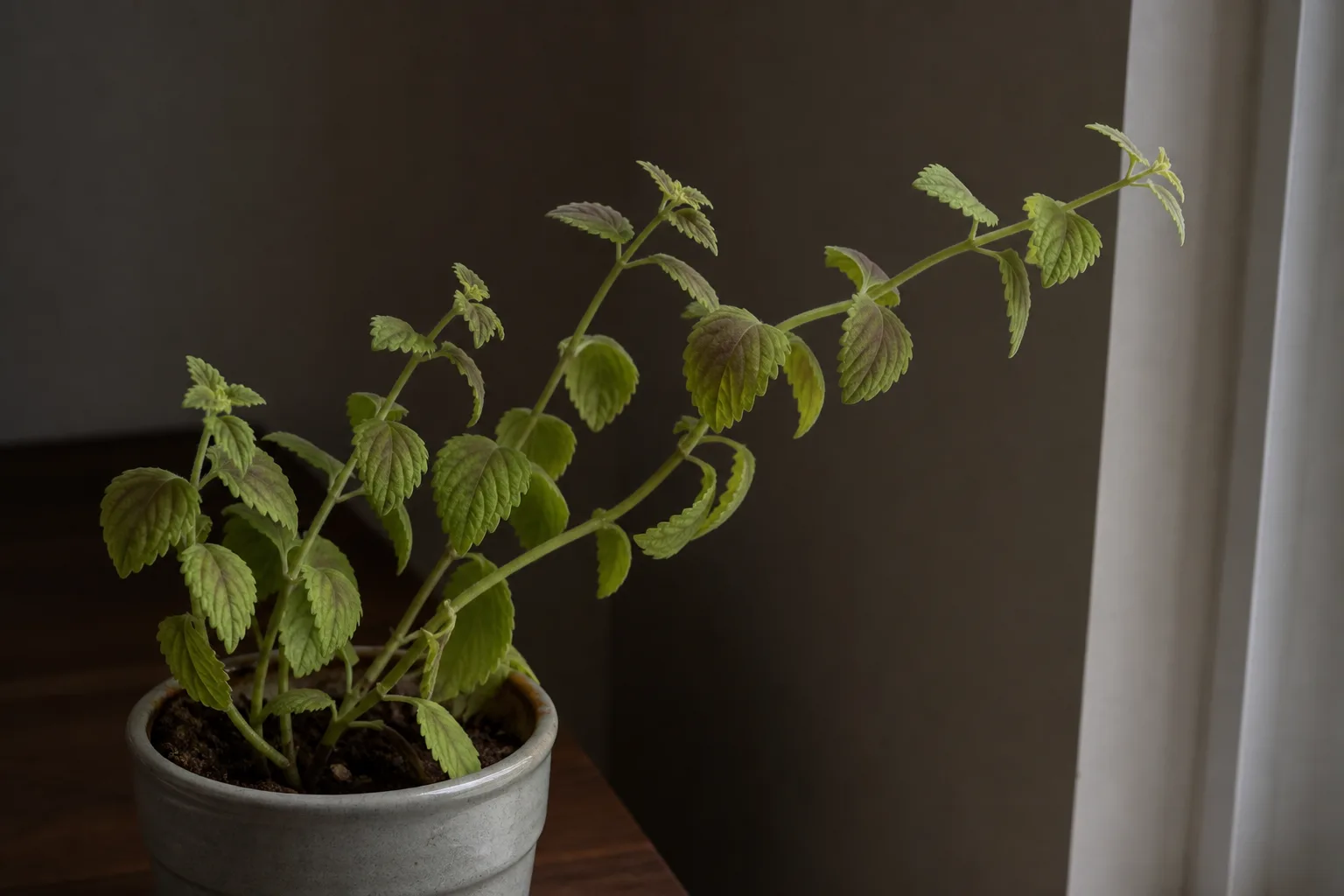
The useful distinction is between enough light for short, sturdy growth and harsh exposure that bleaches or scorches foliage. NC State says houseplant coleus needs bright light, while extension guidance notes that full shade can encourage legginess and some cultivars tolerate more sun than others. A plant pressed against hot glass in a summer afternoon may wilt or develop pale, dry patches; one far back in a dim room may stretch toward the window, with longer gaps between leaves. (NC State Extension Plant Toolbox; Clemson Cooperative Extension)
Adjust Light to the Cultivar and Window
Watch new growth over several weeks. If fresh leaves are smaller, stems are stretching, or the plant consistently leans, move it closer to the window or add a grow light. Rotate the pot a quarter-turn every week or two to even out directional growth. If leaves fade on the window-facing side, develop crisp patches, or the plant wilts while its mix is still damp, move it slightly back or filter the strongest sun. Do not repeatedly relocate it each day; stability makes it easier to see whether a change helped.
Variety names and leaf color are clues, not guarantees. Some modern coleus selections are bred for sunnier outdoor beds, while others hold their color better in partial shade. A sun-tolerant outdoor cultivar still needs gradual acclimation when moving from a nursery bench or shaded porch into direct indoor sun. In winter, the same window may provide much less usable light because the sun is lower and days are shorter. If growth becomes sparse during that season, prune lightly and wait for spring rather than cutting the plant back severely while it is already short on energy.
Keep It Warm and Manage Humidity Realistically
Coleus grows best in the warm conditions typical of a comfortable home. Avoid cold windowsills, exterior doors that open to winter air, and direct contact with heating or air-conditioning vents. Brief temperature swings are not automatically fatal, but repeated cold drafts can slow growth and damage tender leaves. For outdoor coleus being moved inside, make the transition before nights become cold; do not wait for frost to force the move.
Humidity is helpful, especially in a dry heated home, but a bathroom or daily misting is not a requirement for every plant. Average indoor humidity is often enough if the plant is watered correctly and leaves remain healthy. University of Georgia Extension explains that misting makes only a fleeting change to room humidity; it does not create a stable humid environment around a plant. If edges become crisp in a very dry room, group plants with space for airflow, use a room humidifier, or move coleus away from heat vents. Avoid crowding wet foliage, which can slow drying and favor leaf disease. (University of Georgia Cooperative Extension)
A pebble tray may slightly increase moisture immediately around a plant, but do not allow the pot to stand in water. For most homes, a humidifier controlled for the room is more predictable than misting, while keeping the plant in a naturally comfortable room is simplest. Choose the least complicated solution that addresses a real symptom; if the leaves are fine, there is no need to add humidity equipment.
Water by Checking the Potting Mix
Coleus prefers consistent moisture while actively growing, but “keep moist” does not mean leave roots in standing water. Check the top inch of mix with a finger or a wooden skewer. When that layer has dried and the pot feels lighter, water thoroughly until excess runs from the drainage holes. Empty the saucer after the pot drains. If the mix is still moist below the surface, wait and recheck later.
The interval changes with pot size, root mass, mix, light, temperature, and season. A small plant in a warm bright room may need water more often than a large plant in a cool room. Minnesota Extension notes that container-grown coleus needs more frequent attention than garden-bed plants and emphasizes drainage; Clemson recommends checking the top inch for outdoor plantings. Those are useful reminders to inspect the root zone, not an indoor watering calendar. Indoors, weekly watering can be too much in a slow-drying pot or too little in a hot sunny window. Gardener’s Path likewise recommends a top-inch moisture check for houseplant coleus; treat that as a starting cue, then adjust to the room and container rather than copying a calendar. (University of Minnesota Extension; Clemson Cooperative Extension; Gardener’s Path)
Tell Dry-Soil Wilt From Overwatering
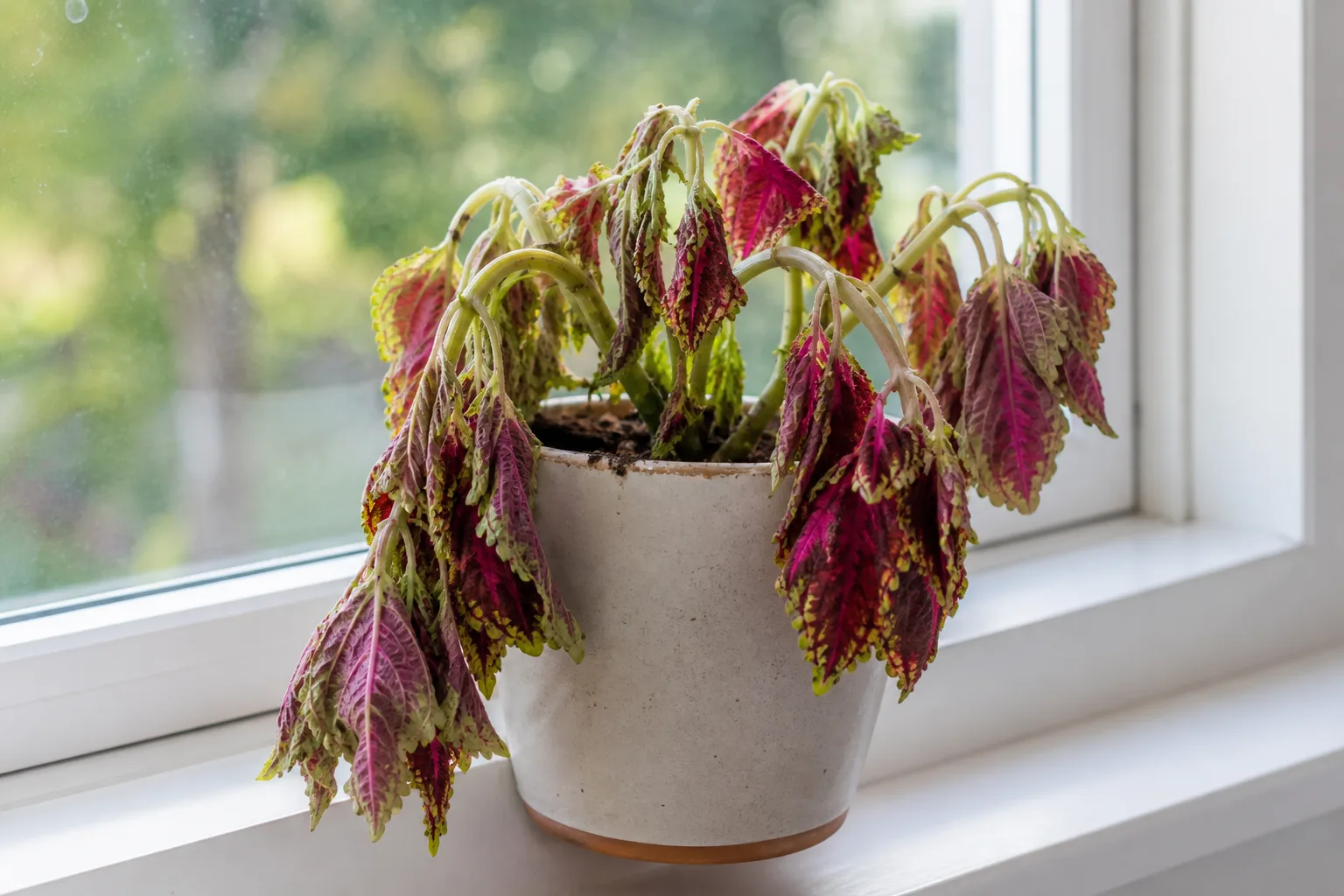
Dry coleus often wilts while the mix feels light and dry; after a thorough watering, the leaves may regain firmness. A plant in waterlogged mix can also droop, but its pot remains heavy, the surface may stay damp for days, and yellowing or soft, dark stems may follow. Do not respond to every drooping leaf with more water. First check moisture below the surface and confirm that the drainage hole is open.
If a plant dries until the mix shrinks from the pot edges, water slowly in two passes so the mix can absorb moisture instead of letting all of it race down the gap. If the root zone remains soaked, stop watering, remove standing runoff, and allow the pot to drain in a bright, warm place. Persistent sour odor, blackened stems, or collapsing roots may indicate rot; simply withholding water will not revive severely damaged roots. Repot only if inspection confirms the mix or roots are failing, and avoid disturbing healthy roots without reason.
Choose a Draining Pot and Airy Potting Mix
Use a container with at least one unobstructed drainage hole. Plastic or glazed ceramic tends to dry more slowly than unglazed terracotta; that can be useful in a dry home but increases the need to check for overwatering in a cool, dim room. Terracotta breathes and dries faster, so it may suit a grower who tends to water heavily or a plant in a sunny location. Neither material is inherently best. Match the pot to your room and your watering habits.
A standard indoor potting mix is usually adequate if it drains freely. If water sits on the surface or the pot stays wet for too long, improve structure with a modest amount of perlite or choose a fresh mix formulated for houseplants. Avoid dense garden soil, which can compact in a container and impede air around roots. A layer of gravel at the bottom does not fix a blocked drainage hole or a heavy mix; it can actually leave the perched wet zone higher in the pot. Keep the pot’s drainage holes clear and use one consistent mix from top to bottom.
Choose a pot only a little wider than the root ball when repotting. An oversized container holds more unused damp mix around roots and can make watering harder to judge. A nursery pot set inside a decorative cachepot is fine if you remove it for watering or pour out all runoff afterward.
Feed Lightly During Active Growth
Coleus does not need a heavy fertilizer program to make colorful leaves. If it is growing steadily in fresh potting mix, wait before feeding; many mixes include a starter charge. During bright, warm months, a balanced houseplant fertilizer diluted according to its label can support new growth. Start conservatively and feed only when the plant is actively growing. Do not fertilize a wilted, cold, recently repotted, or root-damaged plant as a rescue treatment. Fertilizer cannot correct poor light or waterlogged roots and can add salt stress.
Different extension recommendations are written for different systems: garden beds, nursery production, or containers. For a houseplant, the product label and response of the plant are better guides than copying a field rate or a fixed weekly dose. If pale leaf edges or a crust on the mix develops after repeated feeding, pause, water thoroughly to flush accumulated salts if drainage is sound, and resume at a lower frequency only during active growth. Reduce or stop feeding in winter when shorter days slow growth. (Clemson Cooperative Extension)
Avoid “bloom booster” fertilizer if your goal is foliage. Pinching flower spikes is the more direct way to keep the plant focused on its leafy form, while high fertilizer rates can harm rather than improve it.
Pinch and Prune for a Fuller Plant
Pinching removes the growing tip above a pair of leaves or a leaf node. The buds at that node can then branch, creating a fuller outline instead of one tall stem. Use clean scissors or your fingertips on tender growth and cut just above a node, taking care not to strip the whole plant at once. Repeat as stems lengthen, but allow enough leafy growth to remain so the plant can keep making energy.
Minnesota Extension advises clipping the top couple of inches once a young plant is roughly six inches tall to encourage branching. That is a useful starting point, not a required measurement for every cultivar or size. On a mature houseplant, remove only the longest tips or stems that spoil its shape, then wait for new branches before repeating. Pinching can make a plant bushier, but it cannot compensate for inadequate light; move it to brighter conditions first if internodes are widely spaced. (University of Minnesota Extension)
Coleus produces small flower spikes, often as days shorten or a plant matures. If you want a dense foliage display, remove the spikes before they set seed. If you prefer to see flowers or collect seed, allow some spikes to remain; the plant is not harmed simply because it blooms. Pinching and pruning will delay flowers and create more trimming work, so decide whether the plant’s job is compact foliage or a looser flowering form.
Repot Only When Roots Need More Room
Repot when roots circle the root ball densely, emerge from drainage holes, or the mix dries unusually fast because roots have displaced most of it. A plant that is top-heavy or repeatedly wilts may also need a larger pot, but inspect the mix and root condition before assuming it is root-bound. Growth slowing in winter alone is not a reason to repot.
Move up one pot size—often about one or two inches wider—rather than jumping to a much larger container. Use fresh, free-draining mix, keep the crown at the same depth, and water enough to settle the mix. Afterward, place the plant in bright indirect light while roots re-establish and hold off fertilizer until fresh growth resumes. Repotting can briefly pause growth; doing it during active spring or early summer growth gives a coleus more time to recover than a cold, dim winter period.
If the plant is large but you want to keep its current pot, trim the canopy modestly and refresh some of the surface mix rather than aggressively cutting apart the roots. You can also take cuttings and keep a smaller replacement plant. That can be more manageable than maintaining a crowded mature plant in a living room window.
Troubleshoot Faded Color, Yellow Leaves, and Slow Growth
Start with the newest leaves and the pattern of damage. Faded color with long gaps between leaves usually points toward inadequate light; move the plant gradually closer to a window or supplement light. Crispy pale patches on the sun-facing side suggest too much intense direct sun or heat against glass. Uniform yellowing and a persistently wet pot call for a root-zone and drainage check before fertilizer. One or two older leaves yellowing as a plant grows may be normal, especially after a seasonal move, but widespread yellowing or leaf drop deserves inspection.
Small leaves and stalled growth can reflect short winter days, cool temperatures, root crowding, or a combination. Check whether growth has slowed across the houseplants in that room before changing fertilizer. Brown margins can follow dry air, salt accumulation, underwatering, or hot drafts; look for a pattern and change one factor at a time. Photograph the plant before and after a correction so you can see whether new leaves improve. Existing damaged leaves rarely become perfect again; judge success by the growth that follows.
Inspect for Common Indoor Pests
Check leaf undersides, stem joints, and new growth for spider mites, aphids, mealybugs, or whiteflies. Fine stippling or webbing can suggest mites; clusters of soft-bodied insects and sticky honeydew can point to aphids or whiteflies; cottony deposits around joints often indicate mealybugs. NC State lists aphids, whiteflies, and spider mites among pests of coleus. Isolate a suspect plant while identifying the problem so it does not spread to nearby houseplants. (NC State Extension Plant Toolbox)
For a small infestation, rinse leaves and stems with lukewarm water and remove heavily affected growth. Repeat inspections because eggs or hidden insects may survive the first cleaning. If a labeled insecticidal soap is needed, follow the product directions, test a small area first, and keep the plant out of harsh direct sun until foliage is dry. Do not spray a homemade dish-soap mixture or neem product without checking the label and plant tolerance; “natural” does not mean harmless to leaves, pets, or beneficial insects. Quarantine and treatment are especially important before bringing outdoor plants inside.
Propagate Coleus From Stem Cuttings
Stem cuttings are a simple way to keep a favorite color or replace a plant that has grown too large. Choose a healthy, non-flowering tip, cut just below a node with clean scissors, and remove the leaves from the lower portion that would sit in water or mix. The cutting needs at least one exposed node; roots form from the stem at or near that point. Avoid taking so many cuttings that the parent plant loses most of its foliage.
You can root the stem in a clean glass of water or directly in a moist, airy propagation mix. In water, keep leaves above the surface and change the water if it becomes cloudy. In mix, keep it evenly moist but not saturated and use a clear cover only if the air is especially dry; ventilate it to prevent stagnant dampness. Set the cutting in bright indirect light and warmth. Minnesota Extension reports that coleus cuttings can root in about two to three weeks, though timing varies with temperature, light, and cutting condition. (University of Minnesota Extension; Royal Horticultural Society)
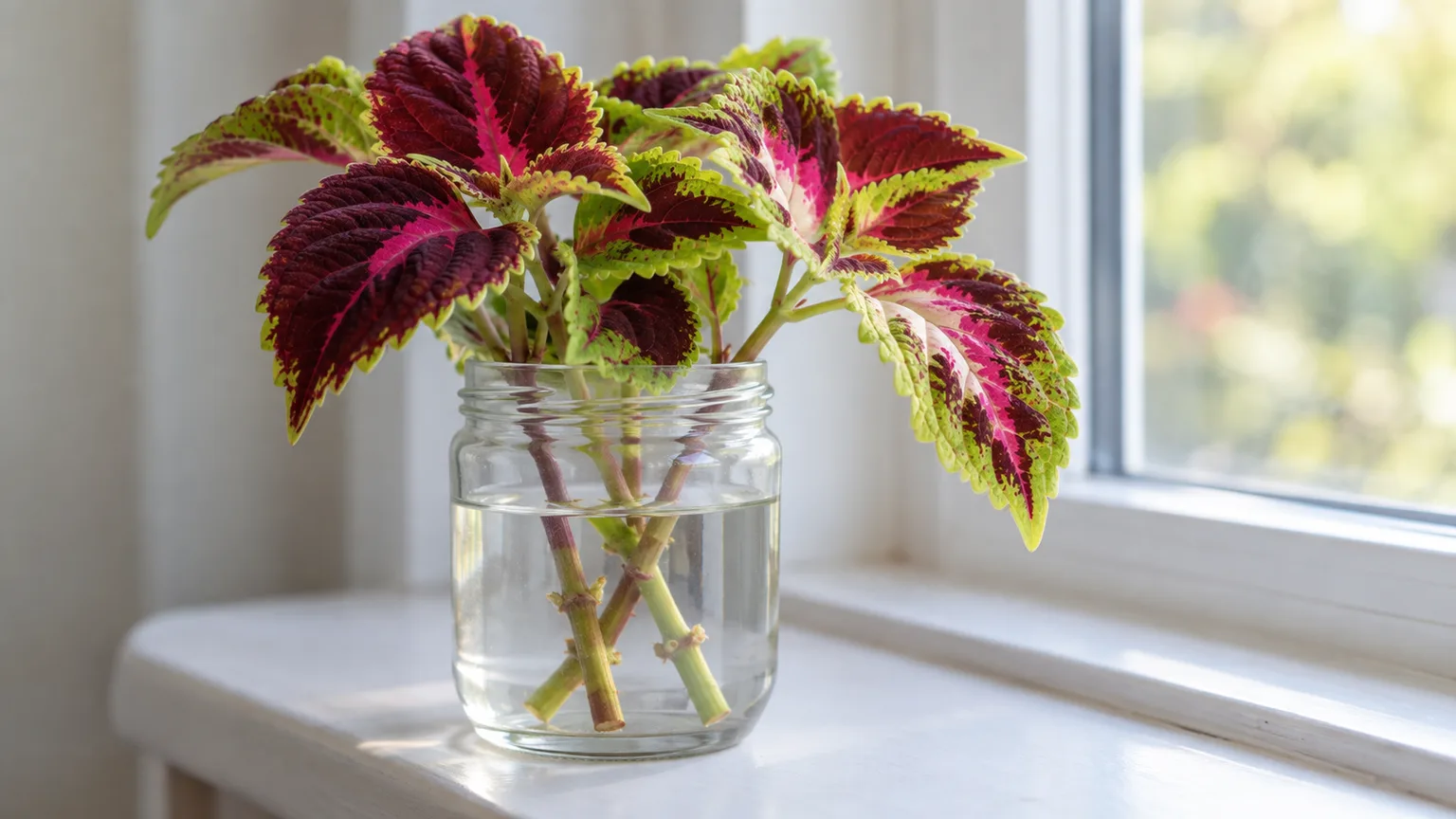
Once roots are visible and branching, pot the cutting into a small container with drainage and houseplant mix. Water to settle the soil, then let new growth—not just roots—show that it has adjusted before feeding. If a water-rooted cutting wilts after potting, keep the mix evenly moist while new soil roots form, but do not leave the pot standing in water. A rooted cutting also makes a compact backup to overwinter if the original plant is too large.
Grow Coleus From Seed When Variation Is Welcome
Seed works if you want several plants or enjoy unexpected color combinations, but seedlings may not look like the named parent cultivar. Many ornamental varieties are hybrids or selected for particular foliage; seed does not guarantee an exact copy. A cutting is the better method when preserving a specific leaf pattern or growth habit matters.
For seed, use clean seed-starting mix and follow the packet’s depth and temperature directions. Coleus seed is small, and extension guidance notes that light is needed for germination; do not bury it deeply. Keep the surface evenly moist, provide warmth and bright light, then pot seedlings individually after they have enough leaves to handle. If seedling color or shape differs, that is normal variation rather than proof that care has failed. Minnesota Extension gives germination guidance of roughly 10 to 20 days at 70 to 75°F, although a particular seed lot and setup can vary. (University of Minnesota Extension)
Bring Outdoor Coleus Inside Without Bringing Pests
In cool climates, outdoor coleus is usually treated as a warm-season plant. You can bring a container indoors to keep it growing, or take cuttings if space or pest risk makes the whole plant impractical. Move before nights turn cold; doing it while the plant is still healthy gives it a better chance to adapt than waiting until it has been chilled. A bright window or grow light is essential once days shorten.
Before moving it, inspect the leaf undersides, stems, and soil surface for insects, eggs, and weeds. Rinse the foliage, remove dead leaves, and isolate the plant from the rest of your collection for a short observation period. If an infestation is present, treat it outdoors or in a separate area using a product labeled for the pest and plant, then recheck. Do not automatically drench the soil or apply pesticide “just in case.” University of Minnesota Extension recommends inspecting, cleaning, and acclimating houseplants brought back inside; a sudden change in light and humidity can also cause temporary leaf drop. (University of Minnesota Extension: Bringing Houseplants Back Inside)
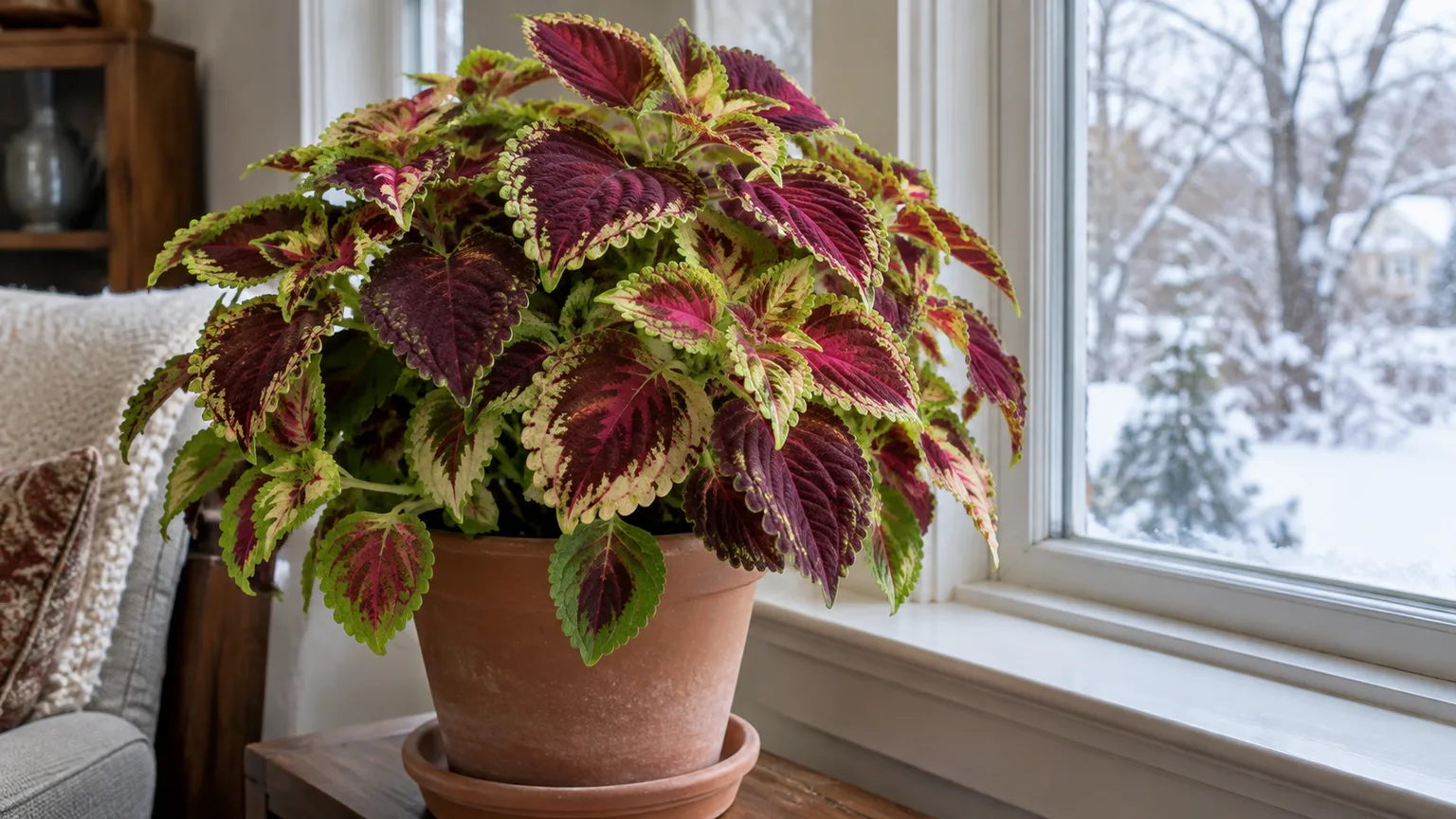
For a plant coming in from outdoors, place it first in bright indirect light and avoid immediate hard pruning or fertilizer. Outdoor sun and wind create different water demand, so check the pot more often during the first week and then adjust as growth slows. Expect some leaves to drop as the plant adapts to lower light. Remove damaged leaves, keep the root zone appropriately moist, and wait for stable new growth before deciding the plant is failing. In spring, reverse the process gradually: acclimate it to outdoor light and wind over several days rather than moving it from a room directly into full sun.
Handle Plant and Pet Safety With Accurate Identification
The scrape’s broad claim that coleus is toxic to people and pets needs careful qualification. The ornamental painted nettle in this guide is Coleus scutellarioides. NC State’s plant profile describes low-severity poison characteristics and possible minor skin irritation after repeated contact. Separately, the ASPCA page titled “Coleus” lists Coleus amboinicus—also called Indian borage or Spanish thyme—and reports toxicity to dogs, cats, and horses from essential oils. That is a different species from the colorful ornamental commonly sold as coleus, so the ASPCA listing should not be presented as direct proof about every C. scutellarioides cultivar. (NC State Extension Plant Toolbox; ASPCA Poison Control)
Because retail labels are not always precise and pets may chew foliage, use a cautious placement: keep the plant and trimmings out of reach if an animal is inclined to eat houseplants. Wash hands after pruning if you have sensitive skin, and do not consume ornamental plants. If a child or pet ingests a plant, identify it from its label or a clear photo and contact a veterinarian, poison-control service, or medical professional for case-specific guidance. Do not induce vomiting or rely on a general plant list to assess an individual exposure.
Conclusion
Indoor coleus care comes down to matching light and water to the plant’s actual conditions. Give it a bright window or supplemental light, keep it warm, water when the upper mix begins to dry rather than by calendar, and make sure excess water can drain. Pinch selectively if you want a fuller outline, but remember that pruning cannot replace adequate light. Inspect the plant before seasonal moves, isolate pests early, and use cuttings when you want to preserve a favorite cultivar or make overwintering easier. Coleus is adaptable, but it is not a zero-maintenance plant: a few regular checks are what keep its color and shape at their best.



