How to Grow and Care for Blood Leaf (Iresine)
Learn how to grow blood leaf indoors or outdoors, with practical guidance on light, watering, pruning, propagation, winter care, and common problems.
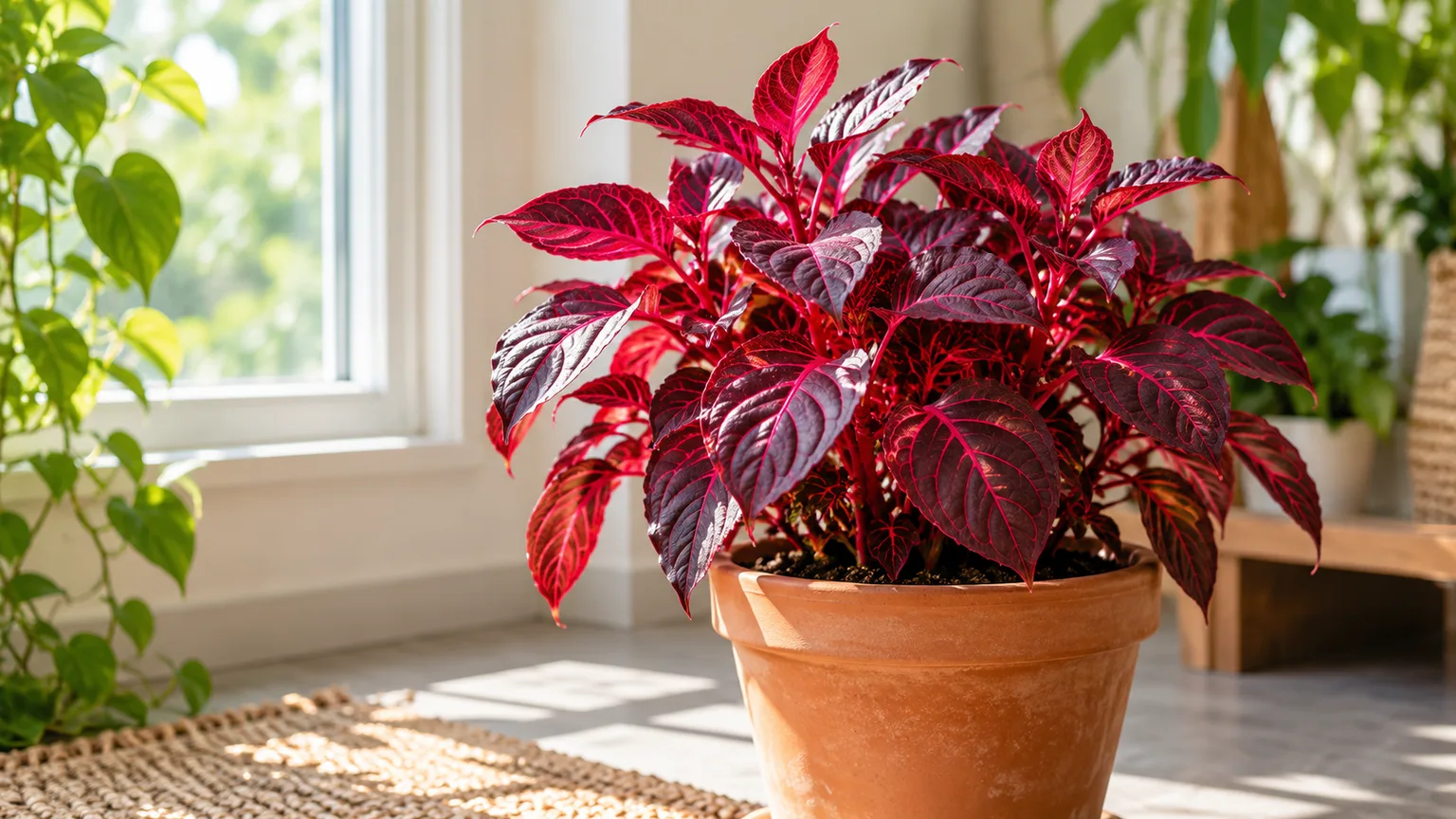
Blood leaf earns its place on a windowsill or summer patio through foliage rather than flowers: the leaves are often deep red or purple, with vivid veins that make the whole plant look painted. It grows quickly in warmth and can become full and striking, but it also tells you when its conditions are off—growth stretches in low light, color can fade, and a root ball left wet for too long may shed leaves.
The reliable routine is simple once you match care to the season: give it bright light, water when the upper soil begins to dry, keep the mix airy, and pinch growing tips while the plant is actively growing. Blood leaf is a tender perennial, so growers in cold-winter regions generally treat it as a houseplant or summer annual and move containers indoors before chilly nights.
Understand blood leaf’s habit, names, and varieties
Blood leaf is sold under several common names, including bloodleaf, beefsteak plant, and chicken gizzard. Labels commonly use Iresine herbstii. NC State Extension lists it as Iresine diffusa f. herbstii and records I. herbstii as a previous name, so a difference in the label does not necessarily mean you have a different plant. It belongs to the amaranth family, Amaranthaceae, and is grown for oval leaves, reddish stems, and contrasting veins rather than its small, inconspicuous flowers. (NC State Extension Gardener Plant Toolbox)
Growth habit depends on where and how it is grown. In its native tropical range it can become a substantial plant, but as a container houseplant it is easier to maintain as a compact, regularly pinched specimen; outdoors in cool climates, it is usually grown as a seasonal accent. The species is described as a short-lived tender perennial, which is why keeping a few cuttings can be more dependable than expecting one older plant to stay lush forever. (Gardenia’s Bloodleaf profile)
Cultivar names help explain the range of leaf colors sold as blood leaf. ‘Brilliantissima’ is known for reddish-purple foliage, while ‘Aureoreticulata’ has green leaves with yellow-gold veins and red stems. If your plant is green and gold rather than red, check its label before treating the color as a care problem; some variation is built into the cultivar, not caused by weak light. (NC State Extension Gardener Plant Toolbox)
A blood leaf makes the most sense for someone who wants colorful foliage and does not mind occasional pinching and seasonal adjustment. It is not a set-it-and-forget-it succulent: consistent warmth and moisture matter, but the roots still need air. If you can provide a bright place and a pot that drains freely, the plant is manageable even if it is less common than pothos or a philodendron.
Choose indoor, patio, or bed growing to match your climate
Indoors is the safest year-round option when winter temperatures drop below what a tropical foliage plant can tolerate. Place the plant near a bright window where it can receive strong ambient light and some gentle direct sun if it acclimates well. A warm bathroom or kitchen can help if the air is dry, but humidity alone will not compensate for a dark room.
In a frost-free climate, blood leaf can grow outdoors in a bed or container. NC State lists it for USDA hardiness zones 10 through 12, and recommends moist but well-drained soil and full sun in its landscape guidance; Gardenia likewise describes full sun to part shade. Those ranges are a planning guide, not a promise that a plant in a pot will withstand a cold snap, drying wind, or a sudden move from indoor shade into afternoon sun. (NC State Extension Gardener Plant Toolbox; Gardenia’s Bloodleaf profile)
A movable container gives you the most flexibility. You can use the plant outside for summer color, then bring it back indoors before nights become cold. If you want to plant it in a border, choose a warm site with soil that drains after rain, and accept that it may be an annual where winter frost kills tender growth.
Do not use outdoor exposure as a cure for a struggling indoor plant without acclimating it. A plant raised behind glass has not necessarily experienced direct sun, wind, or temperature swings; those conditions can scorch leaves or dry its pot much faster. Start it in bright shade, then increase morning sun over about a week while monitoring for bleaching, crisp edges, or rapid wilting.
Give it bright light to protect its color
Light is one of the strongest levers for keeping blood leaf compact and richly colored. Bright indirect light near a window is a useful indoor starting point; a few hours of gentle morning sun can deepen color, while dim corners often produce longer spaces between leaves and a less saturated look. PLNTS also notes that shadier placement can dull the foliage and that harsh midday exposure may damage leaves. (PLNTS Iresine care guide)
Watch the newest growth rather than judging a plant by one older leaf. If fresh leaves are smaller, greener, or spaced farther apart than older leaves, move the plant closer to a bright window or add a grow light. Give it several weeks to respond: leaves that have already grown in low light will not change shape, and moving the plant will only affect future growth.
Direct sunlight is not automatically a problem, but intensity and acclimation matter. Morning sun through a window is often gentler than hot afternoon sun through glass, and outdoor sun is stronger than it may appear from inside. If the leaves develop pale, dry patches on the side facing the window, back the plant away from the glass or use a sheer curtain rather than swinging it to a dark location.
Rotate the pot every week or two if the plant leans toward the window. That small habit encourages more even growth and makes it easier to spot whether one side is getting much less light. If you use a grow light, set it close enough to illuminate the whole canopy but not so close that leaves heat up; follow the fixture’s distance guidance and adjust based on the plant’s response.
Keep the root ball evenly moist without leaving it wet
Blood leaf likes steady moisture during active growth, but “keep moist” does not mean keeping the pot saturated. Check the top inch of mix with a finger: when it feels only slightly damp or nearly dry, water thoroughly until excess flows from the drainage holes. Then empty the saucer or cachepot so the roots are not left standing in runoff.
How often that point arrives depends on the light, temperature, pot size, and mix. A small terracotta pot in a warm, bright room can dry much faster than a larger plastic pot in winter. Use the plant and soil as your calendar instead of assigning it a fixed number of days; the same schedule that worked in July may leave it too wet in December. (PLNTS Iresine care guide)
When growth slows in fall and winter, the soil usually takes longer to dry, so check less often and water less frequently. Still, do not let the entire root ball turn bone-dry for an extended period. A plant that is too dry may wilt and develop crisp margins; a plant kept wet may yellow, drop lower leaves, or wilt even though the mix feels damp.
If water runs down the sides without wetting the center, the mix may have become hydrophobic or compacted. Pour slowly over the whole surface in two passes, allowing the first water to soak in; if the root ball remains dry, briefly bottom-water and then let the pot drain completely. Do not leave it in a bowl of water as a routine—rehydrating a dry mix is different from keeping roots submerged.
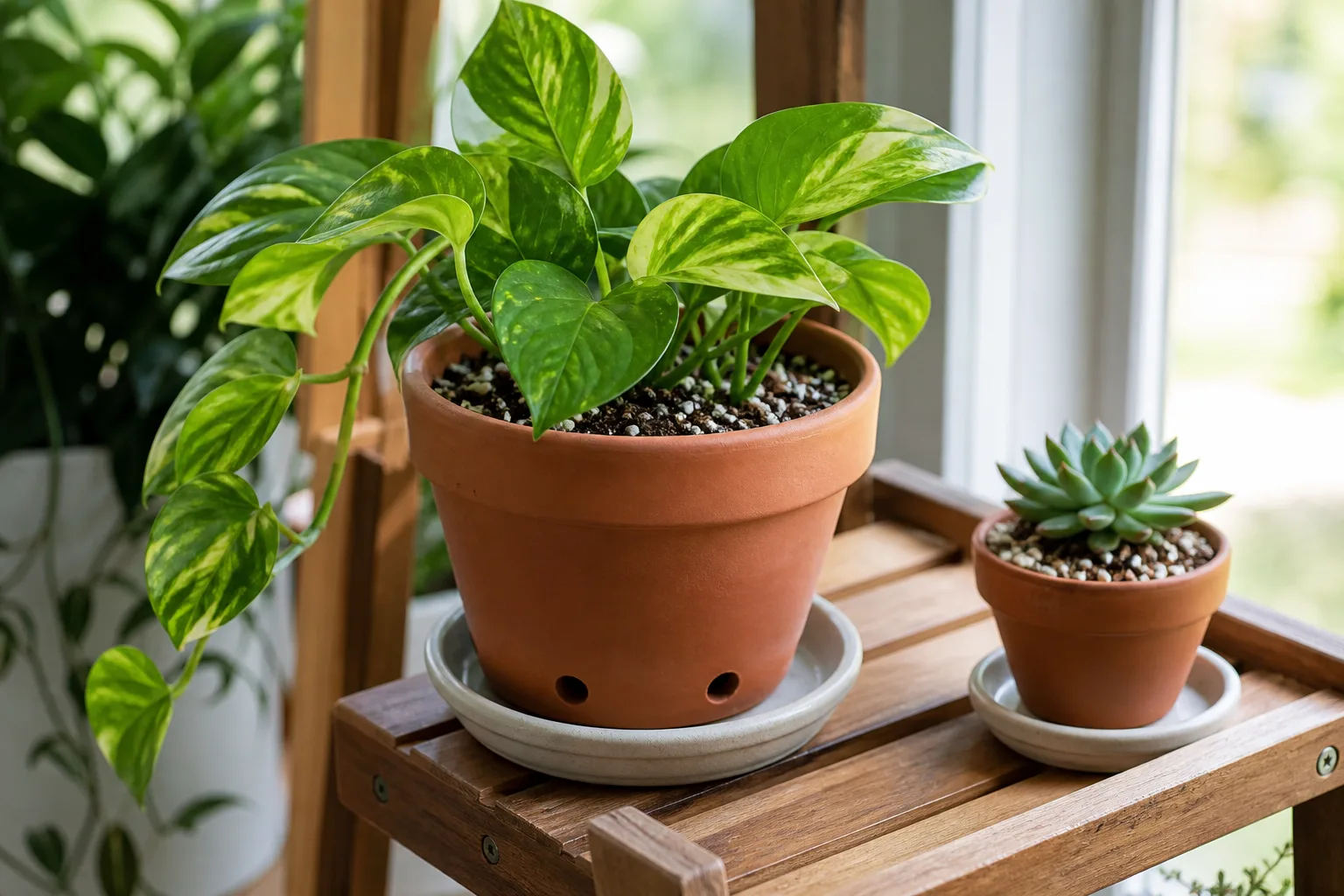
Choose rich soil that drains and a pot with holes
A good blood leaf mix holds enough moisture for active growth while allowing extra water and air to move through it. A standard indoor potting mix amended with perlite or pumice is a practical starting point; the exact ratio matters less than the result. After watering, the mix should become evenly damp, drain without delay, and not remain heavy and waterlogged for days.
Use a container with open drainage holes. A decorative cachepot is fine if you lift the nursery pot out to water and pour away runoff; a pot without drainage makes it much harder to tell whether the bottom of the root ball is saturated. Do not add a layer of gravel at the bottom as a substitute for drainage—the soil profile still needs an open exit for water.
Blood leaf does well in a fertile mix, but rich does not mean dense. If the soil compacts into a solid mass, roots may receive too little air; if the mix is extremely coarse, the plant may dry faster than you can keep up with. When choosing a commercial blend, prioritize a quality houseplant potting mix and good drainage over special ingredients marketed as mandatory.
Outdoor planting requires the same balance at a larger scale. Avoid a low spot where rainwater pools or a bed that stays soggy after irrigation. If the garden soil drains poorly, a raised container or amended planting area may be safer than trying to make a waterlogged site work for a plant that needs reliable moisture but cannot sit in standing water.
Maintain warmth and useful humidity
Blood leaf prefers warm, stable conditions. Keep it away from cold windows in winter, frequently opened exterior doors, and direct blasts from air conditioners or heaters. A comfortable indoor room is generally a better target than pushing the thermostat toward a precise number; sudden temperature changes are more likely to cause trouble than a small fluctuation within normal household conditions.
Humidity can help the foliage look better in a dry room, especially when heating is running, but do not treat it as the first fix for brown edges. Check watering, root health, and light before adding equipment. If the room remains very dry, a humidifier near the plant can raise humidity more consistently than misting leaves; keep some airflow so damp foliage does not stay wet for long periods.
A pebble tray may add a little moisture immediately around a pot, but it will not turn a dry room into a tropical greenhouse. Place the pot above the waterline on the stones, not in standing water, and make sure the tray is wide enough to hold the pot securely. If you have several tropical plants, grouping them near a humidifier is usually more practical than maintaining multiple small trays.
Warmth and light work together. A plant in a bright, warm spot may use water and nutrients faster, while one in a cool low-light room grows slowly and stays wet longer. If growth changes as the season shifts, adjust watering first and avoid compensating for slow winter growth with extra fertilizer.
Feed lightly while it is actively growing
During spring and summer, a balanced liquid houseplant fertilizer can support new stems and foliage. Follow the label rate; if the product is concentrated, use the directions for indoor container plants rather than guessing. PLNTS suggests feeding every two to four weeks during the growing season, but a cautious monthly feeding at the labeled strength may be enough in a rich potting mix. (PLNTS Iresine care guide)
Fertilizer is not a color treatment. If blood leaf is pale or leggy, first check light; feeding a plant that is already stressed or sitting in wet soil can create more problems without correcting the cause. Do not fertilize a dry root ball, a freshly repotted plant, or one that has stopped growing in low winter light.
If you see a white crust on the soil surface or pot rim, or brown tips appear after repeated feeding, salts may be accumulating. Flush the pot with plain water until it drains freely, then let it empty completely. Resume feeding only after active growth returns, and use the label’s dilution and frequency instead of adding extra because the foliage looks less vivid.
Pinch and prune to keep the plant compact
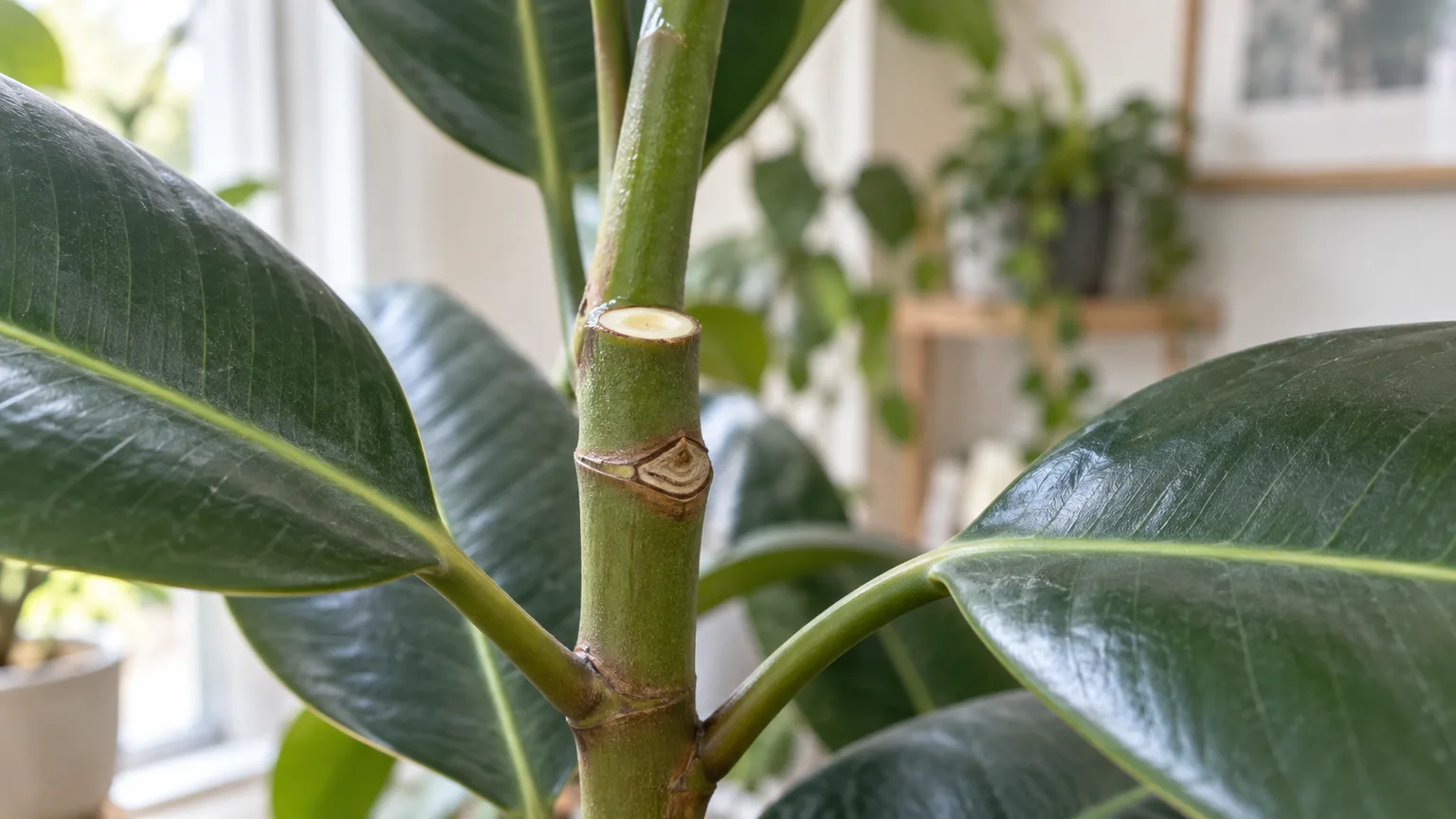
Blood leaf tends to branch more readily when you pinch or cut growing tips. On a young plant, removing the soft tip above a pair of leaves encourages shoots to develop from nodes lower on the stem, gradually building a fuller shape. Repeat selectively as new stems lengthen rather than shearing every branch at once.
Use clean, sharp scissors or fingers to pinch tender growth. If the plant has become tall and sparse, shorten the longest stems above a healthy leaf pair and keep the removed pieces as cuttings. Avoid removing most of the foliage in one session; a plant that has lost much of its leaf area has less energy to push out new growth, especially in a dim or cool room.
Blood leaf may produce small, greenish or pale flowers, but foliage is usually the main attraction. If you prefer a leafy shape, pinch off flower spikes when they appear and continue trimming soft tips. NC State Extension notes that pinching can encourage bushiness and control size, and that removing flower buds directs the plant’s energy toward foliage. (NC State Extension Gardener Plant Toolbox)
A cut is most useful when it solves a visible problem: one stem is outgrowing the rest, the plant is leaning, or the center has become crowded. Do not prune a weak plant hard just because it looks messy; first improve its light and watering, then trim gradually once new growth appears. The new shoots will follow the conditions you give them, so pruning alone cannot fix chronic shade.
Propagate stem cuttings in water or potting mix
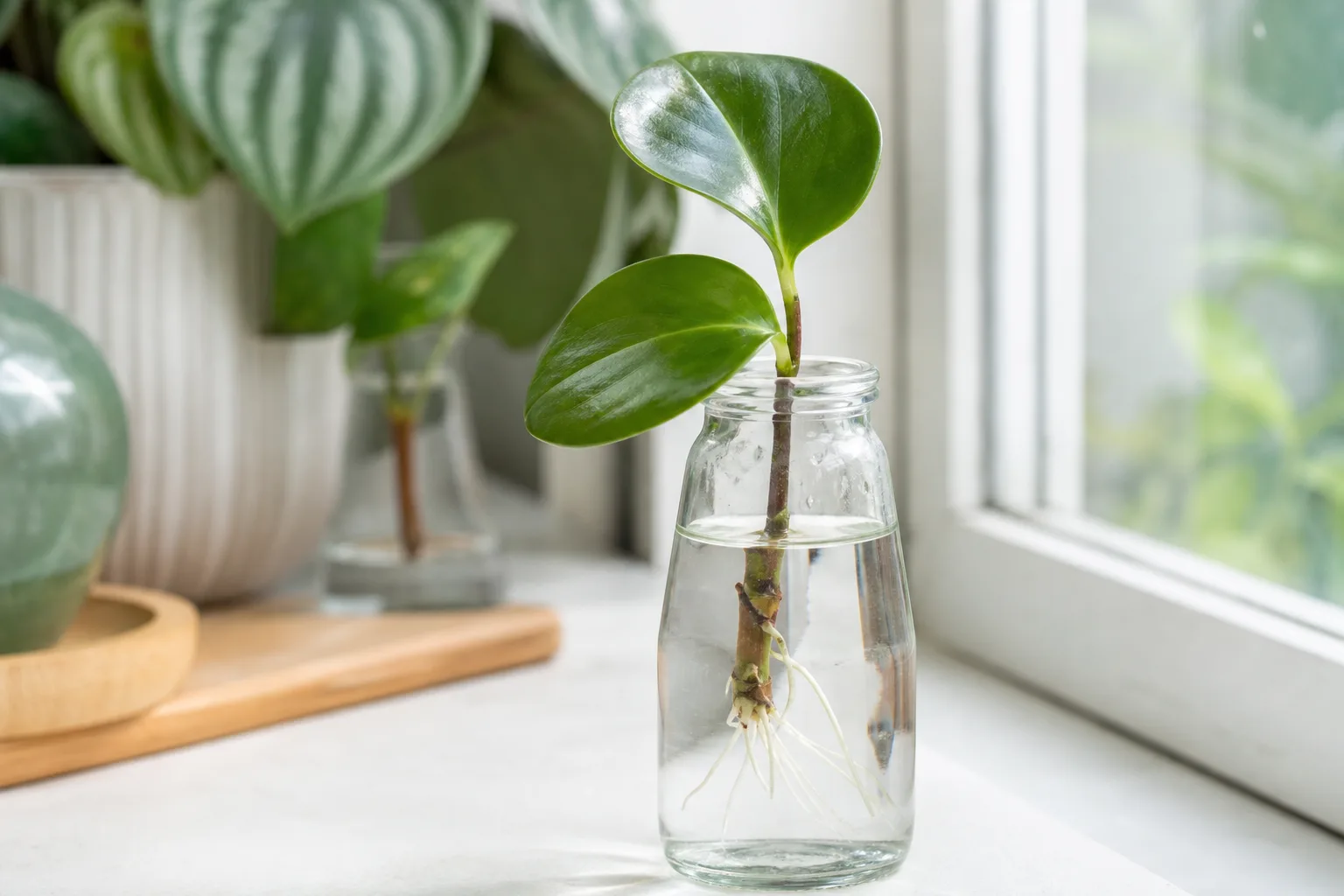
Stem cuttings are the easiest way to make another blood leaf plant and to renew an older one that has become woody or sparse. Choose a healthy, non-flowering stem with several leaves, and cut just below a node—the point where a leaf attaches to the stem. A cutting around 3 to 5 inches long is easy to handle, but the node and healthy growth matter more than an exact measurement. (NC State Extension Gardener Plant Toolbox; PLNTS Iresine care guide)
For water propagation, remove the leaves that would sit underwater and place the node in a clean glass of room-temperature water. Keep the remaining leaves above the rim, set the glass in bright indirect light, and change the water when it becomes cloudy. Once several roots are visible, pot the cutting into a small container of moist, well-drained mix and keep it evenly damp while it adjusts.
You can also root a cutting directly in mix. Remove lower leaves, insert the bare node into a small pot of pre-moistened potting mix, and firm the medium gently so the stem stays upright. Covering the pot loosely with a clear bag can hold humidity, but keep the plastic from touching leaves and open it daily for fresh air; remove it when new growth shows that the cutting is established.
New roots are easy to damage, so resist tugging on the stem every few days to check progress. A cutting that wilts immediately may have too much leaf area, a dry rooting medium, harsh sun, or low warmth; correct one condition at a time. Once it starts growing, give it the same bright light and drainage as a mature plant, then pinch its tip after it has settled if you want a bushier specimen.
Repot when roots and potting mix signal a need
Do not repot by the calendar alone. Consider moving blood leaf when roots circle the inside of the pot, emerge through drainage holes, or the root ball dries unusually quickly despite a sensible watering routine. A plant that is growing well and still has workable potting mix can remain in its container; frequent pot changes disturb roots and do not automatically improve growth.
When repotting is needed, choose a pot only one size larger, with drainage holes, and fresh mix that drains well. A pot that is far too large holds more wet soil than a small root system can use, which increases the time the center stays damp. Slide the plant out, loosen only the outer roots if they are tightly circling, set it at the same depth, and water until the excess drains.
The growing season is the easiest time to repot because the plant can resume growth sooner, but a root problem can justify action at another time. If you suspect rot, inspect the roots rather than moving the plant into a much larger pot and hoping for the best. Remove only soft, dark, or foul-smelling roots with clean scissors, then use a fresh potting mix and container that drains; avoid repeatedly watering until new growth appears.
After repotting, place the plant in bright indirect light and return to its normal care gradually. Do not fertilize immediately because fresh potting mix may already contain nutrients and disturbed roots can be sensitive. If the plant droops briefly, check that it is neither waterlogged nor bone dry before adding more water.
Move container plants outdoors and bring them back
A summer stay outdoors can give blood leaf stronger light and room to grow, but moving a houseplant outside is an adjustment, not a simple relocation. Start in bright shade for several days, then expose it to early morning sun and lengthen that exposure gradually. If leaves bleach, crisp, or wilt soon after the move, return it to filtered light and slow the transition.
Containers dry faster outdoors because wind and sun increase evaporation. Check soil more often during hot weather, but keep the same rule: water thoroughly when the upper mix begins to dry, then let the pot drain. A light plastic pot may heat up quickly in afternoon sun, while terracotta dries faster; either can work if you match the placement and watering to the container.
Bring the plant back inside before cold nights, not after it has already been chilled. Check leaves and stems for aphids, mites, scale, or whiteflies, and rinse or wipe the foliage before placing it near other indoor plants. A few days in a separate spot gives you time to see whether any pests were missed.
In zones where winter is mild and frost is rare, blood leaf may be planted outdoors more permanently, but a sudden cold event can still damage tender growth. In colder regions, grow it in a pot or treat it as a warm-season annual. Taking a few cuttings before the end of summer gives you a backup if the parent plant struggles through winter indoors.
Diagnose fading, yellowing, drooping, and leaf drop
When the leaves lose their vivid color, check light before reaching for fertilizer. Low light is a common reason for duller foliage and stretched stems; move the plant gradually to a brighter location and evaluate the new growth over the following weeks. If only one cultivar has green-and-yellow leaves, that pattern may be normal rather than a symptom. (NC State Extension Gardener Plant Toolbox; Gardenia’s Bloodleaf profile)
Yellow leaves need context. One older leaf at the base may be normal aging, but several yellow leaves at once call for a look at soil moisture, drainage, recent temperature changes, and pests. Wet mix plus yellowing or a soft stem suggests that roots may not be getting enough air; pause watering until the upper soil dries and make sure runoff can escape.
A wilted plant can be thirsty, but wilting alone does not prove that it needs water. If the mix is dry and the pot feels light, water it thoroughly and allow it to drain; if the mix is wet, do not add more. Wet roots can fail to supply water to leaves, so a plant may droop while sitting in soggy soil. If symptoms persist, slide the root ball out gently and inspect it.
Brown, crispy edges may follow an extended dry spell, low humidity, hot window exposure, or fertilizer salts. Look at the pattern: damage limited to the sun-facing side points toward exposure, while crispy margins around several leaves may mean the plant has dried too far or the room is very dry. Flush the mix if there is salt crust, move it away from harsh afternoon sun if the leaves are bleached, and adjust watering based on the soil rather than changing every factor together.
Sudden leaf drop often follows stress rather than a single deficiency. Cold drafts, a move from outdoors to a warm dry room, inconsistent watering, and root saturation can all upset the plant. Review what changed in the week before the leaves fell, correct the most likely cause, and wait for new growth before pruning aggressively or feeding.
Check pests and mildew before treating
Inspect the undersides of leaves, stem joints, and newest growth when the plant looks speckled, sticky, or distorted. Aphids may cluster at tender tips, mealybugs look like small white cottony patches, and spider mites can cause fine stippling or webbing. Scale insects may appear as fixed bumps on stems; check with a magnifier if you are unsure rather than treating every mark as a pest.
Isolate an affected plant before it touches other houseplants. For a small infestation, wipe leaves and stems with a damp cloth or rinse the plant, then repeat inspections over the next week because eggs or hidden insects may remain. If you choose an insecticidal soap or another product, use one labeled for the plant and pest, follow its directions, and test a small area first; sensitive foliage can be damaged by some sprays.
Powdery mildew can appear as a pale dusty coating, especially where air movement is poor and foliage stays damp. Remove badly affected leaves, give the plant more space, and water the soil instead of routinely wetting the leaves. NC State Extension identifies powdery mildew as a potential problem and also advises watching for aphids and spider mites. (NC State Extension Gardener Plant Toolbox)
Avoid spraying a plant simply because one leaf has a mark. Sun scorch, dried water spots, and physical damage can resemble disease or pests, but an unnecessary spray may add stress. Confirm a pattern across several leaves, check for actual insects or powdery growth, and choose a treatment only after you know what you are trying to control.
Understand pet safety and handling
The ASPCA lists chicken-gizzard, another common name for Iresine herbstii, as non-toxic to cats and dogs. That is useful reassurance for ordinary household placement, but it is not a reason to encourage pets to chew foliage or to assume every plant sold under a common name is correctly identified. If a pet eats a large amount or develops symptoms, contact a veterinarian; the ASPCA database is a toxicity reference, not a diagnosis for an individual animal. (ASPCA Animal Poison Control’s Chicken-Gizzard profile)
Keep pruning scraps and rooting cuttings out of reach, especially if pets tend to chew fresh leaves. Some plants can cause stomach upset from the rough plant material even when they are not listed as toxic, and soil, fertilizer, or pest-control products may pose separate risks. Wash hands after repotting or pruning, and avoid touching your eyes while handling plant sap or soil.
Conclusion: Build the routine around light, moisture, and warmth
Blood leaf is at its best when you treat it as a tropical foliage plant with a seasonal rhythm: bright light fuels compact, vivid growth; evenly moist but airy soil keeps roots functioning; and warmth prevents the stress that can trigger leaf drop. Pinch the tips while it is growing, feed modestly in spring and summer, and let the mix dry a little more slowly between waterings when winter light and growth decline.
Start with the condition most likely to be limiting the plant instead of changing its entire setup at once. If it is pale and stretched, improve the light; if it is drooping, feel the soil before watering; if it is getting leggy, pinch a few stems and root the trimmings. In a cold-winter region, keep the pot movable and take a backup cutting before the outdoor season ends.



