Star Cactus Care: Light, Water, Soil, and Blooms
Star cactus care starts with species ID, gritty drainage, and bright light. Learn how to water by season, repot safely, encourage blooms, and source plants responsibly.
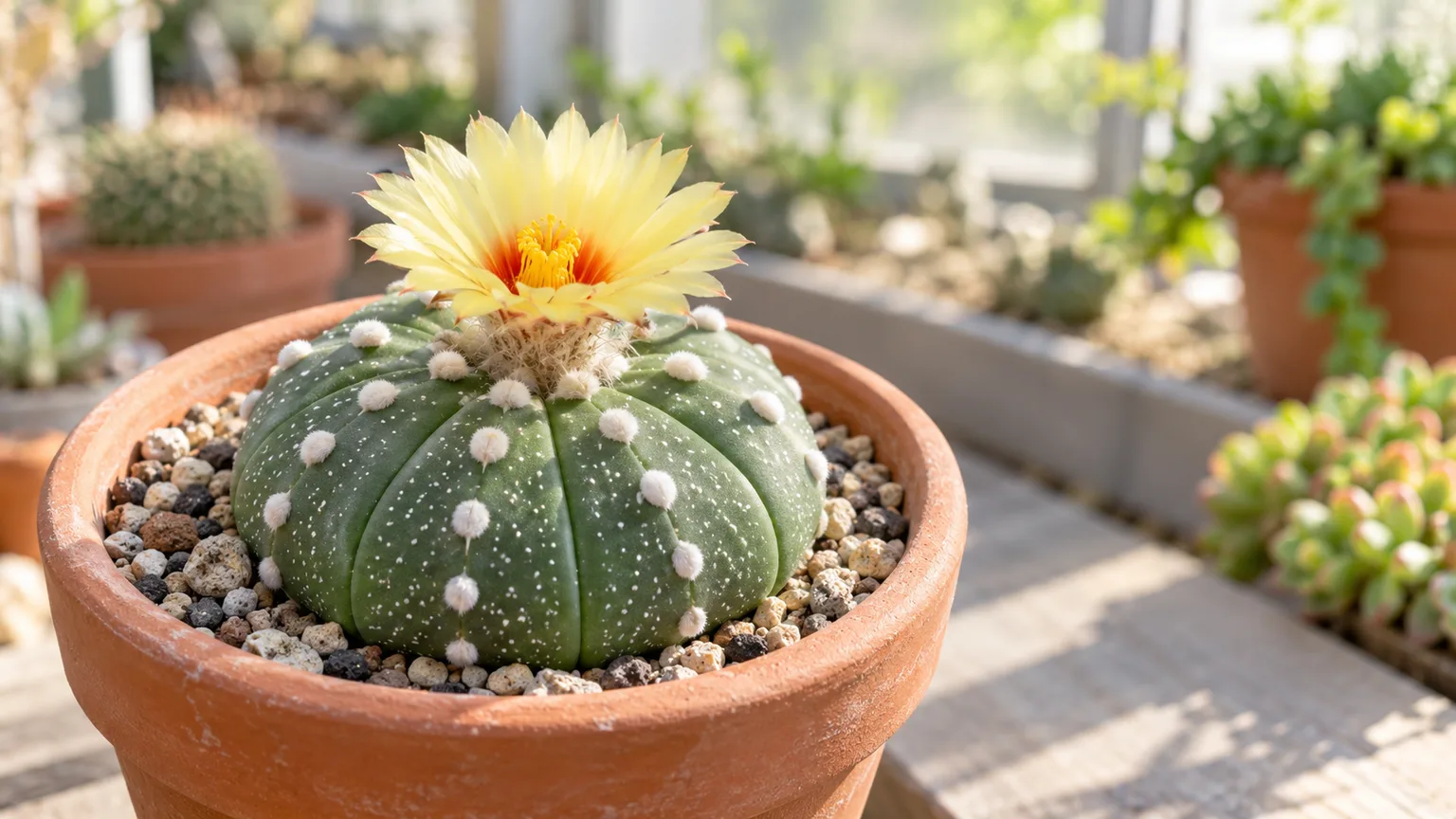
“Star cactus” can mean the entire Astrophytum genus or, more specifically, Astrophytum asterias, the flattened sand dollar cactus. That distinction matters before you change its light or watering routine: some Astrophytum have long spines, some are nearly spineless, and their size and tolerance differ. The North Carolina Extension Gardener Plant Toolbox recognizes six species in the genus, while Kew’s Plants of the World Online accepts A. asterias as a species native from southern Texas into northeastern Mexico.
For most potted plants, the reliable starting point is bright light, a fast-draining mix, a pot with an open drainage hole, and watering only after the root zone dries. The calendar is secondary. A warm plant in active summer growth can use water; the same cactus in a cool, dim room can remain wet for too long. Use the cues below to adjust care to the plant you actually have.
| Growing factor | Practical starting point |
|---|---|
| Light | Brightest available window; introduce direct sun gradually |
| Medium | Loose cactus mix amended with pumice, lava rock, or coarse grit |
| Water | Soak the root ball only after it has dried through; drain completely |
| Winter | Keep cooler and much drier; never combine cold with wet soil |
| Feeding | Dilute cactus fertilizer sparingly during active growth |
| Repotting | Move only when roots or degraded mix justify it, usually in spring |
Star cactus means two things
Astrophytum asterias is the true sand dollar cactus
The species most often sold as star cactus is A. asterias. Its low, flattened body has clear ribs radiating from the center, small woolly areoles, and typically no projecting spines. White flecks or tufts decorate the green surface; a mature, well-grown plant may produce a yellow flower, often with a warmer orange or reddish throat. It is also called sand dollar cactus or sea-urchin cactus because of its round, patterned shape.
The plant’s name is not a precise label on every store tag. Some sellers use “star cactus” for other Astrophytum species or even unrelated star-shaped succulents. Check the scientific name on the tag, or compare the body: a flat disc with no long spines suggests A. asterias; a taller, angular plant with strong ribs may be another species. If the label is missing, use conservative care—bright light, excellent drainage, and a longer dry interval—until you identify it.
Related Astrophytum species need slightly different expectations
The genus includes compact and columnar forms. A. myriostigma, or bishop’s cap, is usually ribbed and spineless; A. capricorne has long curling spines; A. ornatum can become taller and carries conspicuous spines. A. coahuilense resembles bishop’s cap, while A. caput-medusae has narrow, elongated tubercles rather than the classic star outline. The RHS profile for A. asterias ‘Superkabuto’ describes a slow-growing, spineless cactus with white markings and summer flowers.
These are not interchangeable sizes of one houseplant. Give a tall, spiny species more room and safer handling; expect A. asterias to stay low and expand slowly. Collection forms such as heavily flecked or crested plants can also grow at a different pace from a standard seed-grown specimen. Follow the species or cultivar label over a generic “star cactus” calendar.
Start with the right light and acclimate gradually
Give an Astrophytum the brightest stable position you can provide. A south-, east-, or west-facing window can work depending on hemisphere, season, and glass; direct morning sun with bright light for the rest of the day is a forgiving starting point. A bright indoor grow light can supplement a weak winter window, but keep it far enough away that the plant does not heat or bleach.
“Full sun” is not a cue to move a nursery cactus abruptly onto a hot patio. Plants raised under greenhouse shade can scorch when the skin receives several hours of intense midday sun without acclimation. Over one to two weeks, increase exposure in small steps: begin with bright shade, add an hour or two of mild morning sun, then watch the plant for bleached, tan, or corky patches. Reverse the change if those appear. A soft, stretched body or unusually long spacing between new growth points more toward too little light; scorched pale patches point toward too much sun too quickly.
Outdoors, bright dappled light beneath a high, open canopy or a spot with morning sun and light afternoon protection often balances growth and heat. The native habitat is not a bare baking tray: wild plants can occur in openings among shrubs, with partial shelter from rocks or surrounding vegetation. A cactus society’s grower notes on Astrophytum likewise caution that A. asterias prefers excellent drainage and can benefit from light afternoon shade. In a cloudy or cool climate, the plant may take more direct sun; in a desert window or heat-reflecting balcony, protect it during the harshest hours.
Choose a mineral-rich mix and a drainable pot
Roots need both water and air. Use a commercial cactus mix only if it dries through at a reasonable pace in your conditions; many bagged mixes contain enough peat or fine particles to stay damp too long for a small, slow-growing cactus. A practical starting blend is about half cactus potting mix and half coarse mineral material such as pumice, lava rock, or horticultural grit. In a humid home, a cool climate, or a pot that dries slowly, raise the mineral share. In a hot, arid room where water disappears very quickly, keep a little more organic mix.
Avoid fine beach or play sand. Fine grains can fill the air spaces between particles and make a dense, slow-draining mass rather than an open cactus medium. Rinse dusty grit if needed, then let it drain before potting. You do not need to chase an exact soil pH: extension and grower sources vary in how strongly they emphasize acidity or limestone, and ordinary tap water and commercial mixes differ. Prioritize a stable, airy structure over a narrow pH target. The RHS guide to growing houseplant cacti and succulents recommends gritty, free-draining compost and explains why excess water creates root-rot risk.

Use a pot with at least one unobstructed drainage hole. Choose a size only slightly wider than the root system; a large volume of unused wet mix can stay damp after the roots have taken up what they need. A. asterias develops a substantial root system for its compact top, so give the roots enough depth without jumping to a deep, oversized planter. Unglazed terracotta dries faster and can help in a humid room, but it also dries quickly in heat. Plastic or glazed pots are workable when you extend the dry interval accordingly.
Top dressing is optional. A thin layer of clean coarse grit keeps the stem from sitting against damp organic particles and makes the surface easier to inspect. Do not bury the base to make the plant appear taller, and do not use a decorative stone layer to compensate for a pot without drainage.
Adjust the mix and pot to your room
The best mix is the one that leaves roots moist briefly after a thorough watering, then lets the whole pot dry before the next one. Test it instead of assuming a bag’s “cactus” label is sufficient: water a spare pot of the mix, let it drain, and check how long the center remains damp. If a bamboo skewer inserted near the root zone comes out cool or dark several days later, increase coarse mineral content or use a smaller pot.
There is a real trade-off between mineral and organic ingredients. An almost mineral mix is forgiving where air is humid, the plant is cool, or watering habits are heavy, but it can dry so fast in a hot, windy setting that roots receive too little time to absorb water. A mix with more organic material buffers dry indoor air but becomes risky when light is low and temperatures are cool. Change one variable at a time—pot material, mix, or watering interval—so you can see what improved drainage.
Water by growth and dryness, not by a fixed calendar
During warm, bright weather, water thoroughly when the entire mix has dried, not just when the top looks pale. Pour slowly until water exits the drainage hole, then empty the saucer. If the pot remains heavy or the center is damp, wait. A small cactus may use surprisingly little water because it grows slowly; a large plant in active heat may dry much sooner. North Carolina Extension recommends allowing the medium to dry completely and warns against standing or soggy conditions; the RHS cultivation notes say to water moderately during growth and stop during dormancy.
Check below the surface with a wooden skewer or lift the pot and learn its dry weight. Do not use shriveling as the only signal: A. asterias can contract during drought and may naturally sit lower in the soil in habitat, while a swollen or firm body can still have roots damaged by constant moisture. In the growing season, a slightly less firm body plus a fully dry pot can support watering. A soft, yellow-brown, translucent base is not a thirst signal; it is a reason to inspect the roots and stop adding water.
In a cool, dim winter room, growth slows and the pot can stay wet much longer. Reduce watering sharply or keep the plant dry during a cool rest, especially if the temperature is near the lower end of the room range. If it is kept warm under strong light and continues growing, it may need an occasional small watering, but wait for complete dryness and do not water merely because a month has passed. Seedlings are different: they have small reserves and need a more consistently humid environment while young, so do not apply the mature-plant winter routine to a sealed seed tray.
Give it warmth in summer and a cool, dry winter rest
Astrophytum grows most reliably with warmth, good airflow, and strong light in the active season. NC State lists summer temperatures around 70–95°F and winter conditions around 40–70°F for the genus. Treat those as a broad range, not a requirement to push a potted plant to 95°F. A window that heats sharply under glass can stress a plant even when the outdoor temperature seems moderate; ventilate the room and keep the pot out of hot stagnant air.
For winter, choose a bright, cooler location that remains frost-free and keep the root zone dry. A modest seasonal drop helps distinguish active growth from rest, but wet compost and cold air together are the combination to avoid. Do not leave a pot in rain, against a cold pane, or directly over a radiator. In climates with freezing winters or repeated cold rain, grow this cactus in a movable pot under cover rather than as an exposed landscape plant. Atmospheric humidity alone is not the same as a saturated root ball; the practical test is how quickly the mix dries and whether air circulates around the pot.
Fertilize lightly while new growth is active
A cactus in fresh mix does not need a strong feed. If it is growing in a container through spring and summer, use a low-nitrogen cactus fertilizer at one-quarter to one-half of the label rate, once every four to six weeks at most, or follow a product’s cactus-specific directions. A few light applications during active growth are safer than frequent full-strength feedings. The RHS recommends two or three balanced liquid feeds during the growing season for its A. asterias cultivar.
Skip fertilizer in winter, immediately after repotting, or when the plant is soft, discolored, or not rooted well. Excess nitrogen can push growth that is weak and less compact, while fertilizer salts can build up in a small pot. If you see a pale crust at the soil surface or leafless root zone symptoms, flush the medium with plain water only when it is warm enough to dry promptly, and use a weaker feeding routine next season.
Repot only when the pot or mix calls for it
Annual repotting is unnecessary for a slow-growing cactus and creates repeated root disturbance. Repot when roots crowd the drain hole, the plant becomes unstable, the mix has collapsed into fine particles, or salts and pests have become difficult to remove. Early in the warm growing season is the easiest window because roots can resume activity after the move. If the plant is healthy and the mix still drains well, leave it alone even if it has occupied the same pot for several seasons.
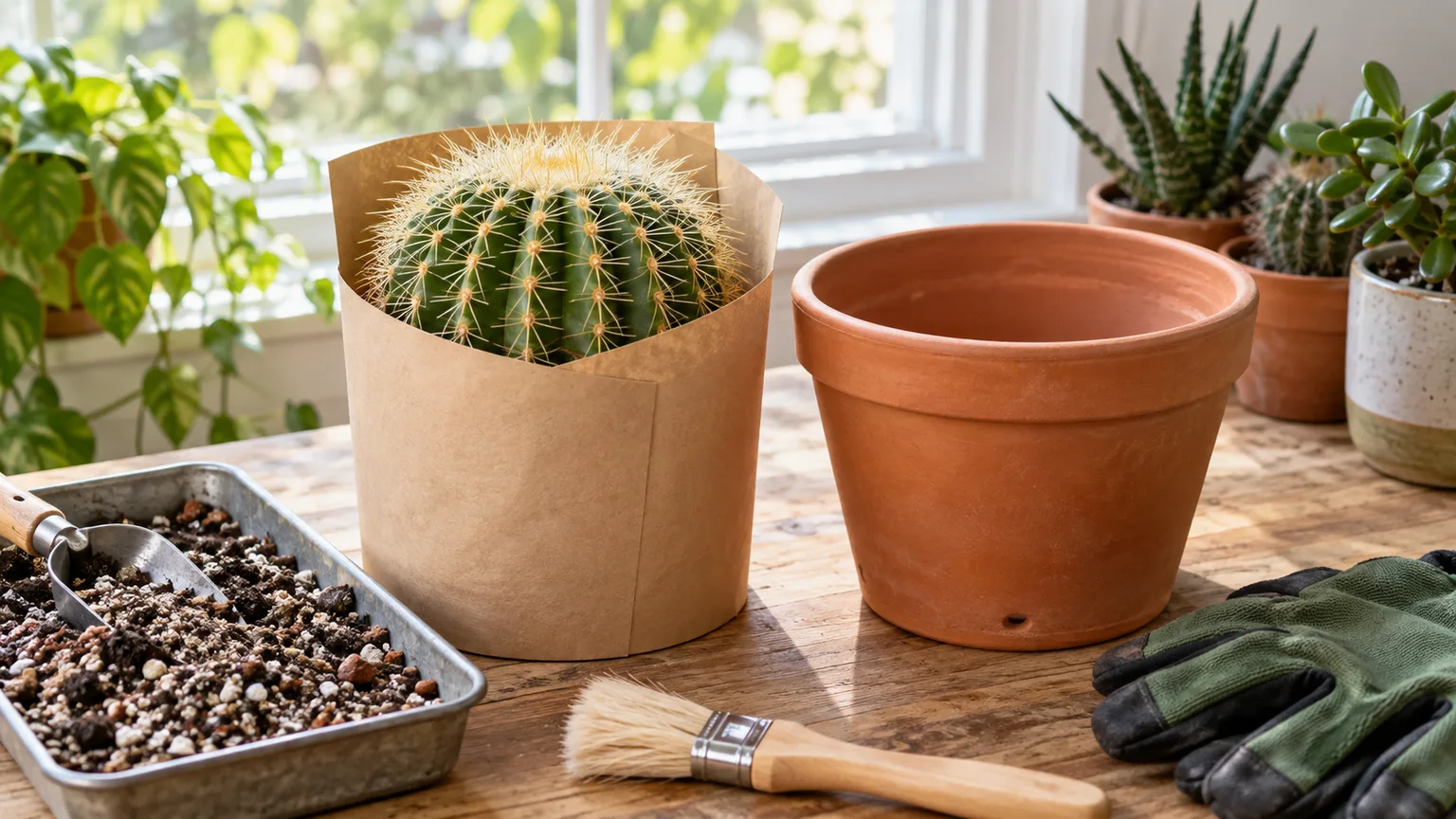
Wear thick gloves or use folded paper, foam, or cactus tongs to grip spiny species; avoid squeezing the plant body. Remove loose old mix, inspect roots, and trim only roots that are clearly dead or rotted with a clean blade. Let any fresh cuts dry before planting into dry mix. Set the cactus at its previous depth, firm the mix lightly, and do not water immediately if roots were damaged. Wait several days for root wounds to dry, then resume a cautious soak-and-dry routine. A plant that has lost much of its root system needs more time, not fertilizer or a large pot.
Grow star cactus from legally sourced seed
Most Astrophytum are propagated from seed; many forms do not produce offsets that can simply be detached. Use seed from a reputable nursery or a documented cultivated parent plant, especially for A. asterias. Sprinkle the seed onto a clean, fine-textured, pre-moistened cactus seed mix, press it against the surface, and cover only lightly if the seed supplier advises it. Tiny seeds buried too deeply may fail to reach light or emerge through the surface.
Use a clean, shallow container with drainage, then cover it with a clear lid or bag to hold humidity while germination begins. Keep the tray warm and in bright indirect light, not hot direct sun behind glass. The mix should remain lightly and evenly moist, never flooded. Vent the cover briefly if condensation is excessive, algae spreads, or seedlings begin to stretch; as seedlings establish, increase ventilation gradually and let the surface dry for short periods between careful misting or bottom watering. There is no need to transplant seedlings as soon as they appear. Wait until they are large enough to handle and have begun to form a stable body and roots.
Seed-grown plants are slow and variable. Cultivars may not come true from seed, and seedlings do not instantly reproduce the dense flecking or unusual forms of a selected parent. Grafting can speed the growth of valuable or weak-rooted specimens, but it is an advanced technique and produces a different silhouette from an own-root plant. For an ordinary home collection, buying an established, legally propagated plant is simpler than collecting wild seed or attempting to graft a first cactus.
Encourage flowers without forcing growth
A star cactus flowers when it is mature and growing under suitable conditions; there is no dependable age at which every seedling blooms. Strong seasonal light, a warm growing period, sound roots, and a drier, cooler winter rest can support flowering. A plant that receives too little light or stays wet through winter may remain alive yet never build the energy or seasonal rhythm needed to flower. Yellow flowers with orange or red centers are characteristic of several cultivated Astrophytum, though exact appearance varies with species and cultivar.
Do not force buds with extra fertilizer or repeated watering. That can weaken roots rather than advance maturity. Keep the plant oriented consistently after it buds, since abrupt changes in light and temperature can stress a developing flower. If it blooms but produces no viable seed, pollination may not have occurred; enjoying the flower does not require collecting seed, and any seed you do sow should come from documented cultivated stock.
Diagnose rot, sun stress, and pests
Separate normal shrinking from root trouble
A healthy A. asterias can flatten or draw inward during a dry rest. If the color is even, the body remains firm, and the plant returns to shape after a warm-season watering, gradual contraction alone does not mean it is dying. Never water a cool, dormant plant just to plump it up; wait for warmth and active growth, then confirm the mix is dry before watering.
Rot looks different. A base that becomes mushy, dark, translucent, or foul-smelling suggests the roots or lower stem are failing. Unpot the plant, discard wet mix, and check whether healthy roots remain firm and pale. Remove only rotten tissue with a sterile tool; if rot has reached the growing point, recovery may not be possible. Let the remaining healthy tissue dry before replanting in clean, dry, highly airy medium, and correct the cause—usually a mix that stayed wet, a pot without drainage, or watering during cold rest. Do not spray a home-brewed mixture over the body and assume that will cure internal rot.
Pale tan patches on the sun-facing side may be sunburn, especially after a sudden move outdoors. Move the plant to bright shade, then acclimate over time; burned tissue will not turn green again, so judge improvement by whether damage stops spreading and new growth remains normal. A yellow cast with elongated shape suggests inadequate light more often than drought. Check light, temperature, and root-zone dryness separately before changing all three.
Inspect areoles and roots for pests
Mealybugs hide in the woolly areoles and at the soil line; root mealybugs may be visible only when repotting. Scale insects appear as fixed bumps, while spider mites can leave fine stippling or webbing. Isolate an infested plant from other cacti, inspect the crown and root collar with a bright light, and repeat checks over the following weeks because eggs and hidden insects can escape one treatment. The RHS lists mealybugs among potential pests for A. asterias.
Use a product labeled for the pest and plant, follow its label, and test any contact treatment on a small area first. Thickly woolly or delicate cultivars can mark easily, and broad spraying is not a substitute for removing pests from crevices. If roots are infested, discard the old mix, clean the pot, and repot only after the roots are dry and sound. Handle all cactus species carefully: A. asterias is usually spineless, but many plants sold under the genus name have sharp spines.
Buy legally propagated stock and protect wild plants
A. asterias is not simply a rare collector’s look. It is listed as endangered under the U.S. Endangered Species Act, and the species is included in Appendix I of CITES, which regulates international trade. U.S. Fish and Wildlife Service species records identify star cactus as endangered. Laws and paperwork can vary with the plant’s origin and where it is shipped, so check requirements before an international purchase rather than assuming a small potted plant is exempt.
Choose a nursery that can say whether its plants are seed-grown or otherwise propagated in cultivation and can document origin when needed. Avoid plants advertised as field collected or sold with no credible provenance. Do not dig up wild plants, collect seed from protected populations, or release cultivated plants outdoors near native habitat. The Kew-led CITES and Cacti guide explains why responsible trade and propagated stock matter for cacti conservation; cultivation should reduce pressure on wild populations, not create a market for them.
Conclusion
Star cactus care becomes manageable when you identify the plant, keep its roots airy, and let the season—not a fixed monthly schedule—set the watering pace. Give it bright light with a gradual adjustment, use a pot that drains, water only after the mix has dried through, and keep it cooler and much drier in winter. Repot only when the plant or medium needs it, and diagnose softness before adding water.
If your plant is Astrophytum asterias, buy it from a traceable cultivated source and expect patient, slow growth. Good care will not make a cactus flower on command, but it gives the plant the stable conditions it needs to stay compact, recover from seasonal rest, and eventually reward you with its brief, bright bloom.



