14 Garden Shrubs with Red Berries for Your Yard
Compare 14 shrubs with red berries by size, season, pollination, wildlife value, and safety so you can choose a plant that fits your yard and region.
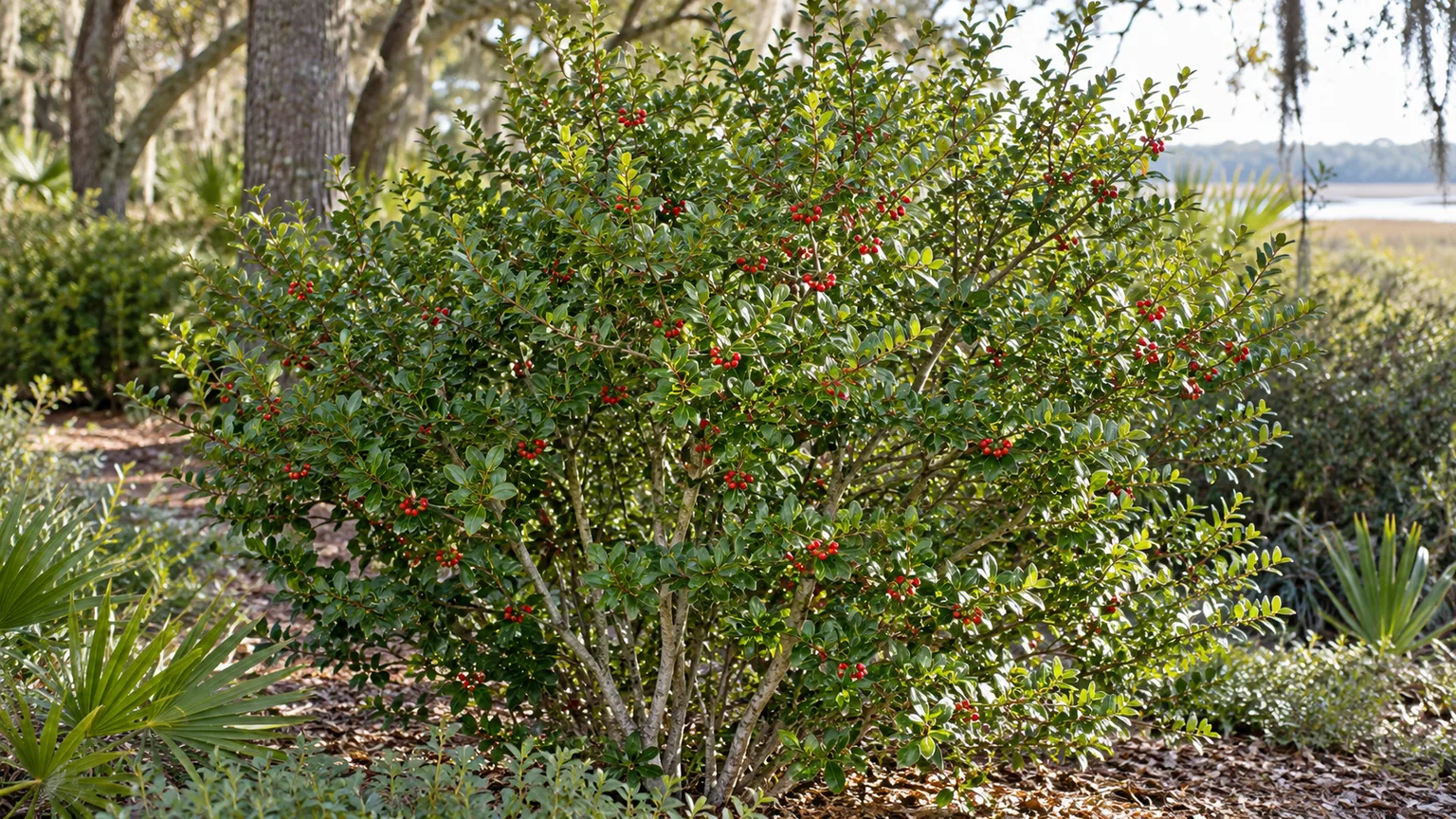
Shrubs with red berries can add winter color, feed wildlife, or provide fruit for the kitchen, but those are three different jobs. A plant that makes a reliable winter display may have berries that are poisonous to people or pets; a productive currant may need cool summers and a different pruning plan than an ornamental holly. Start with your goal, then check mature size, local climate, pollination needs, and whether the species is suitable where you live.
The list below includes deciduous and evergreen shrubs, edible crops, native wildlife plants, and a few popular ornamentals that deserve caution. The word “berry” is used in the everyday gardening sense: botanically, many of these fruits are drupes, pomes, or capsules. Red color alone cannot tell you whether fruit is safe to eat.
14 shrubs with red berries to compare
1. Winterberry holly (Ilex verticillata)
Winterberry is the classic choice for bright fruit on bare winter stems. This deciduous North American holly is especially effective beside a pond, rain garden, or damp border, where its leafless branches make the red clusters visible after autumn foliage drops. Compact female cultivars such as ‘Red Sprite’ suit smaller spaces better than full-size selections, but check the label for eventual spread rather than buying by pot size.
The detail that most often decides whether a winterberry is worth buying is pollination. Female plants set fruit, so pair the cultivar with a male holly whose bloom overlaps; a male labeled for one selection may not be the right partner for every female cultivar. Berries are wildlife food but are not a snack for people or pets. The North Carolina Extension profile describes the species’ fruit, habitat, and cultivar choices, while the ASPCA holly listing rates holly berries as low-toxicity for dogs, cats, and horses.
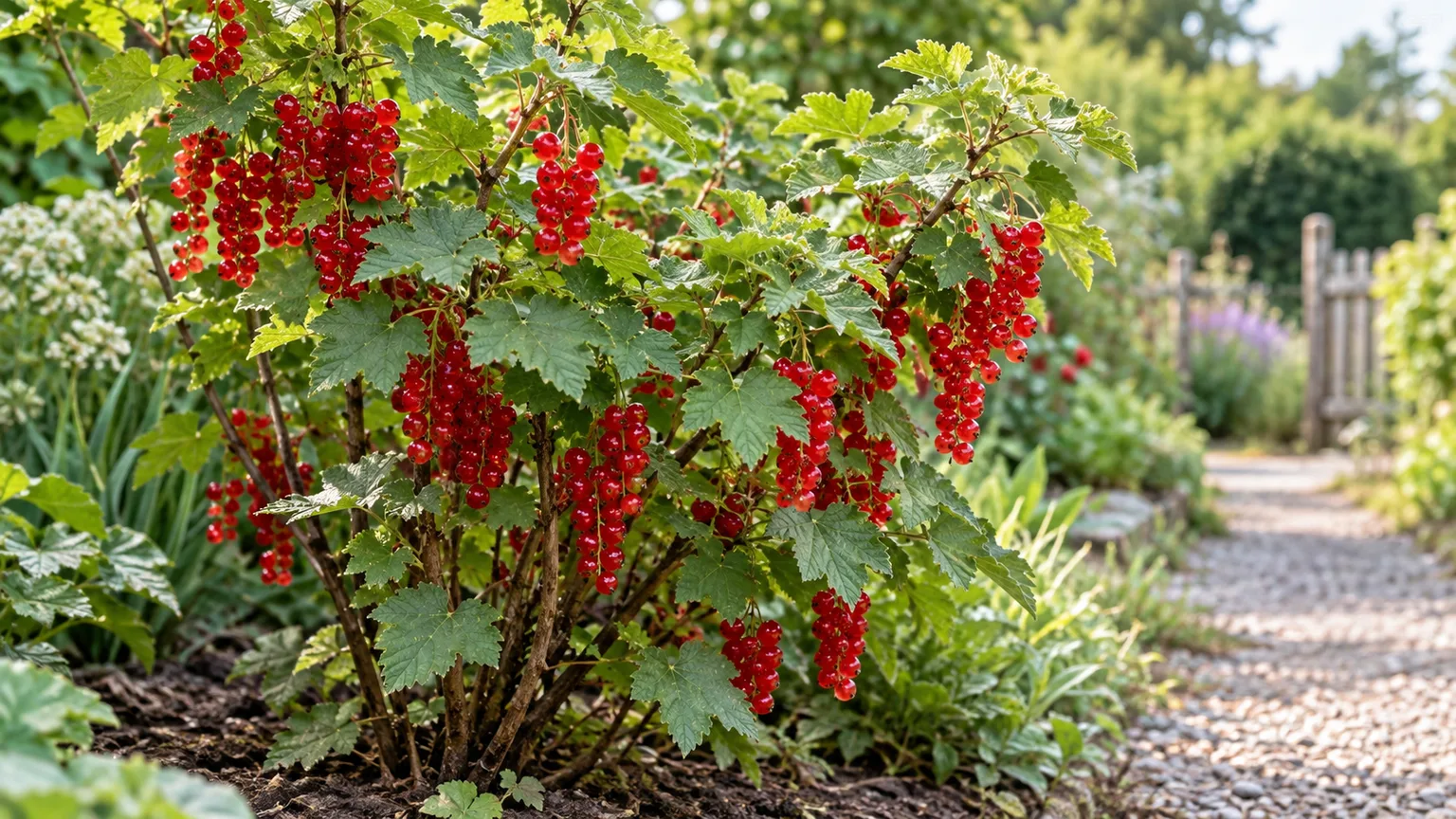
2. Red currant (Ribes rubrum)
Choose red currant when the berries are meant for harvest, not just decoration. Its translucent fruit hangs in strings and has a tart flavor suited to jelly, sauce, and baking. In hot-summer gardens, give the shrub morning sun and some afternoon protection; fruit quality and plant vigor can decline when the root zone repeatedly dries or the plant bakes in reflected heat.
Most red and white currants are self-fertile, so a second cultivar is not required for fruit set, although more than one may improve yields. They fruit on older wood, so annual pruning should remove a few of the oldest or weakest stems rather than shearing the whole shrub. Check local rules before ordering: currants and gooseberries can be restricted in some places because they host white pine blister rust. University of Minnesota Extension’s currant guide explains cultivar, planting, pruning, and disease considerations.
3. Red chokeberry (Aronia arbutifolia)
Red chokeberry earns its place through more than fruit: white spring flowers, glossy leaves, red berries, and vivid fall color extend its display across several seasons. It is native in eastern North America and tolerates a wider range of moisture than many ornamental shrubs, including periodically wet soil. In a sunny site it generally flowers and fruits more heavily; in a smaller garden, allow room for suckers or plan to remove them.
The fruit is technically a pome, not a true berry. It is edible, but the raw flavor is sharply astringent, so most gardeners prefer it cooked into jam, syrup, or jelly rather than eaten by the handful. Birds and small mammals may use the fruit later in the season. The N.C. State Extension profile notes the shrub’s native range, wet-site tolerance, winter fruit, and use in preserves.
4. Linden viburnum (Viburnum dilatatum)
Linden viburnum produces dense red fruit clusters after spring flowers, and its broad leaves can turn coppery or red in fall. It grows into a large, rounded shrub—often around 8 to 10 feet tall—so it works better as a background screen than as a tight foundation plant. The berries may persist into winter, although birds can remove them well before late winter.
This is a nonnative shrub with documented escape concerns in parts of the eastern United States. Do not choose it simply because a nursery tag promises abundant berries: check your state invasive-plant list and local extension guidance first. The Oregon State landscape profile flags invasive concerns in some East Coast states, and the National Park Service overview of invasive viburnums offers regional context. Where it is a concern, choose a locally native viburnum suited to your site, even if its ripe fruit is a different color.
5. European spindle tree (Euonymus europaeus)
Spindle tree’s fall display is unusual: pink-red capsules split open to expose orange seed coverings, which birds may eat. The shrub or small tree also colors up in autumn, but the capsules are not edible berries, and the plant is a poor choice for a family garden where children may sample fruit. Do not put it on an edible-hedge shortlist.
There is also a regional spread concern. N.C. State Extension describes the species as weedy to invasive in some settings and says not to eat its berries, flowers, or other parts. Because the colorful fruit is the main reason many people consider it, it is sensible to seek a native alternative unless a local horticulture authority confirms it is appropriate for your site. The extension profile provides the plant’s toxicity and spread cautions.
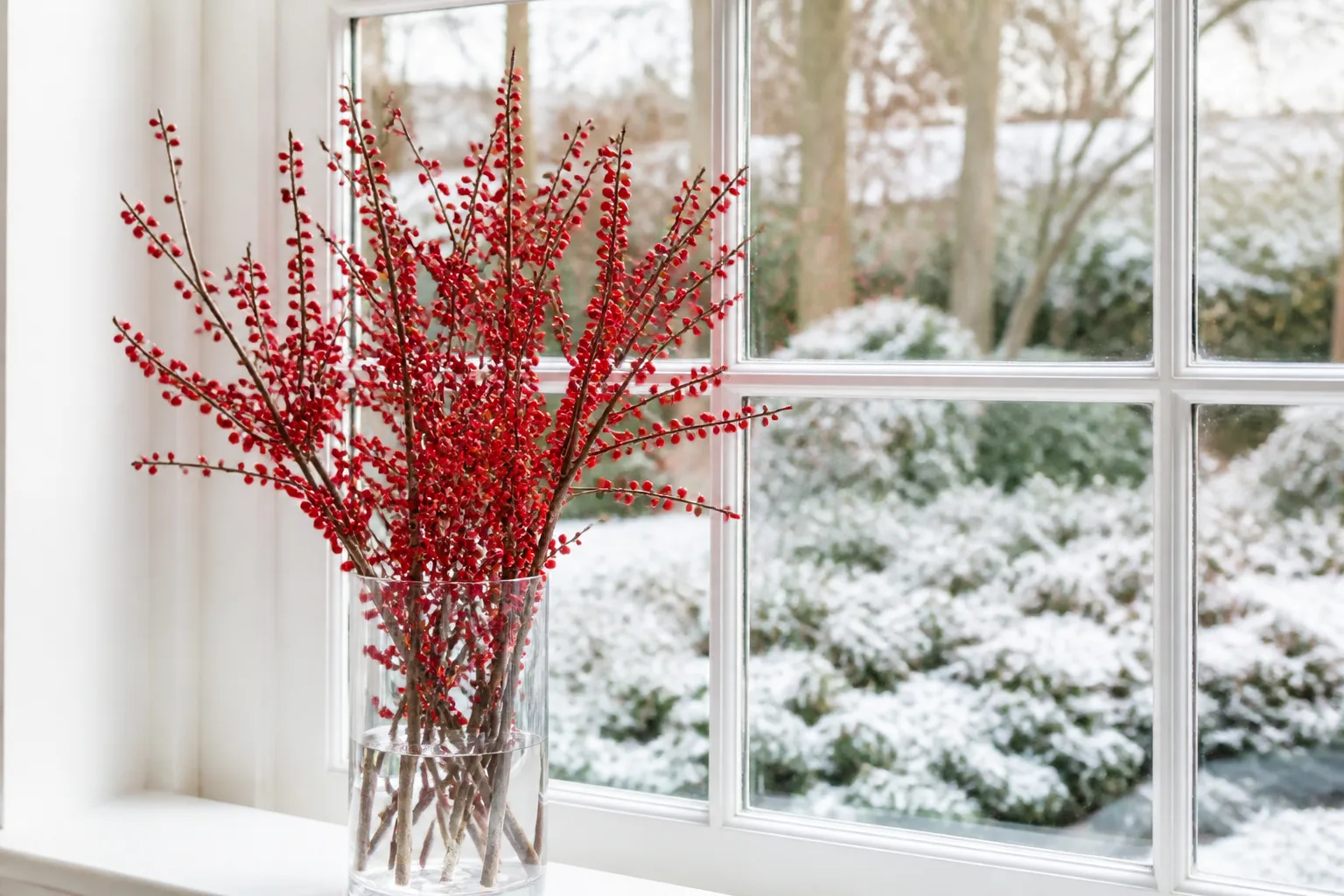
6. Cotoneaster (Cotoneaster species)
“Cotoneaster” covers many different shrubs, from low, arching groundcovers to upright hedging plants. Most flower in spring and form clusters of red, orange, or sometimes yellow fruit later; evergreen and deciduous types offer different winter structure. Choose by the actual species and cultivar name, then compare its mature width with the spot you have—generic cotoneaster care advice can hide a dramatic difference in size and habit.
Some species escape cultivation or are regulated in particular countries and regions. Berries can also cause illness if people or pets eat them in quantity, so treat ornamental fruit as display rather than food. The RHS cotoneaster guide describes the range of growth forms, sun and soil needs, fruit value, and species-specific invasive cautions. Before planting near open land, check the local noxious-weed or invasive-plant list instead of assuming every cotoneaster is equally suitable.
7. Strawberry tree (Arbutus unedo)
Strawberry tree is an evergreen large shrub or small tree for mild-winter gardens, commonly grown in sheltered, sunny sites. It is distinctive because white, urn-shaped flowers can appear while the previous year’s red, rough-skinned fruit is ripening. That overlap gives the plant a longer ornamental season than a shrub whose berries appear only after its flowers have vanished.
N.C. State Extension describes the fruit as edible and suitable for preserves, but the RHS profile labels it ornamental and advises against eating it. Because guidance conflicts and this is primarily a landscape plant, treat the fruit as ornamental unless you have reliable local food-use guidance and can positively identify the species. It is often bland, and fallen fruit can be messy beside a walk or patio. This is not a dependable choice for cold inland gardens, and young plants need more shelter than established ones. N.C. State Extension lists its mild-climate range and fruit timing; the Royal Horticultural Society profile advises a sheltered, well-drained position.

8. Coralberry (Symphoricarpos orbiculatus)
Coralberry is a compact, arching native shrub that forms low colonies and carries small red-purple fruits into winter. It fits naturalized borders, woodland edges, or slopes where a spreading shrub can help cover soil; it is less suited to a formal bed that needs a sharply defined outline. Its modest greenish flowers are not the main show, but the fruits and twig texture extend interest after flowering.
The plant spreads by underground stems, and a planting may need more than one genetic strain for a strong fruit display. Leave room for suckers or remove them where they cross a boundary. Although birds and other wildlife use the fruit, people should not treat it as an edible currant; N.C. State Extension’s coralberry profile flags both its colonial habit and low-severity poisonous fruit.
9. Yaupon holly (Ilex vomitoria)
Yaupon is a broadleaf evergreen native to the southeastern United States and parts of Mexico. It handles heat, salt spray, and dry periods once established, and its small leaves lack the sharp teeth many gardeners associate with holly. Female plants can carry translucent red fruit in fall and winter, while compact or weeping cultivars offer forms for a hedge, specimen, or large container.
Yaupon is dioecious: most fruiting females need a male plant with overlapping bloom nearby. It can also grow substantially larger than a dwarf nursery form suggests, so verify the cultivar and mature dimensions. N.C. State Extension notes that it can form thickets and gives it a high flammability rating, making placement near a home’s defensible-space zone a poor choice. Its berries should not be eaten; the extension profile reports low-severity poisoning symptoms after fruit ingestion.
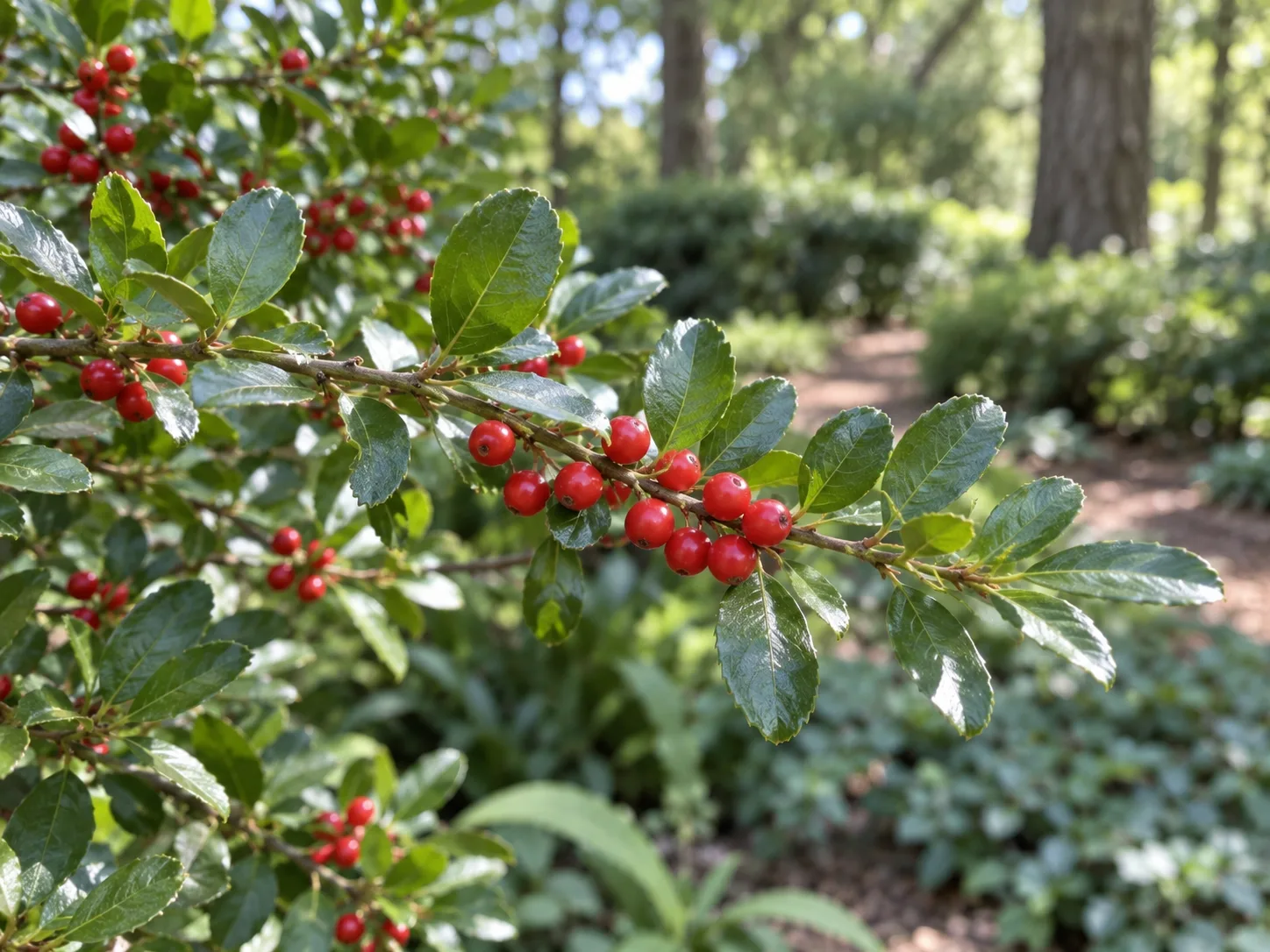
10. Spotted laurel (Aucuba japonica)
Aucuba is one of the better-known options for a shady corner where flowering and fruiting plants are harder to establish. Its large leathery leaves may be solid green or gold-speckled, and female plants can hold red fruits from fall into spring. Keep it out of hot direct afternoon sun: exposed young leaves can scorch or blacken, while bright shade or dappled shade usually suits the shrub better.
Aucuba generally needs a male pollinator, though ‘Rozannie’ is sold as a self-fertile selection. Confirm that label before relying on fruit, and remember that “self-fertile” describes pollination, not safety. The berries and leaves can cause nausea and vomiting if eaten, according to N.C. State Extension. If children or pets explore the garden by tasting plants, position aucuba where its fruit is not accessible.
11. American holly (Ilex opaca)
American holly is an evergreen native that may be sold as a shrub but can mature into a large tree. Its leathery, prickly leaves and red-to-orange fruit provide a strong winter display, and the branches offer dense cover for wildlife. Think of it as a long-term specimen or screen with room to grow; a small cultivar or another species is a better fit for a narrow foundation bed.
Fruit appears on female plants after pollination by a nearby male, so check sex and bloom compatibility before buying. Holly fruit is ornamental and can upset people or pets if eaten. N.C. State Extension’s American holly profile gives the large mature size, soil preferences, and pollination requirement; ASPCA lists holly as low-toxicity to dogs, cats, and horses, with vomiting and diarrhea among possible signs.
12. Possumhaw holly (Ilex decidua)
Possumhaw is a deciduous North American holly that often grows as a large multi-stemmed shrub or small tree. The fruit can turn red or orange while leaves remain, then stand out on bare branches after leaf fall. It is a strong choice for a winter focal point in a region where the species is adapted, especially if you want a native alternative to an evergreen holly.
As with other hollies, only female plants fruit, and a compatible male pollinator is usually needed. Cultivars differ in fruit color, habit, and hardiness, so buy a named plant from a nursery that can identify the sex and recommend a matching pollinizer. The University of Florida IFAS profile of ‘Hunter’ possumhaw describes its range and landscape uses, and N.C. State Extension notes that pollinated female flowers develop persistent fruit.
13. Firethorn (Pyracantha coccinea)
Firethorn produces dense clusters of red or orange fruit on an evergreen to semi-evergreen shrub. Its arching, thorny growth makes it useful against a fence or wall, where it can be trained as a screen, but those spines are a genuine maintenance cost. Avoid it beside narrow paths, play areas, or places where pruning would force you to reach into the branches.
The shrub flowers on older growth, so clipping it after flower buds have formed can remove the next fruit display. Prune selectively after flowering and keep enough of the previous year’s wood for bloom; the RHS also warns that shade, poor pollination, drought, or late frost can reduce berries. See the RHS growing guide and N.C. State Extension’s firethorn profile for siting and maintenance details. Do not eat its ornamental fruit based only on its bright color.
14. Silver buffaloberry (Shepherdia argentea)
Silver buffaloberry is a hardy, deciduous shrub with narrow silvery leaves, spring flowers, and bright red fruit in fall. It is native to western and central North America and can cope with leaner, drier soils better than many berrying shrubs. Its height and width can reach roughly 8 to 12 feet, and it carries sharp spines, so place it where a loose hedge or barrier is useful rather than where people brush past it.
Male and female plants are separate; a female needs a male nearby to set fruit. The fruit is edible but tart, and it is commonly better suited to preserves than to fresh eating. Buffaloberry can sucker into a thicket, which is useful for a windbreak or naturalized planting but not for a tightly controlled bed. N.C. State Extension covers its fruit, thorniness, and separate-sex flowers, while the USDA plant guide describes its western range and growth form.
Choose by region, light, space, and season
For long-lasting winter color, start with winterberry, possumhaw, American holly, yaupon, or a cotoneaster species that is appropriate locally. Deciduous hollies show their fruit clearly after leaf drop; evergreen hollies keep foliage through winter but can hide some berries among dense leaves. No shrub keeps every berry until spring: birds, weather, and cultivar all affect how long the display lasts.
For a harvest, favor red currant, red chokeberry, or silver buffaloberry; consider strawberry tree only in a mild climate and follow cautious, locally verified food-use guidance because references differ on eating its fruit. For deep shade, aucuba is a more realistic option than a sun-loving fruiting shrub, but remember its pollination and toxicity caveats. For wet soil, red chokeberry or winterberry may suit better than firethorn or strawberry tree; for a narrow walkway, avoid thorny firethorn and spiny buffaloberry. A broader Gardenia overview of evergreen berrying shrubs is useful for comparing design roles, but use each species’ profile to confirm its hardiness and pollination needs.
Native status and invasiveness are regional questions, not traits you can settle from a plant’s country of origin alone. Cotoneaster and Linden viburnum have invasive concerns in some areas; spindle tree can be weedy; and the popular red-berried nandina (Nandina domestica) is invasive in parts of the Southeast and has caused documented cyanide poisoning in cedar waxwings that gorged on the fruit. Before buying any shrub that birds will disperse, check your state invasive species list and local extension advice. The USDA Forest Service review of nandina documents seed dispersal and spread, and the published case report indexed by PubMed records cedar waxwing deaths associated with heavy berry consumption. Where nandina is a problem, yaupon holly is one native evergreen alternative in its southeastern range.
Before you plant, write down the mature height and spread, the soil’s usual moisture, the light at midday and in late afternoon, and whether you want to harvest fruit or leave it for wildlife. Then confirm hardiness and local status with a regional extension service, botanical garden, or native plant organization. That short check can prevent the two most common disappointments: a shrub that outgrows the space and a female plant that never gets pollinated.
Red fruit is not an edibility test
Only harvest from a shrub you have identified with certainty and intentionally selected as a food plant. Red currant is a familiar edible crop; red chokeberry and silver buffaloberry can be used in preserves; and strawberry tree fruit is eaten in some regions, though its flavor is mild. Even these plants need correct identification and sound food handling. Do not taste an unknown berry to identify it, and do not assume that a fruit birds eat is safe for people, cats, or dogs.
Winterberry, American holly, yaupon holly, aucuba, spindle tree, and cotoneaster should be treated as ornamentals rather than edible crops. Toxicity may range from mild gastrointestinal upset to more serious effects depending on plant, amount, and animal, so a blanket “poisonous” label can be less useful than a cautious plan: keep ornamental fruit out of reach, remove fallen fruit where a pet repeatedly mouths it, and call a veterinarian or poison-control service if ingestion occurs. The ASPCA holly profile is a useful example of species-specific guidance, not proof that every red-fruited shrub has the same risk.
Botanical names matter here because common names overlap. “Winterberry” may refer to a holly or, in other contexts, another plant; “spindle” and “strawberry tree” are not literal descriptions of the fruit. Keep the nursery label, check the Latin name, and verify the cultivar before placing a plant near a play area or food garden.
Why a berry shrub may not fruit
When an established shrub has flowers but no berries, first identify whether the species has separate male and female plants. Hollies and silver buffaloberry commonly need a male pollen source; for hollies, compatible bloom timing matters as much as distance. If a young plant has never flowered, age and establishment may be the issue rather than a missing pollinator.
Next, check whether pruning removed flower-bearing wood. Firethorn sets many flowers on previous-season growth, while currants need selective cane renewal rather than repeated shearing. A late frost can damage flowers before the damage is obvious, and heavy shade can reduce flowering on plants that otherwise tolerate shade. Correct only the limiting factor you can verify; extra fertilizer will not solve a sex mismatch and can push leafy growth at the expense of flowers.
For a newly purchased holly, ask the nursery for the plant’s sex, the recommended pollinizer cultivar, and the expected overlap in bloom. If the shrub is already mature and flowers reliably, photograph the blooms and ask a local extension office to help confirm the species and sex before planting a second large shrub. A small diagnosis first is cheaper than adding an incompatible pollinator or replacing a healthy plant.
Conclusion
The best shrub with red berries is the one whose fruit purpose, mature size, hardiness, light, and moisture needs match your garden. Red currant is a straightforward edible crop; winterberry and possumhaw bring strong leafless winter color; yaupon and American holly keep evergreen structure; and coralberry or red chokeberry can add native wildlife value in suitable regions. Cotoneaster, linden viburnum, spindle tree, and nandina deserve a local invasiveness check before planting.
Confirm the botanical name, pollination requirements, mature spread, and safety notes on the plant label before you buy. That turns a bright berry display into a shrub that fits the yard for years, rather than an attractive plant you later need to move, contain, or remove.



