How to Grow and Care for Chrysanthemums
Learn how to choose hardy garden mums, plant and pinch them at the right time, water containers, and protect roots for a better chance of spring return.
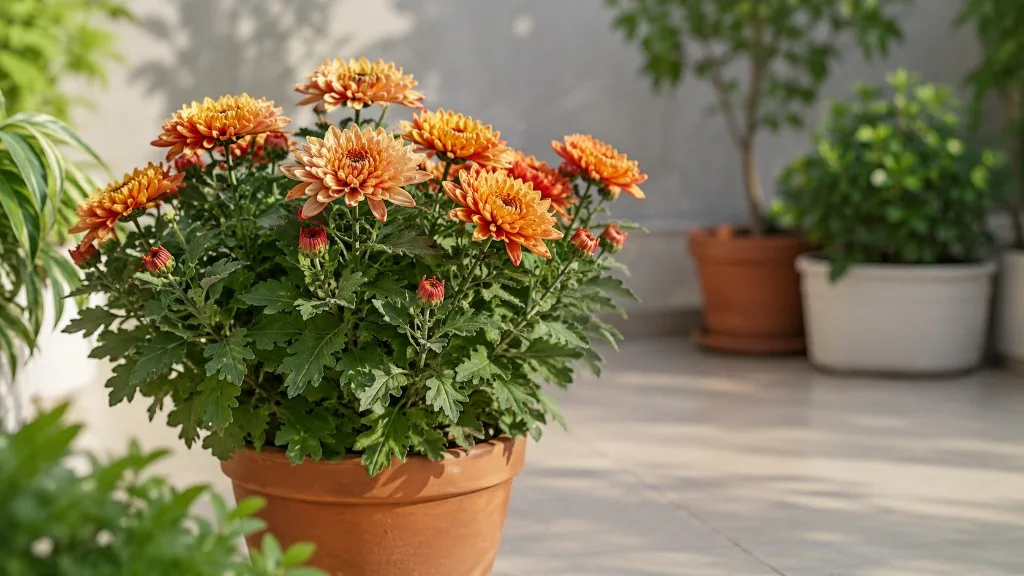
Chrysanthemums, or mums, can be dependable garden perennials, short-lived seasonal displays, or carefully trained florist plants. The name on a decorative pot rarely tells you which kind you have, and a plant sold in full bloom in autumn has little time to establish roots before winter. If your goal is a perennial border, buy a labeled garden cultivar in spring, plant it in sun and well-drained soil, and let it build a root system before its first cold season.
If you want several weeks of fall color on a porch, a blooming pot can do that well without ever becoming a reliable perennial. The care is simple once you decide which outcome matters: protect the display now, or invest in the plant’s survival next year.
Distinguish garden mums from florist mums
Most ornamental mums sold for gardens belong to the complex hybrid group commonly called Chrysanthemum × morifolium. They are herbaceous perennials, but that botanical label describes their life cycle, not a guarantee that every cultivar can survive every local winter. A garden mum selected for outdoor performance is generally a better perennial choice than a florist mum bred and scheduled to bloom under greenhouse conditions.
Garden mums are often selected to flower outdoors earlier, before a hard freeze damages unopened buds. Florist mums may need a longer, uninterrupted period of long nights to set flowers, and some are not reliably winter-hardy in colder regions. Iowa State Extension notes that garden mums are generally more cold-hardy and flower earlier outdoors than florist mums in Iowa; even a hardy cultivar can fail if planted too late or placed in wet, exposed soil. Check the label for “garden mum,” named cultivar, expected mature size, bloom timing, and local hardiness information rather than relying on the word “hardy” alone. (Iowa State University Extension)
The flower’s shape is not a dependable hardiness test. Cushion-like pompons, daisy forms, and other flower types can all appear in outdoor selections, while large exhibition blooms usually require more specialized growing and staking. For a low-maintenance border, prioritize a locally recommended garden cultivar and a bloom window that arrives before your typical killing frost.
Decide how to buy: temporary color or a perennial bed
For instant color, choose a plant with most buds still closed and a few open flowers so you can confirm the color. Keep the nursery pot watered and use it as a seasonal accent; a decorative cachepot is fine as long as you remove the inner pot for watering and let excess water drain. This route is honest and often the easiest: enjoy the flowers, then compost the plant when it fades.
For a perennial bed, look for a young, labeled garden mum in spring or early summer. A small plant may look unimpressive beside a dome of flowers in September, but it has the growing season to root into surrounding soil, branch, and become acclimated before winter. If a fall display plant is already in full bloom, consider it a gamble in cold climates. You can try planting it, but do not confuse “can be planted” with “has enough time to establish.” In a mild-winter area, or when a plant is bought early enough before the ground freezes, the odds may improve; cultivar, drainage, and local weather still matter.
When choosing any potted mum, inspect the foliage and stems. Avoid plants with collapsed stems, widespread yellowing, webbing, leaf spots, or a saturated pot that smells sour. A dense root ball is common in retail mums, so water it thoroughly and gently loosen the outer roots if you transplant it. Do not tear the roots apart aggressively while the plant is covered in buds.
Choose sun, soil, and a dark night
Give garden mums at least six hours of direct sun, ideally more in climates with cool summers. In too much shade, stems stretch toward light, flowering can thin out, and foliage stays wet longer after rain. A sheltered spot helps tall or late-flowering cultivars withstand autumn wind, but avoid a location so enclosed that air cannot move around the foliage.
Soil should hold enough moisture to keep roots from drying while draining freely after rain. If the bed stays soggy, especially in winter, improve the entire planting area or choose a raised bed instead of putting compost into a small planting hole surrounded by dense clay. Incorporating mature compost can improve soil structure, but no amendment can compensate for a site where water stands around the crown.
Mums are short-day plants: they initiate flower buds as nights lengthen in late summer. Outdoor lighting that shines on the plant through the night can delay or interfere with flowering, sometimes unevenly on the side facing the light. Avoid planting directly under a security light or bright streetlamp. The plant does not need darkness in an absolute sense, but a consistent long night is part of its seasonal cue. (Illinois Extension; Iowa State University Extension)
Plant chrysanthemums for root establishment
In regions with freezing winters, spring planting is the safer route. Wait until severe frost has passed and the soil is workable, then plant while there is still a long stretch of active growth ahead. The Royal Horticultural Society likewise recommends planting young chrysanthemums outside after frost risk has passed; Wisconsin Extension notes that spring-planted mums are more likely to establish than fall purchases pushed into the ground just before winter. In mild climates, planting dates can extend later, but avoid the hottest, driest period unless you can water consistently. (RHS; University of Wisconsin–Madison Division of Extension)
Prepare the bed by loosening soil wider than the root ball and mixing in compost if the soil is poor or compacted. Set the plant at the same depth it grew in the pot, backfill, and water slowly so soil settles around the roots. Space plants according to the mature size on the tag; 18 to 24 inches is a common starting point for many garden mums, but compact cultivars can be closer and vigorous ones need more room. Good spacing lets light and air reach the lower stems and makes inspection easier.
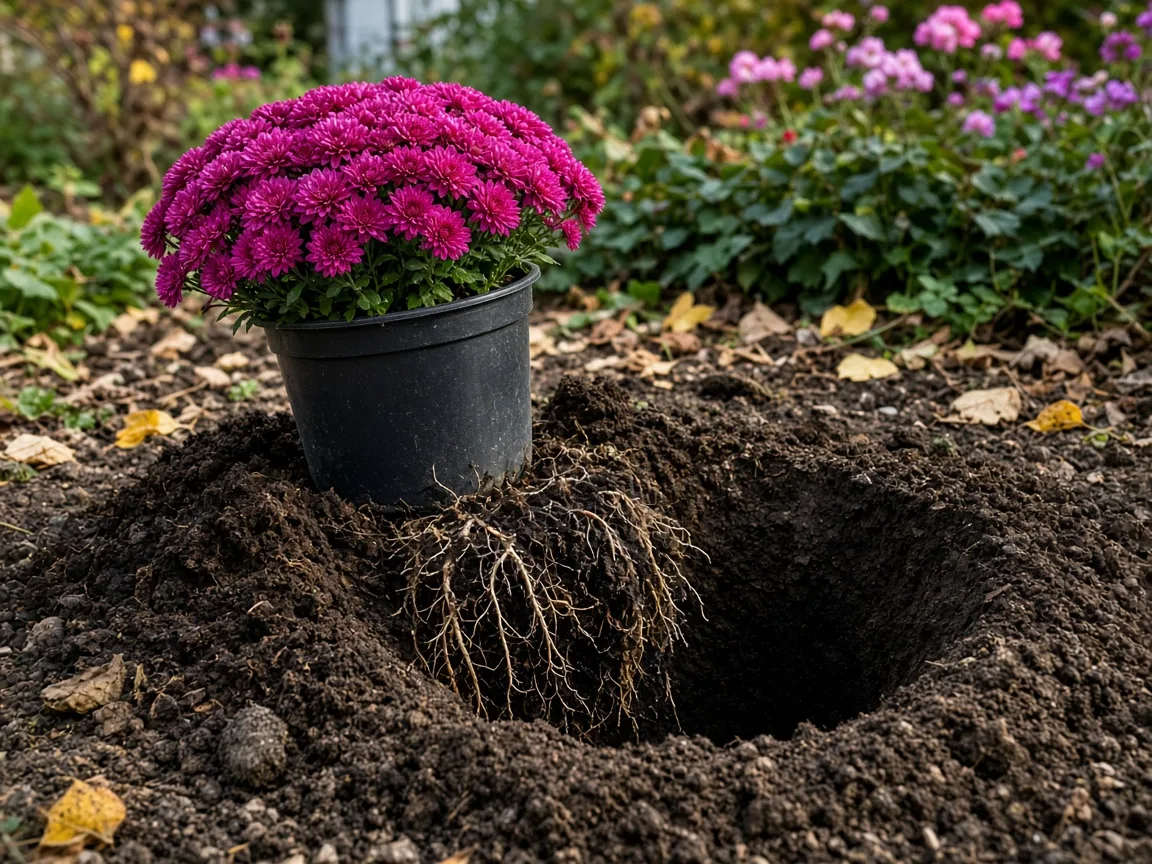
Apply a light layer of mulch after planting to moderate moisture and suppress weeds, leaving a small gap around the crown. Water regularly while the plant establishes. A new mum may flower in its first fall if it is mature enough and receives the required nights, but its first-year priority is healthy roots and branching, not matching the perfectly rounded nursery dome.
Water by checking the root zone
Mums prefer even moisture during active growth, but constantly wet soil deprives roots of oxygen and encourages rot. In a garden bed, check beneath the mulch and feel the soil an inch or two down. Water deeply when that layer is drying, then let excess water drain; during a prolonged dry spell, newly planted mums may need attention more often than established plants with roots spread through the bed.
Containers dry faster because they hold less soil and are exposed to sun and wind. Check a blooming pot daily in warm or windy weather, but water only when the mix is starting to dry rather than following a fixed every-day schedule. Apply water until it runs from the drainage holes, empty the saucer or decorative cover, and check again later if a tightly packed root ball sheds water around its edges. If the pot has dried hard, a slow second watering may be needed for the root ball to re-wet evenly.
Repeated wilting can shorten flower life and weaken the plant, while yellow lower leaves and a persistently wet pot suggest poor drainage or overwatering. Water the soil rather than routinely soaking flowers and foliage, and provide drainage holes in every pot. These simple checks are more useful than a rigid weekly schedule because weather, pot size, root density, and plant maturity all change how quickly a mum uses water.
Fertilize during vegetative growth
Feed established garden mums when spring growth begins, using compost or a balanced slow-release fertilizer according to its label. Young plants need enough nutrition to produce stems and roots, but excess nitrogen can create lush, floppy growth at the expense of sturdy stems and flowers. If your soil is reasonably fertile and the plant grows well, heavy feeding is unnecessary.
Stop routine feeding as flower buds begin to form or as late summer approaches, especially in regions with early frosts. A late push of soft growth will not have time to harden before cold weather. Plants in pots may exhaust nutrients faster than garden plants, but a blooming mum purchased in autumn usually does not need a strong fertilizer dose; consistent moisture and good drainage matter more during its display. Avoid copying greenhouse fertilizer schedules without knowing the product concentration or the plant’s growth stage.
If a mum is weak, do not assume fertilizer is the answer. First check sun, root health, water drainage, pest damage, and whether the plant was recently divided or transplanted. Nutrients cannot repair roots sitting in water or compensate for a cultivar planted too late for your growing season.
Pinch stems before bud initiation
Pinching removes the growing tip so side shoots branch, producing a shorter plant with more flowering stems. Begin when a spring-planted mum is about 6 inches tall or has recovered from transplanting and is actively growing. Use clean fingers or snips to remove the top inch or two just above a set of leaves. Repeat when the new branches have grown several inches, usually once or twice more depending on the cultivar and your preferred shape.
The final pinch is the part gardeners most often mistime. Mums need time to grow after pinching before they set flower buds in response to longer nights. Stop pinching well before your expected bloom period; many Midwest recommendations use early July as a practical cutoff, but early cultivars and warmer or cooler regions vary. If the tag or local extension guidance gives cultivar-specific timing, follow that. If you pinch late, the plant may flower later than expected or miss the season’s first frost. (Illinois Extension; Iowa State University Extension)
You do not have to pinch every mum. Some newer cultivars are bred to form compact mounds without repeated pruning, and a fall plant bought in full bloom should not be pinched at all. Pinching is a spring and early-summer shaping practice for actively growing garden plants, not a way to revive a finished autumn display.
Follow a season-by-season care calendar
Spring: Once new shoots emerge, remove winter mulch gradually, clear dead material, and assess whether the clump is crowded. Divide if needed, then begin watering as growth resumes. Plant new garden mums after hard frost risk has passed. Start pinching only after a transplanted plant is actively growing.
Early summer: Keep soil evenly moist, renew mulch if needed, and pinch young stems at intervals. Feed modestly while the plant is making foliage and roots. Stop pinching before buds begin forming; the exact cutoff depends on cultivar and local climate, so use bloom timing rather than a universal date.
Late summer and fall: Expect buds as nights lengthen. Keep water steady during dry weather, but do not fertilize heavily or disturb a mature plant in full bloom. Enjoy flowers, remove only spent blooms if you want a tidier display, and leave enough healthy foliage for the plant’s seasonal cycle.
After flowering and winter: In cold climates, leave stems standing through winter and mulch after the soil cools to reduce freeze-thaw heaving. In milder climates, gardeners may cut stems back after flowering. When spring growth appears, trim old stems and remove winter protection gradually. Extension recommendations differ on fall pruning, so use the guidance for your region and prioritize crown insulation in places with severe freeze-thaw cycles.
Grow chrysanthemums in containers
Use a pot with several unobstructed drainage holes and a quality container mix. Choose a container wide enough for the cultivar’s mature size; a very small grower’s pot can dry out rapidly and leave roots circling the edge. If you are keeping the mum in its nursery pot for a short display, you can set it inside a decorative planter, but take it out to water and never leave it standing in collected water.
A potted mum needs a bright outdoor location and more frequent moisture checks than a garden-bed plant. Rotate the pot if one side receives much less light, and shelter it from strong wind if stems are top-heavy. When transplanting into a larger container, choose one only moderately larger than the root ball, tease apart tightly circling outer roots, and water in thoroughly. A dramatic jump into an oversized pot can leave too much wet mix around the roots.
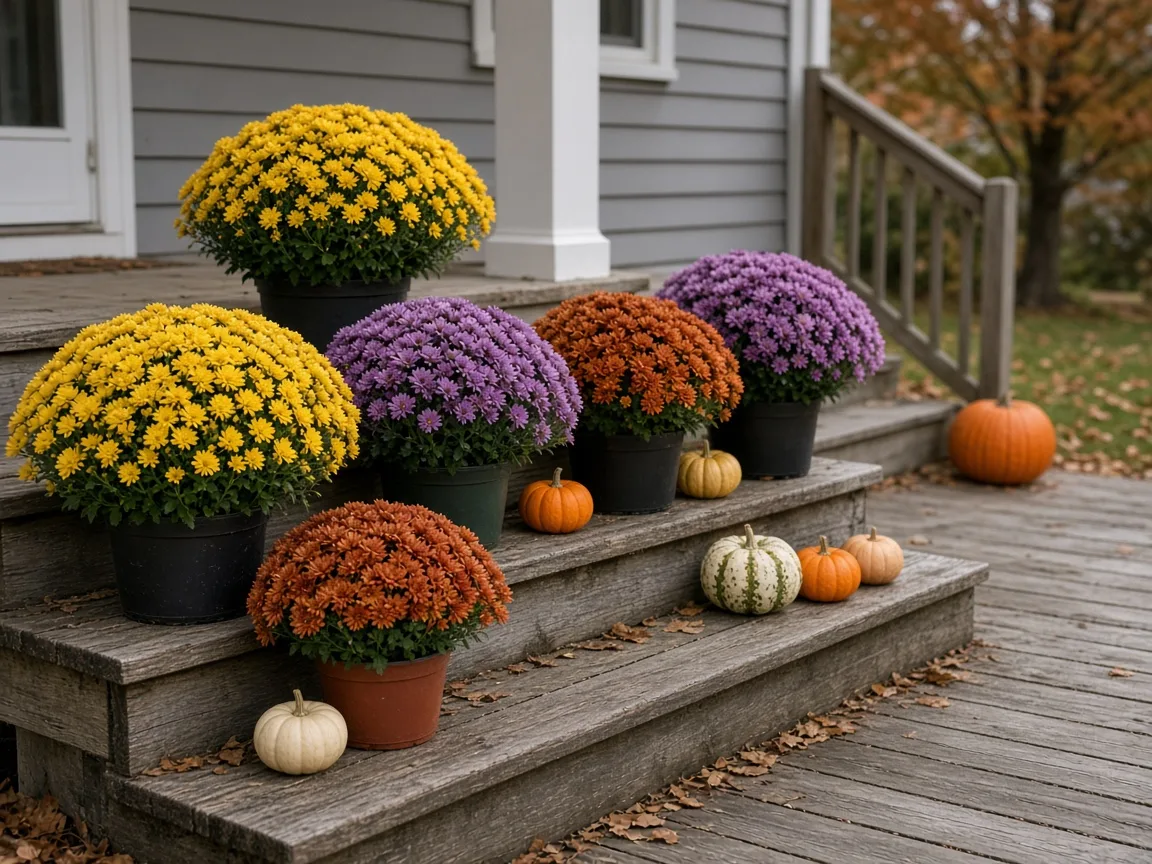
If you want the plant to survive winter, remember that roots in a container are more exposed to cold than roots in the ground. A pot on a porch is a good fall decoration but a risky place to overwinter a borderline-hardy cultivar in a cold region. Move it to a protected, cool, unheated space or sink the pot into soil and insulate it, while keeping the mix only slightly moist. A warm living room is usually too warm and dim for dormant winter storage.
Understand why fall mums may not return
“Perennial” and “winter-hardy here” are different claims. A garden mum can be perennial in its adapted climate and still die in a region with colder winters, alternating thaws and freezes, or wet soil. A florist mum may be grown for its flower display rather than outdoor survival. A fall purchase is also often mature and putting energy into buds rather than expanding roots into garden soil.
Timing compounds these risks. A plant placed in the ground shortly before freezing weather has less time to establish than one planted in spring. Mums have relatively shallow, fibrous roots; when the soil repeatedly freezes and thaws, it can push the crown upward and expose roots to drying cold. Wisconsin Extension specifically cautions that fall pots have little time to develop roots before winter, while Iowa State describes heaving and crown damage as winter hazards. (Wisconsin Extension; Iowa State University Extension)
Drainage can matter as much as minimum temperature. A sheltered bed with a layer of snow may protect a plant better than a warmer low spot where water pools and freezes around the crown. For the best chance of return, buy an outdoor cultivar in spring, plant it in well-drained soil, stop pinching early enough for fall buds, and mulch for local winter conditions. Treat late-blooming fall pots as seasonal unless you are willing to accept losses.
Overwinter garden mums and potted plants
For in-ground mums, leave the old stems in place through winter in cold regions. The dry stems can help catch insulating snow and make the crown easier to locate. After the ground cools, apply a loose layer of straw or evergreen boughs over the crown and root zone. The point is to buffer temperature swings, not to keep the soil warm and wet. Avoid tightly packed, waterlogged mulch against stems; remove or thin it in spring as new growth appears.
Some RHS guidance for mild regions recommends cutting plants back after flowering and protecting roots with mulch, while Iowa State advises leaving old growth standing because it can improve survival in colder winters. This is a genuine climate-dependent difference, not a single universal rule. If your winters feature freeze-thaw cycles and little reliable snow cover, keeping stems through winter is a sensible default; follow local extension guidance for your area. (RHS; Iowa State University Extension)
For container plants, the safest strategy in a cold climate is to protect the root ball rather than leave a small pot exposed above ground. Sink the container into a protected bed, cluster pots in a sheltered location and insulate around them, or move them to a cool, frost-protected garage or shed after the flowers fade. Keep dormant plants cool and check soil occasionally so it does not become bone dry or saturated. A heated room encourages weak growth while outdoor light is low. In spring, return the plant outside gradually and resume normal watering as new growth appears.
Propagate by division or cuttings
Divide established garden mums in spring when new shoots are visible. Dig the clump, discard the old woody or dead center if it has lost vigor, and separate the young outer sections so each piece has healthy roots and several shoots. Replant divisions promptly at the original depth and water them in. Many clumps benefit from division every two or three years, particularly when the center thins or the plant becomes crowded. (Iowa State University Extension)
Stem cuttings are useful when you want more plants of a particular cultivar. In spring or early summer, cut a healthy, non-flowering shoot a few inches long, remove lower leaves, and insert the cut end into a clean, moist rooting medium such as perlite or a propagation mix. Keep it warm with bright indirect light and steady moisture, not standing water. Once roots form and the cutting resumes growth, pot it up and harden it off before planting outside.
Seed is less predictable for named hybrids. Plants raised from saved seed may not resemble the parent, so use seed when variation is welcome and use division or cuttings when you want to preserve a garden cultivar’s flower color and form. This is a common limitation of hybrid mums, not a failure of seed-starting technique. (Gardener’s Path)
Extend bloom and handle spent flowers
A mum’s flowering period depends on cultivar, planting date, temperature, and the stage of the buds when you bought it. Select plants with a mix of open flowers and tight buds for a longer display at home. Place containers in a bright, cool outdoor spot, keep the root ball from drying, and protect blooms from harsh wind and repeated heavy rain. A light frost may end the show even when the plant’s roots could survive winter.
Remove individual brown, collapsed flowers to keep the plant tidy and reduce decaying material around healthy blooms. Deadheading will not force a finished autumn mum into another full flush if the plant’s flowering cycle is over. For garden mums, the more consequential flower practice is early-season pinching, which creates branching before the short-day signal triggers buds. Do not confuse deadheading—a cleanup task after flowers fade—with pinching—the earlier shaping practice that changes how many flowering stems develop.
If your goal is cut flowers, harvest when blooms are open but still fresh, use clean shears, and place stems promptly in clean water. Leave enough foliage and stems on a perennial plant to support its seasonal cycle and winter protection. Single, open-centered flower forms are often more accessible to late-season pollinators than dense double forms, so including a few open daisies can add ecological value as well as color. (RHS)
Troubleshoot pests, spots, wilt, and weak growth
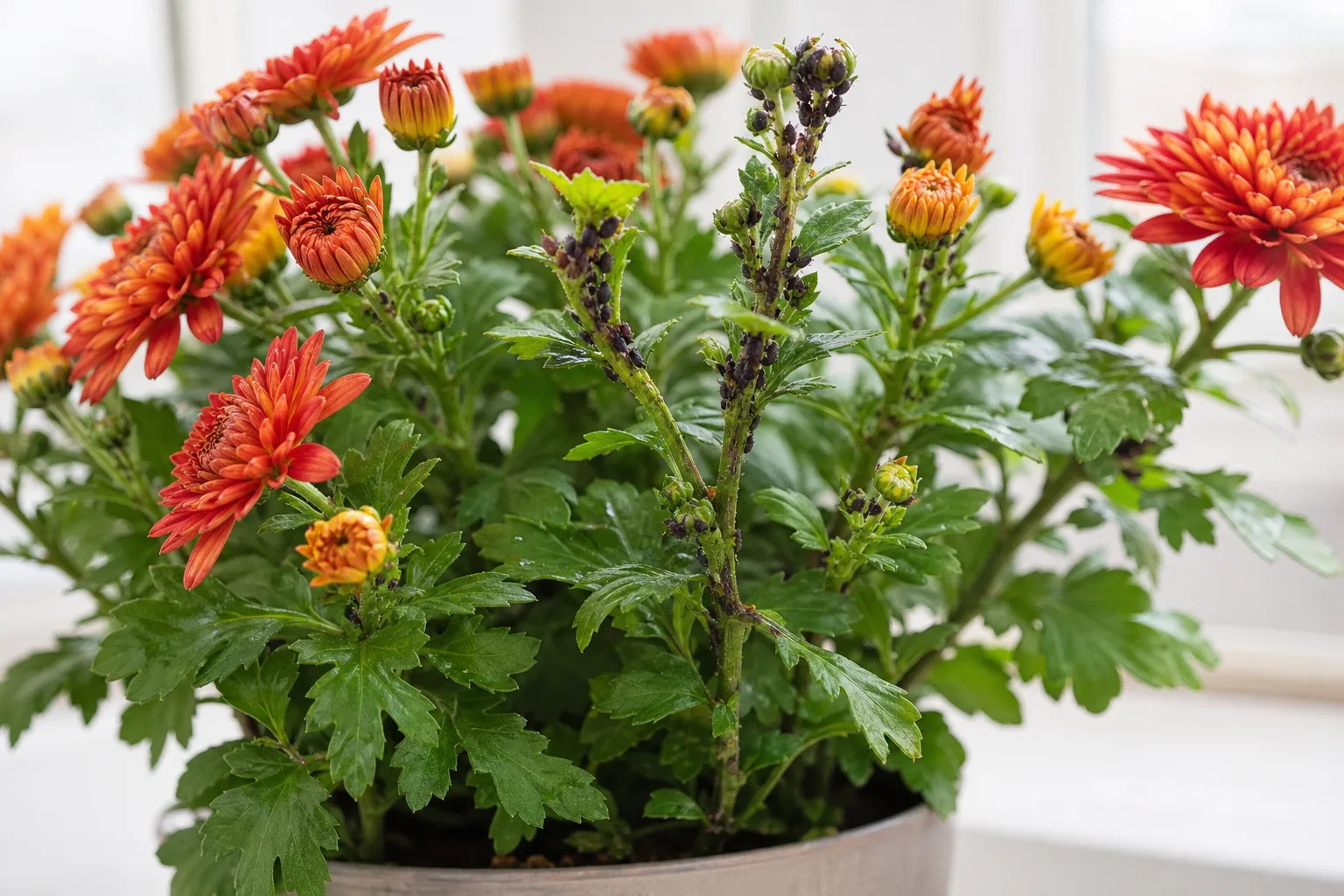
Start with the pattern, not a spray. Aphids cluster on tender tips and buds; spider mites can cause fine stippling and webbing, especially in hot, dry conditions; leafminers leave winding trails inside leaves. Inspect the undersides of leaves and new growth. For a small aphid population, dislodge insects with a firm water stream or remove affected tips, then recheck the plant. Avoid broad-spectrum insecticides as a first response because they can harm beneficial insects and do not fix water or light problems.
Yellow lower leaves with wet soil point first to drainage or overwatering; a dry, lightweight pot and limp foliage suggest the root ball needs water. Leggy growth often means too little sun or missed spring pinching. A mum that has healthy foliage but no flowers may be receiving light during the night, may have been pinched too late, or may be a late-flowering cultivar in a region where frost arrives early. Correct the cause instead of immediately adding fertilizer.
White powder on leaves can indicate powdery mildew, while persistent wetness and dead tissue can encourage gray mold and rots. Rust can begin as pale spots on leaf tops and develop raised pustules underneath. Improve spacing and airflow, water at the soil line, remove diseased leaves, and clean tools between plants. Penn State Extension lists several distinct chrysanthemum diseases with overlapping symptoms; if you see unusual white rust-like pustules or rapid one-sided wilting, isolate the plant and consult a local extension service before moving cuttings or composting it. (Penn State Extension; RHS)
Keep pets away from mums
Chrysanthemums are toxic to cats, dogs, and horses according to the ASPCA. Reported signs after ingestion include vomiting, diarrhea, excess salivation, poor coordination, and skin irritation. Keep plants and fallen flowers out of reach, and do not assume that a pet will avoid the plant because it smells bitter. (ASPCA)
If you suspect a pet has eaten part of a mum, contact a veterinarian or animal poison-control service promptly and identify the plant. Do not induce vomiting or try a home remedy unless a veterinary professional directs you to do so. Garden placement can be adjusted—such as using a raised container or a less accessible bed—but it is not a substitute for preventing access when a curious animal can reach the foliage.
Conclusion
Growing chrysanthemums successfully starts with choosing the right plant for the result you want. Use a blooming fall pot for seasonal color, or choose a labeled garden mum in spring if you want a perennial and can give it sun, drainage, regular moisture, early-season pinching, and winter protection suited to your climate.
A plant sold as hardy still needs a realistic establishment window and a site where its shallow roots will not sit wet or be repeatedly heaved by freeze-thaw cycles. Once you plan around those limits, mums are straightforward: build roots in spring, stop shaping before buds form, and let the plant’s short-day flowering rhythm carry the garden into fall.



