How to Grow and Care for Doublefile Viburnum
Learn where to plant doublefile viburnum, how much water it needs, when to prune, and what to do when flowers or berries fail to appear.
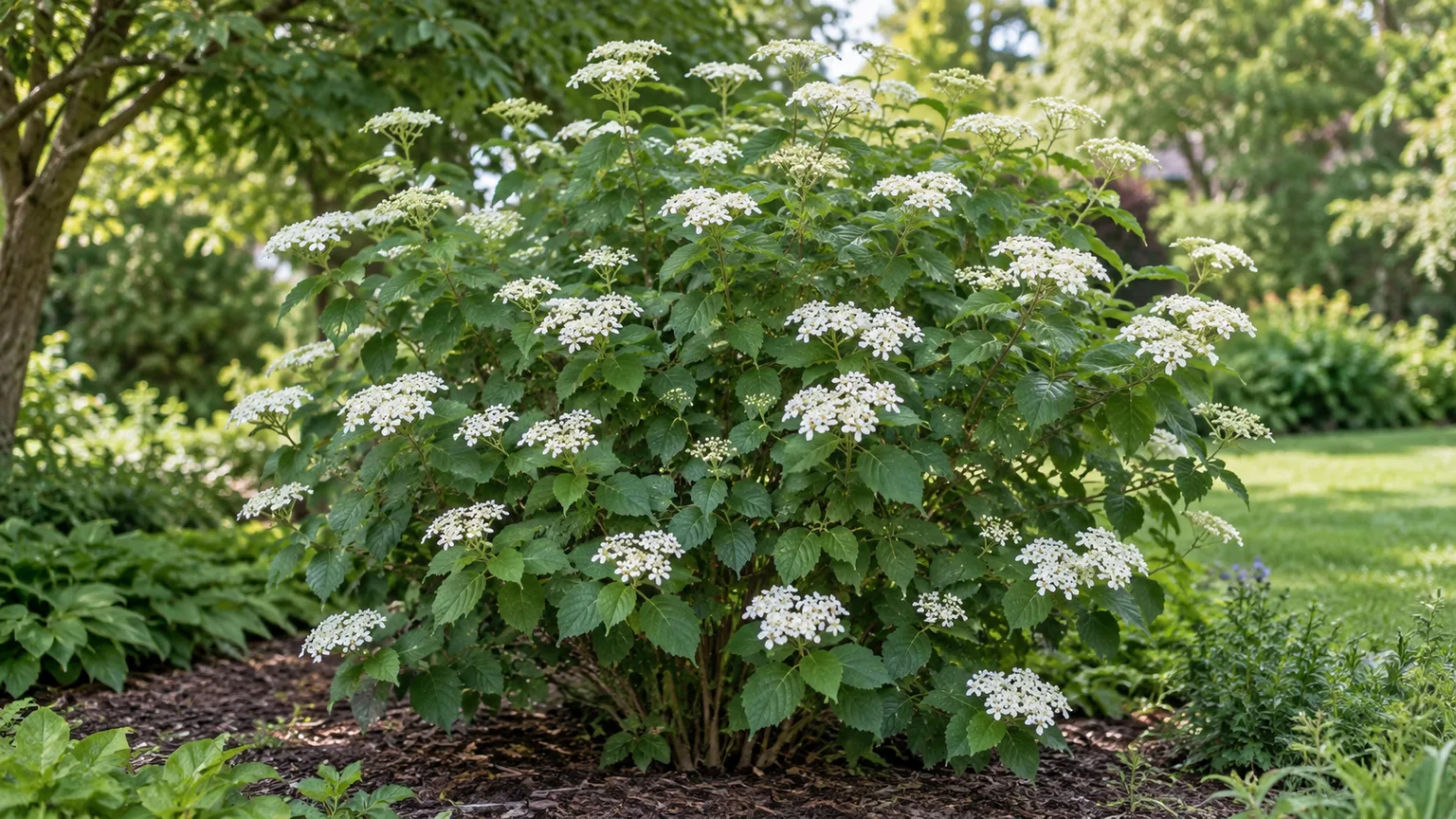
Doublefile viburnum is a large deciduous shrub with a distinctive silhouette: its branches extend outward in horizontal tiers, then carry white lacecap flowers along their length in spring. The best care decision comes before planting—make sure you have room for the mature width, because repeatedly shearing this naturally layered shrub into a narrow hedge removes much of what makes it special.
The care itself is straightforward when the site drains well and the roots do not dry out for long periods. Give the plant enough light, water it while it establishes, and prune selectively just after flowering; those few choices have more impact than routine fertilizer or aggressive shaping.
What Makes Doublefile Viburnum Distinctive
Doublefile viburnum refers to Viburnum plicatum in its lacecap-flowered form, often written as V. plicatum f. tomentosum. The cultivar ‘Mariesii’ is especially common in gardens, and references use several botanical name variations for it. It is a multi-stemmed shrub, not a small tree, even though its tiered framework can look almost architectural when viewed from the side.
Expect a broad plant, roughly 8 to 12 feet tall and often as wide, though cultivar, age, climate, and growing conditions change the final dimensions. Virginia Tech lists the species at about 10 feet tall by 12 feet wide and hardy in Zones 4–8; NC State gives a common range of 8 to 10 feet in both directions. Use those numbers as a planning range, not a guarantee for every nursery plant. The Virginia Tech plant profile and NC State Extension Plant Toolbox describe its size and horizontal habit.
Its appeal lasts beyond the flowers. The prominently veined, pleated green leaves turn shades of red, burgundy, or purple in fall, and pollinated flowers may develop small fruits that ripen from red toward dark purple or black. Bare branches still show the shrub’s layered structure in winter, so choose a location where its form can be seen from more than one angle.
Choose a Site That Fits the Mature Shrub
Think of the plant’s eventual width as a design feature. A doublefile viburnum needs room on all sides for its branches to spread, and its lowest tiers can extend farther than the upright stems suggest when the shrub is young. Place it as a specimen, at the edge of a mixed border, or in a loose screen where the branches can be appreciated; avoid squeezing it between a wall, walkway, and other shrubs.
Light: More sun means more flowers
Full sun generally produces the heaviest bloom, but partial shade is useful where afternoon heat is intense. In cooler regions, a sunny position usually works well if the soil stays evenly moist; in hot-summer climates, morning sun with light afternoon shade can reduce heat stress. The Arkansas Extension profile specifically recommends partial shade in central Arkansas and notes that full sun there requires sufficient water during the hottest part of summer.
Deep shade is a poor trade if flowers are the main reason you chose the shrub. It can survive with less light, but flowering and overall density may be weaker, while branches stretch toward brighter openings. If an established plant blooms sparsely, look at the hours and intensity of direct light before reaching for fertilizer.
Soil: Drainage matters more than texture
The roots prefer soil that holds some moisture but drains between waterings. Sandy loam, loam, and many clay loams can work; the key is whether water moves through the root zone instead of collecting around it. Virginia Tech describes a wide soil-texture range but cautions against poorly drained heavy soil, and the RHS profile for ‘Mariesii’ likewise lists moist but well-drained conditions across several soil types.
Check drainage after a soaking rain or by filling a test hole with water and watching whether it empties. If the planting spot remains saturated, choose a slightly raised bed or another location rather than trying to fix a persistently wet site with a small amount of compost in the planting hole. Organic matter can improve soil structure, but it cannot turn a waterlogged depression into a reliably drained one.
Planting Doublefile Viburnum
Plant in spring or fall when temperatures are mild and the soil can be worked. Before digging, check the label for the cultivar and its stated mature size, then map the shrub’s canopy as a circle around the planting point. For a plant expected to reach 10 to 12 feet wide, leave comparable open space to the next large shrub if you want each one to retain its outline; closer spacing creates a connected mass, but eventually hides the individual tiers.
Dig a hole about two to three times as wide as the root ball and no deeper than its height. Loosen circling roots on a container-grown plant, set the root flare level with or slightly above the surrounding grade, and backfill with the soil you removed. Water slowly to settle the root zone, then spread a 2- to 3-inch layer of organic mulch over the root area while keeping it several inches away from the stems. Avoid burying the trunk base or filling the hole with a rich, sharply different potting mix.
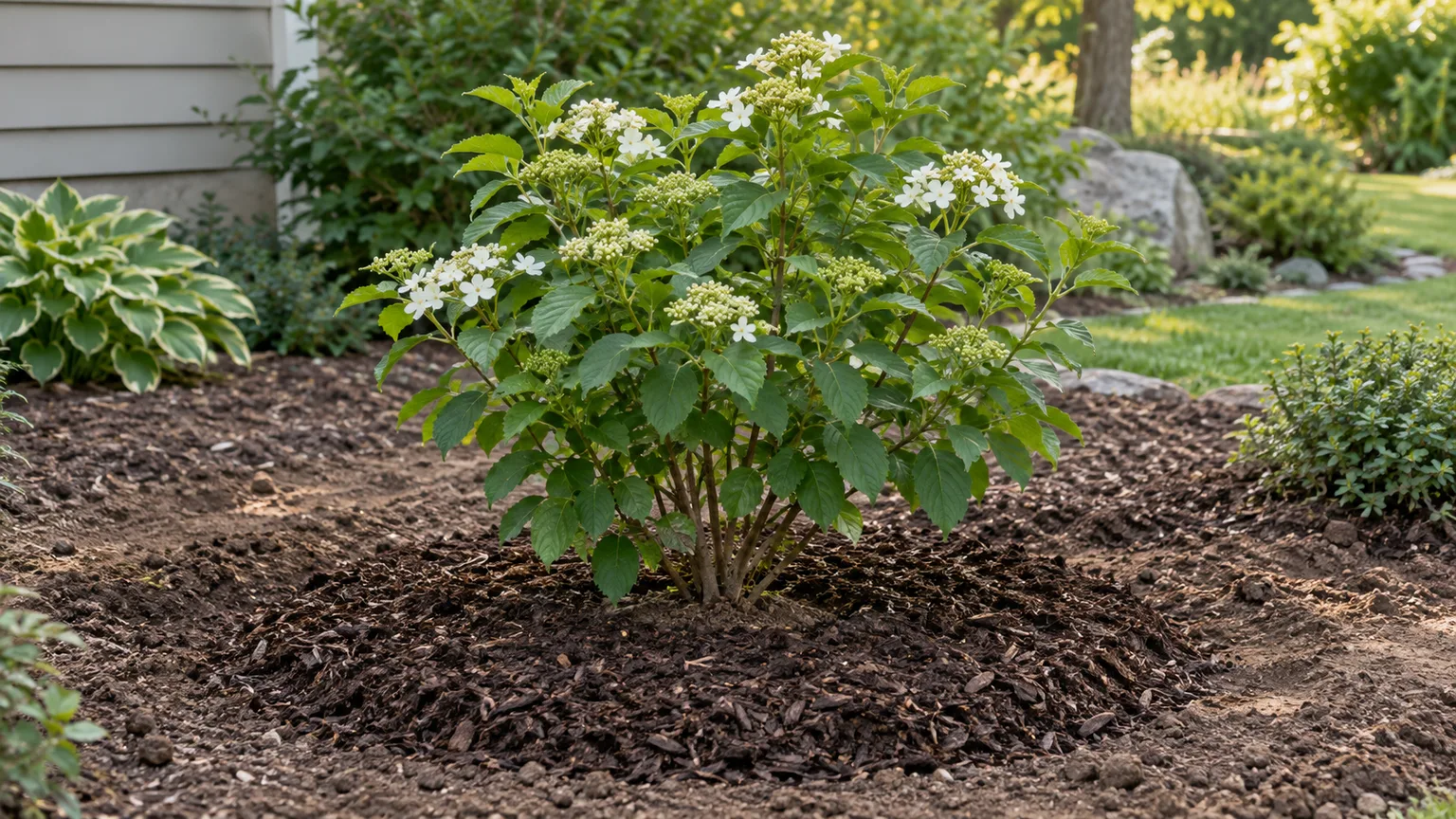
The planting distance from a building should account for the width of mature branches, not just the center stems. If the shrub will sit near a path, allow enough clearance that branches do not routinely brush passersby; pruning those tips every year to force a tight footprint can remove flower-bearing wood and spoil the layered outline. If the space is too narrow, select a smaller shrub rather than planning on constant corrective pruning.
Water, Mulch, and Feeding
Water by root-zone moisture
Water new shrubs deeply after planting and keep the root ball and adjacent soil consistently moist through the first growing season. Do not follow a rigid calendar if rainfall and soil conditions change; check a few inches below the mulch, and water when that layer begins to dry. A slow soak at the base encourages water to reach the roots and reduces the time foliage stays wet.
Once established, doublefile viburnum can tolerate short dry spells better than a newly planted specimen, but it performs best with regular moisture during active growth. Hot, windy weather and sandy soils dry faster than cool weather and moisture-retentive loam. If leaves droop in afternoon heat and recover by evening, check again in the morning and inspect soil moisture before adding water; persistent wilting with wet soil points to a root or drainage problem, not thirst.
During a dry stretch, water less often but deeply enough to wet the soil across the root zone rather than sprinkling the surface every day. A moisture check under the mulch is more useful than judging by the top inch, which can dry while deeper soil remains damp. If the water runs away from a compacted root ball, apply it in two or three slower passes so it has time to soak in.
Mulch, fertilizer, and lawn competition
Maintain a broad, shallow mulch ring to moderate soil temperature and slow evaporation. Keep mulch off the stems and do not pile it into a cone at the base; a deep, compacted layer can hold excess moisture against the bark and obstruct airflow. Expand the ring as the shrub grows, because watering only at the trunk misses the wider feeder-root zone.
Do not fertilize automatically every spring. If the plant makes healthy new growth and flowers normally, additional feeding is unlikely to improve its form and may push soft, leafy growth at the expense of a balanced shrub. A soil test is more useful than guessing at pH or adding a high-nitrogen lawn fertilizer, especially because runoff from a nearby lawn can already supply more nitrogen than the shrub needs. If a test or clear deficiency supports feeding, use a measured landscape-shrub fertilizer according to its label and keep it away from the stem flare.
Prune After Flowering to Keep the Tiered Form
Doublefile viburnum flowers on wood formed in the previous growing season. That is why the safest routine window is shortly after the spring flowers fade: the shrub then has the rest of the growing season to produce shoots that can mature and carry next year’s buds. Pruning in late summer, fall, or before spring bloom can remove those buds, so if you are unsure, wait until after flowering.
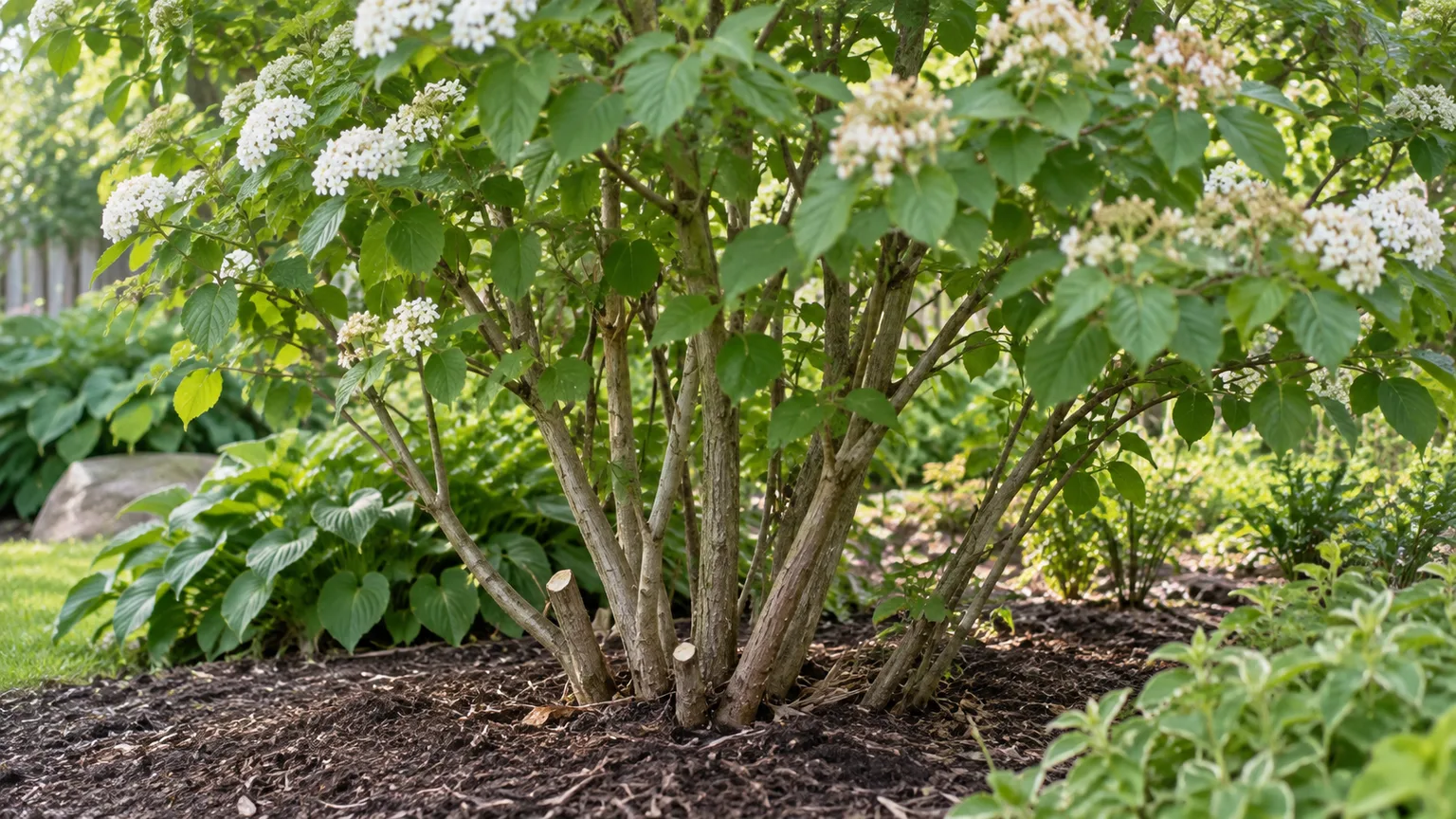
A light annual cleanup
Start by stepping back and identifying the reason for each cut. Remove dead, broken, diseased, or rubbing branches first, tracing them to a healthy branch union or back to the base rather than leaving a long stub. Then look for vertical shoots or suckers that rise through the horizontal tiers; removing a few of these at their origin preserves the shrub’s natural profile better than trimming every branch tip to the same plane.
Do not prune just because a viburnum can be pruned. A young plant often needs only deadwood removal and correction of an obvious crossing branch. For a mature specimen, selective thinning is usually enough; horticulturist Jen Kettell’s Fine Gardening pruning guide recommends particular restraint with doublefile viburnums because hard pruning prompts water sprouts and suckers that interrupt their horizontal form.
What to do with an overgrown shrub
First decide whether the plant is overgrown for its location or simply larger than expected. If it is healthy and has room, retaining its full spread may be better than cutting it into a compact shape. If a few branches obstruct a path or window, remove selected stems at their base or reduce them to a suitably placed side branch, spreading larger corrections across more than one year.
Avoid shearing the entire shrub or cutting every stem to a uniform height. That approach sacrifices flower buds, encourages vigorous upright shoots, and leaves the shrub with a dense outer shell and shaded interior. A severely crowded plant may need gradual renewal pruning, but this is a multi-season project; retain the best horizontal framework and remove a limited share of live wood in any one year. If the structure is badly compromised, consult a local arborist or extension office before making drastic cuts.
Flowers, Pollination, and Berries
The spring flower head is a lacecap: small fertile flowers sit near the center, surrounded by larger sterile florets that create the showy white rim. The paired rows of flower clusters along horizontal branches explain the name “doublefile.” Bloom time varies with climate and spring weather, so use the plant’s local flowering season rather than a fixed calendar date to schedule pruning.
Flowers and fruit are separate outcomes. A shrub can bloom well yet produce few berries if pollination is poor, if late frost damages flowers, or if birds remove fruit as it ripens. Many viburnums set a heavier crop when a genetically different, compatible plant of the same species flowers nearby; two shrubs of the same named clone do not necessarily provide that genetic difference. Fine Gardening’s viburnum pollination discussion explains that compatible plants and overlapping bloom help fruit set, while a second plant is not required for flowering.
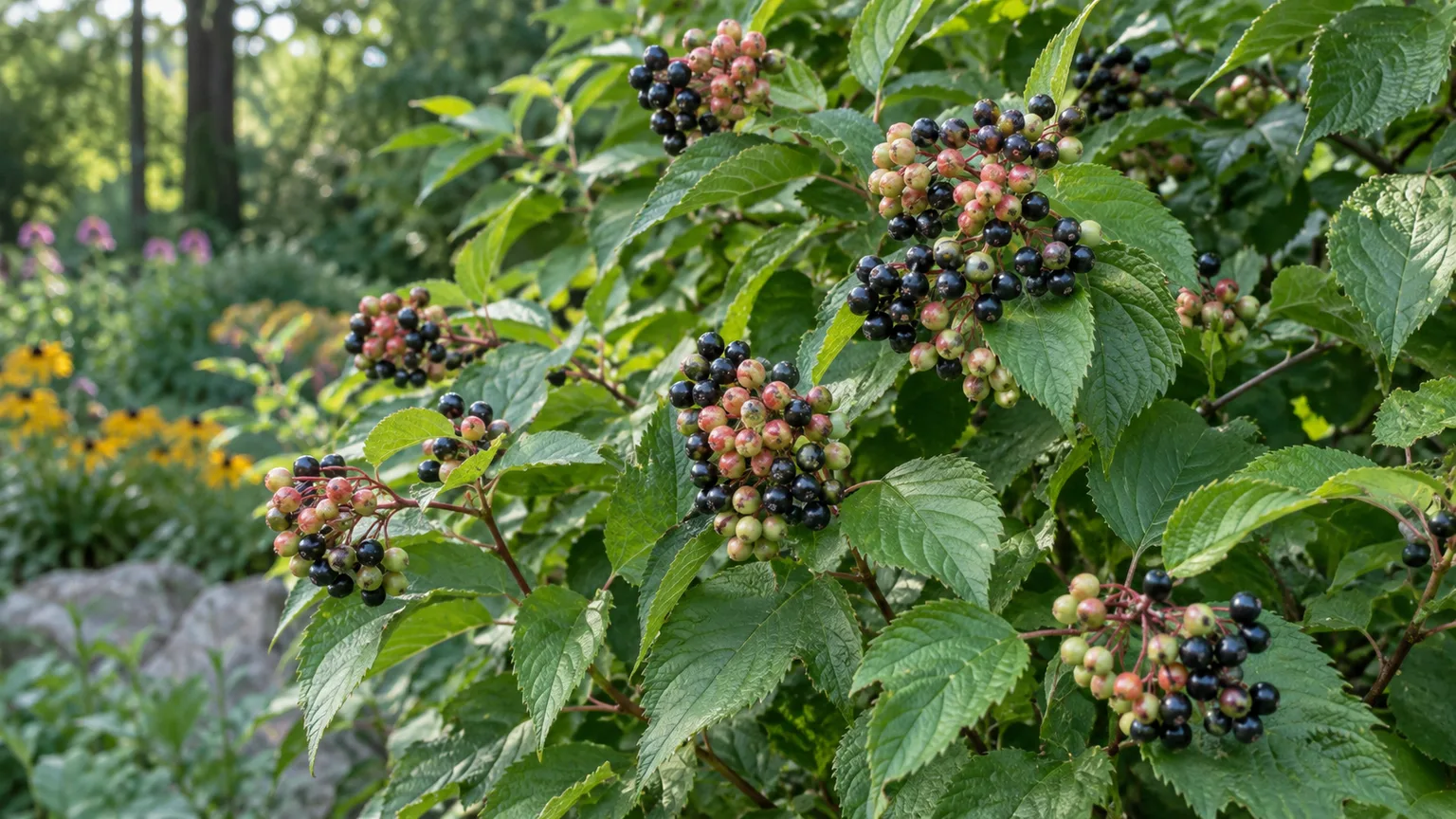
If berries matter to you, ask the nursery for a compatible V. plicatum cultivar with overlapping bloom rather than buying a second plant with the same cultivar name by default. Even with a pollinator, fruit is not guaranteed every year. If flowers are the priority, do not interpret a light berry crop as a care failure; if fruit is absent, check whether the central fertile florets set fruit before changing light, fertilizer, or pruning routines.
Doublefile Viburnum vs. Japanese Snowball
The common names can be confusing because both plants belong to Viburnum plicatum. Doublefile viburnum, usually f. tomentosum, bears lacecap heads with showy sterile outer florets and smaller fertile flowers in the center. The Japanese snowball form, typically f. plicatum, has rounded heads made largely or entirely of showy sterile florets, so its flower clusters look like compact white balls rather than flat lacecaps.
If you want berries, the lacecap form is the more promising choice because it retains fertile flowers, though pollination still matters. If you want a rounded “snowball” flower display, choose that form knowingly and do not assume every plant sold as Japanese snowball is botanically identical. The NC State Plant Toolbox describes the fertile center and sterile outer flowers that distinguish the lacecap display.
Cultivars and Choosing One
‘Mariesii’ is valued for broad horizontal branches and abundant white flowers. It is a substantial shrub, so check the mature size and plant label before purchasing; young nursery specimens can look narrow and upright before their characteristic spread develops. Some catalogs use alternate botanical spellings or synonyms, so match the cultivar name on the label rather than relying on a single version of the Latin name.
‘Shasta’ is another popular lacecap selection noted for heavy bloom, while ‘Summer Snowflake’ is described as producing flowers over a longer season. Cultivars differ in mature size, habit, and flowering pattern, and retailers may report somewhat different dimensions. Virginia Tech’s cultivar notes identify ‘Mariesii’ for larger, more abundant flowers and ‘Roseum’ for blooms that open white and fade pink; confirm that a plant sold under a common name is the flower form you actually want.
Choose for the job the shrub must do. A specimen planting rewards the broad tiered architecture, while a crowded foundation bed may call for a compact cultivar or a different species entirely. Before choosing a cultivar for a narrow site, look for a reliable mature-width description from the nursery or public garden that grew that specific selection; an average species size is not a substitute for cultivar-level dimensions.
Pests and Leaf Problems
Doublefile viburnum is generally considered a relatively trouble-free landscape shrub, but “resistant” does not mean immune. Poor drainage, drought stress, crowding, and heavy shade can weaken growth or make leaf problems more noticeable. Inspect the pattern before treating: damage limited to leaf edges, a fine stippling, holes, egg pits on twigs, powdery growth, and spreading spots point to different causes.
Viburnum leaf beetle
Viburnum leaf beetle larvae feed on leaves in spring and may skeletonize them, leaving a lace-like tissue between veins; later, adult beetles chew oblong holes. In late summer and fall, females make rows of egg pits in young twigs. The University of Maryland Extension guide recommends checking and pruning out egg-laying twigs after leaf drop, then monitoring new growth for larvae the next spring; it also lists doublefile viburnum among the less-susceptible viburnums.
If you find a few egg pits, prune and discard those twig sections rather than spraying the whole shrub. If larvae are abundant and defoliation is increasing, confirm the pest and contact your county extension office for locally appropriate options. Any pesticide must be labeled for the plant and pest, used according to directions, and applied with pollinators and other beneficial insects in mind; do not spray flowering shrubs to solve a problem that can be managed by monitoring and targeted pruning.
Leaf spots and powdery mildew
Brown or black spots can result from several fungal or bacterial diseases, and a photo alone may not identify the cause. Rake up fallen diseased leaves, avoid frequent overhead watering, and thin only where crowded growth restricts airflow. If spotting is severe or repeats year after year, use a local diagnostic service or extension office before applying a fungicide; different pathogens require different responses.
Powdery mildew appears as pale, powdery growth on leaf surfaces, often when humidity is high and air circulation is limited. It is usually more of an appearance issue than an immediate threat to a healthy mature shrub. Clemson Extension’s viburnum pest and disease guide covers leaf spots and other common problems; its recommendations can vary by pest, disease, and region, so avoid treating every discolored leaf as the same condition.
Propagating a Doublefile Viburnum
To reproduce a named cultivar faithfully, take stem cuttings rather than sowing seeds. Seedlings may not come true to the parent, while a rooted cutting is a clone. Softwood cuttings are taken from flexible new growth in late spring or early summer; the best timing depends on local growth, so choose a shoot that bends without snapping and is not yet woody.
Take several 4- to 6-inch nonflowering tips with clean pruners, remove the leaves from the lower portion, and insert the cut ends into a sterile, free-draining propagation medium. Keep the medium evenly moist, not waterlogged, and cover the container loosely with a clear humidity cover while keeping it in bright indirect light. Iowa State Extension’s softwood-cutting guide includes viburnum among shrubs that can be propagated this way; its general method is more reliable than assuming every cutting roots on the same schedule.
Check for resistance with a gentle tug after several weeks, but do not pull repeatedly or pot up a cutting before it has a useful root system. Once roots hold the plug together, move it into a small pot, acclimate it gradually to outdoor conditions, and grow it on until it can handle landscape planting. Propagation takes patience, and not every cutting will root; if you want a dependable plant quickly, buying a nursery-grown cultivar is usually the simpler route.
Conclusion
For a successful doublefile viburnum, choose a bright site with well-drained soil and enough room for a wide, tiered shrub. Water consistently while it establishes, mulch the root zone without covering the stems, and skip routine fertilizer unless a soil test or visible deficiency gives you a reason to feed.
After the flowers fade, prune only what the plant needs: remove dead or crossing wood and a few upright shoots while keeping its horizontal framework intact. If it fails to flower, check shade and last year’s pruning first; if it flowers but has few berries, consider pollination and cultivar compatibility. Those checks solve most problems without turning a naturally elegant shrub into a maintenance project.



