10 Shade-Loving Flowers That Bloom Into Fall
Brighten a shady garden with 10 late-season flowers. Compare bloom times, light needs, soil moisture, spread, and important safety notes before you plant.

A shady garden can still finish the season with flowers, but the best results come from matching each plant to the kind of shade you actually have. White wood aster and toad lily are dependable choices for woodland conditions; Japanese anemones, goldenrods, and monkshood generally bloom more freely with some bright, filtered or morning light. None should be expected to flower equally well in every dark corner.
The other key is timing. Some perennials open in late summer and continue into fall, while others deliver a shorter, distinct autumn show. Planting several bloom windows together is more reliable than expecting one plant to carry the whole season. The ten options below include their best light, soil preference, growing habit, and the limitations worth knowing before you buy.
What “full shade” means for fall flowers
In garden labels, “full shade” often describes a place with less than a few hours of direct sun, not a site with no usable light. A north-facing wall, the shadow of a dense evergreen, and a bright spot beneath a high deciduous canopy are all called shade, but they are very different growing environments. The last one receives much more ambient light and may support a wider range of flowering plants.
For a practical assessment, observe the bed on a clear day in late summer. Note whether it gets direct morning sun, dappled light that moves across the soil, or bright open sky without direct rays. Morning sun and dappled light are easier for many fall flowers than hot afternoon exposure. A completely dark corner under a dense roof or evergreen canopy will usually support foliage plants better than a long-blooming flower border.
Shade is also seasonal. Trees may allow more light through as leaves thin in autumn, but the plants are forming buds earlier in the growing season. If a perennial receives too little light in summer, additional sun after the leaves fall will not restore the missed bloom. Choose for the light it gets from late spring through summer, not only for how bright it looks in October.
Ten flowers for late-season color in shade
The bloom periods below are typical, not guarantees. Climate, cultivar, establishment, and the date of the first hard frost all shift the calendar. Match the light and moisture notes to your site, and use the plants as a palette rather than assuming every one will thrive in deep shade.
1. White wood aster
White wood aster (Eurybia divaricata, often listed under the older name Aster divaricatus) is one of the strongest native choices for a lightly shaded woodland bed. Its small white, daisy-like flowers open in clusters over heart-shaped leaves from late summer into fall. North Carolina State Extension describes it as a plant of dry, open woodlands that prefers partial shade and well-drained soil; it also tolerates shade and drought once established. In a naturally bright woodland or dappled border, it can supply a long, airy finish when many spring flowers are gone.
Allow roughly 18 to 30 inches of room around a plant, and expect it to spread by rhizomes. That makes it useful for a naturalistic drift, but less suitable beside small, slow-growing neighbors that need to stay in a precise spot. Good air circulation and drainage matter: crowded plants or wet clay can invite powdery mildew or aster wilt. See the North Carolina Extension plant profile for regional hardiness and growing details.
2. Japanese anemone
Japanese anemones (Anemone × hybrida and related Japanese anemone types) send elegant pink or white flowers above mounds of foliage from late summer through fall. They are one of the better choices when the garden gets bright shade or morning sun, particularly in hot-summer regions where protection from intense afternoon sun helps the leaves stay presentable. Gardenia describes a flowering season that may last six to eight weeks and continue toward the first frost, while Chicago Botanic Garden’s fall-anemone guidance helps distinguish the later-flowering group from spring anemones.
Give these perennials consistently moist but well-drained soil, and be patient after planting: newly established plants may take time to build a flowering clump. They spread by rhizomes and may travel farther than expected in favorable conditions, so avoid placing them in a tiny mixed border unless you are ready to remove wandering shoots. Compact cultivars can make the habit easier to manage, but check the mature size for the exact variety. Learn more from Gardenia’s Japanese anemone profile and the Chicago Botanic Garden’s fall-blooming anemone guide.
3. Toad lily
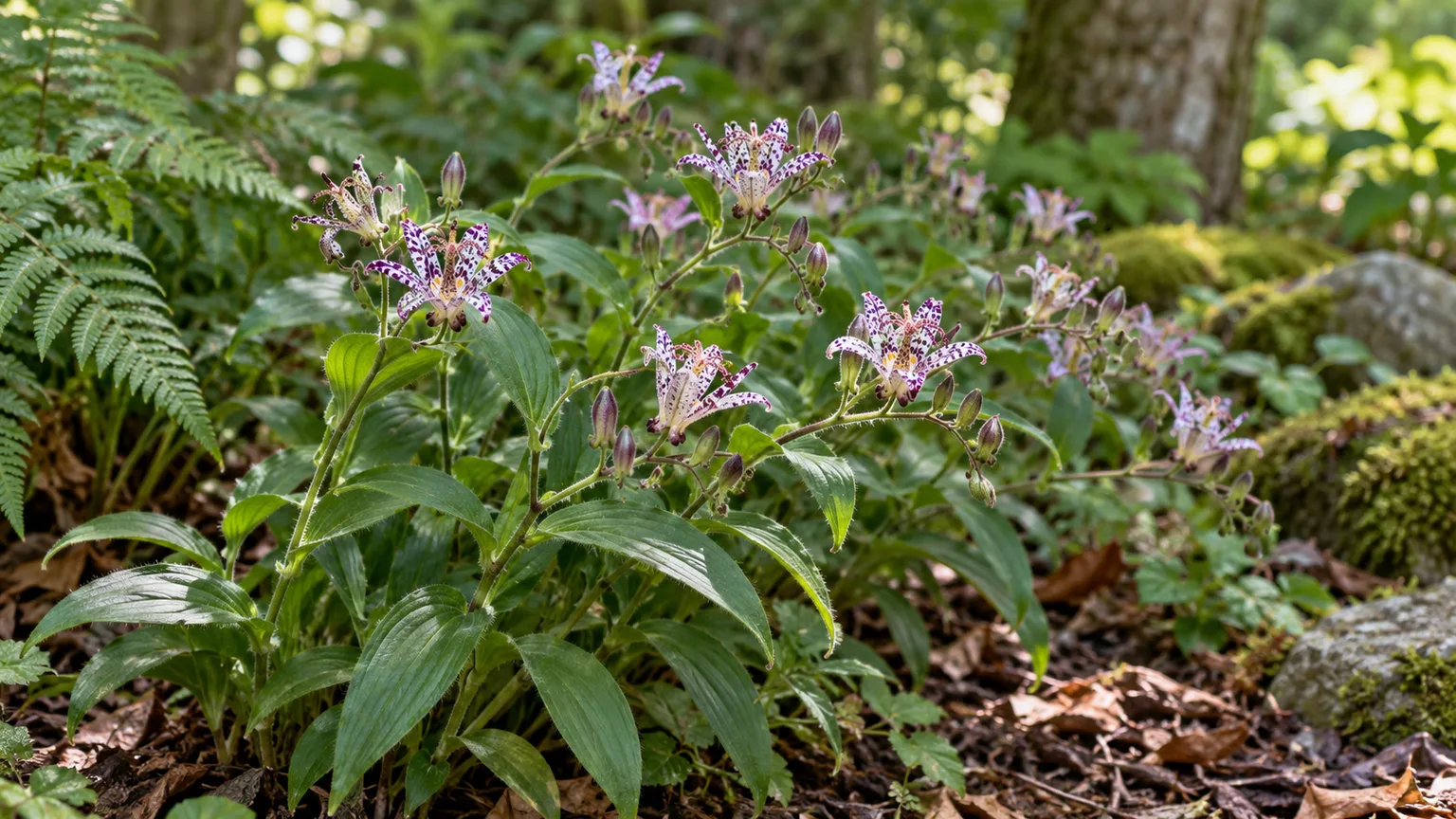
Toad lily (Tricyrtis hirta) earns its place in a late-season shade garden with orchid-like, spotted flowers that appear along arching stems in late summer and early fall. The effect is close-up rather than bold from across the yard, which makes it a good choice for a path edge or a spot viewed from a porch. University of Wisconsin Extension notes that it performs in part to full shade and prefers moist, humus-rich soil.
Do not let the soil dry out during bud formation. Drought can cause the plant to go dormant or fail to flower, and an early hard frost may cut the display short. Give the stems some airflow and watch for slug or rabbit damage on young growth. Toad lilies spread slowly by rhizomes, so they generally need less containment than Japanese anemones, though a mature clump can be divided. The University of Wisconsin Extension guide offers useful details on moisture and flowering duration.
4. Hardy cyclamen
Hardy cyclamen (Cyclamen hederifolium) is a small-scale autumn bloomer for the front of a bed, under deciduous trees, or around the edges of a woodland path. Its swept-back pink or white flowers appear in September and October, often before its marbled leaves reach full size. North Carolina State Extension lists partial shade as its preferred light but notes that it can tolerate dry shade, an unusual advantage where tree roots compete for moisture.
The corm is the part most likely to fail. It dislikes poorly drained soil, especially while dormant in summer, so avoid a low pocket that stays soggy after rain. Plant corms shallowly enough for their shoulders to sit just beneath the soil surface, then keep the dormant area on the dry side during summer. Hardy cyclamen slowly naturalizes if left undisturbed, and its leaves can remain attractive into winter. It is toxic if eaten, so keep corms and foliage away from children and pets. Read the NC State profile for planting depth, dormancy, and safety notes.
5. Hardy begonia
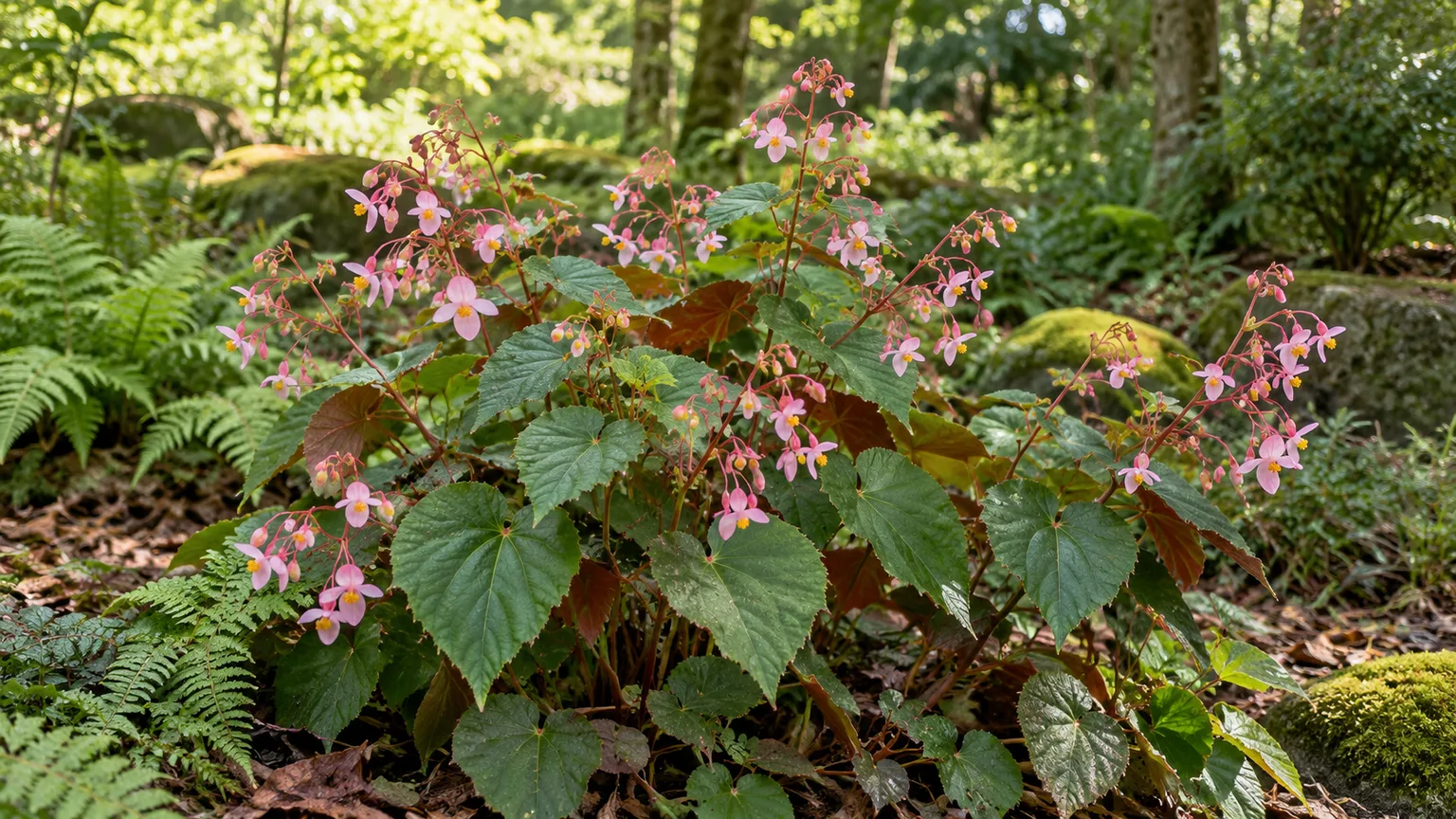
Hardy begonia (Begonia grandis) is a useful bridge between summer and autumn. Its pale pink flowers rise above broad, asymmetrical leaves in summer and can keep appearing into early fall. NC State Extension lists it for partial to deep shade and moist, organic, well-drained soil, so it can be a better fit than many flowering perennials for a sheltered, darker bed.
It is not a plant for dry shade. Water during extended dry weather, especially while the plant is establishing, and do not bury it in a dense mass of leaves where air cannot circulate. The plant can reach about 18 inches to 3 feet depending on conditions, and small bulbils may form where leaf stalks meet stems; these can drop and produce new plants. In colder areas, protect the crown with mulch and check local hardiness guidance before planting. The NC State profile for Begonia grandis covers its shade range, moisture, and propagation.
6. Yellow corydalis
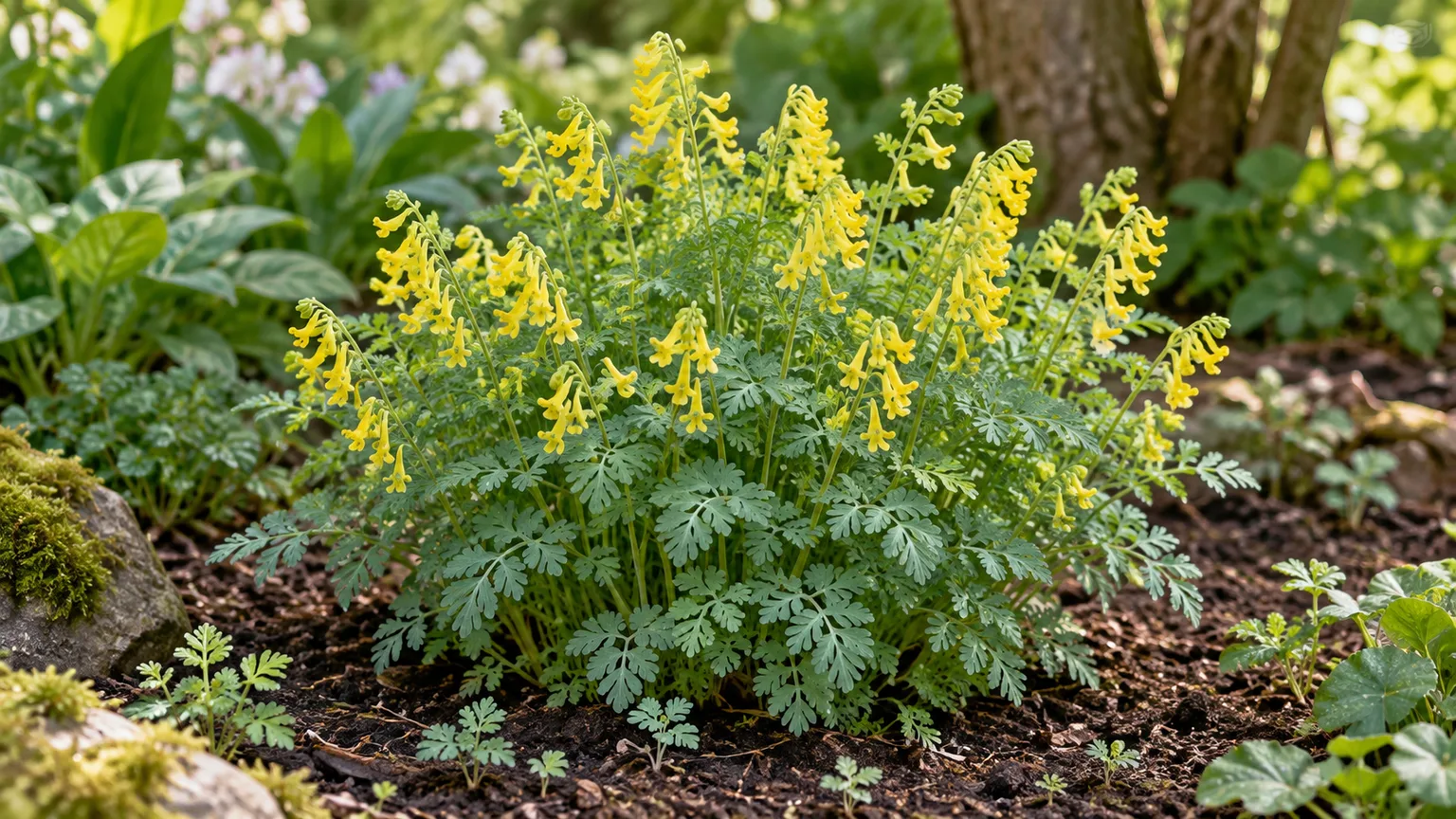
Yellow corydalis (Corydalis lutea) is less of a one-month fall bloomer than a long-season plant: in mild conditions, it can flower from late spring until frost. The airy foliage and small yellow flowers soften a shady edge, and its extended bloom can bridge the gap before asters and goldenrods take over. University of Wisconsin Extension reports that it tolerates light shade to shade, including heavier shade, but appreciates humusy, well-drained soil and regular moisture during heat.
Its generosity has a trade-off. Corydalis may self-seed prolifically and become weedy where seedlings are not welcome. Deadhead before seeds mature if you want to limit volunteers, and pull seedlings while they are small. It is an excellent fit for an informal border, less so for a highly controlled planting. Read the University of Wisconsin Extension profile for the bloom window and self-seeding note.
7. ‘Autumn Bride’ coral bells
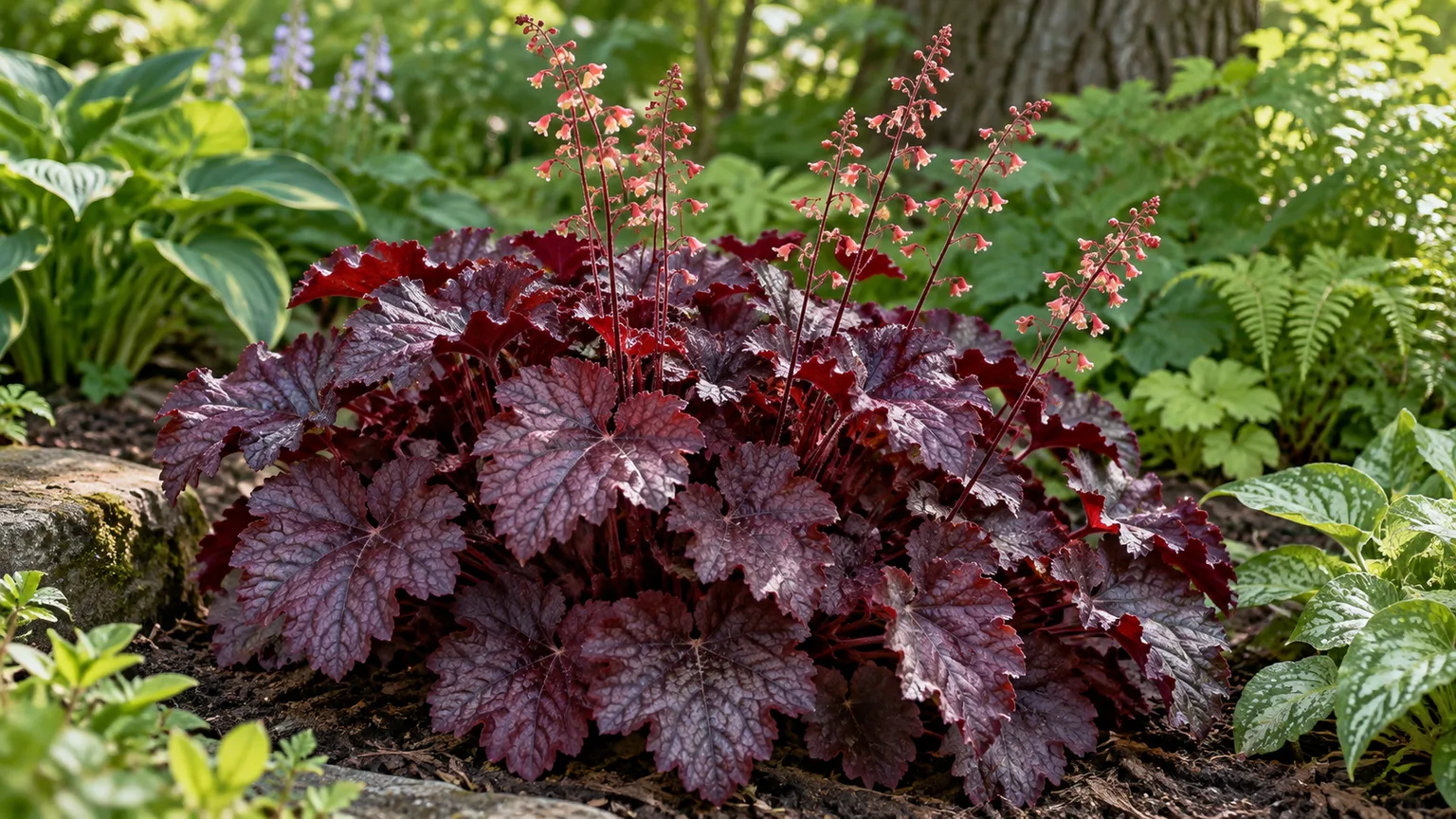
‘Autumn Bride’ is a selection of hairy alumroot (Heuchera villosa) grown for tall, frothy sprays of white flowers as well as its substantial foliage. NC State Extension notes that H. villosa flowers from June into October in North Carolina and does best in partial shade with rich, moist but well-drained soil. The bloom timing varies by region, but this is a strong option when you want flowers above a leafy mound rather than another daisy-shaped bloom.
Use it at the front or middle of a border where its flower stalks can rise without being hidden by taller plants. It appreciates organic matter but should not sit in waterlogged soil. Its airy stems also pair well with the rounded white or pink flowers of anemones and the fine petals of asters. For plant characteristics and its shade range, consult the NC State Extension profile for Heuchera villosa.
8. Blue-stemmed goldenrod
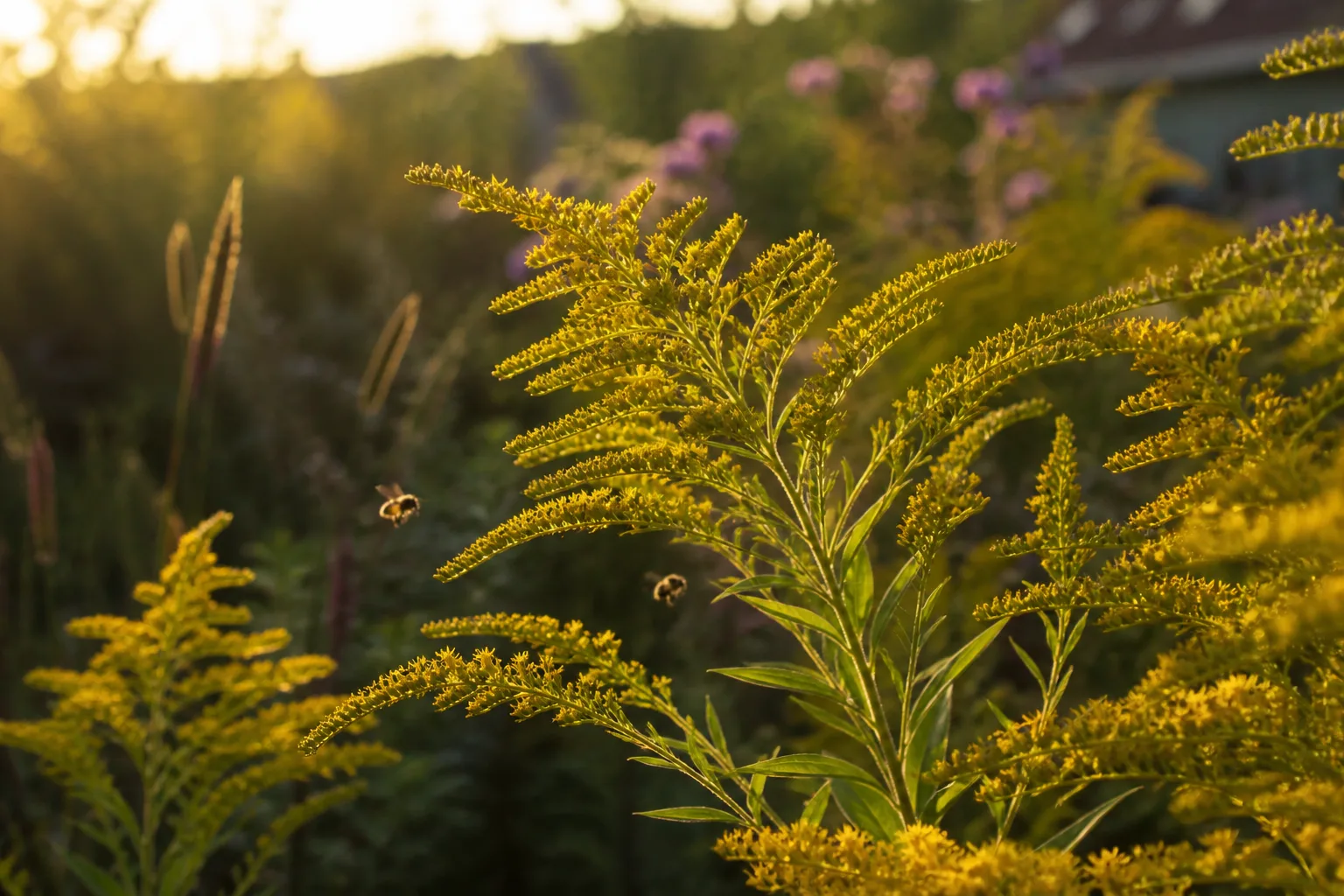
Blue-stemmed goldenrod (Solidago caesia) gives a woodland garden bright yellow flowers along arching, green-purple stems in late summer and early fall. Its flower clusters hug the stems rather than forming the wide plume familiar from many goldenrods, so it can fit into a smaller naturalistic bed. North Carolina State Extension describes it as a perennial of woodland gardens that grows to about 3 feet and does not spread as aggressively as some other goldenrods.
This is a partial-shade choice, not a promise for the darkest corner. A spot with dappled light or some morning sun is a better bet for a reliable display. Once established, it can be a useful native source of late-season nectar and pollen; the exact wildlife visitors depend on your region. See NC State’s profile of Solidago caesia for height, bloom season, and growth habit.
9. Zigzag goldenrod
Zigzag goldenrod (Solidago flexicaulis) is a woodland goldenrod whose stems bend at the leaf joints, giving it the zigzag outline behind its common name. Its clusters of small yellow flowers bring a softer, more natural look to a shade border than the broad, upright plumes of sun-loving goldenrods. It is the better of the two goldenrods here for a shadier site, though a brighter woodland edge will generally flower more reliably than deep, nearly lightless shade.
Give it room to form a colony, or use a root barrier if the bed has strict boundaries. Do not equate every species of goldenrod with the same spread or light needs: choose by botanical name, not just the word “goldenrod” on a nursery label. Cornell’s Fruition blog guide to native goldenrods provides useful context for distinguishing woodland forms from more vigorous species.
10. Fall monkshood
Fall monkshood (Aconitum carmichaelii) produces tall spires of deep blue-purple, hood-shaped flowers in late summer and often into fall. Fine Gardening describes monkshood as best in cool, moist soil and part shade; a Zone Three Garden’s account of A. carmichaelii also illustrates how bloom timing can shift with the length and warmth of the growing season. Expect this plant to perform best in bright or partial shade, not in a dark, dry pocket.
This is the most important safety exception on the list. NC State Extension warns that monkshood has high-severity poison characteristics and advises gloves when handling it. Do not plant it where a child might pick it, where a pet could chew it, or beside edible roots that could be confused with its fleshy roots. If those risks apply, choose another flower. The NC State profile for Aconitum and Fine Gardening’s genus guide explain the growing conditions and toxicity concerns.
Build a sequence instead of relying on one plant
For a longer display, combine bloom periods rather than planting ten copies of the same late bloomer. Hardy begonia and yellow corydalis may start flowering in summer and continue into fall; Japanese anemones, toad lilies, and woodland asters often join in late summer; hardy cyclamen, goldenrods, and monkshood contribute their main color in autumn. Local climate changes those overlaps, so check regional garden calendars and nursery labels before choosing cultivars.
Layer flowers by height and viewing distance. Put low hardy cyclamen near the path, then use coral bells and toad lilies where their foliage and small flowers can be seen up close. Place asters and goldenrods toward the back or in a relaxed drift. Japanese anemones and monkshood need extra room and are easiest to enjoy where their spread or height will not crowd smaller plants.
Repeat colors to make the bed feel intentional: white flowers from aster and coral bells can echo each other; pink cyclamen and anemones can link the front and middle; yellow corydalis and goldenrod can connect early and later bloom. Add ferns, sedges, or evergreen groundcovers for texture between flower flushes. That structure matters because even a long-flowering perennial has pauses between flowers.
Avoid sweet autumn clematis as a quick replacement for shade color. It is often sold for late flowers, but Clemson Extension reports that it has escaped cultivation and is invasive in at least ten states; its seeds spread by wind and the vine can blanket other vegetation. Check the invasive-plant guidance for your state and choose a regionally appropriate native vine if you need vertical coverage. See Clemson Extension’s sweet autumn clematis warning for identification and regional context.
Prepare a shade bed for flowers, not just foliage
Before buying plants, identify the shade source. Under deciduous trees, flowering perennials compete with tree roots for water. Near buildings, rain may not reach the soil evenly. Under evergreens, the combination of low light, dense roots, and dry soil narrows the choices further. Hardy cyclamen, white wood aster, and yellow corydalis can cope with some dry shade once established; toad lily and hardy begonia need steadier moisture.
Check drainage by observing the bed after a heavy rain. If water remains on the surface or the soil smells sour, improve drainage or select plants suited to consistently moist soil rather than putting a corm or rhizomatous perennial into a wet hole. For a dry bed, work a modest amount of finished compost into the planting area and mulch the surface to reduce moisture loss. Do not pile mulch against crowns or stems.
When planting beneath trees, avoid cutting major roots or digging a continuous trench. Make individual planting holes between roots, use smaller starts where the root network is dense, and water each new plant slowly so moisture reaches its root zone. Fall is a useful planting time in many temperate regions, but allow enough time for establishment before the ground freezes; in colder areas, spring planting can be safer for borderline-hardy plants.
Keep fall bloomers healthy through changing weather
Water new plants deeply and consistently through their first growing season, adjusting for rainfall and soil texture instead of using a fixed weekly schedule. Feel the soil a couple of inches below the surface: dry soil at the root zone is a stronger reason to water than a hot afternoon alone. Water near the soil line in the morning where practical, and avoid keeping foliage wet overnight.
Use a light layer of leaf mold or shredded leaves as mulch to maintain moisture and protect shallow roots. Keep the material loose around crowns so stems are not buried. In fall, resist cutting every perennial to the ground as soon as flowers fade. Some seedheads feed birds, and standing stems can help mark the plant’s location while it is dormant. Remove diseased foliage, but leave healthy structure until late winter or early spring if it does not obstruct paths.
Deadheading is a choice, not a universal rule. Remove spent anemone flowers if seedlings are not wanted; deadhead yellow corydalis before seed pods mature when you want to control its volunteers. Leave aster and goldenrod seedheads if you want winter texture and wildlife food. Divide spreading clumps only when they outgrow their space or lose vigor, and do it at a season suited to the species rather than during heat or drought.
Why a shade plant may not flower
The most common cause is too little light during the months when flower buds form. If a bed receives no direct sun and very little sky light, start with plants documented for shade, such as white wood aster, toad lily, or hardy begonia, and accept that bloom may be lighter than in a brighter woodland edge. Avoid assuming a plant will flower simply because its leaves stay green.
Next, check moisture and drainage. Drought-stressed toad lilies may go dormant before flowering, while cyclamen corms can rot in poorly drained soil during summer dormancy. Overly rich nitrogen fertilizer can also push leafy growth at the expense of flowers. A soil test is more useful than adding fertilizer by guesswork; most established woodland perennials need appropriate moisture and light more than repeated feeding.
Finally, check maturity and crowding. A newly planted Japanese anemone may spend its first season establishing roots. A white wood aster or goldenrod packed tightly against other plants may have poor airflow and fewer visible blooms. Give plants their listed spacing, let new perennials settle, and make one adjustment at a time so you can see whether light, water, or competition is the limiting factor.
Conclusion
The most dependable fall flowers for shade are the ones matched to the light and moisture you really have. Start with white wood aster, toad lily, or hardy begonia for woodland and deeper shade; use Japanese anemone, coral bells, and woodland goldenrods in brighter filtered light; reserve monkshood for a safe site where its toxicity is manageable. Combine early and late bloomers, keep soil conditions suited to each plant, and treat “through fall” as a succession of flowers rather than a promise of nonstop bloom from every perennial.