Dog Tail Cactus Care: Light, Water, Soil & Propagation
Dog tail cactus care is different from desert cactus care. Learn how to balance drainage, moisture, filtered light, and seasonal protection for trailing stems.
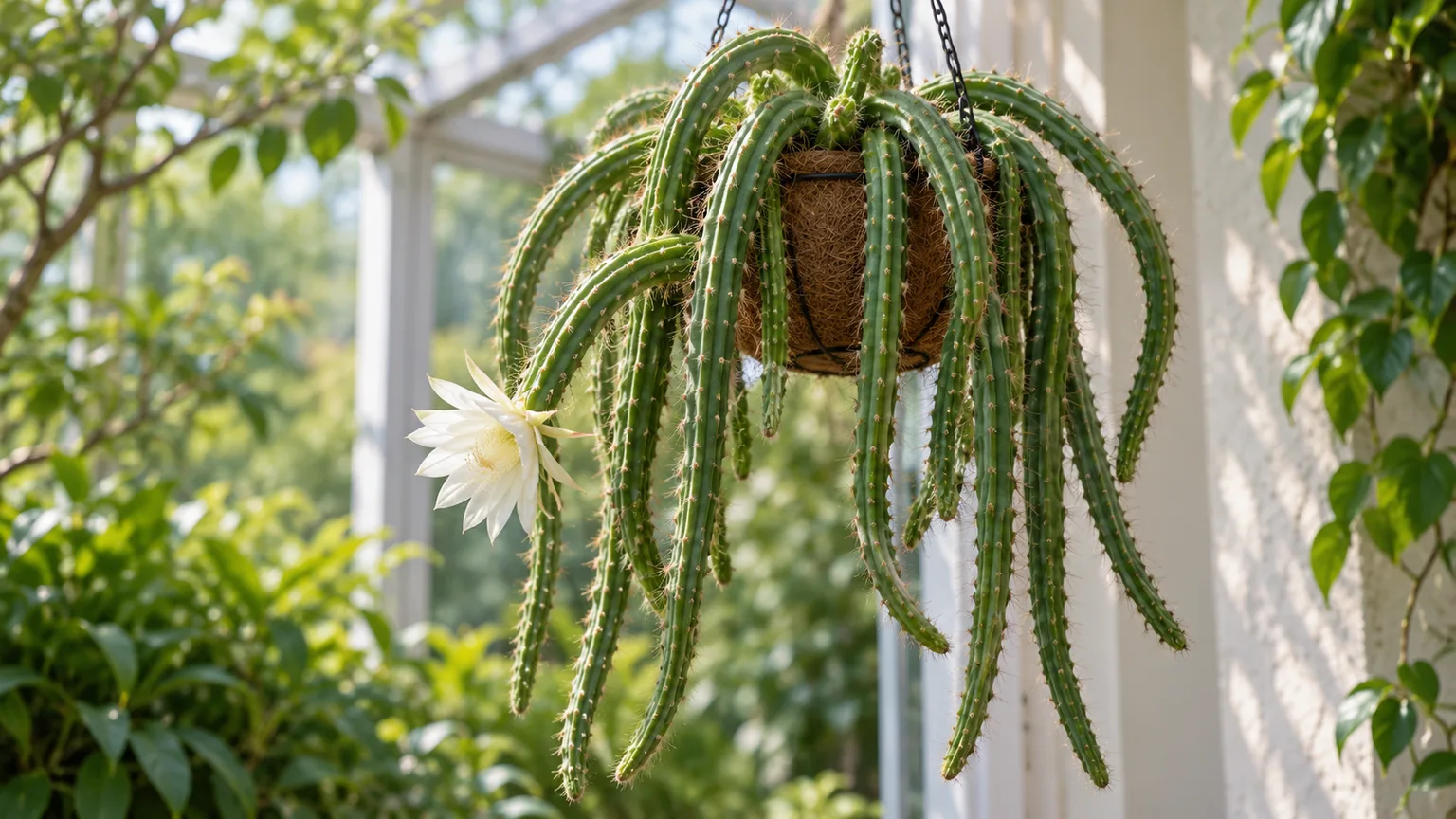
The dog tail cactus is a trailing cactus with long, narrow, ribbed green stems that look striking in a hanging basket. It is often sold under Strophocactus testudo or Selenicereus testudo, but Kew’s Plants of the World Online accepts Deamia testudo and lists those names as synonyms. Knowing the names helps you identify a plant reliably; it also explains why the same cactus can have different labels from one nursery to the next.
Its care sits between two familiar cactus routines. This is an epiphytic cactus, not a desert barrel cactus, so an airy mix and more regular growing-season moisture make sense; however, it is still a succulent with water-storing stems, and permanently wet roots are a serious risk. Give it bright filtered light, let the mix dry substantially between thorough waterings, and protect it from frost. Those three choices prevent most problems before they start.
What a Dog Tail Cactus Is—and Which Name to Use
A dog tail cactus is Deamia testudo, a member of the cactus family with climbing or trailing stems and a naturally epiphytic growth habit. Kew records its native range from southern Mexico through Central America and describes it as a succulent epiphyte of a seasonally dry tropical biome—not simply a rainforest plant that needs constantly damp soil. Gardenia’s species profile describes the plant as both climbing and trailing, with long stems that may reach several feet in favorable conditions, and notes that it can also grow across the ground outdoors in suitable climates.
The practical takeaway is that its roots need air as well as moisture. In nature, an epiphyte grows on or among other plants rather than in a deep, compact soil bed; at home, a potting medium that sheds excess water but retains a little moisture is a better fit than either heavy houseplant soil or a very dry desert-cactus blend. The stems can become long and heavy, so a secure hanging planter or shelf with room below it is useful once the plant settles in.
Common names are less stable than botanical names. A plant tag may read dog tail cactus, Strophocactus testudo, or Selenicereus testudo; Kew currently treats the latter two as synonyms of Deamia testudo. Other trailing cacti are sometimes sold under overlapping “tail cactus” names, so check the botanical name when buying and before following species-specific advice. This page uses “dog tail cactus” for the plant Kew recognizes as Deamia testudo.
A mature plant may send stems several feet over a basket. Gardenia reports 8 to 10 feet in ideal conditions, but a potted specimen may remain much smaller, especially indoors where light, container size, and growing season limit extension. Think of that figure as a possible mature reach, not a size your plant must achieve or a reason to force growth with extra fertilizer.
Where to Grow It Indoors or Outdoors
Indoors is the dependable option in climates with cold winters. Place the basket near a bright east-facing window or behind a sheer curtain at a brighter south- or west-facing window, where the plant can receive strong ambient light without hours of sudden, scorching sun. A hanging position also keeps the trailing stems from being crushed on a sill, though the basket should remain reachable for watering and inspection.
Outdoor growing is reasonable only where frost is rare and the plant can be sheltered in cold weather. Gardenia lists the plant for USDA zones 9 through 11 and reports brief cold tolerance in some references, but that is not a guarantee that a wet, container-grown plant will survive a freeze. Kew’s taxonomic record does not set a temperature threshold, and the sources available for the species do not establish one dependable minimum. Treat it as frost-sensitive: grow it in a movable container, bring it inside before cold nights, and do not use a zone label as permission to leave it exposed to frost or winter rain.
If you move an indoor plant outside for summer, acclimate it over a week or two. Start it in bright shade, then increase the light gradually while watching the sun-facing side for tan or bleached patches. A protected porch or tree-filtered patio is safer than placing a plant straight into afternoon sun. Before bringing it indoors again, inspect stem joints and the soil surface for insects, and let the pot drain fully so you do not carry standing water inside.
Light: Bright, Filtered, and Acclimated Gradually
Give a dog tail cactus bright light for much of the day, with gentle morning sun if it is acclimated. A bright east window is a good starting point; a south- or west-facing window may work when the plant sits back from the glass or receives a sheer curtain during the hottest hours. In a dark corner, new stems tend to lengthen, thin, and lose their compact, sturdy look as they stretch toward a light source.
Published species profiles vary from full sun to part shade, while Plantophiles’ care guide recommends bright indirect light and cautions against intense exposure. The difference is easier to resolve by thinking about climate and acclimation: a plant grown outdoors in gradual sun may tolerate more exposure than one shipped from a shaded greenhouse to hot window glass. Start with bright filtered conditions; only increase direct sun slowly if new growth remains firm and evenly green.
Light stress has two opposite patterns. Long, pale, floppy new stems usually point to insufficient light, while dry tan patches on the side facing a window suggest scorch. Do not move a stretched plant into full sun to “fix” the old stems; old growth will not become compact again, and the sudden change may add burn. Move it a little closer to brighter light, wait for the next growth flush, and judge the new stems.
Soil and Drainage for an Epiphytic Cactus
Use a loose, breathable potting medium that drains freely but does not become bone-dry immediately after every watering. A practical starting mix is about two parts small orchid bark and pumice or perlite to one part ordinary potting mix. The bark keeps larger air spaces around the roots, while the finer portion holds enough moisture for an epiphytic cactus with succulent stems. You can adjust the ratio: use more mineral material in a humid room or a plastic pot that dries slowly, and a little more fine mix in a very dry home if the plant shrivels between checks.
Avoid dense garden soil, peat-heavy mix that stays soggy, and a layer of gravel placed at the bottom of the pot. A drainage hole and an open mix matter more than a decorative pebble layer; water must be able to leave the container rather than collect around the roots. If you already have a bagged cactus mix, loosen it with bark or perlite and test how quickly it drains before committing the whole plant to it. This guide to cactus soil explains how to compare bagged mixes and amend them for different cactus growth habits.
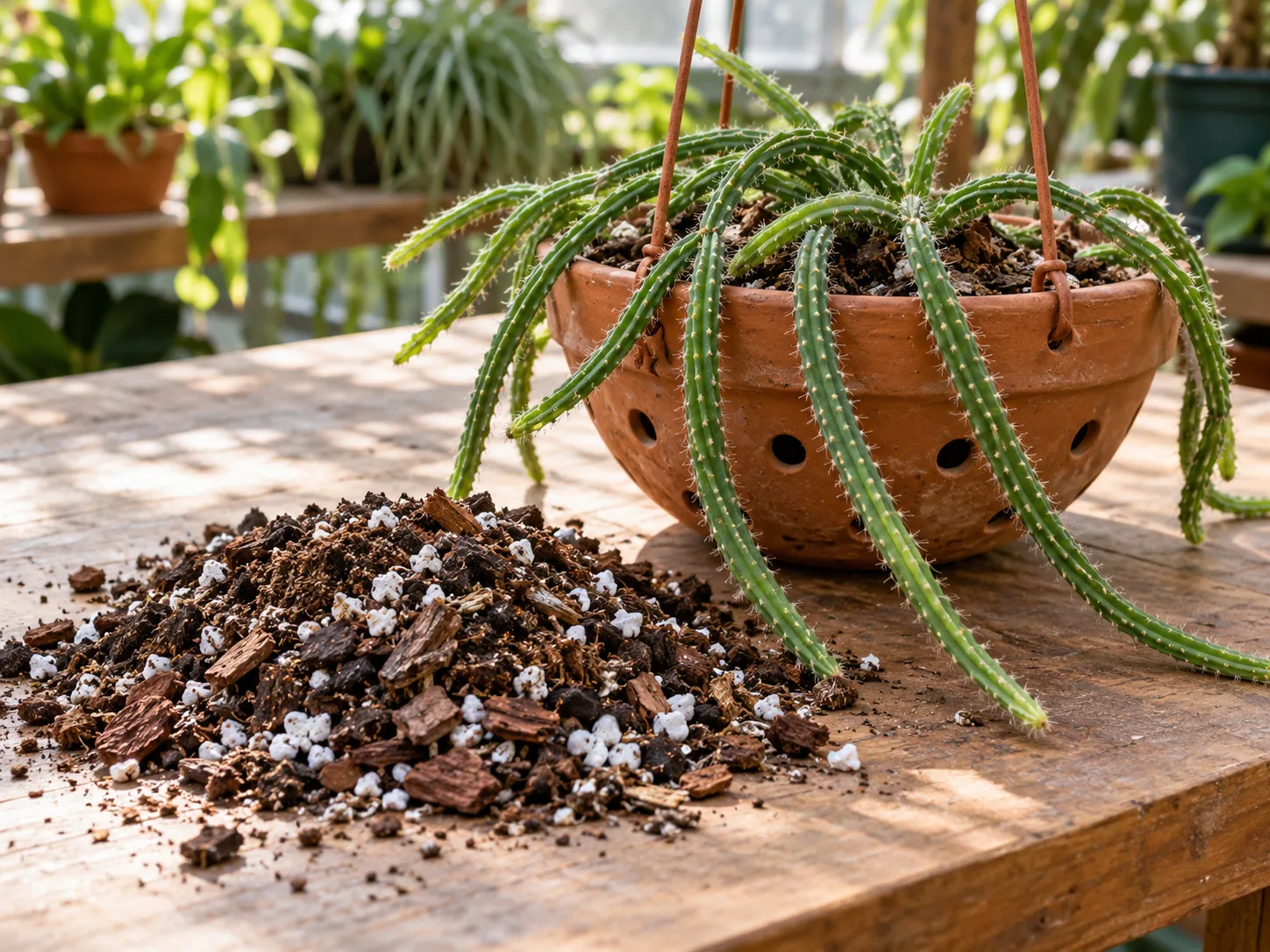
A useful test is to water a small sample of the mix in a spare pot. It should wet evenly, drain promptly, and feel damp rather than muddy afterward. If water pools on the surface, the medium is too compact or the container is blocked. If water runs straight down the sides while the center remains dry, the mix may have become hydrophobic; rewet it slowly rather than assuming the plant has received a full drink.
Watering Without Keeping the Roots Wet
Water thoroughly during active growth, then allow the medium to dry substantially before watering again. Do not use a weekly calendar: a small clay pot in warm bright conditions can dry quickly, while a large plastic basket in cool indoor air can stay damp for days. Instead, feel the upper couple of inches of mix, lift the pot to learn its dry weight, and consider how much light and warmth the plant has received since the last watering.
When the upper mix has dried and the pot feels noticeably lighter, pour water across the surface until it runs through the drainage holes. Let the basket drain completely and empty any saucer. This gives the roots a full wetting followed by access to air, rather than frequent sips that keep the center of the root ball damp. Gardenia’s profile recommends moderate watering during growth and drying between waterings; Plantophiles likewise suggests checking the mix before watering instead of leaving water at the base.
Reduce watering when growth slows in the cooler, darker part of the year. The mix should dry more slowly as light and temperature drop, so wait longer between drinks and never water just because a set number of days has passed. If a stem is slightly less plump but the mix remains damp, do not add water automatically; inspect the roots and drainage first. If the plant is shriveling and the mix is dry all the way through, water it thoroughly and then return to the normal dry-down cycle.
Newly rooted cuttings and recently repotted plants need a gentler routine. A cutting has few roots to use a large volume of water, so keep its medium only lightly moist after the wound has callused and avoid saturating the pot. For a repotted mature plant with disturbed roots, give damaged roots time to dry before the first watering; do not keep a freshly wounded root system in wet mix.
Temperature, Humidity, and Seasonal Changes
Keep the plant warm and frost-free. It is best treated as a houseplant or a warm-climate container plant that can be moved under cover, not as a cactus that can stay outside through winter in most regions. Because hardiness references disagree and do not offer a well-established species-specific freeze limit, bring it indoors before frost and avoid prolonged cold, wet conditions. A conservatory, bright room, or sheltered greenhouse is more dependable than an exposed outdoor basket.
Humidity does not need to be engineered to a precise percentage. The species tolerates the humid air of a protected growing space, but it also grows in a seasonally dry tropical biome, so it is not helpful to treat humidity as a substitute for watering or drainage. Average household air is usually a reasonable starting point if stems remain firm. If a room is very dry and hot, modestly increasing ambient humidity can reduce rapid moisture loss, but keep air moving and do not mist so often that water sits in stem joints.
Season matters more than a fixed schedule. During brighter, warmer months, the plant may push new growth and use water faster; in winter, shorter days and cooler rooms slow both growth and evaporation. Avoid cold drafts, heating vents that bake the basket, and a plant stand directly over a radiator. When you change rooms or move the plant outdoors, give it time to adjust rather than changing light, temperature, and watering all at once.
Fertilizer: Use Less Than You Think
A healthy dog tail cactus does not need heavy feeding. Gardenia notes that an established plant can benefit from diluted fertilizer during the growing season, particularly when it is root-bound. If you choose to feed, use a balanced houseplant or cactus fertilizer at a reduced label rate while the plant is actively producing new stems, and water the mix first so fertilizer is not applied to a completely dry root ball.
Skip fertilizer in winter, on a stressed plant, and on cuttings that have not rooted. Extra nutrients cannot compensate for dim light, compacted mix, or root damage; they may encourage weak, elongated growth that is difficult to support. If a mature plant is healthy but not blooming, increasing fertilizer is not a reliable bloom trigger. Correct the light and seasonal routine first, then allow time for the plant to mature.
Choosing a Pot and Repotting
Choose a shallow or moderately deep container with several unobstructed drainage holes and a hanger strong enough for the pot plus wet mix. A broad basket gives the plant room to spread at the crown, while the hanging position supports the trailing stems. Do not upsize dramatically: a pot much larger than the root ball holds unused moisture around roots that cannot yet absorb it.
Repot when roots crowd the drainage holes, the mix has broken down and stays wet, or the plant becomes unstable—not simply because a year has passed. Move up only one pot size, gently loosen the outer root ball, and remove mix that is clearly compacted or sour. Set the crown at its previous depth and fill gaps without pressing the mix into a dense plug. Avoid burying the base of the stems deeply, where damp medium can sit against the plant.
After repotting, keep the cactus in bright filtered light and give any broken roots a short dry recovery before watering. Then soak the mix and let it drain. If roots were healthy and undisturbed, there is no need to impose a long drought; if you had to remove soft or damaged roots, wait until cuts have dried and the plant is stable before resuming a full watering. A step-by-step cactus repotting guide can help with safe handling and container setup.
Pruning and Training Long Stems
Pruning is optional. Trim stems that are broken, diseased, too long for the available space, or dragging on a surface where they can be damaged. Use clean, sharp shears and make a neat cut at a natural joint or just above a healthy section; avoid crushing or twisting a stem, which can leave a ragged wound.
The plant may branch near a cut, but pruning should not be used to force a particular shape before the plant has enough light to support new growth. If the whole plant is stretched and pale, improve the light gradually rather than repeatedly cutting it back. Remove only what you need to, because every healthy section contributes photosynthesis and can potentially become a cutting.
Let pruned sections dry before potting them. If a cut is soft, black, or visibly rotting, discard that material and cut back to firm, healthy tissue with a clean blade. Wipe the blade between cuts when working through diseased sections so you do not transfer damaged tissue along the plant.
Propagating Dog Tail Cactus
Stem cuttings are the simplest way to make another plant that matches the parent. The best time is during the warm active-growth season, when a cutting can root without being kept cold or wet for a long stretch. Choose firm, healthy growth rather than a stem that is already pale, shriveled, or soft; a cutting carries its starting condition with it.
Rooting Stem Cuttings
Select a stem segment several inches long and cut cleanly through it with a sanitized blade. Leave the segment in a dry, shaded, airy place for several days so the cut end forms a callus; a large or thick cut may need longer than a small one. Do not plant a fresh wet wound directly into moist mix, because the buried end can rot before roots form.
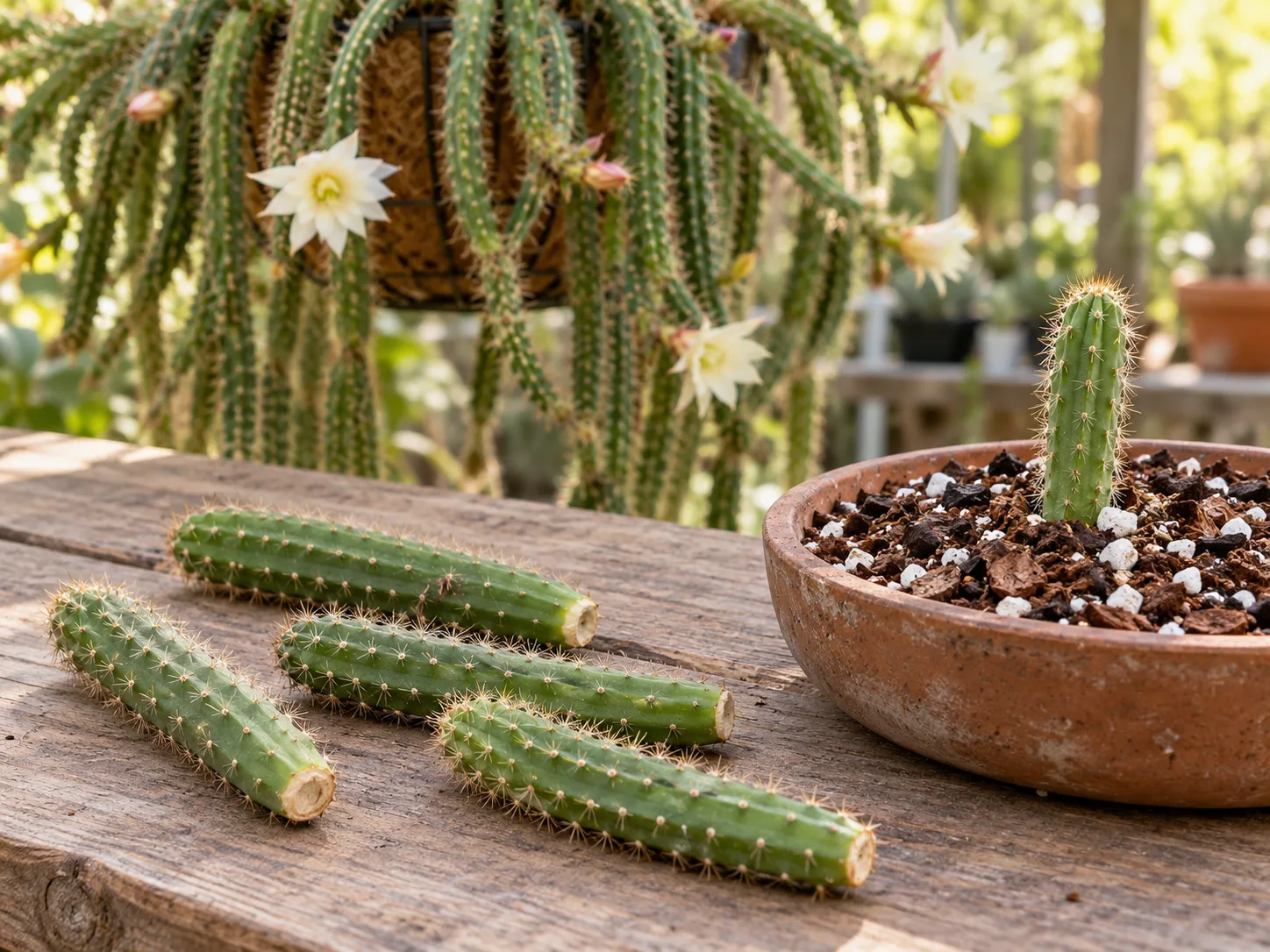
Set the callused end shallowly into a small pot of barely moist, fast-draining mix, just deep enough for the segment to stay upright. Keep it warm in bright indirect light and out of harsh direct sun. Do not water as if it were a rooted adult plant; a cutting has little capacity to use water, so a saturated pot only prolongs the time the wound stays damp.
After a few weeks, check for progress with a very gentle tug or by watching for fresh growth. Rooting speed depends on warmth, cutting size, and conditions, so do not keep pulling the stem out to inspect it. Once it resists a light tug and begins to grow, move it into a slightly larger pot if needed and gradually follow the mature plant’s watering rhythm. The RHS guide to epiphytic cacti gives similar general advice for callusing and rooting cuttings from related epiphytic cacti, though its timing applies to Epiphyllum, not as a guaranteed schedule for Deamia testudo.
Growing from Seed
Seed is possible but slower and less predictable than a cutting. It requires a seed-bearing fruit, which in turn requires successful flowering and pollination; a single indoor plant may never produce fruit. If you do have viable seed, sow it shallowly on a clean, fine, free-draining medium, keep it warm and lightly moist, and provide bright indirect light. Do not bury the seed deeply or let a covered seed tray stay waterlogged.
Seedlings are tiny and vulnerable to drying out, but they are also vulnerable to stagnant, overly wet conditions. Ventilate any cover and gradually expose seedlings to ordinary room air once they have established. For a plant that needs shaping or replacing quickly, use a cutting. Seed is best treated as an experiment rather than the quickest way to fill a hanging basket.
What to Expect From Flowers
A mature dog tail cactus may produce large, fragrant white flowers that open at night, often in the warmer part of the growing season. Gardenia’s species profile describes blooms in summer or early fall, but indoor timing can shift with climate, light, and the plant’s maturity. The flowers are a bonus rather than a dependable annual display, so a plant that grows healthy stems without blooming is not necessarily being mishandled.
If you want to encourage flowering, first provide sustained bright filtered light, healthy growth, and a seasonal slowdown rather than constant warmth and feeding. Keep the plant frost-free; do not expose it to cold to force buds, because species-specific temperature thresholds are not well established. Avoid moving a plant after buds appear, and do not let it become severely dehydrated. If there are no flowers, review light and maturity before changing fertilizer or watering dramatically.
Troubleshooting Common Dog Tail Cactus Problems
Start with the stem and the mix together. A symptom by itself rarely identifies the cause: a pale stem may reflect low light, but it can also follow stress; soft tissue can signal rot, cold injury, or damage. Check whether symptoms are on new or old growth, whether the pot is heavy or light, and whether the roots have air and a clear path for drainage.
Epiphytic cacti kept indoors can also attract mealybugs, aphids, or red spider mites. The RHS lists these among common glasshouse pests of Epiphyllum; dog tail cactus is a different genus, but checking stems and joints is still sensible. Look for cottony clusters, small moving insects, sticky residue, or fine stippling, especially where stems overlap. Isolate an affected plant and identify the pest before choosing a treatment; avoid spraying a product unless its label allows use on your plant and in your setting.
Soft, Dark, or Collapsing Stems
Soft, dark tissue near the base or a stem that collapses is an urgent sign to check for rot. If the mix is wet, stop watering, remove the plant from its pot, and inspect the roots and stem base. Healthy roots should be firm; trim only clearly mushy or black material with a clean blade, discard saturated old mix, and repot remaining healthy tissue in a clean pot with open drainage. If rot has reached the whole crown, a sound upper stem may still be salvageable as a cutting after you cut well above the damaged area and let the wound callus.
If the mix is dry, the stem is firm but slightly shriveled, and the pot is very light, underwatering may be more likely. Give the plant a thorough drink and let excess water drain, then reassess over the next several days. Do not respond to every soft-looking stem with water; when the root ball is already wet, extra water accelerates root failure rather than restoring firmness.
Thin, Pale, or Weak Growth
New stems that grow unusually thin, pale, or limp usually need more usable light or a better root environment. Move the basket toward a brighter window over several days, or use a grow light if natural light is limited. If the new growth remains pale after the light change, check roots, drainage, and fertilizer history; a plant with damaged roots cannot reliably take up water and nutrients even when the window is bright.
Older stems do not thicken just because conditions improve. Judge the change by the growth that appears after the adjustment. Keep watering based on the mix, not on the assumption that a weak-looking plant must be thirsty, and avoid a strong fertilizer dose while it is recovering.
Tan Patches, Pests, and Surface Damage
Dry tan or bleached patches concentrated on the window-facing side are consistent with sun scorch, particularly after a sudden move outdoors or closer to glass. Return the plant to bright filtered light and reintroduce direct sun more slowly if desired. Those patches will not turn green again, so watch the next growth instead of repeatedly moving the plant in response to old damage.
If the mark is soft, spreading, or accompanied by a sour smell, treat it as possible rot rather than sunburn. If stems have cottony deposits or fine speckling, inspect for pests at the joints and under overlapping sections. Remove dead material, improve air movement around the basket, and isolate it from nearby plants while you confirm the cause. A single spot on an old stem can also be a healed injury; if it remains dry and stable, observe it before making a drastic cut.
Conclusion
Dog tail cactus care is easiest when you respect the plant’s two sides: it is an epiphytic cactus that benefits from an airy root zone, and a succulent that still needs a real dry-down between drinks. Start with bright filtered light, a draining bark-based mix, and a frost-free position; then change one condition at a time and judge the response in new growth. If you remember the botanical name Deamia testudo alongside the older labels on nursery tags, you can also verify that the advice and plant you are buying refer to the same species.



