How to Prune Lavender in Fall Safely Before Frost Hits
Learn when a light fall trim is safe, how to cut lavender without exposing old wood, and when to wait until spring based on your plant and frost window.

Quick answer: prune lightly only when the timing is right
You can prune lavender in fall, but you do not have to. A light trim is reasonable after the main flush of flowers fades if the plant is established, you can see healthy green growth to cut, and your area still has a comfortable stretch of mild weather before its usual first frost. If flowers are still opening, frost is near, or the plant is already sparse and woody, leave shaping until spring.
Think of an autumn trim as cleanup, not a reset. Remove spent flower stems and a little loose green growth to keep the plant compact; do not shear it into a bare mound or try to shrink a large shrub in one pass. A conservative cutoff often used by garden writers is about six weeks before expected frost, but that is a planning rule rather than a guarantee. Local weather can turn early, and lavender types differ in hardiness.
What a fall trim can and cannot do
A modest post-flowering cut can tidy a plant, remove long flower stalks that may flop, and keep the leafy cushion from becoming increasingly loose. Regular pruning over the years can help lavender stay compact. The Royal Horticultural Society recommends annual trimming in late summer after flowering, removing spent stalks and a small amount of leaf growth while avoiding old woody stems (RHS lavender growing guide).
There are two different jobs gardeners often call “pruning.” Deadheading means removing faded flower stems; shaping means shortening leafy shoots to manage the shrub’s outline. If the plant is healthy but the frost window is short, deadheading a few awkward stalks may be all you need. You can also leave some seed heads if birds use them or if you prefer the winter texture. Lavender does not need a fall cut simply because the flowers have faded.
That advice does not mean a late fall haircut will protect every plant from snow or guarantee more flowers next year. Pruning is one part of care; cold tolerance, drainage, plant age, and the weather around your garden matter too. If your plant is tender or your winters are severe, avoiding fresh cuts before dormancy may be the better choice. Purdue Extension, writing for a region where lavender can be marginally hardy, recommends waiting until spring growth is underway so a gardener can distinguish live branches from winter-killed ones (Purdue Extension).
Identify your lavender before choosing a pruning date
“Lavender” covers several species and hybrids, and bloom timing is not identical across them. If you still have the nursery tag, check it. Otherwise, look at the flowers and foliage, then use the plant’s actual bloom cycle and your winter conditions to guide the decision. Do not choose a date from the calendar alone.
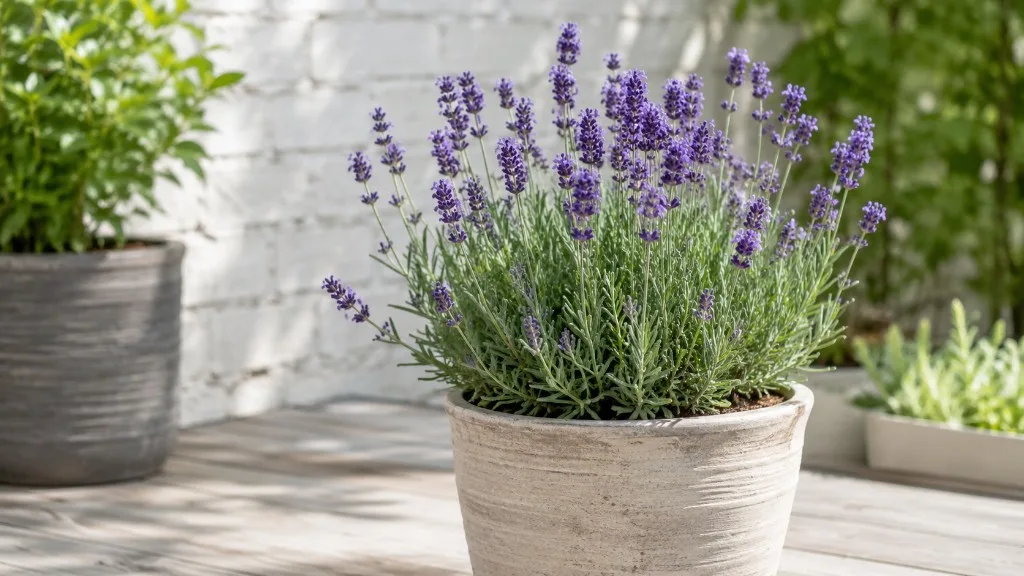
English lavender and Lavandin
English lavender (Lavandula angustifolia) is generally the hardier group in gardens with cold winters. Many plants finish their main show in summer, leaving a potential post-bloom pruning window before fall weather sets in. Lavandin (Lavandula × intermedia) often grows larger and can flower later, so its blooms may not fade until a point when a fall trim would leave little recovery time. In both groups, follow green shoots rather than cutting into the woody framework.
The RHS describes English lavender and its hybrids as the tougher types, while noting that the less hardy species are better protected in colder conditions. Those differences matter more than a generic “prune in fall” instruction. A hardy English lavender that has finished flowering in August in a mild region is a different case from a late-blooming Lavandin facing an early freeze.
Spanish and French lavender
Spanish lavender (Lavandula stoechas) is often easy to recognize by the petal-like “ears” above its flower head. It is less hardy than English lavender and is frequently grown in containers where winter protection is possible. The exact plant sold as French lavender can vary by region and label, so verify its botanical name rather than assuming that common names mean the same thing everywhere. The RHS growing guide distinguishes these less hardy types from English lavender and its hybrids.
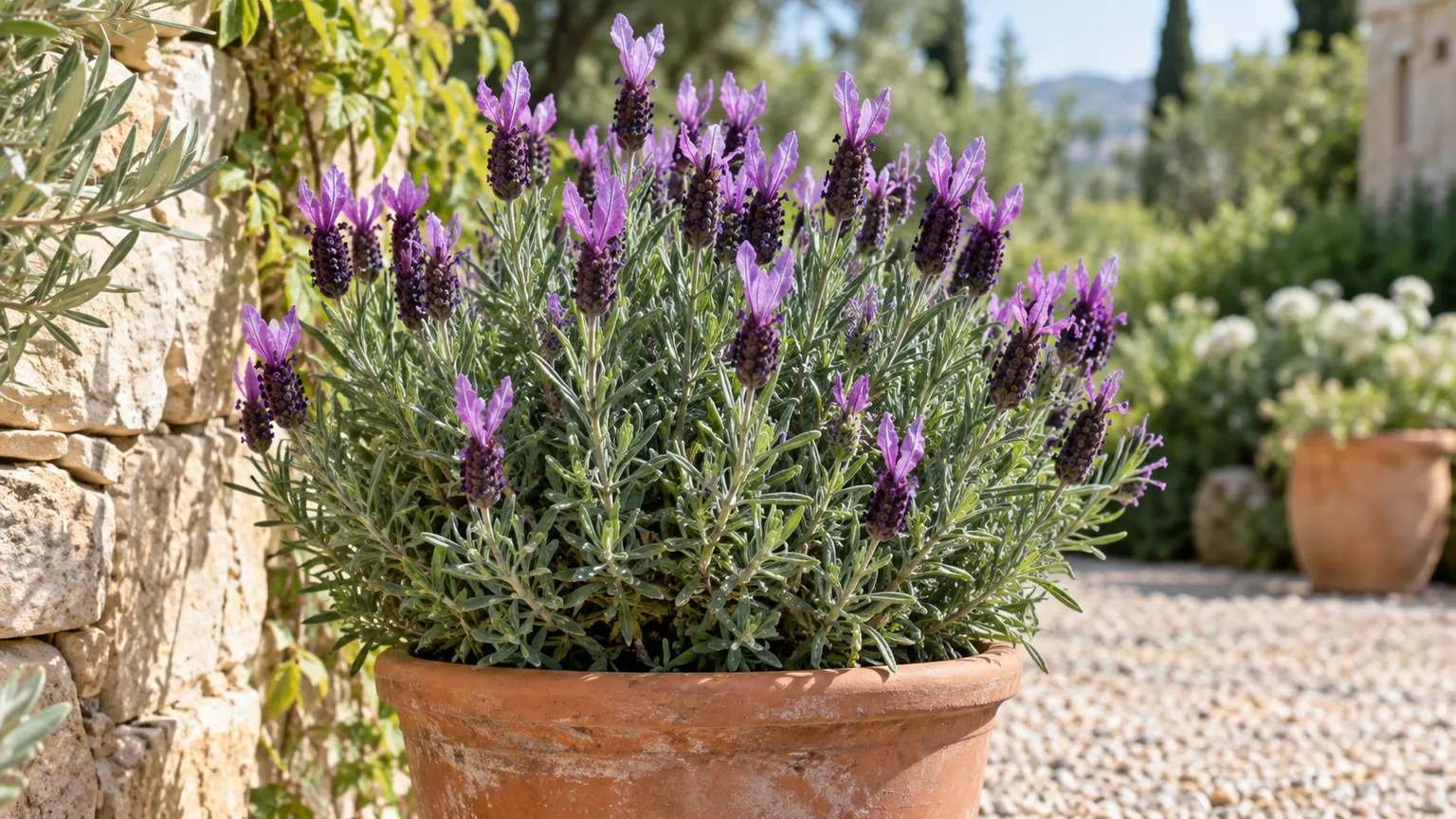
Because tender lavender has less margin for cold injury, keep fall cuts especially small—or skip them. If a Spanish or French lavender is in a pot and will be moved to shelter, do not use that move as a reason to prune it hard first. Remove only flower stalks or damaged shoots that are easy to identify, and protect the plant according to its species and local winter conditions.
Use flowering and frost together to set the window
Start by asking two questions: has the plant finished its main flowering, and is there enough mild weather left for it to settle after a trim? If either answer is no, wait. “Fall” might mean several warm weeks in one garden and the start of freezing nights in another; your plant’s condition is a better guide than the month name.
For a practical cutoff, many gardening guides advise finishing routine pruning roughly six weeks before the expected first frost. Better Homes & Gardens and Southern Living both use that buffer as a way to avoid cutting so late that the plant has little time before cold weather. Treat it as a conservative rule of thumb: average frost dates are estimates, not appointments, and an unusually early cold snap can arrive sooner.
Use the first frost estimate for your neighborhood rather than a statewide average when one is available, and factor in the garden’s actual exposure. A sheltered south-facing bed may stay mild longer than an exposed slope, while a low spot can collect cold air. These differences do not justify pushing the pruning window right up to frost; they help explain why two gardeners in the same region can have different results. If your lavender blooms late every year, shift the routine shaping to the end of its bloom rather than trying to force it into an arbitrary September date.
If you are already inside that buffer, the tidy appearance can wait. Clip a clearly broken or diseased stem with clean pruners if leaving it creates an immediate problem, but do not reshape the whole plant. In a cold climate, wait until new spring growth shows which stems survived; dormant stems can look dead before they are ready to grow.
Why the woody base is a hard stop
Lavender is a woody subshrub, not a soft perennial that reliably pushes new shoots from any point on an old stem. Its outer green growth bears the leaves and flowers you can safely shorten. Older stems near the center become brown, hard, and often bare. When a cut removes all leafy growth from a branch, that section may not sprout again, leaving a permanent gap.
This is why “cut one inch above the wood” is not a reliable universal measurement. A plant may have green leaves close to the branch base, while another has long leafless stems. Instead, locate the lowest healthy leafy shoots on each branch and cut above them. If no green growth remains below the point where you want to cut, do not make that cut in fall.
A woody, misshapen plant can be frustrating, but a severe autumn cut is unlikely to solve the problem safely. If there is still green growth, use several seasons to reduce its size gradually, or replace an old plant that has become mostly bare. Do not assume that every brown stem is dead; wait until spring growth resumes before removing questionable branches.
How to prune lavender safely in fall
Work around the plant slowly rather than shearing the top into a flat surface. Lavender naturally forms a rounded cushion, and selective cuts preserve its shape while leaving leaf-bearing growth in place. If a plant is small, recently planted, or already thin, the safest fall pruning may be limited to spent flower stalks.
Inspect the plant and prepare clean, sharp pruners
Choose a dry day when the foliage is not wet. Use sharp hand pruners or garden scissors that can make clean cuts through the stems you intend to remove. Before you start, look at the whole plant from several sides and identify the green leafy envelope, the bare woody center, dead or broken stems, and any late flowers that are still worth leaving for pollinators or seed.
If the tool has been used on a plant with a suspected disease, clean it before moving to lavender. Sharp blades reduce crushing, which makes it easier to stop exactly above a leafy shoot. You do not need loppers or hedge shears for ordinary fall cleanup; bulky tools make broad, indiscriminate cuts more tempting and are harder to steer around the plant’s woody framework.
Decide on the stopping line before you cut: you will shorten only stems that retain green leaves below the cut. If you are not sure whether a branch is alive, leave it. A quick inspection prevents the common mistake of treating the plant as one hedge-like surface when its shoots have different lengths and different amounts of foliage.
Remove flower stalks without hollowing the cushion
Hold a spent flower stem and follow it down to the leafy growth. Snip the flower stalk just above a green side shoot or leafy section rather than deep in the plant. Continue selectively around the mound, stepping back every few cuts to check that you are not creating a hollow center or cutting one side shorter than the other.
You do not need to remove every faded bloom in autumn. If the seed heads are attractive or you want to leave some structure for wildlife, keep them and make only the cuts needed for shape or safety. The goal is to reduce floppy, finished stems, not to make the plant look as if it has just emerged from a severe haircut.
Shape only green, leafy growth
Once flower stalks are handled, shorten only the tips that extend beyond the plant’s natural outline. Make each cut above a visible set of leaves or a leafy side shoot, keeping the remaining stem green. Move between the top and sides in small passes. A rounded profile is useful, but preserving living foliage is more important than achieving a perfect ball.
Do not cut straight across every stem at the same height. That can remove the leaves from upper branches and leave a brown, leafless shell. If the lavender is leaning, do not try to correct the whole lean by cutting one side back to wood; support, site conditions, or gradual spring pruning may be needed instead.
Check your total removal before you finish
A useful safety ceiling is to remove no more than about one-third of the plant’s soft green growth at one time, and even less when winter hardiness is marginal. This is an upper limit, not a fall target. For a late-season trim, often the right amount is simply the spent flower stalks and a few untidy tips.
Pause and compare the before-and-after outline. You should still see a substantial leafy cushion, not just a woody framework. If the plant looks suddenly open or the cuts have exposed many bare stems, stop; additional shaping can wait until you see how it comes through winter. The Better Homes & Gardens pruning guide also cautions against cutting into woody growth because it may not produce new leaves.
If frost is close, leave the shaping for spring
If the plant has finished flowering but the first frost may arrive in a few weeks, you have not missed a necessary deadline. Leave the plant as it is and mark it for spring inspection. A lavender mound with spent stalks is usually a better winter starting point than one cut hard just before temperatures drop.
In spring, do not rush to remove every brown-looking branch on the first warm day. Wait until new growth is clearly active, then remove stems that are demonstrably dead and shorten living shoots to leafy growth. Purdue Extension notes that spring growth can be delayed after a severe winter; gardeners who prune too early may mistake dormant branches for dead ones. This is especially useful guidance where lavender is at the edge of its hardiness.
Adjust for young plants, containers, and stressed lavender
A new plant should not receive a hard fall haircut simply because its shape looks uneven. A lavender planted this season—especially one planted late—needs time to establish roots. Remove a broken flower stem if needed, but save major shaping for a period of active growth when the plant can recover. Established, vigorous plants have more room for a light post-bloom trim than young transplants do.
Container lavender needs a separate winter plan because roots in a pot are more exposed to temperature swings than roots in the ground. Identify the species, confirm whether it can stay outdoors in your climate, and move tender types to a bright, frost-free place if appropriate. Pruning does not make a tender type winter-hardy, and leaving a wet pot in cold conditions can create problems even when the top growth is intact.
For a pot that must remain outside, the pot’s location and drainage deserve attention before you take the shears to the plant. Keep drainage holes clear, avoid a saucer that holds water through freezing weather, and use the shelter recommended for that cultivar and climate. Do not bring a cold-hardy English lavender into a warm, dim room as a substitute for outdoor care; excessive indoor warmth and weak light can produce soft growth and make the plant harder to manage. When species identification is uncertain, prioritize a sheltered, well-drained position and a minimal cut.
Skip routine pruning on a plant already weakened by drought, poor drainage, disease, or a recent transplant. First correct the growing problem where possible. If only a few stems are clearly diseased or broken, remove those selectively; avoid combining a hard cleanup with a hard prune just before winter.
Fall or spring: choose the safer option
| Your situation | Safer choice | What to do |
|---|---|---|
| Established, hardy lavender; main bloom finished; several mild weeks remain | Light fall trim | Remove spent stalks and a small amount of green tip growth |
| Late-flowering Lavandin; frost is approaching | Wait | Leave shaping until spring and preserve live foliage |
| Spanish/French lavender in a cold region | Very light cleanup or wait | Protect the plant based on its hardiness; do not prune to compensate for cold |
| New or stressed lavender | Wait | Remove only broken or clearly diseased material |
| Woody plant with little green growth | Do not cut back hard | Preserve remaining leaves and reassess during spring growth |
| Cold region where plants often suffer winter dieback | Spring assessment | Wait for active growth to identify live stems |
The table is a decision aid, not a promise that a particular lavender will survive a particular winter. A well-drained site, suitable species, and the way your local winter behaves may matter more than whether you remove a few flower stalks in September. When uncertain, postpone aesthetic shaping; it is reversible to leave a stem for now, but a cut into bare wood cannot be undone.
Fall pruning mistakes that cause avoidable damage
The most costly mistake is cutting into old wood to force a compact shape. Lavender may fail to produce new growth from a bare stem, so a hard haircut can leave holes or kill sections instead of rejuvenating them. Before each cut, find green leaves below it; if you cannot, leave that branch alone.
Another mistake is treating six weeks as a guaranteed safe period. It is a useful buffer, but weather varies and cold snaps can arrive early. Check a local frost estimate, watch the forecast, and be more cautious with late bloomers and tender species. Likewise, the one-third figure is not permission to remove a third of the plant every fall.
Finally, avoid pruning a plant simply because the calendar says “fall garden cleanup.” Lavender retains evergreen or semi-evergreen foliage in many climates, and a little natural looseness is not a problem that needs an urgent fix. Do not remove all remaining flowers if pollinators are still using them, and do not confuse a dormant, slow-growing plant with a dead one before spring growth has had a chance to appear.
What to do after a light trim
Gather cut stems from the crown so they do not mat against the plant, especially if your autumn is wet. Keep the base open to air and avoid piling moisture-holding debris directly against the woody crown. Lavender generally favors a sunny position and well-drained soil; pruning cannot compensate for a site that stays waterlogged through winter.
If your soil is heavy or the plant sits where runoff collects, note that problem for a spring fix rather than trying to solve it with extra cutting. Lavender dislikes persistent wetness around the crown; opening the top of the shrub does not drain the root zone. In a well-drained bed, a light, selective trim usually needs no special follow-up beyond removing clippings and leaving the plant undisturbed as growth slows.
Do not respond to trimming by feeding heavily or keeping the soil constantly wet. In cooler weather, growth slows and soil dries more slowly, so watering should reflect actual conditions rather than a fixed summer schedule. If the plant is in a pot, check drainage and the shelter plan. A brief note about the pruning date, bloom stage, and winter outcome can help you choose a better window next year.
Conclusion: a neat plant is not worth a risky cut
Prune lavender in fall only when its main bloom is finished, the plant is established, green growth gives you a safe cutting point, and enough mild weather remains before frost. Keep the job light: remove spent stalks and a few unruly leafy tips, then stop well above bare wood. If the species is tender, the bloom ran late, the plant is young or stressed, or frost is close, leave the shape alone and assess it after spring growth begins.
Lavender does not need to look perfectly clipped to get through winter. A conservative decision now protects the green growth that can carry the plant into next season.