Creeping Plants: Types, Uses, and How to Choose
Learn what creeping plants are, how they differ from climbers, which types suit sun or shade, and how to use groundcovers on paths, slopes, and borders.
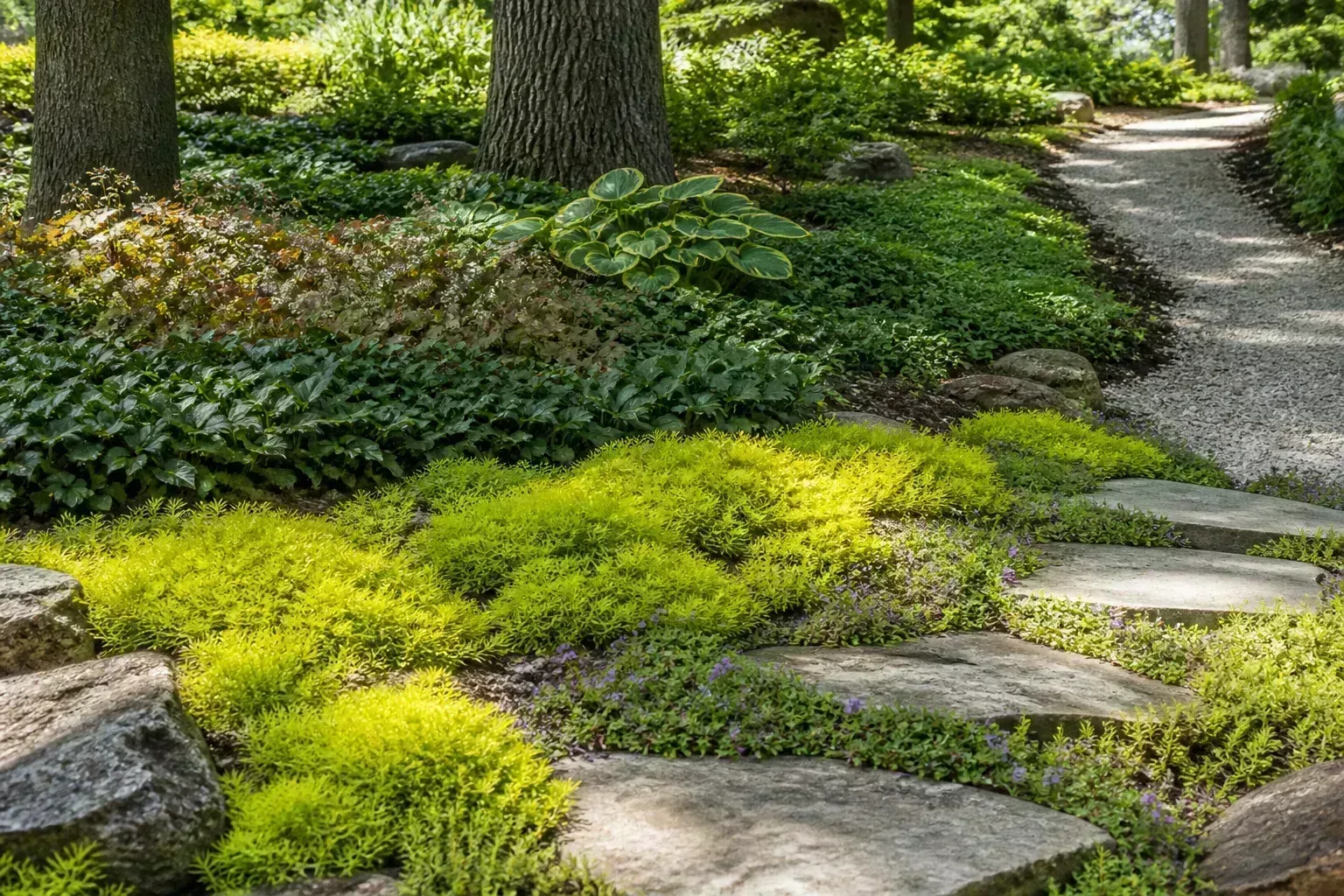
Creeping plants grow horizontally close to the ground, often spreading by runners, rooting stems, or underground rhizomes. Gardeners use them to cover bare soil, soften hard edges, fill the gaps between stones, and add a low layer of foliage or flowers beneath taller plants. Some make calm, manageable mats; others travel quickly enough to cross a path or invade a bed. The useful question is not simply how fast a plant grows, but where it will grow and what will stop it.
What makes a plant a creeper?
A creeping plant has a low, spreading habit. Its stems may trail along the soil surface, send out horizontal runners, or spread through rhizomes below the surface. Where a stem touches moist soil, some species root and form another growing point; others spread outward from a crown and gradually widen into a mat. The exact method matters because it determines how the plant fills space and how difficult it may be to divide or remove.
“Creeper” is a description of growth, not a formal plant family. Creeping thyme is a low herb, creeping juniper is a prostrate evergreen shrub, and creeping phlox is a perennial flower. Each behaves differently, so the shared name tells you to expect horizontal growth, not that the plants need the same light, soil, or care.
Creepers, groundcovers, and climbers are not synonyms
A groundcover is a landscape role: a plant or mix of plants used to cover soil. A creeper is a growth habit. Many creepers make good groundcovers, but a groundcover can also be a clumping sedge, a low shrub, a fern, or a dense perennial that does not creep in the strict sense. Penn State Extension’s groundcover guidance similarly treats groundcover as a landscape category spanning woody and herbaceous plants, selected for their fit and function.
A climber is adapted to grow upward by twining, clinging roots, tendrils, or another attachment strategy. A trailing plant will not automatically climb a trellis; if its stems are long and flexible enough, you may be able to tie or weave them into a support, but you must guide them. Some plants called creepers, including Virginia creeper, are capable climbers. Check the species’ mature habit before planting near walls, fences, or trees.
How creeping plants function in a landscape
Ground-level foliage can protect the soil surface from direct rain impact and reduce the amount of bare ground where weeds establish. A dense planting may also shade the soil, moderate surface temperature, and make an awkward area feel intentional. Fine Gardening describes groundcovers as useful for reducing erosion and weed pressure as well as for creating a carpet of color or a single accent that threads between cracks; those benefits depend on choosing a plant that suits the site and allowing it to fill in.
Coverage is not immediate, and a mat is not a weed-proof blanket. During the first seasons, open spaces between young plants still need weeding. Once the cover closes, it can make it harder for some annual weed seeds to reach light, but established perennial weeds with deep roots or spreading underground parts can push through. The gardener’s advantage is reduced exposed soil and, over time, less space to weed—not a guarantee of zero maintenance.
A planted slope can also be easier to manage than one left bare, but no small groundcover instantly stabilizes a steep bank. Roots need time to establish, and runoff can still move through a thin planting or a concentrated drainage channel. For a steep, eroding slope, combine suitable plants with sound drainage and erosion-control measures rather than expecting foliage alone to solve a structural problem.
Choose a creeper by the site you need to cover
Before buying plants, make a quick site map. Note which parts receive direct sun and for how long, whether the soil stays wet after rain, where water flows downhill, and how close the planting is to paths, lawn, neighbors, or natural areas. Record the mature width from the plant label or a reliable regional profile, not just the pot size. A small nursery pot can become a wide mat.
Then rank your priorities. If you need spring color, choose a flowering species and accept that the show may be seasonal. If you want year-round coverage, prioritize evergreen or semi-evergreen foliage. If the site sits beneath trees, root competition and dry shade may matter more than the light category alone. If the plants will be stepped on, select for occasional foot traffic and design a firm path for daily use.
Sun, shade, and soil moisture
Sunny, dry, well-drained sites suit plants such as moss phlox, creeping thyme, and many low stonecrops. Moss phlox (Phlox subulata) is a particularly clear example: North Carolina State Extension’s plant profile describes it as a dense, spreading mat from dry, rocky or sandy habitats that flowers best in full sun and can tolerate hot, dry conditions once established. It is also used in rock gardens, edging, sunny slopes, and low walls. Its needs differ from plants that tolerate soggy soil, so do not use “creeping” as a substitute for checking drainage.
For shade, look at plants adapted to woodland conditions, such as sweet woodruff, some phlox species, barren strawberry, wild ginger, or native sedges. Light shade beneath a deciduous tree is not the same as deep shade beneath evergreen branches, and both can be dry because tree roots compete for water. A shade-loving plant may still struggle if the ground is dry, compacted, or full of dense surface roots. Choose for the whole site rather than the word “shade” on a tag.
Moisture is just as important as sun. A creeping juniper that tolerates a dry bank may decline in heavy, poorly drained soil, while a woodland groundcover can scorch in a hot, exposed bed. If the soil is wet for days after a storm, choose plants that accept that condition or correct drainage before planting. If water rushes through the area, solve the runoff pattern first; a new groundcover cannot compensate for a downspout discharging onto a slope.
Foot traffic, slopes, and edges
“Walkable” usually means that a plant can tolerate occasional, light steps after it has filled in—not that it can replace a lawn or path under daily traffic. Creeping thyme and some low sedums may work between widely spaced stepping stones, where feet land on the stones most of the time. Even resilient foliage can be crushed during flowering, in wet weather, or when a shortcut turns into a regular route. Put a temporary stepping stone where people naturally walk rather than asking a plant to absorb every footfall.
Edges are a practical constraint, not an afterthought. A groundcover beside a lawn may need a regularly cut border; beside a vegetable bed, you may prefer a slower grower or a physical edging that can be inspected. On a slope, choose a spreading plant whose root habit suits the soil and the maintenance access. A fast cover may be useful on a large, bounded bank and frustrating in a narrow border with no clean stopping point.
Common types of creeping plants
The examples below are starting points, not universal prescriptions. Native range, winter hardiness, mature spread, and invasive status vary by region, and cultivars can behave differently from the species. Use the botanical name to confirm that a plant label refers to the one you intend to buy, then check a local extension, botanical garden, or invasive-plant list for your area.
Flowering mat-formers
Moss phlox (Phlox subulata) forms a low, evergreen-to-semi-evergreen carpet and covers itself with flowers in spring. It suits sunny, well-drained sites such as a rock garden, slope, wall edge, or path border. North Carolina State Extension notes that mature plantings can thin in the center as new growth spreads outward, so an old patch may need division or a refresh rather than more fertilizer. It can be trimmed after flowering to keep the mat dense and tidy.
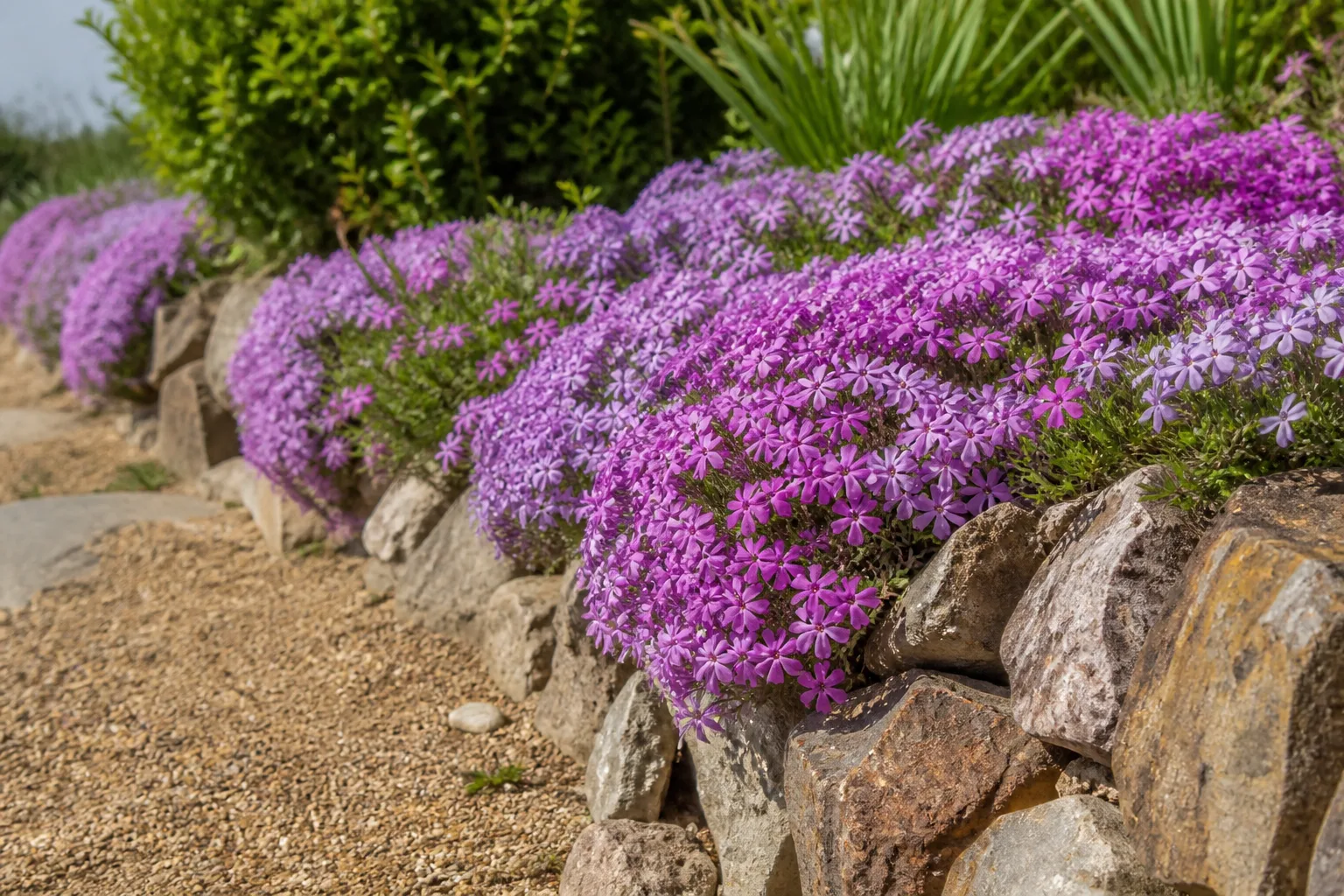
Creeping thyme (Thymus species) brings tiny leaves, a low aromatic mat, and small flowers that can attract pollinators. It is a useful candidate for a sunny path edge or the spaces between stones where drainage is sharp and soil is not constantly wet. “Thyme” names cover multiple species and cultivars, so check the plant label for mature height, width, and hardiness. Treat it as a soft surface for light, occasional contact rather than a path for steady walking, especially when it is in bloom.
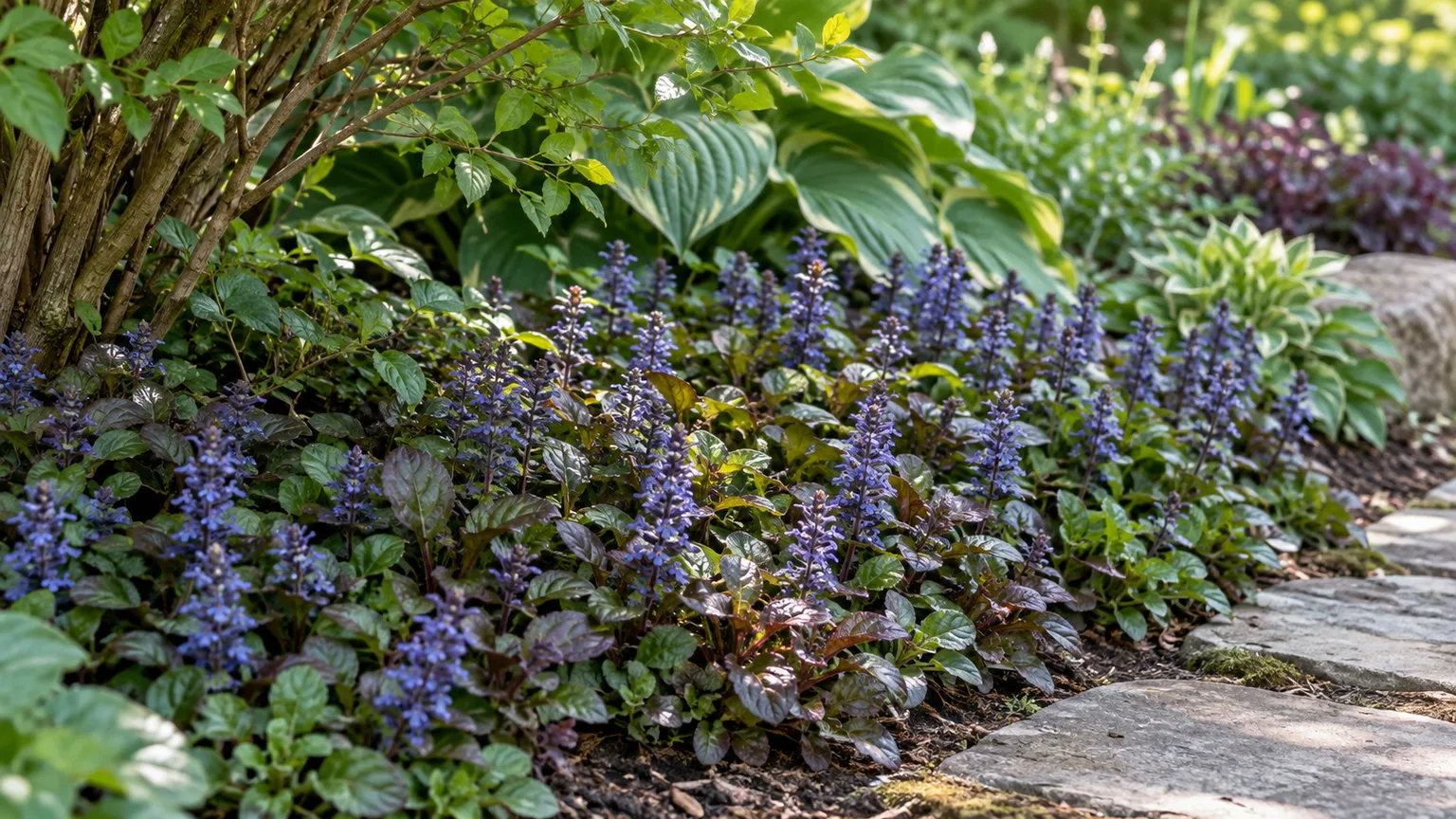
Bugleweed (Ajuga reptans) gives shady or partly shaded beds a quick carpet and short flower spikes. Its speed is the attraction and the warning: it can move into neighboring plants or lawn, and runners are easier to lift while the edge is small. A contained woodland bed may benefit from that coverage; a mixed border with delicate seedlings may not. If you need a slow, precisely bounded groundcover, choose something else.
Evergreen and foliage-first creepers
Creeping juniper (Juniperus horizontalis) is a low, woody evergreen shrub, not a soft perennial carpet. North Carolina State Extension’s creeping-juniper profile describes it as a full-sun plant for well-drained, often rocky or sandy ground; some cultivars can spread several feet wide, so confirm the cultivar before planting. Its branches can cover dry banks and rocky areas, and the foliage supplies structure when flowers are out of season. Avoid planting it where you need to walk or frequently dig: once older woody stems extend over a narrow path, cutting them back is less tidy than trimming soft new growth.
Stonecrops (Sedum and related genera) vary in height and hardiness, but many low types suit sunny, dry, lean soil. Their fleshy leaves store water, and many root readily where stems touch the ground. They are useful around stones and in sharply drained beds; they are poor choices for compacted soil that stays wet. Because species and cultivars differ, do not assume that a sedum bought for a pot will form a durable outdoor groundcover in your climate.
Sweet woodruff (Galium odoratum) and spotted dead nettle (Lamium maculatum) offer low foliage in shade, with flowers or variegation depending on the plant. Both can spread well where conditions suit them, so place them where a broad patch is welcome. Epic Gardening’s shade-groundcover guide cautions that creeping Jenny spreads rapidly and may be invasive in parts of the Midwest and eastern North America; that is a useful reminder that an appealing leaf color does not make a plant a safe choice everywhere. Check the current local list before planting any fast spreader.
Native groundcovers and lawn substitutes
A locally native groundcover can support familiar wildlife and often fits regional rainfall and soils better than an ornamental imported from another climate. “Native” is not a promise of zero care or slow spread, though; a vigorous native can still need an edge, and a plant native to one part of North America may be unsuitable elsewhere. Match the plant to your ecoregion and yard conditions instead of treating a continent-wide label as a guarantee.
Penn State Extension suggests several native choices for particular Northeastern and Mid-Atlantic sites: Pennsylvania sedge (Carex pensylvanica) for a low-input lawn substitute; golden groundsel (Packera aurea) for a spreading, spring-flowering cover; wild violet (Viola spp.) for a partly shaded area; and creeping phlox for a well-drained slope. It also describes native grasses and sedges as useful on slopes because dense root systems can help hold soil. These recommendations are regional examples, not a planting list for every state.
Barren strawberry (Waldsteinia fragarioides) is another North American native that Penn State Extension describes as a low, spreading choice for sun or partial shade, including woodland gardens. It forms a dense mat with small yellow flowers and strawberry-like foliage, but its common name does not mean it produces the sweet fruit of garden strawberries. It spreads by shallow rhizomes; use it where that gradual expansion is welcome and check that it is locally appropriate before buying.
Some gardeners use clover or sedges in place of conventional turf, but a lawn substitute has different texture, flowering, and mowing expectations from grass. Decide whether you need a tidy walk-on surface, habitat, a low-maintenance visual carpet, or just less lawn to mow. A mixed planting of several compatible species can provide seasonal variation and reduce the risk of losing a whole area to a single pest or disease. Penn State Extension specifically recommends grouped drifts rather than one uninterrupted monoculture when designing native slope plantings.
Match the plant to the job
Think of the job in practical terms: cover soil, edge a walkway, soften a retaining wall, reduce weeding beneath shrubs, or replace a small patch of turf. No plant is best at all of these. A thick mat may shade weeds but hide volunteer seedlings you wanted to keep; a flowering carpet may attract pollinators but be less suitable where people step; an evergreen shrub may cover ground year-round but be difficult to divide once mature.
Paths, stepping stones, borders, and rock gardens
For a path border, select a plant whose final spread will not swallow the walking surface, and leave enough room to trim without cutting into woody stems. Between stepping stones, favor low plants that tolerate occasional contact and do not obstruct the stone’s flat landing. If you need a firm accessible route, put down a stable hard surface and use groundcover as the decorative joint, not as the walking surface itself.
Rock gardens and low walls favor plants that can handle fast drainage and will not slump into a saturated pocket. Moss phlox and many stonecrops can spill over a sunny rock edge; creeping thyme can scent the path when brushed. In partial shade, a suitable woodland sedge or native mat-former may work better than a sun-loving succulent. Keep taller leaves from obscuring steps, and check that the plant’s roots will not push into joints or block drainage openings.

Slopes, retaining walls, and exposed soil
A slope calls for a plant with a spreading root system, but the correct choice depends on sun, drainage, soil depth, and access for maintenance. Moss phlox is one possible choice for a sunny, rocky bank. Penn State Extension describes creeping phlox as useful for erosion control when the site drains well and recommends keeping new plants watered through their first year. On other sites, native grasses, sedges, or a mixed planting may provide a better root structure and longer seasonal coverage.
Prepare the area before plants go in. Remove perennial weeds and their roots; otherwise, the new mat can make the weeds harder to reach. If time allows, leave the cleared bed for a couple of weeks so missed weeds can resprout and be removed. Penn State Extension advises against plastic or synthetic landscape cloth under slope plantings because it can increase runoff and erosion, become exposed, and complicate future weeding. For very steep or fragile soil, biodegradable fiber netting can help temporarily while plants establish, but it should complement—not replace—planting and water management.
When a creeper becomes a problem
Fast spread is useful when you have a large, bounded area to cover and a plan for maintenance. It becomes a problem when stems cross property lines, climb structures, invade a lawn or natural area, or compete with plants you want to keep. A plant can be a nuisance even if it is not formally listed as invasive in your state; “invasive” has an ecological and sometimes regulatory meaning, while “aggressive” simply describes garden behavior. Keep those terms distinct, and check the current local guidance before choosing a species that spreads by runners, rhizomes, or seed.
Creeping Jenny is a vivid example of why the location matters: it can make a lush mat in a contained container or bed, but its rapid growth is unsuitable where it is listed as invasive or where it can escape into natural areas. The Royal Horticultural Society lists bugle, creeping Jenny, lesser periwinkle, and sweet woodruff among UK groundcovers that may need control in gardens. Its “garden thug” label means a plant can spread more than wanted; it is not the same as a legal invasive designation, and it does not establish the plant’s status in North America. Check the current state or regional list before planting. The USDA Climate Hubs emphasizes early detection, monitoring, and preventing the spread of invasive plants; a practical garden equivalent is noticing runners before they reach a boundary and cleaning soil or plant fragments from tools when you work around a problem plant.
When an unwanted creeper is already established, decide whether you can lift it by hand, suppress it with repeated removal, or need local invasive-species guidance. Pulling a few surface stems may not remove a rhizomatous plant; small root fragments can remain and regrow. Avoid dragging soil or cuttings into another part of the garden. For a regulated or difficult species, follow local extension or land-management advice rather than moving plant material to a new site.
Plant and establish groundcover in a deliberate sequence
Choose healthy plants from a reliable nursery, and verify the botanical name, mature spread, light needs, hardiness, and local invasive status. Then measure the area and estimate the number of plants using the recommended spacing on the label. Tight spacing fills the bed faster but costs more and can intensify disease or competition; wide spacing takes patience and requires more weeding while the gaps close. The right choice depends on budget, growth rate, and whether the site can be maintained during establishment.
Prepare the bed completely before setting out pots. Remove turf and perennial weeds, loosen compacted soil where appropriate, and use a soil test before adding fertilizer or amendments. Planting into a weed-free bed can save years of pulling weeds from the middle of a dense mat. If you are covering a steep slope, place the plants in staggered groups rather than straight rows that channel runoff.
Plant most perennial groundcovers in spring or fall, when moderate temperatures give roots time to settle before summer heat or winter stress. Follow regional planting windows for your climate. Set each root ball at the depth it grew in the pot, water it in, and add a thin layer of mulch between plants to hold moisture and make early weeds easier to see. Penn State Extension recommends at least two inches of mulch after planting native groundcovers, then watering until the planting is established; it also notes that new plantings need more care than established ones.
Do not expect a newly planted slope to be self-sufficient. Check soil moisture regularly during the first growing season, especially near the top and exposed edge of the bank, where soil dries faster. Water deeply enough to moisten the root zone rather than sprinkling the leaves every day. Replace dead plants promptly so the coverage gap does not become a weed nursery, and keep mulch from piling against woody crowns.
Keep spreading plants within bounds
Inspect the planting edge during the growing season, not only when it becomes visible from the path. Lift rooted runners that have crossed into a bed, trim stems at the boundary, and divide a mat before it becomes too thick to manage. For a plant that spreads by seed, remove unwanted seedheads before they mature. A one-minute edge check every few weeks is usually easier than trying to reclaim a whole lawn or perennial border later.
Use a wide container, raised bed, or an unobstructed hard edge to contain a plant that is vigorous but useful. A shallow edging strip may stop surface runners but will not reliably block deep rhizomes; check the plant’s spread method and inspect any barrier regularly. Avoid planting aggressive spreaders beside streams, wooded edges, vacant land, or neighboring gardens where fragments or seeds can escape. The RHS also recommends avoiding soil disturbance around plants with creeping stems or rhizomes, since moving fragments in soil can spread the problem.
If the plant is already growing too quickly, first identify how it spreads. Surface runners can often be traced and lifted; rhizomes require removing as much underground growth as practical and repeating the inspection as new shoots appear. Do not compost seed-bearing or invasive plant material unless your local waste authority or extension service says that composting method is safe. Bag and dispose of material according to local rules when you are uncertain.
Common mistakes to avoid
The first mistake is choosing by flower color or speed alone. A sunny, dry slope and a shady, damp border may both need “groundcover,” but the same plant may thrive in one and fail in the other. Check the site first, then narrow the list by the plant’s light, drainage, moisture, mature spread, and regional fit.
The second is expecting an instant weed-free surface. Groundcovers need room and time to knit together, so the early gaps still need attention. Remove perennial weeds before planting, mulch between young plants, and keep weeding until the canopy closes. Adding a synthetic barrier under a slope may seem like a shortcut, but it can trap future weeds above it and worsen runoff problems.
The third is treating “groundcover” as synonymous with walkable or maintenance-free. A low plant may bruise under regular traffic, attract pollinators to a route, or need trimming to keep it off a path. Plant a stepping-stone route where feet belong and choose a cover for the surrounding soil, rather than asking a single plant to solve both jobs.
Finally, do not assume a plant is safe to naturalize because it is sold at a nursery or has “creeping” in its name. Use the exact botanical name to check regional restrictions, and pay particular attention to plants known for rapid runners, rhizomes, or self-seeding. If you cannot identify a reliable local reference, select a slower-growing native option from a regional extension or botanical garden list.
Conclusion
Creeping plants are low, horizontally spreading plants; groundcover is the job a plant performs in the landscape. That distinction helps you choose beyond a catchy common name. Look for a creeper only after you have matched light, soil drainage, moisture, traffic, mature spread, and local suitability to the area you want to cover.
For a sunny, rocky edge, moss phlox, thyme, or a suitable stonecrop may fit. For shade, consider a regionally appropriate woodland groundcover; for a slope, use a well-rooted planting and manage runoff while it establishes. Prepare the bed, water new plants through their first season, and keep the edges visible. The best groundcover is the one that fills the intended space, suits the conditions, and remains manageable once it succeeds.



