What to Plant With Roses: Best Companion Plants
What to plant with roses? Compare low edging plants, flowering perennials, bulbs, and herbs, plus spacing and care tips for an open, healthy rose bed.

A rose bed does not need a ring of matching roses to look finished. A few well-chosen companions can soften bare lower canes, add color between rose flushes, and make a border feel like a layered planting instead of a row of shrubs. The best choices are the plants that fit the site and leave the roses enough light, water, and moving air.
Think of “companion” as a design and compatibility choice, not a promise that one plant will cure a rose problem. Catmint, hardy geranium, salvia, sweet alyssum, thyme, and alliums are useful starting points, but each has a different growth habit and water preference. First look at the rose bed; then select two or three plants that solve a real gap without filling every inch of soil.
Start with the rose bed you actually have
A shrub rose in a sunny border, a climbing rose against a warm wall, and a rose in a large patio container need different neighbors. Note the rose’s mature width, where its branches spread, how much sun reaches the ground, and whether the bed is irrigated often or dries between waterings. A plant that looks like a perfect partner in a catalog may become a problem if it grows twice as wide as the space you have.
Roses are not all identical, but the UC Statewide Integrated Pest Management Program notes that most do well in full sun to light shade and perform better with consistent irrigation. Those two details are a helpful starting point, not a license to plant anything with the same sun label at the base of a rose. Companion plants still need enough clearance for the rose’s roots, canes, and routine pruning; the UC IPM rose profile also gives a useful overview of common rose pests and disorders.
Match light, soil, water, and mature size
Before choosing flower colors, compare four practical needs: direct light, drainage, irrigation, and final spread. If two plants cannot share those basics, place them in separate pockets of the same border or grow one in a nearby container instead of forcing a tight pairing.
Check sun and drainage
Most repeat-flowering roses need a bright position to flower well, while many common companions also want sun. The difficult part is often not light but soil: a rose may be watered deeply and regularly in a heavy garden bed, while a lavender or thyme plant prefers a sharply drained spot that dries between waterings. If the bed stays wet after rain, do not try to fix that mismatch by planting a drought-adapted herb closer to the rose; improve drainage or choose a plant that accepts the bed’s moisture.
RHS guidance for pollinator planting favors flowers with open, single layers of petals because pollen and nectar are easier for visiting insects to reach. That is a useful selection rule when you want a rose border to feed insects, too: pair the showy rose with simpler flowers that remain accessible rather than expecting every highly double bloom to do the same job. The RHS Plants for Pollinators guidance explains how to choose flowers for a broader range of pollinators.
Think in water zones
Roses usually appreciate regular moisture while they are actively growing, especially during hot or dry spells. Mediterranean herbs such as lavender and thyme can share a sunny border aesthetically, but they may suffer if the rose’s watering schedule keeps their crowns damp or their soil constantly wet. A separate, raised, or naturally drier edge can make that combination work; if the whole bed is irrigated frequently, choose companions with more similar moisture needs.
Water compatibility is more important than a companion chart’s pairing label. A low perennial that thrives with occasional deep watering can be a better neighbor than a fragrant herb with a famous reputation for “repelling pests.” In a mixed border, group plants by water needs first and use mulch to cover exposed soil without piling it against the rose canes.
Leave air and root room
A rose needs space around its base so you can see the crown, water the root zone, remove fallen leaves, and prune without fighting a thicket. Dense foliage pressed against the lower canes can slow drying and make inspection harder. Choose companions that stay low or can be clipped back, then keep their mature spread outside the area you need to work in.
Roots also compete even when foliage looks tidy. When planting near an established rose, avoid chopping through thick roots to make room for a large perennial; set a small plant in an open pocket near the edge, use a container, or wait for a new bed before adding more. When in doubt, leave more soil visible. The clear space is useful access, not a design failure.
Best companion plants for different jobs
A short palette is easier to maintain than a collection of every plant that appears on a “best companions” chart. Use low growers at the front, taller flower spikes behind or between wide rose shrubs, and bulbs or annuals where you can plant them without repeatedly disturbing rose roots. For visual choices, garden writers at Garden Design and Homes & Gardens also emphasize complementary shape, foliage, and bloom timing; those are dependable reasons to pair plants even when a pest-control claim is not established.
Low edging plants to soften bare canes
Hardy geraniums (Geranium species, not the tender Pelargonium often sold as a zonal geranium) make a useful low or mid-height layer. Their rounded mounds and small flowers soften the hard line of woody canes, and many cultivars can be cut back after a flush if they spread farther than expected. Pick a variety whose labeled mature spread fits the edge; “geranium” covers many species, so check the plant tag rather than assuming every one stays compact.
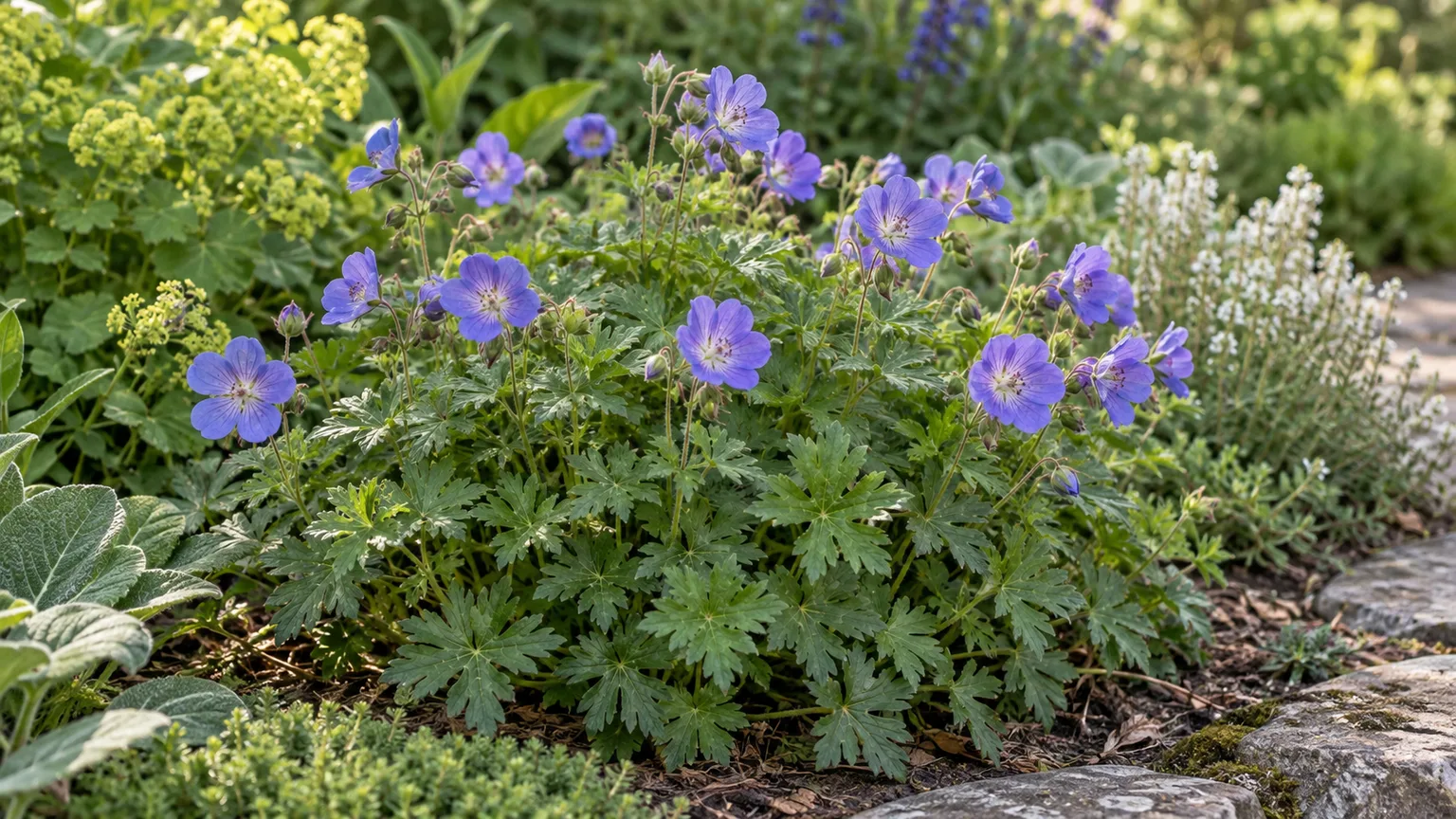
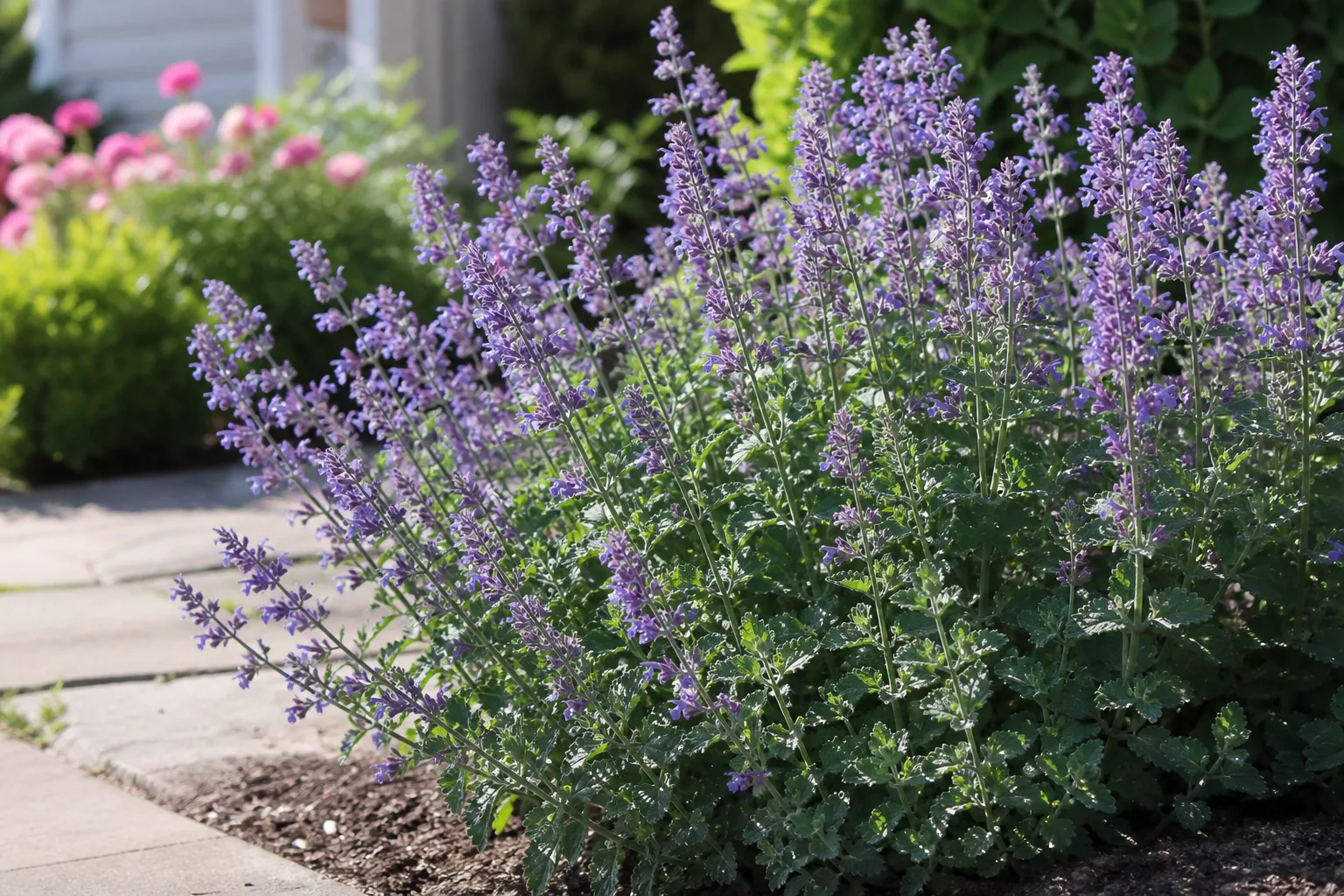
Catmint (Nepeta) is another classic border plant because its gray-green foliage and blue-purple flower spikes echo or contrast with rose colors. It is most useful as a clump along the front or side of a shrub rose, where it can hide some bare lower stems while remaining easy to shear back after flowering. Leave a clear ring immediately around the rose, and do not count on catmint scent to stop aphids or rabbits from reaching it.
Sweet alyssum (Lobularia maritima) is a flexible annual or short-lived perennial depending on climate. Its low cushions of small flowers fill a front edge without hiding the rose, and repeat sowing or allowing modest self-seeding can extend that soft border through the season. It is also a practical flower for a pollinator-minded bed because the flowers are open and easy to reach; it does not act as a shield around the rose.
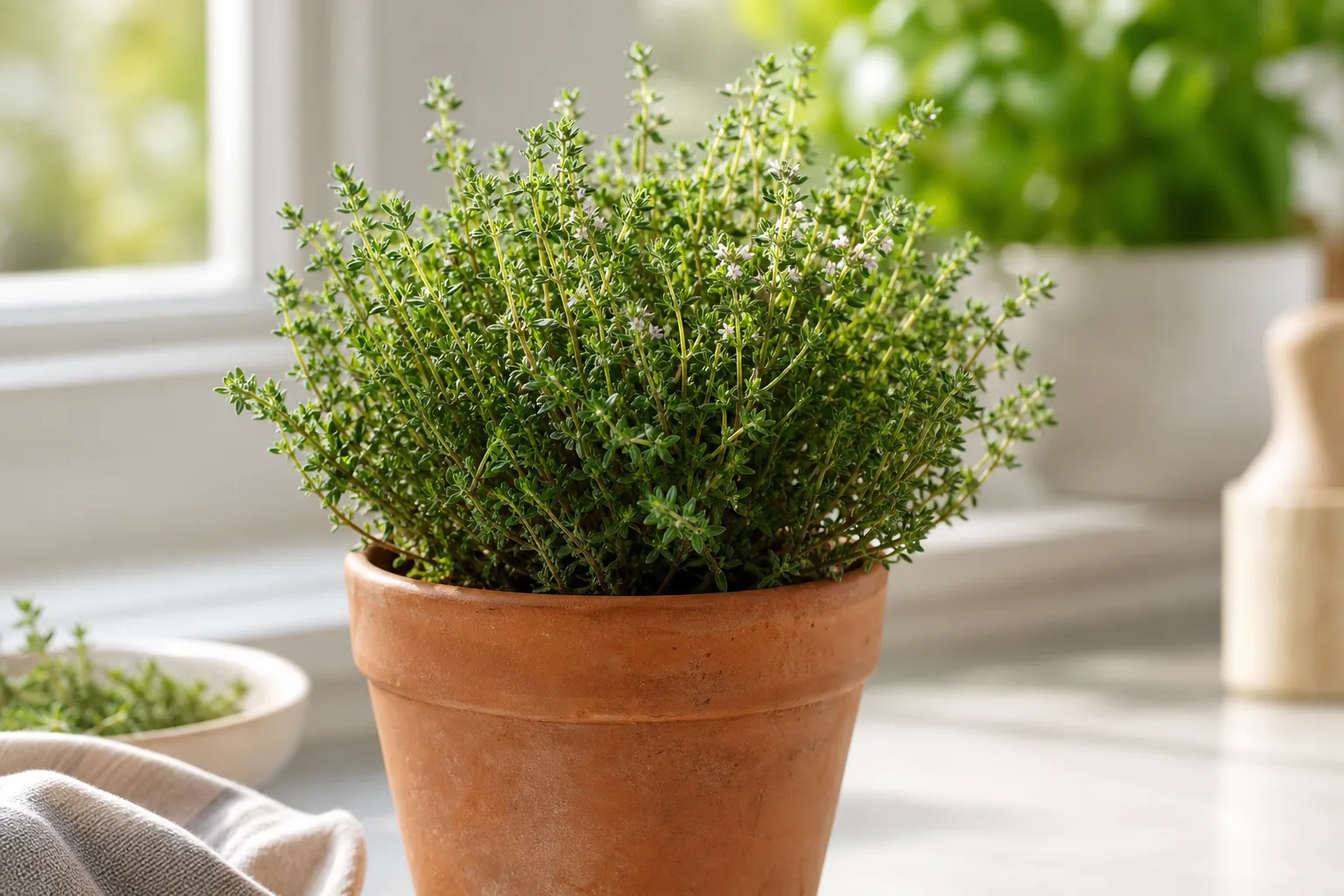
Creeping thyme and other compact thymes fit the sunny outer lip of a bed that drains well. Their scale and low foliage work beside miniature or compact shrub roses, but a spreading thyme can run into the rose’s working zone, and the herb’s preference for drier soil may conflict with frequent irrigation. Use it as a defined edge rather than a carpet under every cane.
Flowering perennials that add a second season
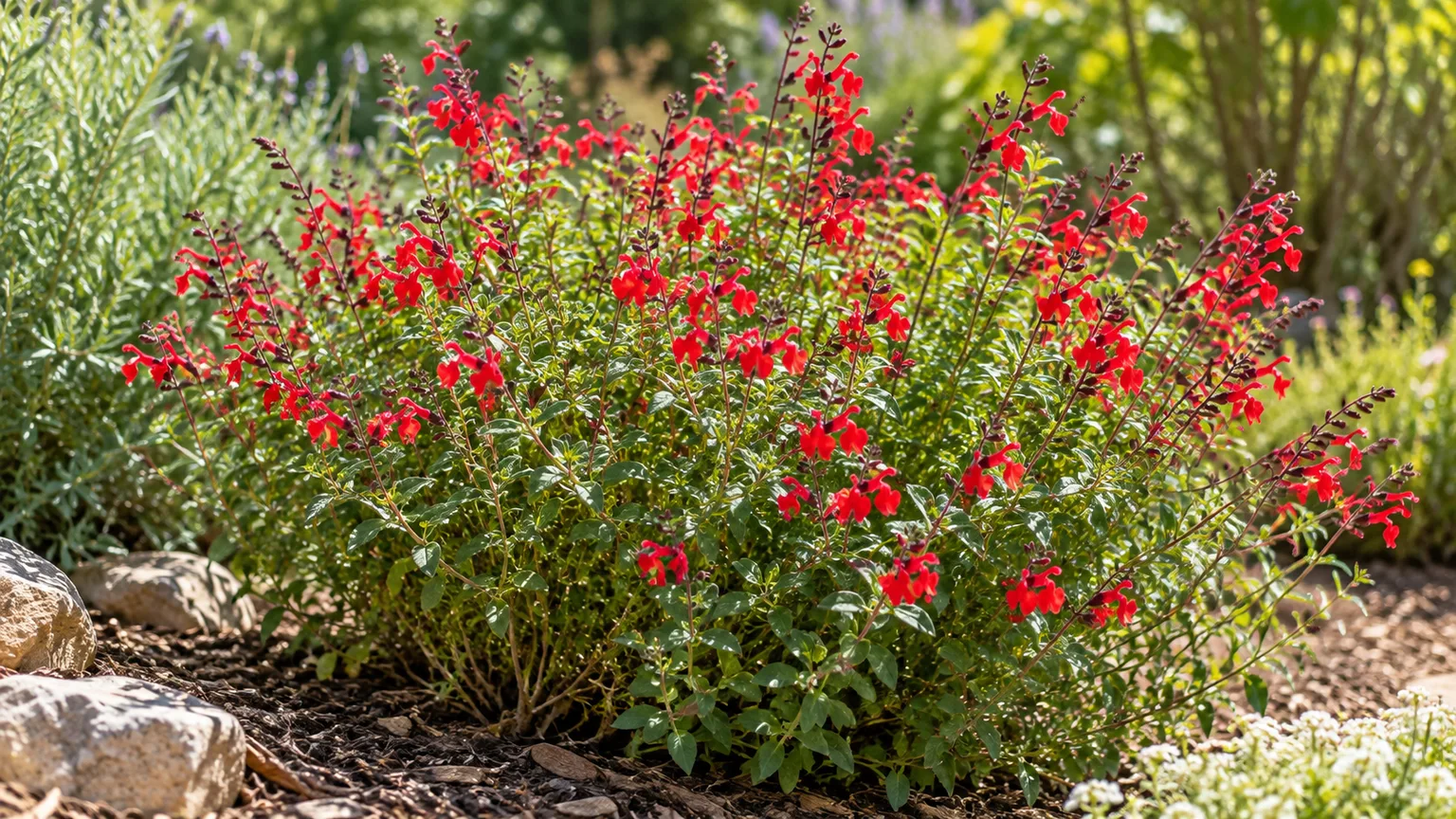
Hardy salvias such as Salvia nemorosa or compact garden hybrids add upright flower spikes among rounded rose blooms. Plant them just beyond the rose’s widest branches or in repeating clumps through a larger border so that they add vertical rhythm without shading a smaller rose. Their flowering can bridge a visual pause between rose flushes, but exact timing varies by cultivar and climate; follow the variety’s label and local bloom calendar.
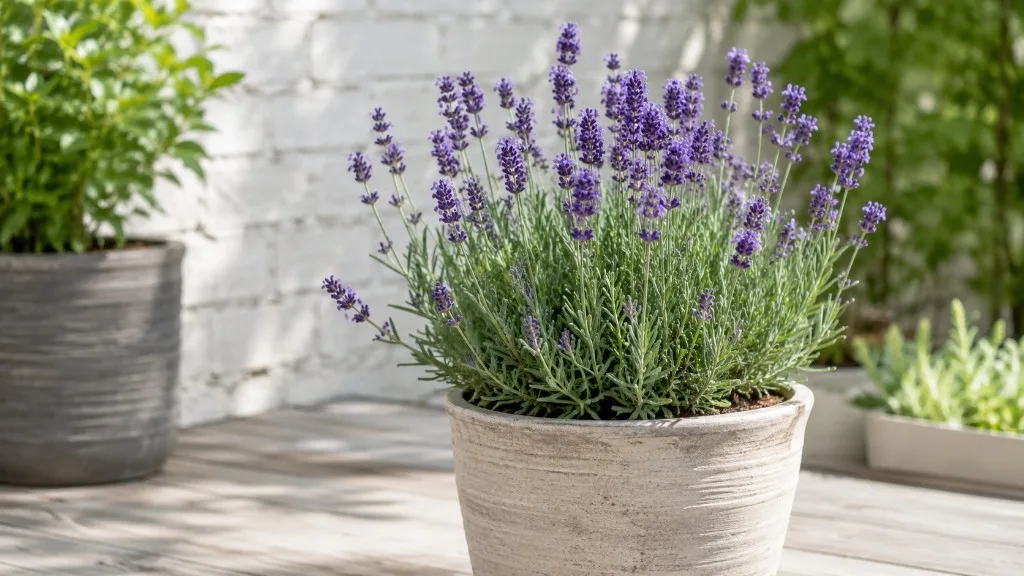
Lavender is a beautiful neighbor when both plants can share a sunny, freely draining position. It gives the border silver foliage and purple spikes, but it is not the automatic choice for every rose bed: in heavy soil or a frequently irrigated bed, lavender is more likely to struggle than to improve the roses. Put it along a raised or drier edge, use a locally hardy type, and leave enough width for the plant to mature rather than shearing it into a narrow strip.
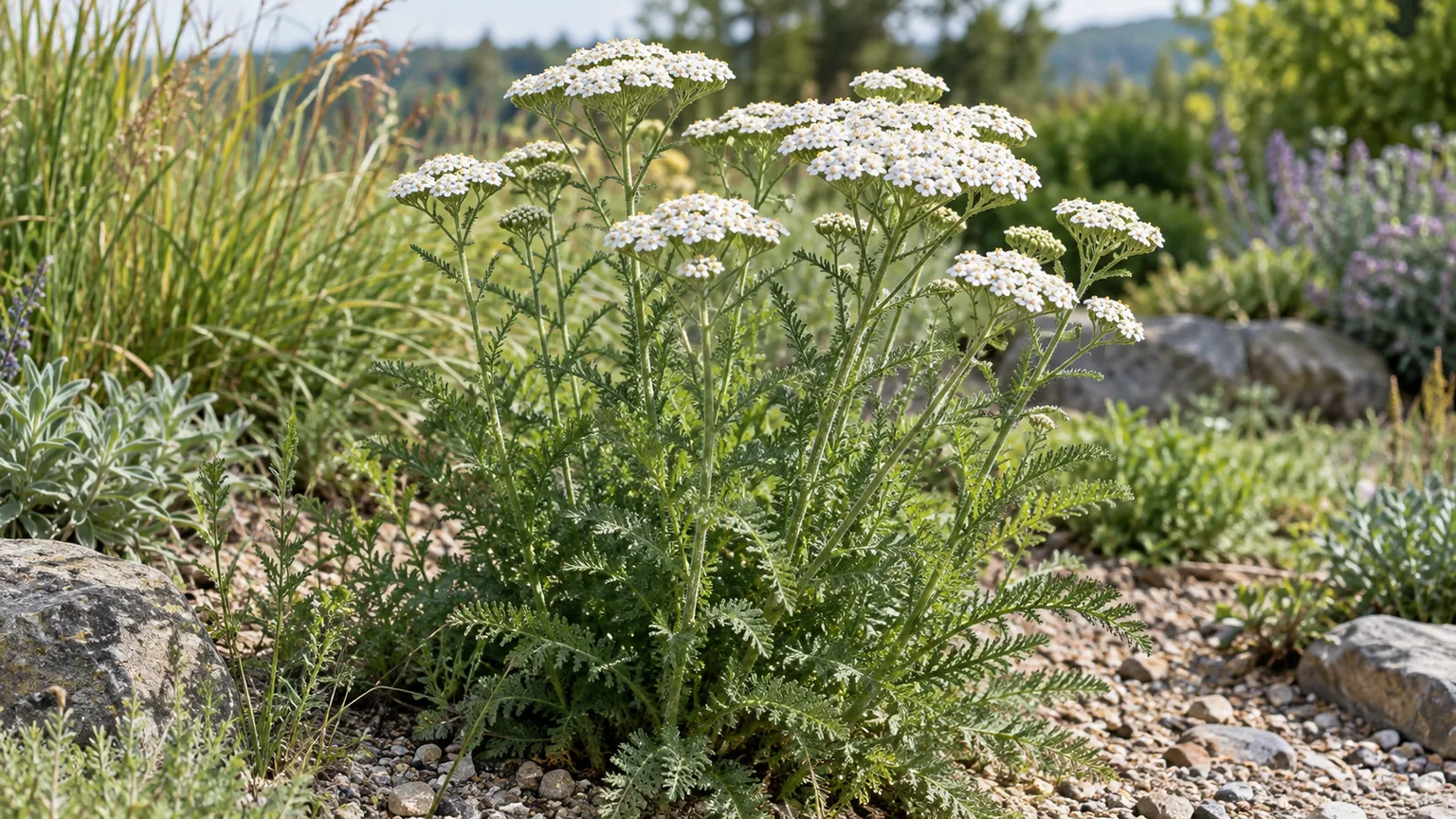
Yarrow (Achillea) brings flat flower clusters that contrast with rounded roses and can supply pollen and nectar to visiting insects. It is a better fit for a sunny, drier border than a wet, heavily fed rose bed, and many forms spread through rhizomes or self-seed. Start with one clump at the outside of the planting and remove unwanted seedlings before they weave through the rose roots.
You can also use phlox, penstemon, or compact coreopsis if they suit your local climate and the bed’s moisture. Make the choice by height and spread as well as color: a tall plant belongs behind the rose or between large shrubs, while a small mound belongs at the border’s front. More species do not automatically make a better garden; repeating a few plants usually gives a rose bed a calmer, more intentional look.
Bulbs, herbs, and annuals for lighter accents
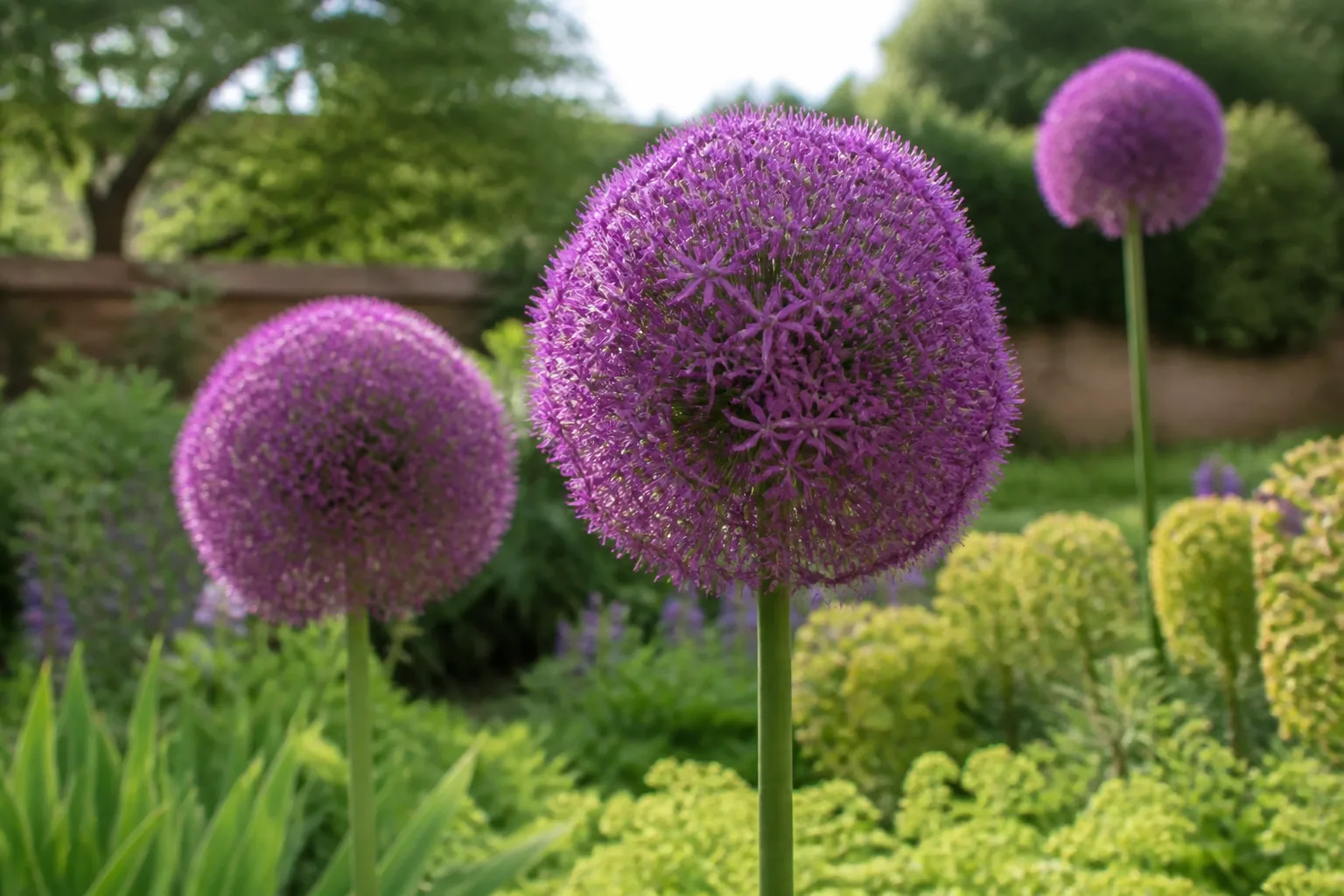
Ornamental alliums give a rose bed round flower heads and a spring-to-early-summer accent, depending on the variety. Place bulbs in small groups in gaps that will remain accessible, not in a dense ring that will require digging around established roots every fall. Let the foliage yellow naturally after flowering so the bulb can replenish itself; a neighboring perennial can soften the leaves later without smothering them.
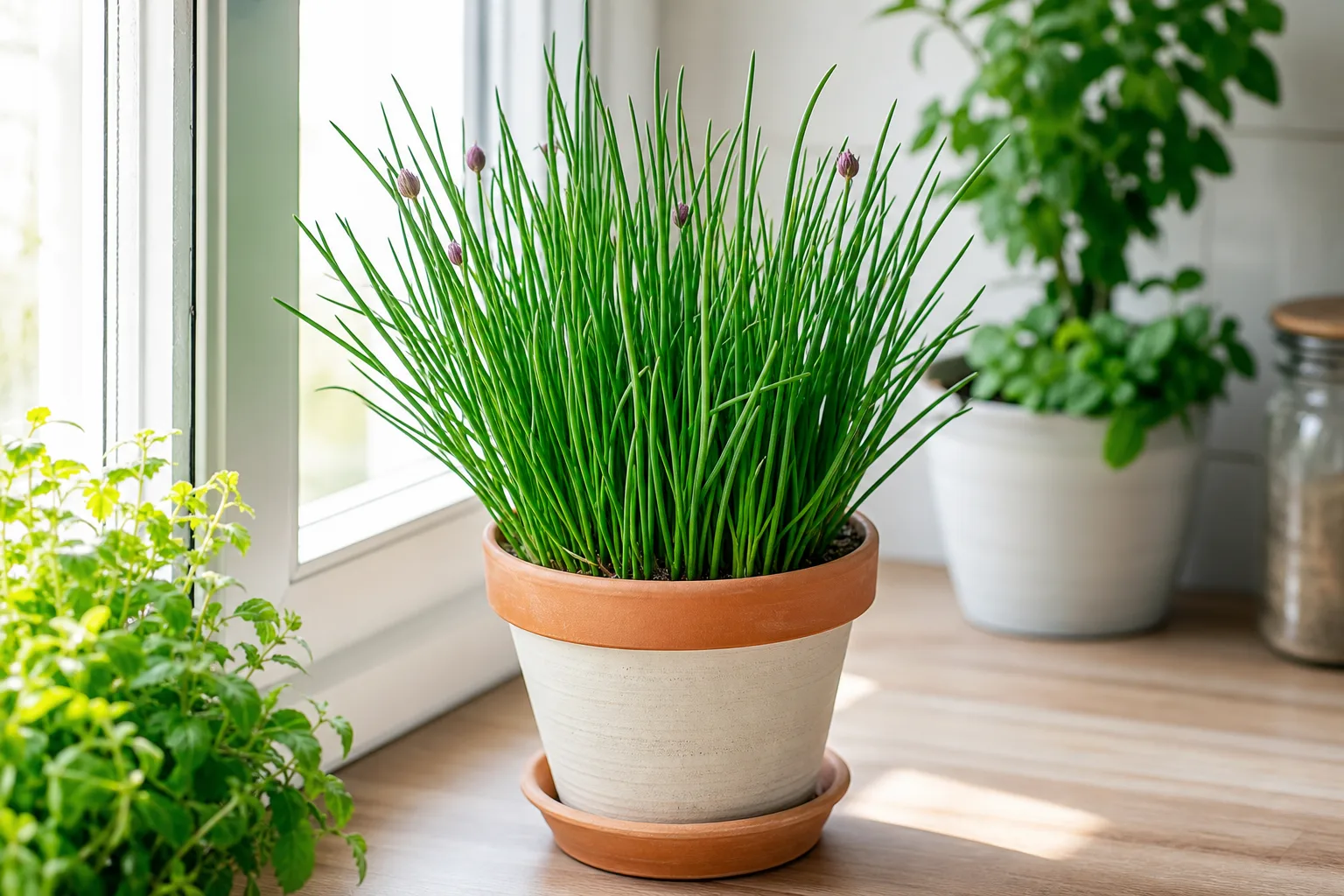
Chives are a smaller allium option for a sunny bed edge. Their grasslike leaves and round purple flowers bring a finer texture than the rose, and their foliage is handy if you also cook with chives. Treat them as an edible ornamental, not an aphid repellent: no single row of chives should replace inspecting new rose shoots or managing a real pest problem.
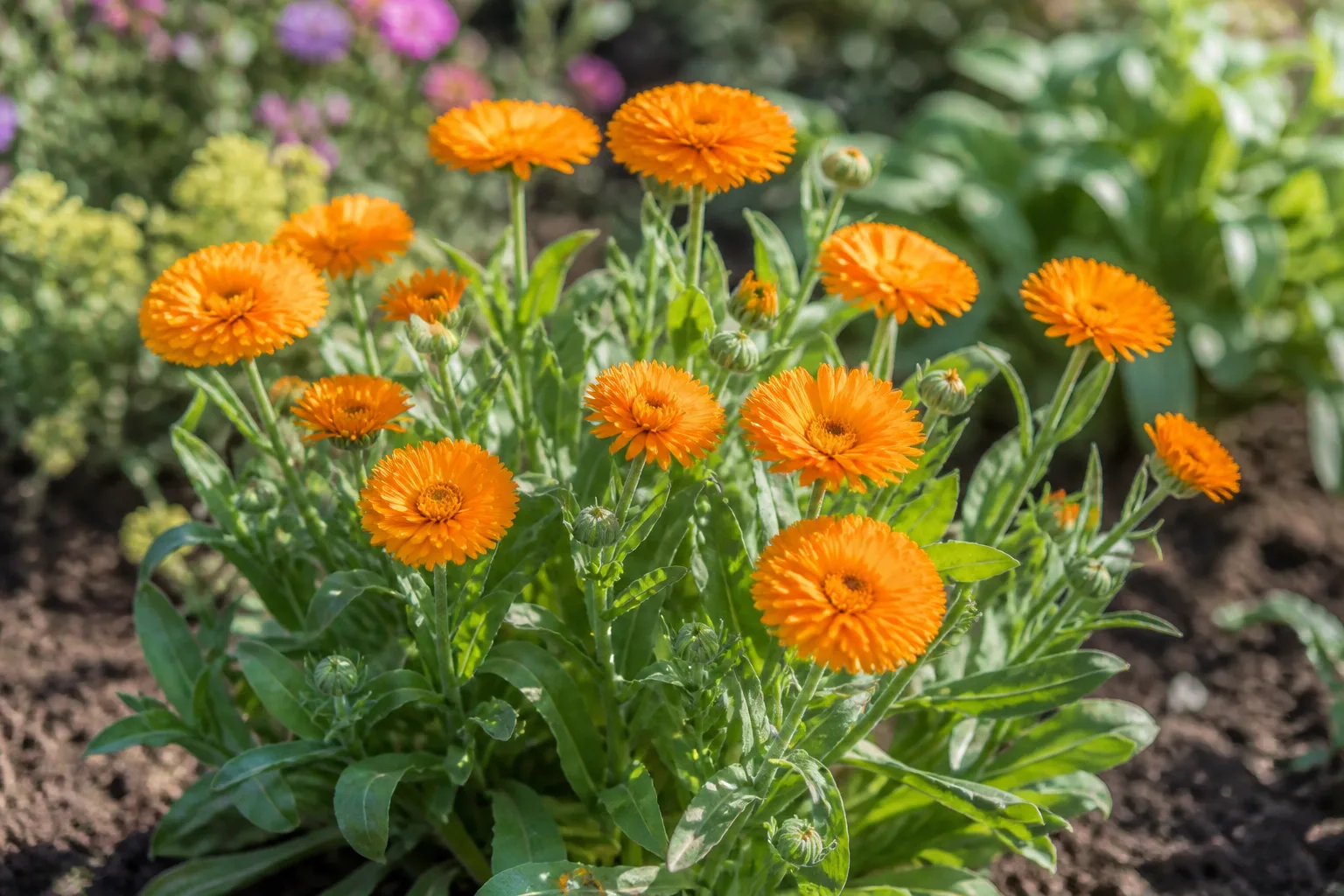
For seasonal color, try calendula or a compact verbena in open pockets at the front of a new planting. They are easy to remove or change if the rose expands, which is a real advantage in a bed where you are still learning how much space each shrub occupies. Annuals also let you test a color combination for one season before committing to another perennial root system.
Which companion fits your site?
| Rose-bed condition | Good starting choices | Main reason | Watch for |
|---|---|---|---|
| Sunny bed with regular watering | Hardy geranium, salvia, sweet alyssum | Color and a low-to-tall border layer | Leave the crown open and allow mature spread |
| Sunny, sharply drained edge | Lavender, thyme, yarrow | Their foliage and flowers suit a drier border | Do not keep them wet to match a thirsty neighbor |
| Small or compact shrub rose | Sweet alyssum, compact geranium, dwarf salvia | Smaller mature size is easier to control | Check the exact cultivar dimensions |
| Large rose border with seasonal gaps | Alliums, salvia, yarrow, annual calendula | Different heights and bloom windows add succession | Plant bulbs where you can leave them undisturbed |
Easy rose-and-companion combinations
It helps to start with a planting “recipe” and then adjust it to the actual cultivar labels. These combinations are design frameworks, not fixed counts: a rose with a mature spread of several feet needs more breathing room than a miniature rose in a narrow courtyard bed. Leave gaps where you need access, then repeat a few plants rather than filling the entire bed in one shopping trip.
For a compact shrub-rose bed
Choose one low front layer and one modest flower spike. A compact hardy geranium or sweet alyssum can soften the path-facing edge, while one or two small salvias add height farther back; keep both outside the rose’s crown and clear of branches that touch the ground. If you want purple flowers, use the salvia or catmint as the color note and let the rose remain the focal point.
For a bed with very limited width, seasonal annuals may be more useful than a permanent groundcover. Calendula or verbena can be pulled when the rose grows into the gap, and you do not have to dig a mature perennial out of the rose’s root zone. Skip lavender if that small space receives the same frequent irrigation as the rose and the soil stays damp.
For a long border or climbing rose
Use a repeated sequence: a low edging plant near the path, a mid-height perennial between large rose shrubs, and taller vertical accents behind them. For example, repeat hardy geranium along the front, insert salvia or catmint in spaced clumps, and tuck alliums or yarrow farther back where their flowers can rise above the rose foliage. Repeating three plants across a border makes the planting feel connected without turning it into a single-species hedge.
A climbing rose can share a border with low companions at the front, but keep its base open enough to water, tie in stems, and check the canes. Do not plant a second climber or a tall shrub directly in the same narrow footprint simply because the wall looks empty; the rose will need room for its mature framework and for air to pass through it. If a wall creates a hot, dry microclimate, select companions for that edge rather than copying a pairing from a cooler, wetter garden.
Plants to use cautiously around roses
Avoid plants that will win the space battle. Mint and lemon balm can spread by runners, and vigorous groundcovers can creep under the rose before you notice; keep such plants in containers or choose a compact cultivar with a controllable edge. Large shrubs and woody perennials may look compatible aboveground but develop root systems that make watering and feeding harder for both plants.
Also be cautious with plants whose conditions conflict with the site. Ferns and many shade-loving plants are poor choices in a hot, sunny rose bed; lavender and thyme are poor choices in soil that stays wet. A tall companion on the sunward side can shade the rose, and a densely planted “living mulch” can hide dropped leaves or make it difficult to inspect the lower canes.
Claims that tomatoes, garlic, marigolds, or aromatic herbs automatically prevent rose diseases or repel the main rose pests are not a sound reason to add them. You may still grow them for food, flowers, or texture when their requirements fit, but treat any pest effect as uncertain and local rather than guaranteed. The right plant in the wrong position is still the wrong companion.
How to plant companions without stressing established roses
Plant when the weather is mild and the soil is workable, usually in spring or fall according to your climate and each plant’s planting window. Water the rose before digging nearby so its root zone is not already dry, then use the smallest hole that fits the companion’s root ball. Set the new plant at its existing soil level, firm the soil gently, and water it in without flooding the rose crown.
Use plant tags to map the final garden, not only the nursery-pot size. A plant sold in a four-inch pot may mature into a wide mound that reaches the rose’s canes; position it at the outside of the rose’s future canopy or choose a smaller cultivar. For established roses, a container just beyond the bed can be a sensible way to test a color, fragrance, or seasonal bloom before disturbing roots.
Use a clean ring around each crown
Keep a visible, easy-to-reach space around the rose base. The exact width depends on the rose and your access needs, so a universal one-foot rule is less useful than checking the rose’s mature spread and leaving room to water, prune, and remove debris. Compact companions can sit farther out; a large shrub rose or a rose with arching canes needs a broader working zone.
Do not pile mulch against the canes while trying to hide bare soil. A thin, even mulch layer can reduce weeds and slow drying, but it should not bury the crown or turn the base into a damp pocket. If a companion grows into the clear ring, trim or divide it while it is still small.
Plant to the mature canopy, not today’s gap
New roses can look isolated, which tempts gardeners to fill every open patch immediately. Give the shrub a season to establish and check its real branch width before adding a permanent groundcover; roses vary widely by class and cultivar, and pruning changes their outline from year to year. Temporary annuals are a safer filler during that first season than several deep-rooted perennials.
For a mature rose, avoid working a spade through the root zone simply to create a symmetrical ring. Plant companions at the edge, divide an existing clump away from the rose and transplant a small section, or use a pot. This protects established roots and makes future pruning easier.
What companion planting can do for pests
A mixed planting can add flower resources and variety to a garden, but that is different from proving that one plant repels a specific rose pest. The RHS recommends a range of flowering plants and open flowers to support pollinators; its review of the Plants for Pollinators list describes an evidence-based screening process for those choices. That supports choosing good flowers for visiting insects, not promising that a single companion will eliminate aphids, Japanese beetles, or black spot.
A flowering border may help make the garden more useful to beneficial insects, especially when plants flower over a longer period, but results depend on the species, the scale of the planting, local insect populations, and pesticide use. If you want to see whether a pairing helps, keep a simple note of aphids or leaf damage on similar rose branches before and after planting rather than assuming a change was caused by the companion. Do not spray indiscriminately: pesticides can harm the same insects you are trying to attract.
If a rose develops a problem, identify it and use a rose-specific response. Check new shoots for aphids, look under leaves for mites, remove infected fallen foliage where appropriate, and preserve airflow through pruning. Companions can make the border more attractive and may contribute habitat, but they do not replace rose care or integrated pest management.
A simple care plan for rose-and-perennial beds
During the first growing season, water new companions until their roots establish, while checking that drought-adapted plants are not sitting in soggy soil. Keep weeds down by hand or with a light mulch layer, and cut back any plant that begins leaning into the rose’s center. If a companion wilts while the rose looks fine, adjust its position or water zone instead of increasing irrigation for the entire bed.
After bloom, trim plants according to their own needs: shear catmint or salvia only when their growth habit and timing make that appropriate, deadhead annuals if you want them to continue flowering, and let bulb foliage yellow before removing it. Divide clumps when they crowd a path or the rose’s working space, not on an arbitrary calendar. A little editing each season keeps a companion planting from becoming a second maintenance problem.
Review the bed after the rose’s first and later flushes. If companions disappear under foliage, move them outward; if the bed still looks empty in late summer, add one plant with a different bloom window; if you cannot reach the rose to prune, thin the border. The most successful pairing is one you can maintain without sacrificing the rose’s health or your access to it.
Conclusion
The best plants to grow with roses share the bed’s light and drainage, fit its watering routine, and stay within the space you can maintain. Hardy geranium, catmint, sweet alyssum, compact salvia, alliums, and carefully placed herbs can add a low edge, vertical flowers, or seasonal color; lavender, thyme, and yarrow are strongest choices for sunnier, drier pockets.
Start with two or three companions, leave the rose crown and canes open, and judge every plant by its mature size. Choose the flowers for what you can reliably observe—shape, bloom timing, accessible flowers, and manageable growth—rather than expecting them to work as pest-control products. That simple approach gives roses room to thrive and gives the rest of the border a job beyond filling bare soil.



