How to Grow and Care for Cockscomb Celosia Flowers
Grow cockscomb successfully with clear seed-starting dates, warm-soil planting advice, spacing, watering, pinching, and tips for fresh or dried flowers.
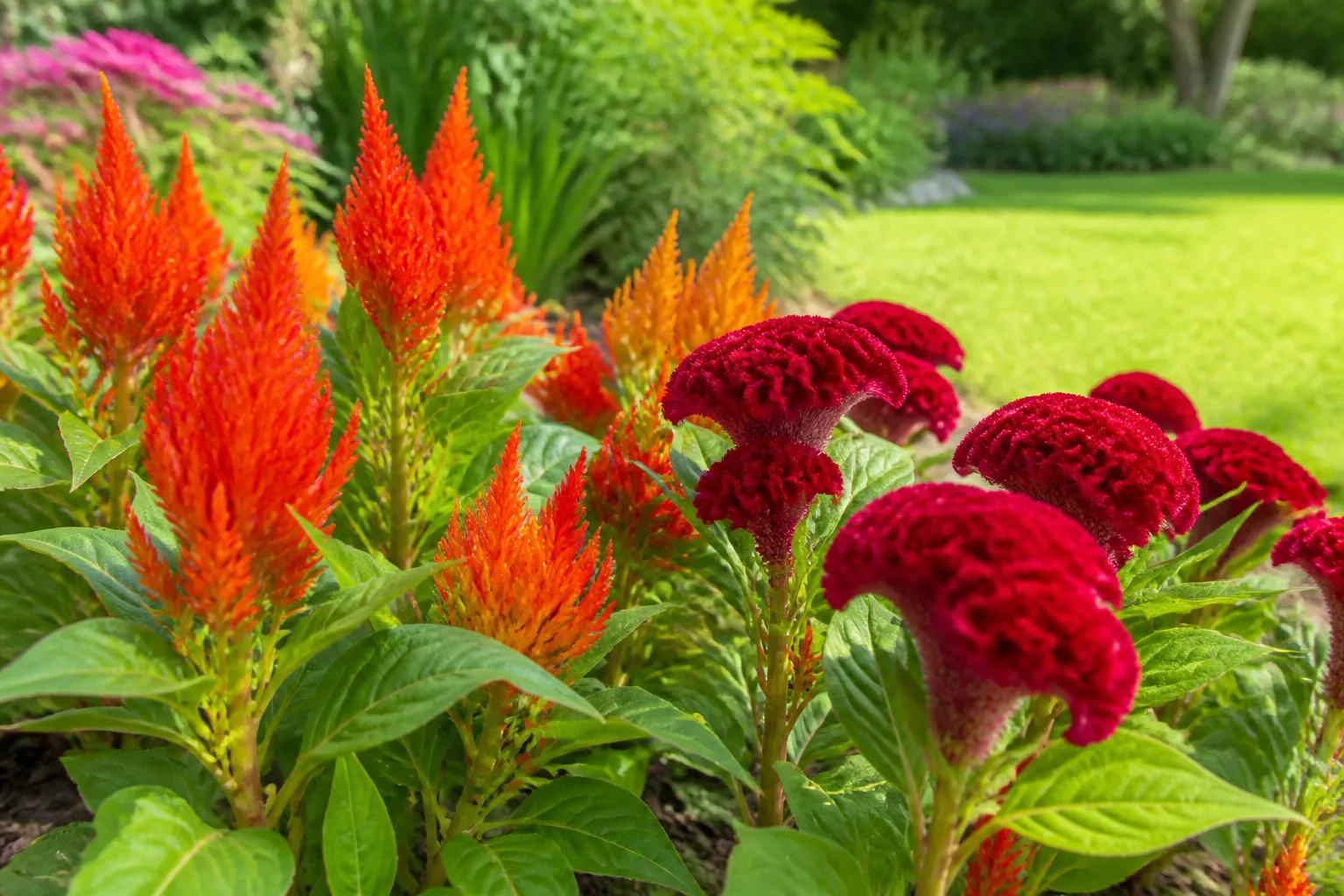
Cockscomb is the crested form of celosia, grown for its dense, folded flower head and saturated summer color. Its botanical name is often given as Celosia argentea var. cristata; plant labels may shorten it to Celosia cristata. The form is distinctive, but the plant’s success depends on a few less dramatic details: warm soil, sun, drainage, and careful handling while young.
The easiest way to grow cockscomb is to choose a variety for the space, sow or transplant only after cold weather has passed, and keep the root zone evenly moist without leaving it waterlogged. Once established, the plant needs little shaping. You can pinch it for a branching display, leave it unpinched for a larger focal crest, or harvest mature stems for fresh and dried arrangements. For an overview of the other Celosia forms, see our Celosia growing guide.
Cockscomb at a Glance
| Growing detail | What to plan for |
|---|---|
| Botanical group | Crested Celosia, commonly labeled C. argentea var. cristata |
| Life cycle | Warm-season annual in gardens with frost; may persist in the warmest frost-free climates |
| Light | Full sun, ideally six or more hours of direct light |
| Soil | Fertile but freely draining; avoid heavy, persistently wet soil |
| Planting window | After frost danger has passed and the soil has warmed |
| Size | Highly cultivar-dependent, from compact bedding types to plants several feet tall |
| Main uses | Sunny beds, containers, fresh arrangements, dried flowers |
The North Carolina State Extension Plant Toolbox describes celosia as a showy, long-blooming plant for sun and well-drained soil, and notes that heavy clay, cold weather, and overly wet conditions are common trouble points. It also treats Celosia as a diverse group, so use the height and spacing on the seed packet rather than assuming every cockscomb will reach the same size. (NC State Extension)
What Cockscomb Is and How to Choose a Form

Cockscomb is not a separate genus; it is the crested flower form within Celosia. The head develops a folded, ridged surface that can resemble a rooster’s comb or a fan. Colors include red, burgundy, orange, gold, pink, and cream, while foliage color and plant height vary by cultivar.
When buying seed or nursery starts, look for the mature height, spread, and flower form on the label. A compact cockscomb can fit a container or the front half of a border, while a taller, heavier-headed selection needs room and may benefit from shelter or support. Choose for the actual job: a single dramatic crest, a row for cutting, or a low mass of color.
Crest, Plume, and Wheat Forms
Garden labels sometimes use “celosia” for all three familiar flower shapes. Crested cockscomb has a broad, folded head; plumed celosia has soft, flame-like clusters; wheat celosia carries narrow, upright spikes. They share warm-weather preferences, but their shapes and growth habits are different, so do not buy a feathery plume if a fan-shaped crest is what you want.
North Carolina State Extension groups celosia into plumed, wheat, and cockscomb forms and notes that the genus includes both ornamental and edible plants. This guide focuses on the ornamental crested form. A separate guide to celosia forms and care covers the broader group, including plumes and wheat types. (NC State Extension)
Where and When to Plant Cockscomb
Cockscomb is a warm-season flower. In a climate with winter frost, grow it as an annual and plan to replace it after the season rather than expecting the crown to survive winter outdoors. In frost-free regions, a plant may last longer, but many gardeners still sow fresh plants because young growth tends to be more vigorous and the seed is inexpensive.
Choose a site that gets direct sun for most of the day and drains after rain. Taller cultivars with broad heads are vulnerable to wind, so an exposed corner is a poor choice even when the light is excellent. A position near a fence or other porous windbreak can reduce stem damage without shading the plant.
Match Planting Date to Frost and Soil Warmth
Do not use the calendar alone. Wait until your local frost risk has passed and soil feels warm at planting depth; cold, wet ground can stall seedlings even after daytime temperatures begin to rise. For direct sowing, gardeners often wait until soil is close to 70°F, a practical target cited by Happy DIY Home’s cockscomb guide. In cooler regions, that may be several weeks after the last frost date.
If your spring is short, start seed indoors so plants have a head start, but avoid holding seedlings in small cells until their roots tangle. If the growing season is long and warm, direct sowing into the final bed avoids transplanting altogether. Either approach works best when young plants move into consistently warm conditions rather than a cold snap.
Starting Cockscomb from Seed

Cockscomb is straightforward to raise from seed, but the seed is tiny and the young roots are easy to disturb. Start with fresh seed and a fine-textured seed-starting mix. Sow shallowly, keep the surface moist but not saturated, and give seedlings bright light as soon as they emerge.
Gardening Know How’s cockscomb advice and the seed-starting discussion at Happy DIY Home both emphasize warm conditions; their practical recommendations differ on whether to sow in place or start undercover. That difference is useful: direct sowing minimizes root disturbance, while indoor sowing helps gardeners with a short season get plants established before summer. Pick the method that fits your frost window and ability to transplant gently.
Indoor Sowing Without Leggy Seedlings
Count backward roughly six to eight weeks from the date you expect to plant outside. Sow one or two seeds in a small individual cell or a biodegradable pot, press them onto the surface, and cover only lightly according to the seed packet. Keep the mix warm and evenly damp; a plastic cover can help retain humidity, but remove it once seedlings appear so air can circulate.
Place seedlings under a bright grow light or in the brightest available window. If stems stretch toward the light, move the fixture closer or provide a longer daily lighting period rather than feeding more fertilizer. Thin to the strongest seedling in each cell by snipping the extra one at soil level, and avoid pulling it up through the roots of the plant you are keeping.
Harden seedlings off over about a week, increasing outdoor exposure gradually. Plant them out only when nights are mild and the bed is warm. Set each root ball at the same depth it grew in its pot, water it in, and avoid teasing or shaking apart the roots unless they are severely circling.
Direct Sowing and Thinning
Direct sow when the weather is reliably warm and the bed has drained well. Press seeds onto the soil surface or cover them with only a thin layer of fine mix; heavy covering makes it harder for small seedlings to emerge. Water gently with a fine rose or mist so the seed stays in place.
Keep the surface lightly moist until seedlings appear, then let the upper layer begin to dry between waterings. Once seedlings have several true leaves, thin them to the spacing on the packet. Crowding may look fuller at first, but it traps humidity around foliage and leaves less room for each flower head to develop.
Planting Nursery Starts and Spacing
Nursery plants provide instant color, but inspect the root ball before buying. Choose compact, healthy plants with firm stems and no mushy crowns; avoid crowded packs whose roots have formed a dense mat or whose stems are already stretched. Small plants that have not begun flowering usually settle in better than oversized starts carrying a heavy crest.
Plant after frost danger has passed and the soil has warmed. Leave enough space for the listed mature spread, and use more distance for tall, large-headed selections than for compact bedding cultivars. As a starting point, many smaller types need about 8 to 12 inches, while taller plants may need 12 to 18 inches; the variety label takes priority over these ranges.
Set the plant at its original soil level and water around the root zone. If the root ball is tightly packed, loosen only the outermost roots gently rather than tearing the center apart. Cockscomb seedlings can pause after rough handling, so a careful one-time planting is better than repeated moving to correct a spacing mistake.
Sun, Soil, and Drainage
Full sun gives cockscomb the energy to produce sturdy stems and colored heads. NC State Extension lists six or more hours of direct light as the full-sun range for celosia. In light shade the plant may survive, but flowering can be weaker and stems may lean as they reach toward brighter conditions. (NC State Extension)
The soil should hold some moisture while allowing excess water to drain. Improve a heavy bed before planting with organic matter and a raised planting area if water tends to sit after rain. Do not try to solve poor drainage by adding only a small handful of sand to dense clay; correct the bed broadly or use a container with drainage holes.
A slightly rich soil is useful, but cockscomb does not need a highly amended, soggy pocket. Avoid burying the crown under mulch, and leave a little breathing room around each plant. If a site stays wet for days after rain, choose another spot or grow cockscomb in a container rather than repeatedly treating symptoms that begin below the soil line.
Watering Cockscomb Through the Season
Water consistently while seeds germinate and transplants establish. After that, check the soil before watering: if the top inch is dry and the root zone is beginning to dry, water thoroughly at the base. In a garden bed, rainfall and mulch may stretch the interval; in a container on a hot patio, the pot may need attention much more often.
A fixed “every day” schedule is unreliable because pot size, weather, and soil mix change how quickly moisture disappears. Check with a finger or a moisture meter before adding more water. If the soil is still damp and leaves droop in midday heat, wait and reassess in the evening instead of adding water automatically.
Water at soil level when possible, especially in humid weather. Repeatedly wetting dense foliage late in the day can leave leaves damp overnight and encourage leaf spots. Keep container drainage holes open and empty any saucer that holds standing water after irrigation.
Feeding for Blooms, Not Just Leaves
Prepare the bed with a modest amount of finished compost if the soil is poor, then observe how the plants grow before adding fertilizer. A plant with healthy green leaves and strong stems does not need a routine weekly feed. Too much nitrogen can push soft leafy growth, delay flowering, and make a tall plant more likely to lean.
If growth is pale or weak despite good light, first check for cold, waterlogged soil, or crowded roots. Those conditions often look like a nutrient problem but fertilizer will not fix them. If the soil is genuinely depleted, use a balanced fertilizer at the label rate and stop once plants are flowering well; in containers, follow the potting mix or fertilizer instructions because nutrients leach more quickly.
Pinching, Staking, and Deadheading
Decide what shape you want before pinching. Removing the young tip can encourage side shoots and more branches, but it may delay the first crest and shift the plant toward several smaller heads. If the goal is one large, central show flower, leave the main stem alone; if you prefer a fuller, lower plant for cutting or a border, pinch once while it is still young and actively growing.
The heavy flower head, not neglect, is often why a tall cockscomb leans. Put a discreet stake or support in place when planting, before roots spread, and tie the stem loosely below the crest. A sheltered planting location and spacing that allows air to move can prevent some damage without making every plant look tied up.
Deadhead when the head loses color or you do not want seed to mature. If you want volunteer seedlings next year, leave a few flowers until they dry and release seed, then remove the rest. The North Carolina State Extension Plant Toolbox notes that celosia can reseed readily, so an intentional seed head or two is easier to manage than a whole bed of volunteers. (NC State Extension)
Growing Cockscomb in Containers
Containers make cockscomb easier to place in a sunny, sheltered spot, but they also dry faster than garden beds. Choose a sturdy pot with several drainage holes and enough weight that a tall, top-heavy plant will not tip in wind. Compact cultivars are usually more manageable than the tallest crested selections on a balcony or small patio.
Use fresh potting mix rather than dense garden soil, and avoid a pot that is much larger than the root system if you tend to overwater. A large volume of wet mix can stay cold and saturated around a small plant. Water when the surface has begun to dry, then let the pot drain completely; do not leave it sitting in a water-filled saucer.
Rotate the container if light reaches it from only one side. If a plant leans despite full sun, check whether the container is stable and whether the flower head has outgrown the support. Moving the pot to a wind-sheltered position is often simpler than trying to straighten a stem after it has kinked.
Pests and Problems: Diagnose Before Treating
Celosia is not immune to pests, but many problems come from conditions rather than insects. NC State Extension lists mites, leaf spots, and stem rot among issues that can occur, with wet soil and cold weather a major concern. Start by inspecting the plant and the soil before applying any treatment. (NC State Extension)
Look under leaves for fine webbing or tiny moving specks if foliage becomes stippled during hot, dry weather. If you see a pest, confirm the identification and follow the label on any garden product; do not spray a stressed plant based only on a guess. For leaf spots, remove badly affected leaves, improve spacing, and water the soil rather than the foliage.
Wilting, Yellowing, or a Collapsing Stem
A drooping head on an otherwise firm, green plant may simply be too heavy for the stem or exposed to gusts. Add support and check whether the stem is bent or cracked. By contrast, a soft, darkened stem base with wet soil suggests rot; remove the collapsed plant and correct drainage instead of trying to prop it up.
Yellowing leaves need a soil check. Dry soil plus drooping leaves points toward water stress, while yellow lower leaves and persistently wet soil call for less water and better drainage. A plant that wilts in the hottest hour but recovers by evening may be reacting to heat; if the soil is damp, wait before watering again.
Cutting and Drying Cockscomb Flowers
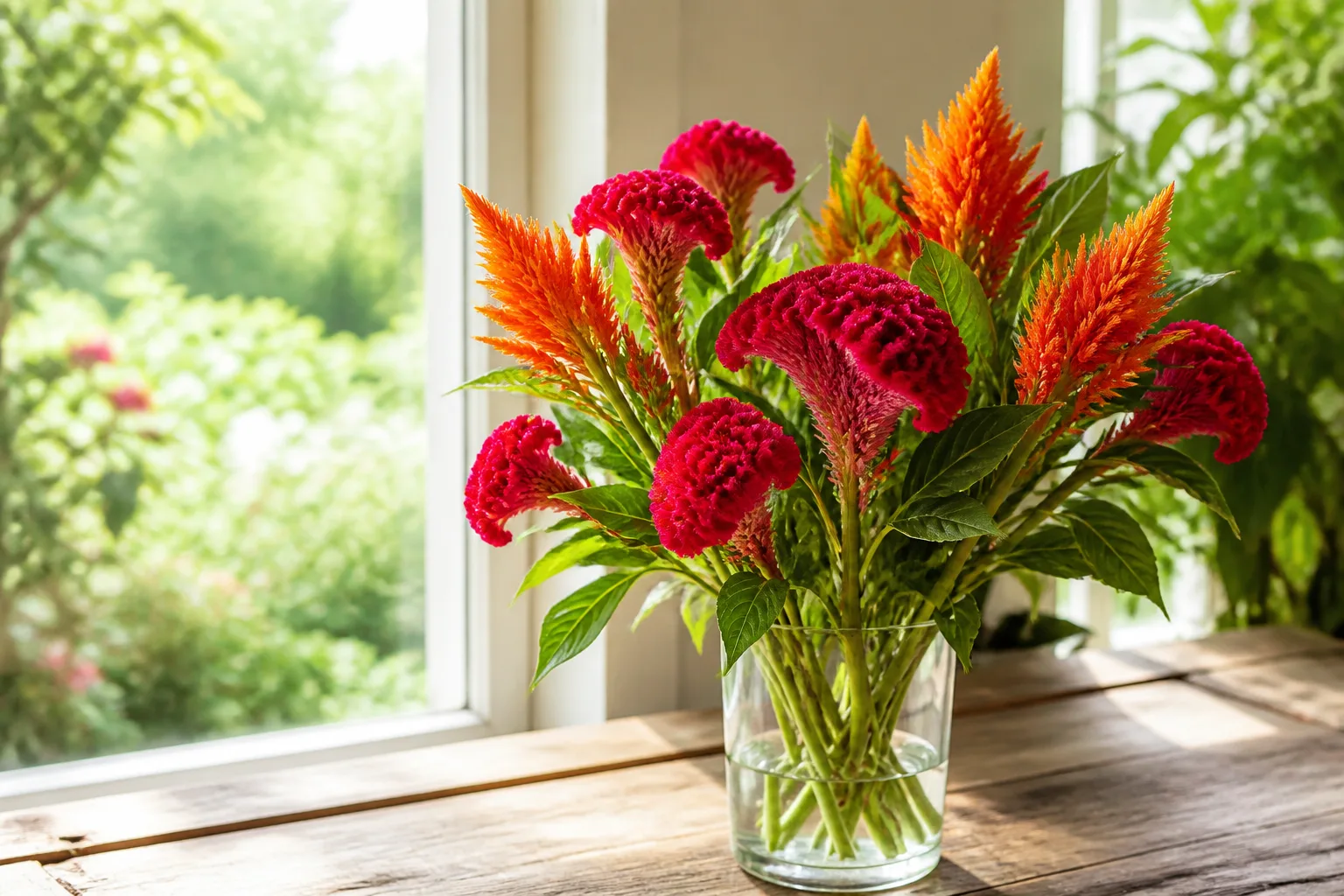
For fresh arrangements, cut stems when the crested head is fully colored and firm, before it starts to brown or shed seed. Harvest in the cool part of the day, strip leaves that would sit below the waterline, and place the stems promptly in a clean vase. Change the water when it turns cloudy and recut the stem ends if flowers begin to droop.
For dried arrangements, choose undamaged heads that are fully formed but not already soft or fading. Remove excess foliage, tie small bundles so air can circulate, and hang them upside down in a dark, dry, ventilated place. Large crests are dense, so smaller bunches dry more evenly than a tight bundle that traps moisture inside the flowers.
Cockscomb’s sculptural heads are useful in arrangements where a softer plume or flat daisy would not provide the same texture. Drying color varies with cultivar and room conditions, so test a few stems before harvesting an entire bed for a particular color scheme. For the most consistent result, keep the flowers out of direct sun while they dry and store them away from damp rooms.
Saving Seed and Managing Self-Sowing
Let a few selected flower heads stay on the plant after their color begins to fade. As the head dries, shake or brush seed into a paper bag or over a tray, then allow it to finish drying in a dry, shaded place before storing it in a labeled envelope. Keep seed cool and dry until the next warm season.
Seed saving is less predictable when the plant is a named hybrid or nearby celosia varieties flower at the same time. Seedlings may not match the parent color, height, or crest shape. If you want a uniform display, buy fresh seed from a reliable supplier; if you enjoy surprises, leave only a small number of seed heads and remove the others before they scatter.
Volunteer seedlings may appear in cracks or outside the intended bed because celosia can reseed freely. Pull unwanted seedlings while they are small, and do not mistake them for overwintered plants in a cold-winter region. In most gardens with frost, a new plant comes from seed rather than a surviving perennial crown.
Conclusion
Cockscomb grows best when you treat it as a warm-season flower with a distinctive, sometimes top-heavy crest. Give it full sun, wait for warm soil, keep the roots moist but not waterlogged, and choose a cultivar whose mature height fits the bed or pot. Direct sowing avoids root disturbance, while carefully raised indoor seedlings can help gardeners with shorter summers.
Pinch only when extra branches matter more than one large central bloom, and stake tall plants before wind bends their stems. Cut the heads while they are fully colored for fresh arrangements or dry them in small, airy bundles; leave a few seed heads only if you welcome variable volunteers next season. With those choices made up front, cockscomb can provide a long stretch of vivid flowers without a complicated care routine.