18 Carrot Companions for Better Space and Harvests
Find 18 carrot companion plants, from radishes and lettuce to onions and marigolds, with honest notes on evidence, timing, spacing, and pest protection.
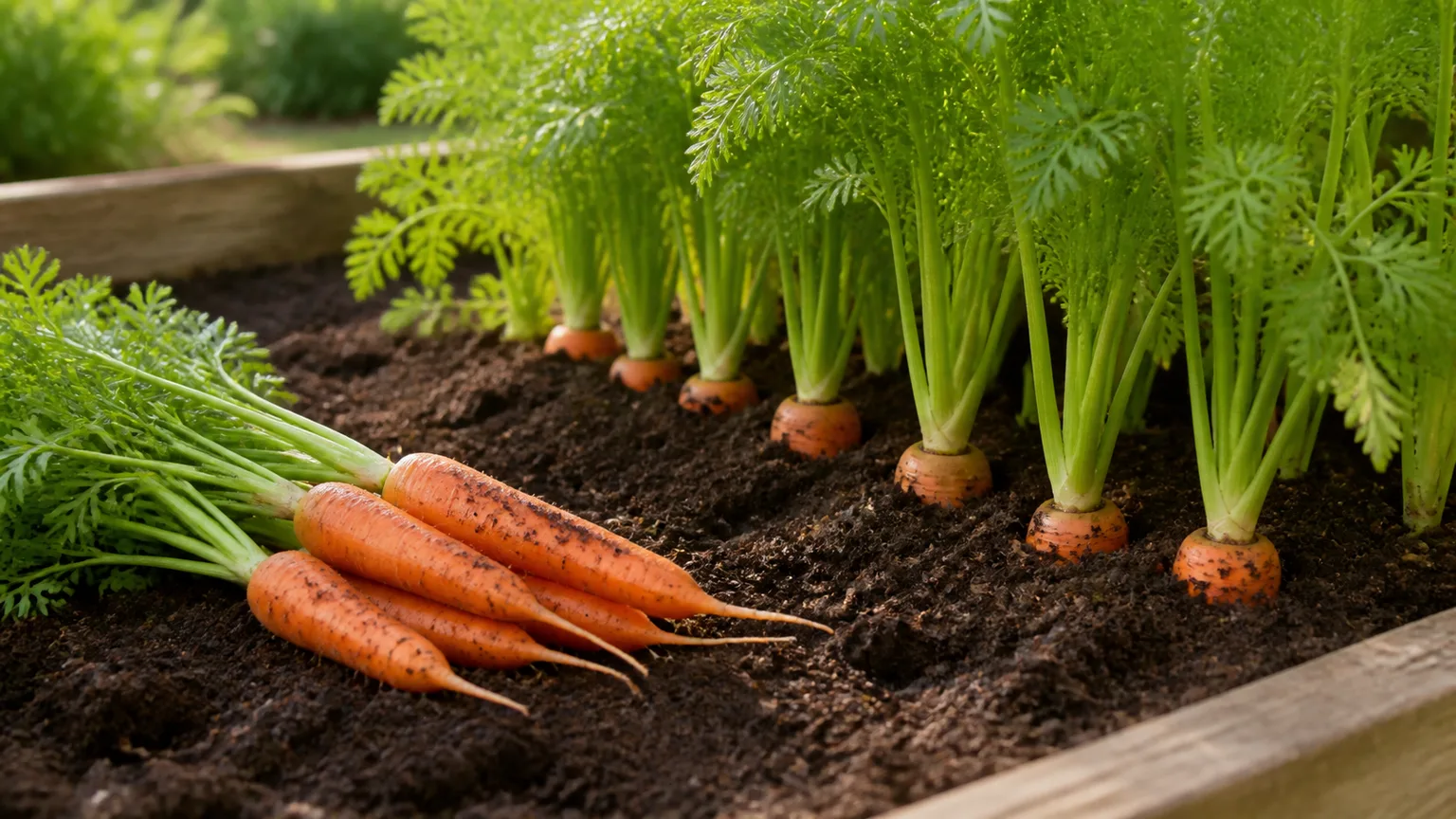
Carrot companion planting works best when it solves a real garden problem: using open space while roots mature, sharing a cool-season window, or adding flowers and crop diversity around a bed. The word “companion” does not mean a plant has been proved to make carrots sweeter, loosen soil for them, or repel every pest.
The most dependable pairings are often practical rather than magical. Radishes can mark a slow-germinating carrot row and come out early; lettuce and spinach can use a nearby strip before the bed fills; and an onion or flowering herb may add diversity, though any pest effect depends on the exact crop and layout. Carrots still need loose soil, light, steady moisture at germination, and room to develop their taproots.
What makes a good carrot companion?
Start with carrots’ needs, not a chart of “good” and “bad” neighbors. Carrots are direct-sown because transplanting can damage their young taproots, and their small seeds may take up to three weeks to emerge. They need a fine, open seedbed that stays evenly moist, so a companion that blankets the soil, competes for water, or hides the row during that early stage can make sowing harder rather than easier. University of Minnesota Extension’s carrot guide recommends thinning seedlings to roughly 2–4 inches apart; Utah State University Extension gives 2–3 inches within a row and 12–18 inches between rows. Treat those as crop-spacing guidance, not extra space that can be filled without limit.
A useful companion can fit in one of three ways: it matures before carrot roots need their full space, it occupies a different height or row, or it contributes flowers and habitat without blocking sun and airflow. The Royal Horticultural Society describes space efficiency as one of the clearest reasons for intercropping, while it says the familiar onion-and-carrot scent effect is a claim rather than a guaranteed control. A 2023 meta-analysis of 63 intercropping studies found broad benefits for beneficial insects and lower pest abundance across agricultural systems, but its results varied with crop pairing and planting arrangement; that does not prove that every plant on a garden companion list will improve carrots. RHS companion-planting guidance and the intercropping meta-analysis are useful context, not a promise for an individual bed.
Use the 18 options below as a menu. The first group shares a cool-season bed; the second and third can add allium foliage, herbs, or flowers; the last group includes summer crops that need deliberate placement. “Can grow near carrots” is not the same as “will protect carrots.”
18 carrot companion plants to try
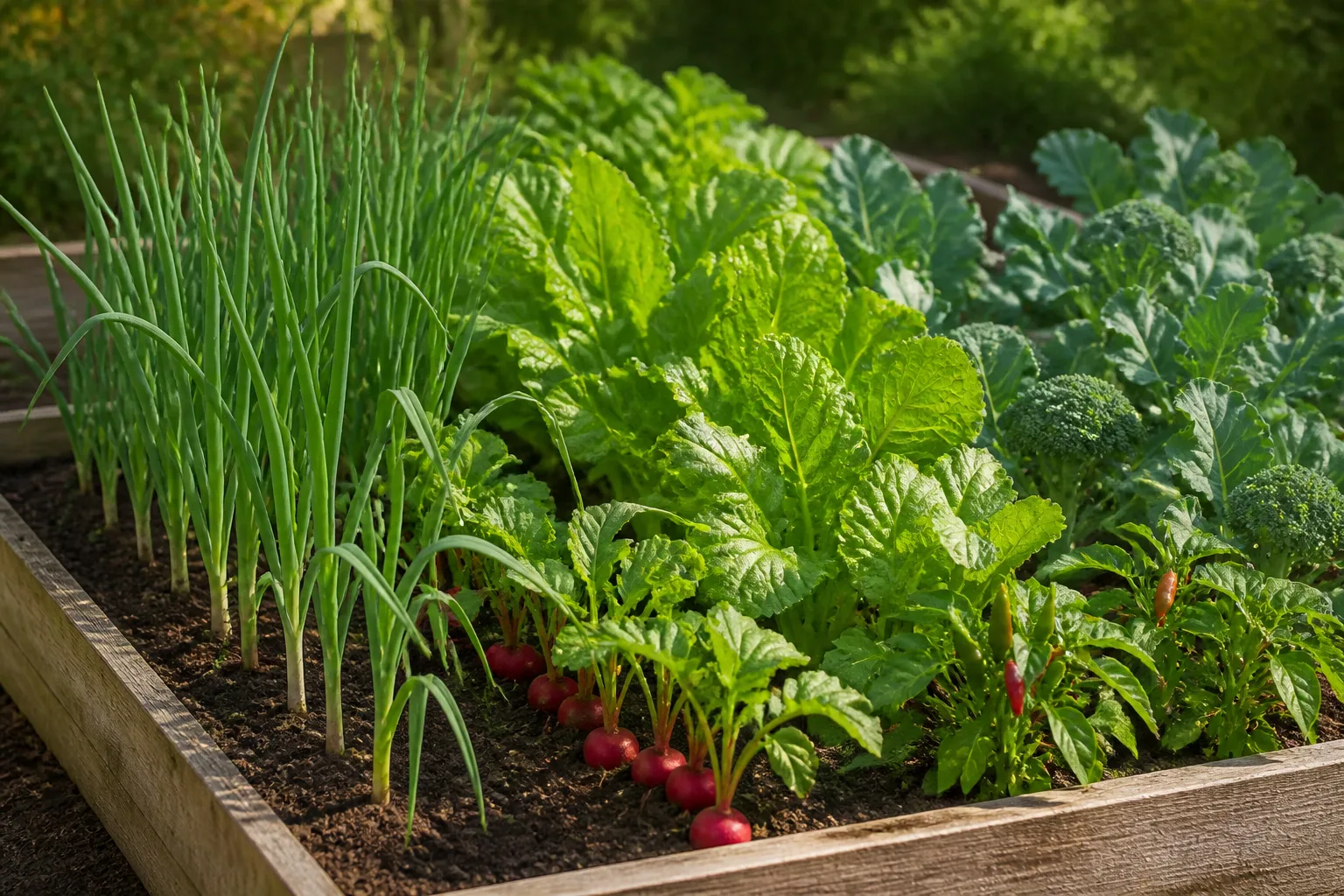
Fast crops that share a spring bed
1. Lettuce. Leaf lettuce is a reasonable neighbor for early carrots because you can harvest outer leaves while roots continue growing, and its shallow feeding pattern can use a separate strip of the bed. Sow it beside, not over, the carrot drill, and choose a loose-leaf type you can cut young; a dense head planted too close can shade seedlings and make thinning awkward. The pairing earns its place through timing and harvest, not because carrots have been shown to improve lettuce.
2. Radishes. Radishes are the most practical carrot companion for a new gardener because they emerge quickly and make a planted row easier to see while carrot seedlings are still tiny. Minnesota Extension notes that gardeners sometimes sow them in the same row, then pull the radishes as carrots emerge so the roots have more room; Utah State Extension also says radishes can mark rows and help with soil crusting. Sow them lightly and harvest promptly—do not leave a full radish canopy to compete with carrots. (Minnesota Extension; Utah State Extension)
3. Spinach. Spinach suits the same cool spring or fall windows as carrots, and young leaves can be picked before the plant becomes a broad, dense clump. Give it its own narrow row or plant it along the bed edge; crowded spinach can close over the soil, hold dampness against carrot foliage, and make the carrot line hard to weed. In hot weather, both crops may struggle, so use local sowing windows instead of a generic hardiness-zone chart.
4. Beets. Beets share carrot-friendly weather and can produce edible leaves before roots mature, but they are still another root crop competing for underground room. Grow them in a neighboring row or use them as a separate succession planting, rather than mixing beet seed densely through the carrot row. If your bed is shallow or compacted, choose one root crop for that section and reserve the other for a deeper bed.
5. Turnips. Small turnips can fill a cool-season row beside carrots if you plan to harvest them young, when their tops and roots occupy less space. Larger turnip varieties develop broad leaves and substantial roots, so they can shade and crowd carrot seedlings if sown too closely. Think of turnips as a same-season crop for an adjacent strip—not a pest repellent or a partner that improves carrot flavor.
Alliums and herbs: useful neighbors, uncertain repellents
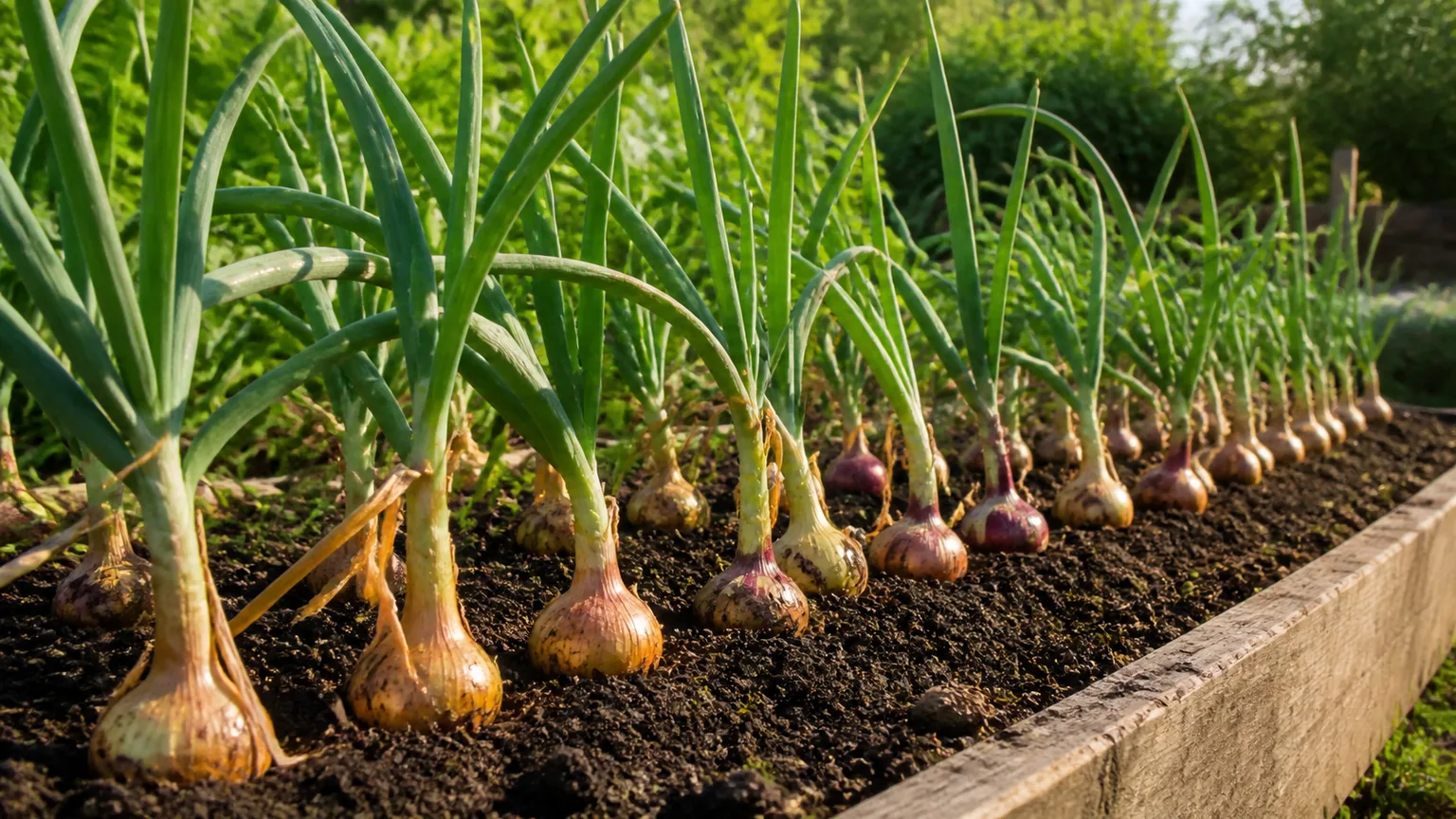
6. Onions. Onions are the classic carrot pairing, and there is some crop-specific evidence worth taking seriously without turning it into a guarantee. In a seven-year small-scale field study in southern Finland, carrot-fly damage was slightly lower beside onion rows, but overall infestation was generally low; the RHS likewise describes the scent effect as a claim. Plant onions because you want both crops and can keep their rows distinct, not as a substitute for mesh when carrot fly is common. (AGRIS record of the Finland field study; RHS companion guidance)
7. Leeks. Leeks can share a vegetable bed with carrots when each has a clear row and you have enough room to lift the leek without wrenching nearby roots. Their upright leaves use height differently from carrot foliage, but they grow for a long time and their stems widen, so a tight mixed row becomes crowded by midsummer. Use leeks as an adjacent crop, and do not assume their onion-family scent alone will stop carrot pests.
8. Chives. Chives are handy near a kitchen garden because they are perennial, compact, and easy to snip, but their clumps gradually widen and can occupy a carrot row for years. Keep a clump at the bed edge or in a pot rather than scattering it through a root crop that needs to be dug and replanted. Their onion-like scent makes them a traditional companion; there is not enough carrot-specific evidence to promise that chives will keep carrot rust fly away.
9. Oregano. Oregano is a useful culinary herb to keep nearby, especially in a pot or a dry, well-drained border at the edge of a vegetable bed. Its spreading stems can creep into a seed row, and its preferred drier conditions do not always match the evenly moist surface carrots need while they germinate. Enjoy it for harvest and garden diversity, not as a proven carrot-fly treatment.
10. Rosemary. Rosemary is a woody, sun-loving perennial that usually does better in a free-draining edge planting or container than in the frequently watered strip used to germinate carrots. Give it room to mature and keep its roots out of the carrot drill; a small rosemary pot near the bed still adds a useful kitchen herb without creating direct root competition. Studies of rosemary oils or other pests do not establish that a rosemary plant beside carrots will repel carrot fly.
11. Sage. Sage can occupy a sunny bed edge with oregano and rosemary, but it becomes a woody shrub and prefers soil that drains well between waterings. That makes it a poor choice to plant directly inside a narrow carrot row where you need to keep the seed surface damp and weed by hand. Use sage as a permanent border herb if the bed layout has room, and choose another companion if carrots are the priority in that patch.
Flowers and flowering herbs for a more varied bed
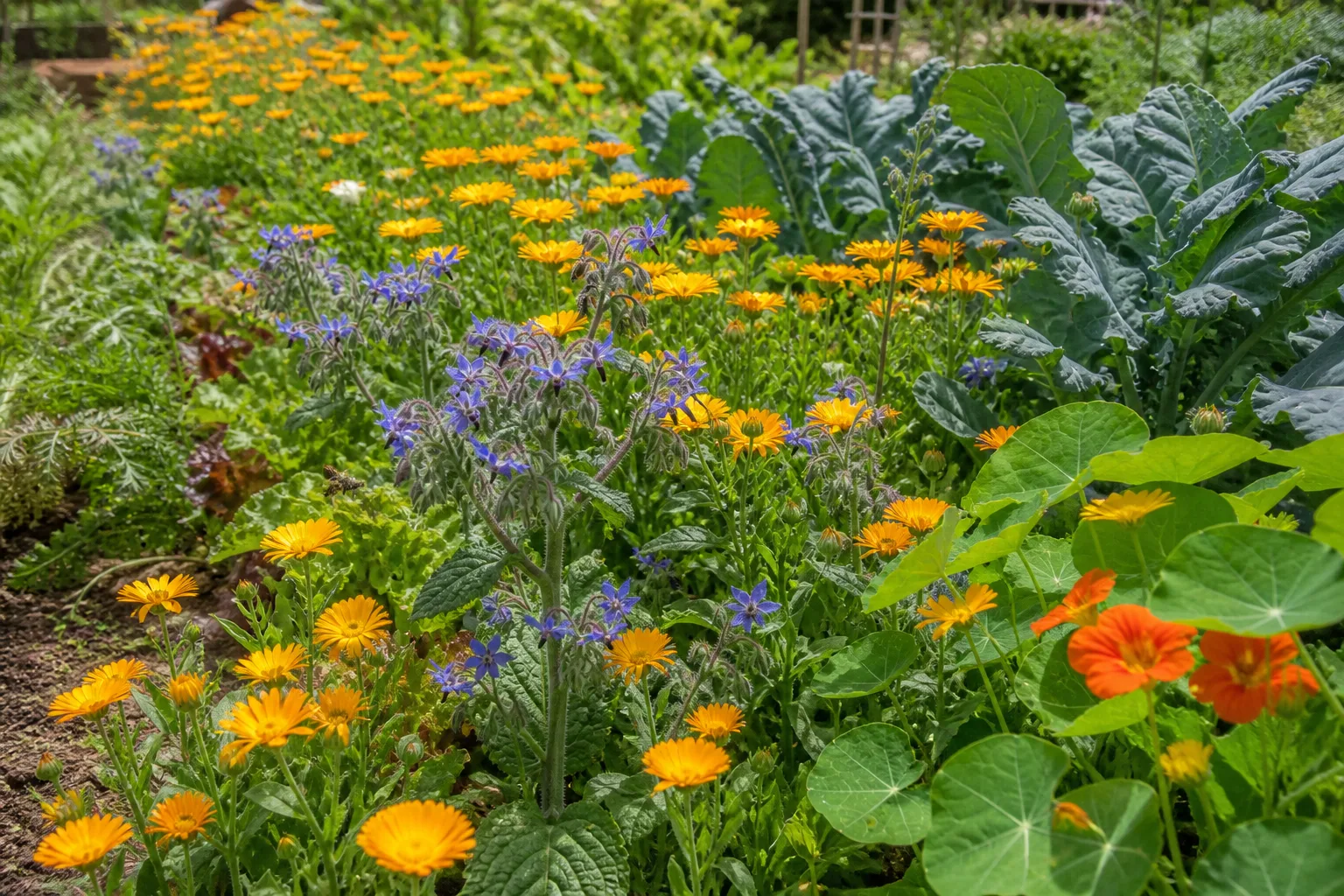
12. Marigolds. Marigolds are one of the few listed companions with carrot-specific field research, but the result should be described precisely. A Polish study over two years tested French marigold (Tagetes patula) and pot marigold (Calendula officinalis) with one carrot cultivar; it reported pest differences and increased sugar content in intercropped roots, while overall yield did not fall across the two years. That is a promising result from a particular setup, not proof that any marigold will sweeten every homegrown carrot or control pests in every climate. (Study in Acta Agrobotanica)
13. Cilantro (coriander). Cilantro is an annual herb with small flowers that can provide nectar and pollen when you let a few plants bloom, so place it at the edge of a carrot bed if you want to support a more varied garden. There is also a two-year Polish carrot trial in which coriander was intercropped with carrots and the researchers recorded changes in carrot pests and beneficial insects; outcomes from that field arrangement should not be generalized into a claim that cilantro always protects backyard carrots. Harvest most leaves if you want the herb, and allow just a few plants to flower rather than letting the entire row bolt. (Folia Horticulturae field study; RHS companion guidance)
Summer vegetables that need room and light
14. Peppers. Sweet peppers and carrots can share a garden season in some climates, but their ideal sowing windows differ: carrots are cool-season roots, while peppers need warm weather and grow into a leafy canopy. Set peppers on the north edge of a bed in the Northern Hemisphere (or south edge in the Southern Hemisphere) and keep the carrot row on the sunny side. A pepper plant can make light afternoon shade in a hot garden, but dense shade during carrot growth reduces the light reaching its tops and complicates watering.
15. Tomatoes. Tomatoes may fit beside carrots when you use the calendar: sow carrots early, then transplant tomatoes after frost danger has passed, while the carrot crop still has direct sun. A mature tomato can shade and occupy far more space than a seedling tomato suggests, so do not tuck a full carrot row under a plant that will spread across it. Carrots do not need to “loosen the soil” for tomato roots when the bed has already been prepared properly; each crop grows well because its own soil and spacing needs are met.
16. Bush beans. Bush beans can occupy a neighboring summer row, but their bushy leaves may shade carrots and their roots still draw water and nutrients from the same bed. Beans fix nitrogen through root-nodule bacteria for their own growth; most nitrogen becomes available to other plants after bean residues decompose, so a living bean beside a carrot is not an instant fertilizer. Keep the rows separate, and treat beans as a crop that may improve the rotation after harvest rather than a guaranteed boost to the current carrot roots. (New Mexico State University Extension on nitrogen fixation)
17. Cabbage. Cabbage likes cool growing conditions, which can make its season overlap with spring or fall carrots, but a mature head and its outer leaves take up a generous footprint. Grow cabbage in a separate row at the bed edge and leave an access path for weeding and harvest; otherwise its leaves can shade the carrot seedlings and pulling a cabbage can disturb developing roots. Small gardens often do better with a cabbage succession in one bed and carrots in another than with both packed into a short raised bed.
18. Cucumbers. Cucumbers can share a garden with carrots if you train vines up a sturdy trellis and keep the carrot strip open to the sun. A ground-running cucumber can sprawl over the soil, shade the feathery carrot tops, and make it hard to water evenly or harvest roots without damaging the vine. In a small bed, grow cucumbers vertically at the far side and sow carrots early enough to harvest before the cucumber canopy reaches its full size.
Plan a mixed bed without sacrificing roots
A simple layout is easier to maintain than a dense patch where every crop is mixed together. Start with one or two carrot rows in loose, stone-free soil; decide whether the main goal is an early row marker, a second harvest, flowers, or a summer crop along the edge. Then assign each companion a specific strip or pot. Intercropping works through timing and arrangement, so a plan that preserves access to the carrot rows is more useful than maximizing the number of plants in every square inch.
Use radishes as markers, then harvest them early
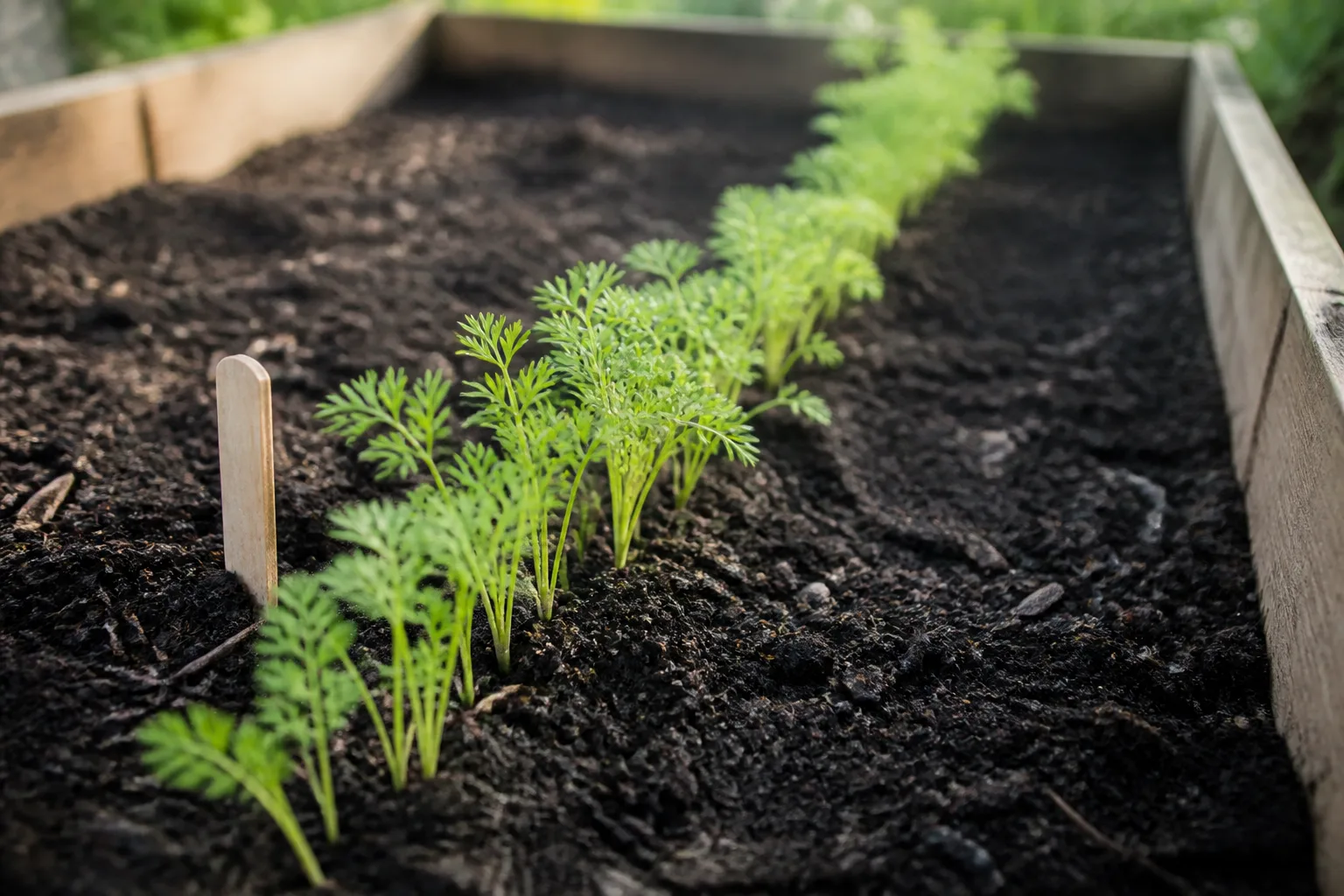
Sow a light sprinkle of radishes along the carrot drill or use them as short markers at intervals, then thin and harvest the radishes as soon as they are usable. Their quick emergence gives you a visible line to weed around before the carrot tops are easy to see, and pulling them opens room while carrot roots are still expanding. Keep enough exposed soil for light watering during germination; if you broadcast radish seed densely, the radish seedlings can become another crop the carrots must compete with.
Give each crop its own row or root space
Carrot roots grow downward, but that does not mean they can share soil volume with every other root crop without competition. Leave carrots at the spacing recommended for the variety—often around 2–3 inches after thinning—and put beets, turnips, onions, or leeks in their own row. In containers, use a deep planter for carrots and consider placing a shallow bowl of lettuce or herbs beside it instead of adding several species to the same limited root zone.
Carrots are particularly unforgiving of a crowded start. Thin them while seedlings are small, pull weeds by hand close to the row, and avoid digging a companion crop directly through the carrot line. If a companion must be removed, cut it at soil level rather than wrenching a large root ball beside developing carrots.
Put large plants where they cast the least shade

Place tomatoes, peppers, cucumbers on trellises, and mature cabbage where their leaves will not cover the carrot row during the brightest part of the day. In the Northern Hemisphere, a tall crop is usually safest on the north side of a bed; in the Southern Hemisphere, reverse that orientation. A little afternoon shade can be useful during extreme heat, but do not depend on a tall crop to cool carrots if it blocks morning and midday sun.
Check the mature width on seed packets and transplant labels instead of planning around the size of a young plant. Leave a path or hand-width access to the carrot row so you can thin, water, weed, and harvest without crushing foliage. Succession planting is often a better “companion” strategy than interplanting: sow a short row of lettuce or carrots every few weeks, and let each planting use the space after an earlier crop is harvested.
Protect carrots with measures that work on their own
If carrot rust fly is active in your area, use a physical barrier rather than asking companion plants to carry the whole job. The larvae feed into carrot roots, and Utah State University Extension recommends crop rotation, removing old carrot residues and host weeds, timely harvest, and floating row covers where practical; the Royal Horticultural Society also recommends insect-proof mesh. Set the cover over the bed after sowing and secure its edges so adult flies cannot reach the crop. A cover also means you should avoid relying on pollinator access to the carrot foliage: carrots grown for roots do not need to flower.
Companions can still be part of a diverse garden, but they are one layer of management. Avoid sowing carrots in last year’s carrot bed, check roots and foliage as you harvest, and ask a local extension service about timing because carrot-fly generations vary by region. Utah’s guide notes that planting after mid-June can avoid a peak egg-laying period there; that calendar should not be copied into a different climate without local confirmation. (Utah State carrot rust fly guide; RHS carrot-growing guide)
What not to plant directly beside carrot rows
There is no universal blacklist that makes carrots fail whenever a named vegetable grows nearby. The practical exclusions are crops that share carrot pests, need more room than the bed can give, or create so much shade that seedlings stall. A plant that is acceptable in a neighboring bed may be a poor choice for the same narrow row.
Separate crops that share carrot-fly hosts
Carrot rust fly can attack other members of the carrot family, including parsnips, parsley, celery, and celeriac. If this pest is a recurring problem, do not surround carrots with its other hosts or leave wild carrot weeds at the bed edge; rotate to non-host crops and cover the carrots instead. This is a more defensible reason to separate parsnips and celery than a blanket claim that they “steal” a particular nutrient from carrots. (Utah State University Extension)
Dill is sometimes listed as a carrot enemy because both are in the Apiaceae family, but that alone does not show that the plants are incompatible or that they cross-pollinate. If you grow dill for leaves or flowers, keep it from shading the carrot row and do not let self-seeded plants crowd the bed. The more important warning is to avoid host plants and weeds that can carry pests and to keep enough room for every crop.
Avoid crowded roots and oversized canopies
Potatoes are not inherently poisonous to carrots, but their expanding tubers and the digging needed to harvest them make a close mixed row inconvenient and potentially damaging to carrot roots. Zucchini and sprawling cucumbers can also cover the bed, while large tomatoes or cabbage can cast more shade than a carrot seedling tolerates. Keep these crops at the edge, trellis vining plants, or grow the crops in separate beds; “nearby” does not require “interwoven.”
Conclusion
Choose carrot companions by what they actually contribute: radishes make a clear marker and early harvest, leafy greens can share a cool-season bed, flowers and herbs add diversity, and alliums have limited evidence for partial pest effects. Give each crop its own light and root space, and use mesh and rotation when carrot rust fly is the risk. A simple layout with one well-spaced carrot row and one purposeful neighbor is more likely to produce usable roots than a crowded bed built around companion-planting promises.



