Cacti and Succulent Care: A Growing Guide
Learn to choose and care for cacti and succulents with safe sun acclimation, root-zone watering, draining soil, seasonal care, propagation, and troubleshooting.
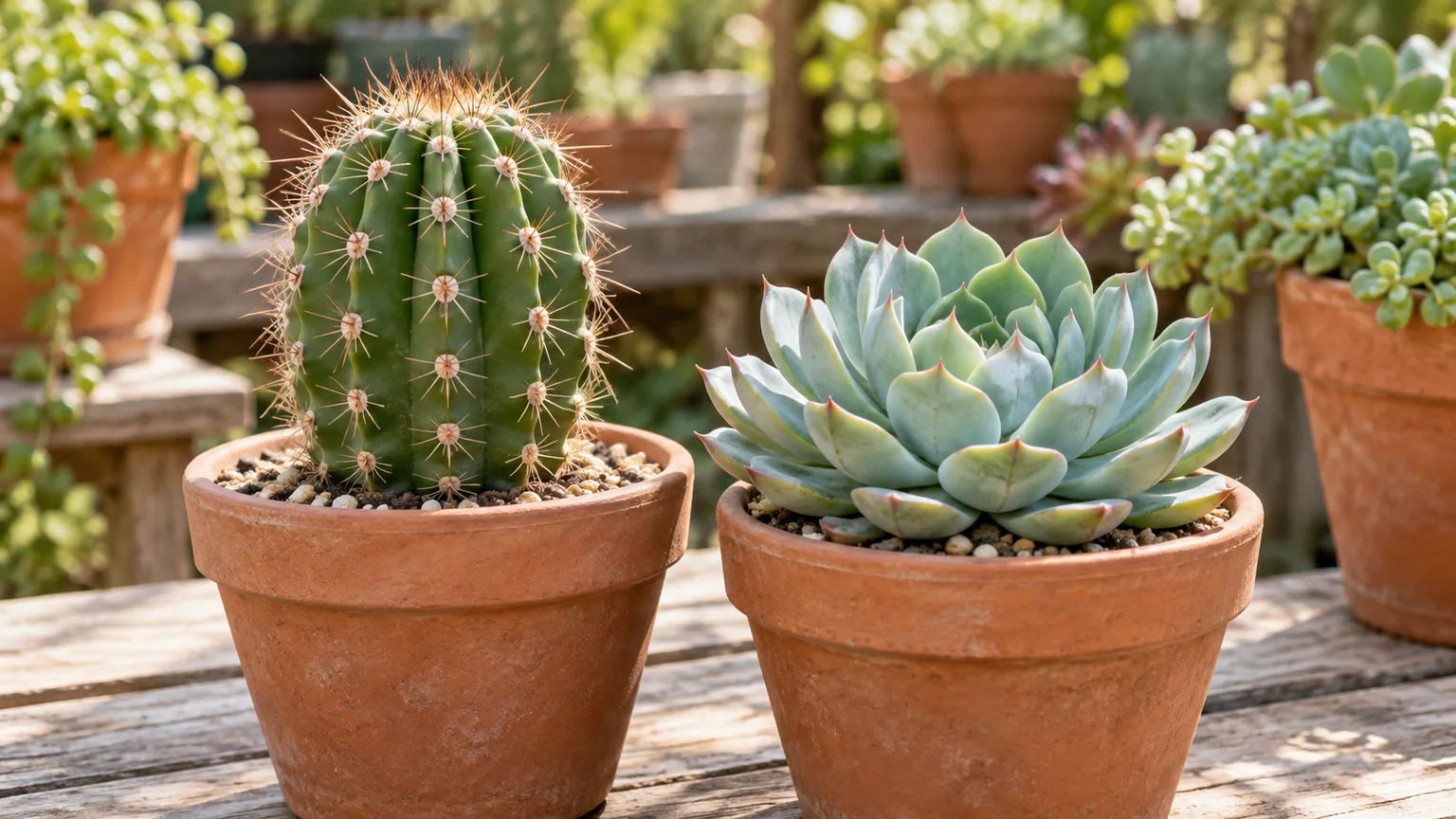
Cacti and succulents are often sold together because many store water and tolerate dry air, but the label doesn’t tell you exactly how to care for a plant. A desert cactus, an Echeveria, and a Christmas cactus can all be succulents, yet their preferred light, soil, and watering rhythm differ. Start by identifying the plant’s growth type, then match its care to the room or garden where it will live.
For most potted desert cacti and leafy succulents, a dependable starting point is bright light, a fast-draining mix, a pot with a drainage hole, and a thorough watering followed by a drying period. Forest cacti and cold-hardy outdoor succulents need different adjustments. These distinctions are more useful than a calendar reminder that says to water every Sunday.
Start by identifying the plant’s growing type
“Succulent” describes a water-storage adaptation, not a single botanical family or a standard care plan. Cacti are one group within the broader category; other familiar succulents include aloe, jade, Echeveria, haworthia, sedum, and sempervivum. Their water-storing tissue may be in leaves, stems, or roots, and the group includes plants from very different climates. The Royal Horticultural Society’s growing guide distinguishes common arid types from rainforest-dwelling cacti that prefer partial shade and more regular moisture.
Before changing care, sort a plant into one of four useful growing patterns:
- Desert cacti: usually store water in stems, grow best in strong light, and need a pronounced dry period between thorough waterings.
- Leafy arid succulents: aloe, Echeveria, jade, and many kalanchoes generally want bright light and well-drained soil, though species vary in how much direct sun they tolerate.
- Forest cacti: Christmas cactus, Rhipsalis, and Epiphyllum come from humid forests or grow as epiphytes. They usually prefer filtered light and more even moisture than a barrel cactus, without sitting in soggy soil.
- Cold-hardy outdoor succulents: some sedums and sempervivums can grow in rock gardens or containers outside, but the cultivar, climate, winter rain, and drainage determine success.
A label with a scientific name makes this first decision much easier. If a nursery tag says only “assorted succulent,” take a clear photo and compare the plant’s shape with reliable plant references before treating it like a desert rosette. For a closer look at the botanical distinction, see the difference between cacti and succulents; for species ideas, browse types of succulents.
Quick care reference for cacti and succulents
Use this table as a starting point, then adapt it to the plant’s name, season, container, and actual growth. “Dry” means the root zone has dried to the degree that suits that group, not just that the soil surface looks pale.
| Plant group | Light | Watering cue | Main caution |
|---|---|---|---|
| Desert cactus | Brightest available light; strong sun after acclimation | Water deeply once the mix has dried through much of the root zone during active growth | Cold, wet soil and abrupt sun changes |
| Leafy arid succulent | Bright light; direct sun depends on species and acclimation | Water when the mix has dried well, then drain the pot | Dim rooms, oversized pots, and water trapped in the crown |
| Forest cactus | Bright, filtered light | Water when the upper mix dries; avoid leaving roots waterlogged | Treating it like a desert cactus or giving harsh afternoon sun |
| Hardy outdoor succulent | Sun to light shade, depending on species | Rain may be enough after establishment; check containers during dry spells | Wet winter soil and unverified frost tolerance |
The reference is deliberately qualitative. A shallow terracotta pot on a hot, sunny balcony can dry far faster than a deep plastic pot in a cool room. A schedule that is safe for one arrangement may keep another pot wet long enough to damage its roots.
Choose a plant for your light, climate, and routine
Pick a plant for the conditions you can provide, not only for its shape. A bright south- or west-facing window may suit many Echeverias, aloe, or sun-loving cacti once they are acclimated. A brighter room with filtered light can be a better fit for haworthia, gasteria, or a forest cactus. A shaded apartment with one small north-facing window is not automatically suitable for every plant sold as low-maintenance; some will stretch there unless you add a grow light.
For outdoor growing, begin with the plant’s cold tolerance and your local winter pattern. Sedum and Sempervivum include hardy garden choices, while many popular rosette succulents are vulnerable to frost or prolonged cold rain. A protected patio can extend the season, but it does not change a tender plant into a hardy one. Check the exact species or cultivar before leaving it outside year-round.
Think about your watering habits too. If you tend to water on a fixed weekly schedule, choose a plant and container combination that dries predictably, then make the moisture check part of the routine. If you want a mixed bowl, group plants only when they share similar light, temperature, and dry-down needs. Separate pots are easier to manage when one plant is a forest cactus and another is a desert species.
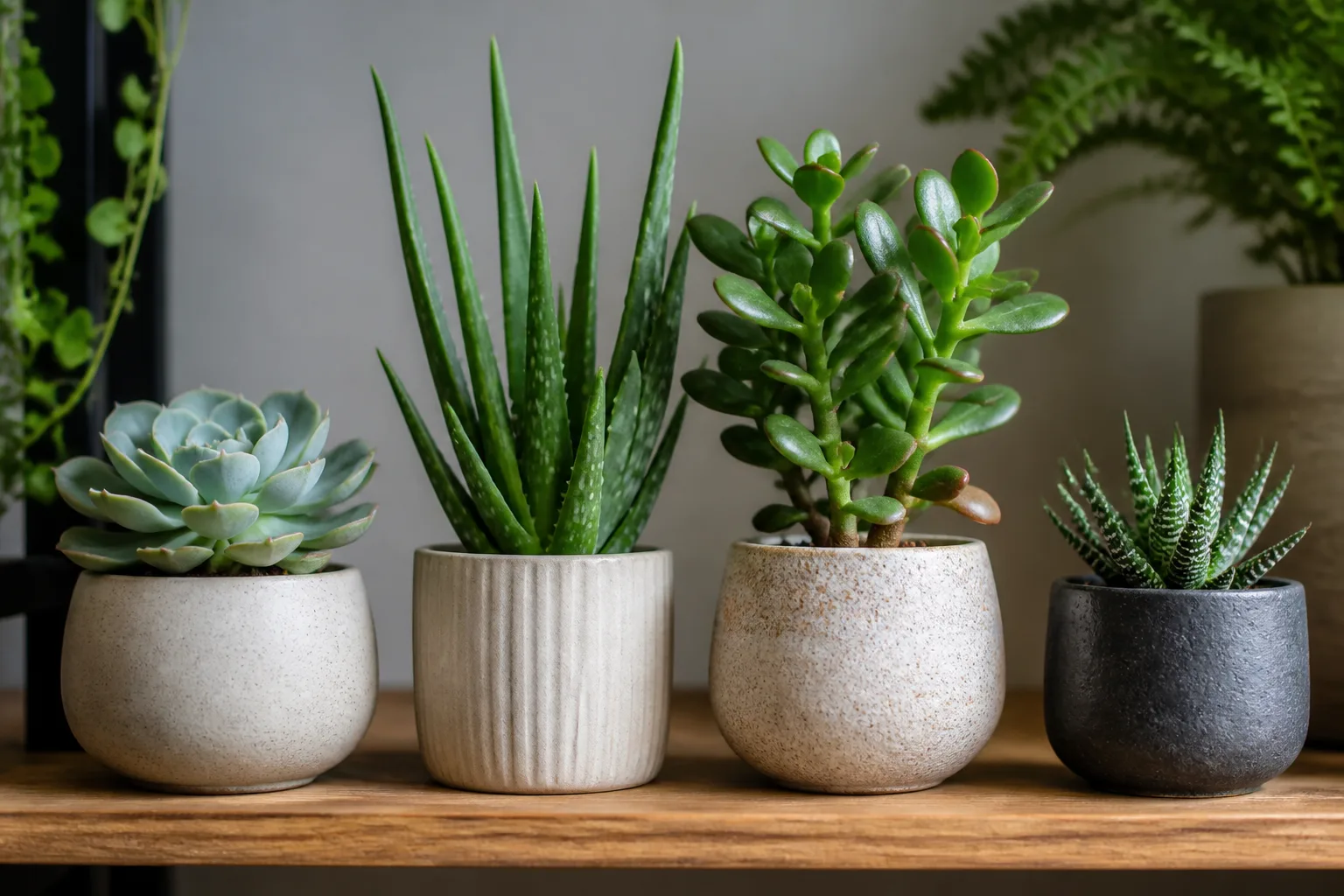
BBC Gardeners’ World’s cacti and succulents collection includes separate growing guides for plants such as aeoniums, echeverias, jade, sedum, sempervivum, and haworthia. Use those names to find the right plant-specific advice after choosing a type, rather than expecting one broad label to dictate every detail.
Give the brightest light the plant can handle
Most desert cacti and many leafy succulents need more light than a typical indoor corner provides. Put them as close as practical to a bright window while keeping leaves from pressing against hot glass. Strong light helps rosette succulents stay compact and gives cacti the energy to grow normally; a dim setting can produce leaning stems, wide gaps between leaves, and weak new growth.
“Bright light” does not always mean hours of direct sun. Glass, window direction, nearby buildings, latitude, season, and curtains all change what reaches the plant. Haworthias and some gasterias can tolerate filtered light better than an Echeveria, while forest cacti generally prefer bright shade. If a plant is stretching, move it gradually closer to the light or add a grow light above it. Do not try to fix a stretched plant by watering or fertilizing more; the existing shape may stay loose, but stronger new growth can become more compact.
Acclimate before moving into direct sun
A plant that grew under greenhouse shade or in a shop can scorch when suddenly moved to a sunny sill or patio. Increase its exposure in stages over about one to two weeks: begin with bright shade or gentle morning sun, then lengthen exposure while watching the leaves and stem. If the plant develops sharply bleached, tan, or dry patches on the side facing the sun, pull it back to filtered light and restart more slowly. Damaged patches will not turn green again, so judge the adjustment by the next healthy growth.
The Boyce Thompson Arboretum also advises gradual exposure for cacti and succulents that are not accustomed to direct sun. This is especially important when moving houseplants outdoors in spring: outdoor sunlight can be much stronger than light behind a window, and a hot afternoon can stress even a plant that eventually thrives in full sun. A temporary shade cloth or sheltered spot makes the transition easier.
Water thoroughly, then let the root zone dry
For a potted desert cactus or a typical arid succulent, water the whole root ball rather than giving frequent sips. Pour slowly until excess water runs through the drainage hole, let the pot finish draining, and empty its saucer or decorative cachepot. Then wait until the mix has dried to the depth appropriate for that plant before watering again. This wet-then-dry cycle gives roots access to moisture and air; staying constantly wet is more dangerous than allowing a short dry interval.
Check below the surface instead of trusting the color of the top layer. Push a wooden skewer into the mix or use a finger where the pot opening allows; lift the pot and learn how it feels after watering and as it dries. A moisture meter can be a clue, but it may give misleading readings in coarse mix or beside a dense root clump. Water needs change with light, temperature, pot material, pot size, airflow, and active growth, so a fixed weekly schedule is unreliable.
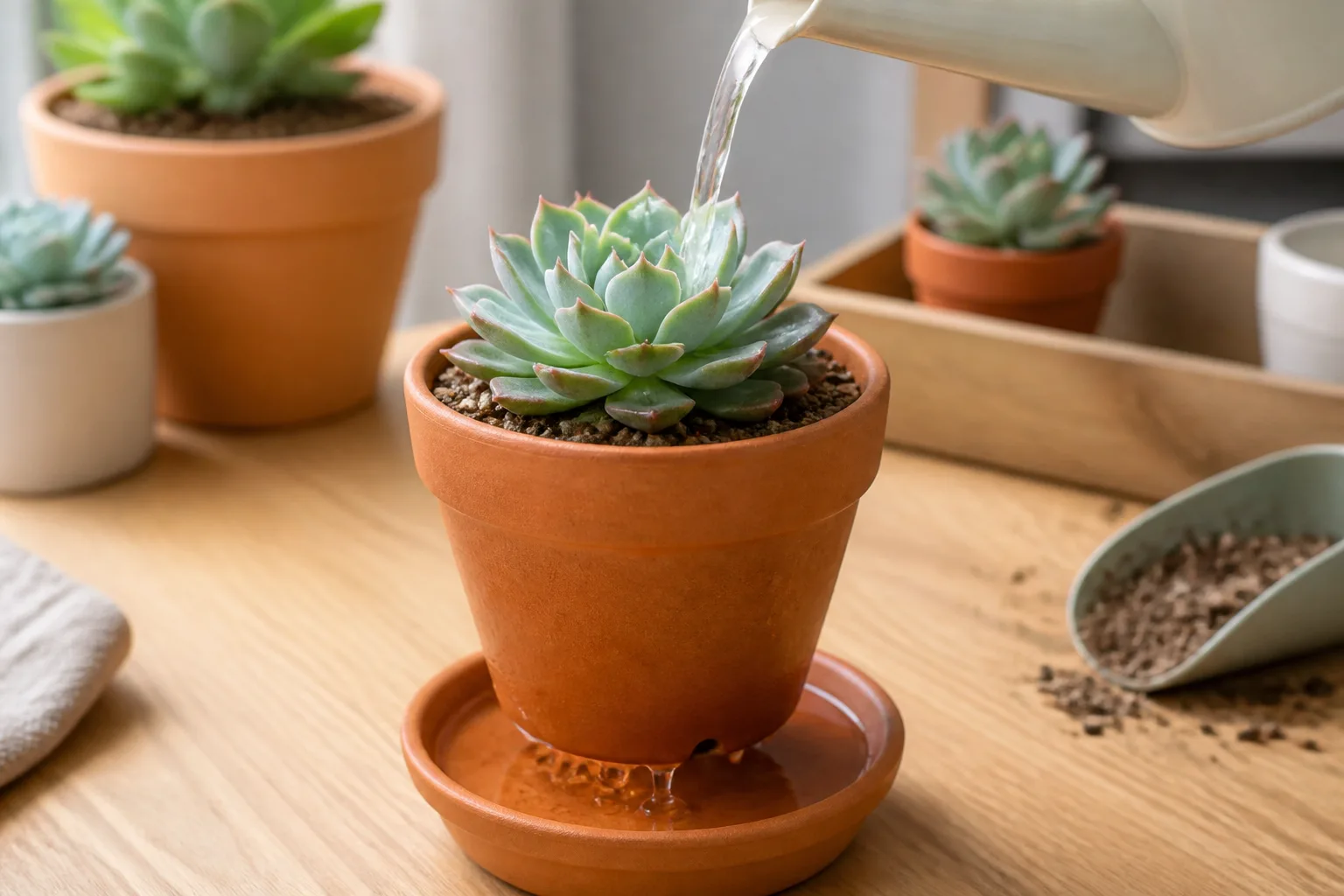
Use the plant’s response as well as the soil check. Slightly wrinkled leaves that firm after watering may signal thirst, but wrinkling can also happen when damaged roots cannot absorb water. A pot that stays heavy for a long time, soft translucent leaves, or a sour smell from the soil is a reason to check drainage and roots before adding more water. For a step-by-step watering routine, see how to water succulents.
Desert cacti and forest cacti need different rhythms
A desert cactus usually benefits from a thorough drink during active growth, followed by a substantial dry-down. During cool, low-light periods, it may use little water; keeping it wet when growth slows raises the risk of rot. Do not interpret “drought tolerant” as a requirement to keep it bone-dry all year. A plant actively growing in warmth and bright light still needs water when its mix dries.
Forest cacti are the main exception to the desert rule. Christmas cactus, Rhipsalis, and Epiphyllum evolved in more sheltered, humid habitats, so they often prefer filtered light and more regular moisture. Let the upper mix dry before watering, but do not leave them desiccated for long stretches if they are actively growing or flowering. They still need air around their roots and a pot that drains freely. The RHS guide describes epiphytic cacti as needing partial shade and more regular watering than arid types; its guidance is why a Christmas cactus should not be managed like a desert barrel cactus.
If you are unsure which pattern fits, check the plant’s label or scientific name. Until you identify it, water cautiously based on soil condition, keep the container draining, and avoid repeated small splashes that only dampen the surface. A plant-specific guide is a better next step than applying the driest possible schedule to every cactus.
Use an airy mix and a pot that drains
Cactus and succulent roots need both water and oxygen. A dense mix that stays wet around the roots can lead to decline even if the surface looks dry. Start with a commercial cactus or succulent mix, then check how it behaves: water should move through without pooling for a long time, but the mix should not become dry again immediately after watering. If it stays heavy and compact, blend in a coarse mineral ingredient such as pumice or perlite.
No single recipe is ideal for every plant and home. A cool room, a large plastic pot, and a moisture-retentive mix may need more mineral content than a warm, bright room with a small terracotta pot. Desert cacti generally need a faster-drying mix than forest cacti, which can use a somewhat more organic medium while still draining well. Avoid garden soil in a small container because it can compact; very fine sand can also fill air spaces rather than improve drainage.
Choose a pot with an open drainage hole and just enough room for the roots. Terracotta dries faster because moisture can evaporate through its sides; glazed ceramic and plastic hold moisture longer. These materials can all work when you adjust the mix and watering checks. Decorative pots without holes can be used as outer cachepots, but the growing pot should be lifted out for watering and allowed to drain fully. A layer of gravel at the bottom does not replace a drainage hole.
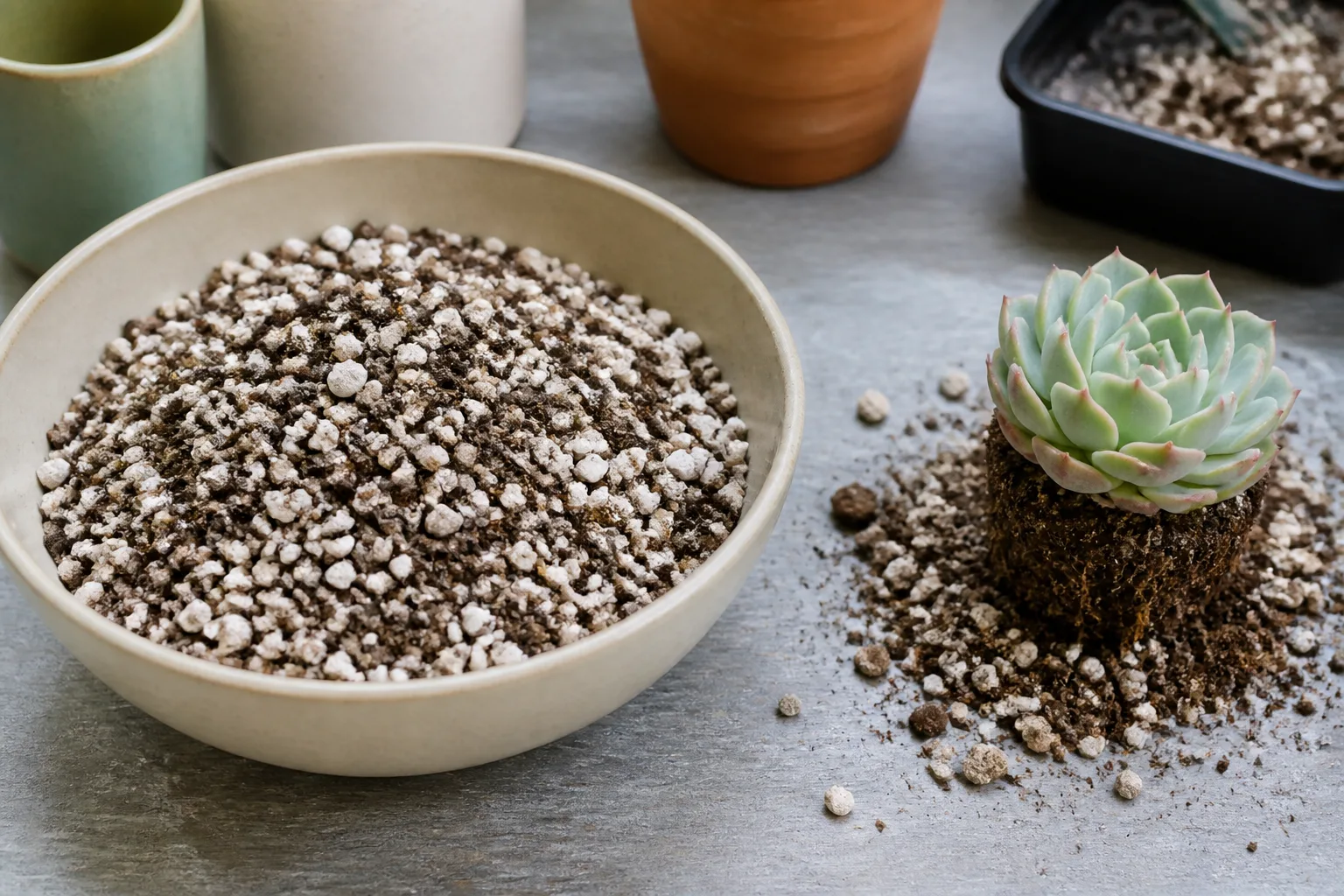
A thin gravel top-dressing is optional, not a cure for a poor mix. Keep it away from the plant’s crown so leaves and stems do not stay damp. For more detail on adjusting ingredients and choosing a mix, read what cactus soil is made for and succulent potting soil needs.
Repot when roots or soil condition call for it
Repotting can help when roots have filled the container, the mix has broken down and stays wet, the plant is unstable, or you need to remove rot. It is not a required annual chore. A new plant can usually stay in its nursery pot while you learn how quickly it dries; repot sooner only if the medium is compacted, the pot has no workable drainage, or the plant is already declining.
When a new pot is needed, choose one only slightly wider than the root system. Too much unused soil holds moisture after the roots have taken what they need. Repotting is easiest when the plant is beginning active growth, often in spring, but urgent root problems should be addressed when found. Use folded newspaper, cardboard, or long tongs to steady a spiny cactus without squeezing it. After repotting, give damaged roots time to recover before returning to a normal watering routine. See how to repot a cactus or how to repot succulents for detailed steps.
Adjust care as growth and seasons change
Most desert cacti and arid succulents grow more actively when days are brighter and warmer. As light and growth slow, they use water more slowly, so extend the interval between waterings and pause fertilizer until new growth resumes. Do not use the month alone as a signal: a warm sunny room can keep a plant active, while a shaded, cool window can slow it earlier.
Some cacti flower more readily after a cooler, drier rest, but the right conditions vary by species. Do not chill a tender plant to force flowers. Keep it away from cold drafts and heat vents, maintain bright light, and follow a species-specific flowering guide if blooms are your goal. Holiday cacti have different seasonal patterns from desert cacti; their care is covered in the Christmas cactus guide.
Humidity is usually not something to increase for desert cacti or most rosette succulents. Normal indoor air is fine, and misting does not replace watering the roots. Forest cacti tolerate more humidity, but stagnant, wet conditions still encourage disease. Airflow and a draining mix are more useful than placing a desert plant over a water tray.
Protect outdoor succulents from cold and winter rain
For an outdoor succulent, check the exact plant’s cold tolerance and the conditions around its roots. Some sedums and sempervivums are hardy in climates where tender aloe, Echeveria, or agave may freeze. Even a plant that tolerates winter temperatures can fail in dense soil that stays saturated through cold weather. In containers, roots are more exposed to cold than they would be in the ground, and a rain-soaked pot can be more dangerous than a brief dry frost.
Use the plant label and a local climate guide to confirm hardiness before leaving it outside all year. Move tender container plants under cover before frost, and protect hardy pots from prolonged winter rain if their species needs drier conditions. Place them in a sheltered, bright spot and keep air moving around foliage rather than wrapping a wet plant in plastic. The RHS identifies winter wet as a major problem for many outdoor succulents and recommends shelter and free-draining conditions. A flowering garden sedum illustrates the kind of plant that can be grown outdoors, though hardiness still depends on species and local climate.
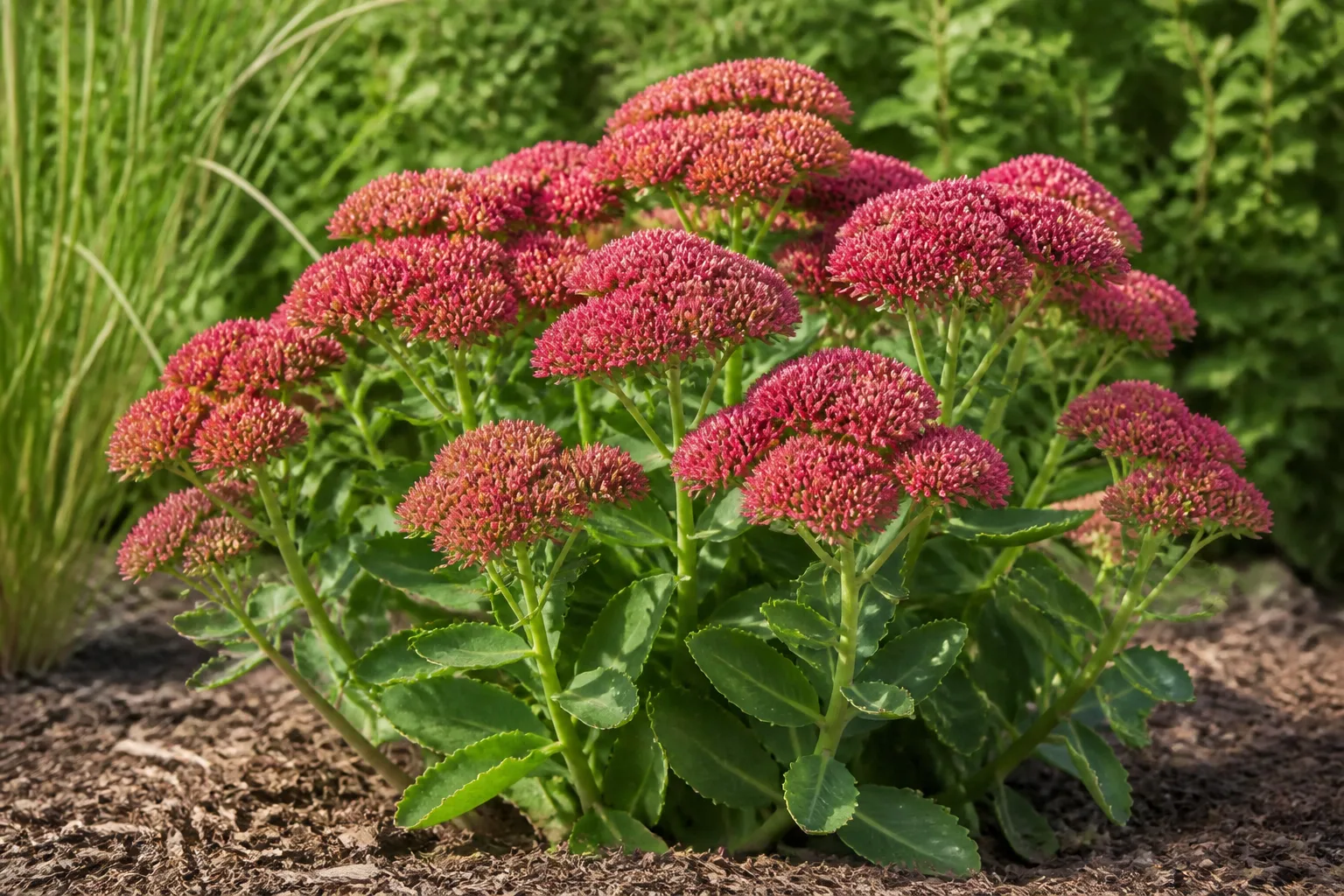
For planning through winter, read whether succulents can survive winter and check your own plant’s hardiness rather than assuming all succulents are frost tender or all are frost proof.
Fertilize lightly only during active growth
Cacti and succulents do not need heavy feeding to stay healthy. If a plant is in fresh potting mix and producing steady growth, fertilizer may not be needed right away. When growth is active, use a diluted fertilizer labeled for container plants or cacti and succulents, and follow the product directions. Do not feed a plant that is dormant, badly stressed, or sitting in wet, damaged soil; fertilizer will not repair poor light or root rot.
Published advice varies: the RHS suggests monthly feeding during the growing season, while Epic Gardening recommends a much lighter annual approach for indoor succulents. That difference reflects how potting mix, outdoor versus indoor growth, and product concentration change nutrient needs. A conservative approach is to begin with a weak dose during active growth, skip feeding after repotting into a nutrient-containing mix, and watch for soft, unusually stretched growth that can signal excess nitrogen. Avoid applying fertilizer directly to leaves or stems.
Propagate by leaves, stems, or offsets
Propagation depends on the plant’s growth form. Many Echeveria and sedum produce new plants from a complete, healthy leaf; jade, aeonium, and some trailing succulents are more reliably started from stem cuttings. Aloe, haworthia, and sempervivum often make offsets or pups that can be separated once they have their own roots. A cactus may be grown from seed, a rooted offset, or a stem cutting if the species forms stems that can be safely cut.
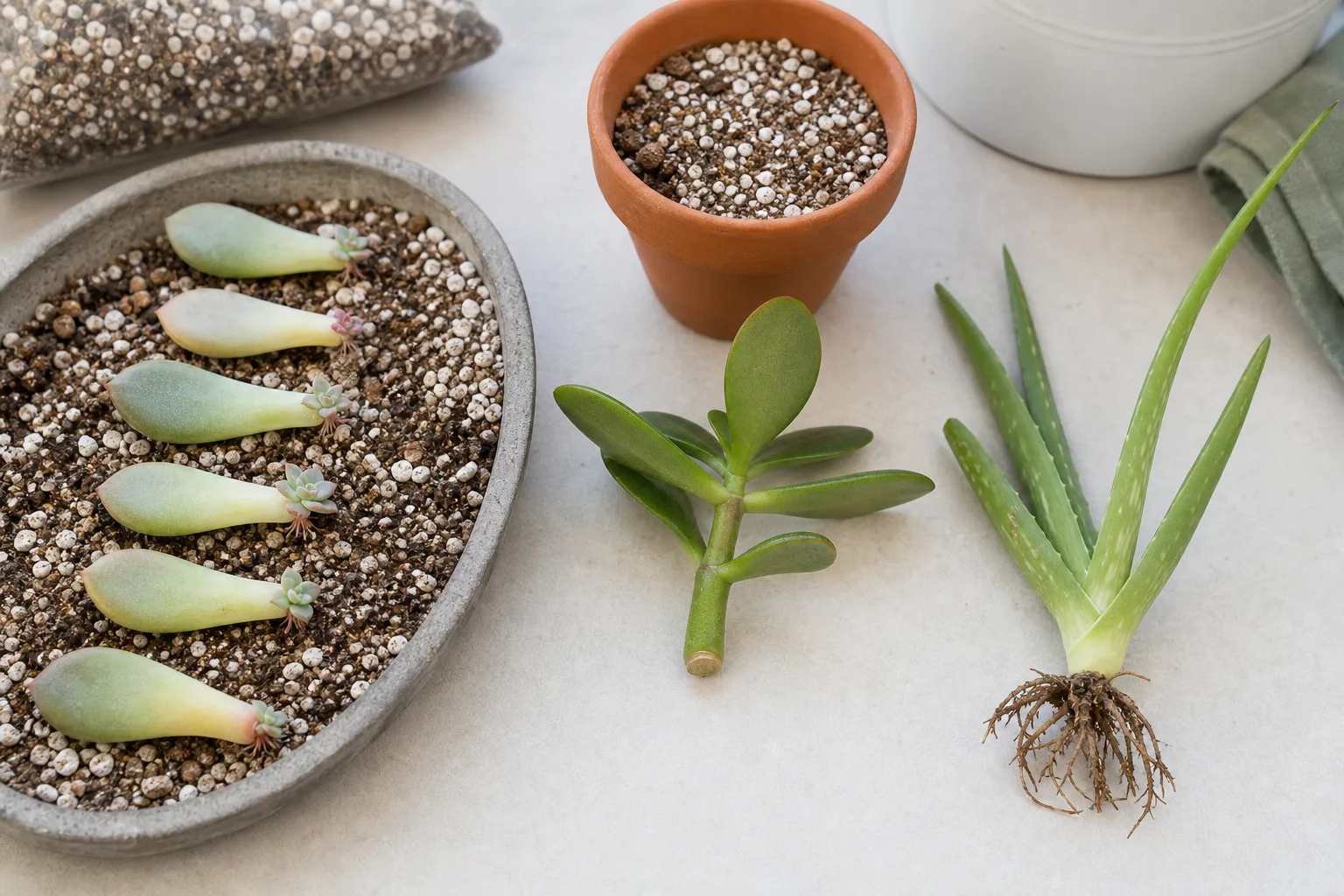
For a leaf cutting, twist the leaf off cleanly so its base remains intact, then let the cut surface dry before placing it on a lightly moist, airy mix. For a stem cutting, use a clean blade, let the cut end callus, and keep the cutting in a warm, bright location out of harsh sun while roots form. Avoid watering newly cut tissue heavily: the wound needs to dry, and wet soil around an unrooted cutting can cause rot before roots develop.
Offsets can be easier because they already have a growing point and may have roots. Separate them with a clean tool, let any wound dry, and pot them into a small container that dries at a predictable pace. Seed propagation is slower and needs more consistent moisture than mature-plant care, so it is a separate project. The RHS propagation guide describes using cuttings, offsets, and seed according to the plant’s growth pattern; see how to propagate succulents for a fuller method comparison.
Diagnose common signs before changing care
One symptom rarely identifies one cause by itself. Yellowing or wrinkling can come from thirsty roots, rotted roots, low light, cold injury, or normal loss of an older leaf. Before watering, pruning, or fertilizing, check the soil moisture, pot weight, light exposure, and whether the change began after a move or cold night. Compare new growth with older leaves; one damaged leaf is less useful than a repeated pattern.
Look for the location and texture of the damage. Sunburn tends to affect the side that suddenly received stronger light and may appear bleached or corky. Low light often produces a stretched silhouette, leaning growth, or larger gaps between leaves. Cold injury can leave discolored or water-soaked patches after a chill. Overwatering is more likely when soft or translucent leaves coincide with a mix that remains wet and a pot that drains poorly.
Pests hide in narrow leaf joints, around the base of spines, and beneath leaves. Mealybugs may look like small white cottony clusters, while scale can appear as fixed bumps; webbing can point to mites. Isolate a newly affected plant, inspect nearby pots, and confirm the pest before choosing a treatment. A strong spray or household mixture can damage leaves or harm beneficial insects, so use only products labeled for the plant and pest when you need one.
Separate thirst from root rot
Both underwatering and root rot can make leaves wrinkle, which is why adding water based on wrinkles alone can worsen the problem. A thirsty plant usually has a dry mix and a pot that feels light; after a thorough drink, firm leaves may gradually recover. Root trouble is more likely when the soil stays damp, the plant softens or collapses near the base, or the roots are dark and mushy rather than firm.
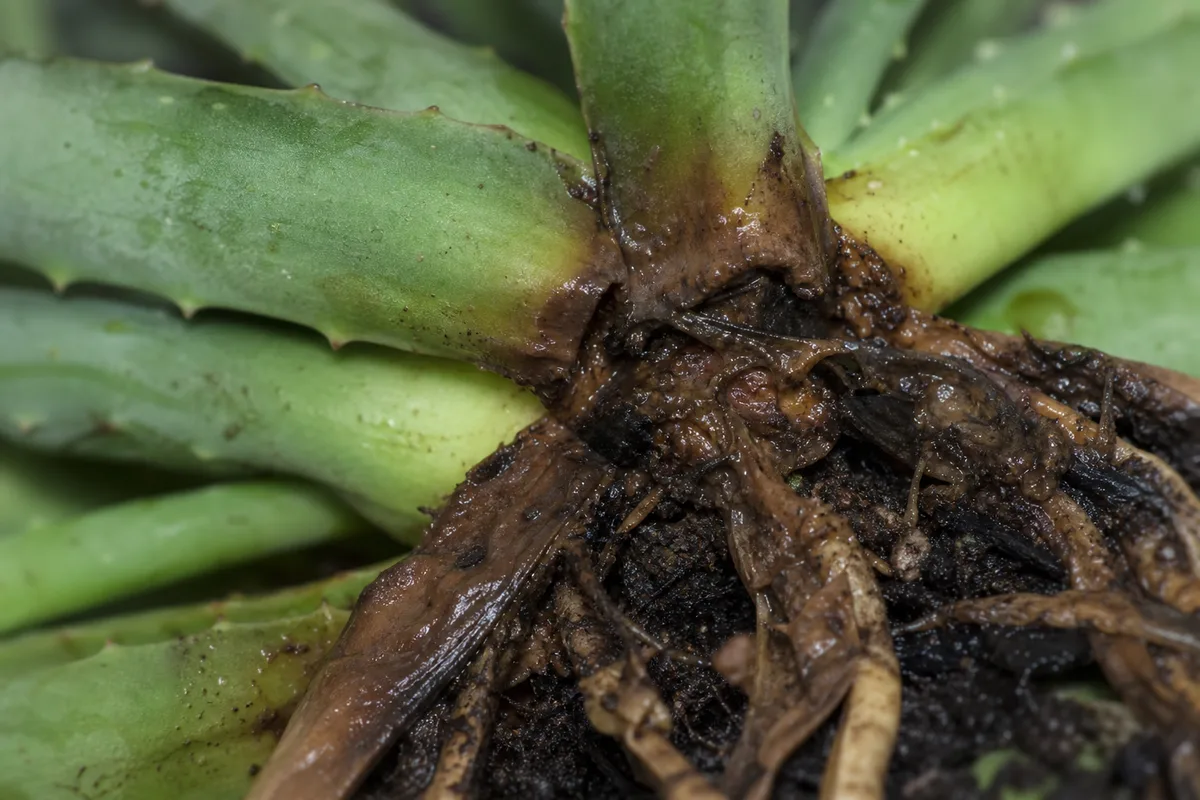
If signs point to rot, slide the plant from its pot and inspect the root ball. Trim away only tissue that is clearly soft or decayed using a clean blade, discard the soggy mix, and let healthy cuts dry before repotting into fresh, airy medium. If much of the crown or stem is already soft, recovery may not be possible; a clean cutting from firm, healthy growth may still be worth trying. For ongoing symptoms, use a focused diagnosis such as how to revive a succulent or how to save an overwatered cactus.
Change one condition at a time unless the plant has an urgent root or pest problem. If you move a stretched succulent into intense sun and repot it into a new mix on the same day, you will not know which change helped or hurt. Correct the most likely cause, give the plant a stable period, and judge progress by new growth; damaged tissue may remain marked even after care improves.
Prevent pests and handle prickly plants safely
Inspect plants before adding them to a group, especially around leaf axils, new growth, and the soil line. Keep a newly purchased plant apart for a short observation period so pests are easier to catch before they reach the collection. Remove fallen leaves from the soil surface and avoid crowding plants where air cannot move between them.
Use thick gloves, folded paper, cardboard, or purpose-made tongs when repotting spiny cacti. Tiny glochids on some prickly pears can be hard to see and may detach from the pads, so do not assume a plant is safe because it lacks long spines. Some lookalikes, such as Euphorbia, are not cacti and can release irritating milky sap when cut; identify them before pruning and avoid skin or eye contact. Keep unfamiliar plants out of children’s reach until you know how they should be handled.
Conclusion
Cacti and succulents are easier to grow when you match care to the plant’s type and habitat. Give desert cacti and many leafy succulents bright light, draining soil, and a thorough drink followed by a measured dry-down; treat forest cacti, cold-hardy outdoor plants, and tender species according to their different needs.
When a plant struggles, check its identity, light, moisture below the surface, and drainage before changing several things at once. A suitable pot and a gradual adjustment usually solve more problems than extra water or fertilizer. Use the plant’s new growth as your guide, and let its specific growing pattern—not the broad “succulent” label—set the routine.