How to Grow and Care For Butterfly Pea Plant
Grow butterfly pea in beds or pots with practical seed-starting, light, watering, pruning, winter-care, and flower-harvest advice for your climate.
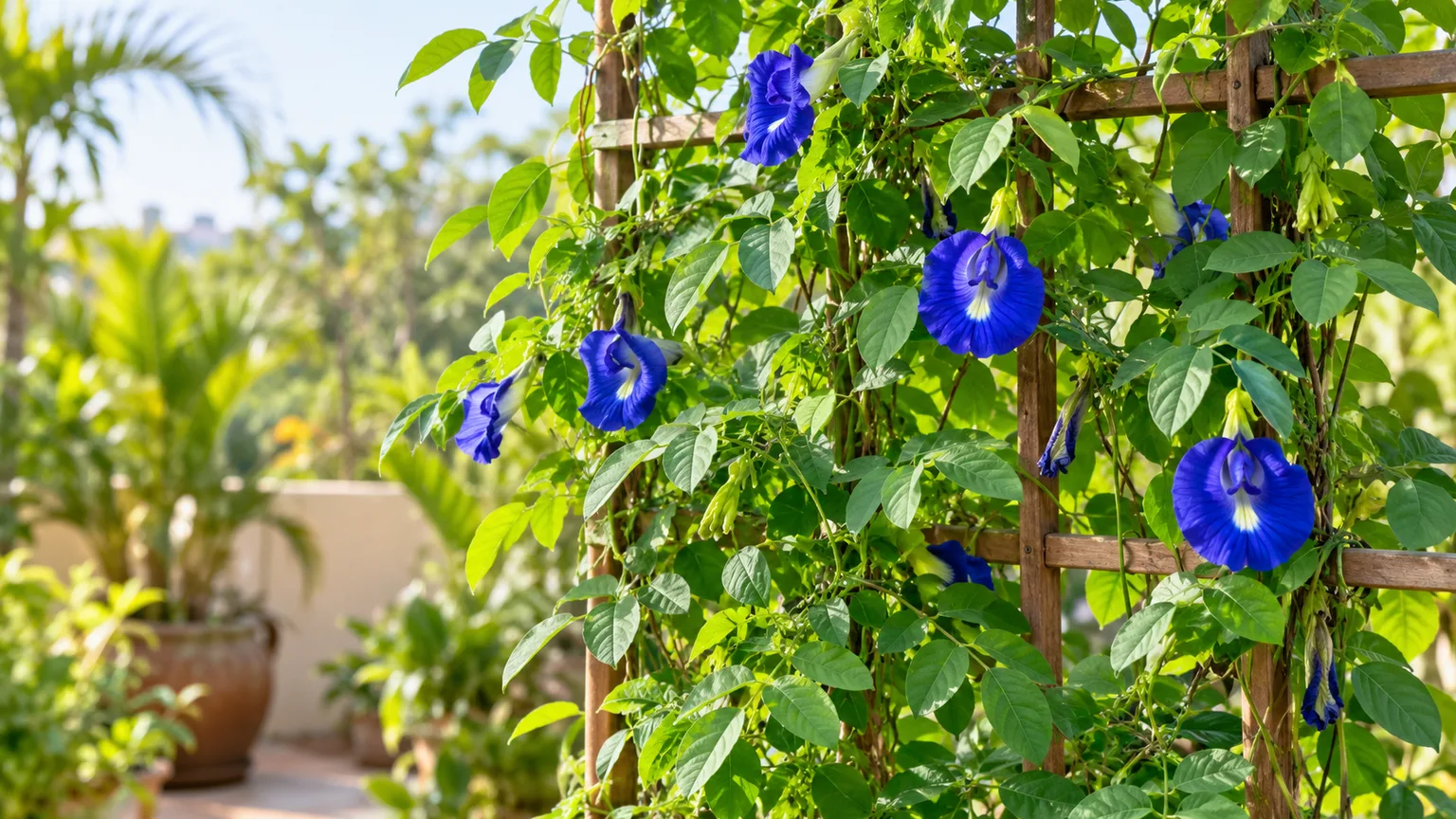
Butterfly pea (Clitoria ternatea) is a warm-weather climbing legume grown for its blue, violet, or white flowers and, in some gardens, its edible young pods. The flowers can color drinks and food blue; adding an acidic ingredient such as lemon shifts that pigment toward purple. To get a dependable crop, think of this plant as a tropical vine with a short growing season in cold climates: warmth, sun, drainage, and support matter more than elaborate feeding.
The first decision is whether your winter is mild enough for the plant to live outdoors year after year. If frost is possible, plan to grow it as a summer annual or keep it in a movable container before you sow. The second is what you want to harvest. Picking flowers frequently encourages a steady supply of blooms, while leaving flowers on the vine lets pods form and mature.
Butterfly Pea at a Glance
| Need | Practical starting point |
|---|---|
| Growth habit | Twining tropical perennial vine; annual where winters bring frost |
| Light | Full sun for strongest flowering; some afternoon shade in very hot climates |
| Soil | Fertile or average soil that drains freely; broad tolerance for soil type |
| Water | Keep new plants evenly moist; let the surface begin to dry between waterings once established |
| Support | Trellis, fence, obelisk, or other structure installed before the stems elongate |
| Flowers and fruit | Blue, violet, or white flowers; flat pods follow if flowers are pollinated and left in place |
A mature vine can extend several feet and may climb roughly 10 to 15 feet when conditions and support allow, although growth varies by cultivar and season. It belongs to the bean family, Fabaceae, and has compound leaves with several small leaflets. The Royal Horticultural Society’s plant profile records its tropical Asian range; an Encyclopaedia Britannica overview describes its twining habit, frost sensitivity, flowers, and broad soil tolerance.
Choose a Climate and Planting Season It Can Handle
Butterfly pea is reliably perennial only in warm, frost-free conditions. Published hardiness ranges vary by source, cultivar, and local climate; the useful rule for a home grower is simpler: a single cold snap can kill an exposed vine, so do not count on a zone label alone if your yard sees frost. In mild tropical and subtropical areas, plant it where the roots can remain in the ground through winter. In colder regions, grow it during the warm season and either start over from seed next year or move a container indoors before nights turn cold. Epic Gardening’s butterfly pea growing guide likewise recommends container growing where winter cold is a concern.
Wait until both the soil and nights are warm before setting seedlings outside. Cool weather slows establishment and wet, cold soil increases the chance that seeds or young roots will rot before they grow. Gardeners with a short summer can start seeds indoors several weeks before the expected last frost, then transplant only after frost risk has passed and the weather has settled into warm conditions. In a long, hot season, direct sowing outdoors is easier because the vine grows quickly once it is established.
Pick a Sunny Site for More Flowers
Choose the brightest practical spot, ideally one receiving at least six hours of direct sun. More light usually means a fuller vine and more flowers; a plant in deep shade may stay green and produce long stems while setting few blooms. In an extremely hot inland climate, a site with strong morning sun and light afternoon shade can reduce heat stress, but too much shade commonly trades flowers for leaves.
Look beyond the sun map before planting. The site should have room for a climbing vine, airflow around the foliage, and soil that does not stay saturated after heavy rain. Keep the root zone away from a downspout or a low spot that collects water. If you are growing it against a wall or fence, check that the structure will not cast shade for most of the day and that the vine will not cover vents, gutters, or a neighboring plant you want to keep visible.
Put Support in Place Before the Vine Runs
The stems twine around narrow supports; they do not cling to a smooth wall by themselves. Set a trellis, fence, netting, or sturdy obelisk in place at planting time so you do not have to push stakes through a crowded root system later. A small pot can use a compact tripod or fan trellis, while an in-ground vine needs a structure tall and strong enough to carry a leafy canopy after rain.
Guide the first few stems gently toward the support. If a stem has not found a surface to wrap around, loosely tie it with soft garden tape or a strip of fabric, leaving room for the stem to thicken. Avoid pulling tight or winding the vine around a narrow wire, which can constrict it. Training early also helps you decide where new growth goes: spread stems over the trellis for a screen, or keep them concentrated near the center if you want an easier-to-reach harvest.
Prepare Soil That Drains After Rain
Butterfly pea tolerates a range of soils, but roots need oxygen. A loam or sandy loam that holds some moisture yet drains after watering is a good target. If your soil is heavy clay, improve the planting area broadly with organic matter and consider a raised bed; digging a small amended pocket in dense clay can create a basin that collects water around the roots. In a pot, use a quality container mix rather than garden soil, which compacts and drains poorly in a confined space.
A soil pH around 6 to 8 is generally suitable, so most gardeners do not need to adjust pH unless a soil test identifies a real problem. Mix a modest amount of finished compost into poor soil before planting. Avoid burying the stem deeper than it grew in its nursery pot, and do not place fresh manure directly against roots. Good structure and drainage solve more problems than a complicated soil recipe.
Water for Steady Growth Without Soggy Roots
Water new seedlings when the top layer of soil starts to dry, giving enough to moisten the root zone rather than sprinkling the leaves. During establishment, consistent moisture helps a small root system expand. Once the vine is growing strongly, it can tolerate short dry spells, but prolonged drought can stall new growth and reduce flowering. Use the plant and soil as your gauge instead of a fixed calendar: a container may need water every day in hot, windy weather and much less often during cloudy, humid weeks.
Check below the surface before watering again. If the soil is still cool and damp a finger-depth down, wait; if it has dried and the leaves are beginning to lose firmness, water thoroughly. Empty saucers under pots so roots are not left in standing water. Direct water to the soil in the morning when possible, which gives splashed foliage time to dry and reduces the damp conditions that encourage leaf disease. Yellowing plus persistently wet soil points to poor drainage or overwatering, not a need for more fertilizer.
Fertilize Lightly and Watch Leaf Growth
Butterfly pea is a legume, and mature roots may develop nodules that host nitrogen-fixing bacteria. That relationship does not mean every plant can meet all its nutrient needs in every soil, but it does mean heavy nitrogen feeding is usually unnecessary. Excess nitrogen can push the vine toward lush foliage at the expense of flowers, especially when light is already limited.
Start with compost or a balanced, slow-release fertilizer at the label rate if the soil is poor. Then watch the plant. Deep green leaves and long, soft shoots with few blooms suggest that the next step is more sun or less nitrogen, not another dose. A pale, stunted vine may need a soil test or a careful review of drainage and root health before feeding. Container plants lose nutrients as water drains through the pot, so a dilute balanced feed during active growth can help; reduce or stop feeding when growth slows indoors for winter.
Start Butterfly Pea From Seed
Direct sow once the weather is warm, or start seeds in individual cells indoors so the roots are disturbed as little as possible. Use fresh, well-draining seed-starting mix and a clean pot with drainage. Plant each seed about a half-inch deep, water the mix, and place the tray somewhere warm. Keep it evenly moist, not saturated. A clear humidity cover can slow drying, but remove it once sprouts emerge so stagnant, wet air does not linger around seedlings.
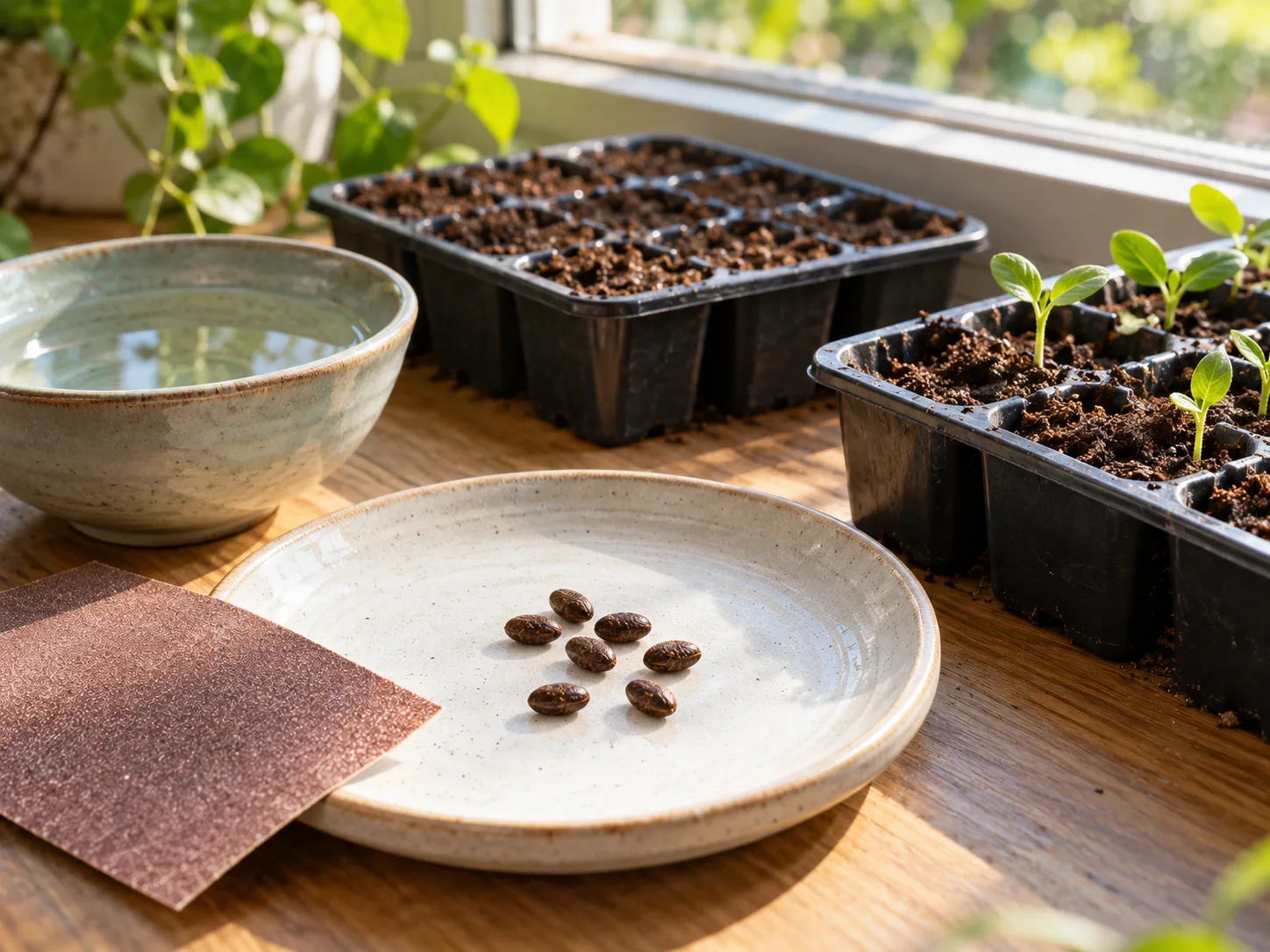
Seed germination can be uneven because hard seed coats, seed age, and pod maturity all matter. A 2024 systematic review of butterfly pea germination research describes dormancy and seed maturity as internal factors and seed treatment and temperature as factors gardeners can influence. In everyday terms, do not assume a failed first seed is proof that the plant is difficult: use a small test batch, keep it warm, and adjust the seed treatment only if seeds remain hard and unchanged. Epic Gardening also recommends soaking seed before sowing and keeping the mix damp but not waterlogged.
Improve Germination Without Damaging the Seed
First inspect the seeds. Firm, intact seeds are suitable; discard any that are soft, moldy, or visibly damaged. Soaking overnight in room-temperature water can help the seed coat take up moisture. If seeds remain very hard or prior batches failed, lightly scuff one small spot on the coat with fine sandpaper or nick the coat with a clean blade, taking care not to cut into the pale inner seed. Soak the treated seeds afterward and sow them promptly.
Do not use chemical scarification or boiling water for a home garden. Those methods are unnecessary risks when a gentle soak and light abrasion are available. A swollen seed has imbibed water and is ready to sow; a seed that remains hard after soaking may need a tiny additional scuff. Provide steady warmth and patience: germination often takes about one to three weeks, and not every seed will sprout at the same time. If nothing happens after several weeks, check for cold mix, waterlogged soil, old seed, or a seed coat that never softened before sowing another batch.
Harden Off and Transplant at the Right Time
A seedling raised indoors has not yet adjusted to direct sun, wind, or outdoor temperature swings. Over about a week, set it outside in a sheltered bright spot for a few hours, then gradually increase its exposure and time outdoors. Bring it back in if nights are cold or a storm is expected. This transition helps prevent scorched leaves and wilting after an otherwise healthy transplant.
Plant seedlings outside only after frost danger is over and the weather is warm. Space vines far enough apart that their mature foliage can dry after rain; for a single trellis, a few feet between plants is usually easier to manage than crowding several into one small section. Water them in, direct the first stems toward the support, and keep the root zone evenly moist while they establish. Avoid transplanting during the hottest part of a heat wave if you can choose a milder, cloudy day.
Grow Butterfly Pea Successfully in a Container
A pot is the best option when winters are cold, your soil drains poorly, or you want to move the plant closer to a sunny patio. Use a sturdy container with several drainage holes and enough room for roots—roughly 12 inches wide is a practical starting size for one plant, with a larger pot reducing how quickly it dries. Pair it with a trellis sized for the mature vine; a tiny pot and tall support can tip in wind as the canopy fills out.
Use fresh potting mix and set the crown at the same depth as before. Water until excess runs from the drainage holes, then empty the saucer. In hot weather, check moisture daily because containers warm and dry faster than garden beds. If the plant is root-bound, roots circle densely at the outside of the root ball, or the mix dries almost immediately after watering, shift it into a pot only a few inches wider. A much larger pot full of wet mix can stay damp for too long around a small root system.
Train and Prune the Vine With a Purpose
Pinch a young plant once it has several sets of true leaves if you want more side shoots and a bushier screen. Let the main stems grow when your priority is height or a quick cover over a fence. During the season, redirect wayward tips before they become tangled, and remove weak, damaged, or crossing stems with clean pruners. Pruning is a way to shape the vine and improve airflow, not a requirement for flowering.
Deadheading creates a choice. Remove spent flowers when you want to encourage fresh blooms and keep the plant tidy; leave healthy flowers in place when you want pods. Do not cut the entire vine back hard in the middle of a short summer, since the plant needs time to regrow and form flowers. At the end of the season, trim dead growth after frost or cut back a potted plant enough to bring it indoors and inspect it.
Diagnose a Vine That Will Not Flower
A leafy vine without flowers usually needs a change in conditions rather than a special bloom stimulant. Check the likely causes in this order: is it warm enough, is it receiving several hours of direct sun, is the plant old enough to flower, and has it been fed with a nitrogen-heavy fertilizer? A plant started late in a short northern summer may spend much of its season establishing roots and stems. Give it the warmest sunny position available and avoid frequent feeding while it catches up.
If flowers form but disappear quickly, that can be normal: an individual bloom is short-lived. Pick flowers regularly during the day and check the vine every day or two during peak bloom. If the plant makes flowers but no pods, it may not be pollinated, especially indoors behind a screen. Move an outdoor container where pollinators can reach it during warm weather, or use a small soft brush to transfer pollen between open flowers. Leave several flowers untouched if you want to test whether pod set is the issue.
Harvest Flowers, Pods, and Seeds at Different Stages
Pick flowers when they are newly open and clean, preferably after dew dries. Each bloom lasts only briefly, so harvesting a small amount frequently gives fresher color than waiting for a large flush. Use flowers immediately, or dry them in a single layer in a shaded, airy spot until crisp, then store them in a sealed container away from heat and light. Flowers that are intended for food or tea should come from plants grown without pesticides not labeled for edible crops; rinse them and discard any damaged or contaminated blooms.
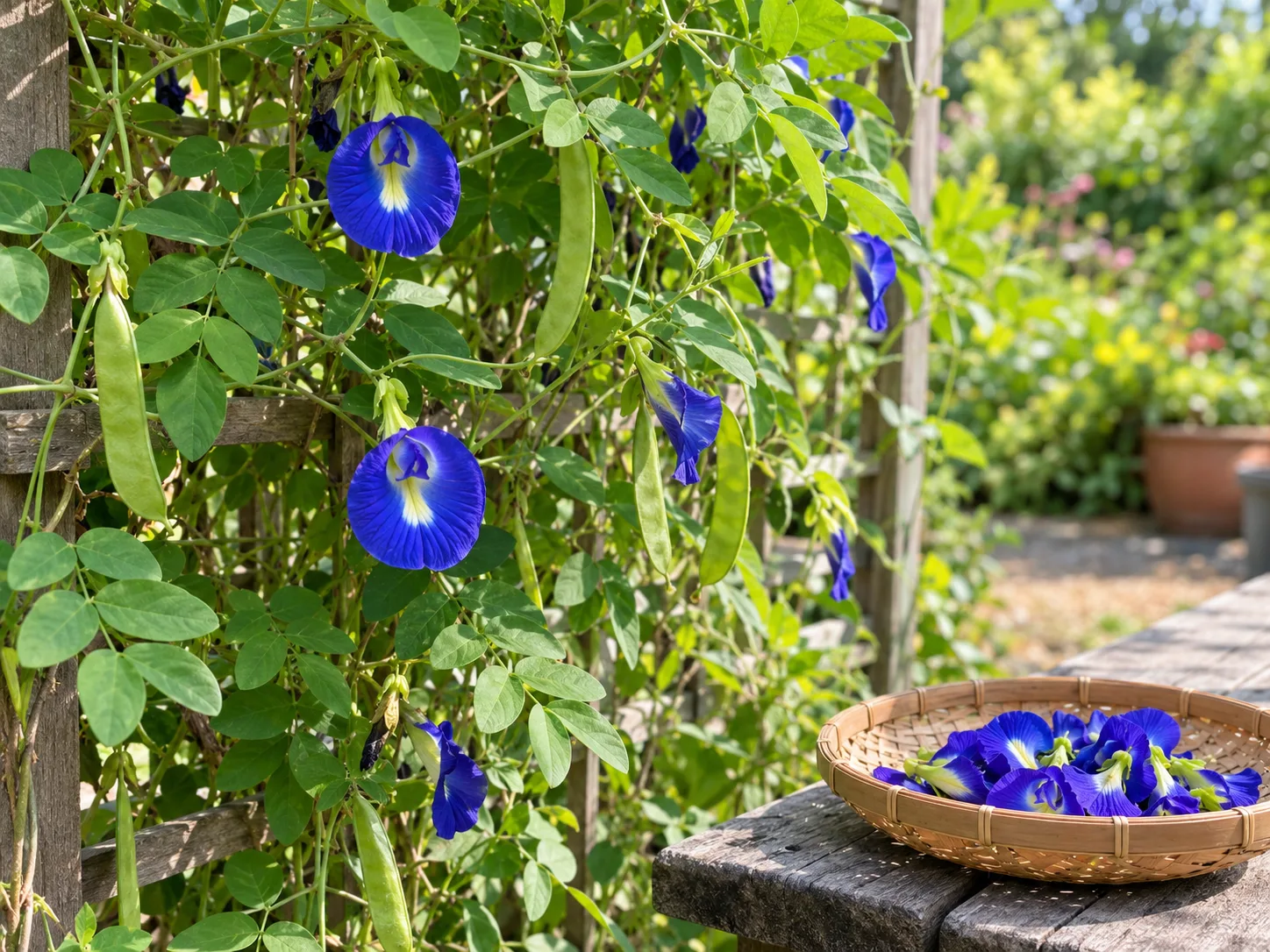
Flowers used for natural color have a mild flavor, and their blue pigment changes toward purple when the liquid becomes more acidic. The science on butterfly pea extracts includes laboratory and food-processing studies, but that does not establish the flower tea as a medical treatment; enjoy it as a culinary ingredient rather than relying on health claims. A peer-reviewed review of butterfly pea flower research covers its pigments and extraction methods, not a home-garden dosage or a clinical benefit.
To harvest pods, stop deadheading some flowers and let them set fruit. Pick flat green pods while they are young and tender; older pods become fibrous as seeds mature. For seed saving, leave a few pods until they turn brown and dry on the vine, then collect them before they split or weather. Open a pod and store firm, dry seeds in a labeled paper envelope in a cool, dry place. Germination may vary with age and storage, so save more than you expect to plant and test a few before relying on a saved batch.
Overwinter a Potted Vine or Save Seed
Bring a container indoors before nights approach the plant’s cold limit, not after frost has damaged the foliage. Inspect leaf undersides for aphids and mites, rinse dust and pests away, and place the vine at the sunniest window available. Reduce watering as growth slows, but do not let the root ball dry completely. Indoor air is often less humid than a tropical patio, so expect some leaf drop or slower growth; avoid trying to compensate by keeping the pot constantly wet.
A plant that becomes leggy in winter can be lightly trimmed and trained near a bright window, then pruned more substantially as new growth begins in spring. If indoor light is inadequate, overwintering may be less reliable than collecting dry seeds and starting fresh next season. Treat the plant as an annual if the cost and space of keeping a large vine indoors outweigh the benefit of an older root system.
Manage Pests, Disease, and Excess Moisture
Inspect new growth and the undersides of leaves every week. Aphids cluster on soft tips and may leave sticky residue; spider mites cause fine stippling and, in heavier infestations, webbing. Start with a firm spray of water, especially under leaves, and repeat after several days. If a product is needed, use one labeled for the plant and the intended setting, follow its label, and avoid spraying open flowers when pollinators are active.
Root problems are more likely in a pot without drainage or soil that stays wet than in a plant that simply prefers humidity. If leaves yellow while the mix remains damp, pause watering and check whether water escapes freely. A foul smell or soft, dark roots calls for removing the plant from the pot, trimming dead roots with clean tools, and repotting into fresh, airy mix. Brown spots that spread across wet foliage can also signal a disease issue; remove badly affected leaves, water the soil rather than the canopy, and improve airflow. If damage progresses despite those changes, take a sample to a local extension office for diagnosis before applying a pesticide or fungicide.
Keep the Vine Contained Where It Can Spread
Butterfly pea is useful as a fast-growing screen, but vigorous vines and seed pods can be a liability if they escape a garden. It has naturalized outside its original range, and Gardenia’s butterfly pea profile notes invasive behavior in parts of Australia, Hawaii, and Pacific island ecosystems. That does not mean it is invasive everywhere; risk depends on climate and local ecology. Check your state, regional, or island invasive-plant list before planting in warm areas, especially near waterways, conservation land, or natural habitat.
Where it is appropriate to grow, keep it on a maintained support rather than letting stems trail into unmanaged ground. Remove unwanted pods before they dry and split, and do not discard seed-bearing material in a natural area or green-waste pile that may spread it. In frost-prone climates, winter cold usually limits persistence outdoors, but collect and dispose of unwanted seeds all the same.
Conclusion
Successful butterfly pea care starts with matching the plant to your winter. Give it warmth, direct sun, free-draining soil, and a support before the vine takes off; use a pot if you need to move it away from cold. Start seeds warm, soak them, and use only gentle scarification when a hard coat appears to be the problem.
After the vine grows, let your goal guide your pruning and harvest. Pick flowers often for color, or leave flowers in place for young pods and mature seed. If the plant stays leafy without blooms, check light, temperature, age, and fertilizer before changing anything else. That simple sequence makes this tropical vine easier to grow—and easier to keep in bounds.



