Blue Star Plant Care: How to Grow and Prune Amsonia
Learn blue star plant care by season: choose the right Amsonia, prevent floppy stems, water wisely, prune only when needed, and grow new plants from seed.
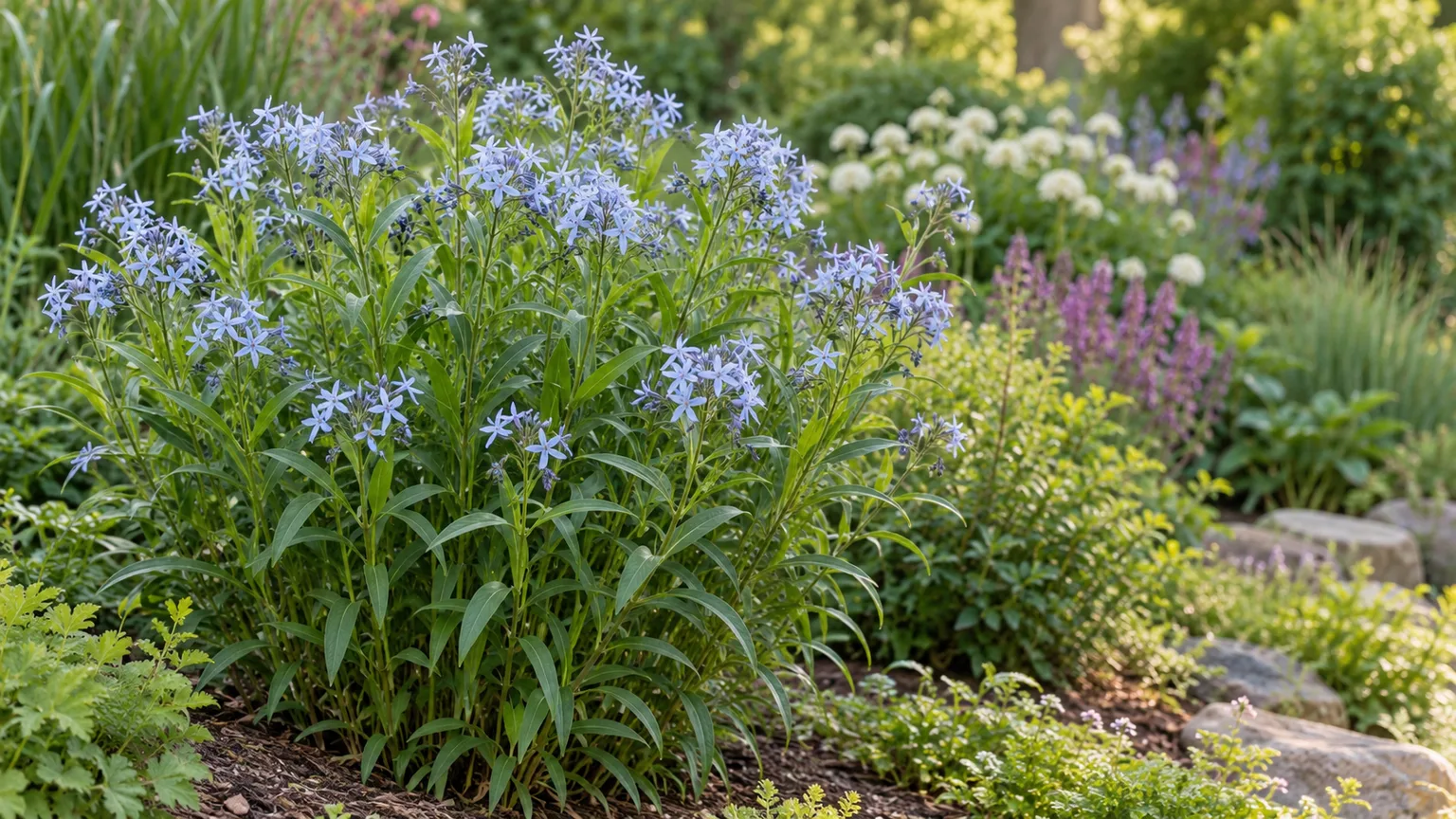
Blue star, or Amsonia, is a clump-forming North American perennial with soft blue, star-shaped flowers in late spring and foliage that can turn bright yellow in autumn. The flowers are lovely, but the plant’s real advantage is the long stretch between them: a tidy mound of narrow green leaves, interesting seed pods, and a substantial fall display with little routine maintenance.
Most planting problems come from choosing a dark, crowded spot or expecting every Amsonia to have the same size and leaf texture. For the most familiar blue star, eastern bluestar (Amsonia tabernaemontana), give the clump room, moderate moisture while it establishes, and as much sun as your climate allows. Then leave it alone unless its stems need shaping.
What blue star looks like through the seasons
Eastern bluestar grows from a perennial crown into a rounded, shrub-like clump of upright stems. Its willow-shaped leaves are medium green and arranged along the stems; clusters of small, five-pointed, pale blue flowers open near the tips. NC State Extension describes it as a native herbaceous perennial across central and eastern North America, growing about two to three feet tall and wide in its profile, though mature size varies among species and cultivars. (NC State Extension)
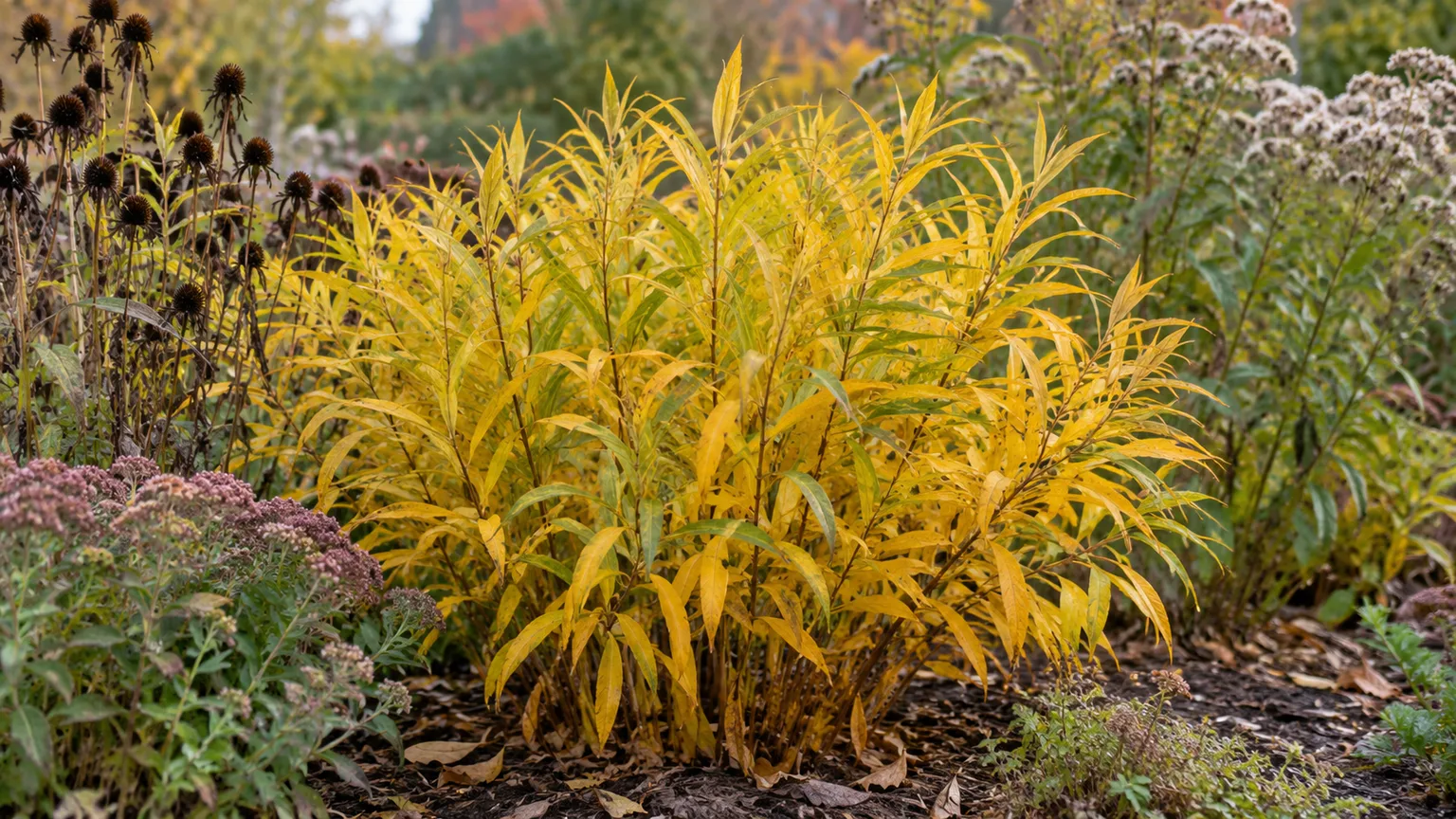
Flowering usually falls somewhere in late spring, with exact timing shifting according to species and local weather. Penn State Extension reports a mid-April to early-June bloom window across native Amsonias and flowers that last roughly two to four weeks. Afterward, long, narrow seed pods may develop; as temperatures cool, the leaves can turn yellow to gold. That change gives the plant a second, foliage-led season instead of leaving an empty-looking gap after flowering. (Penn State Extension; Flower Gallery)
Which Amsonia should you buy?
“Blue star” is a common name for several Amsonia species, not a promise that every plant will look identical. Eastern bluestar has wider, willow-like leaves and a sturdy, rounded habit. Threadleaf bluestar (A. hubrichtii) has very fine, needle-like foliage and is especially valued for its airy texture and strong fall color. Shining bluestar (A. tabernaemontana var. illustris) has glossier leaves and can grow taller. Penn State Extension’s comparison of native species makes the practical distinction clear: leaf texture, final width, and form can shift substantially across the genus. (Penn State Extension)
Cultivars can solve a space or color problem. ‘Blue Ice’ is a compact selection, generally around 12 to 18 inches tall, with a slightly deeper blue flower; it is a better fit for a smaller border than a full-size species. ‘Storm Cloud’ is known for dark stems and silver-veined foliage. Check the botanical name and mature dimensions on the nursery label before buying, because a plant tagged only “blue star” may not be the width you expect. NC State Extension lists the named selections and traits for eastern bluestar, while Brooklyn Botanic Garden discusses the shorter, more self-supporting ‘Blue Ice’. (NC State Extension; Brooklyn Botanic Garden; Gardenia)
Hardiness also depends on the species and the cultivar, so use the plant tag and a locally reliable hardiness reference rather than applying one zone range to the whole genus. Amsonia is perennial in cold-winter gardens, but a compact cultivar, a southern native species, and eastern bluestar need not share identical limits.
Choose a site that gives the clump room
Amsonia is a border perennial, not a ground cover that rapidly fills every gap. It expands gradually into a broad clump, so plan for the mature width—often around two to three feet for eastern bluestar, with some species and selections wider. Leave enough space for air to move around it and for neighboring plants to grow without swallowing its stems.
The plant’s size and delayed spring growth affect placement. It may look like bare soil for longer than nearby perennials, then send up shoots from the crown. Mark its location after fall dieback and avoid digging through the spot in early spring. A late start is normal; disturbing the crown because you assume the plant is dead can damage the growth points.
How much sun keeps Amsonia upright?
Full sun to light partial shade suits most blue stars. In a cooler region, full sun usually produces a denser, more upright clump and a better flower display. In hot climates, some afternoon shade can reduce heat stress, especially if the soil dries quickly, but deep shade tends to produce loose stems that lean or flop. NC State Extension and Brooklyn Botanic Garden both note that shade can make eastern bluestar less upright. (NC State Extension; Brooklyn Botanic Garden)
If you have only a shaded spot, don’t automatically rule out the plant. Choose a compact cultivar where possible, avoid pairing it with aggressive neighbors, and expect to trim it after flowering or support it discreetly. A few hours of direct sun and open bright shade are different from a dark corner under dense trees; the more light the plant receives, the less likely it is to need corrective pruning.
Soil and drainage: moist, not waterlogged
Eastern bluestar tolerates a range of garden soils, including clay, loam, and sandy ground, as long as water can drain through the root zone. It grows well in moist soil and can handle occasional wetness, but a spot that stays saturated for weeks is a different condition from a rain garden that drains between storms. If water stands after ordinary rain, improve drainage or choose another site rather than trying to compensate with fertilizer.
Established plants can tolerate dry spells because Amsonia develops deep roots, but “drought tolerant” does not mean it prefers bone-dry soil. During the first growing season, keep the root ball from drying completely. Once the clump is established, water deeply during prolonged dry weather if the foliage wilts or the soil remains dry well below the surface. A thin layer of compost or organic mulch can help even out moisture; keep it off the crown so spring shoots are not buried.
Planting blue star step by step
Plant nursery-grown Amsonia in spring or early fall, when mild weather gives roots time to settle before heat or freezing conditions. First check the tag for mature width, then choose the sunniest site that still suits the plant’s moisture needs. Dig a hole about as deep as the root ball and wider than it, loosen compacted soil around the sides, and position the crown at the same level it sat in the pot.
Backfill with the soil you removed instead of creating a small pocket of rich potting mix inside the bed. Water slowly to settle the soil around the roots, then add a modest mulch layer over the root zone without piling it against the stems. For multiple plants, use the expected mature width as the starting spacing; closer planting makes a quick mass but can crowd the clumps as they mature.
A large container can work temporarily, but it is less forgiving than an open bed. Use a deep, heavy pot with unobstructed drainage and check moisture more often than you would in the ground. Because Amsonia’s roots are substantial, the container will eventually limit growth and make watering less even; choose another perennial if you need a permanent small-pot plant.
Watering after planting and after establishment
Water a new planting thoroughly at installation, then check the root zone rather than following a fixed weekly schedule. During the first season, water when the soil around the root ball is beginning to dry; the aim is even moisture, not a permanently soggy crown. Heat, rainfall, soil texture, and wind all change how quickly the bed dries, so a calendar alone cannot tell you whether the plant needs water.
After establishment, Amsonia usually needs less attention. Deep roots help it bridge ordinary dry intervals, but an extended hot drought can still stress a plant—particularly one in full sun or sandy soil. Water slowly at the base when the soil is dry several inches down and the plant shows sustained stress. If leaves yellow while the ground is wet, stop adding water and inspect drainage before assuming the plant is thirsty.
Fertilizer: why less usually works
A healthy blue star in ordinary garden soil rarely needs routine fertilizer. Too much nitrogen can produce lush, soft growth that is more likely to lean, while the plant’s natural habit does not require a heavy feeding program. Penn State Extension recommends a light spring mulch of well-composted organic matter as an option, not a prescription for repeated chemical feeding. (Penn State Extension)
If growth is weak across several seasons, check the growing conditions first: deep shade, chronic drought, waterlogged soil, root competition, or a recent transplant can all explain poor performance. A soil test is more useful than applying a general-purpose fertilizer by guesswork. Correct the limiting condition before adding nutrients.
A simple year-round Amsonia care calendar
| Season | What to look for | Useful action |
|---|---|---|
| Late winter to spring | Shoots may emerge later than neighboring perennials | Mark the crown and wait before digging or dividing; clear debris gently once growth is visible |
| Late spring to early summer | Clusters of blue flowers open for a few weeks | Water new plants; decide whether to shape the clump after flowering |
| Summer | Leafy stems and developing narrow pods | Water in prolonged drought; trim only if shade or leaning makes the plant untidy |
| Autumn | Foliage may turn clear yellow or gold | Leave pods if you want seed or winter interest; collect ripe pods if you want to sow them |
| Winter | Stems dry back above the crown | Leave some hollow stems standing for habitat, then cut them back in late winter |
The sequence is more dependable than a single calendar date because regional weather shifts bloom, seed ripening, leaf color, and emergence. For the same reason, don’t assume a late-spring planting has failed simply because a neighboring plant leafed out first.
When and how to prune a floppy clump
First fix the cause of flopping. If the plant is in deep shade, crowded, or planted in rich, overfertilized soil, cutting it back may make it tidier for a while but will not change the conditions that caused weak growth. More sun, sensible spacing, and restrained feeding are the durable adjustments.
If the stems still lean after flowering, you can cut the clump back by about one-third to one-half. This encourages fresh growth lower on the stems and can create a shorter, rounder shape. Do it soon after the flowers fade, while the plant has time to regrow; late-season hard shearing can remove the seed pods and reduce the foliage display you planted it for. Full-sun plants often hold themselves well enough that pruning is unnecessary. (Brooklyn Botanic Garden; Gardenia)
Use clean pruners and wear gloves because cut stems release milky sap that may irritate sensitive skin. If you do not want to cut the plant, place sturdy perennials or grasses nearby as visual support, but do not crowd the crown or block its light. A discreet hoop can help a valued clump stay upright without sacrificing flowers or pods.
Seed pods, deadheading, and self-sowing
Blue star does not need deadheading to keep flowering; its main flowering period is brief. Removing spent flowers also removes the developing pods, so choose based on what you want next: a tidier outline, fewer seedlings, or seed to collect. If you like the pods and want to see how the plant matures, leave at least some stems intact.
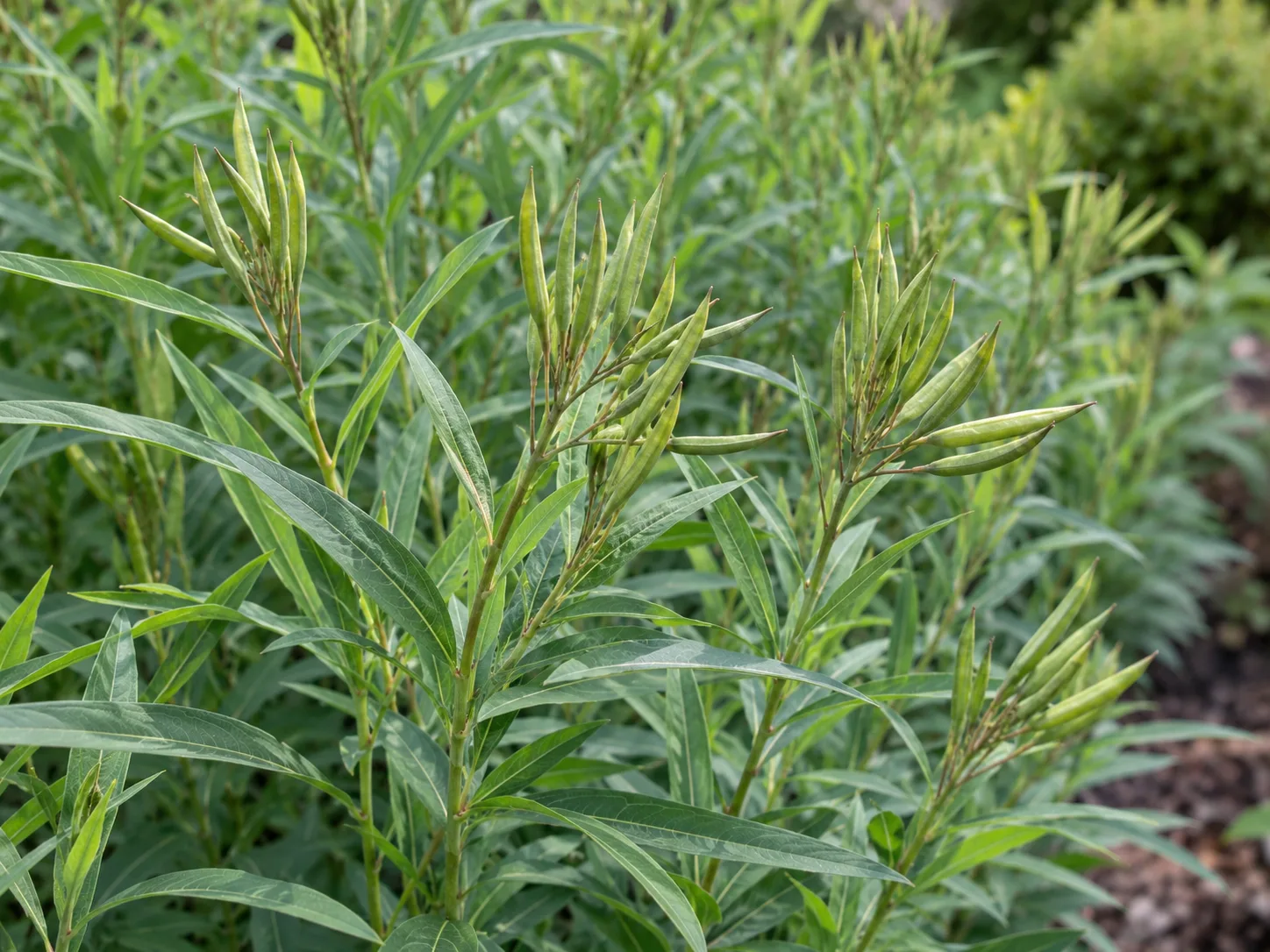
The pods are narrow and elongated. Let them dry on the plant, then collect them before they split and release their hard black seeds. If you do not want seedlings, snip off the pods before they open and pull any young plants while they are small. This is usually easier than trying to prevent a mature clump from expanding, which it generally does slowly.
Grow Amsonia from seed
Seed is the most practical way to raise several plants when you do not need an exact copy of a named cultivar. Sow fresh seed outdoors in fall in a labeled nursery bed or small pots set in a protected outdoor location. Natural winter conditions provide the seasonal cues seeds may need; alternatively, follow the seed supplier’s specific instructions if the seed has been cleaned or stored. Cover lightly and keep the sowing medium evenly moist, not waterlogged.
Mark the site clearly. Amsonia seedlings are easy to mistake for weeds, and young plants may take two or three years to produce a substantial flowering clump. Penn State Extension notes that seed-grown plants can flower in their second or third year; NC State Extension likewise cautions that first-year seedlings may not bloom. (Penn State Extension; NC State Extension)
Keep seedlings evenly moist while they establish and transplant them while small if they are growing too close together. Seedlings from a named cultivar may not retain the parent’s flower color, size, or habit. If you want a uniform drift of a specific selection, buy that cultivar from a reputable nursery rather than relying on saved seed.
Divide or move mature plants only when needed
Amsonia is long-lived and does not need routine division to keep blooming. Divide only when a clump has outgrown its space, must be moved, or you have a compelling reason to make another plant. Penn State Extension points out that a mature root system includes a deep taproot, fibrous roots, and buds; this is why a well-established clump can be difficult to lift cleanly. (Penn State Extension)
If you decide to divide, work in early spring before active growth or in fall after the foliage has died back, and water the day before if the soil is dry. Dig widely and deeply to preserve as much root as possible. Split the crown so each piece has healthy roots and at least one visible growing eye, replant promptly at the same depth, and water consistently as it reestablishes. Expect some setback, and do not divide simply because the center looks woody; Amsonia is naturally clump-forming rather than a fast-running ground cover.
For a new planting, a nursery plant or seed is usually the easier starting point. Division is a way to move or share a mature clump, not a required annual maintenance task.
Pests, rust, and common problems
Amsonia has few routine pest problems. Its latex sap discourages browsing, and its sturdy perennial growth is generally trouble-free. NC State Extension notes that rust can occur; inspect leaves if you see distinct orange-brown pustules or spots rather than assuming every change in color is disease. (NC State Extension)
If rust is limited, remove affected leaves and fallen debris, avoid repeatedly wetting foliage late in the day, and improve air movement by giving the clump room. Do not apply a fungicide just because leaves are yellow: normal autumn color is a feature, and a pesticide should only be considered after you identify a recurring problem and confirm that the product is labeled for the plant and use site.
A plant that wilts in dry soil needs water; one that wilts in persistently wet soil may have damaged roots and needs better drainage, not more irrigation. If stems collapse but foliage remains otherwise healthy, look first at light, spacing, and recent fertilizer use. These checks distinguish common care issues from the occasional pest or disease problem.
Winter care and spring cleanup
Blue star is an outdoor perennial, not a houseplant to bring into a heated room for winter. Let the foliage turn and die back naturally. In cold regions, leaving some stems until late winter adds structure and protects the crown from disturbance; the crown itself is the part that must survive for the plant to return.
When you cut stems back, consider leaving roughly 12 to 18 inches rather than shearing every stem to the ground. Penn State Extension notes that the hollow stems can provide nesting habitat for native bees. If a tidy border matters more to you, you can cut lower after winter, but wait until late winter or early spring and mark the crown so you do not damage the emerging shoots. (Penn State Extension)
The plant may be slow to emerge. Do not pull or dig into the crown just because it is still dormant while nearby perennials are already growing. Remove only loose debris from around the spot, keep foot traffic away, and give it time to show green growth.
Companion planting and garden placement
Amsonia works as a mid-border anchor, a repeated drift, or a transition between spring flowers and late-season foliage. Its spring blue is subtle rather than electric, so a single isolated clump can read as understated; a loose group of several plants makes the bloom more visible while preserving a natural look. Its fine-to-medium foliage also contrasts with plants that have broader leaves or more substantial flower heads.
Choose companions by matching the site, not just by matching colors. In a sunny, well-drained bed, pair eastern bluestar with ornamental grasses or other perennials that will not smother its crown. In a moister, partly shaded border, use plants that tolerate similar moisture and let Amsonia occupy an open edge where it will not be hidden. Keep the expected mature spread in mind so companion roots do not force the blue star into shade.
The plant also contributes to a wildlife garden. Penn State Extension describes native bluestar as a source of nectar and a host plant for some butterfly and moth caterpillars; its flowers also draw pollinators. If supporting insects is a goal, avoid cutting every stem immediately after bloom and consider leaving hollow stems through winter. (Penn State Extension; Brooklyn Botanic Garden)
Sap safety and handling
Like other members of the dogbane family, Amsonia releases a white, latex-like sap when stems or leaves are cut. NC State Extension describes the latex as toxic and notes that it helps deter herbivores; Penn State Extension advises wearing gloves because the sap can irritate sensitive skin. (NC State Extension; Penn State Extension)
Wear gloves when pruning or dividing, avoid rubbing your eyes, and wash skin and tools after contact. Do not eat any part of the plant, and keep cut stems and seed pods away from children and pets that chew plants. If a person or animal ingests Amsonia or has a concerning reaction, contact an appropriate medical or veterinary professional rather than trying a home remedy.
Conclusion
Blue star is easiest to grow when you treat it as a long-lived, slowly expanding perennial rather than a high-maintenance flowering annual. Give the right Amsonia enough sun, room, and moisture while it establishes; avoid routine feeding and unnecessary division; and prune only when shade or leaning makes the clump untidy. Leave the crown undisturbed when it is slow to emerge, then let the flowers, seed pods, and fall color carry the plant through the seasons.