How to Grow and Care for Blue Star Creeper in Your Garden
Blue star creeper forms a low carpet of tiny blue flowers but spreads. Get clear planting, water, winter, propagation, and containment advice before planting.
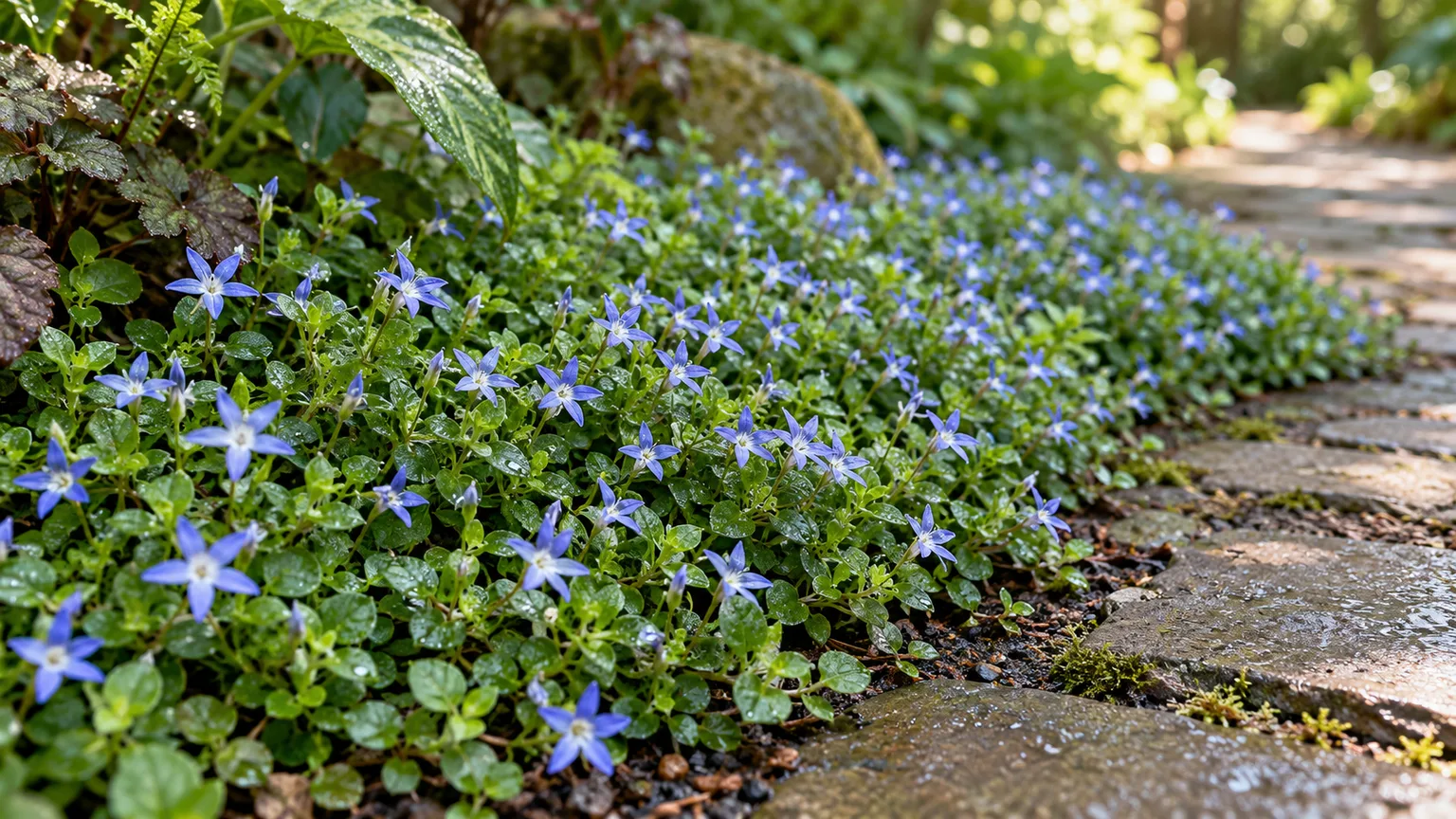
Blue star creeper is an appealing solution for a very particular garden problem: you want a low, flowering carpet that softens the ground between stepping stones, along a path, or at the front of a moist border. The plant is Isotoma fluviatilis, a mat-forming perennial with tiny green leaves and small pale-blue or white star-shaped flowers. Its stems creep along the ground and root where nodes touch suitable soil, so a few starts can gradually knit into a larger patch.
That same habit is the reason to plan before planting. Blue star creeper can move beyond the spot you intended, and a dense mat is awkward to remove from the middle of delicate perennials. Give it an edged, visible boundary, steady moisture without stagnant soil, and enough light for flowering; use something tougher or less vigorous if the area is dry, heavily walked, or packed with small neighboring plants.
Quick Answer: A Low Mat With a Strong Spreading Habit
Blue star creeper grows best in sun to partial shade, evenly moist soil that drains, and a site with room for a creeping mat. It is commonly grown as a perennial in roughly USDA Zones 6–8, although winter survival depends on drainage, exposure, and the local climate rather than the zone label alone. North Carolina State Extension describes it as a spreading ground cover about 2–3 inches tall and 14–24 inches wide, with dappled sun or partial shade and soil that may be occasionally wet (NC State Extension).
The practical care routine is simple: plant starts in spring or early fall, water consistently while they root, weed the gaps before runners close them, and trim or lift stems that cross the boundary. Avoid a strict “one inch every week” rule. The right amount depends on rainfall, soil texture, sun, and how quickly the site dries.
Check the Botanical Name Before You Buy
Common names on nursery tags are not always consistent. Look for Isotoma fluviatilis, also sold under older names such as Laurentia fluviatilis or Lobelia fluviatilis. Kew recognizes Isotoma fluviatilis as an accepted species native to eastern and southeastern Australia (Plants of the World Online, Kew). It belongs to Campanulaceae, the bellflower family.
Check the tag if it promises a taller, bushier plant with large blue flowers. The RHS entry for Laurentia ‘Blue Star’ describes a different-looking upright plant, reaching as much as 30 centimeters with flowers around 4 centimeters across, rather than the tiny creeping carpet most people mean by blue star creeper (Royal Horticultural Society). The Latin name and a photo of the mature habit are more dependable than the common name alone.
Where Blue Star Creeper Works—and Where It Becomes a Problem
This plant earns its place where a fine-textured ground cover can spread without smothering small, slow-growing neighbors. It can fill joints between stepping stones, soften the edge of a rock garden, spill from a wide container, or make a low carpet in a moist bed. In its native range, botanists record it in damp sand or mud near streams and in wet depressions; the Yarra Ranges plant directory likewise lists seasonally moist sites and edging pools among its uses (PlantNET FloraOnline, Yarra Ranges Council).
Treat “ground cover” as a design role, not proof that it is a perfect lawn. The flowers and leaves sit low, but the plant does not have the same uniformity, wear tolerance, or recovery pattern as turf. It is a better fit for light, occasional steps near stones than for a dog run, play area, shortcut, or other place that receives daily foot traffic.
Strong Uses for a Small, Creeping Ground Cover
The best site is bounded and easy to inspect. A path edge, a strip between pavers, or an open pocket between larger shrubs lets the mat look intentional and makes trimming runners straightforward. In a mixed border, place it around sturdy plants with room at their base; avoid tucking it into a tight weave of low seedlings or slow-growing alpine plants that it can overrun.
Blue star creeper is also useful where bare soil stays evenly damp but is not under standing water for long periods. It can knit across gaps that are too small for a shrub and too shaded or moist for a dry-climate ground cover. Use it as a visual carpet, not as a substitute for correcting a drainage problem or stabilizing a slope that needs deep-rooted plants.
Skip It for Heavy Traffic, Dry Beds, and Delicate Borders
Choose another plant if you need a drought-proof carpet, have no way to contain spreading stems, or want every plant in a border to remain in a fixed footprint. Blue star creeper can pause or thin in hot, dry conditions, while generous irrigation can make its runners travel faster than expected. A narrow barrier can guide the edge, but a barrier does not stop seeds or remove stray pieces carried in garden debris.
It is native to Australia, so gardeners elsewhere should also check local invasive-plant or noxious-weed guidance before purchase. “Not on a list” does not mean “will stay put”; garden behavior varies with moisture, winter conditions, and maintenance. If you need dependable coverage but want a strictly local native, compare regionally recommended ground covers before choosing this one.
Match Light, Soil, and Moisture to Your Climate
Think of the site as a balance: enough light for compact growth and flowers, enough moisture to prevent repeated drying, and enough drainage that roots do not sit in stale, waterlogged soil. A plant near a stream in nature may encounter saturated periods, but a compacted clay bed beside a downspout can stay airless for too long. The goal in an ordinary garden is moist and aerated, not permanently flooded.
Sun and Heat
In a cool-summer climate, blue star creeper can take more sun if the root zone does not dry rapidly. In a hot-summer garden, give it morning sun or bright dappled light and shade from intense afternoon heat. NC State lists dappled sunlight and partial shade among its preferred exposures; Gardenia’s horticultural profile also recommends full sun to partial shade, with shade more useful in hotter conditions (NC State Extension, Gardenia).
Deep shade is not the same as cool shade. Under dense evergreen cover, the soil may be dry from tree-root competition, and the creeper may become sparse or flower little. Before planting a whole bed, test a small patch through one growing season; if it stretches toward light or stops flowering, move the next starts to a brighter edge.
Moisture Without Stagnant Soil
Use soil texture to set expectations. Sandy or loose loam drains quickly and may need more frequent checks in warm weather; dense clay holds water longer and may need compost worked into a broad area before planting. Do not place a small pocket of rich potting mix in a clay basin and assume the roots will drain—water can collect at the boundary between the two textures.
After rain or irrigation, the soil should feel cool and damp below the surface, then gradually lose excess water. If it remains shiny, sticky, or sour-smelling for days, improve the site or choose a different plant. If the top few inches dry quickly while the leaves curl or fade, increase water or add a thin organic mulch around the patch, leaving the foliage uncovered. A mulch layer can retain moisture but should not bury the tiny crowns.
Plant Blue Star Creeper for Even Coverage
Plant when mild weather gives the starts time to root before summer heat or hard winter conditions. Spring is a reliable choice in cold-winter regions; early fall can work where the soil stays warm and there is enough time before freezing weather. Buy healthy, well-rooted plugs and inspect the plant label for the botanical name.
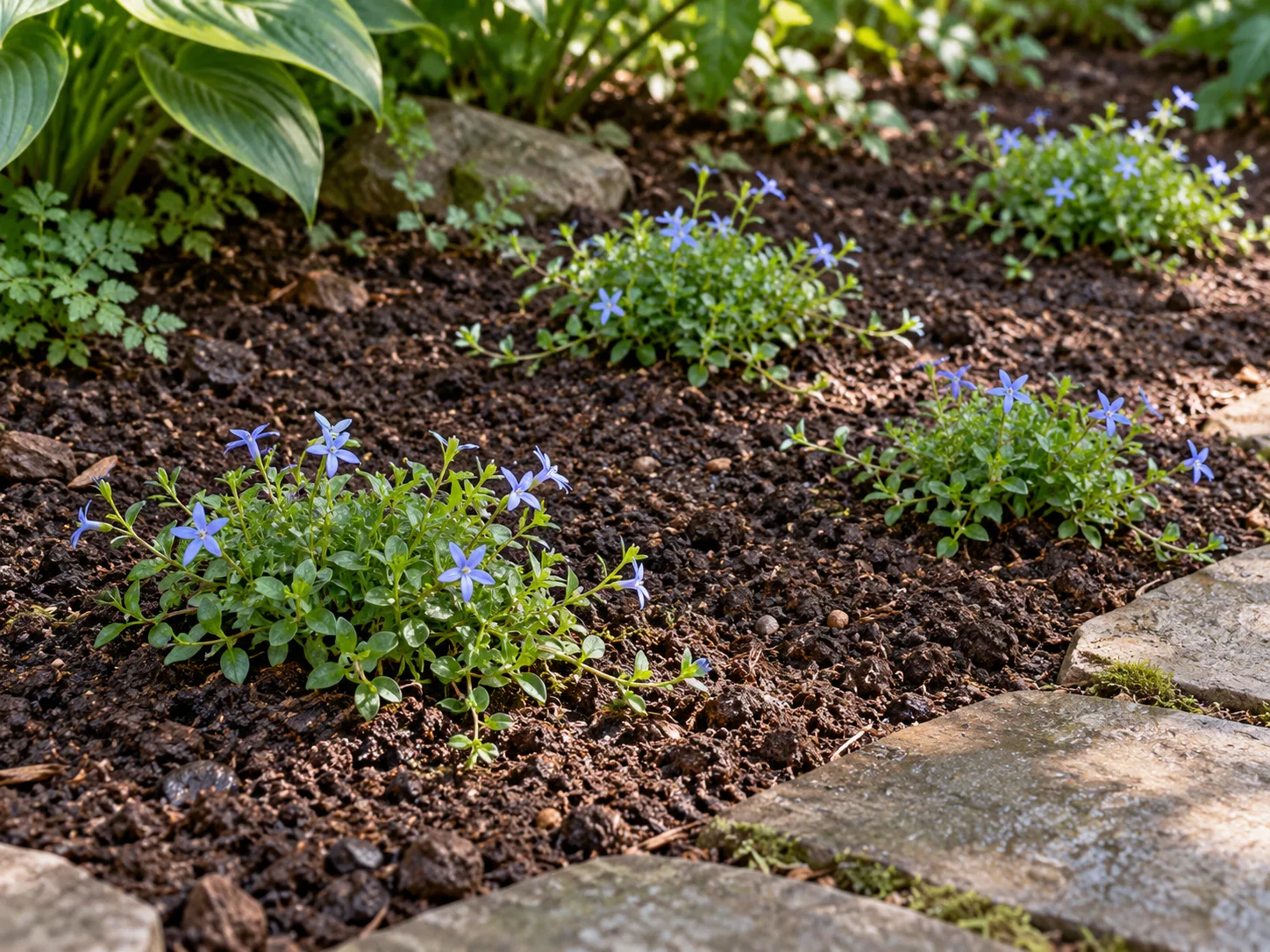
Space Plugs by the Job
For an area you want to fill quickly, place starts about 8–12 inches apart. For a lower-cost planting where you can wait for the mat to close, use 12–18 inches between centers and keep the gaps weeded during establishment. Mature plants can spread roughly a foot or more across, but actual speed depends on growing conditions; no spacing guarantees a wall-to-wall carpet by a particular date.
Between pavers, leave the walking surface and stone edges stable, then fill only the soil joints that are deep enough to hold a little growing medium. Very narrow, dry, sun-baked joints may not support roots consistently. Avoid raising the soil above the stone surface, where loose soil can wash or spill onto the path.
Planting Step by Step
First, remove perennial weeds and loosen the soil across the entire planting zone rather than making isolated amended holes. Blend a modest amount of finished compost into compacted ground if needed, then level the surface so water does not pool in low pockets.
Set each plug with its crown level with the surrounding soil. Firm the soil lightly around the roots, water the area thoroughly, and check that water soaks in rather than running away or standing in a puddle. Add a low-profile edge at the intended boundary before the plants spread; installing one after runners weave through a border makes the job harder.
For the first several weeks, check moisture with a finger at root depth instead of watering by calendar. Keep the root zone evenly damp while roots establish, pull weeds while they are small, and avoid walking over the new patch. Once stems begin to meet, water according to rainfall and soil drying rather than keeping the bed constantly wet.
Watering, Feeding, and Routine Care
Blue star creeper is not a “plant it and forget it” choice in its first season. Water newly planted starts when the soil begins to dry, especially during warm or windy weather. After roots spread, established plants can tolerate brief dry intervals better than new plugs, but prolonged drought may thin the mat or cause dormancy; resume steady moisture and wait for healthy rooted nodes to regrow before assuming the patch is dead.
Feed lightly. If growth is healthy, flowers are present, and neighboring soil is reasonably fertile, skip routine fertilizer. A thin compost top-dressing in spring is enough for many beds. If foliage is pale and growth weak after checking light, water, and root health, use a balanced fertilizer at the label’s low rate; repeated high-nitrogen feeding can produce lush runners without solving the underlying site problem.
Weed during the open-canopy phase. Once a patch closes, it may shade out some small weeds, but it will not reliably suppress established perennial weeds. Pull weeds by hand rather than spraying broadly through a low mat, and keep irrigation directed at the soil when possible. Inspect the edge every few weeks in active growth so that a single runner does not become a rooted clump in the neighboring bed.
Keep Runners Inside Their Boundary
Blue star creeper spreads horizontally by stems that root at nodes when they touch moist soil. Botanical descriptions of the plant note its mat-forming habit and rooting nodes, which explains why runners can be lifted and replanted as well as why they cross a garden edge (PlantNET FloraOnline, Yarra Ranges Council). Do not assume it spreads only in one direction or stops at a paver.
Use a physical edge where it meets lawn, gravel, or a mixed perennial bed. The extension guidance notes that edging can contain its runners (NC State Extension); in practice, an edge works best when it rises slightly above the soil and you can see stems trying to cross. Cut or lift those runners promptly, including any rooted pieces. Keep a narrow inspection strip on the far side of the edge if the planting borders sensitive plants.
If you want to remove a section, loosen the mat and lift it in pieces, tracing runners to their rooted nodes. Check again after rain or irrigation, when missed pieces are easier to spot against damp soil. Do not compost seed-bearing or unwanted fragments if the compost pile is not managed hot enough to break them down; bag them according to local yard-waste guidance.
Propagate by Division or Seed
Division is the easiest way to reproduce a known plant. In spring or early fall, use a trowel to lift a small section that has leaves, rooted nodes, and some soil around the roots. Separate it into pieces without reducing each piece to a bare unrooted stem, then replant immediately at the same depth and water it in.
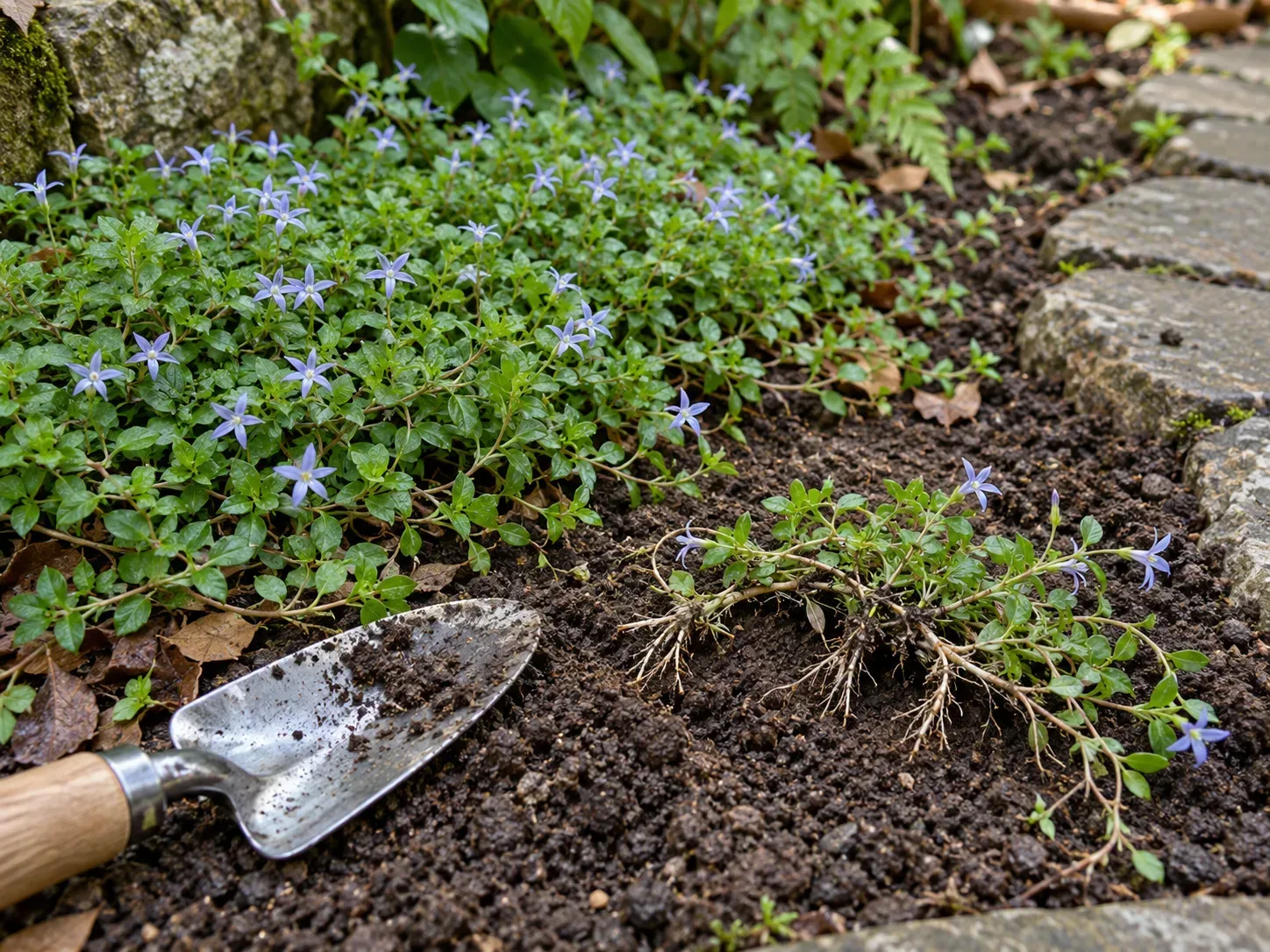
Keep the new division consistently moist until it resists a gentle tug. If you are moving it to a hot or sunny location, give it temporary afternoon shade while it establishes. A small division may pause before expanding; the goal in the first weeks is root contact and new leaf growth, not instant coverage.
Seed is possible but slower and less predictable than sharing a rooted piece. Let the small capsules mature and dry, then surface-sow the tiny seeds on moist seed-starting mix rather than burying them deeply; keep the surface bright and evenly moist while germination begins. Because seedlings are minute and easy to lose to drying, algae, or weeds, buy plugs or divide an established patch when you want a reliable landscape result. Epic Gardening also describes seed starting and division as propagation options for this species (Epic Gardening).
Troubleshoot Sparse Growth, Brown Patches, and Few Flowers
Start with a close look at the soil before changing care. A brown patch can come from dryness, winter exposure, root damage, or soil that remains waterlogged; these problems require different responses. Check a few inches below the surface and inspect one small edge of the patch for firm, pale roots and living nodes before you add more water.
If the soil is dry and the leaves are crisp, water slowly enough to wet the root zone. A hydrophobic or compacted surface may shed water, so apply a small amount, let it soak, and repeat instead of flooding the bed all at once. If the area receives hot afternoon sun, shade it during the hottest part of the day or relocate future divisions to a cooler edge.
If the soil is wet and stems are soft or roots are dark, stop extra watering and improve drainage. Remove dead material, clear compacted debris, and replant only healthy rooted pieces in better soil. A low spot beside a gutter or a clay bowl beneath a new planting hole often needs site correction, not a fungicide or another round of fertilizer.
If the mat is thin or flowering is poor, check for deep shade, dry tree-root competition, fresh transplant stress, and excess fertilizer. Give plants time to establish, move them toward brighter filtered light if practical, and avoid feeding a struggling patch until water and drainage are right. A few flowers in the first season do not predict what a mature, better-sited mat will do.
Grow It in Pots or Between Pavers
A broad, shallow container makes spread easy to manage and lets stems trail over an edge. Choose a pot with drainage holes and a quality potting mix that holds some moisture but does not stay saturated. Check containers more often than in-ground beds during hot spells because a small volume of mix dries fast; water when the upper layer begins to dry, then empty standing water from a saucer.
For pavers, blue star creeper works best in joints where there is enough soil for roots and the stones are set securely. It softens hardscape visually, but plants may be crushed if shoes land on them day after day. Route routine walking onto the stones and treat the plants in the seams as a decorative living filler; avoid putting them in a narrow joint exposed to repeated scuffing or wheelbarrow traffic.
Container roots experience colder swings than roots in open ground, so a potted plant may need more winter protection than the same species planted in a sheltered bed. In cold climates, move the pot to a protected, unheated location or treat it as seasonal if you cannot keep the root ball from freezing and drying out. Trim trailing stems that touch the ground if you do not want the container to root itself into the surrounding bed.
Winter Care and Seasonal Cleanup
The commonly cited range is around USDA Zones 6–8, but treat it as a guide rather than a guarantee. NC State lists the species for zones 6a through 8b, while other horticultural references use a broader zone 6–8 range; cultivar identity, snow cover, winter wet, wind exposure, and local microclimate all affect survival (NC State Extension, Gardenia). In colder or exposed places, expect foliage to bronze or die back and watch for new growth in spring before removing a whole patch.
Do not shear the entire planting automatically every fall. Remove damaged or matted foliage when it obscures the edge or traps debris, and trim runners whenever they leave the intended area. If your climate brings repeated freeze-thaw cycles, a light, airy layer of leaf mulch can protect roots in a small exposed bed, but keep it loose and remove excess cover before spring growth is smothered.
In warmer climates, evergreen foliage may remain visible through winter, though flowering slows with shorter days or cooler weather. Keep drainage open and do not keep the soil wet just because the plant is evergreen. In all climates, tidy the boundary in early spring, look for rooted runners that crossed during the previous growing season, and fill bare spots only after confirming the cause of decline.
Conclusion
Blue star creeper is at its best in a small, planned role: a low carpet along a path, between stable stepping stones, or at the edge of a bed that stays moist and drains well. Confirm that the label says Isotoma fluviatilis, choose a climate-appropriate mix of sun and shade, start with plugs spaced for your patience and budget, and give the patch a boundary before it spreads.
The first season is about establishment and observation. Keep new starts evenly moist, weed open gaps, and inspect the runners; after the mat fills in, routine care is mostly edge trimming and occasional watering during dry spells. If you want a ground cover that never travels, handles heavy traffic, or survives prolonged drought without attention, pick another plant. If you can offer the right site and keep an eye on its edge, blue star creeper rewards that planning with fine foliage and a long, delicate flower display.



