How to Keep Cut Flowers Fresh in a Vase: Home Care
Learn how to keep cut flowers fresh with a clean vase, sharp stem cuts, correctly diluted flower food, cool placement, and a water-change schedule at home.
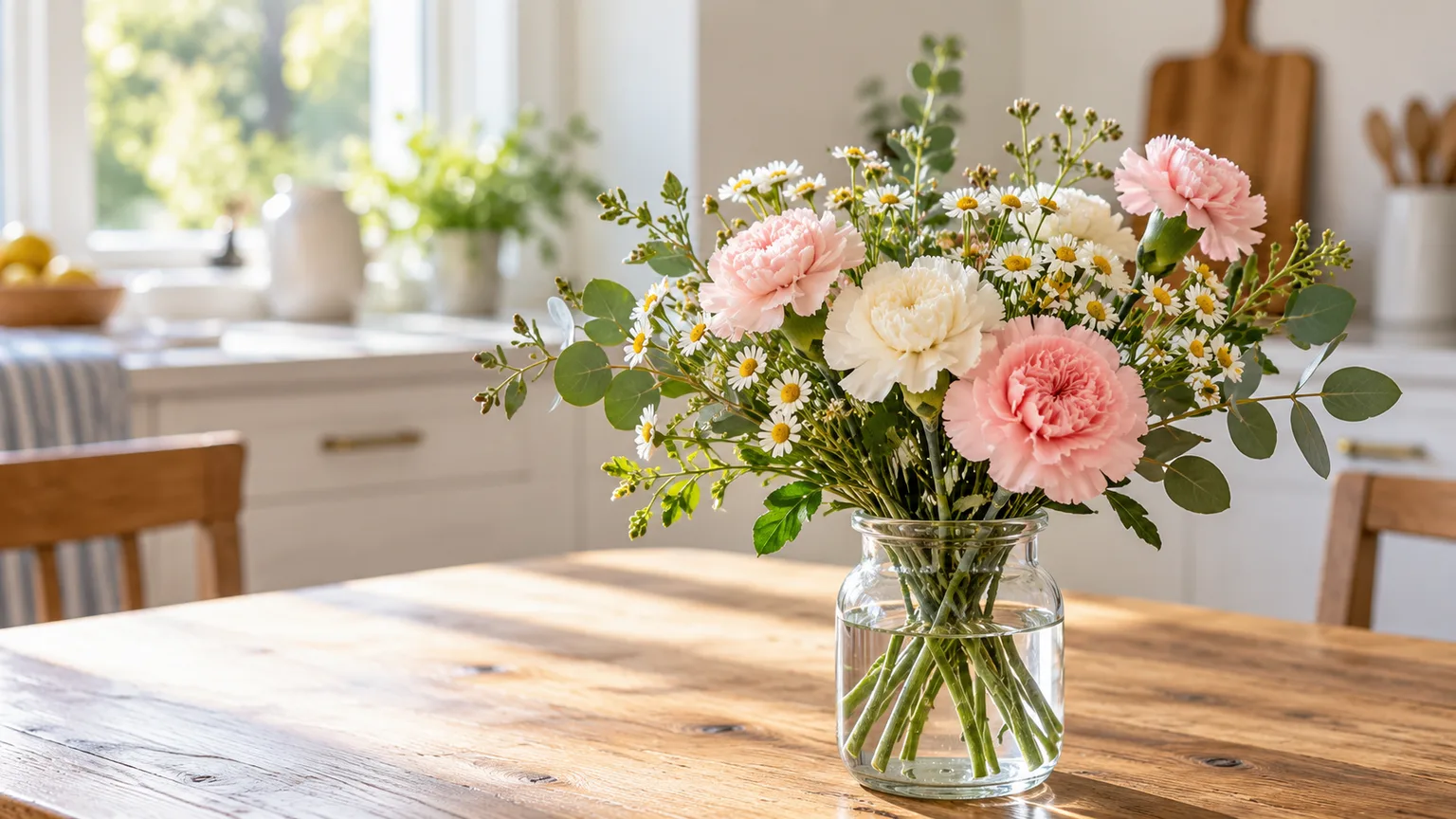
A bouquet starts aging the moment it is cut, so home care cannot turn old stems into newly harvested ones. What you can do is protect the quality they still have: get them into clean water quickly, give them a fresh cut, keep bacteria and submerged leaves out of the vase, and slow aging by avoiding heat. Those four jobs matter more than arranging tricks or a crowded shelf of products.
For most grocery or florist bouquets, the simplest dependable setup is a washed vase, fresh water, and the flower-food packet mixed exactly as directed. Check the water level every day, then replace the solution when it turns cloudy or about every two to three days. A NC State Extension postharvest guide describes the same core pressures on vase life: water stress, microbial contamination, temperature, carbohydrate supply, and ethylene exposure.
The real reasons cut flowers fade
A cut stem has lost its roots, but its leaves and flowers still lose water to the air. If the stem cannot replace that moisture, petals soften, leaves droop, and a rose may develop a bent neck. The stem’s water-conducting tissue can also become less effective when the cut end dries out or microorganisms build up in the vase, so a bouquet may wilt even when the vase still looks half full.
Warmth speeds the flower’s metabolism and aging. Direct sun, a hot kitchen, heater vent, or warm car can push a bouquet downhill quickly; ripening fruit and decaying plant material add ethylene, a natural plant gas that accelerates aging in sensitive flowers. The goal is not to make a room cold or keep blooms in darkness. It is to avoid extra heat, dirty water, blocked stems, and unnecessary ethylene exposure.
Those causes point to a useful order of operations: begin with stems that are still sound, hydrate them, keep the vase clean, use preservative correctly, then choose a cooler place for the arrangement. If the bouquet was harvested or shipped days ago, even excellent care only preserves what remains. Some varieties naturally last longer than others, and a single fading bloom does not mean that you have done something wrong.
Choose a bouquet with room to open
Look for a bouquet that is hydrated and undamaged rather than one with the tightest possible buds. Firm stems, fresh green foliage, and petals that look full and intact are better signs than a display with brown edges, translucent patches, limp leaves, or soft stems. If the flowers are sold in water, check that the water looks clean and that the lower stems are not slimy.
The ideal opening stage depends on the flower. Many blooms are best bought as color is showing, but a rose or dahlia picked in an extremely tight bud may not open well indoors; tulips and daffodils are often sold at a tighter stage. The RHS advises that most flowers should be cut when they begin showing color, while roses and dahlias may fail to develop from a very tight bud. Illinois Extension likewise emphasizes matching harvest stage to species, noting that some flowers can be cut partially open while dahlias and zinnias should be open. That is why “choose closed buds” is not a universal florist rule.
Read petals, leaves, and stems together
Inspect a few representative stems instead of squeezing every bloom. On roses, lilies, or tulips, petals should feel resilient rather than papery or limp, but rough handling can bruise petals and make a good flower look old. For roses, a little color and looseness at the outer petals is reassuring; for tulips and daffodils, intact buds with firm stems are often a sensible purchase.
Also look at the leaves and cut ends. Healthy foliage should look green and hydrated, not yellowed, spotted, or bent. Avoid stems with crushed bases, soft dark patches, or a sour smell from the bucket. If you are buying a mixed bouquet, choose a bunch with different but compatible stages of opening: one or two showy blooms, several buds ready to open, and sturdy greenery give the arrangement room to change without making it look bare on day one.
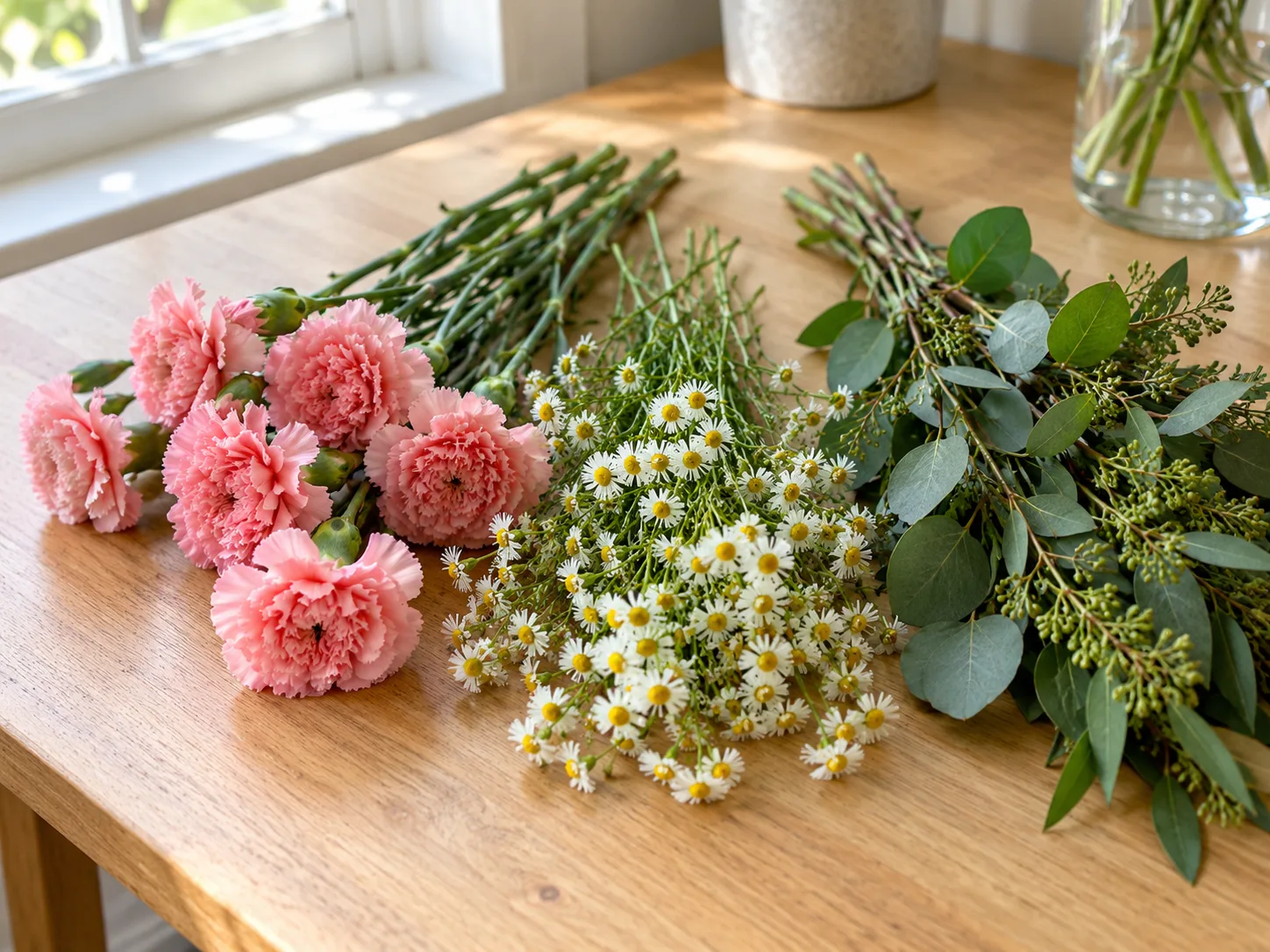
If you are shopping from a grocery flower display, handling and transport are part of the purchase decision. Our guide to building a grocery-store flower bouquet covers how to judge bunches and combine stems by role; the freshness checks here apply whether the bouquet comes from a supermarket, a farmers market, or a florist.
Carry flowers home without extra stress
Water and temperature matter before the vase is ready. Ask the florist to wrap the stem ends with a hydration sleeve if you will be traveling a while, and keep the flowers upright in the coolest passenger-area spot you can manage. A sunny dashboard or closed car can heat up much faster than the weather outside, so do not leave a bouquet in a parked vehicle while you run another errand.
When you reach home, move the stems into water promptly instead of leaving them wrapped on the counter. If a bouquet will be out of water for a commute, that does not automatically ruin it, but a hot, dry trip consumes some of the margin it needs to recover. Keep the paper sleeve on loosely if it supports the stems; remove plastic or tight wrapping that traps moisture around petals, then prepare the vase.
For a longer delay, a florist can often hold the stems in water until pickup. If you are planning a trip with flowers or expect a long gap between purchase and arranging, see our practical guide to how long cut flowers can go without water. The honest answer depends on the species, stem hydration, temperature, and how much air movement it encounters.
Prepare the vase before you unwrap the bouquet
Set out the vase, clean shears or a sharp knife, water, and the flower-food packet before you start trimming. This keeps freshly cut stems from sitting dry while you search for supplies. Choose a vessel with enough depth to support the stems and a wide enough opening that they are not packed tightly together; all stems need access to water, not just the tallest ones.
A vase does not need to be expensive or transparent. Its job is to hold water without tipping and to let you clean the inside thoroughly. If a bouquet is too dense for the first vase you choose, split it into two arrangements. More breathing room makes it easier to remove individual flowers later and helps you see changes in water level or clarity.
Start with a clean vessel and clean water
Wash a reused vase with hot, soapy water and rinse away any residue before filling it. A quick rinse can leave a ring of old plant material behind, and that residue gives microorganisms a head start. If a previous bouquet left a smell or slimy film, scrub the vase with a bottle brush or sponge; then rinse until it feels clean rather than slick.
Fill the vase with enough fresh water to keep every stem end submerged as the level drops. Clean cool or room-temperature tap water is usually a practical starting point, but water quality and flower species can influence how preservative performs. Do not add a random amount of flower food yet: first check the packet’s stated water volume so the solution will not end up too concentrated or too weak.
Illinois Extension explains that a clean vase reduces bacterial buildup and that submerged foliage decays into the water. Its bouquet guidance also recommends following the packet’s mixing directions because the food’s carbohydrate, acidifier, and antimicrobial ingredients work as a balanced solution. If the arrangement came in floral foam, keep the foam wet with the recommended solution rather than pulling the stems out to recut them.
Remove submerged leaves and make a clean cut
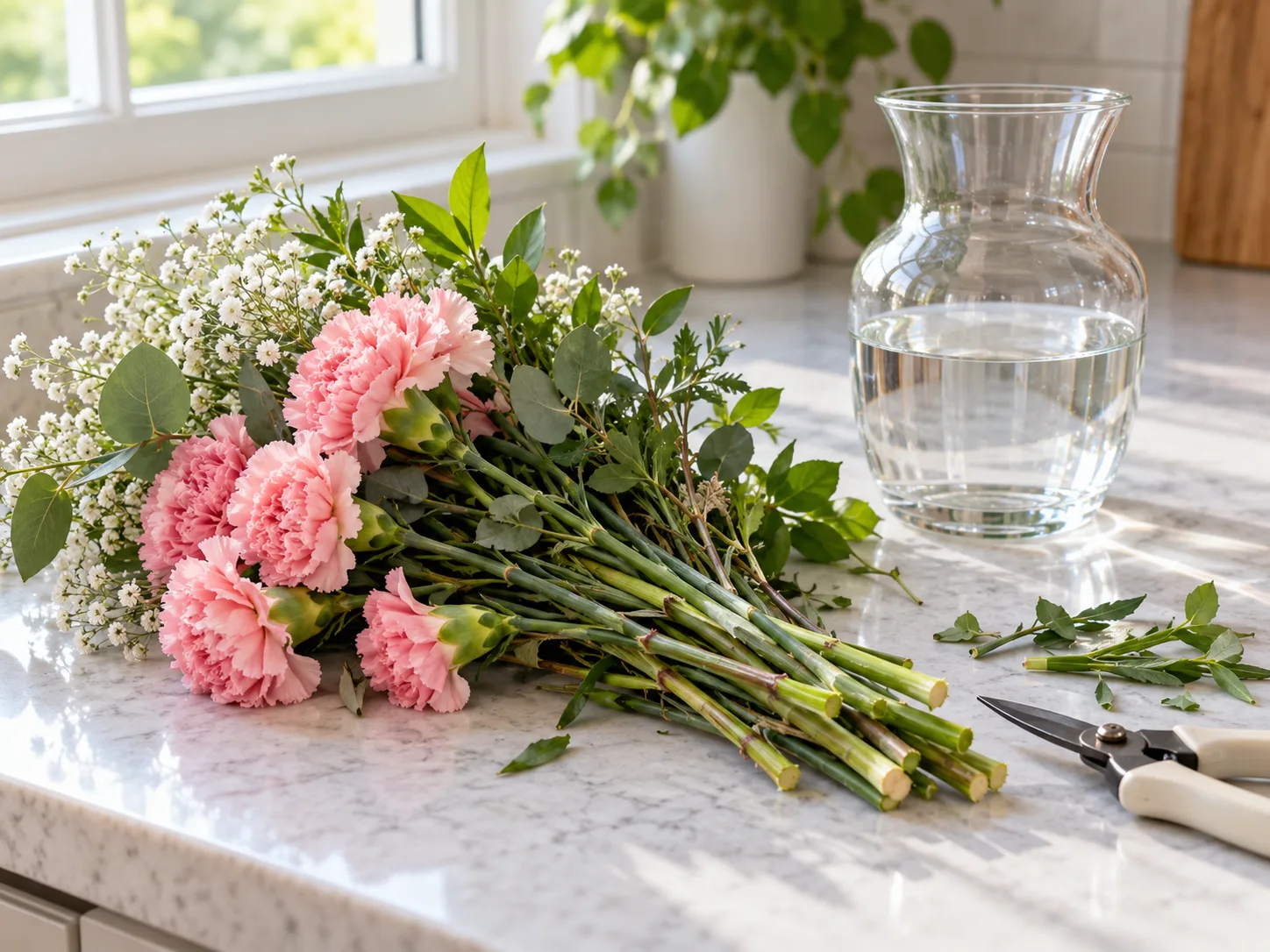
Take the bouquet out of its sleeve and separate the stems enough to see where the vase waterline will fall. Remove leaves, small side shoots, and damaged foliage below that line. Keep healthy leaves above the water when they help the design, but do not let leafy stems sit submerged: rotting leaves can cloud the water and add odor before the flowers themselves look spent.
Use clean, sharp shears or a knife to remove roughly half an inch to an inch from the bottom of each stem, adjusting the amount to fit your vase and reach firm, fresh tissue. Make a smooth cut rather than squeezing through the stem with dull household scissors. An angled cut can keep the stem from sitting flat against the bottom and provides a larger exposed surface, but the important part is the clean, fresh edge and quick return to water, not an exact 45-degree ritual.
Recut stems one at a time and place them straight into the vase or a clean holding container. Some guides recommend making cuts under water, particularly for roses, to limit the chance of air entering the conducting tissue; NC State Cooperative Extension notes that the benefit has not been proven, though it does not harm the flowers when done cleanly. You do not need to fumble with a water-filled sink for every store bouquet if a sharp cut and immediate hydration are practical.
Give garden-cut flowers time to condition
If you are cutting from your own garden, harvest in the cool morning when stems are well hydrated, taking a clean bucket of water with you. Cut each stem at the stage that suits that flower, then place it in water as quickly as possible. Iowa State Extension notes that flowers should be cut when they are fully hydrated and at the right development stage; the best stage varies by species, so one universal “bud size” rule will produce poor results for some blooms.
At home, remove the leaves that would sit in the vase and recut the stems before arranging. For many garden flowers, leaving the bunch upright in clean water in a cool place for a few hours helps it hydrate before you handle the stems again; the RHS recommends conditioning prepared stems in a cool spot for at least two to three hours or ideally overnight. This is useful when flowers have wilted slightly in a warm garden or when you are arranging them for an event later in the day. If you are planning a cutting bed as well as a bouquet, our flower-growing guide covers choices for the garden and how to start them.
Do not treat every species with the same special procedure. Some woody, hollow, or sap-bearing stems have specific handling needs, and those methods can be counterproductive when applied to ordinary flowers. For common stems, start with clean cuts and fast hydration; if a named flower keeps collapsing after that, use a species-specific extension or florist recommendation instead of crushing, burning, or hammering every stem.
Use flower food at the stated dose
If your bouquet includes a packet of flower food, use it. Measure the water volume the packet calls for, dissolve the full amount as directed, and then add the stems. “More food” is not a shortcut: too much can damage flowers, and too little may not control microbial growth. If you are unsure how much water is in your vase, fill it with a measuring jug before mixing or prepare the solution in a separate container.
Most consumer preservatives combine a carbohydrate for energy, an acidifier that adjusts water pH, and an antimicrobial ingredient that slows bacterial growth. The packet is formulated for cut flowers rather than for feeding a rooted houseplant, so household fertilizers are not substitutes. Penn State Extension explains that commercial preservatives work better than improvised mixtures and that dilution instructions matter; NC State also cautions that the wrong concentration may be ineffective or damaging.
What the packet does
Sugar alone supplies food but does not keep the water clean. Acidifying the water changes conditions that affect bacterial growth and water uptake, while the antimicrobial ingredient helps limit the microorganisms that can clog a stem’s conducting tissue. Together, those functions explain why flower food is more dependable than a spoonful of sugar, a penny, or a splash of soda.
A small Fine Gardening comparison tested several home additives against plain water and a commercial packet using sunflowers, celosia, and lisianthus. In that limited, informal trial, the commercial food performed best overall, while the sugar-and-vinegar mixture performed worst; the test is not a universal ranking for every cultivar, but it supports treating packet food as the predictable choice instead of a kitchen recipe. If you want to compare a specific sugar-water claim, our guide on putting roses in sugar water explains why sugar by itself is not equivalent to a balanced preservative.
What to do when the packet is missing
Use clean water without additives rather than guessing a homemade dose. Guidance does vary: the RHS publishes a simple water, vinegar, and sugar recipe, while Iowa State Extension says common household additives do not work as well as floral preservative and may shorten vase life. These recommendations use different recipes and contexts, so there is no single homemade formula that can be treated as a tested substitute for every mixed bouquet.
If you regularly buy cut flowers, keep a few commercial packets or a small bottle of consumer floral preservative on hand. Do not combine products, add fertilizer, or pour bleach into the vase by eye. If a packet is missing and you have no preservative, clean water, a clean vase, and a cool location are enough to give the bouquet a fair chance.
Refresh water on a steady, condition-based schedule
Check the water level every day, especially in the first couple of days when a thirsty bouquet may drink quickly. Top up with the same correctly mixed solution if the water is still clear and clean. If it has become cloudy, smells sour, or contains loose leaves and petals, do a full refresh rather than pouring fresh water over the old solution.
As a routine, replace the vase water and make fresh preservative solution every two to three days, or sooner when it looks dirty. Wash or rinse the vase during each full change, remove any soft leaves, and check the stem ends. The RHS recommends changing water and recutting stem bases every two to four days; Illinois Extension suggests changing water every two to three days, while Iowa State says that recutting is unnecessary when the water change is prompt. A small recut at each full change is a reasonable household routine, but do not repeatedly remove long sections of stem when the cuts are already clean and the flowers are drinking normally. For a compact care checklist you can keep by the sink, see our guide to making cut flowers last longer.
Remove individual blooms once they turn slimy, collapse, or shed petals heavily. One aging stem can make an arrangement look tired before the rest of the flowers are done, and decay adds debris to the water. If several blooms droop at once, treat it as a water-uptake or temperature problem rather than merely pulling flowers out.
Put the vase in a cool, calm spot
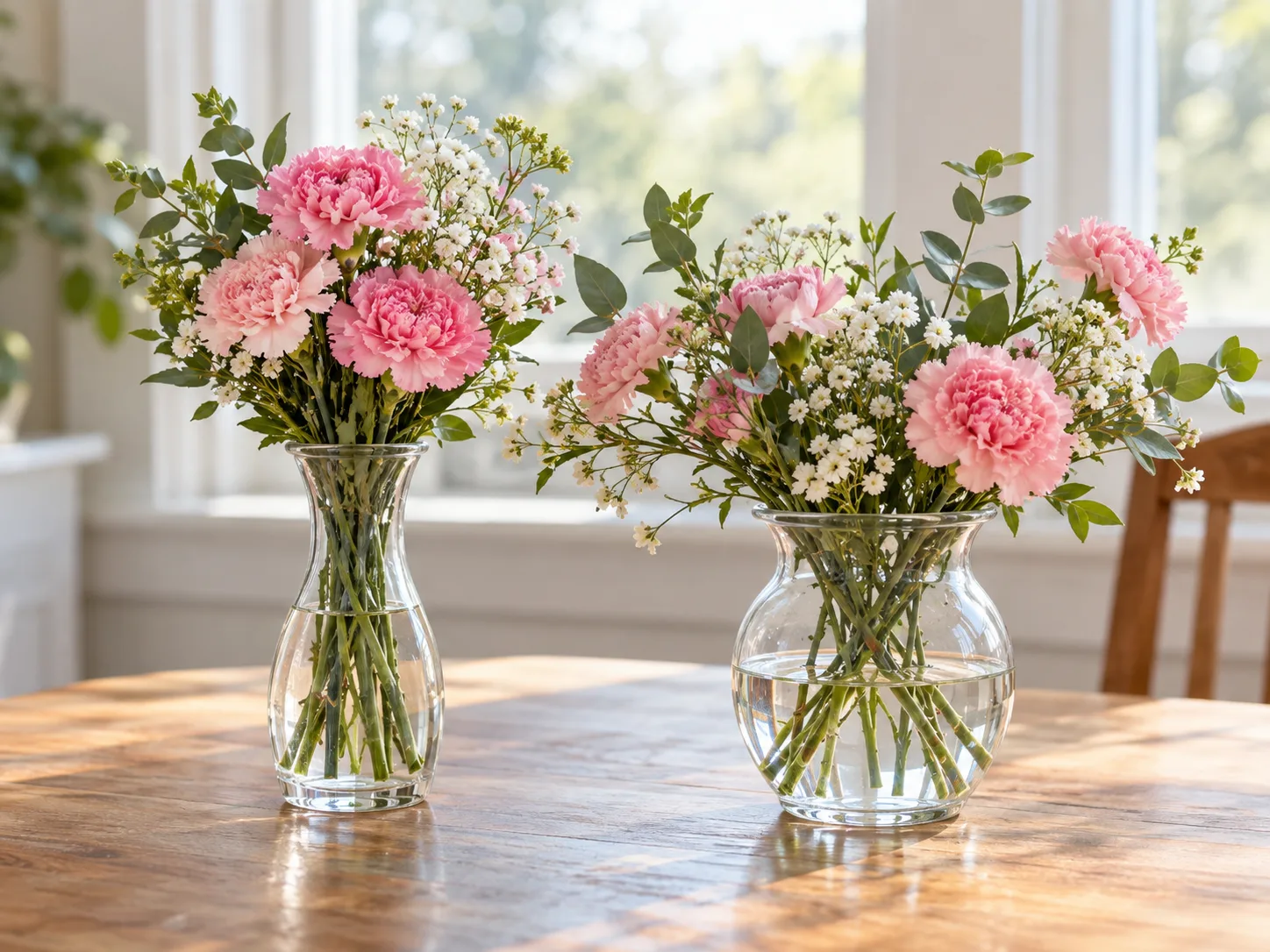
Choose a bright room that stays comfortably cool, with the vase out of direct sun. Keep it away from a stove, radiator, fireplace, warm appliance, heater vent, or strong fan. Illinois Extension gives 65–72°F as a typical comfortable range for cut flowers, but the useful rule at home is to avoid the warmest and draftiest places in the room rather than trying to control a thermostat to an exact number.
Do not put the vase beside a bowl of ripening apples, bananas, or other fruit. Ripening produce releases ethylene, which can speed aging in sensitive flowers; dying flowers can also contribute to ethylene exposure and decay. NC State’s postharvest guidance lists ethylene and temperature among the conditions that affect cut-flower quality, and the RHS also recommends keeping arrangements away from ripe fruit.
A refrigerator can help with short-term storage for many flowers, but it is not a universal overnight trick. Home refrigerators often contain ripening produce, and flower species do not all share the same storage requirements. If you cannot separate a bouquet from fruit or confirm that its flowers tolerate cold storage, a cool room away from sun and drafts is the safer everyday choice. For cut tulips, which have their own handling quirks, see our guide to keeping tulips fresh in a vase.
Troubleshoot drooping, cloudy water, and closed buds
When flowers suddenly droop, start with the water before trying a complicated rescue. Is the vase nearly empty? Has the water turned cloudy? Are leaves sitting below the waterline? Are the stems warm from a sunny window or a car? Fix the first visible problem, then trim the lower stem ends with a clean tool and move the vase somewhere cooler.
If the water is cloudy or smelly, empty it, wash the vase, remove submerged or rotting foliage, mix fresh food at the proper concentration, and recut any soft or dried stem ends. Place the stems into the fresh solution promptly. If one bloom droops while the others remain firm, that stem may be damaged or simply older; remove it if it fails to recover rather than changing the care routine for the entire bouquet.
A fresh cut and fresh water may help a limp flower if dehydration or a blocked stem is the cause, but they cannot reverse aging or bruising. If a rose develops a bent neck while its petals are still fresh, NC Cooperative Extension suggests recutting the stem and briefly submerging the flower in warm water in a shallow pan. Treat that as a rose-specific rescue, not a routine for every flower; stop if the bloom is already soft, brown, or shedding.
Closed buds need a different diagnosis. Some blooms open gradually after purchase, but a hard, immature bud may have been cut too early and may never open in a vase. Keep the arrangement hydrated and out of heat, then give it time; adding extra sugar, fertilizer, or warm water will not reliably force an immature flower to open.
Give tulips, roses, and daffodils their own adjustments
Mixed bouquets usually do well with the shared routine above, but a few common flowers benefit from extra attention. Tulips and gerberas can bend under the weight of their flowers; the RHS recommends wrapping susceptible stems in paper and standing them deeply in water for at least two hours to help straighten them. Remove the wrap only after the stems have had time to hydrate, then arrange them at a height that supports the heads.
Roses should arrive with a little opening, not as marble-tight buds. If a rose wilts despite a full vase, check whether its cut end is dry or slimy and refresh that stem. A florist may advise a species-specific treatment for a particular rose variety, but do not crush the base or strip all its thorns as a freshness trick. Clean water, a sharp recut, correct flower food, and a cool place remain the safe starting points.
Daffodils need special handling in mixed arrangements because their sap can reduce the vase life of other flowers. University of Illinois Extension recommends conditioning their stems separately in warm water for 12 to 24 hours before mixing; the UC Davis Postharvest Research and Extension Center says separate holding for a few hours can prevent the sap from affecting companion flowers. The recommended timing differs, but both sources agree on the key move: do not put freshly cut daffodils straight into the same water as the rest of a mixed bouquet. If you have no time to condition them separately, give them their own small vase.
Homegrown stems can need still more variation. For example, the RHS notes that flowers such as roses and dahlias should not be harvested at the same tight-bud stage as flowers that open reliably after cutting, and Iowa State describes extra handling for some woody stems. When a flower is important to an event, ask the grower or florist how that species is harvested and conditioned instead of assuming that a universal household recipe applies.
Skip the shortcuts that can shorten vase life
Do not smash, split, or hammer ordinary stem ends to “open” them. A ragged end damages the tissues that move water and gives bacteria more damaged surface to colonize. Use a sharp, clean blade; woody stems may have their own preparation recommendations, but crushing is not a substitute for a fresh cut.
Avoid dosing by eye with aspirin, pennies, vodka, sugar, soda, bleach, or vinegar. A trick can circulate online because someone saw one bouquet last, but the result depends on the flower type, the concentration, water quality, and how fresh the bouquet was before you bought it. Iowa State Extension says household additives are inferior to commercial preservative and some can shorten vase life; if the proper flower food is unavailable, clean water is the less risky fallback.
Ice cubes do not compensate for a sunny window or a hot room. Moving the vase away from direct heat and replacing cloudy water addresses the causes that the cubes cannot fix. Likewise, adding more flower food does not save a bouquet whose stems have dried out, become slimy, or were harvested too late.
Finally, do not blame yourself when flowers fade on a normal schedule. A bouquet is a group of living stems with different harvest dates, varieties, and storage histories; one bloom may age sooner than another even when they share the same vase. The practical goal is to avoid shortening their natural vase life, not to make every flower last for the same number of days.
Conclusion
To keep cut flowers fresh, start with sound stems, get them into water quickly, remove every leaf below the waterline, and use a clean vase with flower food mixed at the packet’s stated rate. Check the water each day, replace it when cloudy or every two to three days, and display the arrangement away from heat, direct sun, drafts, and ripening fruit. A clean cut and a steady routine do more than an elaborate arrangement of home remedies.
Adjust for the flowers in front of you: buy some buds partly open, let garden stems hydrate before arranging, support tulips and gerberas if they bend, and condition daffodils separately before mixing them with other species. Even careful handling cannot reset a bouquet’s age, so judge success by whether you avoided preventable stress and enjoyed the flowers while they were at their best.



