How to Grow and Care for Blue Fescue Grass Outdoors
Grow blue fescue in sun and fast-draining soil. Learn when to water, how to prune and divide aging clumps, and why foliage often turns greener in summer.
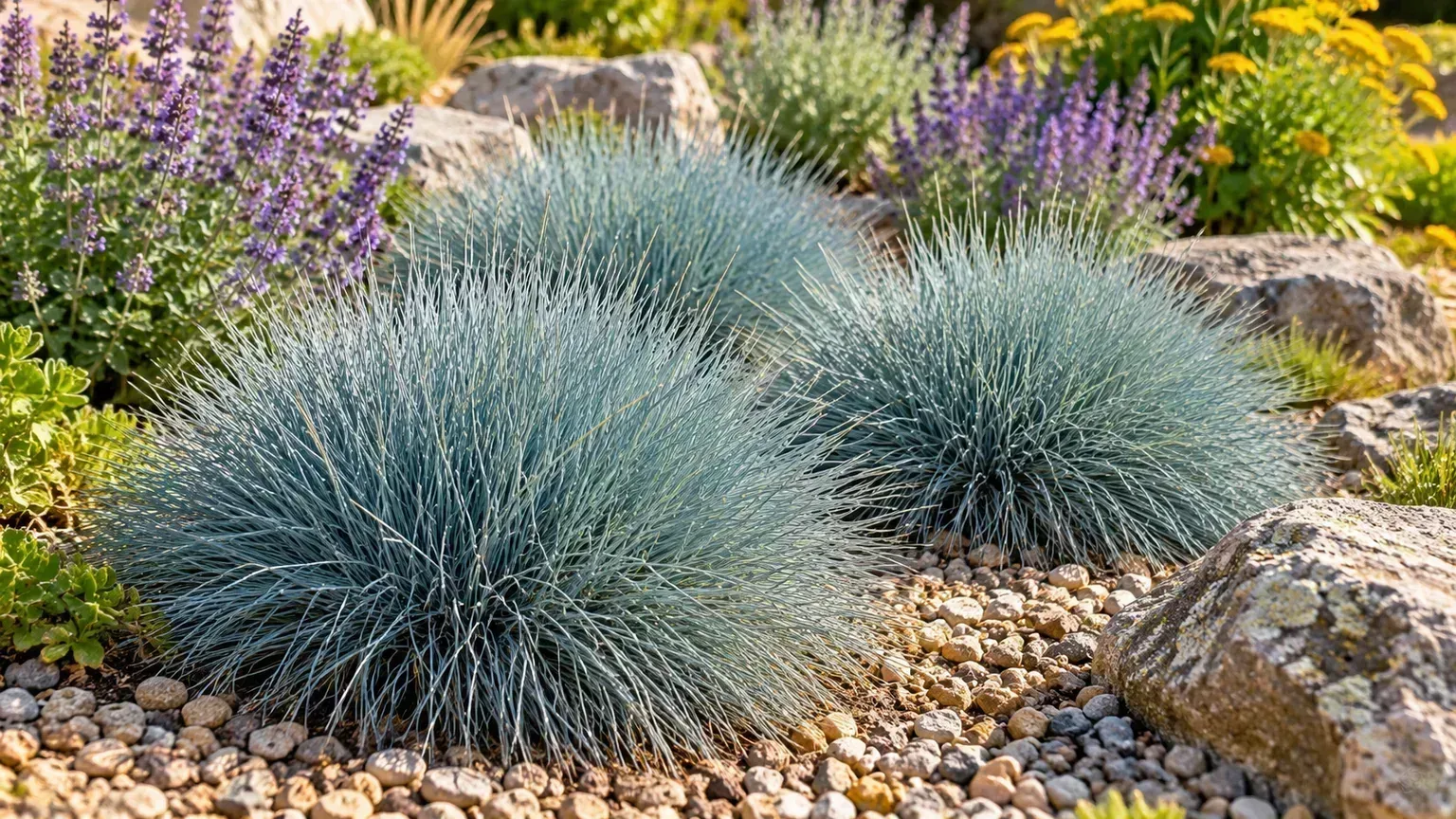
Blue fescue (Festuca glauca) is a compact ornamental grass grown for its fine, silver-blue foliage and rounded clumps. It is happiest in full sun and soil that drains quickly; drought tolerance does not mean it will survive wet roots or a humid summer indefinitely. The fastest way to improve a struggling plant is to check the site and crown before changing its watering or fertilizer.
| Care point | What to provide |
|---|---|
| Light | Full sun for the strongest blue color; light afternoon shade can help in very hot sites |
| Soil | Lean to moderately fertile, sharply drained soil |
| Water | Keep new plants evenly watered while they establish; water mature clumps during extended dry spells |
| Mature size | Commonly about 6–12 inches tall and 10–12 inches wide; flower stems rise higher |
| Hardiness | Often listed for USDA Zones 4–8; cultivar and summer climate affect performance |
| Main upkeep | Spring comb-out or cutback; divide when the center thins, often every 2–3 years |
Is blue fescue right for your garden?
Choose blue fescue when you want a small, cool-toned accent at the front of a sunny border, along a path, in a rock garden, or in a container. Its fine texture contrasts well with broad leaves and larger flowers, and repeated clumps can define an edge without forming a tall screen. It is an ornamental tuft, not a lawn grass: it does not make a mowable carpet or spread by fast underground runners.
This grass is a poor choice for a shaded bed, a low spot that stays wet after rain, or a hot, humid garden where you need a long-lived, no-renewal ground cover. It can tolerate dry periods once established, but old clumps often thin in the middle and may need division or replacement. If you want blue foliage in a warm region, treat blue fescue as a repeatable accent and plan for occasional renewal rather than expecting every plant to remain perfect for years.
How its foliage changes through the seasons
Blue fescue is a cool-season grass, so it tends to look freshest in spring and fall. University of Wisconsin–Madison Extension describes foliage that starts blue-silver in spring, shifts toward blue-green in summer, and becomes darker in fall; in mild winters it may remain evergreen, while harsher weather can brown the leaves. The plant’s color is therefore not a fixed paint-chip blue, even when it is healthy. (University of Wisconsin–Madison Extension)
Thin flower stems appear in late spring or early summer and rise above the foliage. Their small greenish flowers mature to buff or tan seed heads. Leave the stems if you like the airy movement and winter texture; clip them after flowering if you want a tighter blue mound or do not want seedlings appearing in open soil.
Choose a site for color and longevity
Pick the site before you amend the soil. Blue fescue is more forgiving of lean, dry ground than of a crown that stays wet, so a sunny, slightly raised position usually beats a rich bed at the bottom of a slope. If water lingers on the surface after a normal rain, solve the drainage problem first or choose another plant for that spot.
The Missouri Botanical Garden describes blue fescue as a low, semi-evergreen clump that performs in dry to medium, well-drained soil and may decline in heavy, wet soil or hot, humid summers. That is useful context when interpreting hardiness labels: a plant that survives winter lows in your zone may still struggle through sticky summer weather.
Light: full sun keeps the mound bluer
For the strongest blue-gray color and a tight shape, plant blue fescue in full sun. It can tolerate light shade, but the foliage often looks greener and the clump may become less compact. The RHS recommends full sun for Festuca and notes that leaf color is better in sun than in shade. (Royal Horticultural Society)
In a region with intense summer heat, morning sun with some protection from the harshest late-afternoon exposure can reduce stress. This is a compromise, not a color-enhancing trick: too much shade trades some heat relief for greener foliage. If a clump is already in shade, move or divide it in cool weather rather than feeding it to force color.
Soil and drainage matter more than rich compost
Use soil that drains freely and is low to moderately fertile. Sandy, gravelly, or ordinary loam can work if water does not sit around the crown. Heavy clay is risky when it stays wet; planting on a slight mound or in a raised bed can improve the root zone more reliably than filling a small planting hole with loose material that creates a pocket inside dense clay.
Avoid treating this grass like a hungry perennial. A thick layer of rich compost or high-nitrogen fertilizer can encourage softer, greener growth, while excessive organic mulch can keep moisture against the crown. If you mulch, keep it thin and pulled back from the base; gravel is a practical choice in a dry garden. Gardenia.net’s blue fescue guide likewise emphasizes full sun, lean soil, and good drainage over heavy feeding.
Plant blue fescue without burying the crown
Plant in spring or early fall, when temperatures are moderate and the roots have time to settle before severe heat or frozen ground. Water the nursery pot first, slide the root ball out, and loosen only roots that are tightly circling the outside. Set the crown—the point where the leaves emerge from the roots—at soil level or just slightly above it, then backfill and firm the soil without burying the center of the clump.
Water slowly after planting so the root ball and nearby soil make contact. During establishment, check the soil around the roots rather than relying on a calendar: the goal is consistent moisture while roots are spreading, not a waterlogged planting hole. Once the plant is growing steadily and resists a gentle tug, reduce supplemental watering and let the surface dry between soakings.
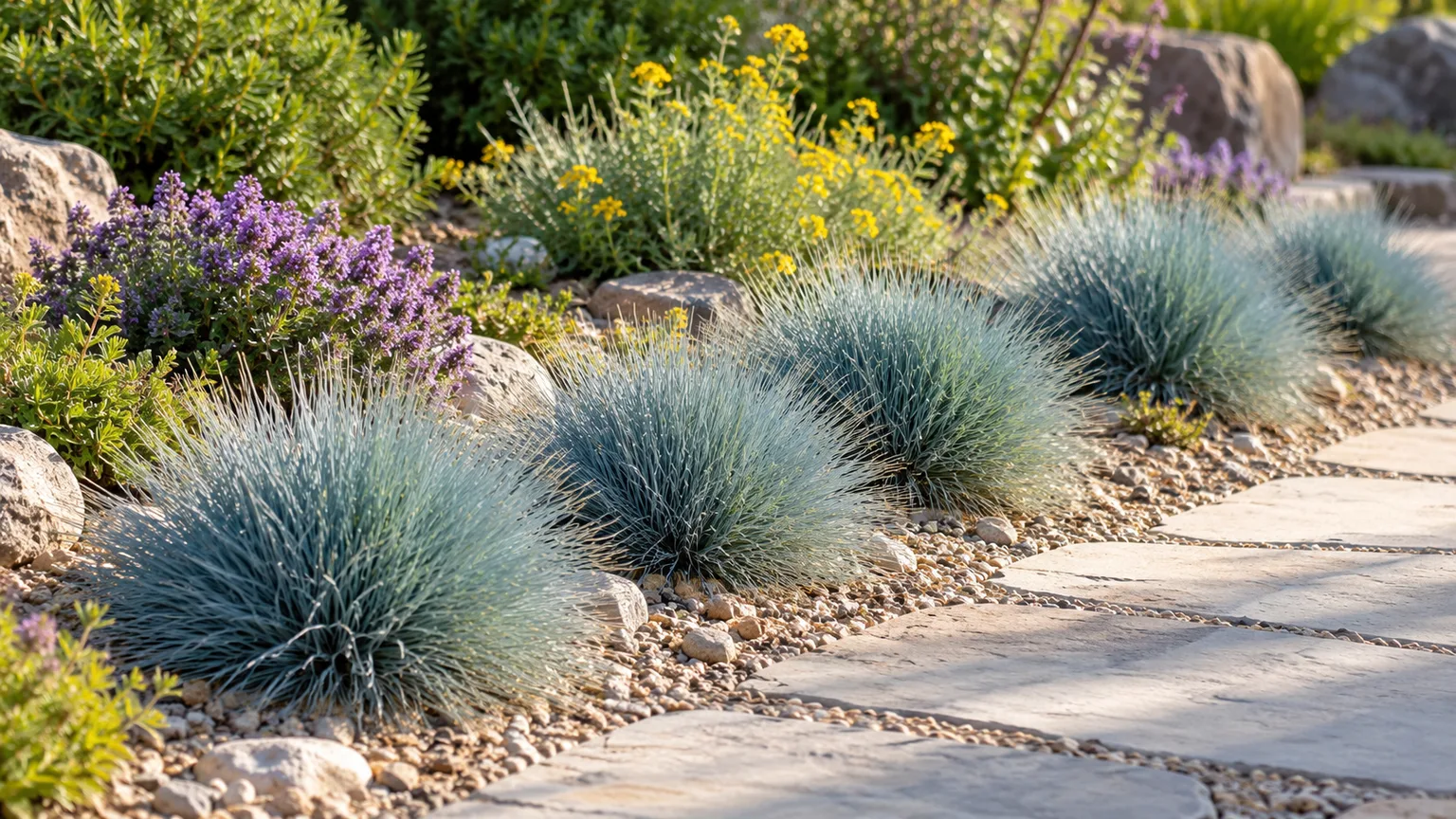
Space plants for the look you want
Blue fescue forms a mound and expands slowly, so spacing determines whether it reads as separate accents or a nearly continuous border. For individual round clumps, allow roughly 12–15 inches between centers, adjusting for the cultivar’s stated spread. For a denser edging or mass planting, Wisconsin Extension suggests about 8–10 inches apart; that closes gaps faster but leaves less room to distinguish each mound.
Do not plant it as a quick, weed-proof ground cover. Even closely spaced clumps grow slowly, and gaps may remain long enough for weeds to establish. Use a temporary, shallow mulch between young plants, keep mulch away from crowns, and remove weeds before their roots tangle with the grass.
Water by establishment and soil condition
Newly planted blue fescue needs more attention than an established clump. During the first growing season, water deeply when the root zone begins to dry, especially through a dry spell; frequent shallow sprinkling encourages roots to stay near the surface. The exact interval depends on rainfall, soil texture, temperature, and exposure, so a fixed “once a week” rule can overwater clay and underwater a fast-draining gravel bed.
After establishment, water during prolonged drought or exceptional heat if the soil is dry several inches below the surface. The leaves may look less lively during summer dormancy, but that alone is not proof of thirst. Check the soil and crown first: if the ground is still damp, adding water is more likely to worsen stress than solve it. Container plants dry faster and need closer checks than plants in the ground.
Feed sparingly—or skip fertilizer
Blue fescue generally does not need routine fertilizer in an average garden bed. If a plant is pale or weak, first check for shade, waterlogged soil, an old hollow center, or heat stress; those conditions are more likely to be the cause than a lack of food. Fertilizer cannot repair a rotting crown or restore an aging clump.
If a soil test or the surrounding planting clearly shows nutrient deficiency, use a light application of a balanced fertilizer in spring and follow its label. A small amount of mature compost around—but not over—the crown is enough for many gardens. Avoid repeated nitrogen feeding, which can make foliage greener and softer without correcting the site problem.
Prune and divide before a clump loses its shape
Blue fescue needs a modest spring cleanup, not repeated shearing through the growing season. It is a small, semi-evergreen grass, so the aim is to remove winter-damaged leaves while protecting the crown and the fresh blades that emerge from it. A clump that has opened in the center is telling you it is ready for division, not that it needs more fertilizer.
Spring cleanup: comb or cut back carefully
In late winter or early spring, before new leaves lengthen, gently comb through the clump with gloved fingers to pull out loose brown blades. If the foliage is too dense to comb or looks uniformly tired, shear it back to about 3–4 inches, as Wisconsin Extension recommends, and stop above the crown. Do not scalp the plant to ground level or cut into new green growth once it has started.
Flower stems are optional. Remove them after bloom if you want a tidy foliage mound and fewer self-sown seedlings; leave them if you prefer their fine movement and tan seed heads. If seedlings do appear, pull the unwanted ones while small. Seedlings may not match the parent’s blue color, particularly when the original plant is a named cultivar.
Divide an aging clump in spring
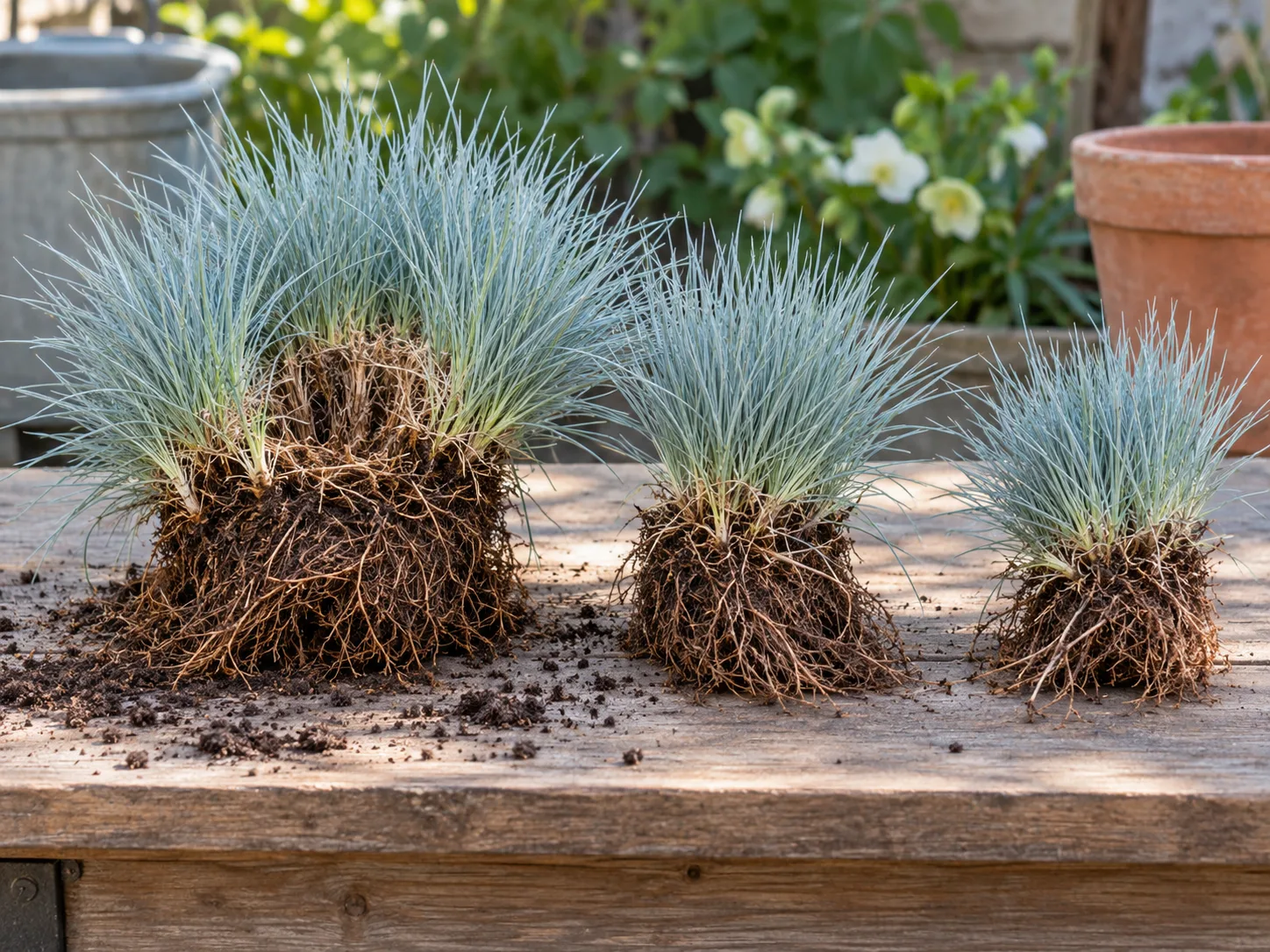
Older clumps often become crowded or brown in the center. The outer sections may still be healthy, so division can renew the plant and give you additional starts. Many references suggest checking or dividing every two to three years, but use the plant’s condition as the decision point: a full, even mound does not need to be disturbed just because a calendar date has arrived.
Lift the clump in early spring as new growth begins, then split it with a sharp spade or knife. Keep sections that have firm roots and healthy leaves; discard the dead, woody, or mushy center. Replant the divisions at their original depth, water them in thoroughly, and keep the root zone lightly moist until new growth shows that they have re-established. (University of Wisconsin–Madison Extension; Missouri Botanical Garden)
Grow from seed when color variation is acceptable
Blue fescue can be grown from seed, but seed is a poor way to reproduce a particular named cultivar. Seedlings vary in foliage color and may be greener than the parent. If uniform blue color matters, buy the cultivar you want or divide a healthy clump; division preserves the parent plant’s characteristics more reliably.
Sow seed in pots or trays of seed-starting mix in spring, barely covering it, and keep the mix evenly moist until germination. Give young plants bright light and good air movement, then harden them off before planting outside. Thin seedlings to the strongest starts and expect to sort for color as they mature. In the garden, remove flower stalks before seed matures if you do not want volunteers.
Grow blue fescue in a container
A pot is useful when the garden soil is too heavy or when you want a small blue accent on a sunny patio. Choose a container with unobstructed drainage holes and enough width for the root ball plus a little growth; a shallow, wide pot is often easier to keep evenly drained than a narrow, deep one. Use a quality outdoor potting mix, and add coarse perlite or grit if the mix stays wet for too long.
Keep the crown at the surface, set the pot in full sun, and empty any saucer that holds standing water. Check the mix more often than a garden bed because wind and sun dry containers faster, but water only when the mix is beginning to dry rather than keeping it constantly wet. In cold-winter areas, a container’s roots experience more temperature swings than roots in the ground; shelter the pot in a protected outdoor location or insulate the container, while keeping the plant dormant and cool rather than bringing it into a warm room.
Adjust care through summer and winter
Spring is the main maintenance window: clean out dead leaves, divide crowded plants, and plant or move clumps while the weather is mild. Summer is when the plant may lose some of its blue cast or pause growth. In hot, humid regions, good airflow and fast drainage matter more than extra water or fertilizer; a plant that declines every summer may be in the wrong climate or position for blue fescue to be a dependable long-term choice.
In fall, avoid heavy feeding and do not cut the plant back simply because flower stems have turned tan. Leave the mound intact if you like winter texture, then remove damaged foliage in spring. In colder climates, some winter browning is normal. The RHS describes Festuca as useful in containers and borders, while extension references note that blue fescue is semi-evergreen and can brown in harsh winters; judge its condition after spring growth resumes rather than discarding a dormant clump in midwinter.
Diagnose green leaves, brown tips, and a dead center
When blue fescue loses color or turns brown, look at where the change begins and whether the soil is wet. Greener, looser growth usually points to too much shade, rich soil, or excess water. A few brown outer leaves after winter or a hot spell are different from a crown that is soft, dark, or collapsing. Correct the likely cause first, then give the plant a growing season to respond.
Use this order of checks:
- Green but firm leaves: check whether nearby plants or a structure now shade the clump; review recent fertilizer and watering.
- Dry brown tips or outer blades: remove dead material in spring and assess heat exposure, drought, and winter injury.
- Brown center with healthy edges: divide the clump in spring and replant the vigorous outer portions.
- Soft crown or roots, especially in damp soil: suspect prolonged wetness; improve drainage or replace the plant in a better site.
- Repeated summer collapse despite good drainage: consider heat and humidity a climate mismatch and choose a more tolerant grass for that position.
Do not respond to every brown leaf by watering more. Blue fescue tolerates dry periods, but it is vulnerable to persistently wet soil; the wrong correction can speed decline.
Pests are uncommon; verify the cause before treating
Blue fescue generally has few serious pest or disease problems. Deer and rabbits may graze it, and an occasional insect colony can appear on stressed growth, but widespread decline is more often a site or age issue than an infestation. Inspect the plant closely before treating, remove dead material, and correct drainage or crowding first. If you find a small aphid colony, a firm stream of water may dislodge it; use any pesticide only when the pest is identified and the product label allows that use.
Choose a cultivar for color, size, or heat response
‘Elijah Blue’ is widely sold and selected for silvery-blue foliage. ‘Boulder Blue’ has a more upright, stiffer look and is reported by Wisconsin Extension as more tolerant of heat and humidity than ‘Elijah Blue’; that is a relative advantage, not a guarantee of success in persistently hot, wet summers. ‘Blue Whiskers’ grows taller and more vigorously, so allow more room if you want a compact edging.
‘Seeigel’ is a compact choice with steel-blue foliage, while ‘Golden Toupee’ is chartreuse rather than blue. These differences matter if you are planting a repeated border or a container that will be viewed close up. Labels and availability can vary, and blue fescue may also be sold under Festuca ovina var. glauca; confirm the botanical name and cultivar on the plant tag instead of choosing by the common name alone. (University of Wisconsin–Madison Extension; Royal Horticultural Society)
Conclusion
Blue fescue lasts longest when its growing conditions match its compact, cool-season habit: give it sun, excellent drainage, modest fertility, and enough water to establish without keeping the crown wet. Expect its foliage to shift color with season and climate, and use spring cleanup to remove winter damage before new blades emerge. When the center opens, divide healthy outer sections; when heat, humidity, or wet soil repeatedly defeats it, move it or choose a better-matched grass rather than trying to fix the wrong site with more water or fertilizer.



