How to Grow and Care for BloomStruck Hydrangea
BloomStruck hydrangea can flower on old and new wood, but climate still matters. Learn how to plant, water, feed, prune, and troubleshoot this rebloomer.
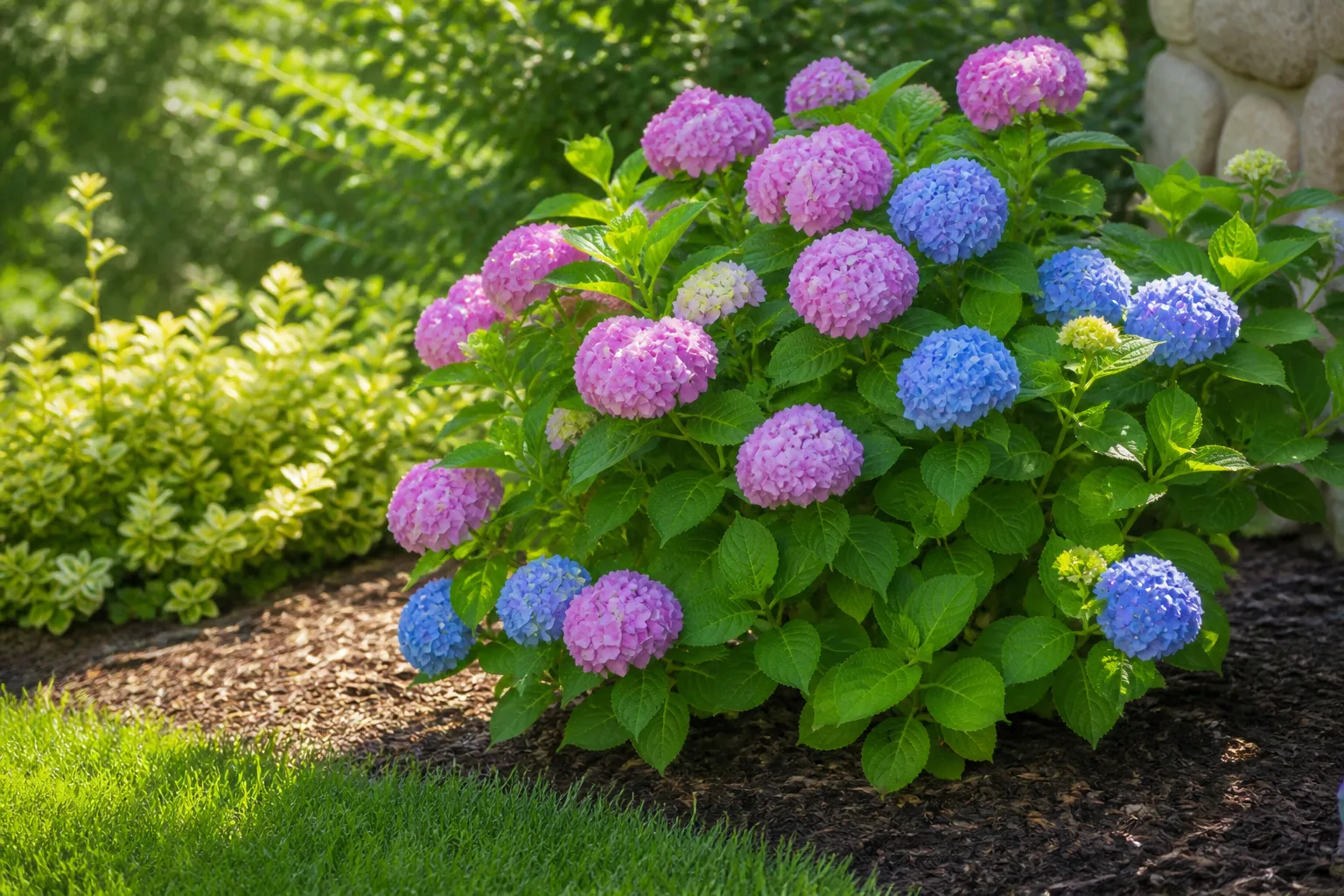
BloomStruck® is a reblooming bigleaf hydrangea grown for rounded mophead flowers, dark green foliage, and reddish stems. It can flower on both overwintered stems and new growth, but the second flush depends on the season: winter injury, late frost, shade, drought, or a too-short growing season can still limit blooms. Give it partial sun, soil that stays evenly moist without becoming soggy, and a light touch with pruning.
BloomStruck hydrangea care at a glance
| Care point | What to provide |
|---|---|
| Botanical identity | Hydrangea macrophylla ‘PIIHM-II’, sold as BloomStruck® in the Endless Summer® series |
| Mature size | About 3–4 feet tall and 4–5 feet wide; allow space for a rounded, spreading shrub |
| Light | Part shade; morning sun is useful, with protection from harsh afternoon heat |
| Soil | Moist, fertile, and well drained; do not keep roots saturated |
| Water | Water deeply when the root zone begins drying, especially during establishment and hot weather |
| Flowers | Mophead clusters that may be rose-pink or blue-purple depending on cultivar, soil, and available aluminum |
| Pruning | Usually unnecessary; remove winter-killed wood in spring after live buds become clear |
| Hardiness | Marketed for USDA Zones 4–9, though flower-bud survival is less dependable in exposed cold sites |
The official BloomStruck profile from Endless Summer lists a 3- to 4-foot height, 4- to 5-foot spread, part-shade exposure, and Zones 4–9. Treat those figures as a starting point for site planning, not a guarantee that every garden will produce repeated flowers: your soil, winter exposure, summer heat, and growing-season length all change how the shrub performs.
What makes BloomStruck different from other bigleaf hydrangeas?
BloomStruck is a named cultivar of Hydrangea macrophylla, the bigleaf hydrangea species that includes both mophead and lacecap forms. Its large, rounded flower clusters, dark green leaves, and red-toned stems make it recognizable; North Carolina State Extension lists the cultivar as a rebloomer with reddish stems and leaf veins. The plant is deciduous, so it loses its leaves in winter rather than acting as an evergreen screen.
The useful distinction is its ability to flower from buds on old wood and from new growth produced during the current season. That trait can improve the odds of getting some flowers after a winter damages overwintered buds, and it may extend the display when the shrub is growing well. It does not mean the plant blooms continuously, ignores frost, or can be cut back hard without cost. (NC State Extension)
Understand reblooming before choosing a climate
A nursery label may list BloomStruck as hardy in a broad zone range, but a plant’s ability to survive winter is different from its ability to keep flower buds alive. Bigleaf hydrangeas hold some of their next season’s potential flowers on stems through winter; harsh cold, exposed wind, or a late spring freeze can damage those buds even if the roots and lower stems survive. Penn State Extension notes that winter injury and poor pruning are common reasons bigleaf hydrangeas fail to flower.
BloomStruck’s new-wood flowering gives it a backup route, not an insurance policy. New shoots must grow and mature enough to make flowers, and that opportunity can be limited in a short, cool season. In colder gardens, plant it in a sheltered spot and be pleased if new growth flowers after old stems are damaged; if dependable annual color matters more than this cultivar’s changing mopheads, consider a hydrangea that flowers on new wood as its primary strategy. (Penn State Extension; University of Minnesota Extension)
Choose a site that balances sun and shelter
Start with the hottest part of your yard, not the shade label on the pot. The best position gets enough light to support flowering but protects the shrub from intense afternoon sun and drying wind. A spot with morning sun and open shade later in the day is a reliable starting point in many regions; in a cool climate with moist soil, it can tolerate more sun, while hot-summer gardens benefit from more afternoon protection.
A north- or east-facing bed, the bright edge of a woodland garden, or a location near a building that blocks prevailing winter wind can work. Avoid a low pocket where water stands after rain and avoid planting under a large tree whose roots compete for moisture. Leave room for a mature shrub about 4 to 5 feet wide, plus airflow between it and walls or neighboring plants.

Light: morning sun, then afternoon protection
BloomStruck is not a deep-woods plant that needs darkness, and “partial shade” does not mean it should receive no direct sun. A few hours of gentler morning light can support sturdy growth and flowers; sun that strikes leaves during the hottest afternoon hours can raise water demand and cause temporary wilt or scorched margins. If your shrub is full of leaves but produces few flowers, check whether nearby trees or a new fence now block most of its light before reaching for fertilizer.
In a hot inland climate, place it where it receives bright filtered light or morning sun with shade after midday. Near the coast or in a cooler summer region, it may handle a longer sun window if the soil remains consistently moist. Let the plant’s response guide small adjustments: persistent burnt edges and afternoon collapse suggest too much heat or too little root moisture, while weak, stretched growth and few buds can indicate excessive shade.
Soil: moisture without standing water
BloomStruck needs a root zone that holds moisture between waterings but drains after rain. Ordinary garden loam enriched with a modest amount of compost can work; heavy clay that remains saturated is a problem even if the surface looks dry, while very sandy soil may need more frequent watering and organic matter across a broad planting area. Do not solve clay by adding a small pocket of potting mix to the planting hole; that can hold water where the roots sit.
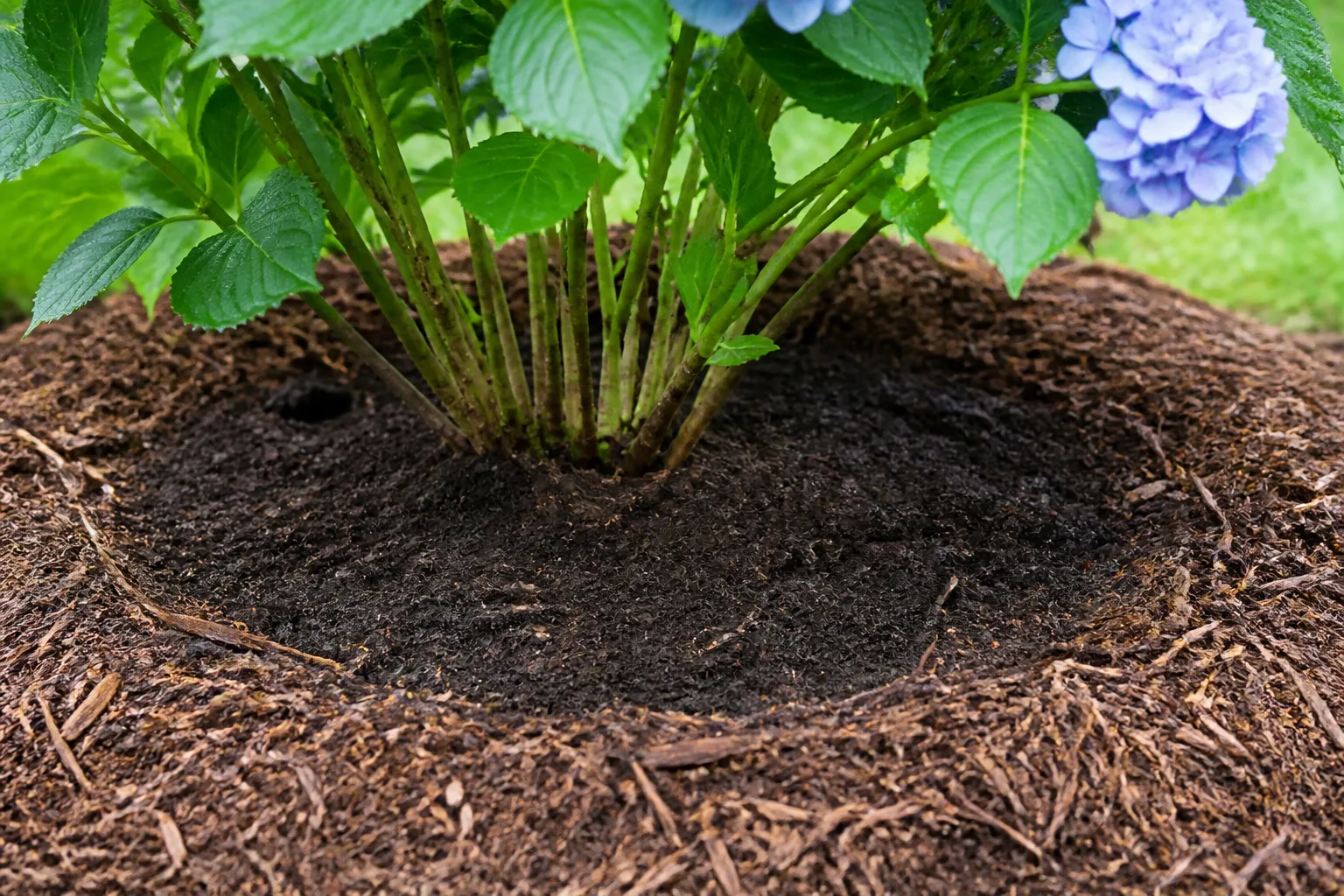
Spread mulch over the root zone to slow evaporation and moderate temperature, keeping it a few inches away from the crown and stems. The Endless Summer care profile recommends a 2- to 3-inch mulch layer and evenly moist, well-drained soil. Refresh mulch as it thins instead of piling new layers against the stem bases.
Plant BloomStruck at the right depth and spacing
Plant in spring after the worst frost risk has passed or in early fall while the soil is still warm enough for roots to establish. In hot climates, avoid setting a new shrub into peak summer heat unless you can keep its root ball from drying. Before planting, water the nursery pot, find the top of the root ball, and dig a hole two to three times wider than the root mass but no deeper than its height.
Set the shrub so the top of its root ball sits level with the surrounding soil, backfill with the excavated soil, and water slowly to settle air pockets. A shallow planting is easier to correct than a buried crown, which can stay too wet and decline. Apply mulch over the root zone, then check moisture frequently through the first growing season; new roots have not yet reached far into the surrounding bed.
Do not plant the shrub at the exact edge of a narrow path simply because its nursery pot looks compact. Its mature width is several feet, and crowding it against a wall or into dense neighboring foliage makes pruning harder and can restrict airflow. For a hedge-like row, plan from the expected mature spread and the visual density you want rather than using a generic spacing number.
Water by checking the root zone
Water new plants slowly and thoroughly so the original root ball and nearby soil are both moistened. During the first growing season, check the soil every few days during dry or hot weather and water when it begins to dry a couple of inches below the surface. After the plant is established, rain may cover much of its need; during a prolonged dry spell, give the root zone a deep soak rather than frequent surface sprinkles.
A fixed schedule such as “one inch every week” can mislead because sandy soil, clay, wind, direct sun, and container culture lose water at different rates. Check under the mulch near the root ball: if it is still damp, wait; if it is dry and crumbly, water at the base until moisture reaches the deeper roots. Morning watering limits evaporation, and keeping leaves dry where practical can reduce the spread of some leaf-spot diseases.
On a hot afternoon, hydrangea leaves may droop temporarily even when the soil contains adequate moisture. Maryland Extension notes that bigleaf hydrangeas can wilt in high daytime temperatures and recover at night; if the plant firms up after sunset and the soil is moist, do not keep soaking it. Repeated wilt that persists into morning, dry soil, or crispy margins call for a closer check of the root zone, sun exposure, and drainage. (University of Maryland Extension)
Fertilize modestly, and only when it helps
Do not automatically fertilize every BloomStruck each season. A healthy shrub in decent soil may need no extra feeding, and fertilizer cannot correct shade, waterlogged roots, cold-damaged buds, or a plant that is still establishing. Maryland Extension recommends soil testing when a nutrient problem is suspected and cautions against fertilizing drought-stressed plants.
If growth is weak and a soil test or local Extension advice supports feeding, use a balanced, slow-release product for woody ornamentals and follow its label; apply it in early spring as growth begins. The cultivar’s brand recommends spring feeding and suggests another application around July for rebloom, but that second feed is not a universal rule for every climate or soil. In short-season and cold-winter areas, avoid late-season feeding that could encourage tender growth before dormancy; do not add high-phosphorus “bloom booster” simply because flowers are sparse. Excess nitrogen can create lots of leaves without solving the actual cause of missing flowers. (University of Maryland Extension; Endless Summer)
Shift flower color with a soil test, not guesswork
BloomStruck flowers can range from blue-purple to pink, but sprinkling an amendment around the shrub is not a reliable color-control method. Soil acidity affects how available aluminum is to the roots: lower pH and accessible aluminum favor blue tones, while less available aluminum in a higher-pH soil favors pink. Intermediate conditions can produce purple or mixed shades, and cultivar genetics, existing soil chemistry, water, and time all affect the result. Maryland Extension describes blue flowers most often at pH 5.0–5.5 and pink in the pH 6.0–6.5 range, with purples possible between those ranges.
Test the bed before changing it, especially if you are planting near foundations, concrete, or other existing beds that may affect soil chemistry. Ask your local Extension office or soil lab to interpret the result, then use only an appropriate amendment at the labeled rate. Maryland Extension warns that too much aluminum sulfate can burn roots; do not use an online recipe, vinegar, coffee grounds, or a handful of lime as a substitute for a test.
Changes are gradual because the plant must take up nutrients while producing the next flowers. If the current bloom is a color you like, the simplest course is to leave the soil alone. If you want to shift color and do not want to amend a large garden bed, a container gives you more control over the growing medium, though it also dries faster and needs careful winter management. (University of Maryland Extension; NC State Extension)
Prune lightly to preserve flower buds
BloomStruck usually needs little or no routine pruning. Its old-wood buds are already on the stems that carry the shrub through winter, so a fall haircut, cutting the whole plant to the ground, or shaping it like a hedge can remove flowers you were expecting. The fact that it can also bloom on new growth is not a reason to prune aggressively; the official cultivar profile says spring is the only time to prune if pruning is necessary.
In cold climates, wait until spring growth begins before deciding which stems are dead. Buds can look dry or stems can appear lifeless after winter and still have living tissue lower down. Scratch a small spot on a suspect stem or wait for leaf-out; green tissue or swelling buds signal life. Cut only clearly dead sections back to the first healthy pair of buds, and remove a whole stem at ground level only when it is dead, broken, or badly crossing another stem.
For a mature, overgrown plant, spread rejuvenation over more than one season rather than removing a large share of the shrub at once. Take out one of the oldest stems at the base in early spring, then observe the plant’s shape and flowering before making another major cut. If it is too large for its space every year, moving it or choosing a smaller shrub is usually a better long-term fix than repeated severe pruning. (University of Minnesota Extension; Endless Summer)
Deadheading is optional and different from pruning
You can remove faded flower heads for a tidier look, or leave them on the shrub for winter texture. If you deadhead, follow the flower stem down only to the first healthy pair of leaves or buds rather than cutting far down into the branch. A rebloom may develop on new growth, but removing an old flower does not guarantee that another one will form.
In a cold region, leaving spent heads through winter can also make it easier to avoid cutting into viable stems before spring growth shows where the plant is alive. The dry heads are not harmful if you leave them, and they can be removed during the spring cleanup. Handle pruning shears carefully and clean them between plants if you are removing diseased material.
Follow a seasonal BloomStruck care calendar
Early spring: Replenish a thin mulch layer, inspect for winter damage, and wait for buds to swell before removing dead wood. If the shrub’s growth or soil test indicates a nutrient need, feed as new growth starts and water the plant if spring weather is dry. Protect tender new shoots if a late freeze is forecast, especially in an exposed site.
Late spring and summer: Keep new plants evenly moist; water established shrubs when the root zone begins drying during a hot, rainless stretch. Watch for the first old-wood flowers, then allow new shoots time to mature for any later bloom. Deadhead only if you want a cleaner appearance, and do not confuse a hot-afternoon wilt with proof that the plant needs another soaking.
Late summer and fall: Stop making major cuts and avoid late fertilizer in climates where shrubs need to harden before winter. Continue watering during dry fall weather until the ground begins to freeze, because a dry root zone is more vulnerable going into winter. Keep leaves and dense debris from remaining against the stems, and note whether the site needs more wind shelter next year.
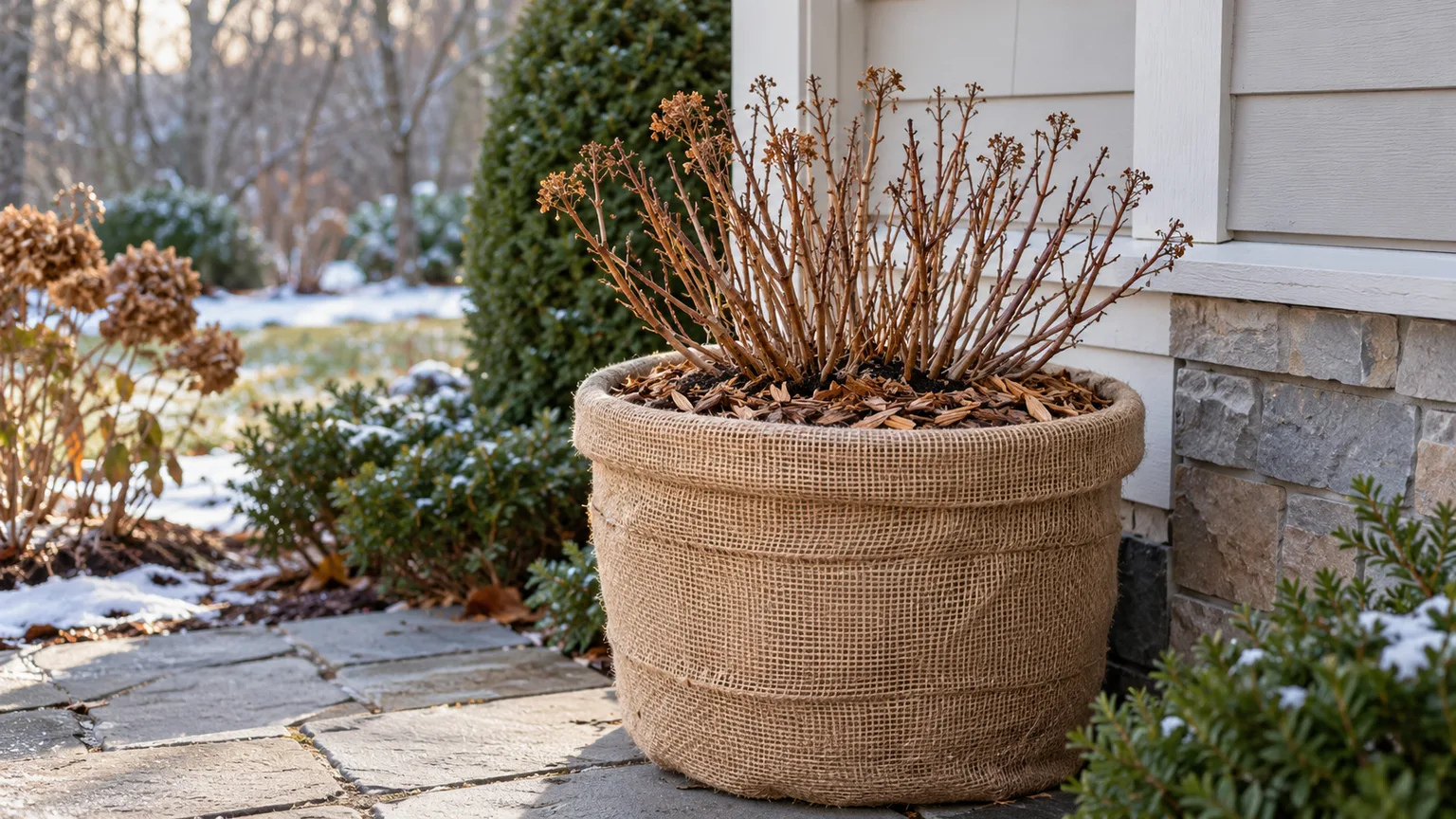
Winter: Leave healthy stems in place, especially where winter injury is common. In cold or exposed gardens, a loose protective enclosure around the shrub filled with dry leaves can buffer wind and temperature swings; remove it in spring as conditions moderate. Do not wrap the shrub tightly in plastic or keep a potted plant warm indoors, since the goal is protection while it remains dormant.
Grow BloomStruck in a container
A container is useful when you want to move the shrub out of harsh afternoon sun or adjust its soil more easily. Pick a broad, sturdy pot with several unobstructed drainage holes and enough volume for the root ball to grow; a small nursery pot will dry too fast and is likely to tip as the plant matures. Use a high-quality outdoor potting mix that holds some moisture but drains freely, and keep the root ball at the same depth it grew in the nursery pot.
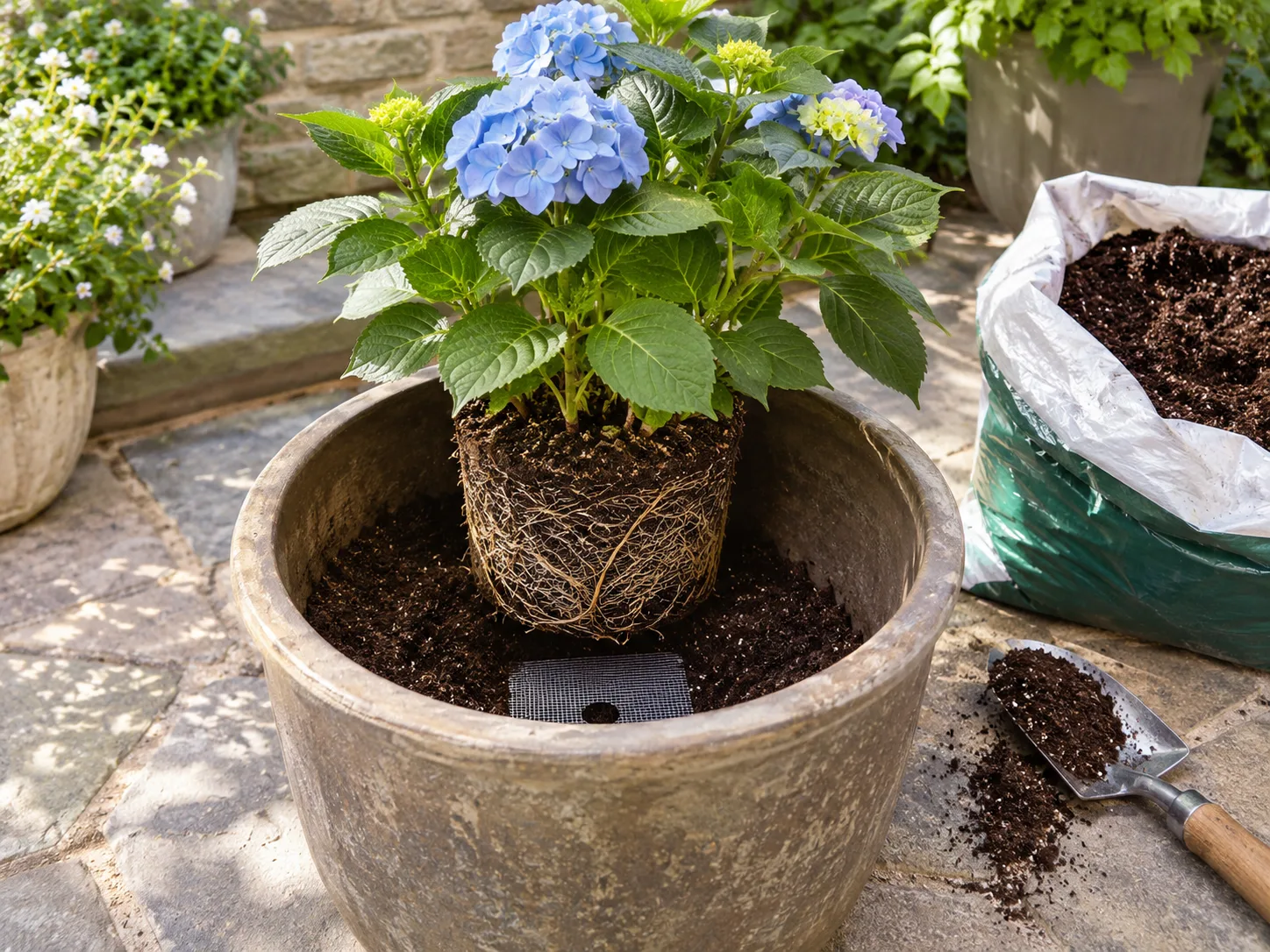
Container plants need closer moisture checks than in-ground shrubs because wind and sun dry a small volume of mix quickly. Water thoroughly when the upper layer begins drying, then allow excess water to drain; do not leave the pot sitting in a full saucer. In winter, roots in a container experience colder temperature swings than roots in the ground, so shelter the pot in an unheated protected space or insulate the container in place. The cultivar-specific container advice in Epic Gardening’s BloomStruck guide makes the same practical distinction: less potting mix means more frequent moisture checks than for an in-ground shrub. A wrap around the pot can buffer the root ball while the dormant stems stay exposed to outdoor temperatures. Do not bring it into a heated room as if it were a houseplant.
Troubleshoot weak growth and missing flowers
Before changing several things at once, note when symptoms began, how many hours of sun the plant gets, and whether the soil is wet, dry, or evenly moist several inches down. A new shrub may spend its first season establishing roots rather than producing a large display, while a mature plant with no flowers needs a different investigation. Work through the likely causes in order instead of adding fertilizer or water automatically.
No flowers: check winter, pruning, light, and fertilizer
If the shrub leafs out but has no flowers, first check for winter injury or a late frost. The top of the plant can lose flower buds while lower stems and roots survive; new-wood flowers may still appear later, but are not guaranteed. Next, review when and how much you pruned: fall or winter cutting, or a hard spring cut before live buds are clear, can remove old-wood flowers.
If there was no severe cold and little pruning, look at light and growth. Dense shade can reduce flowering, and excessive nitrogen may favor foliage at the expense of blooms. A shrub that is healthy but still young may simply need time; a plant that has repeated years of sparse flowers despite good light and moisture may be poorly suited to its winter exposure. Penn State Extension’s useful diagnostic rule is to consider what happened to the buds before assuming a nutrient problem.
Wilting, yellow leaves, and leaf spots
For wilt, check the soil before watering. Dry soil that stays dry into morning suggests a real moisture deficit; wet soil and wilt together point toward poor drainage or root stress, while midday-only droop that disappears overnight can be heat response. Adjust the cause, not just the visible leaves: mulch and a deeper watering help drought stress, while a persistently saturated bed may need drainage improvement or a different site.
Yellow leaves have several possible causes, including overwatering, drought, root injury, and nutrient availability. If the newest leaves are yellow between greener veins, have the soil tested and ask whether high pH is limiting iron before applying fertilizer; if older leaves yellow and the root zone is wet, address drainage first. Distinct tan or brown spots can be fungal or bacterial leaf spot, especially after warm, wet weather; remove heavily affected fallen leaves, water at the soil line, and give the plant enough room for airflow. Extension guidance notes that many leaf spots are cosmetic and that fungicides are not needed in most situations.
BloomStruck has been selected for improved resistance to powdery mildew, but resistance is not immunity to every disease or stress. Check leaf undersides for aphids or scale and look for stippling that may indicate mites, but avoid spraying broad insecticides before identifying the pest. Strong water pressure can dislodge some soft-bodied pests; for a persistent infestation, use a locally recommended, labeled control and protect beneficial insects. (University of Maryland Extension; University of Maryland Extension; North Carolina State Extension)
Keep pets from chewing the plant
Keep pets from eating BloomStruck leaves or flowers. Pet Poison Helpline lists hydrangeas as containing cyanide-forming compounds and advises contacting a veterinary professional or poison service if a pet ingests plant material; the risk depends on the amount eaten and the animal. If you suspect an ingestion, save a photo or sample of the plant and call your veterinarian promptly rather than waiting for symptoms. (Pet Poison Helpline)
Conclusion
BloomStruck is a good choice when you want a compact bigleaf hydrangea with mophead flowers, red-toned stems, and the possibility of blooms from both old and new wood. Its reblooming trait helps, but a sheltered site, gentle pruning, and a moist yet well-drained root zone do more to improve your odds than frequent fertilizer or constant trimming.
Plant it where it can reach its mature spread, protect it from harsh afternoon heat and winter exposure, and wait for spring growth before removing questionable stems. Test the soil before trying to change flower color, and judge wilt by checking the root zone. With those few decisions handled well, you can enjoy the shrub’s natural pink-to-purple range without treating every faded bloom or drooping afternoon leaf as a problem to fix.



