How to Keep Boxelder Bugs Out of Your Home
Learn why boxelder bugs gather on sunny walls, where they slip indoors, and which repairs and cleanup steps reduce repeat fall invasions.

When black insects with red markings gather on the sunny side of a house, the fastest lasting fix is usually exclusion: repair screens, close appropriate gaps, and remove the easy indoor routes they use to overwinter. A hose or vacuum can clear visible bugs, but neither seals a window frame or stops the next warm-weather group from finding the same opening.
Boxelder bugs are seasonal visitors, not a sign that your home is dirty. The adult insects seek dry, sheltered places as autumn temperatures drop; some slip into wall spaces or living areas and may appear again during warm winter days. Work through the outside of the building before fall migration, then use vacuuming and careful monitoring for stragglers. University of California IPM and Penn State Extension both put exclusion and sanitation ahead of routine indoor spraying. (UC IPM; Penn State Extension)
The fastest way to keep boxelder bugs out
If you are seeing bugs now, split the job into four steps: identify them, find the side and opening they favor, block the route with a suitable repair, and remove the visible insects without crushing them. Start on south- and west-facing walls, where sunny surfaces often attract congregations, but inspect the whole exterior because insects can travel around a building and use an opening far from the host tree.
For the first pass, inspect door bottoms and frames, window screens and sashes, siding joints, utility pipes, vents, and the edges where trim meets the foundation. Replace a torn screen or worn sweep before buying sprays; these repairs address entry. If bugs are already inside, vacuum them up and empty the canister outdoors, then check nearby exterior gaps. You may need to repeat cleanup during warm spells because adults that have already entered sheltered spaces can become active again.
The immediate goal is not to make the yard insect-free. It is to reduce the number that cross the building envelope and the number of repeat cleanups inside. Adults can fly in from host trees on nearby properties, so a realistic measure of success is fewer indoor sightings after repairs, not a guarantee that no bug will ever land on the siding.
Identify boxelder bugs before sealing or treating
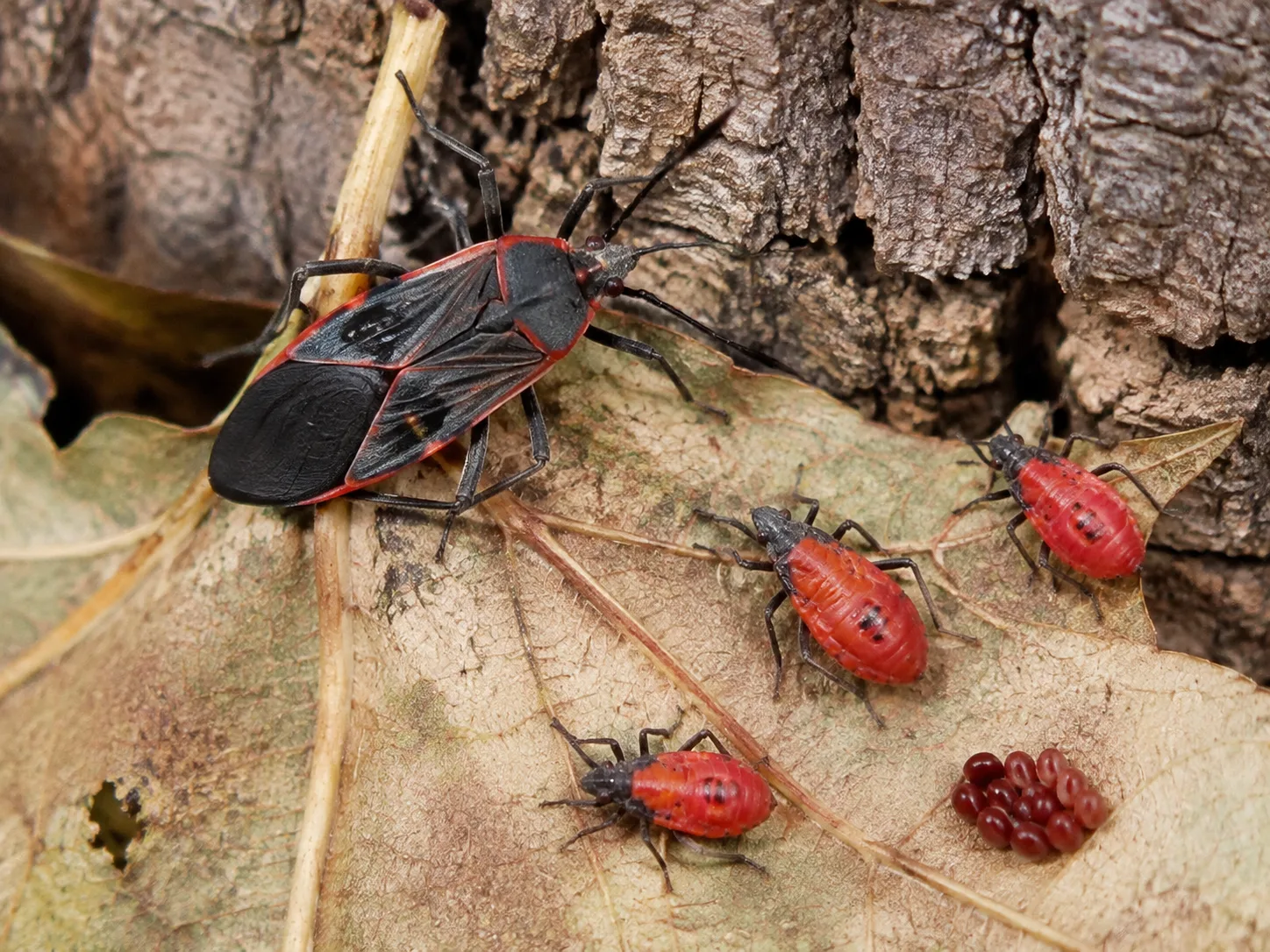
Adult boxelder bugs are flattened, dark brown to black insects about half an inch long, with red-orange lines behind the head and narrow red markings along the wing edges. Their wings meet over the back in an X-like pattern, and the abdomen is red. Young nymphs are smaller, wingless, and often bright red or orange before dark markings and wing pads develop. The UC IPM identification notes describe these color and body marks as useful clues across the life stages. (UC IPM)
The species most familiar in the eastern United States is Boisea trivittata; western boxelder bugs are often identified as Boisea rubrolineata. Both are true bugs in the family Rhopalidae. Adults and nymphs may be present together outdoors, especially near a seed-bearing boxelder, and the young stages do not look like miniature black adults at first.
Separate boxelder bugs from stink bugs and look-alikes
A boxelder bug is not a cockroach and is not a stink bug in the family Pentatomidae, even though it can release an unpleasant odor when crushed. Its flattened body, three red-orange lines behind the head, and red wing margins help distinguish it from many shield-shaped stink bugs. UC IPM also notes that milkweed bugs, squash bugs, bordered plant bugs, and leaf-footed bugs can be mistaken for boxelder bugs, so check the markings and the plant or surface where you found them rather than relying on color alone. (UC IPM)
This matters when deciding whether a plant needs treatment. Boxelder bugs mainly associate with boxelder trees and can also be found on maple and ash; some species feed on fruit. If the insects are concentrated on squash, beans, or another vegetable and the plant has a different pattern of damage, take a close photo and ask a local extension service to confirm the pest before spraying. A wrong identification can expose beneficial insects without solving the actual problem.
Why boxelder bugs gather on houses
The house is a convenient shelter as the season changes. Adults that develop outdoors look for dry cracks and crevices where they can spend winter; buildings provide protected voids around foundations, windows, doors, siding, and roof edges. They are especially visible when they congregate on warm, sunlit surfaces before moving toward a gap. Penn State Extension describes fall movement toward sunny building sides and sheltered spaces, followed by reappearance on warm days. (Penn State Extension)
Nearby trees explain much of the outdoor activity. Boxelder bugs feed and reproduce chiefly around boxelder, also called Manitoba maple (Acer negundo), and may also be associated with other maples and ash. Female, seed-bearing boxelder trees often support larger groups because the bugs feed on seeds; removing one nearby tree may reduce local numbers but will not stop adults arriving from trees elsewhere in the neighborhood. UC IPM notes that winged adults can move between properties and that seeds should be swept or vacuumed from hard surfaces when tree removal is not practical. (UC IPM)
The insects do not need to be eating your houseplants or nesting in your pantry to be a nuisance. University references describe their indoor presence as an overwintering problem, not indoor reproduction. They may crawl into living spaces, become trapped, and die; crushed insects or droppings can mark light fabrics and surfaces. That difference points to a better solution: prevent entry and remove indoor strays instead of trying to eradicate a breeding colony that is not there. (UC IPM; Penn State Extension)
Map the entry route before you patch anything
A short, systematic inspection is more useful than sealing every visible seam indiscriminately. Go outside when bugs are active and note the wall where they gather, the time of day, the nearest tree or seed pile, and the openings within a few feet of the cluster. Then compare those locations with where insects appear indoors. If bugs collect outside one window and show up on its sill, start with that screen, sash, trim, and adjacent siding joint.
Inspect in a loop from the ground upward: foundation and pipe penetrations; doors and windows; siding transitions and trim; vents and exhaust openings; then attic, crawlspace, and roofline access points that are safely reachable. Use a flashlight to see dark gaps, and check a closed door for daylight at the bottom or along its jamb. Do not climb ladders or dismantle building components just to chase a bug; have a qualified contractor inspect inaccessible roof, chimney, or cladding details.
Tell an outdoor cluster from a wall-void emergence
If bugs are mainly on the sunny exterior wall, the immediate issue is a seasonal congregation. Hose off a washable surface or vacuum a reachable cluster, then finish the nearby exclusion repairs. If insects appear indoors around baseboards, window trim, ceiling fixtures, or an exhaust fan, they may be coming through a wall void or an opening between the void and the room. Penn State Extension recommends locating and closing the points where bugs enter living areas and cautions that treating interior wall voids is not a durable solution. (Penn State Extension)
A repeating indoor trickle from the same trim joint deserves a closer building inspection, not a stronger indoor spray. The crack you see may be the exit into the room rather than the original entry from outdoors, so follow the route outward and check the corresponding siding or frame. If the insects are emerging from a sealed cavity, a pest professional or building-envelope contractor can help identify the path without filling a drainage opening or creating a moisture problem.
Seal gaps without damaging the house
Use a repair material that matches the opening. Flexible exterior caulk suits many small stationary cracks around window and door trim; weatherstripping belongs on moving door or window edges; a fitted screen or metal mesh is appropriate for a vent designed to be screened. Larger gaps around plumbing or wiring may need a backing material or repair method chosen for the siding, foundation, or fire rating. A tube of caulk is not a universal fix for every hole in a wall.
Do not seal weep holes, soffit or foundation ventilation, exhaust outlets, or other openings that the building needs for drainage, combustion air, or moisture control. A weep hole in brick or veneer helps water escape from the wall assembly. Covering it with solid sealant may trap water and cause a more costly problem than an occasional insect. When you cannot tell whether an opening is intentional, identify its purpose before closing it; a properly designed screen or pest-resistant cover may be appropriate, but it should preserve the opening’s function.
Southern Living’s home-prevention guidance highlights gaps around utility penetrations, weatherstripping, and screens as common weak points (Southern Living). Gardening Know How also points readers toward screen repairs, sealing utility openings, and focusing on warm building sides (Gardening Know How). Treat those as inspection priorities, not a reason to seal every edge blindly. If a crack is wide, wet, moving, or associated with deteriorating masonry or siding, repair the underlying building defect rather than disguising it with surface caulk.
A prioritized exterior inspection checklist
Work through the spots most likely to give an insect direct access to a living area:
- Door bottoms and corners: look for daylight, worn sweeps, loose thresholds, and gaps where the jamb meets the sill.
- Window screens and frames: check for small tears, loose spline, bent frames, and screens that do not sit tightly in the track.
- Utility penetrations: inspect where cables, pipes, faucets, and air-conditioning lines pass through siding or foundation walls.
- Siding, trim, and foundation transitions: look for open joints, failed caulk, loose boards, and damaged areas around attached structures.
- Vents and roofline openings: check that screens are intact and that louvers close or fit as designed; do not block required ventilation.
- Garage, attic, and crawlspace doors: confirm seals meet at corners and that no gap remains where a door is closed.
Fix obvious gaps first, then recheck the inside during the next warm afternoon. If the insects stop appearing at one window but show up at another, the insects may be using a second route, or the first gap may have been only one of several. Keep a simple note of date and location so you can see whether the repairs reduce indoor activity over the season.
Repair screens, doors, and vent covers
A screen only works if its frame fits the opening and the mesh has no tear. Patch a small tear with a compatible screen repair kit or replace the mesh when damage is extensive; replace bent frames that no longer sit squarely. Make sure windows close fully against their weather seals, and keep doors from being propped open while bugs are gathering outside. A closed but poorly fitted screen is not a barrier.
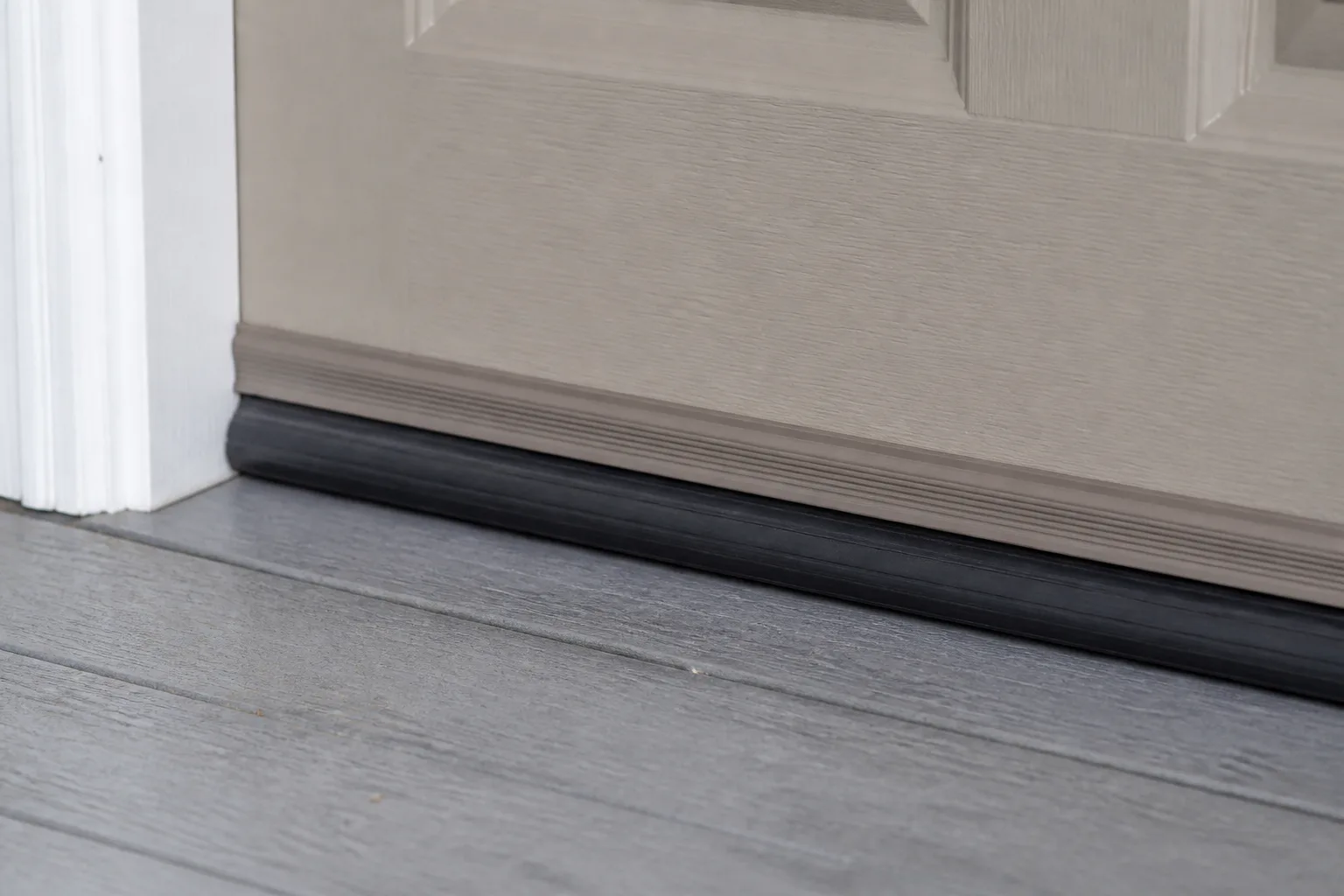
At exterior doors, use weatherstripping around the sides and top and a sweep or threshold seal at the bottom. Close the door and look for daylight around its perimeter. If you can see light, air can pass through the same gap, and a small red-and-black bug can often use it too. Replace compressed or brittle weatherstripping instead of layering loose foam over it, which can prevent the door from latching or leave a hidden opening at the corners.
Vents need a different approach from cracks. Repair torn vent screens and choose a mesh or cover intended for that vent type, leaving enough open area for the airflow the building requires. Do not cover dryer exhaust, furnace or water-heater vents, or combustion openings with improvised mesh; those systems have specific safety and performance needs. Ask a qualified technician or contractor when you are unsure what can be screened.
Reduce outdoor pressure around the foundation
A tidy foundation buffer can reduce the number of bugs resting immediately beside the building. Rake up fallen boxelder, maple, and ash seeds where they accumulate, and move loose boards, rocks, leaf piles, and thick weeds away from the siding. UC IPM suggests maintaining a debris-free strip roughly 6 to 10 feet around the foundation, with particular attention to sunny sides of the house. (UC IPM) This does not remove the host tree or prevent every adult from flying over, but it makes the wall edge less convenient as a shelter.
Keep ordinary garden habitat where it belongs. There is no need to strip beds bare or remove all mulch from the yard; target the clutter that touches the house or sits under a concentrated bug group. Sweep seeds from patios, steps, and driveway edges, and empty outdoor vacuums promptly so insects do not remain in the canister. If bugs are on a tree trunk or siding, a steady hose stream can knock them down without leaving an insecticide residue. UC IPM lists hosing as a control for exposed clusters and stresses that broad pesticide use is rarely justified. (UC IPM)
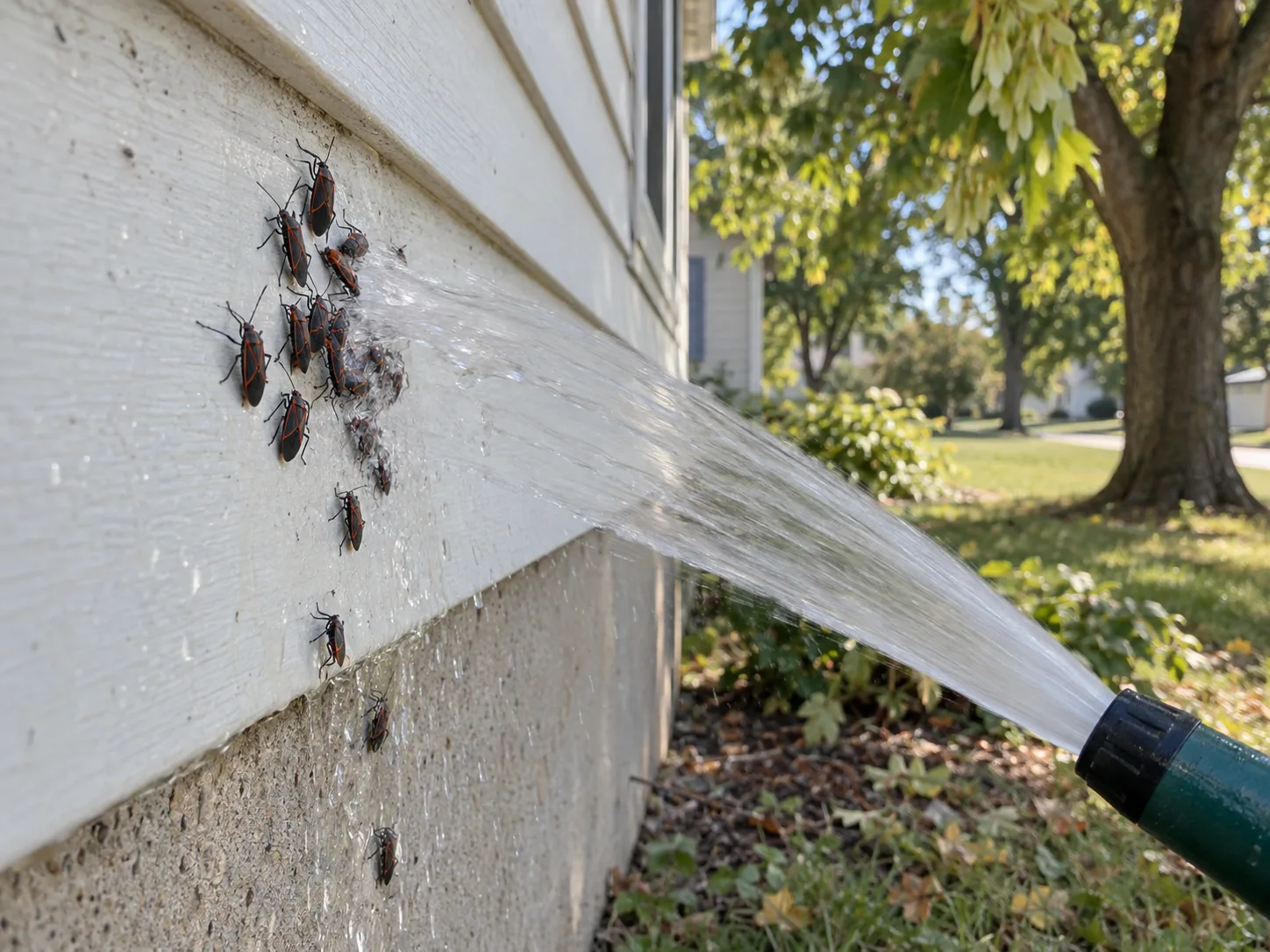
Hosing is temporary: it removes exposed insects but does not create a barrier. Use it when the surface can get wet without damage, avoid forcing water under siding or into window frames, and keep runoff away from electrical equipment and door thresholds. If the same group re-forms every sunny afternoon, shift attention to the host tree, seed litter, and nearby shelter rather than repeating a high-pressure wash against the house.
Remove boxelder bugs already inside without staining surfaces
Vacuuming is usually the cleanest way to collect indoor boxelder bugs. Use a hose or crevice attachment around sills, baseboards, and corners, then empty a bagless canister outdoors into a sealed trash bag or remove and discard the vacuum bag promptly. Do not crush them against paint, curtains, or upholstery; the insects can leave spots and an unpleasant smell. CSU Extension and UC IPM both identify vacuuming as a practical indoor cleanup method. (UC IPM)(Colorado State University Extension)
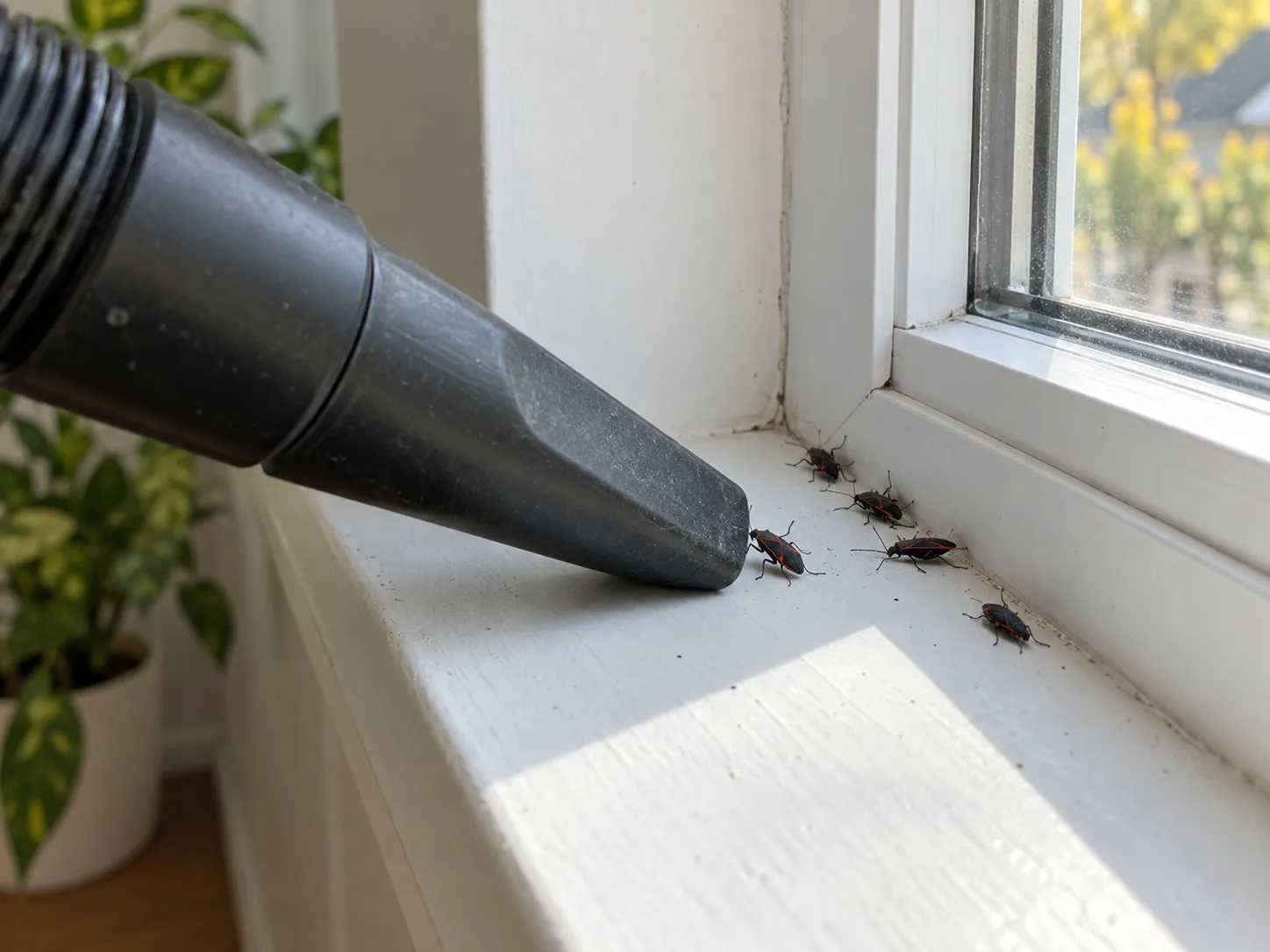
If you find only a few bugs, remove them and note the location. If they reappear in the same room, inspect the window and nearby trim first. If they emerge from a wall, ceiling, or baseboard opening, you may be seeing adults that entered the building envelope earlier and are moving toward warmth or light. Closing the room-side gap can reduce their path into the living area, but the exterior point still matters for future migrations.
Do not use a fogger, spray a room, or inject pesticide into a wall void for routine boxelder cleanup. Penn State Extension cautions that interior sprays and foggers do not stop more insects from emerging, and UC IPM advises against indoor sprays for this nuisance pest. (UC IPM; Penn State Extension) If a vacuum is impractical, collect them with a tissue or container and dispose of them outside; wash a small spot with a surface-appropriate cleaner only after testing a hidden area.
Do sprays, soapy water, or tree removal help?
These methods can reduce a visible cluster in specific circumstances, but they do not replace exclusion. A water stream is often enough for accessible exterior groups; insecticidal soap can work only when it directly contacts exposed insects and should be used only as labeled. Avoid homemade detergent recipes on plants or building surfaces because household products vary and may damage foliage or finishes. UC IPM says insecticides are often no more effective than hosing or vacuuming, and repeated applications may be needed. (UC IPM)
A pesticide barrier may be considered when a large, recurring migration continues despite repairs, but the value depends on timing, target surface, product label, weather, and whether bugs are exposed. Penn State Extension notes that sunlight can reduce some exterior insecticide residues within days or about a week, so a perimeter spray is not a permanent shield. (Penn State Extension) Never apply an outdoor product indoors or use it around vents, drains, pets, children, or flowering plants unless the label allows the exact site and use. A licensed professional can explain the target, active ingredient, expected duration, and precautions before treatment.
Removing a female, seed-bearing boxelder tree close to the house might reduce the local source when the same tree supports heavy groups year after year. It is not guaranteed to solve the invasion: adults can arrive from neighboring boxelder, maple, or ash trees, and a mature tree may provide shade and habitat. Consider removal only after weighing tree condition, location, seed nuisance, and repeat indoor problems with a qualified arborist. Do not cut a mature tree solely because a few bugs appeared one fall.
When a pest professional or arborist is worth calling
Call a pest professional when large numbers enter every year despite well-fitted screens and repaired gaps, when the entry route is inaccessible, or when you need identification before deciding on treatment. Ask the company to inspect how insects reach the structure and to explain exclusion options before recommending a broad spray. If they propose pesticides, ask for the exact product and label, where it will be applied, how long it is expected to work, and what precautions apply to people, pets, beneficial insects, and stormwater.
Bring in an arborist if a nearby boxelder is hazardous, the source tree is mature or difficult to access, or you are considering removal as a recurring-control measure. A pest technician can address building access and treatment; an arborist can assess tree safety and replacement choices. Those are different jobs, and one professional’s recommendation to spray does not answer whether the tree should be removed or whether a gap in the building still needs repair.
Time prevention around the boxelder bug season
Make repairs before adults begin their fall search for protected shelter. The precise timing varies with local weather, but late summer is a useful reminder to check screens, door seals, utility openings, and the sunny south and west sides of the house. Penn State Extension describes adults moving toward overwintering sites in fall; UC IPM notes that adults may reappear on warm winter days and that vigilance can be needed during migration. (UC IPM; Penn State Extension)
| Time of year | What to check | Practical response |
|---|---|---|
| Spring | Indoor stragglers near windows and warm trim; host trees leafing out | Vacuum bugs, record recurring rooms, and plan repairs while weather is mild |
| Summer | Screens, caulk, door seals, utility gaps, and seed-bearing trees | Complete exclusion work before migration; remove failed sealant and repair correctly |
| Early fall | Bugs on sunny walls, tree trunks, stones, and fences | Hose or vacuum exposed groups; keep doors closed and clean seeds near the foundation |
| Winter warm spells | Bugs on sunlit walls or appearing indoors | Vacuum strays and trace the opening; do not assume indoor breeding or spray a wall void |
A checklist tied to local activity works better than a single calendar date. If your first clusters appear in September, complete the repair pass before then; if they appear earlier after a warm, dry summer, move the inspection earlier. Recheck seals after building work, storms, or seasonal temperature changes because a repair that separates or compresses unevenly can open a route again.
Common prevention mistakes that make the job harder
The first mistake is treating visible bugs without finding the way inside. Hosing a wall or vacuuming a windowsill removes what you can see, but if a screen is torn or a door sweep leaves a gap, new adults can follow the same route. Pair every cleanup with an inspection of the closest opening, then check the room again after the next warm day.
The second is sealing an opening that serves a building purpose. Caulk should close an unintended gap, not a weep hole, exhaust, or vent. An insect-resistant vent screen must preserve airflow; otherwise, moisture, combustion, or appliance problems may be more serious than the pest. If you cannot identify an opening’s role, pause and ask a building professional instead of guessing.
The third is assuming that one tree or one spray controls a neighborhood-wide population. Boxelder bugs are mobile, host trees may grow across property lines, and some exterior products lose effectiveness in sun and weather. Tree removal can be a reasonable choice in a persistent case, but it is neither a first step nor a guarantee. Focus first on the building’s openings and make later decisions from what still happens indoors.
Finally, avoid crushing bugs on surfaces and avoid broad indoor insecticide use. Both approaches can create more cleanup or exposure without changing the path that allowed the insects to enter. A vacuum, properly fitted barrier, and targeted exterior cleanup are less dramatic, but they address the actual nuisance with fewer side effects.
Conclusion
To keep boxelder bugs out, begin with the building: repair torn screens, replace worn weatherstripping, seal appropriate cracks, and preserve every opening needed for drainage and ventilation. Then reduce the shelter and seed litter immediately around the foundation, remove exposed clusters with water or a vacuum, and vacuum indoor strays without crushing them.
If bugs return, use where they appear to trace the route rather than escalating automatically to a pesticide or tree removal. A nearby seed-bearing boxelder may contribute to the seasonal pressure, but adults can fly in from elsewhere. Durable exclusion, timely inspection, and realistic expectations are the most practical way to make a home less inviting year after year.