How to Grow Better Boy Tomatoes in a Home Vegetable Garden
Better Boy tomatoes are vigorous indeterminate vines. Learn when to plant, how to support and water them, and what to do when flowers drop or fruit cracks.
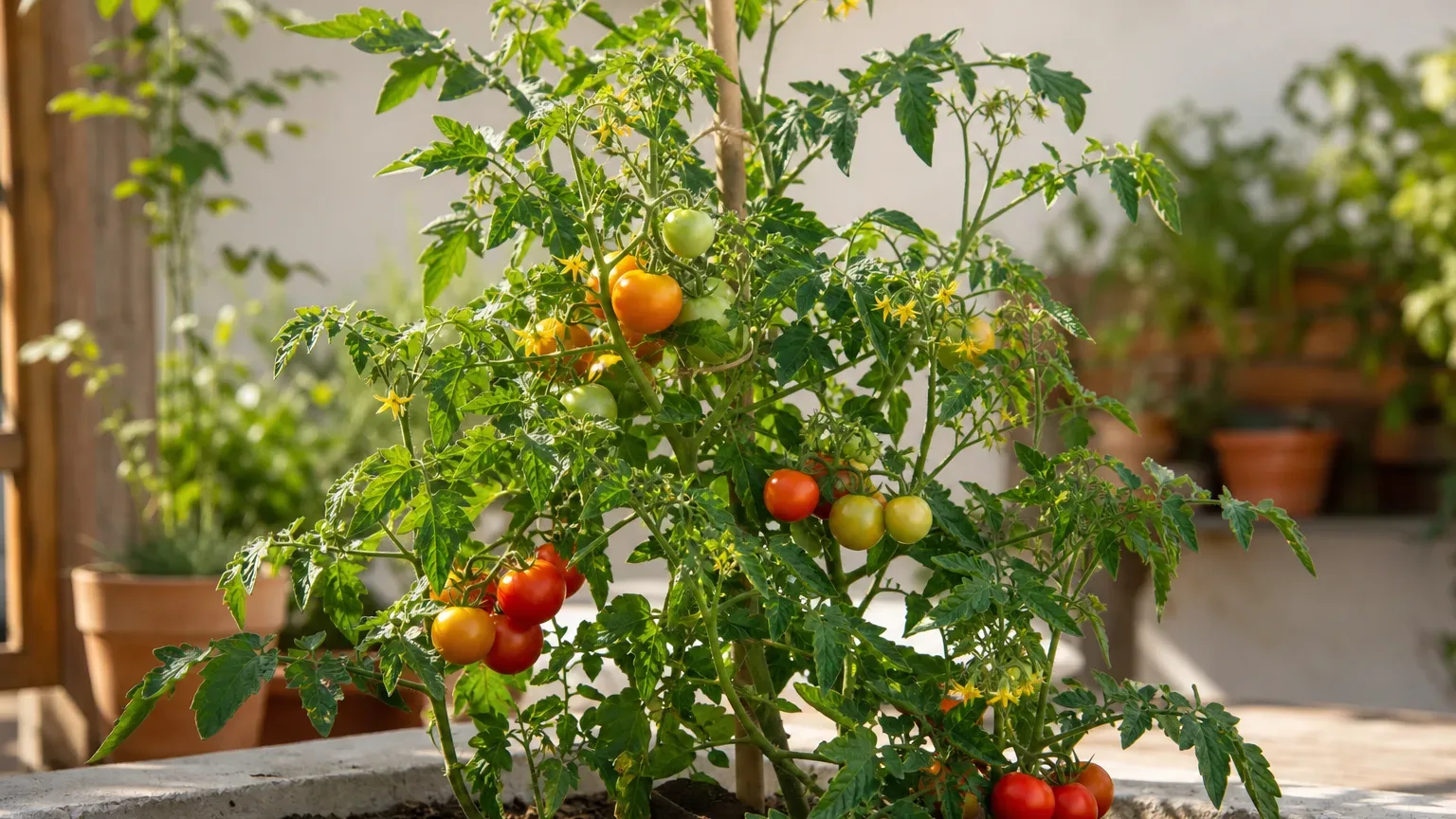
Better Boy is a classic red slicing tomato: vigorous, productive, and capable of carrying large fruit on a vine that keeps growing through the season. The reliable way to grow it is to plan for that size before planting. Give it a sunny bed, warm soil, a support system that will hold a heavy vine, and a watering routine that keeps moisture from swinging between dry and soaked.
The details matter more than a strict calendar. “About 70 days” is a planning estimate, not a promise; cold nights can delay flowers, hot spells can interrupt fruit set, and a large plant in a small pot can dry out before dinner. This guide lays out the choices that prevent those setbacks and helps you diagnose the ones you cannot prevent.
What Better Boy is—and what it is not
Better Boy is a red, full-size slicer in the species Solanum lycopersicum. It is sold as an F1 hybrid and is classified as indeterminate, so the main stem continues to grow and the plant can set successive flower and fruit clusters until cold weather or other stress ends the season. That habit is the reason it needs a real support plan, rather than a small cone cage added after the stems are already sprawling.
Variety listings put maturity around 70 to 75 days, and fruit can be large—Burpee’s current listing gives 72 days and an average fruit weight of 16 ounces, while describing many fruits as reaching a pound. Those are catalog figures, not a guaranteed size or harvest date. Seed companies can count “days to maturity” from different starting points, and temperature, sun, watering, and the health of the transplant all shift the calendar; use the number on your own packet as a rough estimate. Burpee’s current Better Boy listing identifies its offering as an F1 hybrid, indeterminate, and a midseason producer.
A disease-resistance claim is useful only when you know which disease it names. Some Better Boy listings advertise broad resistance, and some seed labels use codes such as V or F for specific wilts and N for root-knot nematodes. Read the label attached to the seed or plant you bought; do not assume every seller’s stock has the same resistance package. Resistance lowers risk from named problems; it does not make a plant immune to every soil pathogen, foliar disease, insect, or weather-related fruit disorder.
Plan around the season, not a hardiness-zone label
Tomatoes are warm-season vegetables that are usually grown as annuals in home gardens. A USDA hardiness zone describes winter low temperatures for perennial-plant survival; it does not tell you when your local soil is warm enough for a tomato transplant. Base timing on your local last spring frost, the forecast, and the temperature of the garden soil.
Wait until frost danger has passed and the soil is warming rather than cold and waterlogged. Penn State Extension notes that frost kills tomato plants and that blossom drop is common when nights are too cold or too hot; it recommends hardening transplants off over about a week before planting. The exact safe date varies by climate, so a gardener with a short season may need a larger transplant and a warmer microclimate, while a gardener in a long, hot season may wait for a less punishing planting window. Penn State Extension’s seedling-to-fruit guidance gives a useful regional baseline for timing and care.
Starting Better Boy tomatoes from seed
Start seeds indoors about six to eight weeks before your expected last frost, rather than sowing them outdoors into cold spring soil. Keep the seed-starting mix warm and evenly moist, then move seedlings into strong light as soon as they emerge; dim windows produce stretched stems that are harder to handle. If you buy a transplant, choose a short, sturdy plant without a heavy crop of flowers or fruit, and harden it gradually by exposing it to outdoor sun and wind for longer periods over roughly a week.
A seed-starting calendar should leave time for the plant to grow sturdy roots without letting it become a lanky, root-bound vine indoors. If you are late, buying a healthy transplant is usually simpler than trying to catch up with a seedling that has spent weeks stretching toward weak light. GrowVeg’s tomato planting guide also recommends starting indoors around six to eight weeks before frost and planting deeply after hardening off.
Choose sun and soil that can support a long vine
Choose the sunniest garden space you have: tomatoes need at least six hours of direct light, and eight hours is a better target where the season is short or cloud cover is frequent. A bright-looking site under a tree canopy is not equivalent to direct sun. Too little light can slow growth and reduce flowering, while a heatwave can still disrupt pollen and fruit set even in a sunny bed.
Better Boy does best in fertile, well-drained soil with plenty of organic matter. Penn State Extension lists a slightly acidic soil range around pH 6.2–6.8; a soil test is more useful than adding lime or fertilizer by guesswork. If the bed drains poorly, improve its structure or use a raised bed before transplanting. Roots sitting in saturated soil are stressed even when the leaves look thirsty, and adding more water will not fix poor drainage.
Compost can improve soil structure and contribute nutrients, but it is not a substitute for a soil test when a bed has a history of overfeeding or poor tomato performance. Avoid planting in the same patch year after year when you can rotate tomatoes and their relatives with crops from other plant families. That does not eliminate every disease, but it makes it harder for some tomato-associated soil problems to build up in one spot.
Transplant deeply and space for airflow
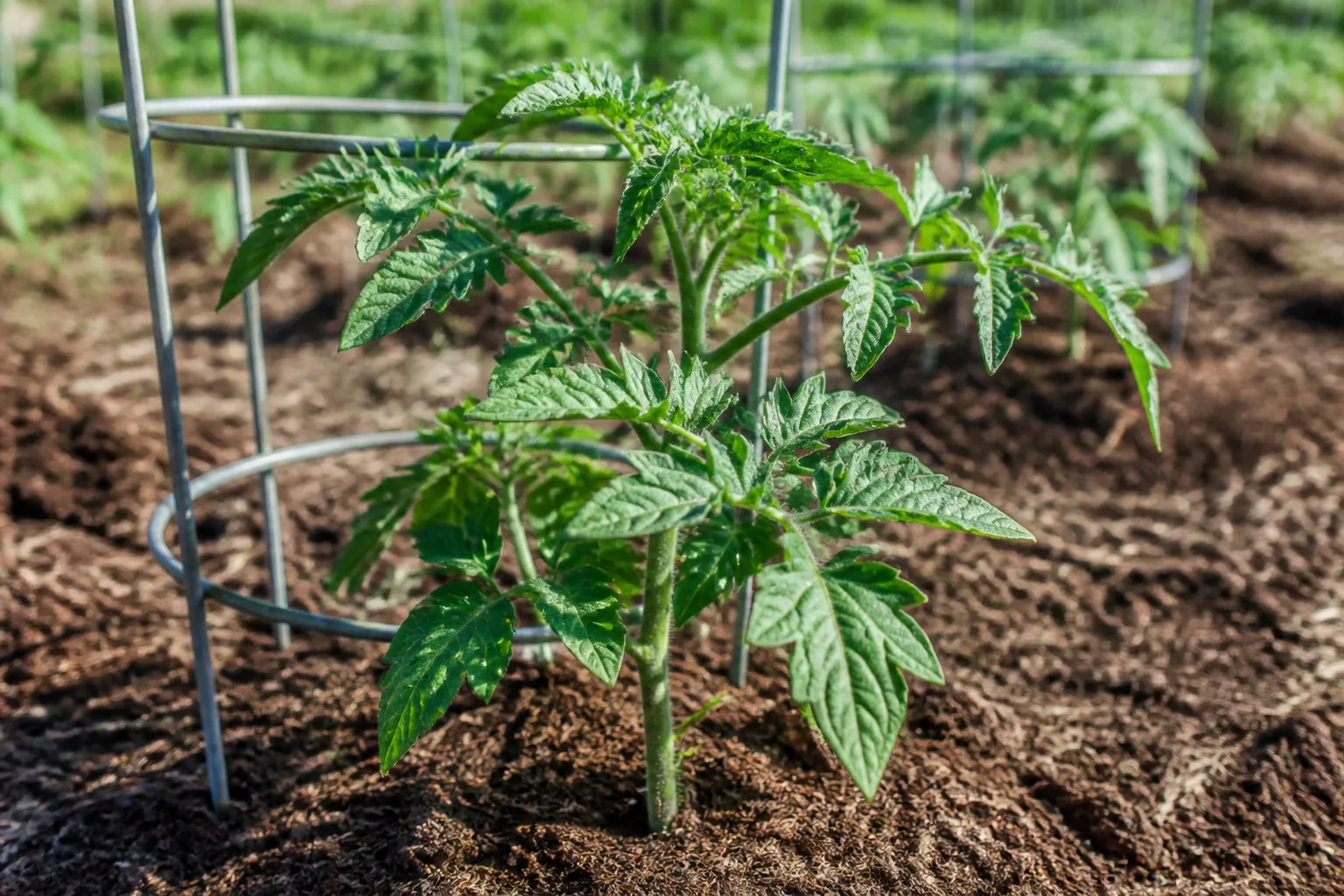
Set a tomato transplant deeper than it stood in its nursery pot. Pinch off leaves that would sit below the soil line, then bury the lower stem up to just below the lowest remaining leaves; tomato stems can form roots along the buried portion. If a transplant is unusually tall and leggy, lay the root ball and lower stem in a shallow trench and gently curve the leafy tip upward instead of forcing the whole stem upright into a deep, cold hole.
For a vigorous indeterminate plant, about three feet between plants is a useful starting point in a home garden. Give more room if you plan to let several stems grow inside a cage or if your summers are humid and foliage remains wet after rain. Planting close together does not guarantee a bigger harvest; it can make it harder to reach fruit, tie stems, and keep leaves dry. Water the transplant thoroughly at the base, then install its support while the root system is still small.
Install support before the plant gets large
The support must carry both a long vine and clusters of heavy fruit. Put a sturdy cage, stake, or trellis in place at planting time, not after the plant has bent or snapped. A short, lightweight cage can tip in wind or fail when fruit-laden branches press against it, so choose a structure anchored deeply enough for your soil and tall enough to keep the plant upright through the season.
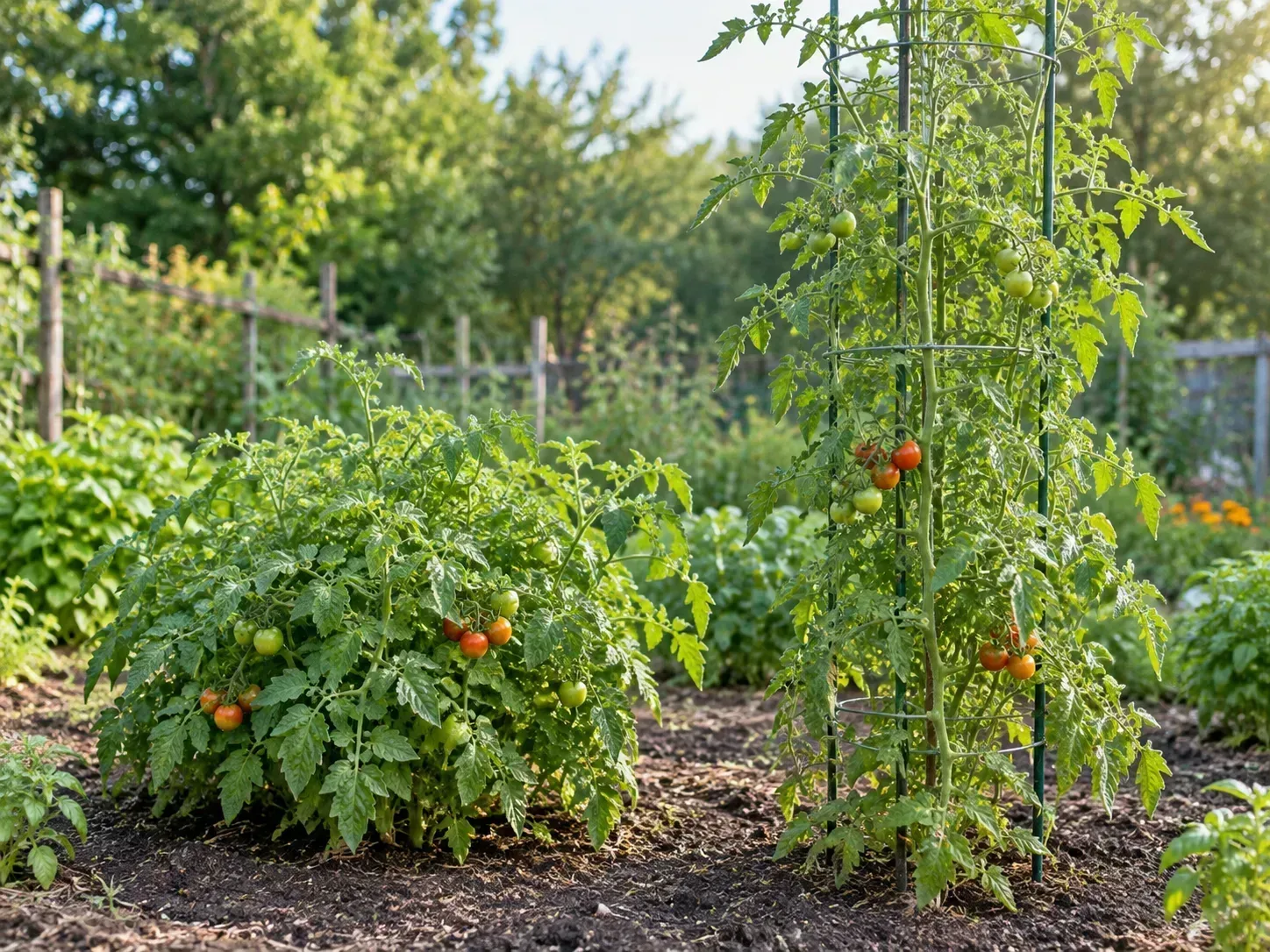
A full-size cage gives the plant room to branch and is often the lower-maintenance choice for a gardener who does not want to pinch every sucker. Staking or string training keeps the vine narrower and improves access, but it requires regular tying and pruning. Penn State Extension recommends supports around five feet for indeterminate tomatoes and notes the trade-off: staked plants can produce earlier, larger fruit, but the approach requires more work and may deliver a smaller total harvest than caging.
Cage, stake, or trellis: which should you choose?
Choose a cage if your priority is fewer pruning chores and a fuller plant. Choose a stake or a vertical trellis if space is tight and you can check the plant regularly, guide each new leader, and secure it with soft ties. A cage is not a “no-care” option: you still need to keep fruit from resting on soil and make sure the cage will not lean under the weight of the plant.
With a stake, place the stake a few inches from the stem during planting so you do not drive it through an established root system later. Tie the stem loosely at intervals as it grows; the tie should support the vine without cutting into it. With either system, check ties and branches after strong wind or a heavy crop sets. GrowVeg’s tomato planting masterclass explains why a strong support makes indeterminate tomatoes easier to manage and why weak canes can fail under a full crop.
Water steadily through flowering and fruit growth
Aim for an even supply of moisture, not a fixed watering schedule. Penn State Extension gives 1 to 1½ inches of water per week as a garden baseline, but rain, soil texture, mulch, temperature, and plant size change what the bed needs. Check the soil a couple of inches down: if it is drying at root depth, water deeply at the base; if it is still damp, wait and check again rather than watering because a calendar says so.
During flowering and fruit expansion, large swings from very dry soil to a heavy soak increase the risk of blossom-end rot and fruit cracking. A deep soak encourages roots to explore the soil, while frequent shallow splashes wet the surface and can leave the deeper root zone dry. Water in the morning when possible, keep foliage dry, and use a soaker hose or drip line if you have one. The goal is stable moisture, not waterlogged roots.
A container has a smaller water reservoir than a garden bed and may need a daily check in hot, windy weather. That does not mean you should water automatically every day: feel the potting mix or check beneath the surface first, and make sure the pot drains freely. Mulch can slow evaporation, but it cannot compensate for an undersized container or blocked drainage.
Mulch and feed without making a leaf-only plant
Once the soil has warmed, apply a few inches of clean straw, chopped leaves, or another suitable organic mulch around the plant, leaving a small gap around the stem. Mulch limits weeds and evaporation, and it reduces soil splashing onto lower leaves during rain or watering. Colorado State University Extension also notes that a surface mulch helps keep soil moisture more even, which reduces the conditions associated with blossom-end rot.
Start with a soil test and follow its recommendations instead of adding several fertilizers at once. Too much nitrogen can create a huge, dark green plant with relatively few flowers and fruit. If your soil needs fertilizer, choose a product and rate intended for vegetables and follow its label; do not assume that more feed will make the plant produce more tomatoes. Compost added before planting can help, while a light in-season feed may be appropriate if the plant shows a real nutrient need or your soil test calls for it.
Do not treat blossom-end rot by reflexively adding calcium or eggshells. The disorder is commonly linked to the plant’s ability to move calcium into developing fruit, which is affected by inconsistent moisture and root stress as well as soil conditions. Stabilize watering first; test the soil before adding a mineral amendment.
Prune only to fit your support plan
Pruning is a management choice, not a requirement for every Better Boy plant. An indeterminate vine can be grown in a cage with several stems, or trained to one or two leaders on a stake or trellis. Pruning a plant to one leader makes it narrower and easier to tie, but it also removes potential fruiting branches and leaves you with less leaf cover. A fuller cage-trained plant uses more room and can be harder to reach inside.
Always remove leaves that touch the soil and any clearly diseased foliage. When pruning, keep the canopy that shades fruit; stripping the plant too aggressively can expose tomatoes to sunscald, especially during hot weather. The University of Wisconsin–Madison Extension’s tomato-pruning guidance focuses on indeterminate plants and explains how removing selected suckers improves airflow, while its timing guidance cautions against pruning so heavily that fruit loses its protective leaf cover.
A practical pruning routine
For a caged Better Boy, remove only a few crowded or low branches at a time. If you want a more open plant, leave the strongest sucker below the first flower cluster as a second leader and remove additional suckers that make the middle too dense. Suckers are shoots that emerge where a leaf stem meets the main stem. Pinch small ones with clean fingers or use clean pruners for larger shoots; sanitize the blade between plants if you have seen disease.
For a staked plant, choose one or two leaders and remove side shoots that would make the vine too broad for the support. Tie the chosen stems as they lengthen. Do not remove early flower clusters to “force” more growth on an otherwise healthy transplant; the plant needs a healthy leaf canopy and warm weather to carry fruit. Stop heavy pruning once fruit is exposed to strong sun, and do not top the plant early simply because it has reached the top of a short stake—extend the support or train the vine rather than cutting away future fruiting growth.
If a sucker grows larger than expected, you do not have to make a large cut in the middle of a hot afternoon. Decide whether the branch fits your support plan; if it does not, remove it with a clean tool when the plant is dry. GrowVeg’s practical guide to pruning tomato plants describes both removing shoots to keep a single leader and rooting healthy suckers in a longer, warmer season.
Why Better Boy flowers may drop before setting fruit
A strong vine can still shed flowers when the weather blocks pollination. Penn State Extension notes that tomato flowers may drop when nights fall below 55°F or rise above 75°F; Colorado State Extension also describes cold nights and high daytime heat as barriers to fruit set. These thresholds are guides, not a switch that works identically for every plant, but they explain why a plant can bloom heavily during a cold snap or heatwave and set little fruit.
Before adding fertilizer, check the conditions in this order: was the transplant recently moved; has the root zone been too dry or waterlogged; does the plant get enough direct sun; and are nights or days outside a comfortable tomato range? Correct the specific stress you find. Mulch and steady watering help with moisture swings, while temporary afternoon shade can reduce exposure during extreme heat without turning the site into a permanently shady bed. More nitrogen will not solve a temperature problem and can make the plant leafier.
Once temperatures settle, new flowers can set fruit. Do not remove the whole plant or assume the seed packet was wrong because one flush failed. In a short-season garden, however, a variety rated at around 70–75 days may have less time to recover from prolonged cool weather than an early cultivar; start with the local season length when selecting next year’s tomato.
Troubleshoot cracked, black-bottomed, or sunburned fruit
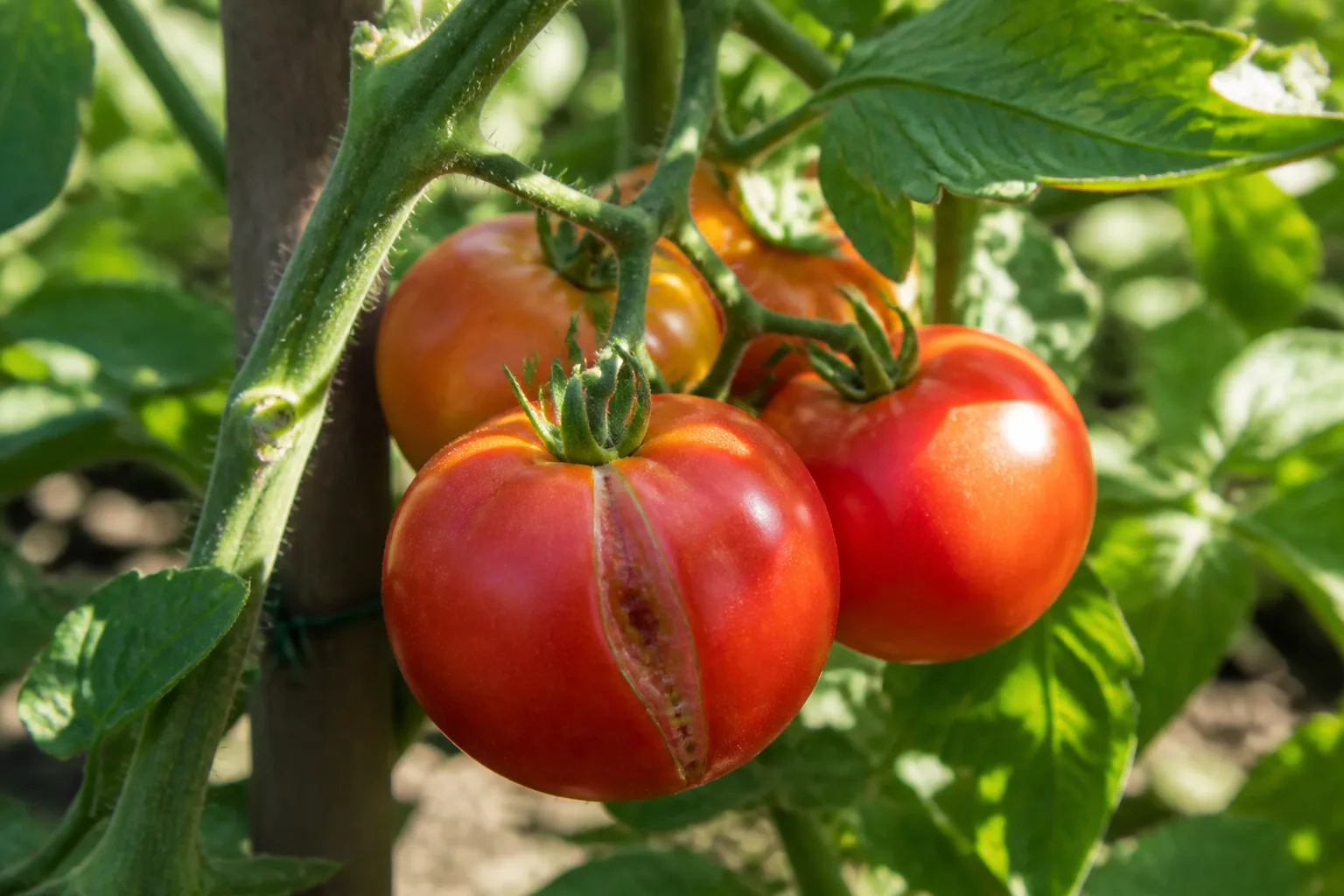
Cracks radiating from the stem or forming in rings around the shoulder often appear after a heavy rain or deep watering follows a dry spell. The fruit takes up water faster than its skin can expand. Pick ripe fruit before a forecast downpour when practical, mulch to slow moisture swings, and water before the plant becomes severely dry. Cracked fruit should be harvested promptly; use it only if the split is fresh and the flesh is sound, and discard fruit with mold or signs of decay.
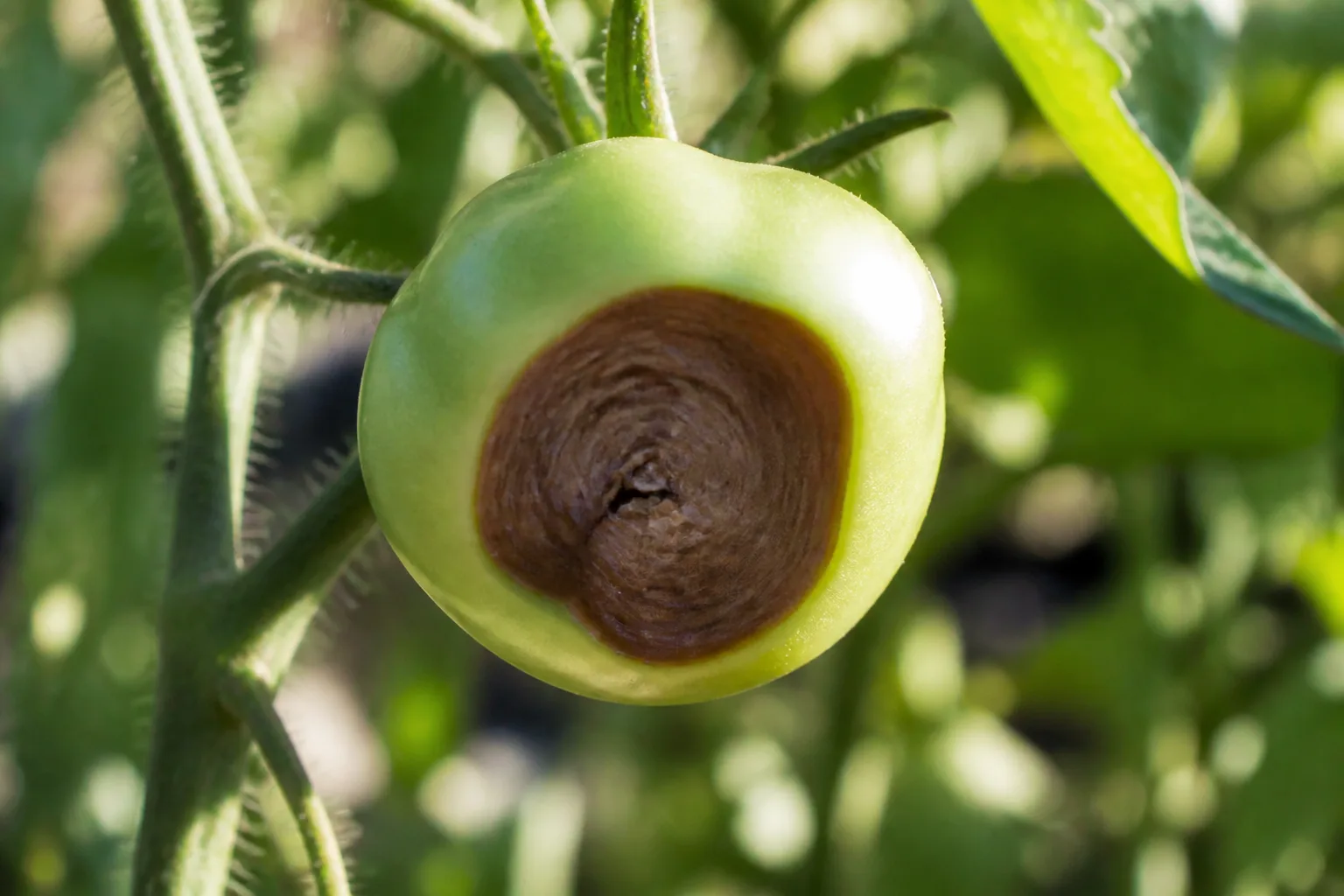
Blossom-end rot looks different: a dark, sunken patch develops on the blossom end, opposite the stem. It is a physiological disorder, not a contagious fungus. Keep soil moisture steadier, make sure roots are not crowded or waterlogged, and check soil pH and nutrients before adding calcium. Affected fruit will not heal, but correcting the growing conditions can help later fruit develop normally.
Sunscald appears as a pale, bleached, or leathery patch on fruit exposed to intense sun. It is more likely after heavy pruning, broken branches, or a disease problem removes too much foliage. Retain enough healthy leaves to shade fruit, and avoid stripping multiple branches at once during hot weather. These three problems can look alarming, but the first action is different for each: stabilize moisture for cracking and blossom-end rot; restore leaf cover and investigate the cause of sudden defoliation for sunscald.
Keep disease resistance in perspective
“Disease resistant” does not mean disease-proof. The resistance listed for a particular Better Boy packet applies only to the diseases named there, and even a resistant cultivar may be affected by a different strain or by unrelated leaf, stem, or fruit problems. Colorado State University Extension explains that VFN refers to resistance to Verticillium wilt, Fusarium wilt, and nematodes; it also cautions that multiple strains exist. Check the current packet rather than relying on a generic description of the variety.
Use prevention that protects every tomato, resistant or not: rotate planting locations when possible, give plants enough space, keep leaves off wet soil, water at the base, remove fallen diseased debris, and avoid handling wet vines. Inspect plants weekly, including the undersides of leaves and the new growth. If symptoms spread quickly, take a clear photo and ask a local extension office for a diagnosis before applying a pesticide; a resistance label does not identify what is actually wrong. Colorado State University Extension explains that VFN describes resistance to particular diseases and that strains vary.
A Better Boy plant with yellowing lower leaves is not automatically hungry. Older leaves can age naturally, but spots, lesions, rapid spread, curled new growth, or unusual stem discoloration call for closer inspection. Compare the pattern across the plant, note recent weather and watering, and check whether the symptoms affect one plant or several. This makes it easier to distinguish normal aging or water stress from a contagious problem and to avoid a needless fertilizer treatment.
Can Better Boy grow in a container?
Yes, but its indeterminate growth makes it more demanding in a pot than a compact determinate tomato. Choose the largest stable container you can manage, with drainage holes, quality potting mix, and a support that will not tip as the vine fills with leaves and fruit. Use one plant per container, and avoid a small herb-sized pot: a limited root volume dries quickly and makes it harder to support a long, fruit-heavy vine.
Place the pot where it receives direct sun and where you can reach it to water and tie the vine. Containers heat and dry more quickly than garden beds, so check moisture daily during hot spells without assuming the plant needs water every time. If you cannot provide a substantial container, a smaller determinate variety is usually a less frustrating choice. GrowVeg’s tomato planting guide notes that tomatoes can grow in containers, but small or hanging containers require especially close watering—an important trade-off for a large fruiting vine.
Harvest, propagate, and finish the season
Pick Better Boy tomatoes when they have developed their full red color and come away with a gentle lift or twist. Harvesting regularly keeps ripe fruit from overripening on the vine and makes it easier to spot new cracks, pests, or decay. The variety is indeterminate, so it can keep producing later clusters when conditions remain favorable; it is not a single-batch crop that finishes as soon as the first tomatoes ripen.
If frost is approaching, harvest mature green fruit before the plant is damaged and let sound tomatoes finish ripening indoors at room temperature. Remove badly cracked or diseased fruit and clear spent vines from the bed. In regions with killing winters, starting with a fresh plant next season is usually simpler than carrying a sprawling vine indoors. In a long, frost-free climate, a healthy sucker can be rooted as a cutting to extend the harvest; GrowVeg’s tomato-pruning guide describes this as a way to turn pruning waste into a young plant when the season is still long enough.
Because Better Boy is sold as an F1 hybrid, seed saved from its fruit may grow but will not reliably reproduce the same cultivar traits. If you want the same plant type, buy fresh seed or propagate a healthy cutting. Starting fresh also gives you a clean plant after a season of weather, pests, and disease exposure.
Conclusion
Better Boy rewards gardeners who give a vigorous tomato room, steady water, and dependable support before the vine becomes heavy. Plant after frost in full sun, set the stem deep, and choose a cage or stake based on how much pruning and tying you want to do. Then diagnose problems by their cause: temperature can stop flowers from setting, uneven moisture can damage fruit, and a resistance label protects only against the specific diseases it names. With those choices in place, you can harvest large slicers over a longer season instead of trying to rescue an oversized vine mid-summer.



