13 Best Low-Maintenance Succulents to Grow Outdoors
Compare 13 outdoor succulents by frost tolerance, sun, soil, and garden use, then choose hardy groundcovers or patio plants that fit your climate.
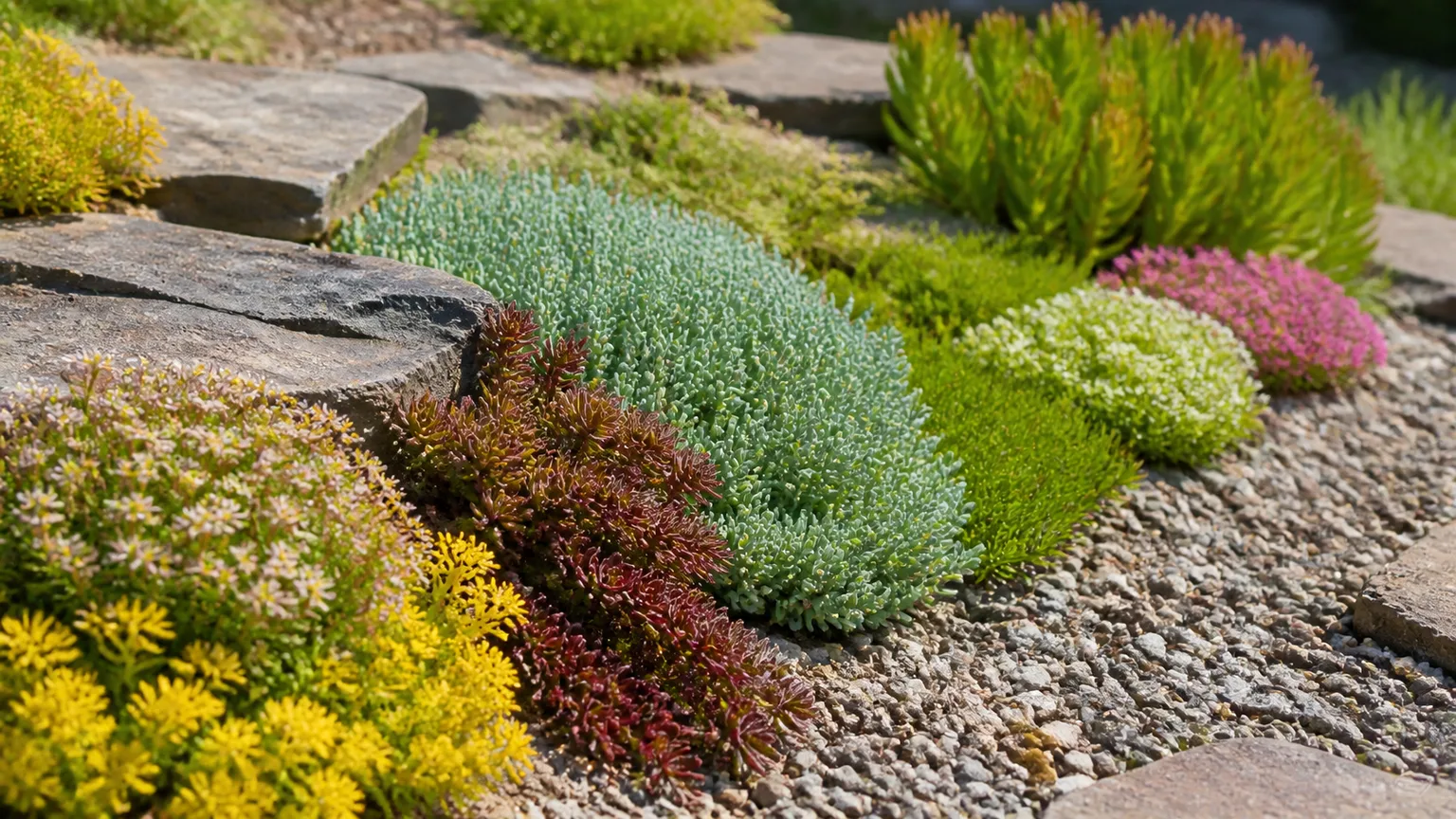
The easiest outdoor succulent is the one matched to your winter and rain—not the one with the shortest watering instructions. A plant that shrugs off a dry summer can still rot in a rain-soaked bed, while a cold-tolerant groundcover may be a poor fit for a shaded, humid courtyard.
Start with two questions: how cold does your garden get, and how quickly does water leave the soil after a storm? Sempervivum, many sedums, some ice plants, and certain prickly pears can live outside year-round in cold regions when they have sharp drainage. Echeveria, jade, aeonium, ghost plant, and aloe are better choices for warm climates or outdoor pots you can shelter before a freeze. This list separates those jobs so “low maintenance” does not turn into repeated winter rescues.
13 outdoor succulents to choose by climate and garden job
| Succulent | Best use | Winter reality |
|---|---|---|
| Hens and chicks | Rosette carpet, trough, rock crevice | Reliable cold-hardy choice with drainage |
| Creeping stonecrop | Groundcover, wall, path edge | Many types are cold-hardy; standing water is the risk |
| Autumn Joy stonecrop | Upright border and fall flowers | Hardy perennial in a broad range of climates |
| Hardy ice plant | Sunny rock garden or bank | Many types are hardy, but their soil must drain |
| Eastern prickly pear | Native-style dry bed and hot slope | Cold-hardy when drainage is excellent |
| Parry’s agave | Sculptural focal point | Tolerates some cold only when kept dry |
| Ghost plant | Cascading pot or frost-free rock garden | Best in mild, nearly frost-free sites |
| Aloe vera | Patio container in a warm region | Bring inside before freezing weather |
| Echeveria | Rosette container or mild-climate edging | Not a dependable frost-hardy perennial |
| Tree aeonium | Large container or coastal bed | Protect from cold; container makes this practical |
| Jade plant | Sunny patio pot in a warm climate | Tender; overwinter under cover where freezes occur |
| Zebra haworthia | Bright shade or covered patio pot | Frost-sensitive and better sheltered from rain |
| Moss rose | Summer groundcover and container flowers | Warm-season annual; replant or let it self-seed |
Hens and chicks (Sempervivum tectorum)
Choose hens and chicks when you want a cold-hardy rosette that fills narrow, sunny gaps between stones. The parent rosette produces offsets—the “chicks”—that spread into a low colony, so one plant can gradually knit a small trough or gravel pocket together. North Carolina State Extension lists Sempervivum among frost-hardy succulents and notes that offsets are easy to divide; the RHS also recommends gritty, free-draining compost and shelter from persistent winter rain in wet regions (North Carolina State Extension; RHS).
Give it sun, airflow, and a planting spot where the crown is not buried. A thin gravel or grit dressing keeps wet soil from splashing onto the rosettes and makes the foliage easier to inspect. Each rosette flowers once and then dies, which can alarm a new grower; the plant is not necessarily failing if the surrounding chicks remain firm and healthy. Remove the spent stalk and leave the offsets to fill the gap. In a humid or rainy climate, a shallow pot with an open drain hole can be more dependable than a flat patch of dense garden soil.
Creeping stonecrop (Sedum species)
Use creeping stonecrop where you need a low mat to soften a rock edge, cover a sunny bank, or fill a gap that lawn will not reach. The name covers many species, so check the nursery tag for mature spread and winter rating rather than assuming every sedum behaves alike. Some cultivars creep a few inches; others climb into adjacent beds. Fine Gardening describes creeping sedums as adaptable to poor, well-drained sites such as rock gardens, walls, and containers, while North Carolina State Extension cautions that poorly drained soil is a common problem (Fine Gardening; North Carolina State Extension).
Plant plugs a little apart and let their stems root naturally; tightly packing them gives weeds fewer openings at first but can trap damp debris around the crowns. Once established, most need little supplemental irrigation except during a prolonged dry spell, and they can be trimmed or lifted if they cross an edge. They are not lawn substitutes for regular walking: their shallow stems can be crushed by repeated foot traffic. Choose a labeled groundcover cultivar such as a creeping stonecrop for pathways, rather than a tall clumping type sold under the same broad common name.
Autumn Joy stonecrop (Hylotelephium ‘Herbstfreude’)
If you want a succulent with height and late-season flowers rather than a groundcover, look for Autumn Joy, commonly sold under the older name Sedum ‘Autumn Joy.’ This clump-forming perennial holds fleshy leaves on upright stems and develops broad flower clusters that age from pale pink toward russet. North Carolina State Extension lists the related Hylotelephium telephium as a low-maintenance succulent perennial for sunny, dry to medium-moisture, well-drained soils, with summer or fall bloom (North Carolina State Extension).
Give it a sunny border position with room for the clump to widen, and do not enrich the planting hole heavily. Excess fertility and shade can produce soft growth that leans or flops, so if stems sprawl, first improve light and avoid extra feeding instead of staking the plant every season. Established clumps tolerate dry periods, but they still benefit from water during the first growing season and exceptional drought. Leave the dried flower heads through winter if you like their structure; cut them back in spring when new shoots appear. This is an easy anchor plant when you want a drought-tolerant border to look like a perennial garden, not a collection of pots.
Hardy yellow ice plant (Delosperma nubigenum)
Hardy ice plants form low, spreading mats of fleshy foliage and bright, daisy-like flowers. Yellow-flowered D. nubigenum is a strong option for colder sites, while purple-flowered D. cooperi brings a longer summer display in regions where its particular cultivar is hardy. North Carolina State Extension lists hardy ice plant types for sunny rock gardens, banks, and containers, with well-drained soil and drought tolerance; it also lists D. nubigenum for Zone 5 and notes the species can tolerate moderate salt (North Carolina State Extension; North Carolina State Extension).

“Ice plant” is not one uniform hardiness promise, so check the botanical name and the cultivar’s local rating before buying. Do not place the crown in a low spot where water pools after rain or snowmelt. Space plants so air moves around the mat and give them time to root before winter. In a hot inland garden, a little late-afternoon shade can prevent stress, but deep shade reduces flowering and makes the mat open. Trim only when the plant has crept past its allotted edge; it does not need shaping for its own health.
Eastern prickly pear (Opuntia humifusa)
For a native, sculptural succulent that can live in a cold-climate rock garden, consider eastern prickly pear. The flattened green pads stay low, while large yellow flowers and red-purple fruits bring seasonal interest. North Carolina State Extension describes it as native to the eastern United States, drought tolerant, suitable for sunny sandy or rocky locations, and rated across USDA Zones 4 through 9; it also warns that the tiny barbed bristles can irritate skin (North Carolina State Extension).
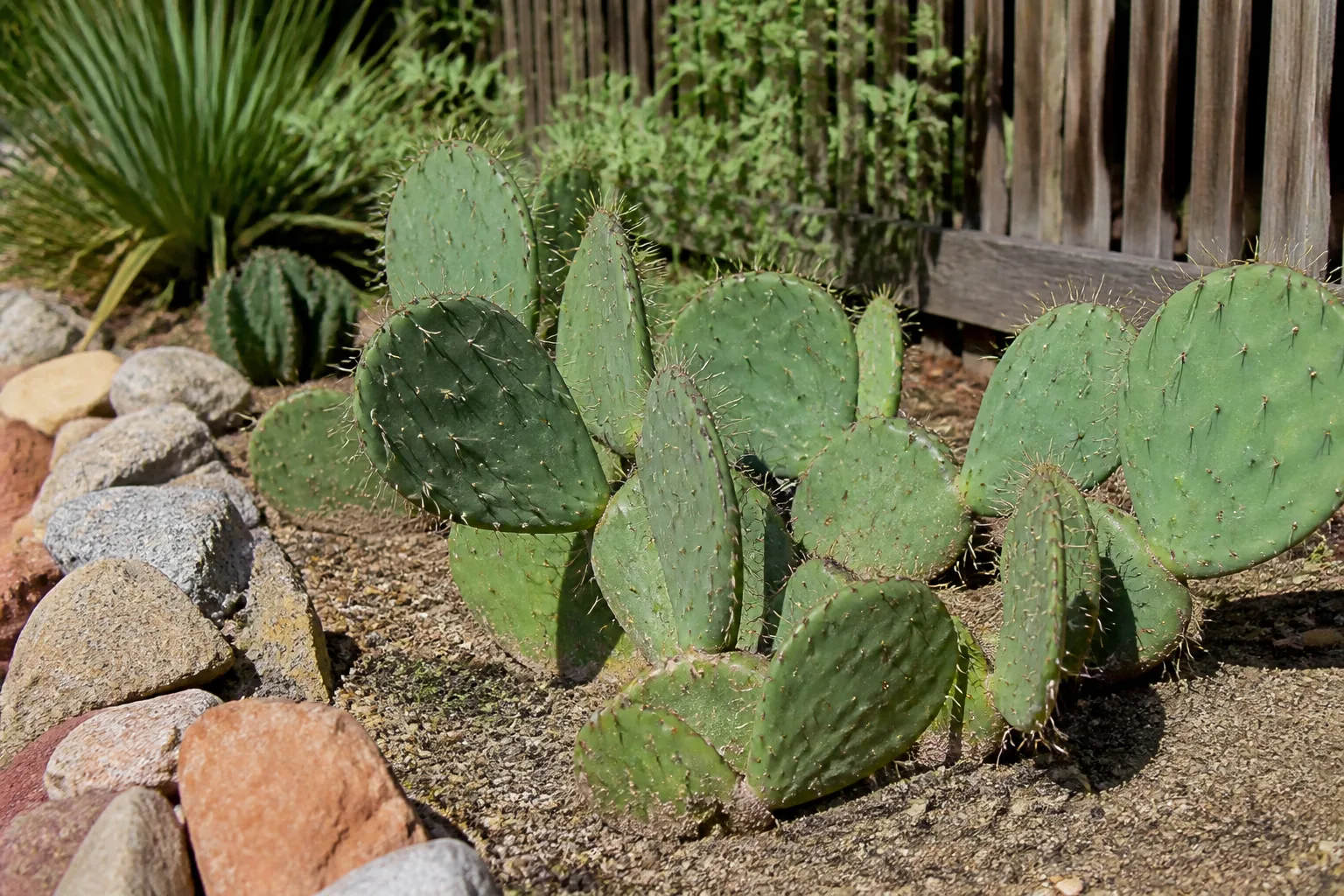
Place it where no one will brush against it: not beside a narrow path, play area, or dog run. Even pads that appear spineless can carry glochids, fine barbed bristles that are harder to see than the larger spines. Use thick gloves and long-handled tools when planting or removing pads, and do not grab fallen pieces barehanded. It is a strong choice for a hot, dry slope or a protected gravel bed, but a poor one for a high-traffic border. Its pads can root where they break off, so remove unwanted pieces before they settle into the soil.
Parry’s agave (Agave parryi)
Parry’s agave is a compact, symmetrical focal plant for a sunny, dry garden. Its blue-gray rosette brings bold structure without the enormous size of some century plants, and established plants spread slowly by offsets. North Carolina State Extension says it prefers sandy or rocky, well-drained soil and may tolerate temperatures down to about −5°F when it stays dry; it also notes that mature flowering rosettes die after blooming and are replaced by offsets (North Carolina State Extension).

That “when dry” condition matters more than a broad hardiness label in climates with winter rain or repeated freeze-thaw cycles. Set the crown above grade, keep mulch away from the center, and do not irrigate dormant plants through winter. The leaf tips are sharp, so leave a buffer from paths and seating; pruning the points does not improve the plant and leaves blunt-looking scars. Agave is most useful as a single accent or spaced group, not as a filler plant. It needs very little routine pruning, but it does need a site that drains and enough room for its mature width.
Ghost plant (Graptopetalum paraguayense)
Ghost plant earns a place in warm-climate gardens for its pale rosettes and arching stems. It can trail over a pot rim, drape across a low retaining wall, or add a soft silver contrast beside darker foliage. North Carolina State Extension notes that the leaves can shift pink in hot, dry weather, that stems become pendulous, and that the plant is low maintenance and drought tolerant once established (North Carolina State Extension).
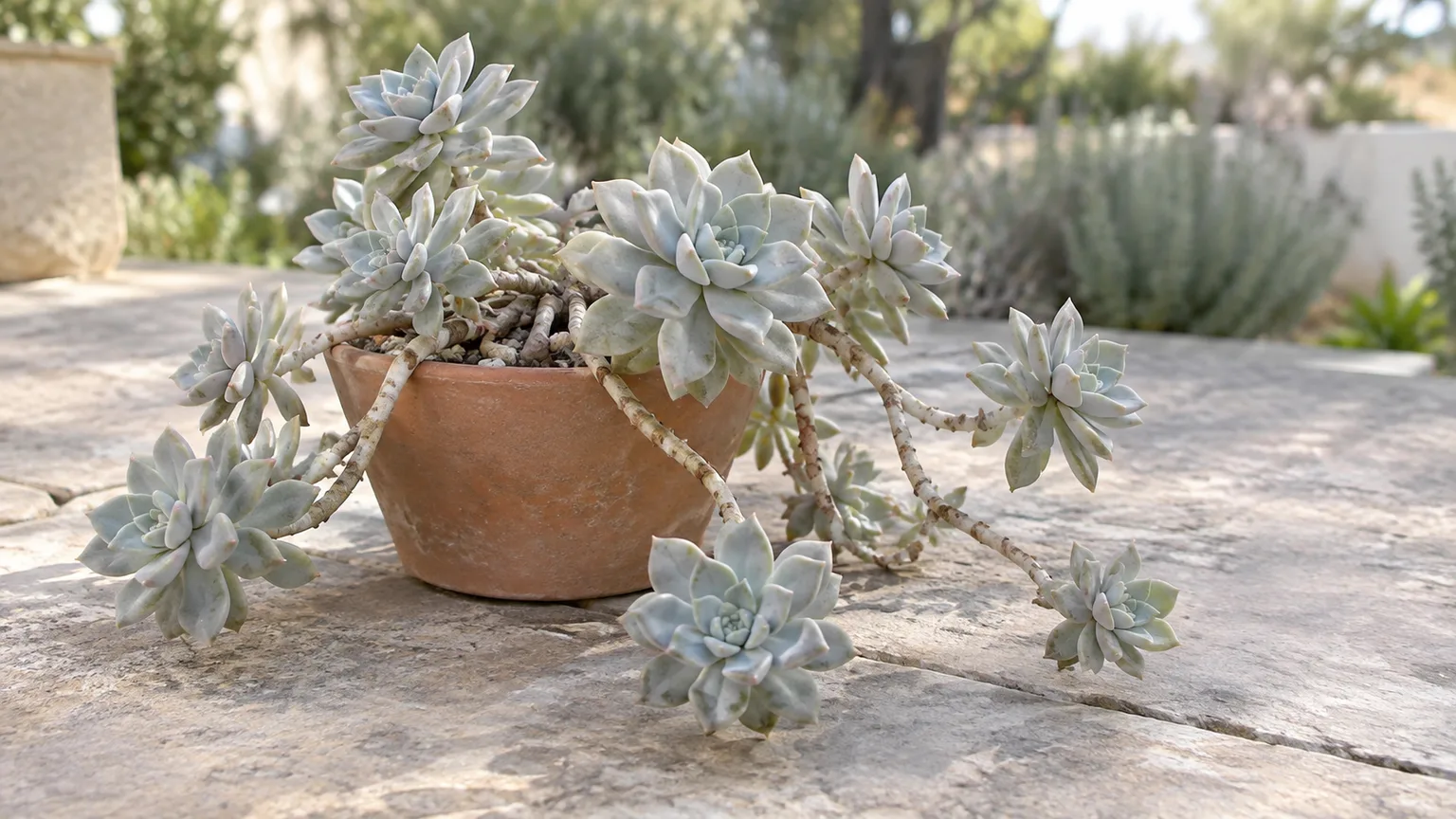
Treat it as a frost-sensitive plant, not as a colder-zone replacement for hens and chicks. In a mild, dry climate, it can grow outdoors in a bright site; where freezes are possible, a pot lets you move it to shelter. Handle it by the pot or stem rather than pinching the powdery leaves, since their farina—the natural waxy coating—marks easily. Let the soil dry between deep waterings, and use a container with an open drain hole. If stems get long and sparse, give the plant more light gradually or trim a healthy tip and root it as a replacement; repeated watering will not correct low-light stretching.
Aloe vera (Aloe vera)
Aloe vera is an easy outdoor succulent for warm, nearly frost-free regions, especially in a container near a patio or sunny entry. Its upright rosette adds weight and height to a small arrangement, and pups can be separated to make new plants. North Carolina State Extension lists aloe vera as an outdoor perennial for Zones 10 and warmer; elsewhere, growing it outside in summer is a seasonal option rather than a year-round planting plan (North Carolina State Extension).
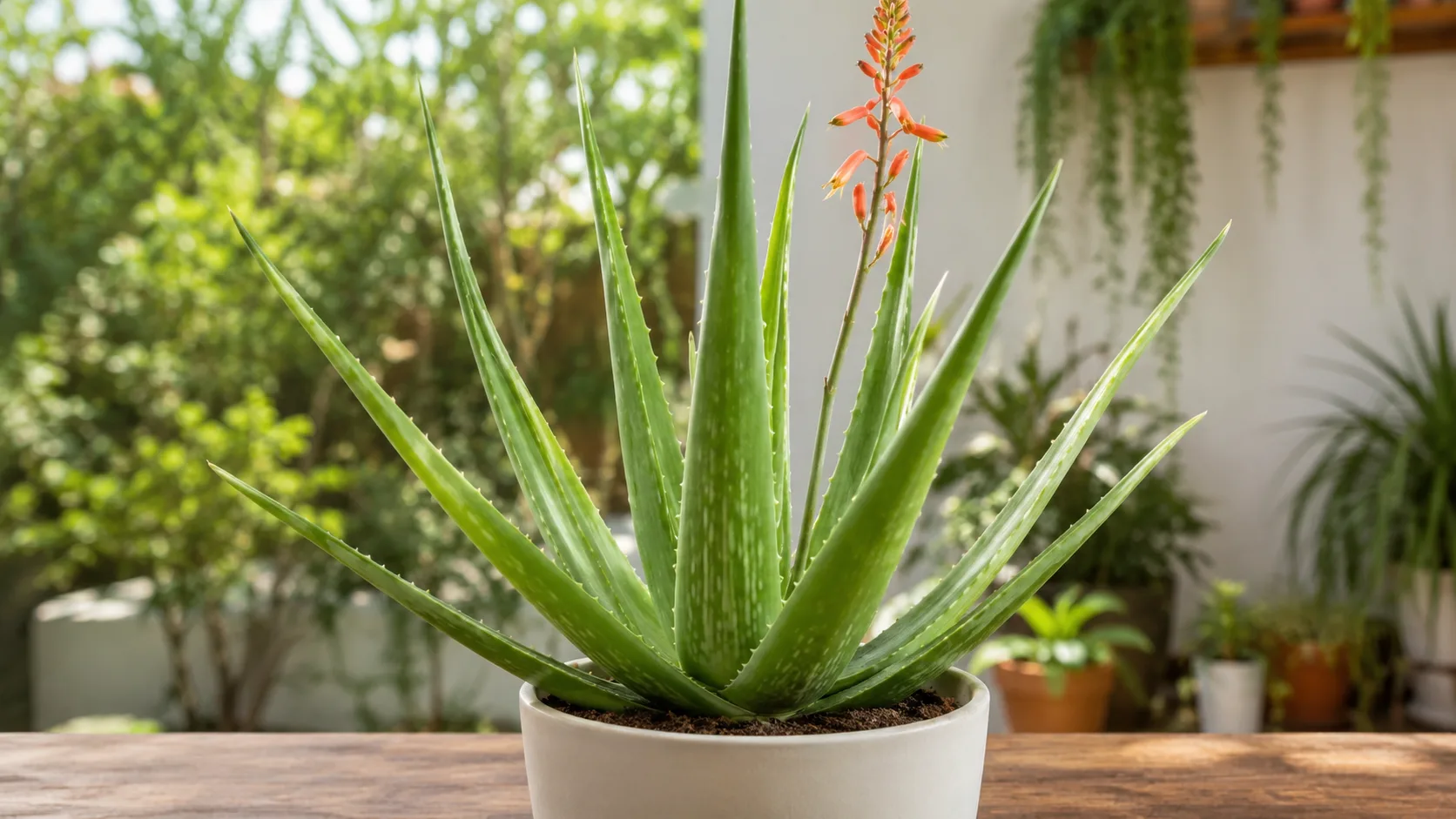
Acclimate a plant that has been indoors before exposing it to intense outdoor sun. Start in bright shade for several days, then increase morning sun over a week or two; a sudden move to hot direct light can bleach or scorch leaves. Use a gritty mix and a pot with drainage, and water thoroughly only after the root zone has dried. Bring the pot under cover before a frost forecast rather than waiting for leaf damage. If you want a cold-hardy year-round garden succulent, choose a named hardy species such as sempervivum or a locally proven sedum instead of relying on aloe’s reputation as an easy houseplant.
Echeveria (Echeveria elegans)
Echeveria is a strong choice for warm-region edging and outdoor containers when rosette shape matters more than surviving snow. Echeveria elegans, often called Mexican snowball, forms pale blue-green clusters and sends up flower stalks above the leaves. North Carolina State Extension says echeverias like sun, dry well-drained soil, and do not reliably tolerate frost; gardeners outside frost-free locations should plan to bring them inside for winter (North Carolina State Extension).
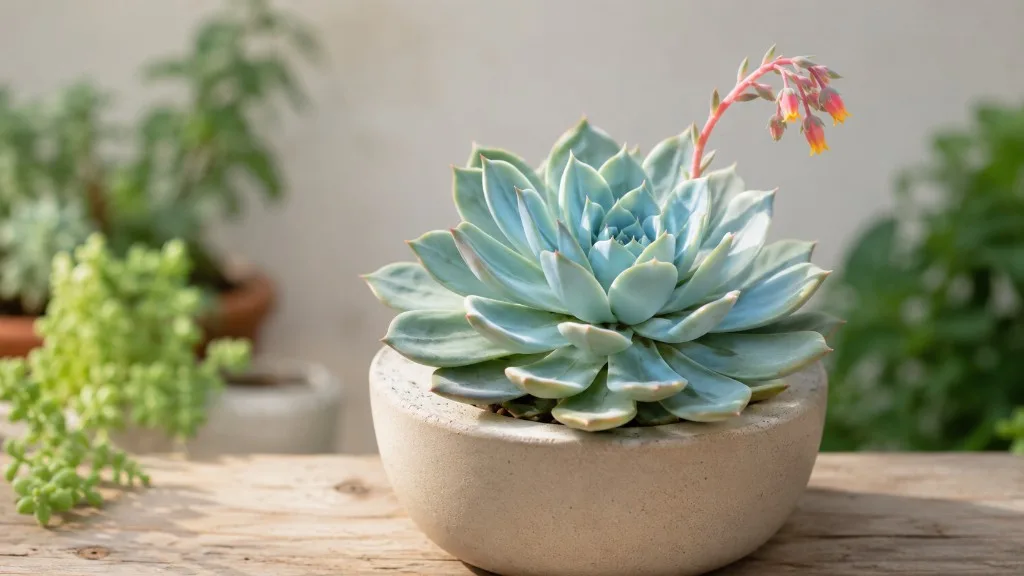
Give it bright light and airflow, but do not move a nursery plant straight from greenhouse shade into afternoon sun. A bright, sheltered patio is a good summer home if the pot drains freely and rain does not keep the mix wet for days. Water at the soil line when the mix has dried rather than pouring into the tight center of the rosette. Remove dead lower leaves so they do not hold moisture against the stem, and watch for stretching as a signal that the plant needs more light. In a cold-winter garden, it is lower maintenance to use echeveria as a movable accent than to repeatedly replant it after frost.
Tree aeonium (Aeonium arboreum)
Tree aeonium gives a patio more height than a compact rosette succulent: woody stems branch upward and end in glossy leaf rosettes. Dark cultivars such as ‘Zwartkop’ create a dramatic container focal point, while green forms look softer in a mixed pot. North Carolina State Extension lists aeoniums for warm Zones 9 through 11 and advises bringing potted plants indoors before nighttime temperatures fall below 40°F in colder parts of its range (North Carolina State Extension).
Aeoniums have a different seasonal rhythm from many familiar summer-growing succulents: they often grow most actively in the cooler part of the year and slow down in hot weather. Do not respond to summer dormancy by soaking a pot that is not using much water. Give the root zone a chance to dry, and provide protection from harsh afternoon sun in a heat wave. A container makes it easier to respect that cycle and shield the plant from cold rain. Remove spent flower stalks after flowering; the rosette that blooms will die, but a branched plant may have other growing rosettes to carry it forward.
Jade plant (Crassula ovata)
Jade plant is a small, tree-like succulent that suits a sunny patio, balcony, or sheltered courtyard in warm climates. Its thick stems and oval leaves make it feel more like a compact shrub than a rosette, and established plants need little shaping. North Carolina State Extension describes jade as a low-maintenance subtropical plant, lists it for Zones 11 and 12, and recommends a well-drained medium and moderate watering after the soil dries (North Carolina State Extension).
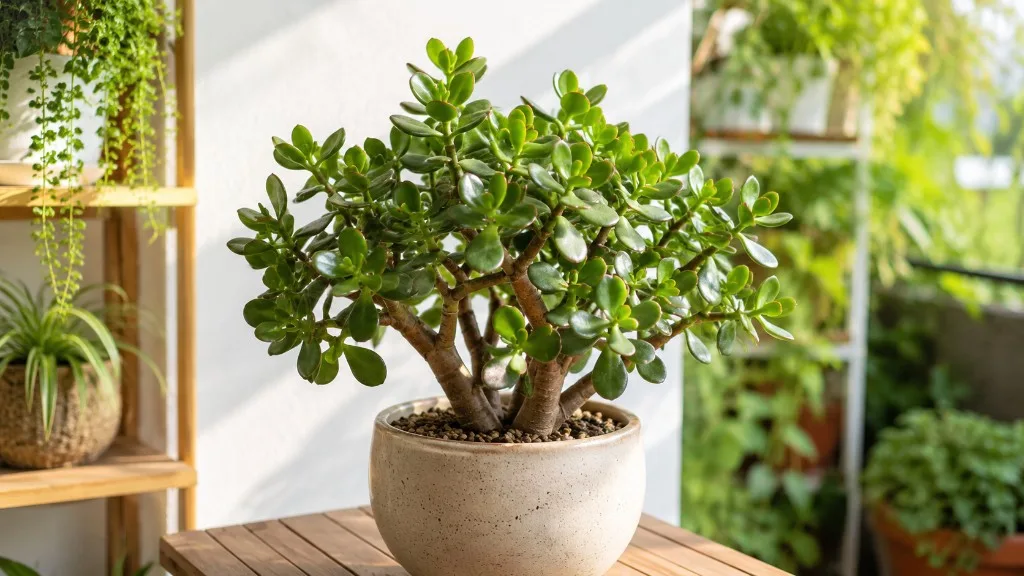
Because jade is tender to cold, a pot is the practical choice where winter frost occurs. Move it before a cold night, not after blackened leaves appear, and avoid a dark indoor corner that would weaken new growth. Outdoors, introduce it to direct sun over several days and provide some afternoon shade during extreme heat, especially if it was grown indoors. Water fully, allow excess to escape, and wait until the soil is dry before repeating. Brittle branches can break in wind or when bumped, so set the pot somewhere stable and choose a heavier container for a mature specimen.
Zebra haworthia (Haworthiopsis attenuata)
For a covered patio or bright shade, zebra haworthia is one of the easiest choices in the list. Its compact dark-green rosettes have white raised bands, and the plant slowly makes offsets rather than racing across a bed. North Carolina State Extension describes it as a low-maintenance succulent for Zones 9 through 11 that can grow outdoors in warm climates, prefers bright indirect light, and is not frost tolerant (North Carolina State Extension).
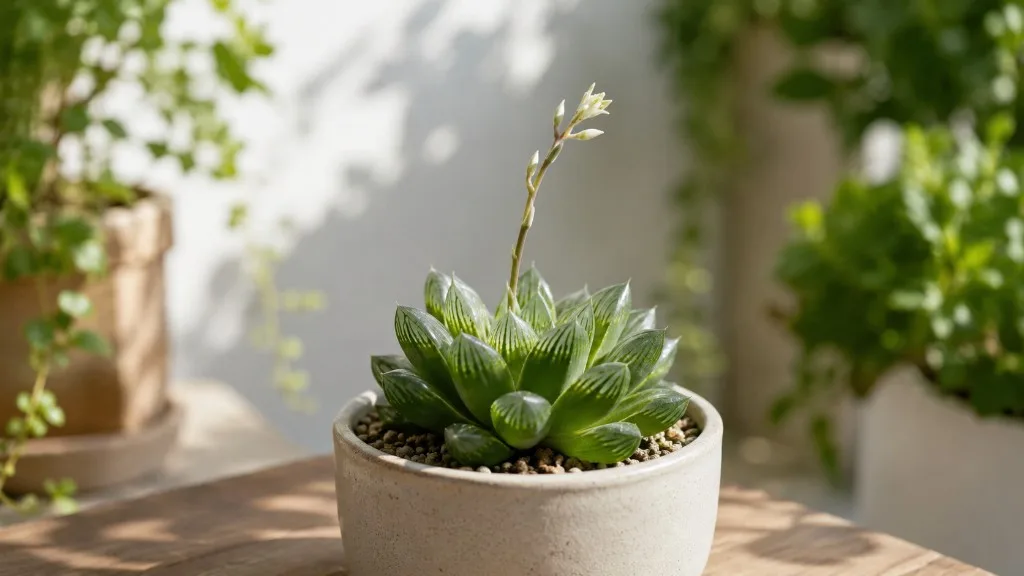
Unlike sedum and hens and chicks, it does not need a baking-hot location to thrive. Bright shade under an eave, a covered porch, or a few hours of morning sun is a better fit than reflected afternoon heat. Its container should still drain freely; shade does not make waterlogging safe. In prolonged rain, move the pot under cover or let the mix dry thoroughly before watering again. If the white markings fade or the leaves become stretched, increase light a little at a time. This is a useful warm-climate outdoor plant for a sheltered corner, but it should not be planted where winter frost reaches it.
Moss rose (Portulaca grandiflora)
Moss rose is a fast, colorful option for a hot summer bed, rock border, hanging basket, or pot. Unlike the perennial succulents above, it is an annual: choose it for a season of flowers, not for evergreen winter structure. North Carolina State Extension describes it as a drought- and heat-tolerant succulent annual for full sun and well-drained sandy or rocky soil; flowers close at night and on cloudy days (North Carolina State Extension).
Sow seed or transplant it after frost danger has passed, and avoid rich soil that stays damp. It spreads into a low mat, making it useful at the front of a border or where a conventional perennial struggles with heat. Deadheading is optional: leave a few flowers to form seed if you want volunteers next year, or remove spent blooms to reduce self-seeding. Poor drainage can still cause crown rot, and occasional aphids or slugs may appear, so “annual” does not mean immune to problems. Use it to fill a warm-season gap, then decide whether to replant or let a few seedlings appear the following spring.
Match succulents to winter cold and rain
In the United States, use the USDA Plant Hardiness Zone Map as a first filter: it is based on average annual extreme minimum winter temperature, not a guarantee about every cold snap or every garden microclimate (USDA Plant Hardiness Zone Map). Look up the zone for your specific address, then compare it with the plant label for the exact species or cultivar. When your garden sits on the edge of a plant’s listed range, use the next hardier choice or grow the borderline plant in a movable pot.
Cold and wet are separate stresses. A hardy succulent can tolerate low temperatures while still rotting if its crown sits in saturated soil for days; a tender plant may be fine in summer but collapse at the first frost. The RHS and BBC Gardeners’ World both emphasize free drainage and winter-rain protection for sempervivums, while Cornell Cooperative Extension Master Gardeners describes gravelly drainage as a core requirement for cold-hardy succulent beds (RHS; BBC Gardeners’ World; Cornell Cooperative Extension). In rainy-winter climates, position plants under an eave, on a slope, in a raised bed, or in containers that can be tipped or sheltered. These tactics reduce how long roots stay cold and wet; they do not make a tender species frost proof.
Heat and exposure matter too. A plant grown in filtered greenhouse light can scorch when moved straight into afternoon sun, even if its species prefers full sun once established. Harden it off gradually, starting with gentle morning light and increasing exposure over one to two weeks. In very hot climates, afternoon shade can preserve foliage color and lower stress for some rosette plants. In humid areas, the air stays wet longer, so wider spacing and a breezy site matter as much as sun exposure.
Build a fast-draining bed or container
Before buying plants, test the place where you plan to grow them. After a soaking rain, does water disappear from the root zone promptly, or does the soil remain sticky and saturated? If water lingers, plant on a raised mound or use a container with a drainage hole; adding a thin layer of gravel below ordinary potting soil does not fix a blocked or slow-draining root zone. The whole planting area needs a route for excess water to leave.
For an in-ground bed, begin with the soil you have rather than trying to replace every cubic inch with a commercial cactus mix. Sandy, gravelly, or shallow rocky ground often suits hardy succulents, while dense clay may need a raised bed or a different plant choice. If amending a bed, mix coarse mineral material through the planting area so drainage changes across the root zone instead of creating a small pocket surrounded by wet soil. A surface dressing of grit can keep leaves cleaner, but it is not a substitute for good drainage below them. Cornell Cooperative Extension and the RHS both emphasize a gritty, open growing medium for these plants (Cornell Cooperative Extension; RHS).
For pots, choose a container with an unobstructed drain hole and avoid oversized pots that hold a large volume of wet mix around a small root system. Unglazed terracotta can dry faster than glazed ceramic or plastic, which helps in a rainy climate but may require closer checks in a hot, windy one. Use a coarse succulent mix or combine a potting medium with a gritty mineral component; the mix should release excess water while still holding enough moisture for roots to rehydrate. Do not pack gravel into the bottom and assume that makes a pot safer—the outlet must remain open.
Water less by responding to weather and soil
Newly planted succulents need more attention than established ones because their roots have not spread into the surrounding soil. Water them after planting, then check moisture a short distance below the surface and irrigate again when the root zone has begun to dry. During the first growing season, rain, heat, pot size, and soil texture will change how quickly that happens. Once the roots are established, most hardy landscape succulents need supplemental water mainly through extended drought, not on a weekly calendar.
When you do water, soak the root area and let the excess drain away. Frequent small splashes wet the surface without encouraging deeper roots and can leave the crown damp. In a container, feel or probe the mix below the top layer; a dry surface can hide wet soil farther down. A small pot in full sun will dry much faster than a broad in-ground patch, so a fixed “once a week” rule can either leave one plant thirsty or drown another. Check the plant and soil together: wrinkled leaves can indicate drought, but soft translucent leaves and a darkening base point toward excess moisture.
Reduce irrigation during cool or dormant periods when growth slows and soil dries more slowly. Do not water outdoor succulents simply because nearby annuals need it. Likewise, drought tolerance does not mean a new planting should be abandoned during an unusually hot, rainless stretch. If a plant is wilting after weeks of dry weather, water deeply and then allow the bed to dry again. The goal is a cycle of thorough moisture followed by an aerated dry-down, not permanent dryness and not constant dampness.
Prevent the failures that make succulents high-maintenance
Root or crown rot: First check drainage and recent rainfall, not just the watering can. A soft base, darkened tissue, or leaves that fall away with little pressure often point to excess moisture; move a container to shelter, stop watering until the mix dries, and remove damaged tissue with a clean tool. If the crown has rotted through, saving a healthy tip or offset may be more realistic than trying to rescue the original plant. Avoid burying the base deeper to make a leaning plant stand upright.
Scorch or bleaching: Pale, dry patches on the sun-facing side can follow a sudden move from shade to intense light. Give a tender or greenhouse-grown plant a gradual transition, and use temporary afternoon shade during a heat wave. Conversely, elongated stems and open rosettes usually mean too little light; increase brightness gradually rather than compensating with more fertilizer or water.
Cold damage: Brown or mushy leaves after a freeze can mean the species is tender, the plant was not acclimated, or winter wetness weakened it before the cold arrived. Check the identity and local hardiness of the exact plant before leaving it outside next winter. If it is a tender rosette, use a pot and move it ahead of frost; if it is a hardy type, improve drainage and remove standing water rather than wrapping it in a moisture-trapping cover.
Unexpected spread or a dying rosette: A groundcover sedum can cross a border, so edge it back or lift and replant sections before it reaches neighboring plants. A flowering sempervivum rosette naturally dies after blooming; leave its healthy offsets in place. A single declining rosette is not the same as a whole colony collapsing. When the plants are crowded, split and replant offsets in spring, then give them a little breathing room.
Spines, sap, and placement: Keep prickly pear and agave clear of narrow paths, play spaces, and seating. Wear gloves when handling prickly pear pads; tiny glochids are difficult to see and can irritate skin (Cornell Cooperative Extension; North Carolina State Extension). If you do not want a sharp plant near visitors or pets, choose a soft-leaved option such as sempervivum or a contained sedum instead.
Conclusion
For a garden that freezes, begin with sempervivum, sedum, hardy ice plant, or a locally proven prickly pear, and give them a sunny place where water drains quickly. In a frost-free climate, you can widen the palette to aloe, ghost plant, echeveria, aeonium, jade, and zebra haworthia; in colder regions, keep those tender plants in containers you can shelter. The most important care decision is not a watering schedule—it is choosing the right plant for the winter and soil you actually have.



