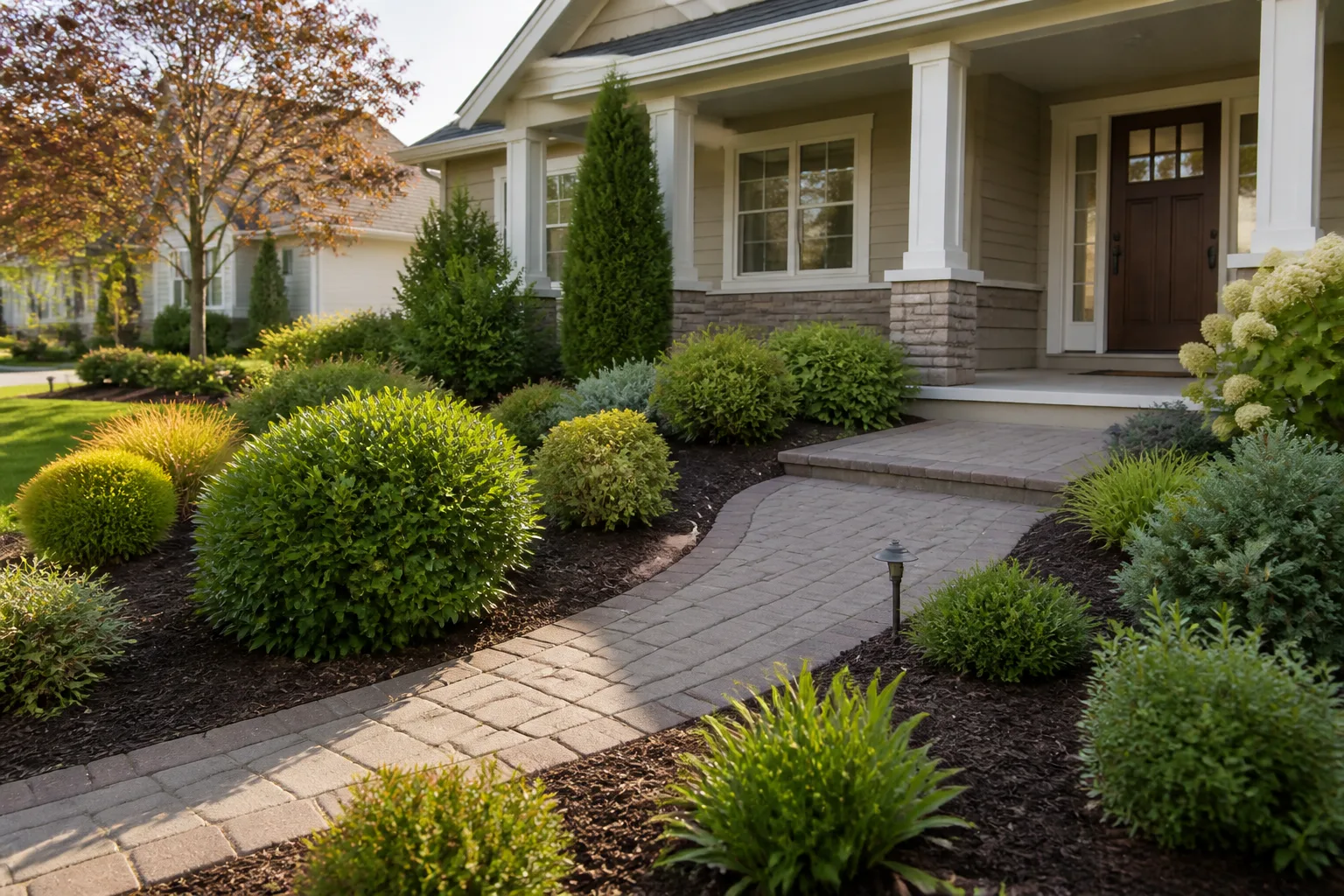
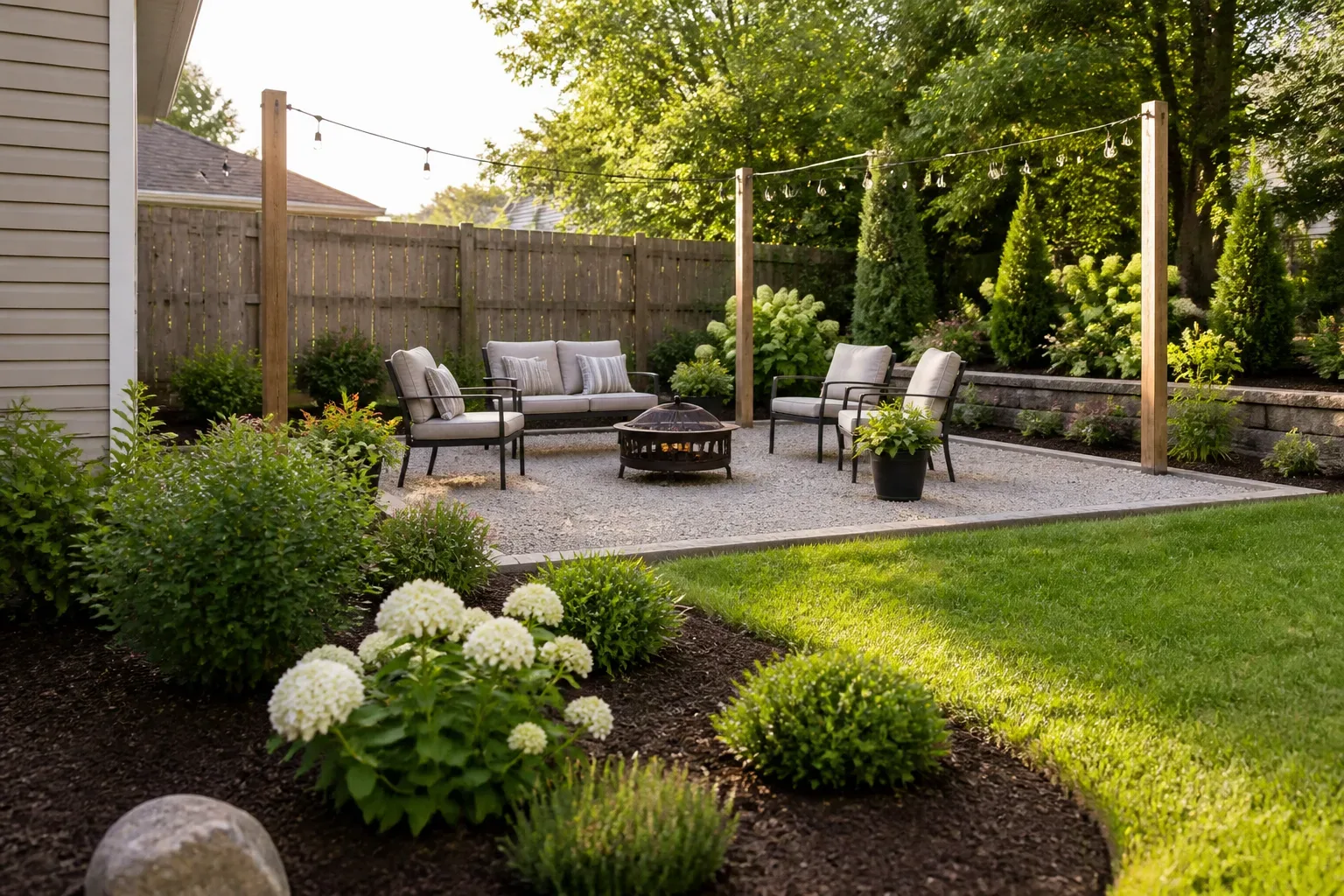
18 Best Landscaping Shrubs for Your Yard by Use and Season
Choose landscaping shrubs by site, light, soil, mature size, and water needs, then compare options for flowers, screening, berries, and year-round structure.

The best landscaping shrub is the one that fits its mature size, soil, light, and water supply without turning into a recurring pruning problem. A plant may be beautiful and hardy yet still be the wrong choice if it blocks a window, outgrows a narrow bed, or needs more summer moisture than your site can provide.
Use the 18 shrubs below as a shortlist, not a universal ranking. Hardiness zones describe winter minimums, not summer heat, rainfall, soil, or humidity; check local extension advice and the exact cultivar label before buying. Oregon State Extension’s landscape shrub guidance emphasizes matching plants to place, while the RHS shrub selector is useful for comparing forms and growing conditions across many garden types.
Choose the site before the shrub
Start with the space itself. Note the hours of direct sun in summer, how quickly the soil drains after rain, whether irrigation reaches the bed, and what the plant must do: screen a view, soften a foundation, feed wildlife, add winter structure, or provide flowers near a patio. A shrub that meets one need well is usually more valuable than one with a long list of qualities that your site cannot support.
Measure the mature footprint
Read both mature height and width, then measure that circle on the ground. A shrub labeled six feet wide needs more than a six-foot hole: it needs access around it for airflow and maintenance, and room for branches to mature without rubbing siding or covering a path. Compact cultivars can solve a space problem, but verify that the plant is truly a selected small form rather than a young specimen of a large species.
If a shrub will sit beneath a window, plan for the height it will reach without annual shearing. If it will form a hedge, include the final width of every plant, not just the spacing recommended for a quick visual screen. Plants forced into a much smaller outline need frequent cuts and often lose their natural shape.
Match light, soil, and water
“Part shade” is not a fixed number of hours across all climates. Afternoon sun in a hot inland garden stresses plants differently from gentle morning sun in a cool region. Likewise, “moist soil” means soil that stays evenly damp but drains; it does not mean roots should sit in a puddle.
The RHS guide to evergreen shrubs for specific situations groups plants by conditions and use, while OSU’s research on drought-tolerant groundcover shrubs makes clear that trial results depend on the region and site. Think of regional plant lists as evidence for a local climate, not as universal promises. For native wildlife value, choose species native to your ecoregion rather than relying on the broad label “native” alone.
Use a site checklist
Before you shop, write down the bed’s approximate length and depth, hours of direct sun, drainage after a soaking rain, nearby utilities, and the mature height you can tolerate. Add the job the shrub must do and how often you are willing to prune or water. This checklist makes it easier to compare plants by the conditions they need instead of being distracted by a photograph or a clearance tag.
18 shrubs, matched to landscape jobs
Mature dimensions below are approximate and vary by cultivar, pruning, and climate. The function column tells you why a plant might earn its space; the last column flags the trade-off to check before purchase.
Flowers and fragrance
| Shrub | Best landscape job | Check before planting |
|---|---|---|
| 1. Witch hazel (Hamamelis virginiana) | Late-season or late-winter flowers and fall color | Large, slow-growing shrub or small tree; allow generous width |
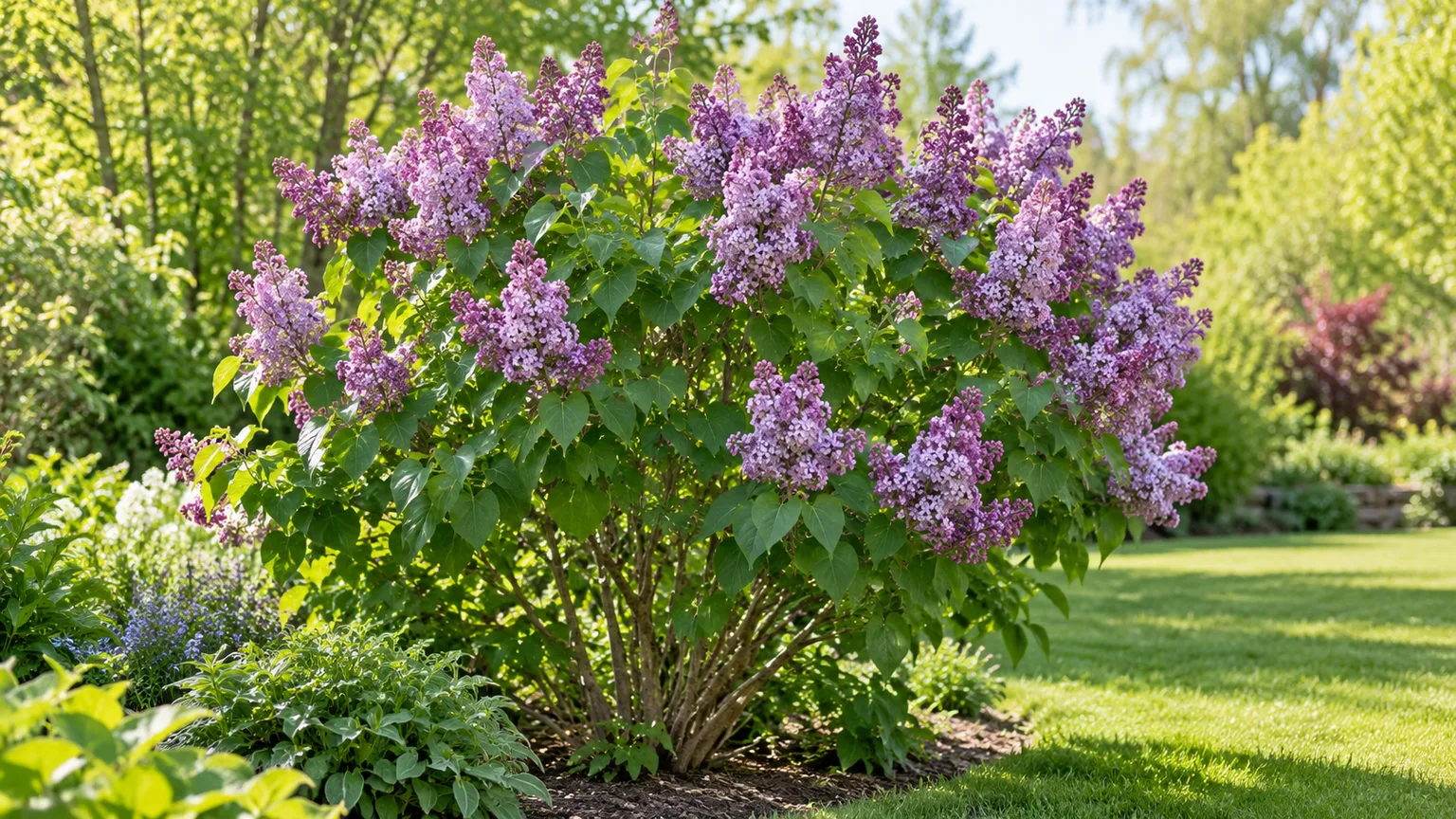
| 2. Common lilac (Syringa vulgaris) | Fragrant spring flowers in a sunny border | Can become a large, suckering shrub; needs sun for strong bloom |
| 3. Doublefile viburnum (Viburnum plicatum f. tomentosum) | Layered white spring flowers and a strong horizontal form | Give it room; mature width can exceed height |
| 4. Dwarf flowering almond (Prunus glandulosa) | Early spring color in a smaller bed | Short bloom window; confirm disease fit and local performance |
| 5. Mountain laurel (Kalmia latifolia) | Evergreen foliage and spring flowers in acidic woodland soil | Toxic if eaten; needs suitable moisture and acidic soil |
| 6. Rose (Rosa spp.) | Repeat flowers, fragrance, or a flowering hedge | Select a disease-resistant cultivar for your climate and light |
| 7. Rose of Sharon (Hibiscus syriacus) | Late-summer flowers when many shrubs are finished | Can self-seed and become invasive in some regions; check local status |
| 8. Stewartstonian azalea (Rhododendron ‘Stewartstonian’) | Spring flowers with evergreen or bronzy fall foliage | Needs acidic, evenly moist soil; keep it away from nibbling children and pets |
| 9. Summersweet (Clethra alnifolia) | Fragrant summer flowers in moist soil and part shade | Leaf-out can be late; allow for gradual suckering |
Witch hazel, lilac, and summersweet illustrate why bloom time is a useful design criterion: together they can extend flowers from late winter into summer. They do not all want the same soil or moisture, though, so the sequence only works if each plant occupies a compatible part of the garden. The Fine Gardening guide to flowering evergreen shrubs is a practical reminder that flowers are only one part of a shrub’s year-round contribution.
For a small entry garden, pick one flowering shrub as the focal point and let lower perennials or groundcovers do the edging. A large lilac or bottlebrush buckeye can overpower a narrow foundation bed even if its flowers are excellent; a compact cultivar or a smaller species may deliver the same seasonal effect at a more workable scale. Do not choose a plant only because its label says “dwarf”—check the listed dimensions and how old the specimen is when those dimensions are reached.
Mountain laurel and azalea deserve a placement check if children or pets explore the garden. North Carolina State Extension identifies mountain laurel as poisonous and describes azaleas as toxic plants, although risk depends on the amount and part eaten. Keep prunings and berries out of reach, and contact a poison-control professional or veterinarian if ingestion occurs rather than trying a home remedy.
Foliage, screening, and winter structure
| Shrub | Best landscape job | Check before planting |
|---|---|---|
| 10. Golden Mop false cypress (Chamaecyparis pisifera ‘Golden Mop’) | Fine-textured gold foliage in a sunny-to-partly-shaded bed | Color is stronger with enough light; protect from winter burn in cold sites |
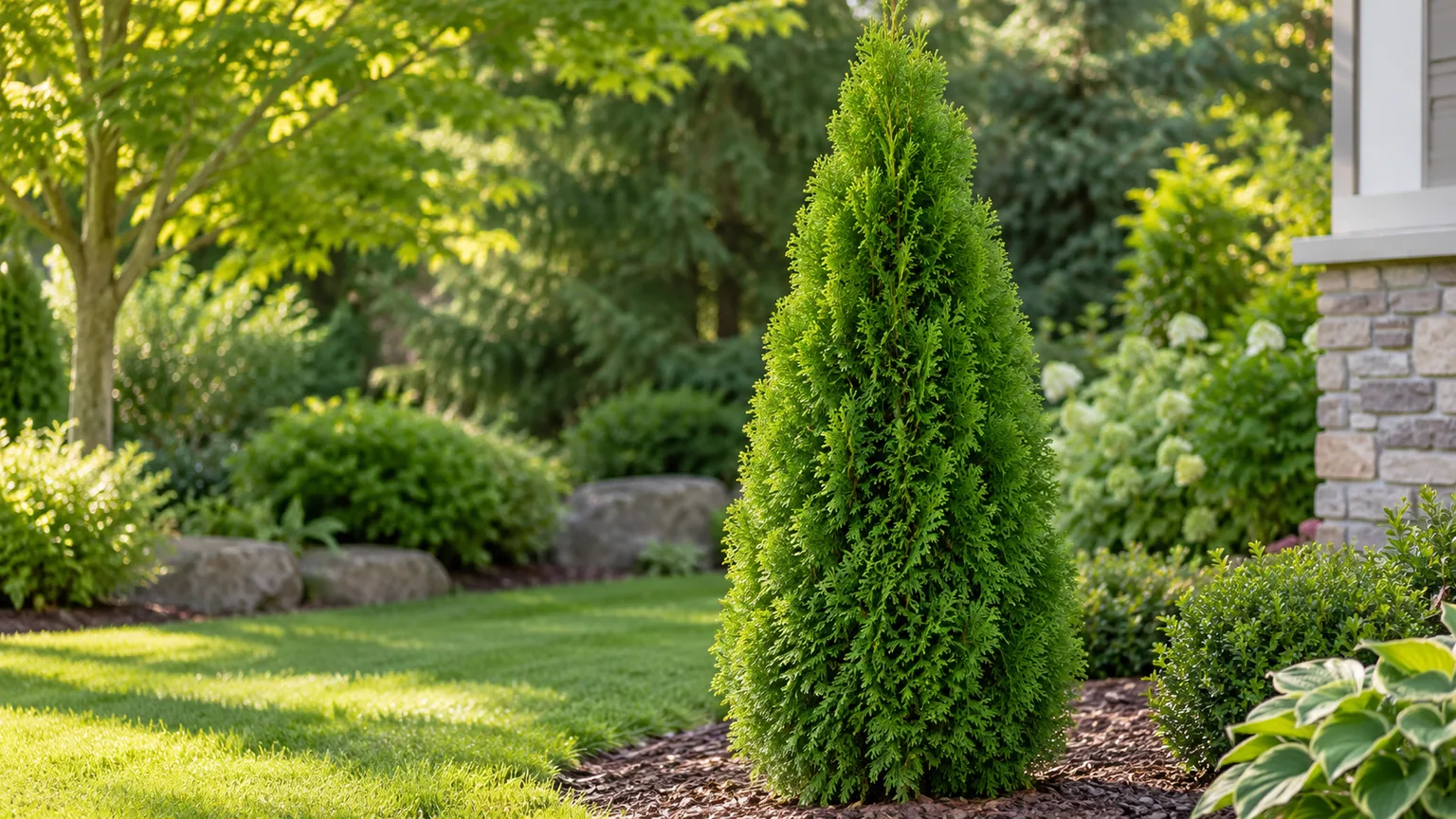
| 11. North Pole arborvitae (Thuja occidentalis ‘Art Boe’) | Narrow evergreen screening | Deer may browse it; screen height and width still need room |
| 12. Northern bush honeysuckle (Diervilla lonicera) | Tough, spreading native shrub for a naturalized edge | Suckers to form colonies; use where spread is welcome |
| 13. Oakleaf hydrangea (Hydrangea quercifolia) | Summer flowers, autumn color, and peeling winter bark | Needs room and consistent establishment water; do not prune at the wrong time |
| 14. Red-twig dogwood (Cornus sericea) | Bright stems in winter and habitat value | Best color comes from renewal pruning; spreads in moist sites |
| 15. Virginia sweetspire (Itea virginica) | Fragrant white flowers and red-orange fall color | Can spread by suckers in favorable soil |
The OSU article on colorful foliage shrubs recommends looking beyond flowers for gold, gray, and variegated leaves that create structure between bloom periods. That principle applies in any region, although the individual species and cultivar choices should match local winter and summer conditions. For a narrow screen, compare mature width as carefully as height; a fast-growing row is not low-maintenance if it must be cut back twice a year.
Plan for more than one season of interest when the bed is visible year-round. Evergreen leaves create a dependable backdrop; colored stems and persistent berries matter after leaf drop; a deciduous shrub with beautiful flowers may contribute little in winter. A useful design has overlapping roles: for instance, evergreen foliage behind a deciduous flowering shrub, plus a lower plant that covers the soil without competing heavily for water.
The North Pole arborvitae is a narrow form, not a maintenance-free hedge. Young plants need watering until established, and deer pressure can strip foliage from many arborvitaes. If browsing is common, protect new shrubs and ask a local extension office about less palatable screening alternatives for your area. A mixed screen of several compatible species is usually more resilient than a single row: one pest or weather event is less likely to damage every plant at once.
Wildlife, berries, and seasonal color
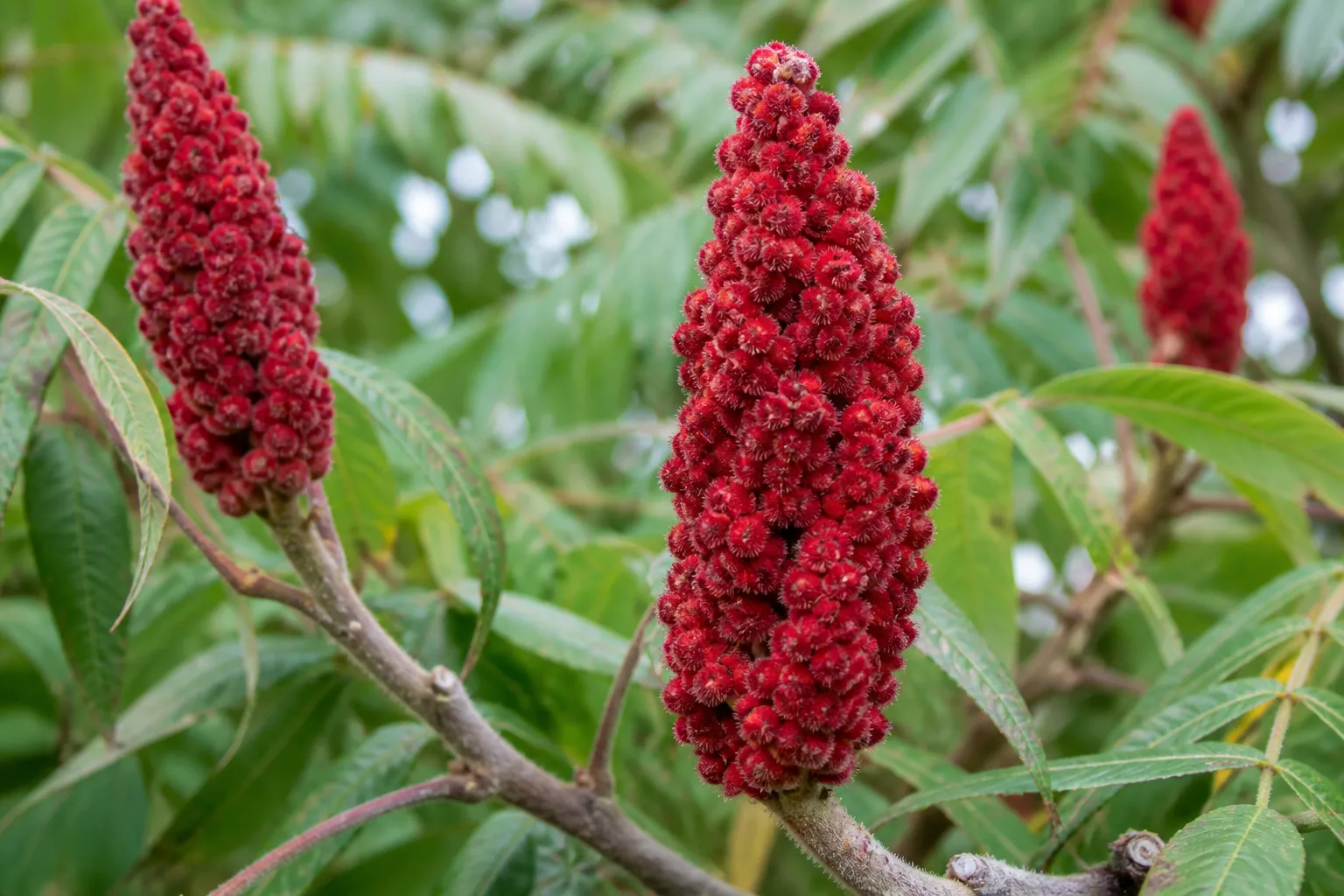
| Shrub | Best landscape job | Check before planting |
|---|---|---|
| 16. Black chokeberry (Aronia melanocarpa) | Spring flowers, edible fruit for wildlife and people, and red fall foliage | Fruit can be astringent; suckering habit suits a naturalized patch |
| 17. Bottlebrush buckeye (Aesculus parviflora) | Large shade-tolerant shrub with summer flower spikes | Broad mature spread and toxic plant parts make placement important |
| 18. Winterberry holly (Ilex verticillata) | Bright winter fruit in a damp or rain-garden edge | Deciduous; female plants need a compatible male pollinator for berries |
“Wildlife friendly” should describe a real fit, not just an attractive label. Ask whether the shrub supports local insects or birds, whether it can spread beyond the bed, and whether pets or children might eat its berries or leaves. Winterberry is a good example of a detail that is easy to miss: the showy fruits appear on female plants, so a male pollinator cultivar must bloom at a compatible time nearby. Berries are not guaranteed just because the shrub has been planted.
When choosing an ecological role, a plant native somewhere in North America is not automatically native to your county or suited to your rainfall. Check the range, soil and moisture conditions, then consider whether the plant spreads by seed or suckers. A spreading shrub can stabilize a slope or fill a woodland edge, but it can also crowd out smaller plants in a compact bed. A regional native-plant society or extension service can help you find a closer match if supporting local wildlife is a priority.
Separate ornamental fruit from food harvest. Chokeberry fruit is edible but sharply astringent fresh; it is more often cooked or processed. Winterberry fruit is for winter wildlife display, not a snack. Do not taste an unfamiliar shrub to identify it, and label potentially toxic plants when children, pets, or visiting caregivers use the yard.
Make the planting work after the first year
The first growing season is the establishment period. Water deeply enough to wet the root ball and surrounding soil, then check moisture before watering again; frequent shallow sprinkling encourages roots to stay near the surface. A two- to three-inch layer of organic mulch can reduce evaporation, but keep it several inches away from stems and trunks so the crown does not stay wet.
Before planting, inspect the root ball and loosen circling roots at the outer edge if the plant is pot-bound. Set the root flare at soil level rather than burying the trunk, backfill with the native soil, and water thoroughly. Amending only the planting hole with rich compost can create a sharp boundary that holds excess water, so improve the broader bed when the soil needs it.
Water deeply while roots establish
Water slowly at the base so moisture reaches the full root ball, then check the soil before watering again. Sandy soil can dry quickly, while clay may remain wet long after the surface looks dry. During the first growing season, adjust to rainfall and heat rather than following a fixed number of days; the goal is even moisture with air still available to roots.
Keep mulch off stems and trunks
A two- to three-inch mulch layer can moderate temperature and reduce evaporation, but leave a small open ring around each stem. Mulch touching bark can keep it damp and conceal damage or pests. Refresh the layer only as it decomposes, and avoid piling new material over old layers until the total depth becomes excessive.
Place shrubs with their mature canopy in mind: do not cover utility boxes, sightlines near a driveway, air-conditioning equipment, or a path that must remain accessible. Call the local utility marking service before digging near buried lines, even if the planting hole seems shallow. In a rain garden or low spot, choose species that tolerate the actual wet-and-dry cycle rather than assuming every shrub will benefit from extra water.
Most established landscape shrubs do not need routine heavy fertilizer. If growth is weak, first check light, drainage, planting depth, root competition, and water; adding nitrogen will not solve a shrub planted in shade when it needs sun. Prune dead, broken, or crossing branches with clean tools, and keep irrigation consistent while roots expand into the surrounding soil.
Prune by flowering habit, not by calendar habit
Many spring-flowering shrubs set flower buds on the previous season’s growth. Cutting them hard in late winter can remove that year’s show, so shape them just after flowering if pruning is needed. Shrubs that flower on new growth can often be pruned during dormancy, but confirm the species and cultivar before using that rule.
Avoid shearing every shrub into a tight box. Repeated surface cuts create a dense outer shell that shades the interior and can expose bare branches when the shrub outgrows the outline. Renewal pruning—removing a few of the oldest stems at the base—often preserves a natural form in multi-stem shrubs such as dogwood, lilac, and summersweet.
Record each shrub before pruning
When you plant, keep the nursery label or write the cultivar, mature dimensions, and flowering period in a garden notebook. Note when buds form and where flowers appear. That record helps you confirm whether the plant blooms on old or new wood before pruning, and prevents a winter cleanup from removing the next spring’s flowers.
Keep a simple plant record when you install a mixed border: note the cultivar, planting year, mature size on the label, and bloom period. That record makes pruning decisions easier because you can check whether flowers form on old or new wood before cutting. If a shrub is healthy but too large for the allotted space, moving it while dormant may be possible when it is still young; repeatedly cutting it back into an unsuitable footprint is not a long-term substitute for choosing the right plant.
Conclusion
Choose landscaping shrubs by site and purpose: the available light, drainage, mature footprint, desired season of interest, and amount of pruning you are willing to do. Then verify local hardiness, native status, toxicity, and cultivar size before buying. A well-matched shrub can supply flowers, screening, fruit, or winter structure for years; the right plant in the wrong place usually becomes a maintenance job.