11 Beautiful Flowers That Bloom in May in Your Garden
Find 11 flowers that bloom in May, from sunny alliums and peonies to shade-loving bleeding hearts, with region-specific timing and practical care advice.
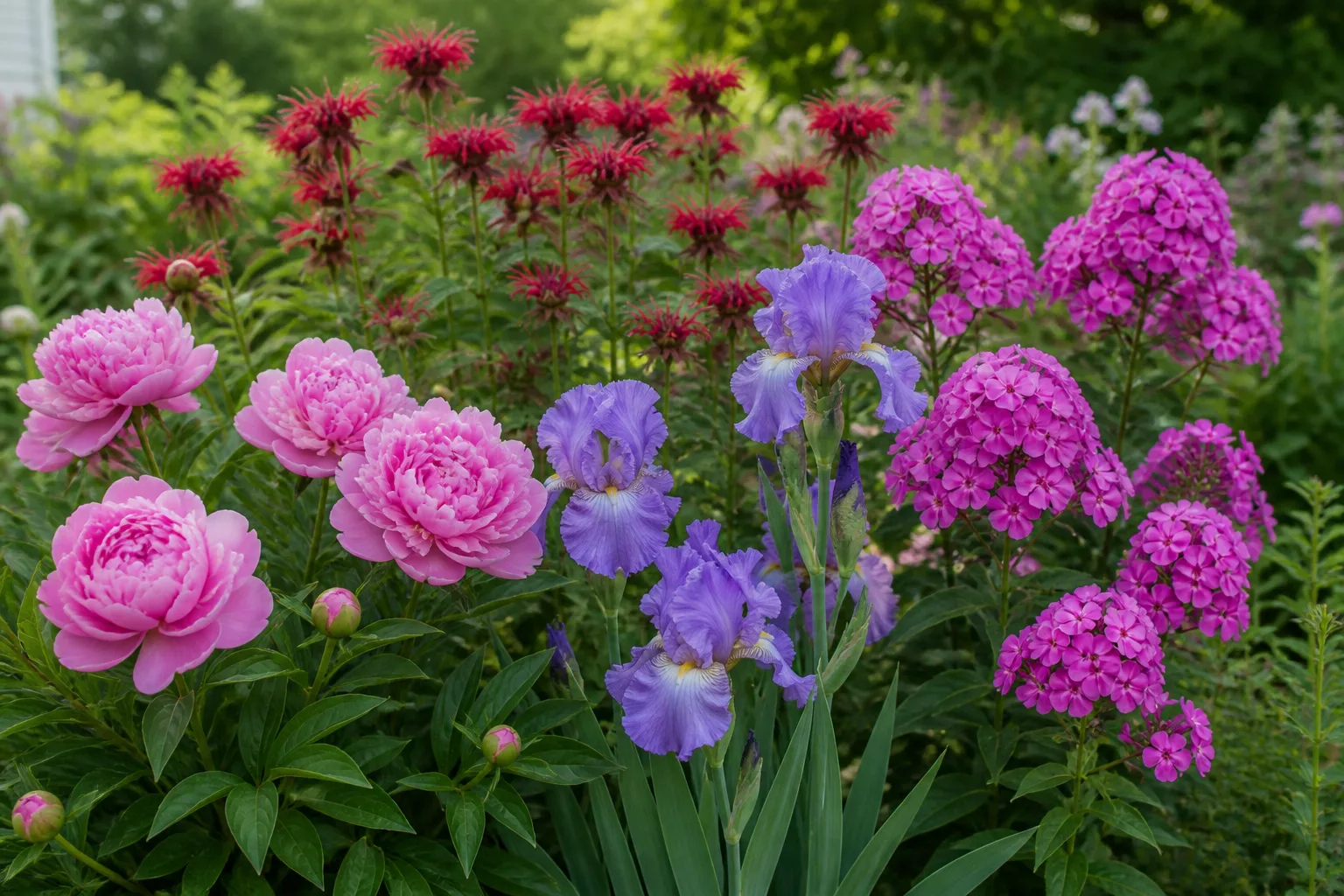
May can bring a garden from bare soil to a full border almost overnight, but there is no single calendar that fits every yard. In a cool-spring region, bleeding hearts and columbines may be opening while lilacs and peonies are still in bud; farther south, the same flowers can finish weeks earlier. The most dependable May display comes from choosing plants for your conditions and staggering early, middle, and late bloomers.
The flowers below include shrubs, bulbs, long-lived perennials, a cool-season annual, and one fragrant groundcover that needs caution. For each, the useful question is not only “Does it bloom in May?” but “Will it bloom in my May, in this light and soil, and what will it look like after the flowers fade?”
Use a bloom calendar, not a single date
The dates here are best understood as a late-spring pattern for temperate gardens, especially areas with cold winters and a gradual spring. Iowa State Extension’s May-blooming perennial guide groups sunny choices such as iris, ornamental onion, and peony alongside shade flowers such as bleeding heart, columbine, and Jacob’s ladder. A gardener in a warmer coastal or southern climate may see some of those blooms in April; a high-elevation or northern garden may still be waiting in June.
Hardiness zones help you judge whether a perennial is likely to survive winter, but they do not tell you the week it will flower. Spring temperature, latitude, elevation, reflected heat, slope, and the cultivar all matter. Use a local botanical garden, extension bloom calendar, or dated photos from your own garden to refine the month; treat the table below as a planning range rather than a guarantee.
May flowers at a glance
| Flower | Common May window in cool-spring gardens | Best fit | Watch for |
|---|---|---|---|
| Ornamental allium | Mid- to late May, often continuing into June | Sunny, well-drained border | Fading leaves; bulbs are planted ahead of bloom |
| Bleeding heart | Early to mid-May | Part shade with even moisture | Foliage may die back in summer heat |
| Brunnera | Mid-spring into May | Part shade and humus-rich soil | Flower display is brief; leaves carry the show afterward |
| Columbine | Mid-May into early summer | Sun in cool climates; dappled shade in warmer sites | Many cultivars self-sow and are short-lived |
| Hardy geranium | Late spring, with some cultivars continuing | Sun to part shade, depending on type | “Geranium” on a plant label can mean very different plants |
| Jacob’s ladder | April to May, sometimes into early June | Cool part shade | Heat and dry soil shorten the show |
| Bearded iris | May into early summer, depending on cultivar | Full sun and sharp drainage | A buried rhizome may rot or flower poorly |
| Lilac | Early to late May, depending on species and cultivar | Sunny shrub border | Prune after flowering, not before the next bloom season |
| Peony | Mid- to late May in many northern gardens | Sunny, well-drained perennial bed | Heavy flowers may need support; blooms are brief |
| Pansy | Spring through early summer where weather stays cool | Pots, edging, and cool-season beds | Heat and overly rich feeding cause decline or legginess |
| Lily-of-the-valley | May in many temperate gardens | Contained shade planting only | Spreads aggressively and is toxic to pets |
The season labels are approximate. Even within one town, a south-facing wall can move flowering forward while a shaded, wind-exposed bed remains behind. If the exact week matters for an event, buy a mature plant already showing buds rather than relying on a cultivar description alone.
11 beautiful flowers to grow for May color
Think of this as a palette, not a shopping list. A small garden does not need all eleven; three compatible plants with different bloom windows will often give a more coherent display than a crowded collection of one of everything.
1. Ornamental allium
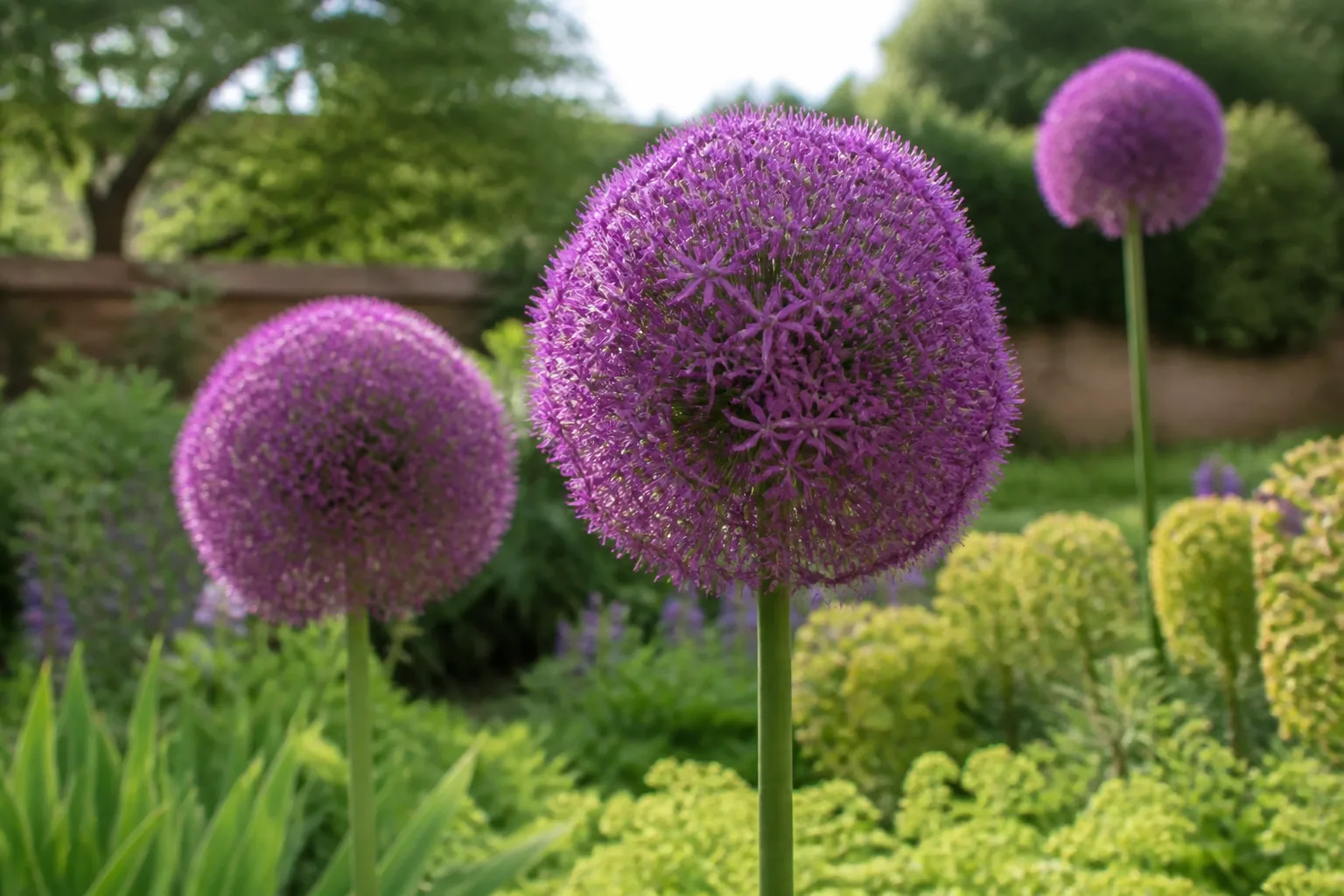
Ornamental onions earn their place with upright stems topped by round clusters of star-shaped flowers. Purple is common, but cultivars also come in white, pink, yellow, and blue. The Royal Horticultural Society’s allium growing guide says most flower in May and June, which makes them useful for bridging spring bulbs and the summer border. BBC Gardeners’ World likewise recommends grouping them for impact and planting them among lower perennials that can hide the strappy leaves as they yellow.
Choose a sunny spot where water drains away quickly. Most large-flowered ornamental alliums are planted as bulbs in fall, so a bare patch in April is not the place to plant them for a May display that same year. Plant the bulbs in drifts rather than a ruler-straight row, and pair them with hardy geranium, catmint, or another plant that can cover their declining foliage without smothering the bulbs. In exposed sites, tall varieties may need a sheltered position because wind can topple the stems.
2. Bleeding heart
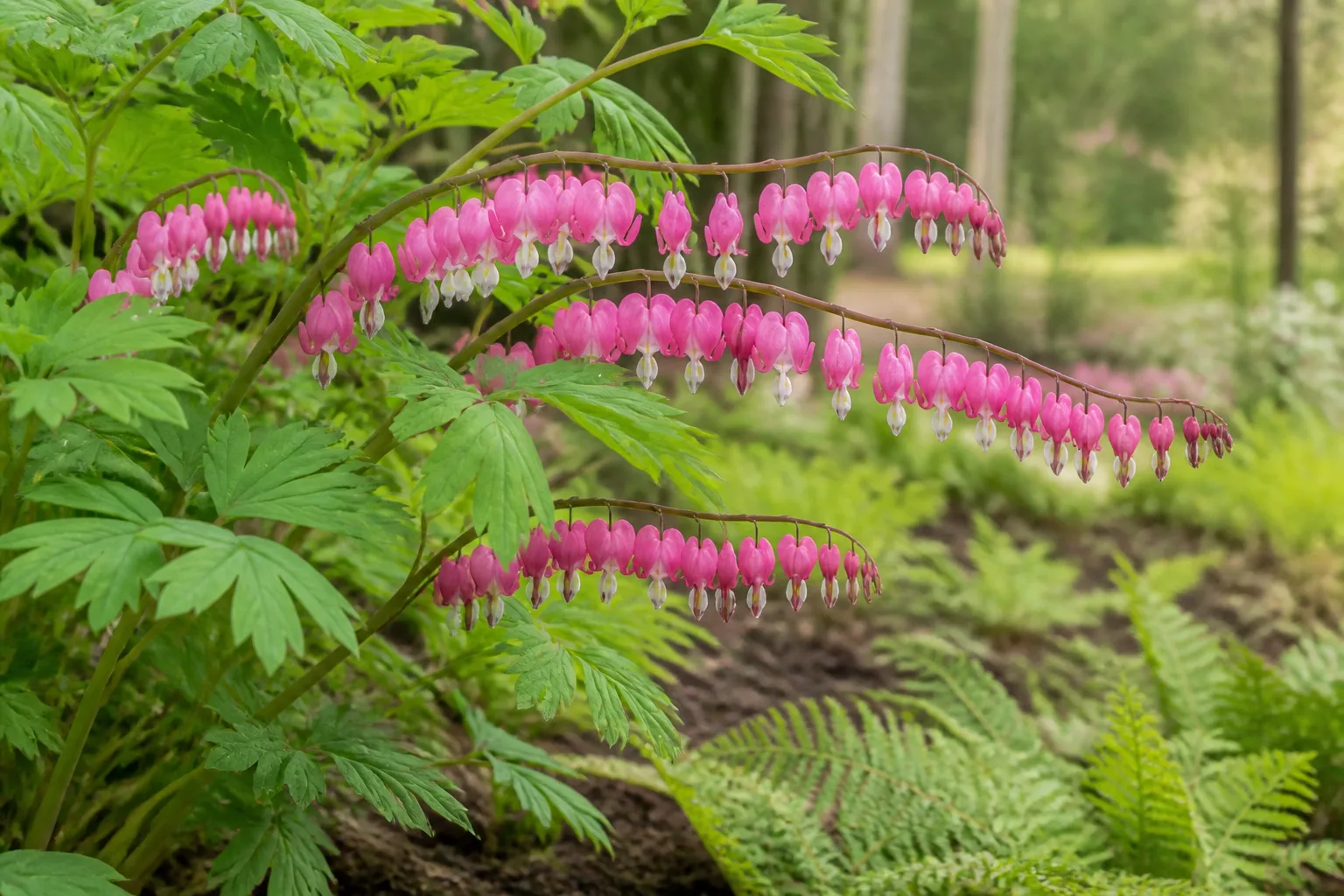
Old-fashioned bleeding heart (Lamprocapnos spectabilis) carries heart-shaped pink-and-white or white flowers along arching stems, often in early to mid-May in cooler regions. It gives a shade garden a distinct vertical line at the same time many woodland perennials are filling out. Part shade, moisture-retentive but well-drained soil, and a little protection from hot afternoon sun help it look its best.
Its main surprise comes after flowering: the foliage may turn yellow and disappear when summer heat arrives. That is normal dormancy for this spring ephemeral, not evidence that the plant died. Mark its location and let neighboring ferns, hostas, or later perennials fill the opening; do not dig up a quiet crown in July. A fringed-leaf bleeding heart can flower later and stay visible longer, so check the botanical name if summer foliage matters to your design. Iowa State Extension’s May bloom guide places old-fashioned bleeding heart among early- to mid-May shade flowers.
3. Brunnera
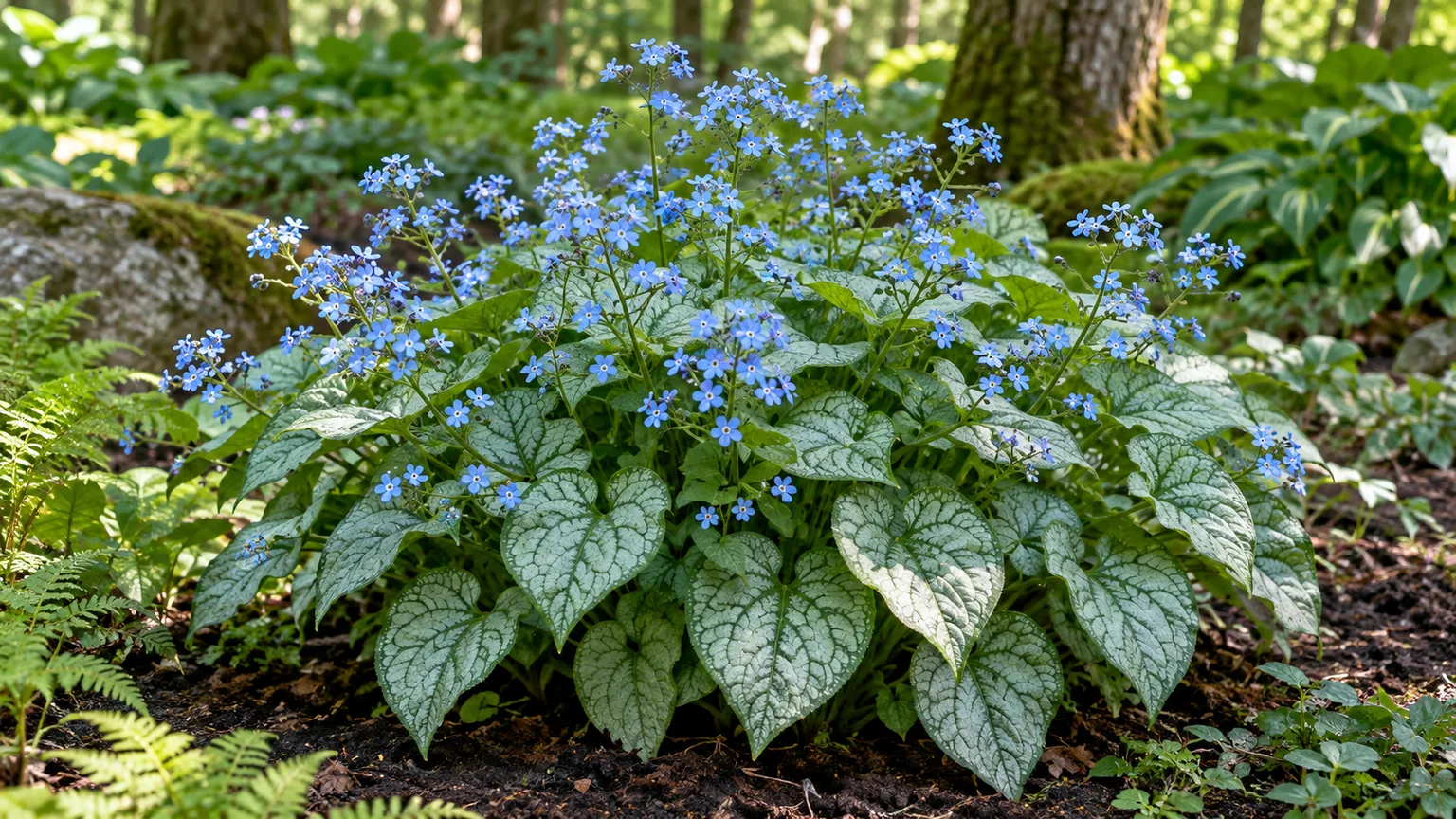
Brunnera (Brunnera macrophylla), also called Siberian bugloss, makes a low mound of heart-shaped leaves with sprays of tiny blue flowers in spring. It is a useful choice where a maple or building blocks afternoon sun: the bloom is airy rather than showy from across the yard, but the foliage can keep the shaded bed attractive after the flowers are gone. Silver-leaved cultivars brighten dark corners especially well.
Give it part shade and soil that stays evenly moist without becoming waterlogged. Established plants are better foliage plants than cut flowers, so place them where their leaves can be seen from a path or window. Do not use a dry, root-filled spot beneath a mature tree and expect regular watering alone to solve the competition; the tree may take up water faster than you can replace it. Iowa State’s shade-perennial guidance lists Brunnera as a shade option with small blue, forget-me-not-like flowers.
4. Columbine
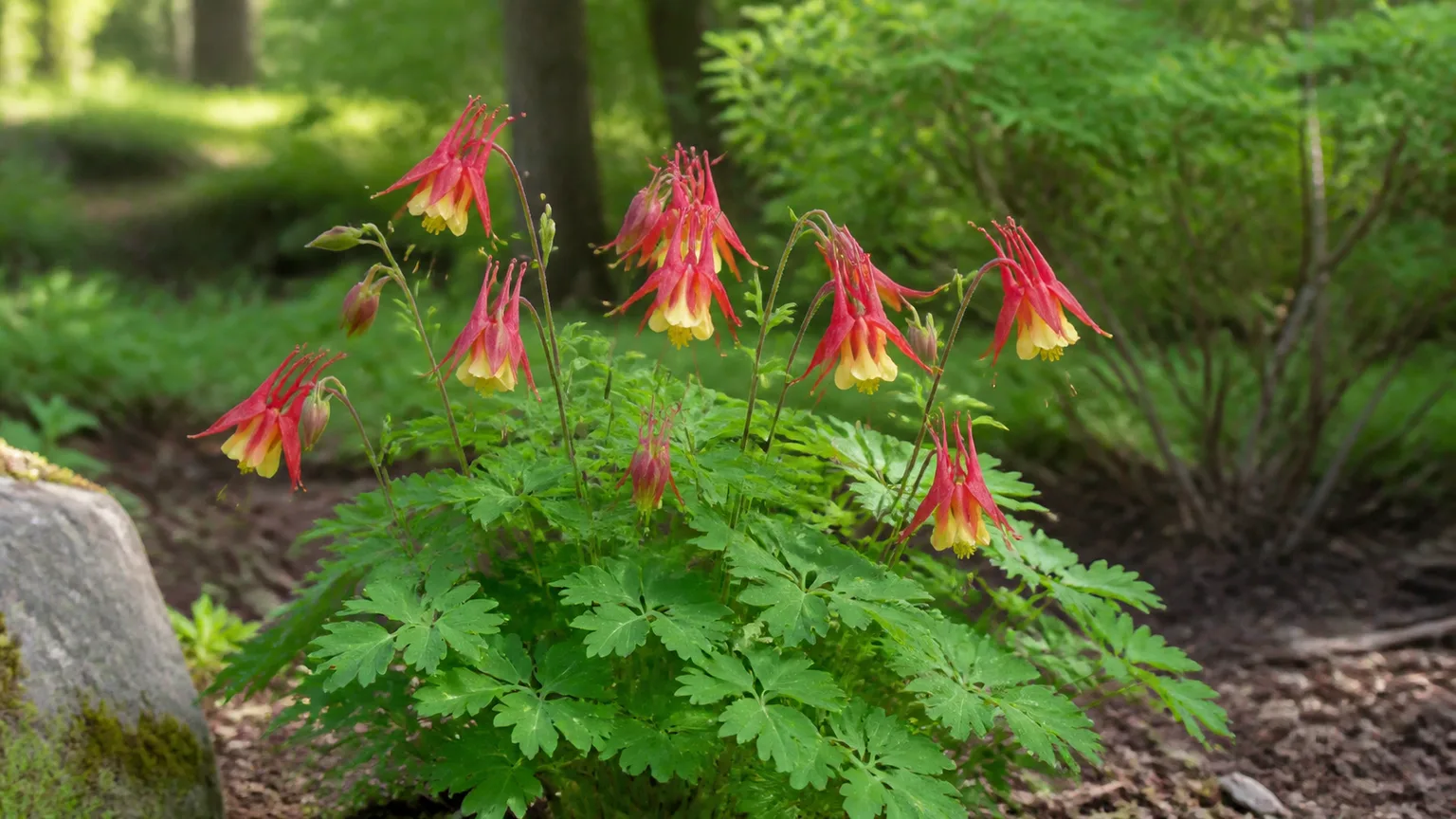
Columbines (Aquilegia species and hybrids) add a light, almost floating form to May beds. Their spurred flowers nod above branching stems, and the color range runs from native red-and-yellow forms to blue, white, pink, and mixed cultivars. They suit a cottage border or the edge of a woodland bed, where the delicate flowers can be viewed close up instead of disappearing behind taller shrubs.
Choose a regional species or cultivar for your climate. In a cooler site, columbine can take more sun; in a warm garden, afternoon shade helps the foliage stay fresh. Water new plants during establishment, then water established clumps during prolonged dry spells. Columbines can be short-lived, but they often self-sow, so leave a few seedheads if you want seedlings and deadhead the rest if you prefer a tidier bed. Iowa State’s columbine guide notes that many plants last only a handful of years but reseed readily; its practical advice is to tolerate minor leaf-miner damage unless the foliage is genuinely unsightly.
5. Hardy geranium
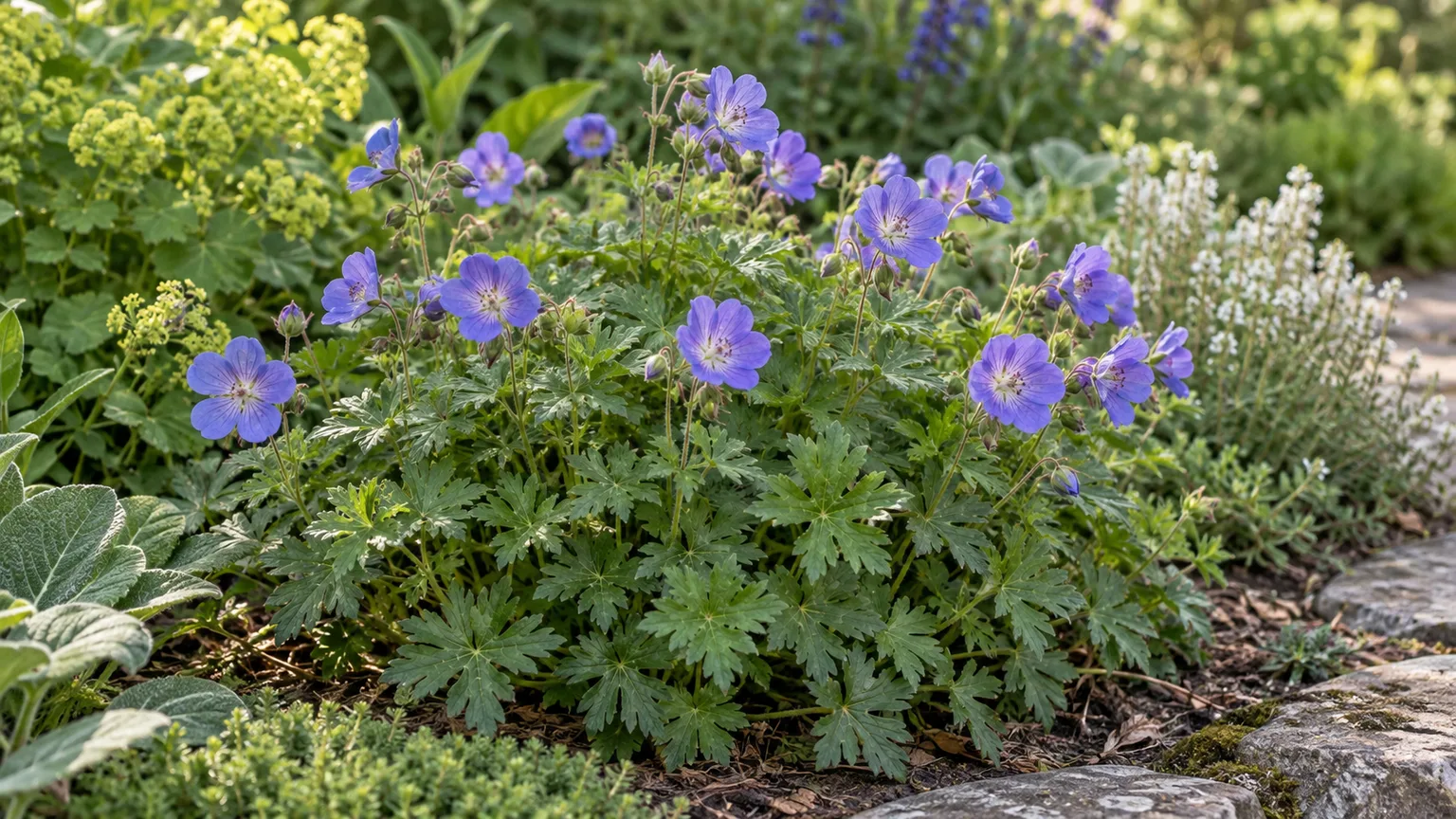
Hardy geraniums, or cranesbills, are true garden perennials in the genus Geranium. They are not the red, pink, or white bedding plants often sold as geraniums, which are Pelargonium. That label distinction matters: cranesbills are cold-hardy landscape plants that form mounds or spread as groundcovers, while pelargoniums are usually treated as tender annuals or overwintered indoors.
Many hardy geraniums flower in late spring, and some cultivars continue in waves well beyond May. Use a compact mound to edge a path or a spreading form to stitch gaps between taller perennials. Light and soil needs vary by species, but average, well-drained soil and sun to part shade suit many garden cultivars. Avoid expecting every hardy geranium to bloom all summer; choose a named long-flowering cultivar if repeat color is the priority, and shear lightly after its first flush only when the cultivar responds well to that treatment.
6. Jacob’s ladder
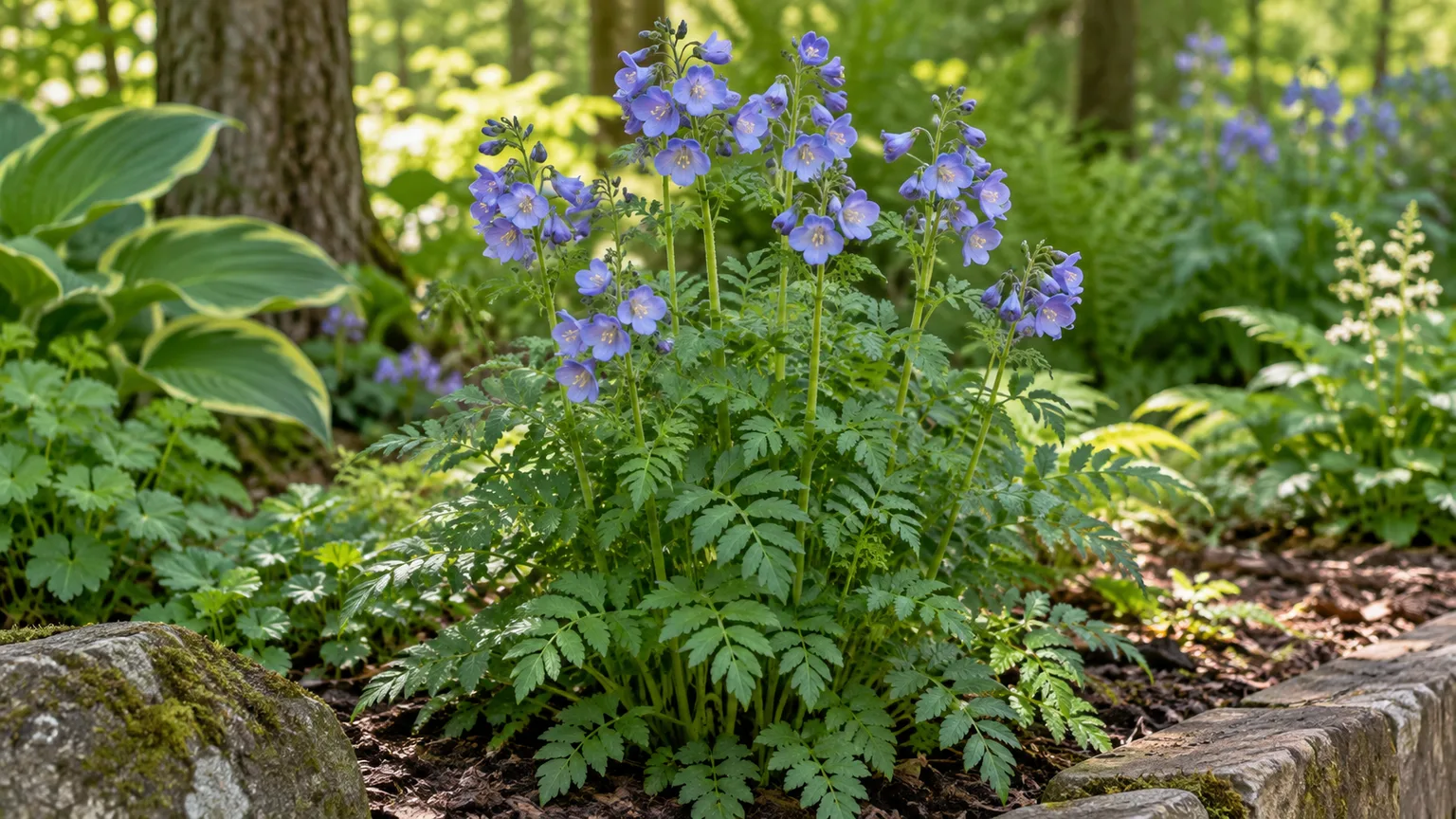
Jacob’s ladder (Polemonium) earns its name from the neat, ladder-like arrangement of leaflets on each stem. In spring, blue or violet bells rise above the foliage and bring a cool color to the middle of a shade border. The North American Polemonium reptans and European P. caeruleum are both grown, but cultivar size, foliage, and adaptation differ, so use the species name on the label rather than choosing by common name alone.
Give it cool part shade and soil that does not dry out for long stretches. The flowers are a seasonal accent, not a month-long carpet; its ferny foliage is the value after bloom. In hot, exposed gardens it can look tired early, so set it where nearby plants provide light afternoon shade without crowding the crown. If the first bloom ends and the plant remains healthy, remove the spent stems neatly; do not cut the whole clump to the ground in the belief that every cultivar will rebloom.
7. Bearded iris
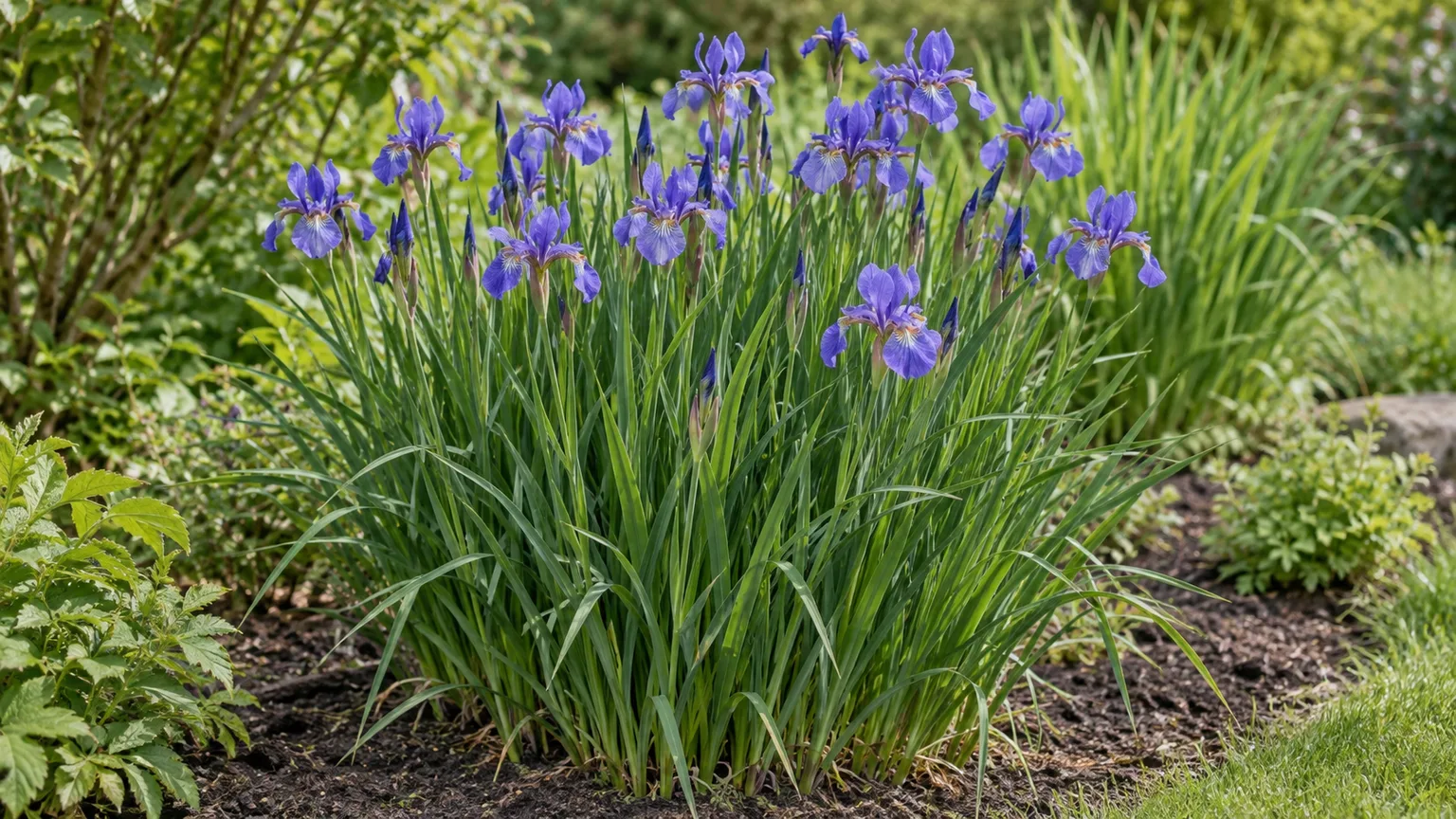
Bearded iris (Iris germanica hybrids) brings a strong, sculptural bloom to sunny May beds. Ruffled petals come in a remarkable range of colors, and the upright leaves give the border structure before and after flowering. The RHS lists border irises as flowering in May and June; its growing guide also emphasizes sun and well-drained soil.
The rhizome is the key to success. Plant or divide it so the top remains partly exposed to sun rather than burying it like a tulip bulb; a wet, shaded rhizome can rot and may flower poorly. Do not place a bearded iris in a boggy bed just because another iris grows at the pond edge: Siberian and Japanese irises tolerate more moisture than bearded types. After blooms fade, remove the flower stalk but leave healthy leaves to recharge the rhizome. The exact bloom week depends heavily on cultivar and local spring temperatures, so combine early-, mid-, and late-season varieties if you want more than one brief burst.
8. Lilac
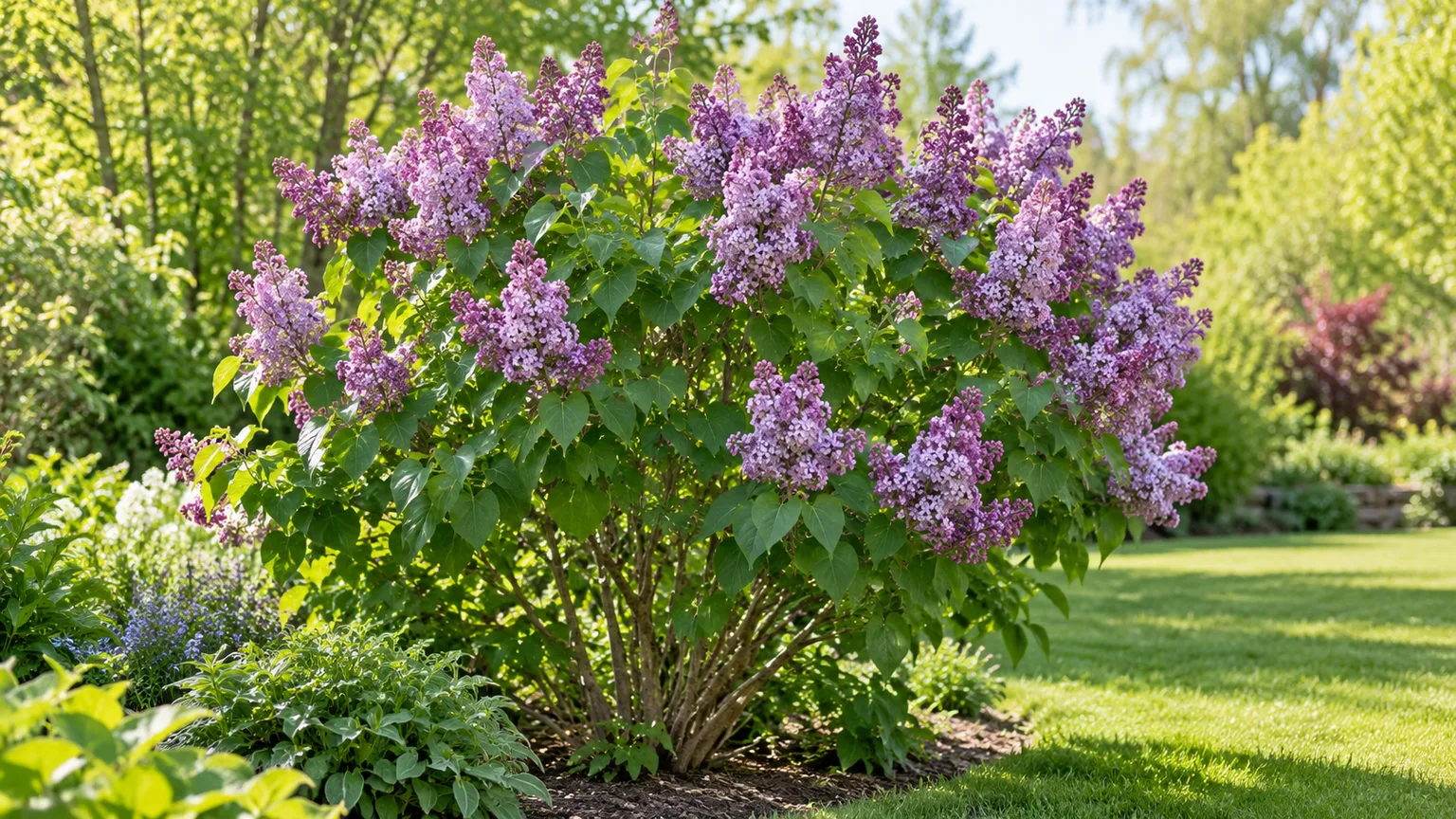
Lilacs (Syringa species and hybrids) are shrubs rather than border perennials, but their fragrant flower clusters can define a whole May garden. Common lilacs often bloom for a short run in spring; early, midseason, and late cultivars can stretch the display. University of Minnesota Extension groups cultivars by bloom time and notes that a selection of species and hybrids can extend fragrance into early summer in Minnesota’s colder climate. See its lilac guidance before choosing a shrub for your region and available space.
Give lilacs full sun for the strongest flowering and enough room for their mature size. They are not instant color: a young shrub may need time to establish, and an overgrown lilac may need phased renovation rather than a severe haircut. If pruning is needed, do it shortly after flowers finish because next year’s buds form during the growing season. Cutting in late summer, fall, or winter can remove those buds and leave you with a healthy shrub but fewer flowers.
9. Peony
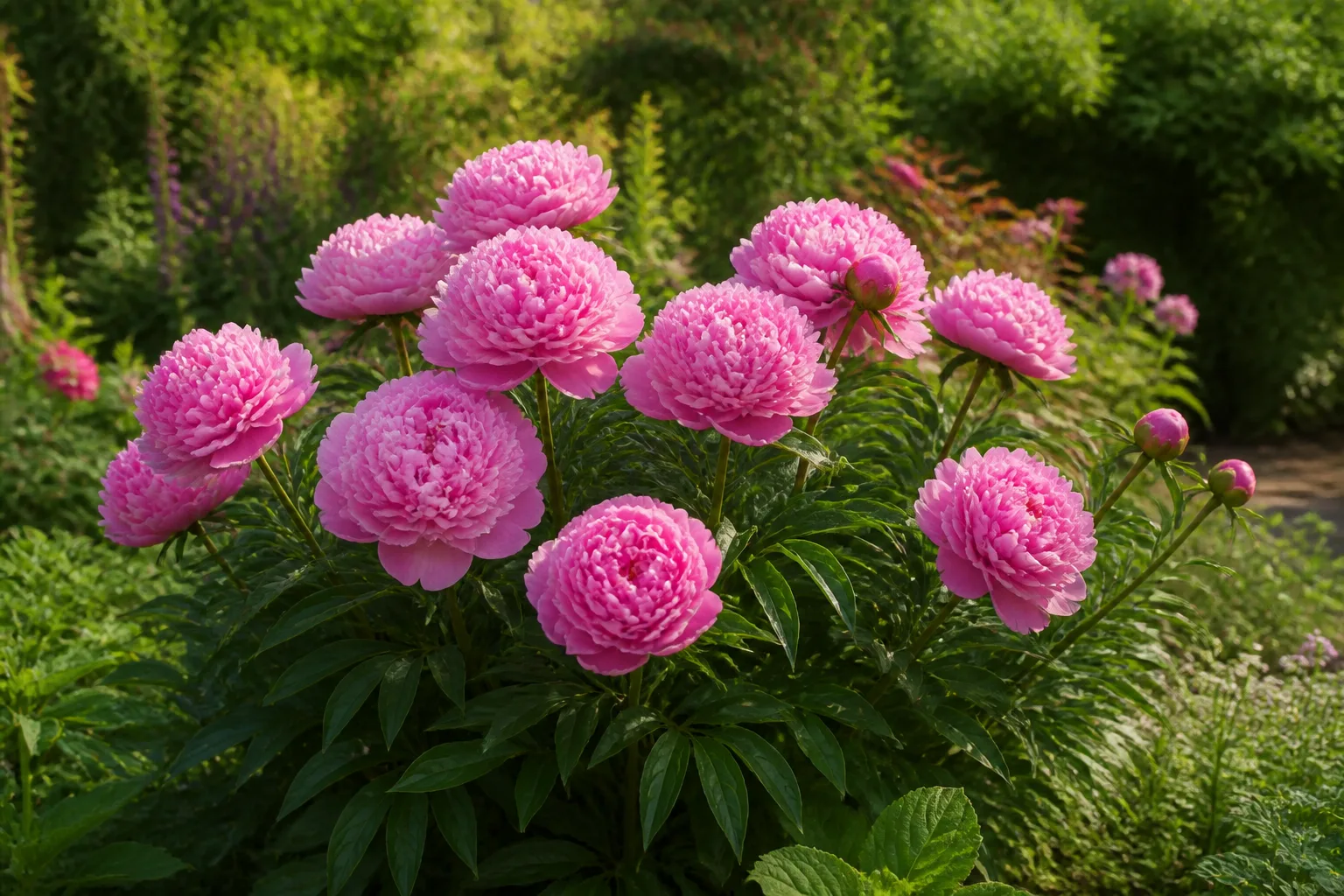
Peonies (Paeonia hybrids) often arrive near the end of May in cooler gardens, when their large, rounded flowers take over the border. Flowering can begin earlier in warmer areas, and cultivar choice makes a real difference: early, midseason, and late peonies can turn a one-week spectacle into a longer sequence. Iowa State Extension describes herbaceous peonies as a late-May feature in Iowa, while Fine Gardening’s garden report captures how peonies, irises, and alliums can overlap in a northern New Jersey garden during May and June.
Plant peonies in a sunny, well-drained spot and avoid burying the growth buds too deeply; deep planting is a common reason a vigorous-looking plant produces foliage but few flowers. Install a ring or discreet support while stems are still short if the cultivar has heavy, double blooms. Once flowers fade, deadhead for tidiness but keep the leaves until they naturally decline. The blooms are spectacular but brief, so place peonies among plants with attractive foliage or later flowers rather than expecting the peony to carry a bed all summer.
10. Pansy
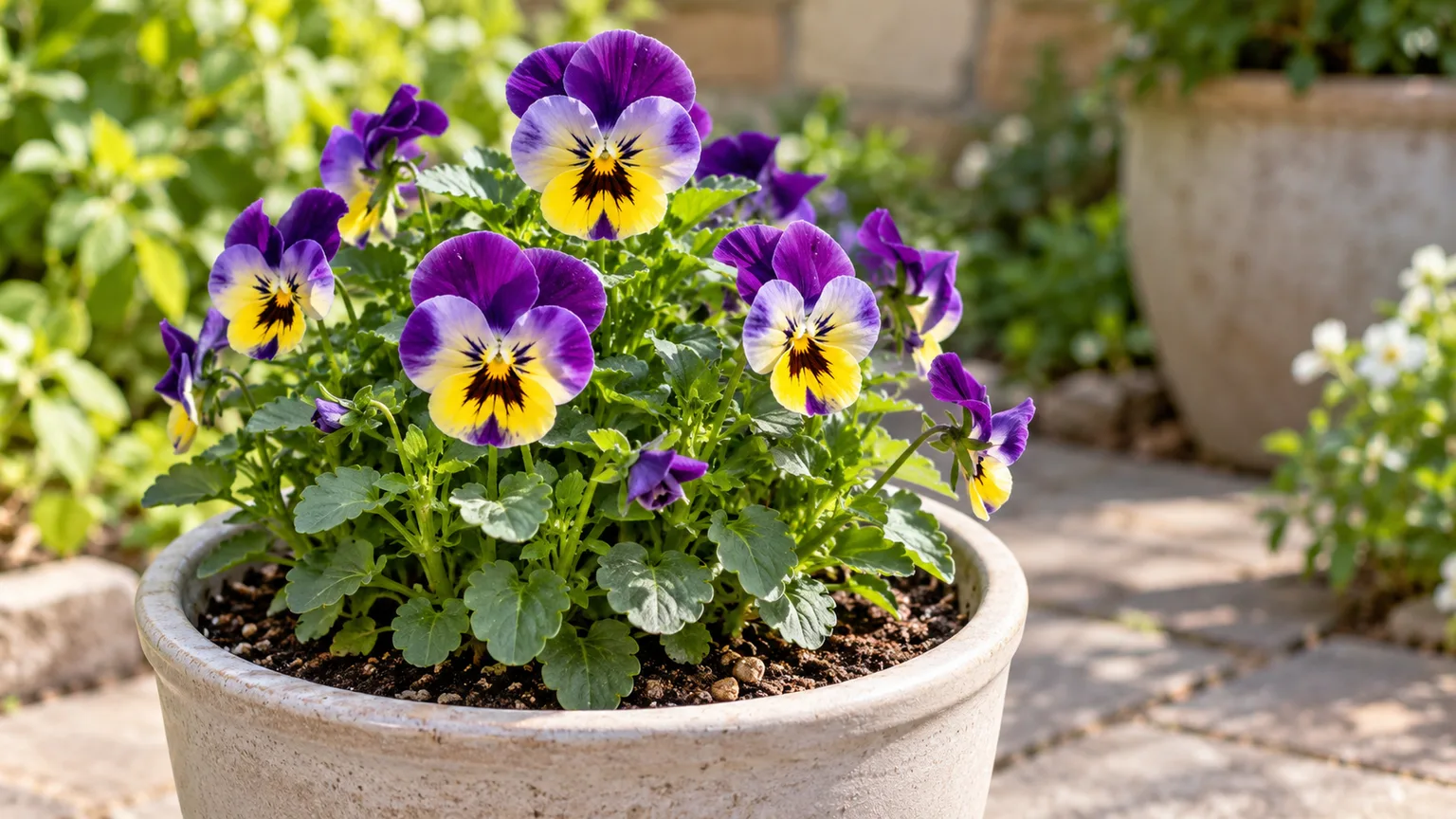
Pansies (Viola × wittrockiana) are the quick route to visible color in containers, window boxes, and the front edge of a spring bed. They bloom through cool spring weather and can bridge a gap while perennials are still emerging. Pick compact plants with plenty of buds and healthy leaves rather than choosing a pot with only a few open flowers; the unopened buds are the next part of the display.
Use a moisture-retentive but freely draining potting mix, water containers before they dry completely, and remove spent blooms if you want to discourage seed production and keep the pot tidy. Pansies generally fade when heat arrives, especially in hot afternoon sun, though some newer varieties tolerate warmer conditions better than older types. Treat them as a seasonal cool-weather performer, not a guaranteed summer perennial. In warm regions, plant them in fall or winter for spring flowers; in colder regions, spring planting can give a longer run.
11. Lily-of-the-valley
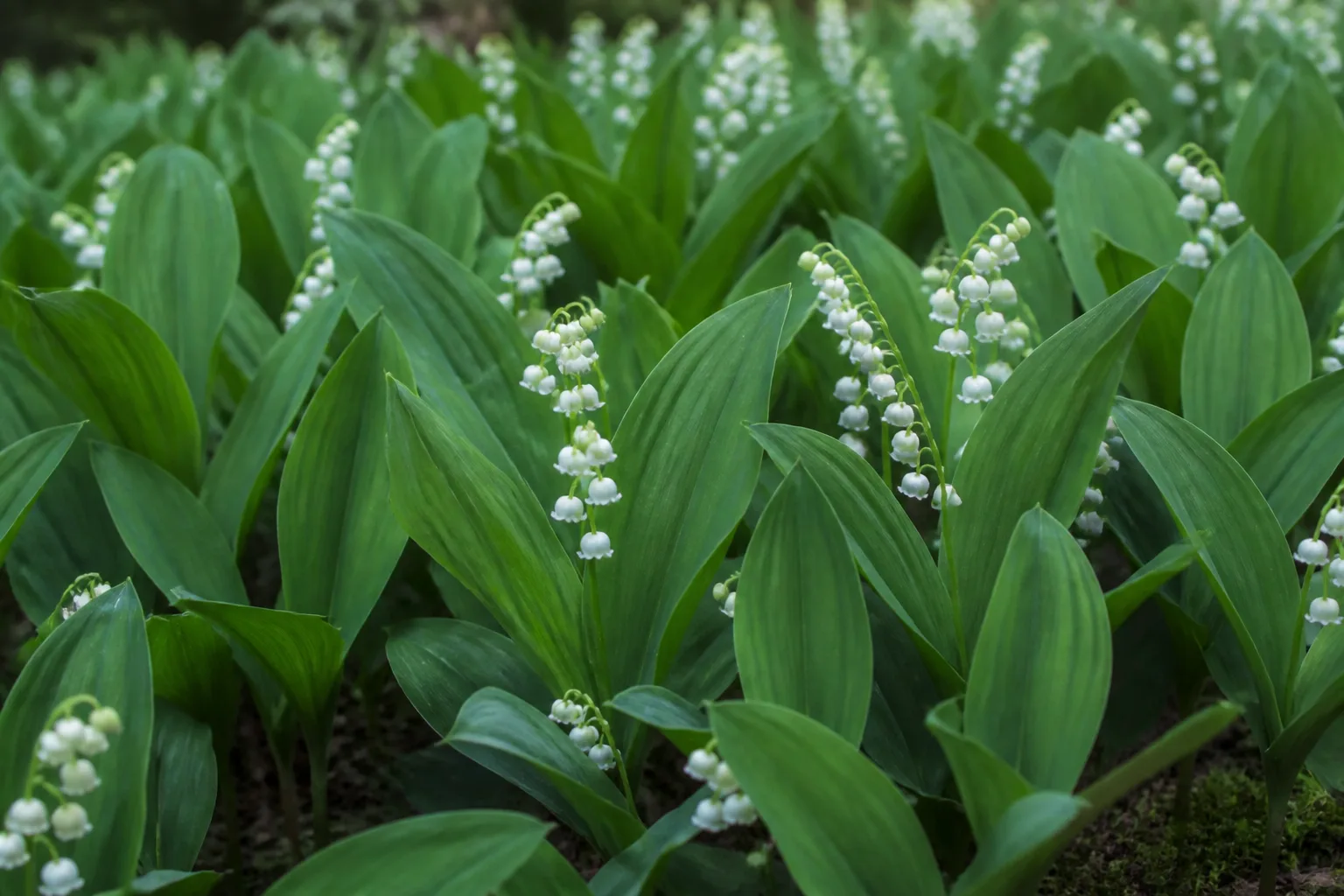
Lily-of-the-valley (Convallaria majalis) makes a low carpet of broad leaves and dangling white bells with an intense, clean fragrance. It can flower in May in temperate shade gardens and is useful where a low-growing plant is needed beneath shrubs. But its spread is a serious design choice, not a small maintenance detail: Iowa State Extension identifies it as an aggressive plant that spreads by runners and can be difficult to remove once established. Its groundcover guidance recommends limiting it to a place where it can be confined or allowed to spread freely.
There is also a pet-safety concern. The ASPCA lists lily-of-the-valley as toxic to dogs, cats, and horses, with cardiac glycosides as the toxic principle; see its plant safety profile. Skip it where pets can chew garden plants or cut stems. If you choose it for a contained, pet-free site, inspect the boundary regularly and remove runners before they move into neighboring beds. For a mixed shade border, Brunnera, columbine, or hardy geranium is easier to manage.
Match flowers to sun, shade, and water
Start with the site, then choose the flower. For a dry, sunny border, consider bearded iris, allium, and peony, but give each fast drainage; these plants do not become more drought-proof when their roots sit in heavy, saturated soil during spring. Lilac needs sun and room for a woody shrub, while a compact hardy geranium can soften the front edge. If deer pressure matters, the Fine Gardening garden report offers a real-world example of a gardener combining spring bloomers with foliage choices after repeated deer browsing, though no plant is universally deer-proof.
For part shade, combine bleeding heart, Brunnera, columbine, and Jacob’s ladder with foliage plants that cover seasonal gaps. Do not assume that “shade tolerant” means “dry-shade tolerant”: under a mature tree, roots compete for moisture, and new plantings may need closer monitoring while they establish. Pansies are most useful in a pot or accessible border edge where you can water and replace them as the weather heats up. Keep the lily-of-the-valley warning in view when choosing anything for a pet-accessible yard.
Make May flowers last through the month
One plant rarely flowers for all of May. Build overlap instead: a spring bulb or bleeding heart for the early part of the month, columbine and iris in the middle, then peony and later alliums as spring turns toward summer. In a small bed, repeat two or three flower shapes or colors so the display looks intentional rather than like a nursery holding area.
Pay attention to what remains after each flower fades. Allium leaves yellow; bleeding heart can disappear; Brunnera and Jacob’s ladder shift from bloom to foliage; lilac and peony need attractive neighbors once their brief show is over. Pairing spring bloomers with later perennials or evergreen structure prevents the “everything was beautiful for ten days” problem. Fine Gardening’s garden example shows how iris, peony, and allium can overlap in one spring display, while the RHS allium guide suggests using lower herbaceous plants to conceal declining leaves.
Deadhead only when it supports the result you want. Removing spent lilac clusters soon after flowering helps prevent seed formation and leaves time for new growth; cutting the shrub later risks next year’s buds. Remove a peony’s faded flower if you do not want seedheads, but leave healthy foliage. Let some columbine seedpods mature if you want volunteers. Leave allium seedheads if you enjoy their winter shape, or remove them for a tidier border. The right cleanup depends on the plant, not on a rule to deadhead everything.
What to plant now for blooms this May
If May is already underway, the fastest route to immediate flowers is a mature nursery plant with open blooms and unopened buds. That works for a container of pansies or a potted perennial, provided you water it through transplant stress and avoid planting into hot, dry soil without follow-up care. A new peony, lilac, or allium bulb is not a reliable same-season shortcut: bulbs are normally planted before the season, and woody shrubs or newly planted perennials may spend the first year building roots.
Seeds are even less predictable for immediate May color. Direct-sown annuals can be satisfying later in summer, but germination, seedling growth, and weather all take time; buying a seed packet in May does not mean you will have flowers in May. For next year, note what flowered in your neighborhood and when, then plant bulbs and divide or place perennials in their recommended season. The RHS’s May flower jobs include hardening off and planting out only after frost risk has passed, and supporting tall or heavy-flowered perennials such as peonies before stems flop.
When shopping, check the plant label for the botanical name, mature height and spread, light, soil drainage, and bloom window. Ask a local nursery which cultivars are flowering now in your area. If you need a specific week for a wedding or other event, buy a plant already in bud and keep a backup option; weather can speed up or delay a garden display by days or weeks.
Conclusion
The best flowers that bloom in May are the ones whose natural season matches your climate and whose growing needs fit the site you actually have. Use alliums, irises, peonies, and lilacs for sunny displays; use bleeding heart, Brunnera, columbine, or Jacob’s ladder in part shade; and use pansies for flexible, cool-weather color. Check local bloom timing, plan for what happens after the flowers fade, and treat spreading or pet-toxic plants as deliberate choices rather than harmless filler.



