How to Grow and Care for Aloe Ferox Indoors or Out
Learn how to grow Aloe ferox indoors or outdoors, with practical advice on light, gritty soil, watering, cold protection, seed propagation, and common problems.
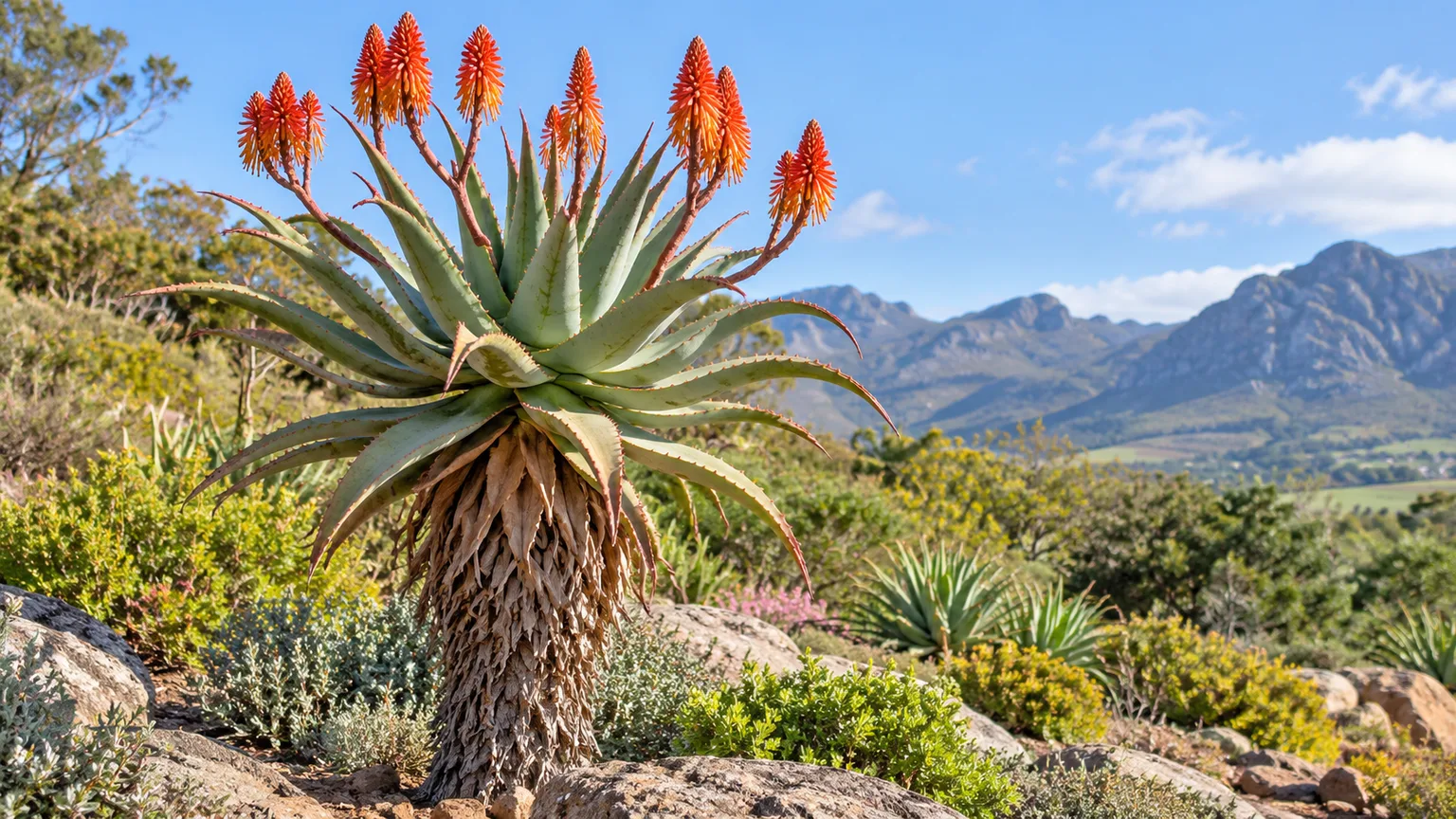
Aloe ferox is a striking South African succulent, but it is not a compact desk plant. It grows into a heavy, spiny, tree-like rosette that needs strong light, excellent drainage, and enough room to mature. In a warm, dry garden it can become a long-lived focal point; in a cold climate, growing it in a pot makes winter protection possible, though the plant will eventually need substantial space.
The central care rule is simple: give the roots air, give the leaves sun, and water only after the growing medium dries through. Most problems start when a grower treats this large, drought-adapted aloe like a thirsty tropical houseplant or keeps it in a pot of dense, wet soil.
Is Aloe ferox the right aloe for your space?
Cape aloe, bitter aloe, and red aloe are common names for Aloe ferox Mill., an evergreen succulent native to southern Africa. It grows across varied habitats from the Western Cape toward KwaZulu-Natal and Lesotho, including rocky slopes and open scrub. That broad native range helps explain why plants can vary in shape and appearance; it does not mean every specimen will tolerate every garden’s winter.
How to recognize Cape aloe
A young plant forms a dense rosette of broad, blue-green leaves. The reddish-brown teeth along the edges are sharp, and some forms also carry prickles on the leaf surfaces. With age, the rosette rises above a single woody stem as lower leaves dry and remain attached, creating a natural hanging “petticoat.” That skirt is part of the plant’s architecture, not a sign that it needs pruning.
Mature plants send up branching, candelabra-like flower clusters with many tubular blooms, most often orange to red, though yellow forms occur. SanBI PlantZAfrica describes plants around 2–3 metres tall, while the RHS gives a possible mature range of 2.5–4 metres tall and 1.5–2.5 metres wide. Allow for a large plant rather than planning around a single maximum; container culture and climate can slow growth, but neither turns it into a miniature aloe. (SanBI PlantZAfrica; RHS Aloe ferox profile)
Choose a site based on mature size
Plant in the ground only where winters are mild enough for an exposed succulent and the soil drains quickly after rain. A slightly raised bed or slope is safer than a low pocket where cold air and winter water collect. Give the mature rosette clearance from paths, doorways, and windows: the leaf teeth can catch clothing or skin, and an old specimen is difficult to move.
In colder regions, treat Cape aloe as a movable container plant or greenhouse specimen. The RHS lists it for conservatory or greenhouse growing in the UK and recommends a sheltered position, a useful reminder that a broad hardiness-zone label cannot capture wet cold, wind, duration of frost, or local shelter. An indoor plant also needs a bright place with room around its sharp leaves, and an eventual plan for its width and weight.
Give it stronger light gradually
Outdoors, full sun produces the firmest, most compact growth. In places with punishing afternoon heat, a spot with morning sun and light afternoon shade can prevent scorch, especially while a young plant is establishing. If a nursery plant has been grown under shade cloth, do not take it straight into all-day sun; start it in gentle morning light and increase exposure over roughly one to two weeks.
Indoors, choose the brightest window available, usually a south- or west-facing exposure in the Northern Hemisphere or the corresponding sun-facing window in the Southern Hemisphere. Turn the pot a quarter turn every week or two if the plant leans toward the glass. If it stretches, spaces leaves farther apart, or loses its compact rosette, the room is too dim for healthy long-term growth; adding a grow light or moving it outside in warm weather is more effective than adding fertilizer.
Aloe ferox grown indoors will not necessarily bloom simply because it is old. Flowering depends on maturity, strong light, and a favorable growing season. A specialist succulent grower’s account records an individual garden plant flowering sooner than expected, but that is a single specimen’s history, not a schedule to plan around. (Dry Oasis Plants, grower account)
Build a fast-draining root zone
Roots need oxygen as much as they need water. For a container, start with a commercial cactus or succulent mix and improve it with coarse horticultural grit, pumice, or perlite so water can pass through instead of sitting in the center of the root ball. A practical starting blend is about two parts potting mix to one part coarse mineral amendment; in a rainy or humid climate, use a grittier mix and a sheltered location.
For outdoor planting, drainage matters more than enriching the soil. If water remains in a test hole or the site stays muddy after rain, plant on a mound or raised bed rather than trying to fix a heavy clay pocket with a small handful of sand. Fine sand can pack tightly; use angular grit or coarse mineral particles. Avoid mixing a large amount of compost or manure into the immediate root zone, since a moisture-holding pocket can remain wet long after the surface looks dry.
RHS guidance suggests peat-free cacti compost, or a peat-free loam-based compost amended with horticultural grit for indoor plants. The exact commercial bag matters less than the result: after watering, excess drains freely, and the mix loses moisture through the root zone before the next irrigation. (RHS Aloe ferox profile)
Choose a pot that will stay stable
Use a pot with an unobstructed drainage hole and a broad enough base to resist tipping. Mature plants are heavy above the soil line, and fast growth from rich mix or frequent feeding can make a tall specimen top-heavy. A heavy terracotta or ceramic pot can help, but it also becomes difficult to move once the plant grows; choose the container with winter handling in mind.
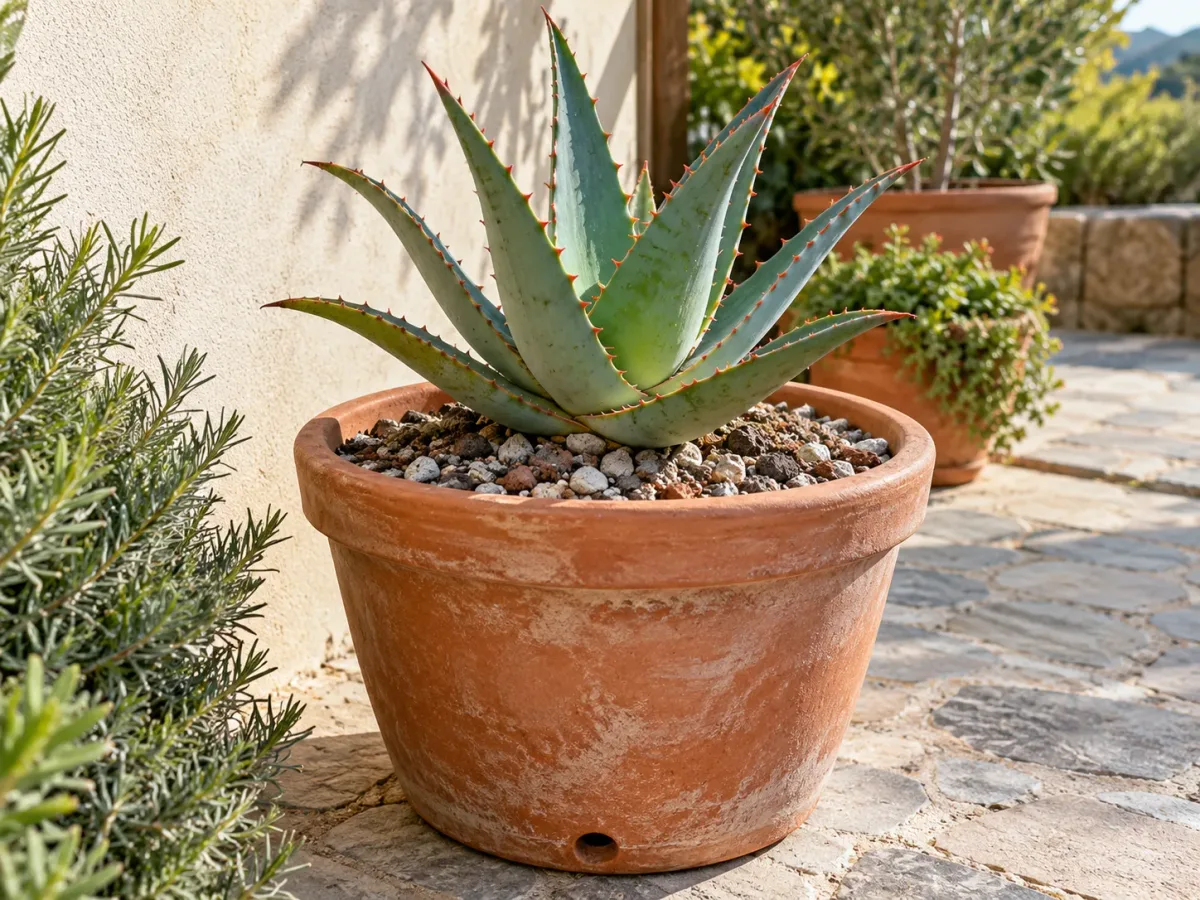
Do not jump from a small nursery pot to an oversized planter. A large volume of unused soil stays wet longer than the roots can absorb it. Move up only enough to fit the root ball and provide room for several seasons of growth, then use a stable outer stand or dolly if the plant must be moved indoors each year. Never use a decorative cachepot that traps runoff unless you remove the inner pot and empty the collected water after each watering.
Water deeply, then wait for the root zone to dry
Water thoroughly enough that the whole root ball is moistened, then let excess run out of the drainage hole. Wait until the mix is dry well below the surface before watering again. Pressing a finger into the top inch is not a reliable test in a large pot: the top may feel dry while the center remains cool and damp. Use a wooden skewer pushed several inches into the mix, or learn the difference in pot weight between a recently watered plant and a dry one.
There is no dependable weekly schedule. In bright, warm weather a container may dry in a few weeks; in winter, a cool room, low light, or a large pot can extend that interval substantially. Water based on the mix and season, not the calendar. A specialist aloe-care guide likewise recommends watering when the medium is dry through much of the pot rather than following a fixed routine. (Prickly Petals, aloe cultivation guide)
For a new outdoor planting, water after planting to settle the soil, then check it periodically while roots establish. Once established, the plant can use natural rainfall in many climates; during prolonged hot drought, a deep drink is more useful than frequent shallow splashes. In a wet winter, stop supplemental irrigation and protect the root zone from persistent rain if drainage is marginal. Never leave the roots standing in a saucer of water.
Set seasonal temperature and humidity expectations
Aloe ferox handles ordinary dry indoor air well; extra humidity is unnecessary and can make poor airflow around a wet crown more troublesome. Warmth and light encourage active growth, while short winter days and cooler conditions slow water use. When growth slows, stretch the time between waterings rather than trying to keep the plant growing with more feed.
Treat freezing weather as a serious risk. A plant in the ground cannot be moved, so reserve permanent planting for a frost-light microclimate with fast drainage and protection from cold winds. If your forecast calls for a frost, move a container under cover before the cold arrives; keep it bright and sheltered, and avoid watering just before a cold spell. Do not rely on a precise minimum temperature printed on a generic succulent chart, because root wetness, frost duration, wind, plant age, and acclimation all affect damage.
Feed lightly, if at all
Aloe ferox survives lean soil and does not need heavy feeding. Fresh potting mix usually supplies enough nutrition for the first growing season. After that, if the plant is actively growing in a container, use a balanced liquid fertilizer at a conservative dilution once in spring or early summer, then watch the response. A plant in the ground with healthy growth may need no routine fertilizer.
The RHS recommends a general liquid fertilizer monthly from May to August for indoor cultivation, while specialist growers emphasize low maintenance and modest feeding. These are different care contexts, not a reason to stack fertilizer doses. For a home-grown plant, one light application during active growth is a cautious starting point; skip feeding in winter, after root damage, or when the soil stays wet. Too much nitrogen can produce softer, faster growth and worsen the plant’s tendency to become top-heavy. (RHS Aloe ferox profile; Dry Oasis Plants)
Repot only when the plant needs it
Repot when roots fill the pot, circle densely at the drainage hole, or the mix has broken down and no longer drains well. A set two- or three-year interval is only a rough reminder; growth rate, climate, pot size, and watering practices determine the actual timing. Spring or early summer is easiest because the plant can begin growing in fresh mix before light and temperature decline.
Wear thick gloves and long sleeves, and use folded cardboard or a strap to support the rosette without squeezing the leaves. Keep the root ball intact unless you need to remove decayed roots or old, compacted soil. Set the plant at its previous depth, firm the mix lightly, and leave the crown above the soil line. If roots were cut or disturbed, let the mix stay dry for several days before watering so small wounds can close.
Keep the natural leaf skirt and remove spent flower stalks
Do not strip healthy lower leaves to make the trunk look tidy. They dry naturally and remain on the stem, forming the skirt described by SanBI. Remove a leaf only when it is fully dry, damaged, or diseased; use a clean, sharp tool and cut close to the stem without tearing into living tissue. If a dried skirt hides pests or traps damp debris in a rainy climate, remove only the loose dead material you can reach safely.
After flowering, wait until the stalk has finished and begins to dry, then cut it near its base with clean loppers. Support the stalk as you cut so it cannot fall onto the plant or a nearby person. Do not prune the central growing point or shorten healthy leaves. A young plant may take years to flower, and an indoor specimen may never receive enough light to do so; focus on steady, compact growth instead of trying to force blooms with extra water or fertilizer.
Propagate by seed rather than expecting pups
Unlike common Aloe vera, Aloe ferox does not reliably produce offsets; a specialist grower describes seed as the usual way to raise it. Seed is the most practical route for a home gardener. SanBI recommends sowing in a well-drained medium in a shallow tray, covering the seed lightly with sand so it stays in place, then keeping the medium moist while guarding against overwatering. Seedlings can be moved to small pots when they reach about 4 centimetres; the SanBI guidance notes that this stage may take around six months. (Dry Oasis Plants, propagation notes; SanBI PlantZAfrica)
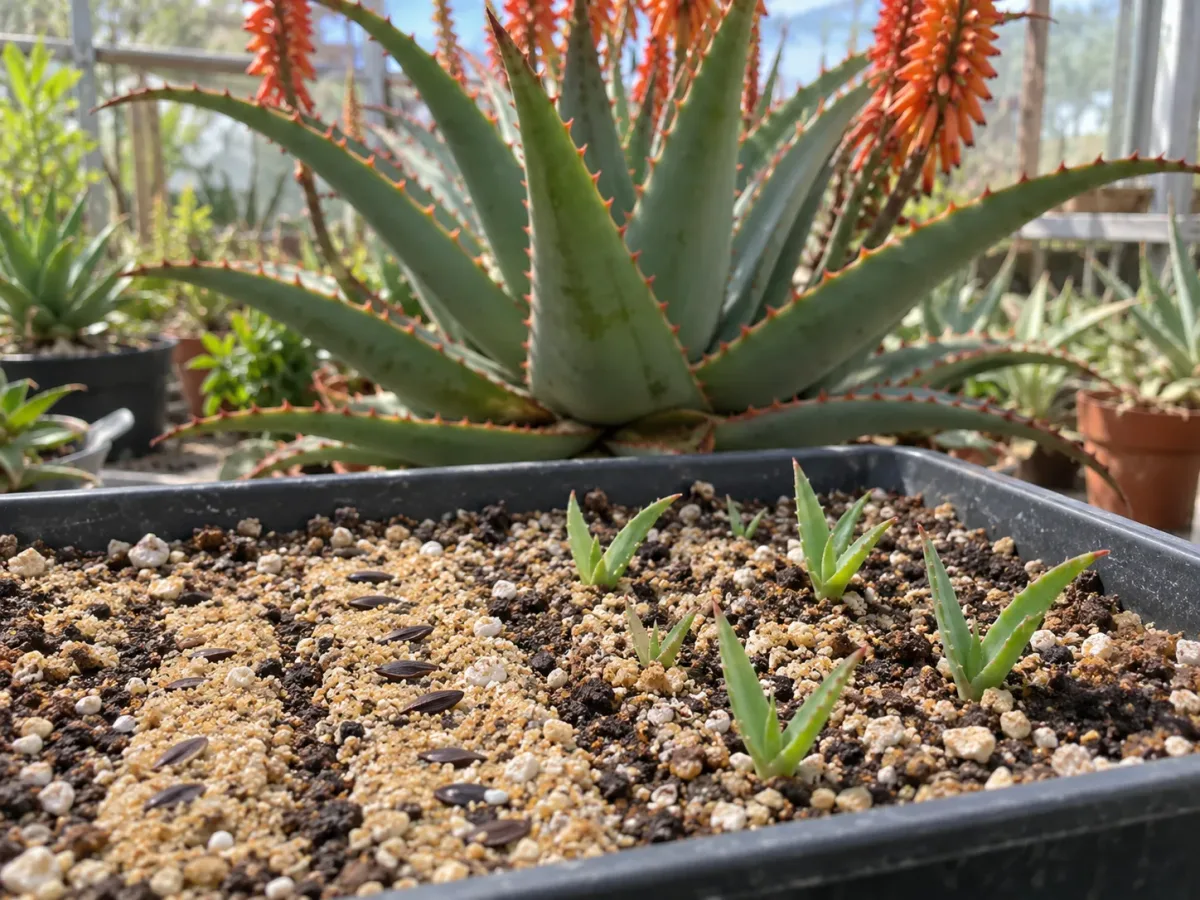
Fill a shallow tray with a sterile, gritty seed mix and pre-moisten it so the surface is evenly damp rather than muddy. Scatter the seeds with space between them, cover them lightly, and place the tray in a warm, bright spot out of harsh midday sun. Keep the mix lightly moist until germination; once seedlings appear, improve airflow and let the surface begin to dry between gentle waterings. If you use a clear cover to hold moisture, lift it daily and remove it once seedlings emerge.
Aloe species can hybridize when they flower at the same time, according to SanBI. If a different aloe is blooming nearby, seedlings may not come true to the parent plant. For a guaranteed species label, buy a nursery-grown plant from a reputable source rather than relying on seed collected from a mixed aloe garden. If an established specimen unexpectedly forms a basal offset, wait until it has its own roots before separating it; do not assume every Aloe ferox will make pups.
Diagnose common Aloe ferox problems
Read several clues together rather than treating one leaf symptom as a diagnosis. Check the soil moisture several inches down, inspect the base of the stem, and compare new growth with older leaves. A single dry bottom leaf is normal; a cluster of soft or collapsing leaves is not.
Soft leaves or a dark stem
Soft, translucent, or water-soaked leaves usually point to roots staying wet too long. Stop watering and inspect the base. If the stem is still firm and the roots are pale and solid, move the plant to bright light and let the mix dry thoroughly. If the roots are dark, mushy, or foul-smelling, remove the wet mix and cut away only rotted tissue with a sterilized blade; repot into a dry, fast-draining medium and delay watering while cuts heal.
A black or brown stem is more urgent when it is soft, spreading, or accompanied by loose leaves. A firm, dry scar or old leaf base is different from active rot. If the crown has collapsed or rot has reached the growing point, saving the whole plant may not be possible. Correct the drainage and watering conditions before attempting recovery; otherwise the replacement plant will face the same problem.
Bleaching, leaf spots, and normal color changes
Pale or bleached patches on the sun-facing side can follow an abrupt move from shade into strong direct sun. Return the plant to bright filtered light, then acclimate it more gradually. A reddish tint can be a normal response to intense light or cooler conditions, but sudden widespread color change with shriveling calls for a check of water and roots.
Dark or rust-colored spots can have more than one cause, including injury, persistent moisture, or disease. Isolate a plant with spreading lesions, avoid wetting the leaves, and remove only clearly affected tissue with a clean blade. Do not apply a fungicide merely because a spot is brown; identify the problem first and use only products labeled for the plant and disease in your location.
Mealybugs, scale, and aloe mite galls
Inspect leaf bases and the undersides of leaves for cottony mealybugs or hard scale. Isolate an infested container, wipe off a small number of insects, and recheck new growth every few days. Repeat cleaning if needed. For a persistent infestation, consult a local extension or plant clinic and follow the product label; avoid spraying a stressed plant in direct sun.
Aloe mite can cause irregular, knobby galls on leaves or the central growing point. These growths do not flatten when the plant dries and are not the same as a single scar. Remove and discard an affected part only if it can be done without damaging the crown; isolate the specimen and get an expert diagnosis if the distortion continues. Specialist growers report that established aloe-mite damage is difficult to reverse, so routine inspection is more useful than waiting for the plant to look severely deformed. (Dry Oasis Plants, pest observations)
Handle the plant safely and keep pets away
The marginal teeth can cut skin, and large leaves may have surface spines. Wear sturdy gloves, long sleeves, and eye protection when moving or pruning a mature plant. Lift from the pot or support the trunk rather than pulling on the rosette, and avoid placing it beside a narrow walkway where someone could brush against it.
Keep the plant out of reach of pets and children who might chew it. The ASPCA lists Aloe vera as toxic to dogs, cats, and horses and identifies saponins and anthraquinones as toxic principles; that listing names Aloe vera, not Aloe ferox, so it should not be presented as a species-specific test. SanBI notes that Aloe ferox has a bitter yellow latex with a long history of laxative use. The prudent rule is not to eat or apply raw plant material, and to contact a veterinarian promptly if a pet chews it; do not try a home remedy. (ASPCA Aloe listing; SanBI PlantZAfrica)
Follow a seasonal routine that favors dry roots
Think in terms of growth and weather, not a fixed month on the calendar. In spring, check whether the pot is crowded, refresh the mix if it has compacted, and resume watering as the plant starts active growth. This is also the least stressful time to repot or give a small, diluted feed.
In summer, introduce outdoor sun gradually and water deeply only after the root zone dries. In autumn, move container plants under cover before cold nights; inspect for pests before bringing them indoors. In winter, keep the plant as bright as possible, reduce watering as growth slows, and let flower stalks develop without keeping the soil constantly damp. In Southern Africa, SanBI records flowering mainly from May through August, the local winter; greenhouse flowering elsewhere shifts with hemisphere, maturity, and growing conditions. (SanBI PlantZAfrica)
Conclusion
Aloe ferox is easiest to grow when you plan for the plant it becomes: a tall, spiny succulent with a broad crown and a heavy stem. Give it strong light, a fast-draining root zone, a stable pot or a warm outdoor site, and deep but infrequent watering guided by soil dryness. Protect it from freezing conditions, keep pets from chewing it, and choose seed if you want to propagate it. The plant rewards patience with sculptural foliage and, once mature and well lit, a branching display of orange-red flowers.