10 Houseplants for Kitchens by Light and Space
Find 10 houseplants for kitchens, from edible herbs to low-water foliage. Match each pick to your light, counter space, cooking heat, and pet-safety needs.
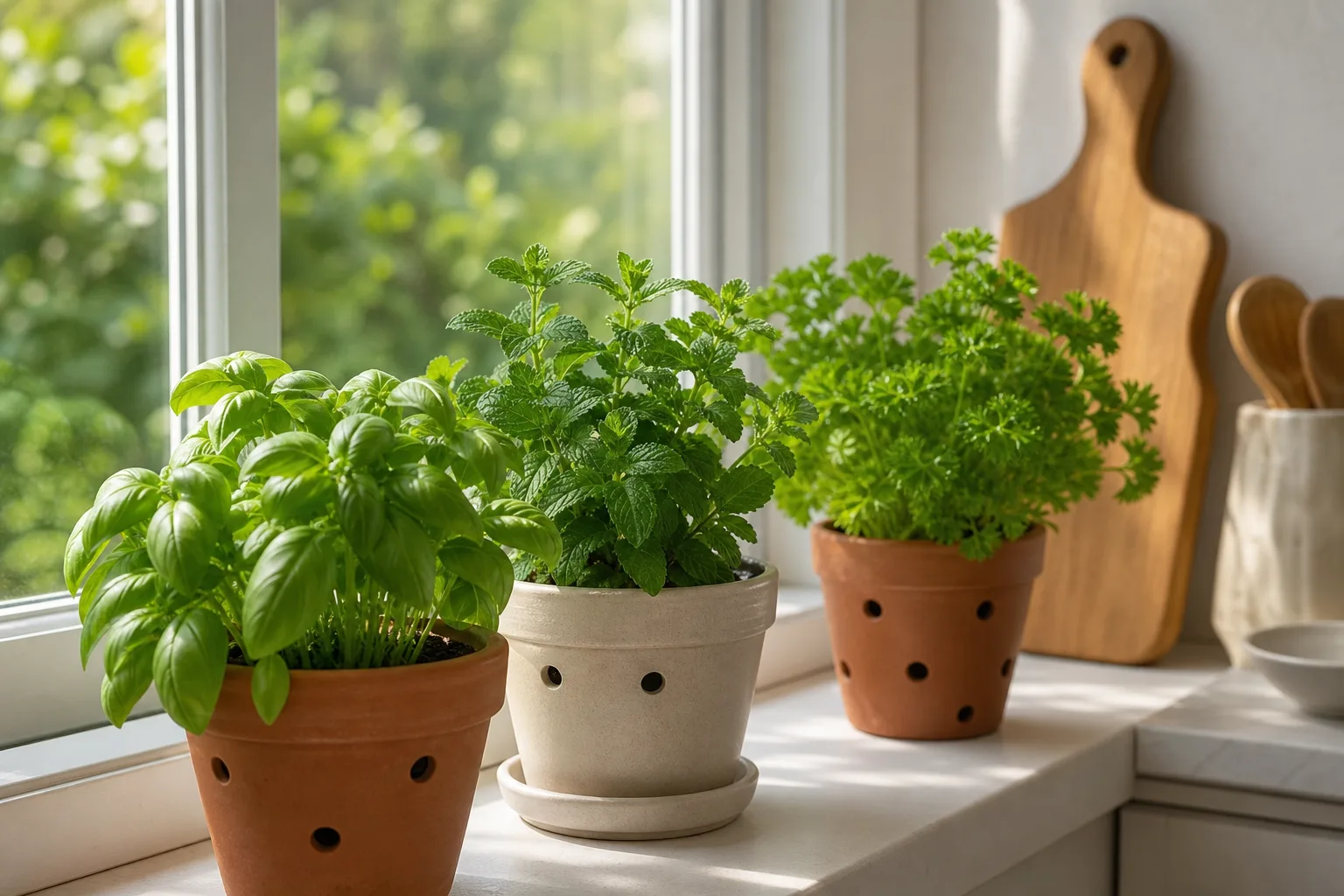
The best kitchen houseplant is the one that fits the light and has a safe place to grow. A bright windowsill can support culinary herbs or aloe; a shelf several feet from the glass may suit pothos or a spider plant better. A dark, windowless kitchen is a different problem: no houseplant can thrive in darkness, so plan for a grow light before you buy.
Kitchens also combine conditions that plant labels rarely describe: hot appliances, short bursts of steam, grease, food-prep surfaces, and limited counter space. Match the plant to the spot instead of assuming that every kitchen is warm and humid. The ten picks below include edible herbs, compact flowers, trailing foliage, and larger statement plants, with the trade-offs that matter in a real working room.
One benefit does need a reality check. Houseplants can make a kitchen feel more welcoming, but a few pots will not clean the air or remove cooking fumes. A peer-reviewed review of 12 chamber studies estimated that matching the pollutant removal from typical air exchange would take roughly 10 to 1,000 plants per square meter of floor space, depending on the plant and study; keep using a range hood and ventilation rather than relying on foliage as an air filter (Journal of Exposure Science & Environmental Epidemiology review).
Let the kitchen’s conditions narrow the list
Read light where the leaves will sit
Check the light at the plant’s actual height, not at the window. A windowsill, a counter beside the window, and a shelf on the opposite wall can receive dramatically different amounts of light. Even a few feet from glass can reduce the light reaching leaves, so “bright kitchen” is not a useful description unless you identify the exact spot. Epic Gardening’s guide to indoor plant light explains why measuring or observing light at the plant is more useful than relying on a vague room label.
Watch that location for a full day. Note whether direct sun reaches it, when the strongest beam arrives, and whether a tree, awning, neighboring building, or curtain blocks the window. If plants stretch toward the glass, lose variegation, or stop making healthy new growth, the site may be too dim; if leaves develop pale, dry patches on the sun-facing side, the beam may be too harsh for that plant or it may need gradual acclimation.
For a kitchen with some daylight but no sunny sill, try a spider plant, pothos, snake plant, or ZZ plant and expect slower growth than in brighter conditions. For a room with no window or usable daylight, install a white full-spectrum grow light above the plants and follow the manufacturer’s distance and timing guidance. Low-light tolerance means a plant can persist in less light; it does not mean it can grow well in a dark corner.
Treat heat, grease, and steam as separate stressors
A kitchen is not automatically a humid greenhouse. Cooking and dishwashing can release short bursts of moisture, but an exhaust hood may remove that moisture quickly, while the air between cooking sessions is much drier. Do not place a humidity-loving plant beside a steamy appliance and expect stable humidity; move it to a bright, calm spot and use a room humidifier only if the plant truly needs more moisture.
Radiant heat and sudden temperature swings are often a bigger risk than brief steam. Keep foliage away from burners, ovens, toaster ovens, air-fryer exhaust, and the hot plume above a dishwasher. A plant does not need to sit beside the appliance to benefit from the room; choose a spot outside the heat and airflow path where leaves will not be repeatedly scorched, dried, or bumped.
Cooking oil and airborne grease can settle on leaves near a range. A thin film attracts dust and blocks some light from reaching the leaf surface, so clean foliage gently with a damp, soft cloth when it looks dirty. Avoid leaf-shine products and do not scrub delicate leaves; prevention is easier than repeatedly washing a plant kept too close to the stove.
Protect the prep zone, drainage, and household pets
Keep ornamental plants and potting mix away from cutting boards, open food, and the area where dishes dry. Use a dedicated saucer or waterproof tray, and choose a pot with a drainage hole; after watering, empty the decorative outer pot so the roots do not sit in runoff. A cachepot makes a shelf or counter safer only when the nursery pot can be removed for watering and the collected water is poured away.
Treat edible herbs differently from ornamental foliage. Grow herbs in clean, food-safe potting mix, keep them clear of cleaning sprays and cooking grease, and wash harvested leaves under running water before use. Never taste an ornamental plant because its name sounds familiar or because another part of a related species is eaten.
Pets change the shortlist. The ASPCA lists spider plant and African violet as non-toxic to cats and dogs, while it lists pothos, heartleaf philodendron, snake plant, and aloe as toxic to one or both; a “non-toxic” listing does not mean any plant should become a pet’s regular snack. If a pet chews a plant, identify it by its botanical name and contact a veterinarian or animal poison-control service for advice rather than waiting for symptoms.
Ten kitchen plants matched to their best use
1. Culinary herbs: the pick for harvest
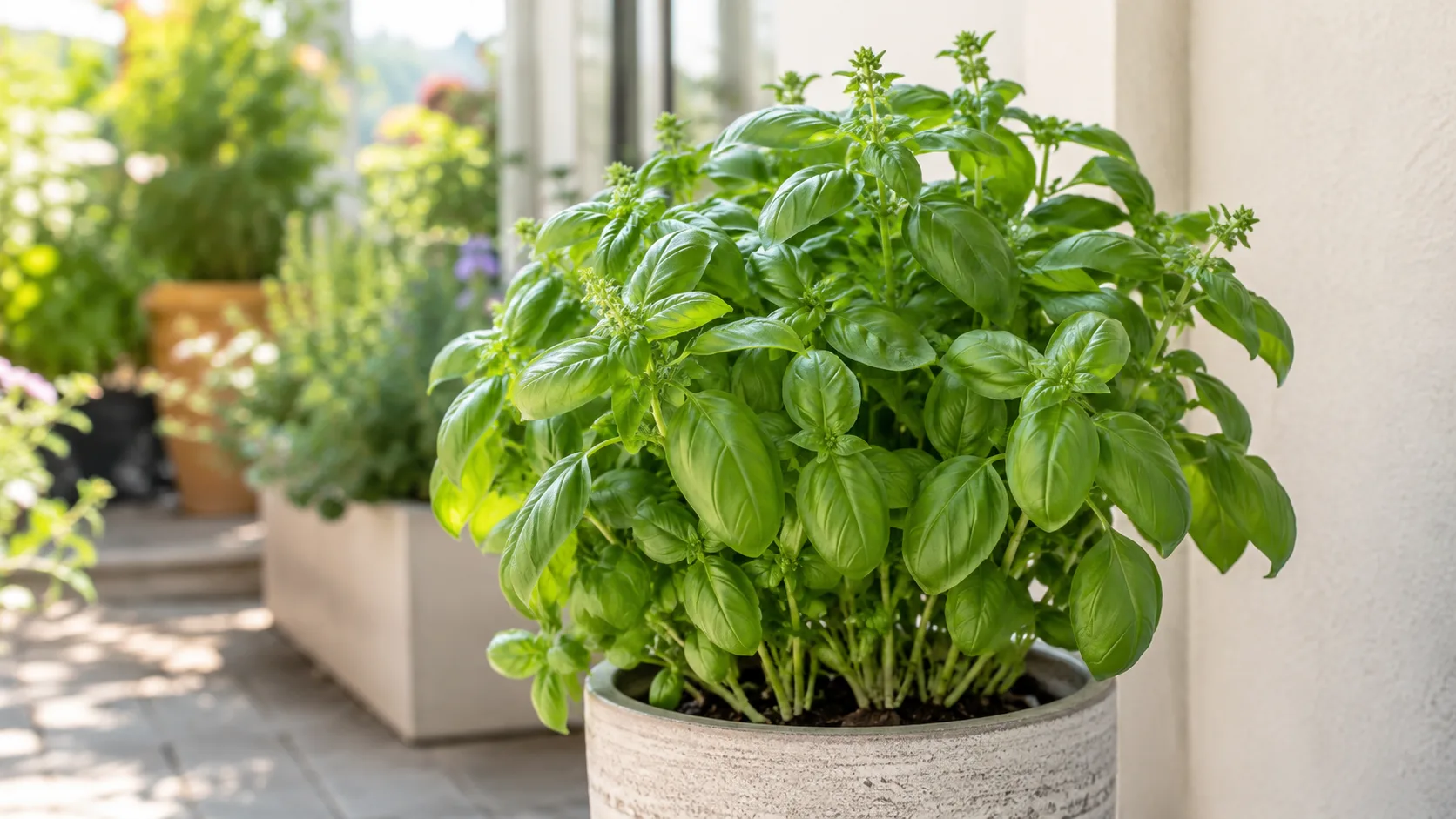
Choose culinary herbs when you want leaves you will actually use, but give them the brightest place in the kitchen. Basil, rosemary, and thyme generally need more direct light than many foliage plants; chives, parsley, and summer-sown cilantro can cope with more partial shade. The Royal Horticultural Society’s container guidance recommends a sunny spot, while its shade-tolerant herb list shows why a windowsill that is too dim for basil may still suit chives or parsley (RHS herb container guidance; RHS herbs for shade). In low light, a small grow light can keep a compact herb pot productive.
Keep herbs in separate pots when their water needs differ. Mint spreads quickly and prefers more even moisture than woody rosemary, so give mint its own container rather than letting it crowd the rest. Use a pot with drainage, water when the mix begins to dry, and harvest lightly and often so the plant branches instead of becoming a tall, bare stem. If fresh herbs are not part of your cooking routine, pick an ornamental plant that does not need the brightest sill.
2. Spider plant: a pet-aware hanging choice
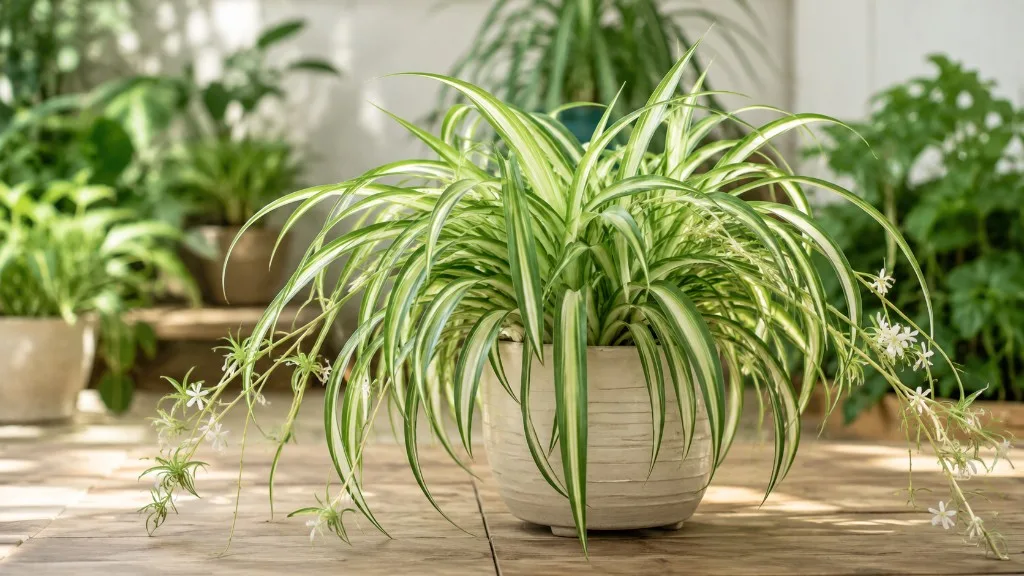
A spider plant (Chlorophytum comosum) suits a bright or moderately lit kitchen where you can spare vertical room but little counter area. Its arching leaves and hanging plantlets look good in a basket or on a shelf, and the plant usually produces those offsets when it is growing steadily. Keep the foliage out of a hot direct beam if the leaves are not acclimated, and trim or reposition long runners so they do not hang over a burner or into the food-prep area.
The ASPCA lists spider plant as non-toxic to cats and dogs (ASPCA spider plant listing). That makes it a more considerate option in a pet household than a toxic trailing vine, but chewing can still damage the plant or upset an animal’s stomach. Set the pot where a pet cannot pull it down, and water once the top layer begins to dry rather than keeping the mix constantly wet.
3. African violet: flowers in a small bright spot
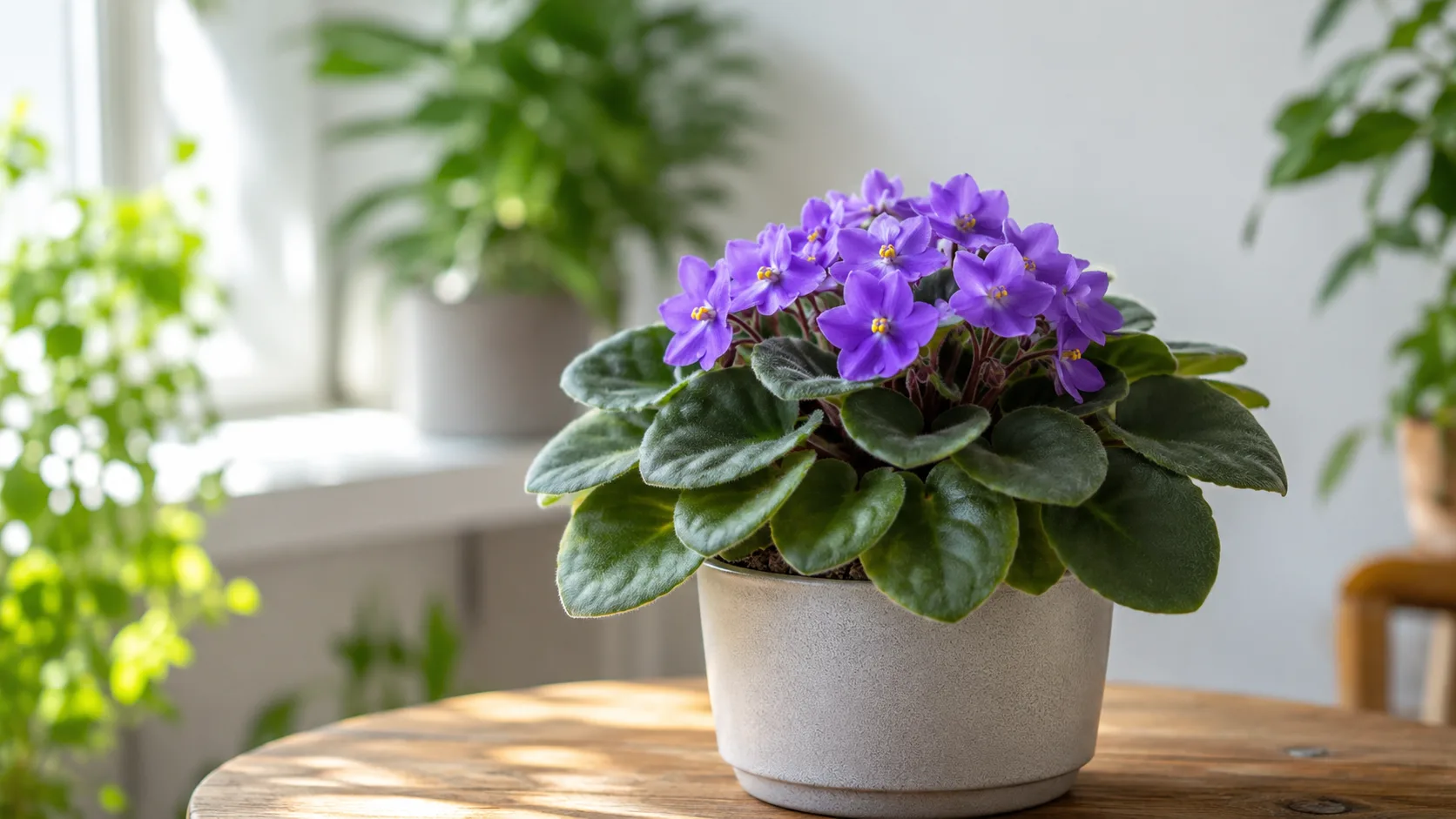
An African violet (Saintpaulia and related hybrids) brings flowers to a small counter, shelf, or windowsill that receives bright indirect light. It is a better match for a compact spot than a large floor plant, and a stable place helps it bloom more reliably than a shelf repeatedly moved between hot and cold zones. Protect it from a harsh midday beam through glass; if the leaves pale or scorch, add a sheer curtain or move the pot a little farther back.
Keep the potting mix lightly and evenly moist, not soggy, and empty the saucer after watering. Bottom-watering can keep water off the fuzzy leaves, but do not leave the pot standing in water for hours. The ASPCA lists African violet as non-toxic to cats and dogs (ASPCA African violet listing); it is still an ornamental plant, not an ingredient for food or tea.
4. Pothos: cascading foliage for a high shelf
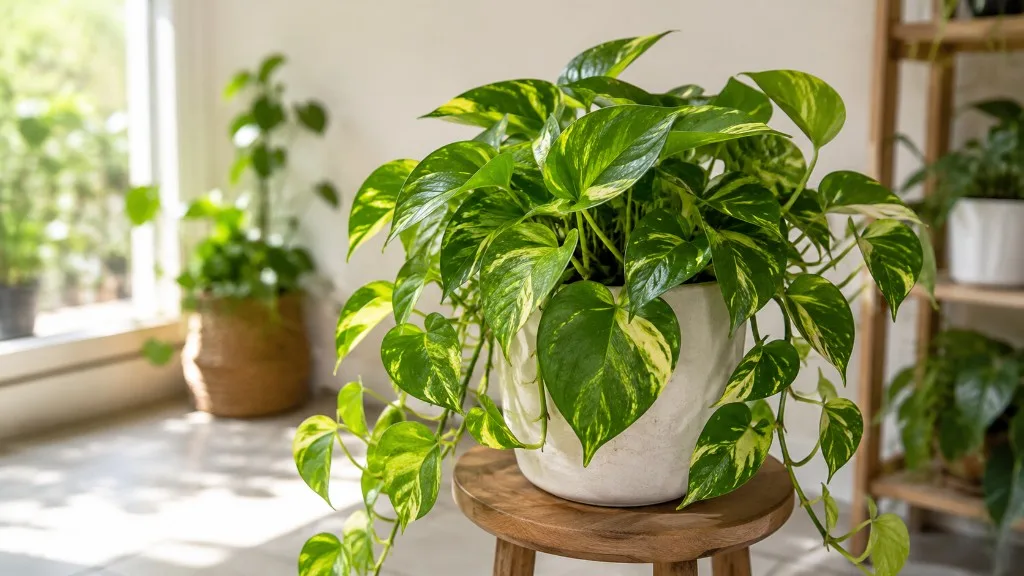
Pothos (Epipremnum aureum) is a practical trailing choice if you have a bright shelf or a hanging point outside the cooking zone. It grows best in bright indirect light, though it can survive for long stretches in lower light; in a dim position, growth slows and variegated leaves may become greener. North Carolina State Extension notes that pothos does well in a well-drained mix and that low light can reduce variegation (NC State Extension’s pothos profile).
Let the potting mix dry somewhat between waterings and do not leave the pot in water inside a decorative cachepot. Long vines need regular trimming so they do not trail across food, appliances, or a path where someone can catch them. Pothos is toxic to cats and dogs according to the ASPCA, which lists insoluble calcium oxalates and mouth irritation among the concerns (ASPCA devil’s ivy listing). Use it only where children and pets cannot chew the leaves or pull the pot down.
5. Heartleaf philodendron: a softer trailing vine
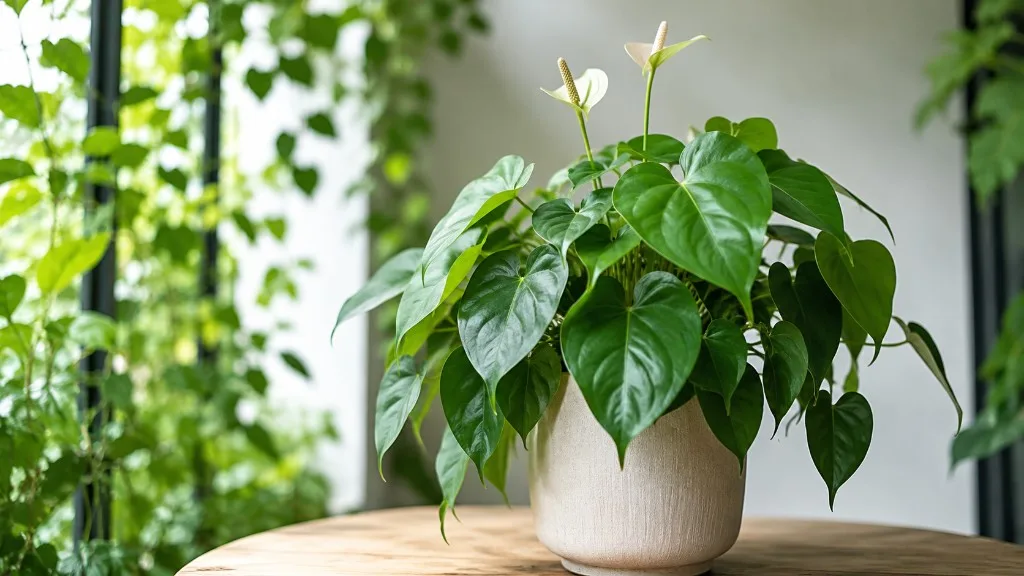
Heartleaf philodendron (Philodendron hederaceum) can fill the same vertical niche as pothos, with thinner stems and softer, often more uniformly green leaves. Give it bright indirect light for fuller growth, and let the upper part of the potting mix begin to dry before watering again. It can adapt to an average indoor room, but a dim kitchen corner may produce long gaps between leaves rather than the dense, leafy look most growers expect.
Pothos and heartleaf philodendron are often mistaken for one another, but they are different genera and both need the same placement caution: keep trailing stems away from pets, toddlers, food, and hot appliances. The ASPCA lists heartleaf philodendron as toxic to cats and dogs because of insoluble calcium oxalates (ASPCA heartleaf philodendron listing). If you like the look but cannot keep a toxic vine out of reach, choose a spider plant or African violet instead.
6. Snake plant: upright form with forgiving watering
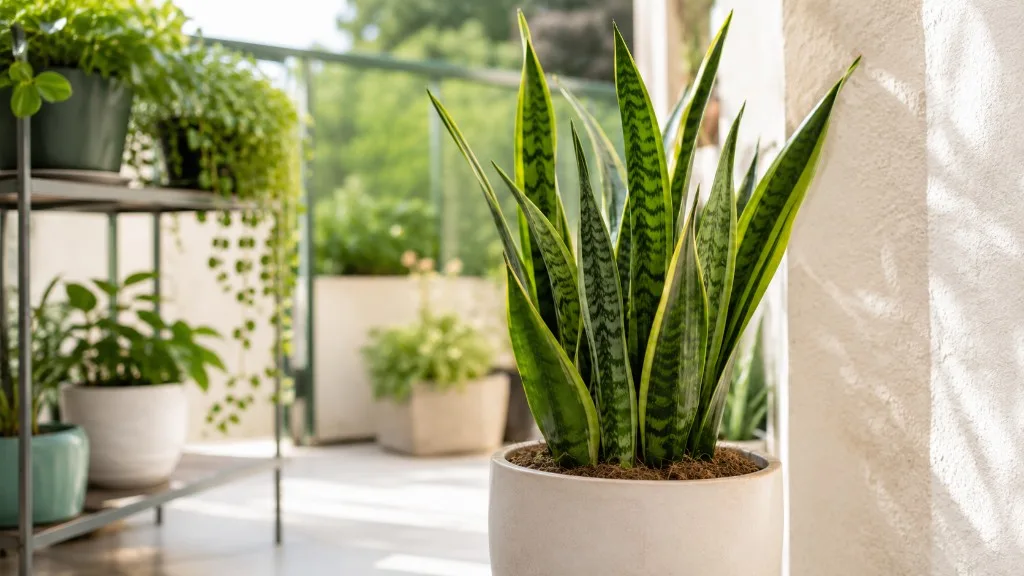
A snake plant (Dracaena trifasciata, also sold under the older name Sansevieria trifasciata) works on a narrow plant stand or floor spot where a trailing plant would be in the way. It tolerates lower light than herbs or aloe, but it still grows better with useful daylight; a dark corner may keep it alive while producing very little new growth. Its upright leaves make it one of the easier choices for a small kitchen with limited horizontal space.
Let the potting mix dry thoroughly before watering again, and choose a free-draining mix and pot. Frequent small splashes near a sink are not a substitute for checking the root zone, and water trapped in an outer pot can still cause rot. The ASPCA lists snake plant as toxic to cats and dogs, with saponins associated with nausea, vomiting, and diarrhea (ASPCA snake plant listing). Keep it out of reach if an animal or young child might chew its stiff leaves.
7. ZZ plant: the low-water option for a bright room
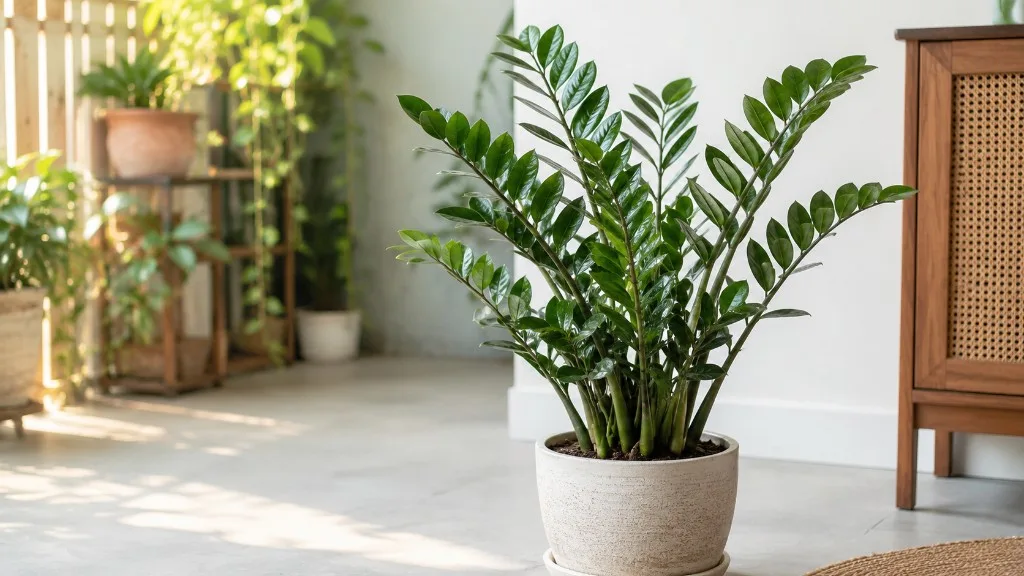
A ZZ plant (Zamioculcas zamiifolia) is suited to a kitchen where you want upright glossy foliage and do not want to water often. Its fleshy underground rhizomes store water, which explains why it copes with drying better than a small herb pot. North Carolina State Extension notes that it can persist in very low light but does best in bright indirect light; if you have that brighter shelf, growth will generally be more satisfying than in a dim corner (NC State Extension’s ZZ plant profile).
Wait until the potting mix has dried out before watering, then let excess water drain fully. Do not place it in a constantly damp dish beside the sink, and do not mistake slow growth for a need to feed it frequently. NC State lists the ZZ plant as toxic to cats and dogs, so position it where the foliage is not available to nibblers. This is a good plant for someone who forgets a watering now and then, not for a kitchen with no usable light or a pet that investigates every leaf.
8. Aloe vera: a succulent for the sunniest sill
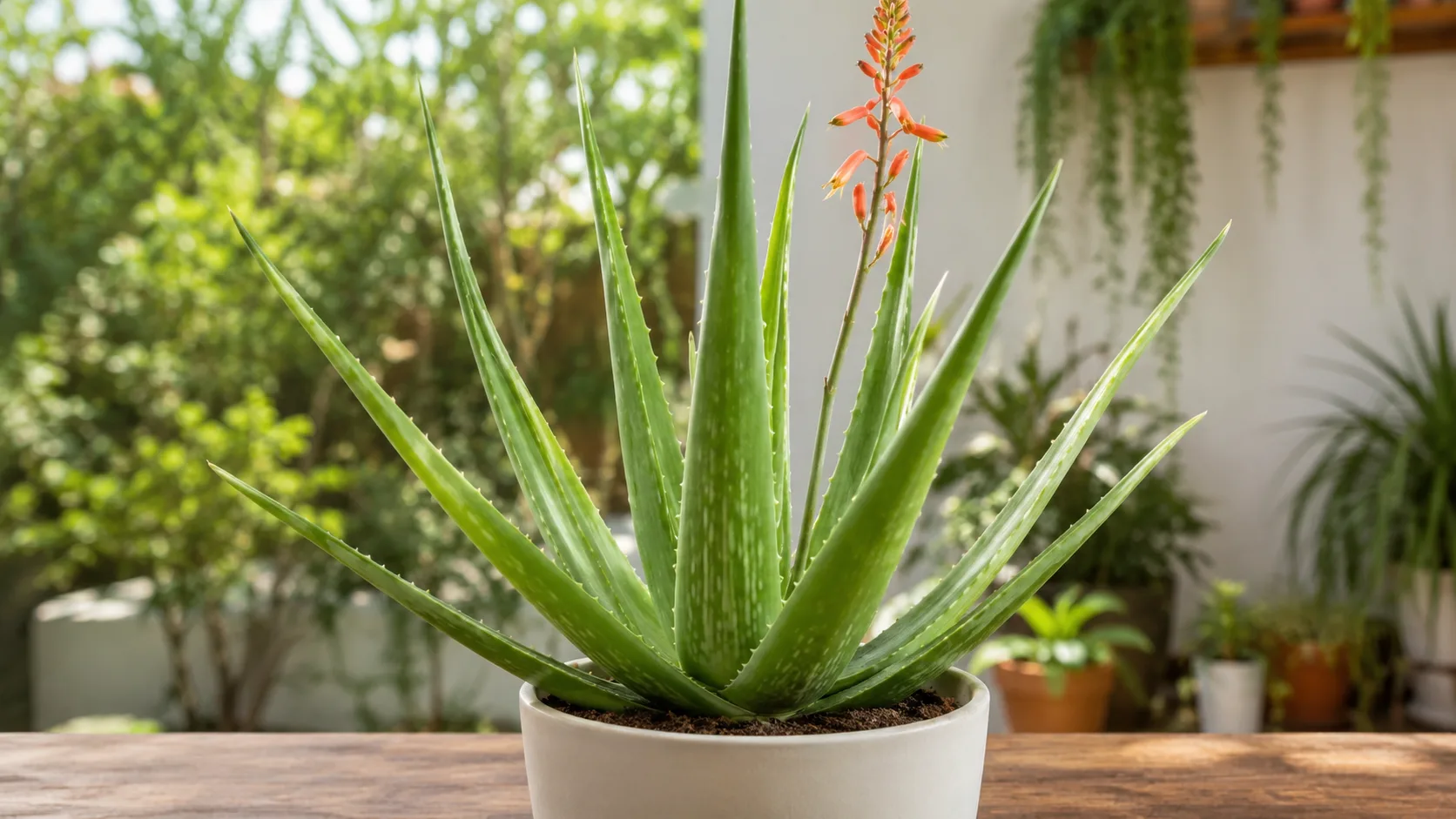
Aloe vera is a better choice for the sunniest kitchen window than for a humid corner or a shelf far from glass. Give it a pot with drainage and a coarse, fast-draining succulent mix; water only after the mix dries, and do not keep it sitting in a saucer of water. If the leaves lean toward the window or stretch, move it closer to the light gradually rather than suddenly placing a greenhouse-grown plant in intense afternoon sun.
Aloe’s familiar gel can make it seem like a kitchen ingredient, but do not treat the whole plant as edible or as an automatic remedy. The ASPCA lists aloe as toxic to cats and dogs and notes that ingestion can cause vomiting, lethargy, and diarrhea (ASPCA aloe listing). If you keep pets, choose a high, stable spot they cannot reach or pick another plant. Aloe is worth considering only when you have strong light and can keep it safely separated from chewing.
9. Rubber tree: a floor plant for a roomy kitchen
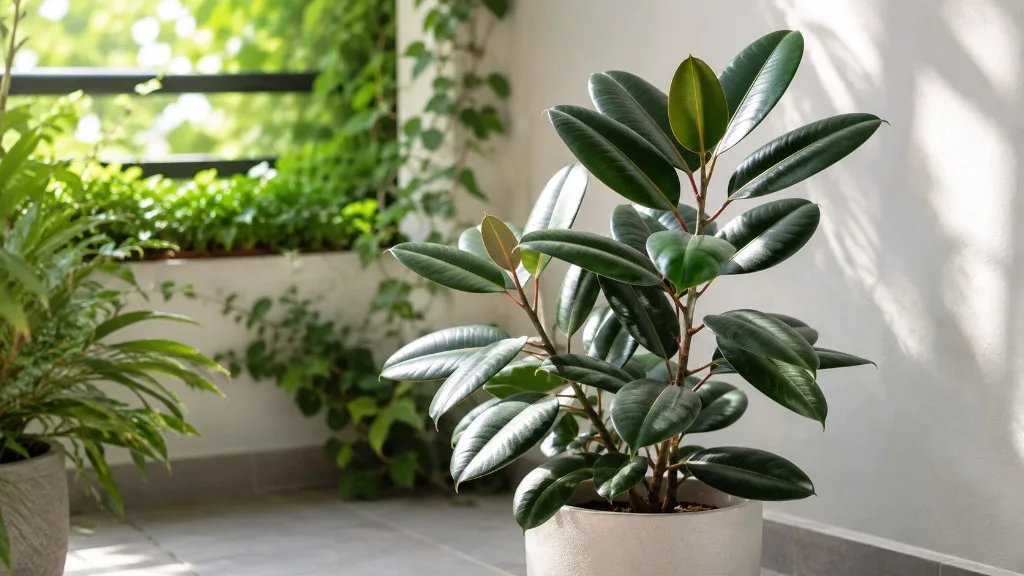
A rubber tree (Ficus elastica) is for a kitchen with a bright indirect-light floor spot and enough clearance for broad, heavy leaves. North Carolina State Extension describes indoor plants ranging from a few feet to much taller with support, so do not buy a small nursery specimen assuming it will remain a countertop plant. It prefers a stable position away from cold drafts and sudden temperature changes, and its leaves can be wiped with a soft damp cloth when dust or kitchen residue collects (NC State Extension’s rubber plant profile).
Use this plant only if you can keep it out of the traffic lane and away from hot appliance exhaust. Its milky sap can ooze from a cut, so use gloves when pruning and wash tools afterward. Common names can complicate pet-safety checks: the ASPCA page titled “Indian Rubber Plant” describes Ficus benjamina, not Ficus elastica. Do not transfer a safety rating between them; identify your plant by its scientific name and ask a veterinarian or animal poison-control service if a pet chews it.
10. Coffee plant: glossy foliage if you can meet its needs

The Arabian coffee plant (Coffea arabica) can grow as an attractive foliage plant in a bright, warm kitchen where the mix can be kept lightly moist without becoming waterlogged. It is less forgiving of neglect than a ZZ or snake plant, and a dim countertop is unlikely to support compact, healthy growth. Keep it away from cold drafts, the oven’s heat plume, and grease; choose it for its leaves rather than expecting a reliable indoor coffee harvest.
Check the botanical name before researching pet safety. The ASPCA entry commonly titled “Coffee Tree” identifies Polyscias guilfoylei, also called wild coffee or geranium-leaf aralia; it is not Coffea arabica and should not be used as a toxicity reference for this plant. That ASPCA entry does list Polyscias guilfoylei as toxic to cats and dogs (ASPCA coffee tree listing). If you keep any coffee plant around a pet that chews foliage, verify the exact species with a qualified veterinary or poison-control resource before choosing its location.
Quick matches by light, space, and safety
| Your kitchen has… | Start with… | Main trade-off |
|---|---|---|
| A sunny sill and you cook with fresh herbs | Basil, rosemary, thyme, or chives | These need more light and more frequent checking than a foliage plant. |
| A bright indirect shelf with little counter space | Spider plant, African violet, pothos, or philodendron | Trailing plants need safe clearance; two of these are toxic to pets. |
| A dim but daylit corner | Snake plant or ZZ plant | Both tolerate low light, but growth slows; neither is pet-safe. |
| A strong sunny window | Aloe or sun-loving herbs | These need fast drainage and protection from overwatering. |
| A clear floor spot with stable, indirect light | Rubber tree or coffee plant | They need more space and a stable place than compact choices. |
| No window and no grow light | Wait before buying | No houseplant thrives in darkness. |
For a pet-safe shortlist, start with spider plant or African violet and verify the exact botanical name on the nursery label. For the lowest watering demand, consider a snake plant or ZZ plant only if you can keep them out of reach and the room has usable daylight. If you want something to cook with, choose herbs based on your brightest growing spot, not just the most convenient counter.
A simple kitchen routine that prevents common problems
Keep a plant in its nursery pot inside a waterproof cachepot if you need to protect a wood counter or shelf. Lift the nursery pot out to water, let it drain, and pour away the water that collects in the outer pot. If you must water in place, use a tray wide enough to catch runoff and check beneath it for leaks; a decorative pot without a drain hole is not a reason to leave roots wet.
Check the mix before watering instead of following a weekly calendar. A small basil pot may dry much faster than an aloe, snake plant, or ZZ plant in the same room, and warm sunlight can speed that difference up. Put a finger into the top of the mix, lift the pot to judge its weight, or use a clean wooden skewer; then water the plants that are ready and leave the others alone.
Recheck the location when seasons change or a plant starts to look different. Stretching stems and smaller new leaves point toward insufficient light, while soft yellowing leaves alongside wet, heavy soil often call for less water and better drainage. A sudden pale patch on the window-facing side may mean the plant needs a slower transition into stronger sun. Move one variable at a time so you can tell whether the change helped.
Keep edible plants, potting soil, and watering runoff away from food-contact surfaces, and inspect foliage for dust or pests before harvesting herbs. A range hood helps remove cooking fumes; a plant’s location should be chosen for growth and household safety, not because it is expected to filter the room. In a small kitchen, one well-placed plant that gets enough light is easier to maintain than a crowded collection competing for the only usable window.
Conclusion
A kitchen’s window and usable space matter more than the steam that appears during cooking. Choose herbs or aloe for a truly bright sill, compact African violets for bright indirect light, spider plants for a pet-aware hanging display, or pothos and philodendron only where pets cannot chew them. A snake plant or ZZ plant can tolerate lower light and less frequent watering, but neither thrives in darkness or belongs within easy reach of a curious pet.
Before buying, watch the intended spot through the day, keep the pot away from heat, grease, and food prep, and plan how you will drain it without leaving standing water. That short check is what turns a kitchen plant from a decorative impulse into a plant that can actually grow there.