Tree Age Calculator
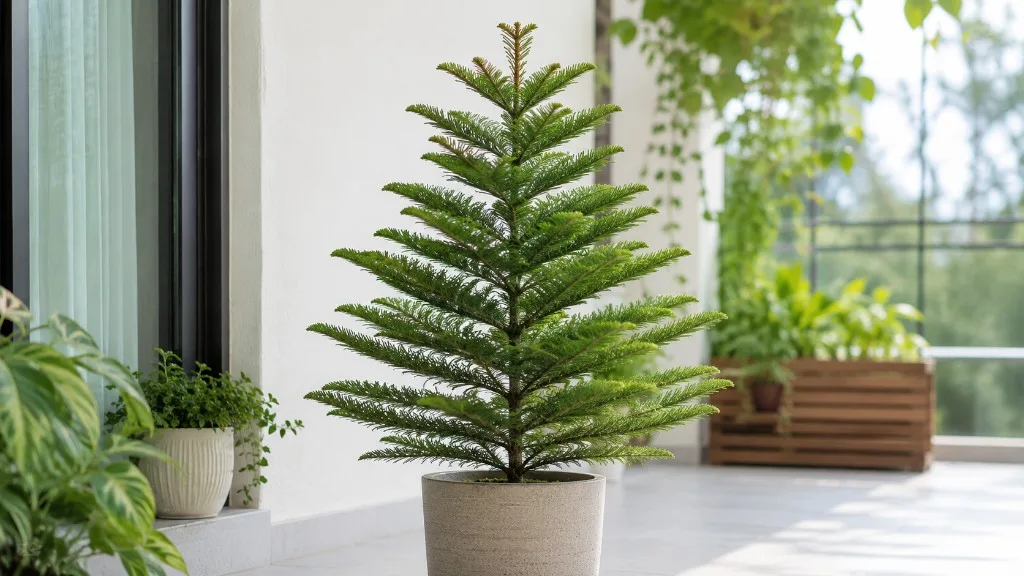
A tree’s age is easy to ask about and surprisingly hard to prove. A wide trunk usually means the tree has been growing for a long time, but the number you get from size alone depends on species, site, competition, pruning history, soil, water, and past stress. A white oak and a silver maple can have the same trunk circumference and very different likely ages.
The Tree Age Calculator gives you a practical, non-destructive estimate from two field inputs: trunk circumference and species. It converts circumference to diameter, then multiplies that diameter by a species growth factor. That makes it useful for homeowners, gardeners, educators, landscape planners, and anyone trying to understand an established tree without cutting it down or taking an increment core.
Treat the result as a planning estimate, not a birth certificate. The calculator can help you decide whether a tree is likely young, mature, or old for its setting. It can also help you compare two trees measured the same way. It cannot see the exact ring pattern inside the trunk, the years the tree spent recovering from drought, or the way its roots were constrained under pavement.
What the calculator estimates
The calculator estimates biological age from trunk size. It does not estimate hazard, structural stability, timber value, legal status, or remaining life expectancy. Those questions need a different kind of assessment, especially if the tree is near a house, road, utility line, sidewalk, or public space.
The method works from diameter at breast height, usually called DBH. In forestry and urban tree measurement, DBH is the trunk diameter measured at a standardized height above the ground; many U.S. guidance documents use 4.5 feet as that height, including New York State’s tree diameter guidance and University of Tennessee forestry measurements material (diameter at breast height, 4.5 feet above the ground).
Because most people can measure circumference more easily than diameter, the calculator starts with circumference at breast height. A flexible tape around the trunk gives circumference. Dividing that circumference by pi gives diameter. The calculator then applies the species factor from the tool’s method table.
The math is short:
Diameter = circumference / pi
Estimated age = diameter x species growth factor
If a tree has a 63-inch circumference, its diameter is about 20.1 inches because 63 divided by 3.1416 equals 20.1. If the selected species has a growth factor of 4.0, the estimate is about 80 years. The tool rounds the result so the output reads like an estimate instead of pretending to know the tree’s exact planting year.
The growth factor is the cautious part of the method. It represents the rough relationship between diameter and age for a species under ordinary open-grown conditions. A fast-growing species uses a lower factor because it can add diameter quickly. A slower-growing species uses a higher factor because the same diameter may have taken longer to develop.
This circumference-to-diameter workflow is the same basic approach used in public tree-age worksheets that describe the formula as a non-destructive method based on circumference at breast height, diameter, and a species growth factor (tree age formula). It is simple enough for field use, but the simplicity is also why the answer should be read with judgment.
How to measure circumference
Measure the trunk at 4.5 feet above the ground unless a local standard or project instruction tells you otherwise. Use a flexible tape and keep it level around the trunk. Pull the tape snug enough to remove slack, but do not dig into loose bark or force the tape into deep furrows.
On level ground, measure vertically from the soil line to the measurement point. On a slope, use the uphill side as your reference. If the tree leans, measure at the standard height along the trunk axis rather than wrapping the tape at an odd angle that exaggerates girth. The goal is not to find the biggest number; it is to measure in a repeatable way.
Avoid measuring near the flared base unless the tree is so small that the standard point is not meaningful. Butt flare, graft unions, burls, wounds, and low branch swelling can make the trunk look much larger than the main stem. If the measurement point hits a deformity, note it and consider measuring just above the abnormal swelling for your own record, then treat the result as less certain.
What to do with multi-stem trees
Multi-stem trees are a common source of bad estimates. If a tree divides below breast height, one wrap around all stems usually overstates the age because the calculator assumes one trunk. A clump of stems may have a large combined circumference even when each stem is comparatively young.
For a fork below 4.5 feet, measure each stem separately at the standard height and run the calculator for the largest stem if you want a rough age of the dominant trunk. If the stems clearly arose from the same original base, the oldest root system may be older than the largest stem suggests. If the tree is a coppiced, pollarded, storm-broken, or repeatedly cut-back specimen, trunk diameter may be a poor age proxy.
For a fork above 4.5 feet, measure the single trunk below the fork at breast height. Write down that the tree forks above the measurement point so the estimate can be interpreted with context later.
Choosing the right species factor
Species choice matters more than a decimal place in circumference. A 20-inch-diameter cottonwood and a 20-inch-diameter white oak should not receive the same age estimate because they commonly grow at different rates.
Use the closest species in the calculator’s list when you know it. If you only know the genus, choose the best match and treat the output as a range. If you are unsure whether a tree is a red oak or a white oak, run both factors and compare the spread. That spread is more honest than forcing one value from a shaky identification.
The parent tool’s method table uses factors such as 5.0 for white oak, 4.0 for red oak, 3.5 for pin oak, 3.0 for silver maple, 3.5 for sugar maple, 5.0 for white pine, 4.5 for black walnut, 4.0 for green ash, 2.5 for cottonwood, and 3.0 for dogwood. Those are practical screening values, not a universal biological law. Local site history can move a real tree away from the table.
Worked example: a red oak in a yard
Suppose a red oak has a circumference of 72 inches at breast height. Divide 72 by 3.1416 and the diameter is about 22.9 inches. With a red oak growth factor of 4.0, the estimated age is about 92 years.
That does not mean the tree sprouted exactly 92 years ago. It means the trunk size is consistent with a red oak that may be around nine decades old under the assumptions built into the calculator. If the tree grew in open lawn with steady water and little competition, it might be younger. If it grew in compacted soil, heavy shade, or repeated drought, it might be older than the same diameter would suggest.
This is where the calculator is most useful: it gives you a defensible starting number, then asks you to look at the site. A large, open-grown yard tree and a suppressed woodland edge tree can tell different stories even when the tape measure reads the same.
Worked example: a fast-growing cottonwood
Now take a cottonwood with the same 72-inch circumference. The diameter is still about 22.9 inches, but the growth factor in the tool is 2.5. The estimated age becomes about 57 years.
That contrast is the whole point of species factors. The tape measurement did not change. The biological interpretation changed because cottonwood is generally treated as a faster-growing tree than red oak in this screening method.
If you were comparing those two trees for a school project, neighborhood history note, or landscape record, the calculator would keep you from making the common mistake of assuming equal trunk size means equal age. It does not.
Worked example: a white pine near a house
Imagine a white pine with a 94-inch circumference. The diameter is about 29.9 inches. With a white pine growth factor of 5.0, the estimate is about 150 years.
That is a meaningful number, but it should also trigger context checking. Was the tree planted as part of an older windbreak? Is it one of several similar pines in a line? Is it growing in open soil, or has construction changed the root zone? If the age estimate affects preservation, insurance, removal, or construction planning, bring in a qualified arborist rather than using a calculator result as the final word.
Tree age and tree risk are related only loosely. An old tree can be structurally sound. A younger tree can be hazardous if it has decay, root damage, included bark, storm cracks, or poor anchorage. This calculator is about age estimation, not risk diagnosis.
Why DBH is used instead of stump diameter
DBH is used because it gives a consistent measurement point above most root flare and below much of the crown variation. Standardized height matters because trunk diameter changes as you move up or down the stem. Measuring at the base usually inflates the number. Measuring too high can shrink it.
Forest inventory systems rely on repeatable diameter measurements because diameter is used for stand structure, volume, growth, and other forest metrics. The USDA Forest Service Forest Inventory and Analysis program uses detailed field procedures for tree diameter measurement, which is why DBH is treated as a core forestry measurement rather than a casual guess (Forest Inventory and Analysis field guide).
For a homeowner, the lesson is simple: do not chase precision in the formula while being sloppy with the tape. A quarter-inch rounding difference matters less than measuring at the wrong height or including a swollen base.
Why diameter does not equal exact age
Diameter is a growth record, but it is not a clock. Trees add wood in response to genetics, light, water, temperature, soil oxygen, nutrient availability, root space, competition, pruning, pests, diseases, storms, and human disturbance. Two trees of the same species can have different diameters at the same age if one had room and the other was crowded.
Modern research on tree age estimation still treats diameter-based models as estimates. A 2025 U.S. Forest Service study on tree age estimation notes that diameter, height, species, environmental conditions, climate, and management practices all influence age-model performance, and that modeling is less precise than tree-ring analysis (tree age estimation).
That is why the calculator should not be used to settle a dispute where the exact year matters. It is well suited for curiosity, planning, education, and preliminary documentation. It is not strong enough by itself for legal evidence, heritage designation, or scientific dating.
Open-grown, forest-grown, and urban trees
An open-grown tree has more light and crown space than a crowded forest tree. It may add diameter faster than a tree competing with neighbors. A forest-grown tree may spend years growing upward before adding a broad trunk. An urban tree may grow quickly in a watered lawn or slowly in a restricted pavement opening.
Urban conditions are especially variable. Soil volume, compaction, reflected heat, irrigation, deicing salts, pruning, root cutting, and construction damage can all change growth. USDA urban tree growth modeling research describes tree growth modeling as dependent on site conditions, management, and soil influences, which is another reason a single factor cannot capture every city tree (urban tree growth modeling).
When the calculator gives a surprisingly young or old estimate, ask what the site has done to the tree. A perfect formula cannot recover missing site history.
Accuracy expectations
For many ordinary landscape trees, a growth-factor estimate is most useful as a broad range. Think “probably around 60 to 80 years” rather than “67 years.” A clean exact number can create false confidence, especially with old, damaged, or unusually fast-growing trees.
The estimate is usually more dependable when the tree has one clear trunk, a known species, a normal measurement point, and a site that roughly matches the assumptions behind the factor. It is less dependable for grafted fruit trees, heavily pruned trees, pollarded trees, coppiced trees, trees with major trunk defects, trees growing in containers, and trees with unknown species identity.
The result also becomes less satisfying as the stakes rise. If you are simply labeling a tree for a garden walk, the calculator is a good fit. If you are deciding whether a tree predates a building, qualifies for protection, or should be removed, you need stronger evidence.
More accurate ways to determine tree age
The most direct way to estimate a living tree’s age is to examine annual growth rings from a core sample. Dendrochronology assigns dates to tree rings and is used in ecology, archaeology, climatology, and forest science; the National Park Service describes it as tree-ring dating based on yearly growth rings (tree-ring dating).
Foresters and researchers often use an increment borer to remove a narrow core from the trunk instead of cutting the tree down. That core can show rings from bark toward the center, although missing the exact center, coring above the root collar, decay, false rings, and difficult wood anatomy can complicate interpretation. U.S. Forest Service research on increment cores notes that ring counts can produce age errors if the years needed to grow from the root collar to coring height are not corrected (increment cores).
Even ring counting is not always as simple as counting lines. The University of Arizona Laboratory of Tree-Ring Research explains that dendrochronologists use crossdating because ring counting alone can lead to inaccurate dating when rings are missing, false, or hard to match (crossdate wood samples).
When to ask an arborist or forester
Ask a certified arborist, consulting arborist, forester, or qualified local expert when the estimate affects safety, property value, construction, permits, insurance, removal, or preservation. A professional can inspect structure, site history, defects, species identity, and local growth patterns in a way a calculator cannot.
Professional help is especially important for large trees near targets. A target is anything that could be harmed if the tree or a large limb failed: a person, house, vehicle, road, playground, power line, fence, shed, or neighboring property. Age curiosity should never distract from structural assessment.
For forest land, timber, or conservation decisions, a forester can use stand history, increment cores, inventory data, and regional growth knowledge. For urban trees, an arborist can interpret pruning wounds, decay, root disturbance, included bark, and site constraints.
Use this calculator when your main question is “about how old is this tree?” If your next question is about planning work around that tree, switch tools. For soil volume, use /tools/dirt-topsoil-calculator/. For mulch coverage, use /tools/mulch-calculator/. For tree work costs, use /tools/tree-removal-cost-calculator/ only as an early planning screen, then get a site-specific quote when safety or access matters.
If the tree is part of a broader garden decision, age is only one variable. A young tree may still cast heavy shade. An older tree may still be vigorous. A tree with slow recent growth may need soil, water, root-zone, pest, or disease assessment rather than an age calculation.
The best workflow is to measure first, estimate second, then decide what decision the estimate actually supports. The calculator should help you ask better questions, not make every tree decision for you.
Common mistakes
The biggest mistake is measuring the wrong place. A tape wrapped around the root flare can make a tree look much older than it is. A tape wrapped above a fork can make it look younger. A tape pulled diagonally around a leaning trunk can exaggerate the circumference.
The second mistake is overtrusting species identity. Maples, oaks, pines, ashes, and dogwoods include many species with different growth habits. If you are not sure, run a conservative range and label the result as provisional.
The third mistake is reading the result as exact. A tree does not add the same amount of diameter every year. Wet years, drought years, crowding, damage, and recovery all leave uneven records. The growth-factor method compresses that complicated history into one number.
The fourth mistake is using tree age as a proxy for value or safety. A large old tree may be worth preserving, but age alone does not tell you whether it is structurally sound, legally protected, historically significant, or ecologically valuable.
Conclusion
The Tree Age Calculator is a fast way to turn a trunk measurement into a reasonable age estimate. Measure circumference at breast height, choose the closest species, and read the result as a range shaped by growth conditions rather than an exact year.
Its strength is practical clarity. It helps you avoid guessing from trunk size alone, compare species more honestly, and decide when a simple estimate is enough. Its weakness is the same as every diameter-based method: trees grow according to real site history, not a perfect table.
For curiosity, garden records, education, and early planning, the calculator is a solid starting point. For exact dating, legal questions, construction decisions, high-value trees, or safety concerns, use the estimate to frame the question and bring in a qualified professional.