Joshua Tree Care: Sun, Soil, Water, and Seeds
Learn Joshua tree care from site selection to watering, seed starting, and legal sourcing. Check whether your climate and soil support this desert native.
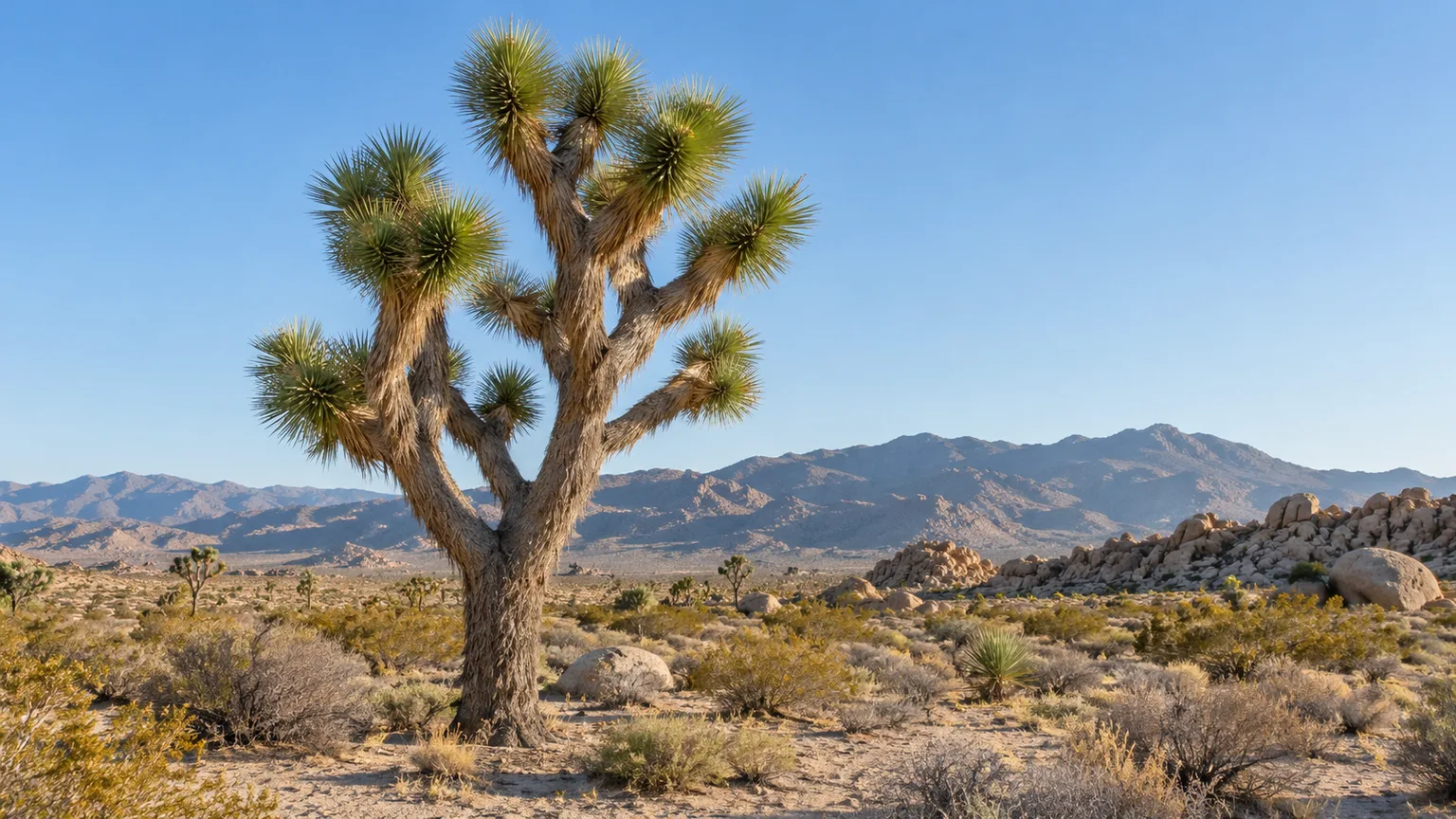
Joshua tree care begins before you buy the plant: this is a slow-growing desert yucca that needs a high-desert rhythm, not simply a sunny corner and occasional neglect. A hot, dry summer, a cool winter, excellent drainage, and generous space matter more than fertilizer or a precise watering calendar. If your yard stays humid, receives regular rain, or holds water after storms, another architectural plant will be a safer choice.
For gardeners in a suitable arid or semi-arid climate, the key is to establish roots without keeping them wet. A young nursery plant needs more attention than an established tree, and a seedling can be damaged by both drought and intense first-summer sun. The guide below starts with those go/no-go decisions, then walks through planting, watering, seed starting, and troubleshooting.
Before you plant: is your climate suitable?
The western Joshua tree, Yucca brevifolia, is native to the Mojave Desert and nearby parts of the Southwest. Its range crosses more than one desert region and elevation, so “desert plant” does not mean it wants constant extreme heat: the plant experiences hot summers alongside cold winter conditions. The National Park Service describes winter freezes and well-timed precipitation as part of its natural flowering cycle, while the U.S. Forest Service species review documents successful germination after warm-season rain and the difficulty of seedling establishment. Those seasonal swings are why a USDA hardiness zone alone cannot tell you whether a yard is suitable. (National Park Service; U.S. Forest Service Fire Effects Information System)
Use this practical screen before buying:
| Your conditions | Likely fit |
|---|---|
| Long sunny season, low humidity, very fast drainage, and a cool winter | Best chance of long-term success |
| Hot summer but mild winter, with excellent drainage | Possible, but flowering and long-term performance may differ from the native cycle |
| Frequent summer rain, humid air, heavy clay, or wet winters | Poor fit unless you can reliably keep the root zone dry |
| Indoors year-round or a small patio pot as the permanent home | Unsuitable for a mature tree |
A cold winter is not a reason to reject the plant automatically; the natural range includes cold high-desert nights. The greater danger is a combination of cold and wet soil, especially around the crown and roots. If your climate cannot provide a dry root zone between rains, do not try to fix the mismatch by adding more gravel to a planting hole—the water regime will still be wrong.
Buy the right plant and protect the wild one
Buy a clearly labeled, nursery-propagated specimen from a seller who can explain its origin. Ask whether it is western Y. brevifolia or an eastern Joshua tree; taxonomic treatments vary, and some sources still call the eastern form Y. brevifolia var. jaegeriana, while the U.S. Forest Service treats it as the separate species Yucca jaegeriana. The eastern form tends to be more compact and multi-stemmed, but a label is not a guarantee of a small mature plant. Check the seller’s stated mature size and confirm it suits your property. (U.S. Forest Service; National Park Service)
Never dig a wild Joshua tree for a home landscape. In California, the Western Joshua Tree Conservation Act restricts taking, possessing, buying, or selling western Joshua trees unless authorized; rules may also apply to seeds, parts, and movement. Other states, federal lands, tribal lands, and private properties have their own requirements. Do not assume that a fallen branch, seed pod, or small seedling is free to collect. Check current rules with the land manager or wildlife agency, and buy only from a source that can verify lawful propagation and sale. (California Department of Fish and Wildlife; Gardeners’ Path)
Choose the site first: sun, space, and exposure
Choose an open position with full sun for most of the day, not a shaded courtyard or a spot under a mature tree. Give the plant room in every direction. A Joshua tree’s eventual crown can spread broadly, and its sharp leaves make close planting beside a walkway, driveway, play area, gate, or regularly used seating spot a safety problem. Think about both the mature silhouette and the routes people will use years from now.
Its roots are wide and relatively shallow rather than a narrow, deep anchor. The National Park Service notes that roots extend in a broad underground circle to capture water after rain or snow and that neighboring trees may be connected underground. That makes a loose, unpaved root zone preferable to a tiny pocket surrounded by concrete. Keep it away from foundations, buried services, septic systems, and places where runoff collects; ask your utility locator before digging. (National Park Service)
Wind exposure also matters. The tree can become top-heavy, especially when wet, and an unstable root ball or waterlogged site increases the risk of leaning. Avoid an exposed corner that funnels strong wind, but do not crowd it against a wall just to shelter it. A sunny site with open air movement and space to grow is the useful compromise.
Prepare soil for drainage, not fertility
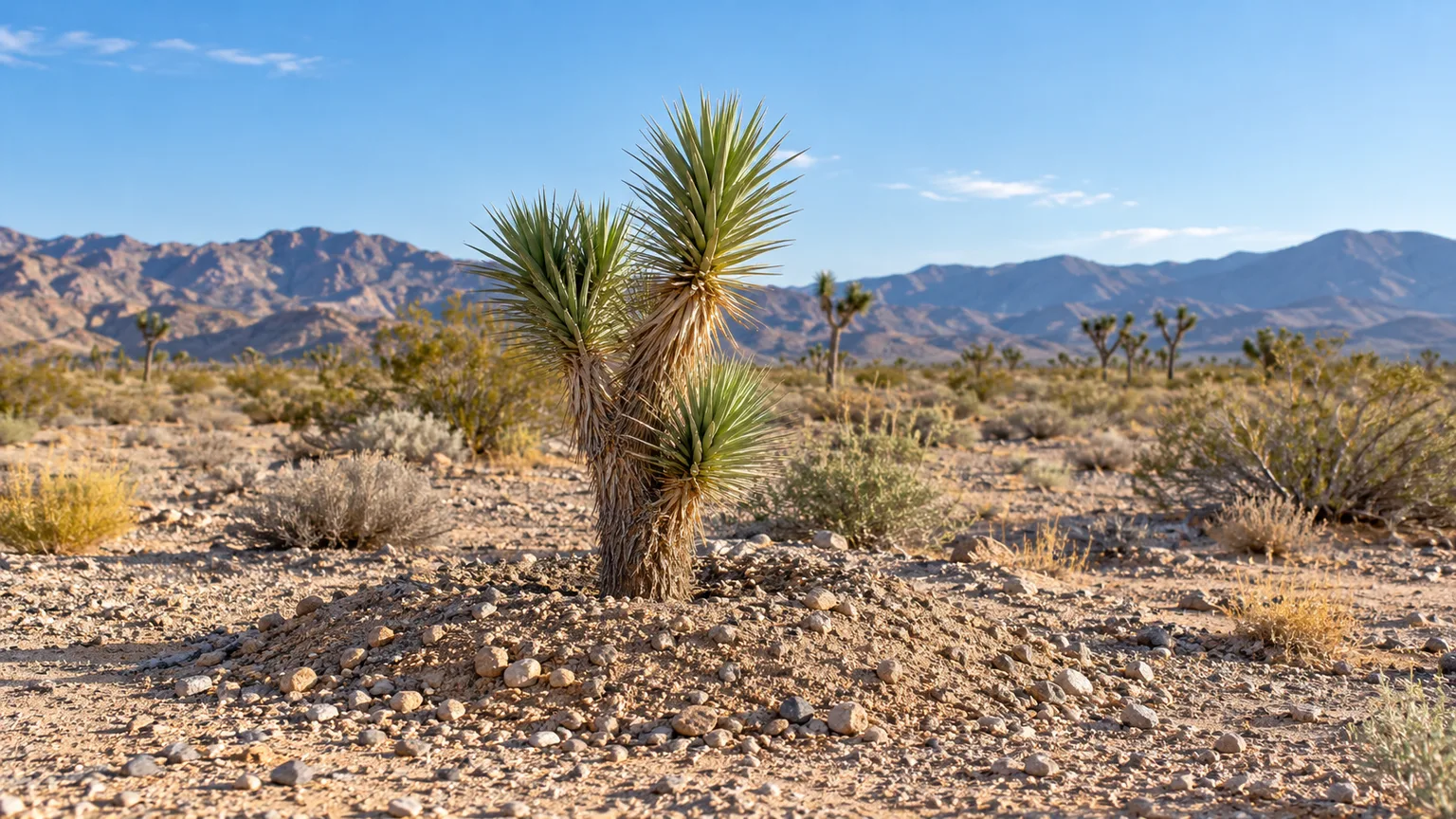
Joshua trees tolerate sandy, rocky, and relatively poor soil; what they do not tolerate is a root zone that stays saturated. Before planting, watch the site during a rain or irrigate a test area. As a broad screening rule, the California Native Plant Society describes good native-garden drainage as water soaking in within about 10 to 15 minutes with no standing water; that is a site-assessment guide, not a Joshua-tree-specific laboratory threshold. If water remains pooled, runs toward the proposed planting spot, or the ground stays slick and cold long after surrounding soil dries, choose a different location or make a broad raised mound that drains into the surrounding grade. (California Native Plant Society)
Do not dig a deep “drainage pocket” in clay and fill the bottom with gravel. That can create a basin where water collects around the root ball. Instead, improve the overall grade, use a wide mound of mineral soil if needed, and plant high enough that the root crown is not buried. In a container, use a gritty cactus or mineral mix and a pot with unobstructed drainage holes. The RHS lists sand, full sun, and well-drained moisture conditions for Y. brevifolia; the practical lesson is drainage, not a precise recipe or pH target. (Royal Horticultural Society)
Avoid enriching the planting hole with compost, manure, or a high-nitrogen mix. Rich soil holds more moisture and can encourage soft growth that does not suit the plant’s slow, sculptural habit. In clay-heavy gardens, a different species may be a better long-term choice than repeatedly trying to amend the hole.
Plant at the original root depth
Plant nursery stock during a mild period when the soil is workable and extreme heat is not imminent; in many hot-desert gardens that means fall or early spring, but local frost and monsoon patterns matter. Water the plant in its pot before planting so the root ball holds together. Wear thick gloves, long sleeves, and eye protection, and have a second person steady the plant if its leaves make it awkward to handle.
Dig a hole no deeper than the root ball and wider than it. Slide the plant out without yanking the trunk, loosen only circling roots at the outside if they separate easily, and do not cut or shorten a taproot to force it into a small hole. Set the root crown at the same level it grew in the container, backfill with the excavated mineral soil, and firm gently to remove large air pockets. Do not bury the trunk or build a deep watering well that stays wet around the base.
Water once after planting to settle the soil around the roots, then let drainage and weather guide the next irrigation. A nursery plant that rocks in wind may need temporary support, but remove ties once the root ball holds firm. Most important, plant it where it can stay: established Joshua trees do not respond well to being moved, so site selection is the best transplant-shock prevention.
Water differently while roots establish
“Drought tolerant” describes an established root system, not a newly planted tree. During the first growing season, check the soil beside the root ball every few days in hot, dry, windy weather. If the root zone has dried several inches down, give a slow, thorough soak that reaches the root ball; if it is still cool or damp, wait. In cooler weather or after rain, the interval may stretch considerably. The goal is moisture available to new roots followed by a real drying period—not daily sprinkles and not a calendar-driven monthly limit.
For a seedling in a pot, the small volume of mix dries faster than the ground, so check more often. Keep it lightly and evenly moist during germination; after it has several leaves, let the surface dry between waterings while the root zone remains barely moist. A pot left in a saucer of runoff can rot even in a warm room. Chicago Botanic Garden’s account of planting Joshua tree seedlings in the Mojave highlights how vulnerable the tiny plants are to trampling, herbivory, and insufficient resources; the U.S. Forest Service review likewise describes establishment as depending on moisture and favorable site conditions, not germination alone. (Chicago Botanic Garden; U.S. Forest Service)
After the tree is established and producing new growth, reduce supplemental irrigation. Water only during an unusually prolonged dry spell when the soil at the root zone is dry, and soak deeply enough to wet that zone before allowing it to dry again. A fixed “once a month” rule can overwater a cool or clay site and underwater a new plant in hot wind. Let rainfall, season, soil, and age decide.
Balance summer heat with winter cold
Full sun and heat suit an established tree when the roots drain quickly. The young plant is the exception: a seedling recently moved from a greenhouse may scorch in abrupt afternoon sun. Acclimate it gradually over one to two weeks, starting in bright shade and increasing direct exposure, rather than moving it from sheltered conditions straight into a hot reflective yard.
Joshua trees experience cold winters in the wild, and cold can be part of the flowering cue. This does not mean every potted seedling should be left unprotected through a severe freeze. A container freezes more quickly than soil, so move a small potted plant into a bright, cool, protected place during an extreme cold snap, then return it outdoors when conditions moderate. Avoid keeping it in a warm, dim room all winter; that trades seasonal light and dormancy for weak growth.
High humidity and summer rainfall are harder to compensate for than a brief cold event because they can keep the roots wet. If you live in a humid climate, a sheltered outdoor container may help you control rain for a while, but it is a management workaround—not proof that the species is a good permanent landscape choice.
Can a Joshua tree live in a pot?
A pot is useful for starting seed, holding a small nursery plant, or growing a specimen temporarily in a climate where it needs seasonal protection. It is a poor permanent plan for a large tree. The roots need room, the plant grows slowly but eventually becomes substantial, and a container limits the wide root zone that helps it capture desert rainfall. Expect to repot while it is small, and do not choose a shallow decorative bowl.
Use a deep, heavy pot with large drainage holes and a coarse mineral mix. Raise the pot feet slightly so the holes do not seal against a patio, and empty any saucer after irrigation. Move up only one pot size at a time; an oversized container stays wet longer than the roots can use. In hot weather, a container dries faster than open ground, so inspect it more often while still allowing the mix to dry between soaks.
If you want a Joshua tree because you love the wild silhouette, the best long-term display is a correctly sited outdoor planting. A houseplant window cannot supply the space, light, seasonal temperature pattern, or root volume a mature tree requires. If the available space is a balcony or small patio, choose a smaller yucca that is suited to containers instead; our guides to yucca varieties and yucca soil and drainage can help distinguish those choices from a Joshua tree.
Skip routine fertilizer and heavy mulch
Do not add fertilizer automatically. Joshua trees are adapted to nutrient-poor soils and have a slow growth habit; faster growth is not necessarily healthier or more attractive. If the tree is declining, check drainage, irrigation, root disturbance, and winter injury before reaching for plant food. Fertilizer will not correct a saturated root zone or a climate mismatch.
Keep thick organic mulch away from the trunk. A thin layer of gravel may help the surface resemble the surrounding desert and reduce splashing, but it should not cover the root crown or trap moisture against the stem. In a hot landscape, mulch placement can also affect soil temperature and water retention; leave a clear, breathable ring around the base and prioritize drainage.
Pruning, dead leaves, and flowers
A Joshua tree needs little routine pruning. The skirt of old leaves beneath the green crowns is part of its natural form and should not be stripped just to make the trunk look tidy. Remove only a branch that is dead, broken, or creating a clear hazard, and use clean, sharp equipment. Because mature plants are awkward and spiny, hire an insured arborist familiar with yuccas for substantial cuts rather than climbing or reaching into the crown yourself.
Do not top the trunk to control height or cut healthy branches to force a particular silhouette. Pruning will not make the tree branch on a predictable schedule, and a large cut can leave a permanent wound. If a flower stalk has finished, you can leave it until seed pods mature if you want to collect legally sourced seed; otherwise, remove only the dry stalk when it is easy to reach safely. Deadheading does not make the plant bloom again that year.
Grow a Joshua tree from seed
Seed is the most practical way to raise a Joshua tree without disturbing an established plant, but only use seed obtained legally from a cultivated source or with permission from the appropriate land manager. In California especially, do not collect pods or seed from a wild western Joshua tree without checking current CDFW rules. Seed production in nature depends on yucca moth pollination, and a flower or pod does not guarantee every seed is viable. (California Department of Fish and Wildlife; U.S. Forest Service)
The Forest Service review reports that Joshua tree seed can germinate readily in warm conditions, while field seedlings are much less certain to establish. For a home sowing, use fresh, clean seed and a deep individual pot with drainage holes. Cover each seed lightly with a thin layer of gritty, sterile mix, moisten evenly, and keep the pot warm—around 68°F or warmer is a reasonable starting range. Keep the mix damp enough for germination but never waterlogged; warmth and oxygen matter together. Gardeners’ Path describes overnight soaking and warm germination as practical options, but soaking is not a substitute for fresh seed or drainage. (U.S. Forest Service; Gardeners’ Path)
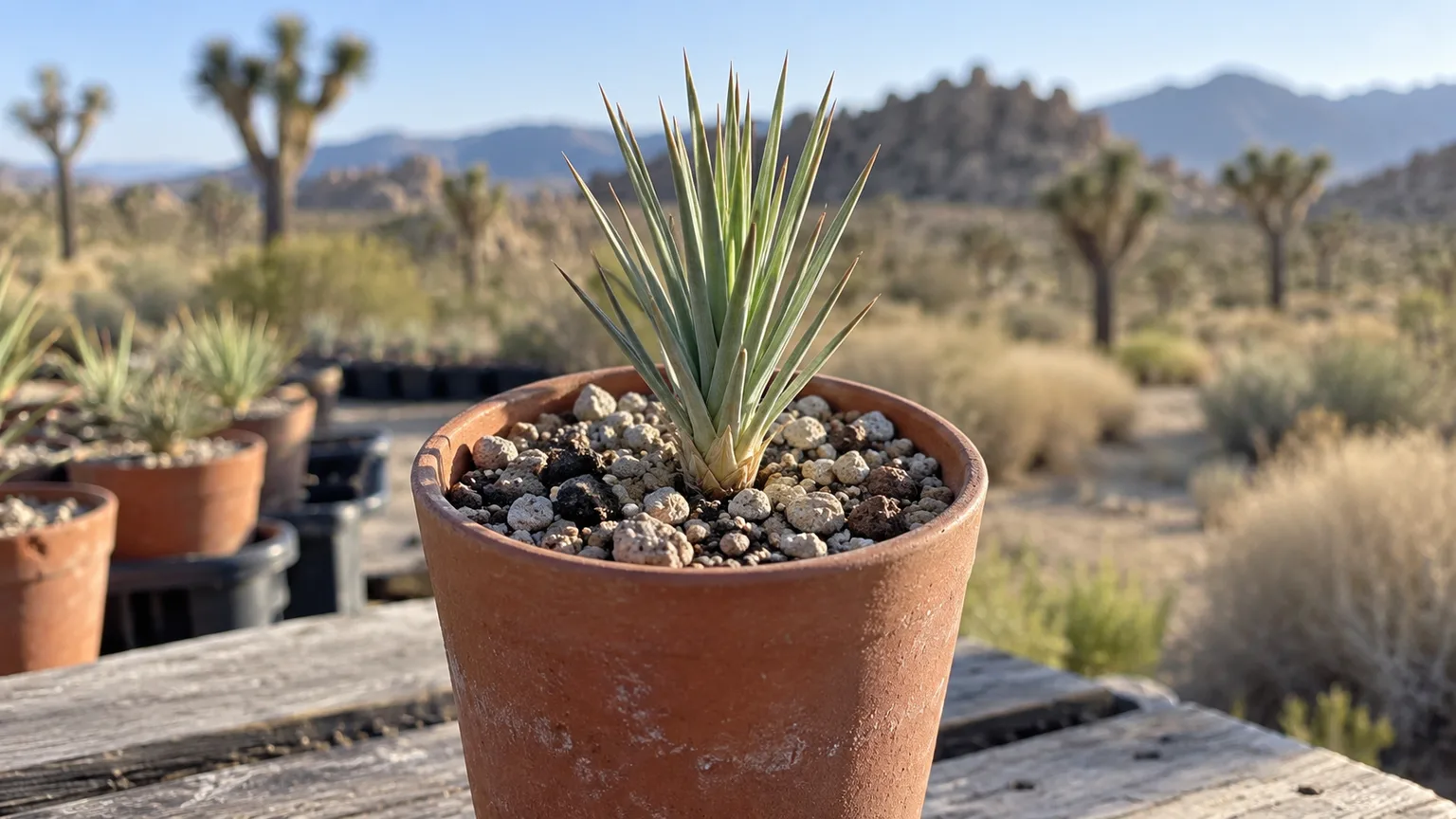
Once a seedling appears, remove any humidity cover and give it bright light with protection from the hottest direct afternoon sun. Increase outdoor sun gradually as it strengthens. Avoid the wet-paper-towel method as your main setup: it can show whether seed germinates, but the fragile root must then be handled and transplanted, creating a second stress point. A seed started directly in its own pot can extend its root without that extra transfer.
Move seedlings carefully
Do not rush a seedling outdoors just because it has germinated. Keep it in its original pot until it is sturdy enough to handle and the weather is suitable for gradual acclimation. Its early leaves may look like narrow blades rather than a miniature branching tree. That is normal. Use a pot deep enough for root development, and shift it up when roots begin to fill the container rather than teasing the plant out of a tiny cell.
When planting into the landscape, choose a mild season and a site that already passes the drainage and space checks. Slide out the root ball intact, lower it into a hole at the same depth, backfill with native mineral soil, and water to settle. For a newly planted seedling, monitor moisture at the root ball through its first hot season; the top may dry quickly while deeper soil remains damp. A light temporary screen can reduce harsh afternoon sun for a recently hardened plant, but remove it once the seedling is growing steadily.
In the wild, young trees often establish beneath nurse shrubs, where shade moderates heat and soil moisture can last longer. In a garden, this is a useful reminder that a tiny seedling is not yet drought-proof. It does not mean you should plant it beneath a large thirsty tree or keep the soil constantly wet; choose a light, well-drained microclimate that protects it from the worst afternoon stress without creating competition or shade for the mature plant. (U.S. Forest Service)
Diagnose common problems before changing care
A soft, darkening trunk or crown, leaves that wilt while the soil stays wet, or a sour smell near the root ball points toward poor drainage or rot. Stop irrigation, check whether water is trapped around the crown, and make sure container holes are open. A badly rotted plant may not recover; adding fertilizer or watering to “perk it up” can make the problem worse. In-ground trees are difficult to move once established, so prevention is much more effective than trying to repair a wet planting site later.
A few older leaves drying on the lower trunk are normal; dead foliage is part of the tree’s natural skirt. Widespread discoloration after a cold snap may indicate freeze injury, while bleached patches after a sudden move into full summer sun suggest sun scorch. Compare the timing of symptoms with watering, rain, transplanting, and temperature changes before acting. Remove only tissue that is dead or broken, and avoid routine spraying unless you have identified a pest or disease.
If the tree is simply growing slowly, that may be normal. The National Park Service notes that growth can settle to roughly half an inch to three inches per year, though rates vary with age and site. A long pause is not enough reason to feed it; look for firm green leaves, a stable trunk, and healthy roots before deciding that something is wrong. (National Park Service)
Why a Joshua tree may not bloom
Joshua trees do not bloom on a dependable annual schedule. Spring flowers follow the conditions of previous seasons, including rainfall and winter cold; the exact cue is complex and not something a gardener can reliably trigger with extra fertilizer or pruning. Some plants spend years as a single unbranched stem, and a young tree may not be mature enough to flower. (National Park Service; Royal Horticultural Society)
The white to greenish-white flowers are pollinated by specialized yucca moths. The moth carries pollen while laying eggs in the flower, and its larvae consume some developing seeds. This relationship is one reason flowering and seed set depend on more than garden care. If your tree is healthy but has not flowered, keep it in the right conditions and wait; do not try to force a bloom by withholding water, overfeeding, or cutting healthy branches.
After flowering, allow seed pods to mature if lawful seed collection is your goal. Otherwise, leave the tree alone. It needs no special after-bloom fertilizer or deadheading routine.
A safe place for a sharp, long-lived plant
Joshua tree leaves end in stiff points, and the mature plant can become taller and wider than the young nursery specimen suggests. Place it where people will not brush against it as they turn a corner, carry groceries, mow, or play. Account for children, pets, delivery paths, and future accessibility needs. A beautiful focal tree is only a good choice if its eventual size and sharp leaves fit the way the property is used.
Use gloves, long sleeves, and eye protection whenever you handle or prune it. Do not climb a mature Joshua tree or attach a hammock to it; the National Park Service warns that trees can tip or drop branches, particularly when they hold more water after wet periods. For heavy branches, major pruning, or a tree leaning near a structure, use a qualified professional and follow local wildlife protections. (National Park Service; California Department of Fish and Wildlife)
Conclusion
Joshua tree care is straightforward only after the site is right: full sun, room to mature, dry air, and soil that drains fast. Give a new planting enough water to establish roots, then cut back as it settles in; do not treat seedlings like mature desert trees or follow a fixed schedule regardless of rain and soil. Skip rich amendments and routine fertilizer, keep the natural shape, and handle wild plants and seeds only within current local rules.
If your yard is humid, wet, or too small to accommodate sharp branches, admire Joshua trees in their native landscape and choose a better-matched yucca for home. If the climate and space fit, start with legally sourced nursery stock, plant carefully once, and let the tree grow at its own measured pace.