15 Wildflower Garden Ideas for Every Backyard
Plan a wildflower garden that fits your yard. Compare meadow, border, lawn, shade, and container ideas and learn how to establish a lasting planting.
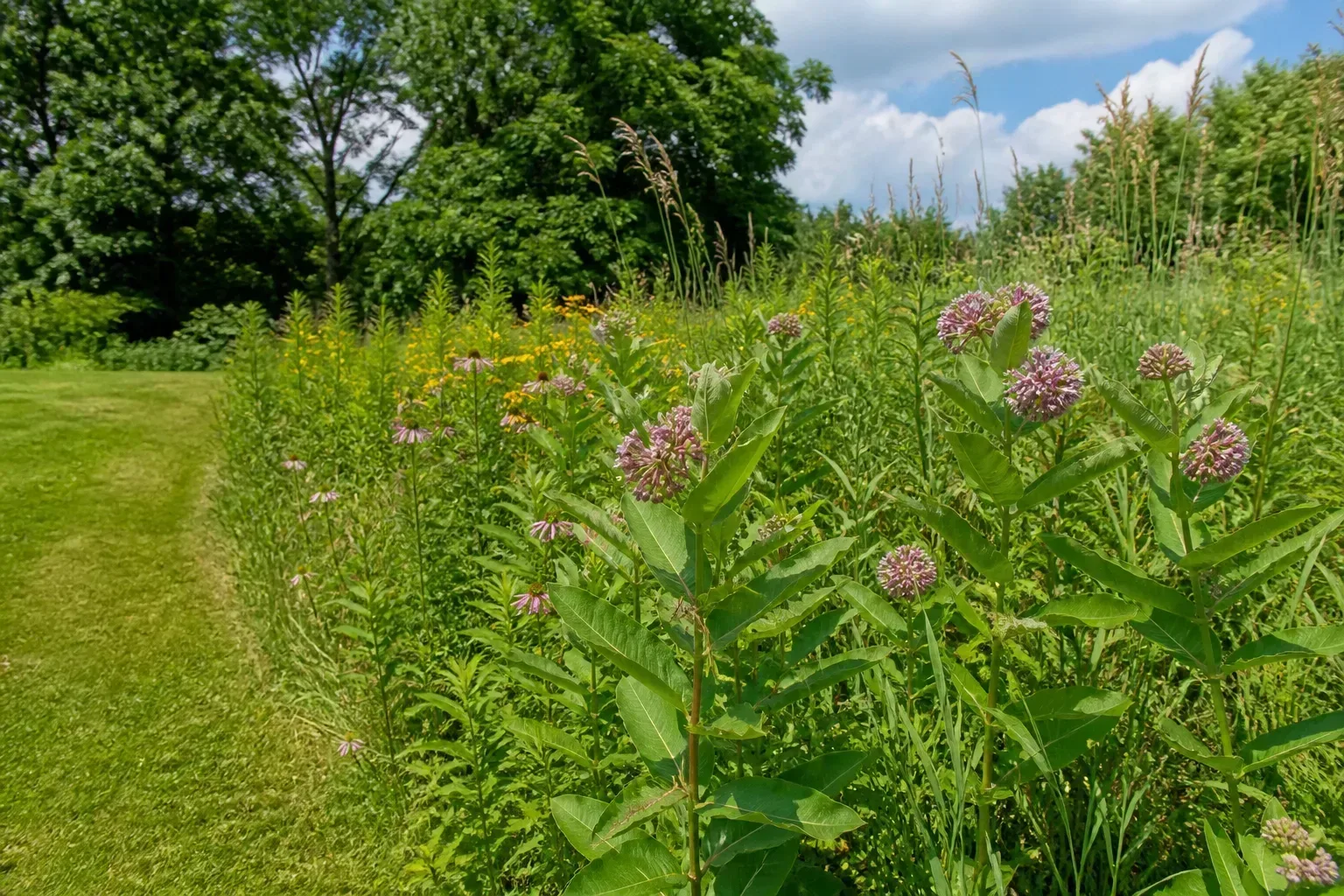
A wildflower garden can be a meadow, a narrow border, a few flowering islands in a lawn, or one generous pot beside a patio. The strongest designs do not depend on a big property or a perfectly mixed seed packet. They start with plants suited to the local climate and site, then use simple cues—repeated groups, a mown edge, a path, or a defined boundary—to make a relaxed planting feel deliberate.
Think about the job you want the garden to do before choosing flowers. A summer splash of annual color is different from a perennial habitat planting that takes time to establish. For a lasting native garden, the National Park Service’s ecoregional pollinator planting cards are a useful model: recommendations change by region because the plants that thrive and serve local wildlife in one area may not suit another.
15 Wildflower Garden Ideas for Real Backyards
1. Choose a Regional Native Palette Before You Choose Colors
A colorful seed mix is tempting, but start with your local plant community. A useful palette might repeat three or four colors—such as yellow, violet, and white—through different native species with overlapping bloom periods. Repetition makes a small planting read as a composition instead of a collection of unrelated plants, while regional species are more likely to match local rainfall, soil, and winter conditions.
Ask a native-plant nursery, Cooperative Extension, or local native plant society for a list tied to your ecoregion and site. Check each plant’s mature height and spread before combining them; a vigorous species can swallow a small bed even when it is native. The National Park Service notes that native plants can support relationships with specialist insects, so choose a diverse group rather than relying on a single showy flower. Native does not mean universally well-behaved or appropriate everywhere: verify that a plant belongs in your part of the region and will not spread into nearby natural areas.
2. Frame a Pocket Meadow With a Mown Edge
You do not need to convert an entire lawn. Cut a broad, gently curved patch into an existing grass area, seed or plug the interior with plants that suit the site, and mow a crisp perimeter a few times each season. A clean edge gives the eye a boundary and signals that the taller growth is intentional. A strip too narrow to see from a window may look like an uncut patch, so even a modest bed benefits from a shape with enough depth to show a mix of heights.
Keep a narrow access route nearby and make the bed large enough to group plants in visible drifts rather than dotting one plant of each kind across the grass. On an established lawn, simply broadcasting seed is rarely enough: the grass shades seedlings and competes for water. Remove or open the turf where each group will grow, then ensure the seed touches bare soil, or use plugs. The Royal Horticultural Society’s meadow-creation guide similarly cautions that direct seeding into dense lawn is unlikely to establish well.
3. Layer a Sunny Strip for a Long Bloom Sequence
A sunny side yard or narrow strip along a walk can become a ribbon of changing color. Plan for an early, middle, and late bloom period, then place plants in repeating clumps rather than alternating single stems. In many regions, that could mean early spring ephemerals at the front edge, summer-blooming perennials through the middle, and asters or goldenrods later in the season. Those are examples of plant groups, not a universal shopping list; choose species native to your area and confirm the site’s moisture and soil conditions.
A sequence is more reliable than choosing flowers from a single bloom-time photo. Check local bloom calendars or nursery labels, and leave some space for each plant to reach its mature width. A border packed too tightly may look full in spring but become a tangle by midsummer. A narrow strip also needs a clear mowing or edging line so it does not creep onto a path or driveway.
4. Use Annuals for a Fast, Temporary Color Patch
Annual wildflowers can provide a quick seasonal display while a perennial planting matures or while you test a location. Put them in a small bed with exposed soil, where you can prepare the ground and re-sow if needed. A regionally appropriate annual mix can give first-year color; familiar choices such as cornflowers, poppies, or cosmos may appear in garden mixes, but they are not native or suitable in every region. Read the species list, not just the packet’s “wildflower” label, and check local invasive-plant guidance before buying.
The trade-off is that annuals complete their life cycle in one season. Some reseed, but a reliable repeat display may require collecting or scattering seed and preparing the bed again. A mixed packet can also bloom unevenly if one species grows faster or the site does not suit every seed in the blend. Treat an annual patch as a seasonal project, not a maintenance-free perennial meadow. The RHS distinguishes annual displays, which can flower quickly, from perennial meadows that take longer to establish but return over multiple years.

5. Build a Woodland-Edge Planting in Dappled Shade
If tree shade rules out a sunny meadow, make a woodland-edge garden instead. Use spring-flowering native woodland plants, followed by shade-tolerant species that carry the display into summer and fall. Depending on your region, candidates might include woodland phlox, Virginia bluebells, columbine, native violets, or woodland asters. These plants differ in moisture needs and bloom timing, so select a small set that matches the actual shade and soil rather than buying one broad “shade wildflower” mix.
Place shorter plants where they can be seen from the path and taller stems toward the back or beneath higher tree limbs. Keep the area’s fallen leaves when they are healthy and not smothering small plants; leaf litter protects soil and can shelter wildlife. Avoid digging deeply beneath mature trees, where roots are dense, and do not assume every plant marketed as a wildflower belongs in a native woodland. Some attractive spring bloomers are introduced species that spread aggressively in certain areas.
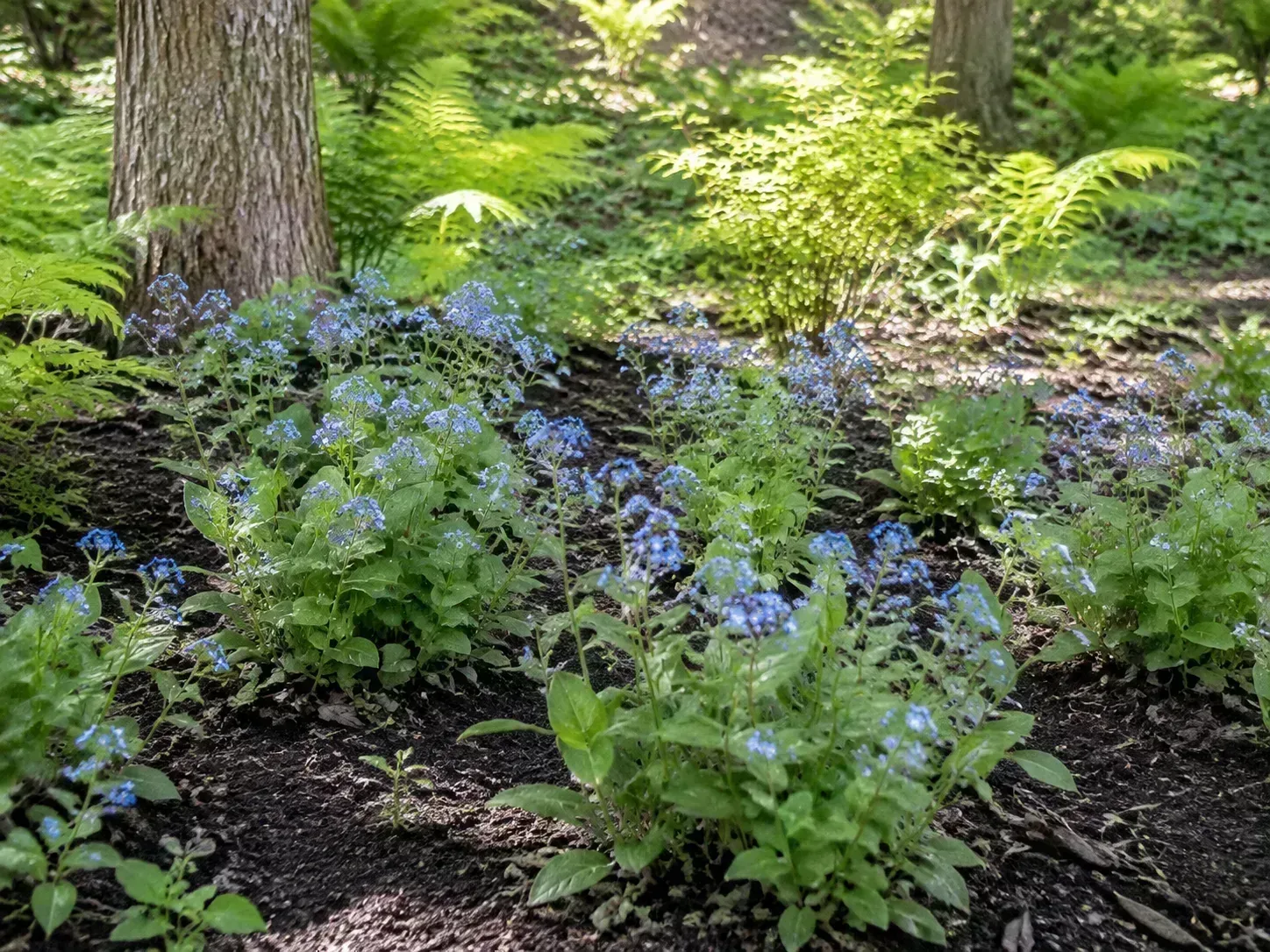
Use the arrangement as a shade-garden reference, then choose woodland species native to your own region.
6. Turn a Fence Line Into a Deep Flowering Border
A fence can anchor a layered border and give tall stems a visual backdrop. Place the tallest sturdy plants toward the fence, medium-height flowers in the center, and lower ground-covering natives near the path. This arrangement keeps the flowers visible and makes it easier to weed and reach the rear row. If the fence casts shade for part of the day, choose species for that light level rather than forcing a full-sun mix into the narrow strip.
Repeat a few plant groups along the length instead of using a different species in every foot. The repetition creates rhythm and makes future edits easier: if one plant spreads too far, you can remove a group without redesigning the entire border. Leave a narrow maintenance gap between the stems and the fence if you need to paint, repair, or access the boundary. Also check the mature height and spread; vigorous native plants can still lean over a neighbor’s path or block a gate.
7. Mix Grasses and Wildflowers for Four-Season Form
Flowers bring color, but native grasses and sedges provide structure before bloom and after petals fade. Use grasses as repeated clumps or a loose matrix between flowering perennials, not as a solid wall that hides the flowers. The right combination depends on the region and moisture level; prairie grasses suit some sunny, well-drained gardens, while sedges and woodland grasses fit other conditions. Keep the mature size in mind, especially near windows, walkways, or low fences.
Grasses add movement and seedheads that look good in fall, but some spread quickly or grow taller than a small yard can comfortably hold. Start with a limited number of clumps and observe how they behave for a season before expanding. A mix with different bloom shapes and leaf textures will read well even when few plants are flowering at once. Fine Gardening’s native meadow guidance describes combining flowering perennials and native grasses for a planting with more than a brief burst of bloom.
8. Cut a Path Through the Meadow You Already Have
A mown path can turn an inaccessible patch into a route for walking, weeding, and observation. A straight line creates a practical shortcut; a gentle curve makes a small yard feel more exploratory. Keep the path wide enough for the people who will use it and wide enough to cut with your mower. If you want the planting to support wildlife, mow in sections or leave a refuge rather than cutting the entire area at once.
Use the path to create a neat contrast with the taller plants, and keep its edges consistent through the growing season. A path that disappears under leaning stems stops functioning and can make the whole area look neglected. Fine Gardening recommends mown paths and edges as ways to give a meadow lawn definition and make it easier to maintain. In a small garden, one loop around a planting bed can provide the same effect without dividing the flowers into narrow strips.
9. Make a Small Seating Clearing Inside the Planting
A simple chair or bench can make a wildflower garden feel like an outdoor room. Mow or pave a small clearing at the edge of the flowers, where the seat has a stable base and an unobstructed approach. Let the tallest stems frame the view rather than surround the seat completely; you want shade and privacy without losing airflow or an easy route back to the house.
Place the seat where you can see the planting from indoors and where the ground does not stay muddy after rain. A small table or a flat stone can hold a drink, but avoid adding so many hardscape pieces that the flowers become a background screen. Keep the plants near the seat low enough for conversation and sightlines, and put taller, more vigorous species farther away. This layout also makes it easier to deadhead a few plants near the sitting area while leaving the rest for seed and wildlife.
10. Plant a Meadow Under Fruit Trees
A flowering understory can use the open ground between fruit trees, improve the look of an orchard, and provide flowers during parts of the season when the canopy is not too dense. Keep a vegetation-free ring around each trunk so stems do not stay pressed against bark and you can inspect the base. Use shorter plants or a mowable ground layer where you need to collect fallen fruit, move a ladder, or reach irrigation and pruning areas.
Check shade as the trees leaf out: the site may be sunny in early spring and substantially darker by summer. Choose plants for that mature light level, and avoid seeding a tall, dense mix that hides dropped fruit or becomes hard to walk through. If you spray fruit trees, read the product label and follow its pollinator precautions; a habitat planting does not remove the need to protect flowering insects from pesticide exposure. The most useful design is one that leaves work zones clear rather than turning every square foot into flowers.
11. Convert Lawn in Flowering Islands
Keep most of the lawn available for play or walking, and carve out several islands for native flowers. A kidney-shaped bed around a tree or a broad crescent along a fence is easier to mow around than scattered tiny circles. Repeat the same few species in each island so the design feels connected. This approach works particularly well for families who want more flowers without giving up a functional lawn.
For establishment, remove the grass from each island or plant larger plugs through carefully cleared openings. Seedlings have a hard time competing with thick turf, so adding seed on top of grass usually produces disappointment. Keep the edge mown and leave enough space around young plugs to spot weeds. If you want to expand later, use the first island to see which species thrive and which need a different spot; add plants in stages rather than buying a full-yard mix before you understand the site.
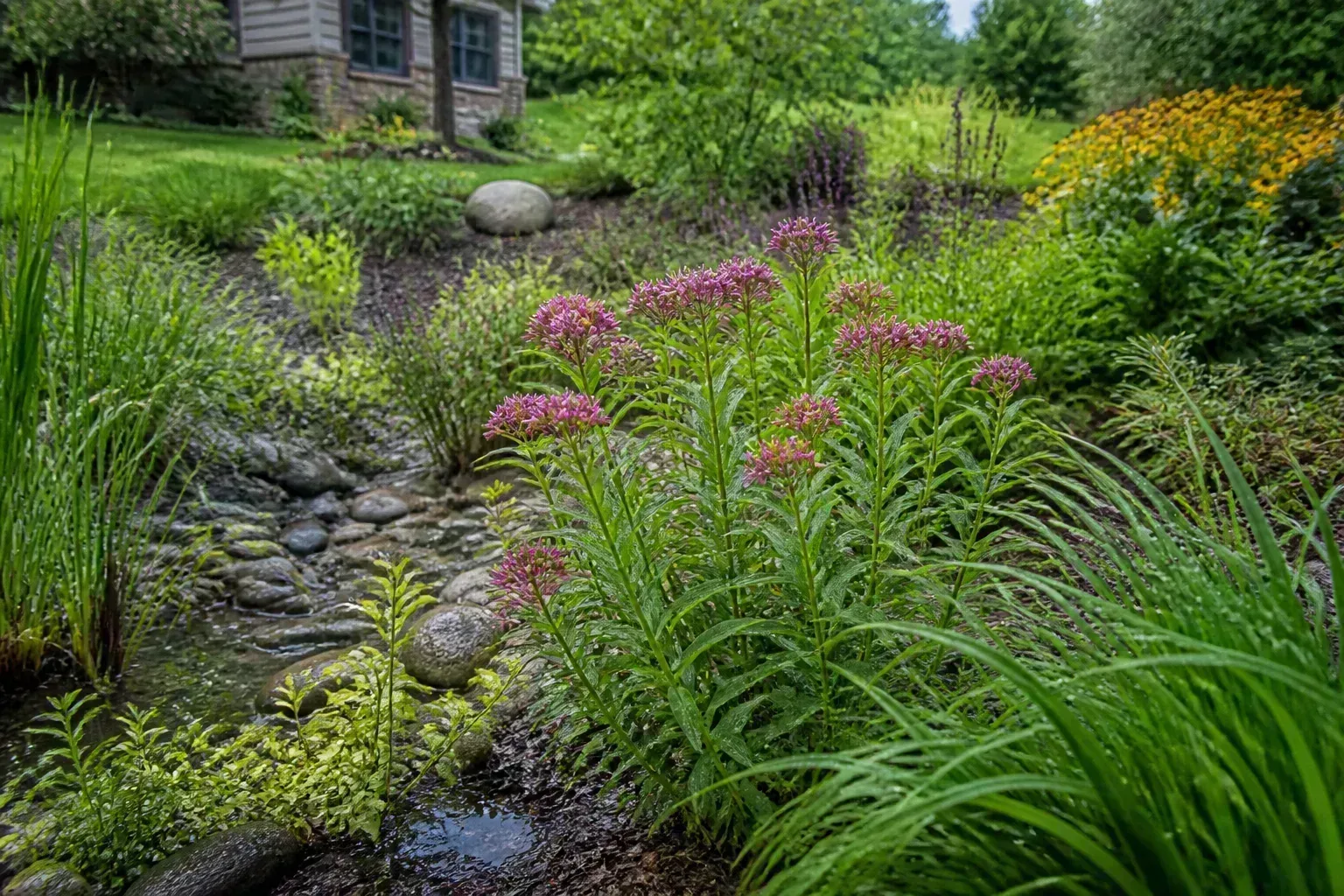
12. Put Moisture-Loving Natives in a Rain Garden
A rain garden is a shallow planted depression that temporarily receives runoff from a roof, driveway, or compacted area. It is not a pond, and it should drain between rain events. Choose native plants based on where they will sit: the center may stay wet longer, while the sloped rim dries sooner. Plants suited to one position may fail a few feet away, so read labels for wet-soil tolerance and check local guidance for the depth and placement of a rain garden.
Use flowering perennials and grasses to soften the basin, but preserve the overflow route and avoid planting where water could be directed toward a foundation. A rain garden needs thoughtful grading and a safe outlet, not just moisture-loving flowers dropped into a soggy spot. If water remains for days after ordinary rain, investigate drainage before treating the area as a garden bed. For small sites, an existing low spot can still support a damp native planting even if it is not engineered to capture roof runoff.
13. Soften a Gravel Walk With Dry-Site Wildflowers
A gravel border or sunny stone path can suit drought-adapted wildflowers that dislike constantly wet soil. Keep the planting pockets open and select species for both the local region and the harsh conditions: reflected heat, quick drainage, and occasional foot traffic. Low-growing plants can soften the edge, while taller stems belong away from the walking surface so they do not flop over the path.
Gravel is not a universal weed barrier, and it does not make a poor species choice more successful. Establish plants in soil pockets or prepared beds, then use gravel as a top dressing if it fits the planting. Do not scatter seed across a frequently walked route; it may be displaced before roots form. This is a particularly useful style for a narrow side yard or a path edge where a conventional lawn struggles, but it needs access for occasional hand-weeding and watering while plants establish.
14. Grow a Mini-Meadow in a Large Patio Container
A container can bring wildflowers to a balcony, patio, or rental yard where there is no open soil. Choose a wide, deep pot with drainage, then combine a few species that share the same sun and moisture needs. A packet that mixes plants for different soils can perform poorly in a single container, so check the seed list or buy a small group of plugs matched to the exposure. Native plants suited to your region may be available in container form through local nurseries or native plant sales.
Containers dry faster than garden beds, especially in wind or afternoon sun, and a shallow pot limits root growth. Use a container mix that drains well, water when the root zone begins to dry, and avoid a saucer that leaves roots standing in water. Keep the pot where flowers can be viewed without blocking a walkway or creating a hazard on an exposed balcony. If the species are perennial, confirm that the pot can protect their roots through local winter conditions; an exposed container experiences colder temperatures than the ground.
15. Leave Seedheads for Winter Structure and Wildlife
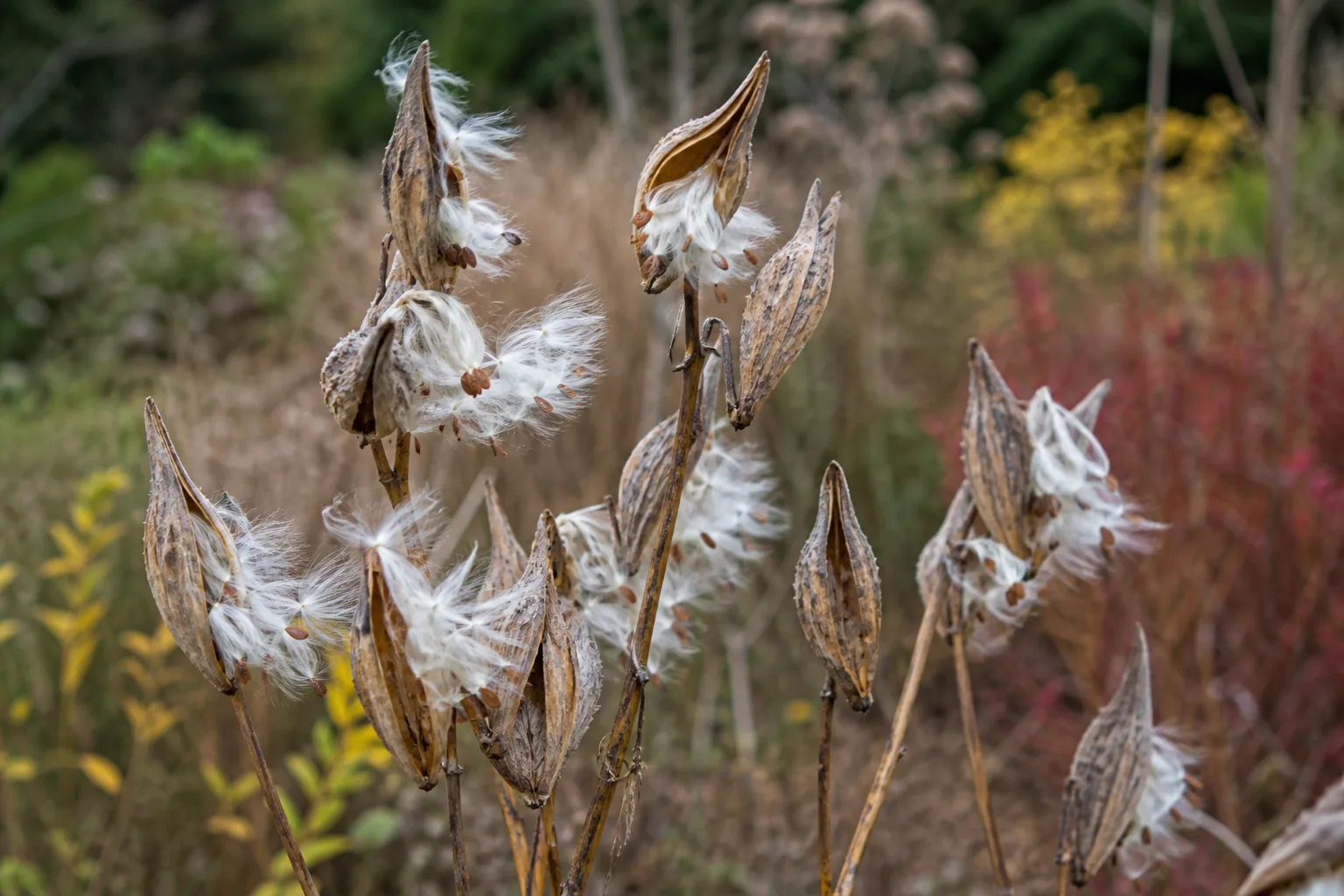
A wildflower garden can remain attractive after the last bloom if you choose plants with upright stems, seedheads, or persistent grasses. Black-eyed Susan-type seedheads, milkweed pods, and local native grasses can create winter texture and provide food or shelter for wildlife. Use familiar examples only as visual references; select the species that belong in your region and fit the space. A few standing stems against an evergreen hedge or fence often look intentional without leaving every border untouched.
Resist a blanket cleanup on the first cold day. Leave healthy stems through winter where they are not blocking access or creating a safety problem, then cut them back when new growth begins and local conditions are suitable. If you do mow or cut a larger meadow, inspect it first for wildlife and avoid working through a wet patch that can be damaged by heavy equipment. The National Park Service’s native-plant garden account describes dead stems and seedheads as winter food and cover; the practical lesson is to keep habitat where it fits your garden, not to abandon all maintenance.
Choose the Idea That Fits Your Space
| Your site | Good starting idea | Design decision to make first |
|---|---|---|
| Sunny lawn with usable grass | Flowering islands or a mown-edge pocket meadow | Remove or open turf; do not rely on seed broadcast over dense grass |
| Narrow sunny side yard | Seasonal border or gravel-edge planting | Confirm drainage and choose plants for reflected heat |
| Dappled shade beneath trees | Woodland-edge patch | Match species to summer shade and avoid deep digging through tree roots |
| Low area that receives runoff | Rain garden or damp native border | Check where water enters and where overflow will go |
| Fruit-tree planting | Short orchard understory | Keep trunks, access lanes, and fruit-collection areas clear |
| Patio or balcony | Container mini-meadow | Choose compatible plants and account for faster drying and winter exposure |
Use the table as a starting point, not a formula. Native species lists are geographically specific, and even a city can contain different micro-sites: one bed may bake beside a driveway while another stays cool under a mature tree. The National Park Service’s regional garden cards illustrate why location belongs in the plant-selection decision.
Establish a Wildflower Garden Without Guesswork
Begin by mapping the space rather than ordering seeds. Note the hours of direct light, where water stands after rain, where runoff moves, and whether the ground is already dominated by grass or perennial weeds. Decide what must remain accessible—paths, gates, utility boxes, orchard trunks, play space—and draw those areas into the design. A small planting with a clear boundary is easier to establish than a large bed with no route for mowing or weeding.
Next, identify plants from your ecoregion and match them to site conditions. Use a local native-plant nursery, Cooperative Extension, or native plant group to verify species and sourcing. Look for the full seed mix list and the region it was designed for; “wildflower” on a packet does not guarantee that the plants are native or non-invasive where you live. Do not collect plants from the wild unless you have permission and know that collection is allowed. The National Park Service emphasizes local plant lists, site mapping, and matching plant requirements to light, moisture, and soil.
Prepare the surface so young plants have room to establish. On a small patch, remove turf and persistent weeds by hand; for a larger conversion, use a method appropriate to the site and avoid disturbing soil in ways that spread invasive roots or bring buried weed seeds to the surface. A perennial meadow often performs better on leaner soil than a highly fertilized bed, because vigorous grass and weeds can outcompete slower wildflowers. Do not add compost or fertilizer automatically; follow the selected mix’s instructions and only amend for a known need.
Sow at the time recommended for the species and climate. Many mixes are sown in spring or fall, but exact timing depends on local weather and whether seeds need winter cold to germinate. Spread small seed evenly, rake or press it lightly into the surface if instructions call for it, and keep the seedbed moist while seedlings develop. Water a small bed during dry establishment weather; large meadow areas may be impractical to irrigate, so choose timing and species that fit local rainfall. A plug planting costs more up front but gives faster visual structure and makes it easier to place plants in groups.
Plan for establishment work. The first season may look sparse, and seedlings can be hard to distinguish from weeds. Identify the species in the mix before pulling anything, remove aggressive weeds while they are small, and mow or trim only as advised for the selected planting. Once plants mature, time a cut to the species’ seed set and local wildlife cycle, and remove bulky clippings where the goal is to keep grass from dominating. Fine Gardening’s meadow-lawn guide and the RHS’s meadow advice both underscore that natural-looking plantings still need planned edges and periodic management. Savvy Gardening’s habitat-garden guidance adds a useful design test: think about food, shelter, and water together rather than expecting flowers alone to meet every wildlife need.
Conclusion
A wildflower garden can be as small as a container or as expansive as a meadow, but it works best when the design follows the site. Choose plants from your region, account for sun and moisture, and decide where people will walk, sit, mow, and reach the garden before sowing.
For the easiest first step, convert one manageable patch, edge it cleanly, and observe it for a full season. Let annuals provide quick color if that is the goal; choose perennials and grasses for a longer-lived structure. A garden that balances flowers with paths, edges, and realistic maintenance will feel wild without looking forgotten.



