Why Geranium Leaves Turn Yellow: 7 Causes and Fixes
Learn why geranium leaves turn yellow, from overwatering and low light to cold, pests, disease, nutrients, and herbicide injury—and what to do first.
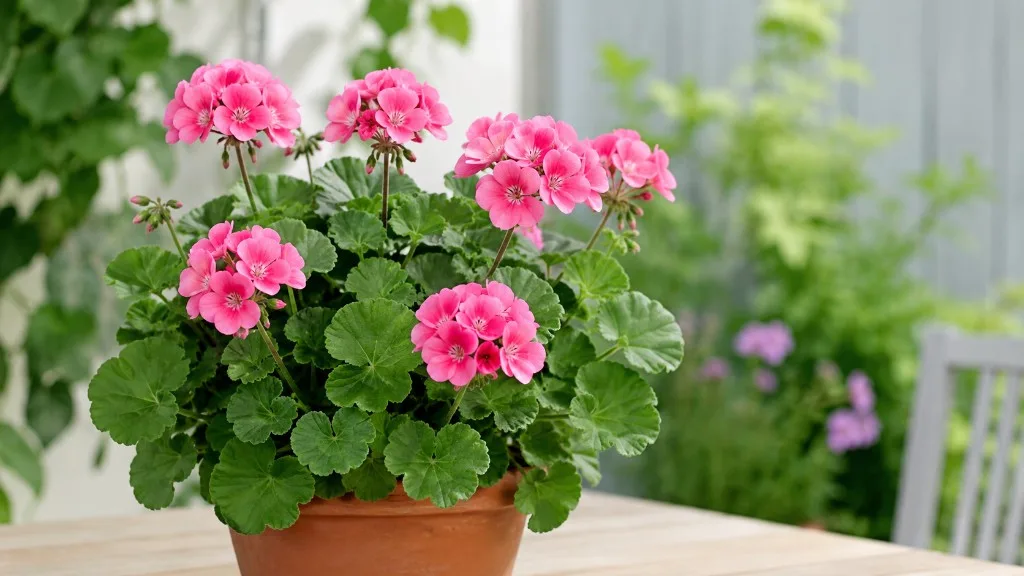
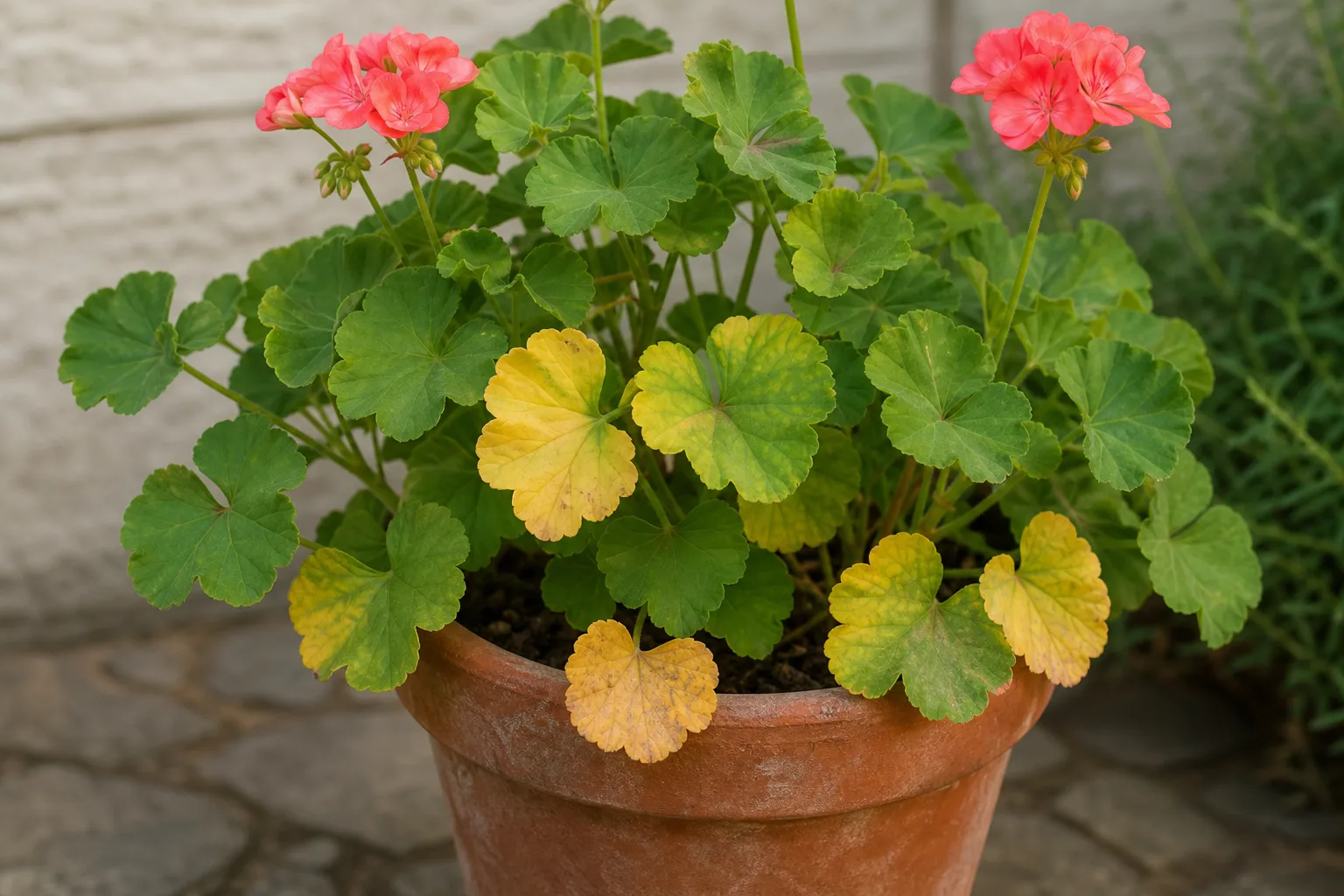
Yellow geranium leaves are a clue, not a complete diagnosis. A single old leaf can yellow naturally, while a whole plant turning pale may be overwatered, underlit, cold, nutrient-starved, diseased, or exposed to herbicide.
Check the soil, roots, light, and pattern before changing care. Yellow tissue that has lost chlorophyll usually will not turn green again; the goal is to protect new growth.
Start with the pattern, not the color
| Pattern | Likely causes | First check |
|---|---|---|
| Lower leaves yellow and soft | Wet soil, aging, low light | Drainage and roots |
| Leaves pale across whole plant | Low light, nutrition, root stress | Light and soil |
| Yellow stippling | Mites or pests | Leaf undersides |
| Spots with yellow halos | Disease | Airflow and leaf pattern |
| One-sided damage | Sun, cold, herbicide | Exposure history |
| Sudden yellow after cold | Temperature injury | Forecast and stems |
Overwatering and poor drainage
Geraniums, more accurately many Pelargonium hybrids, dislike roots that remain wet. If the mix is damp for days, leaves can yellow, stems may soften, and the plant can wilt because damaged roots cannot take up water.
Check the pot’s drainage hole and empty the saucer. Let the upper mix dry before watering thoroughly again. If roots are brown and soft, remove the plant, cut away rot, and repot only healthy tissue into fresh, draining mix.
Underwatering and heat
Dry soil, hot pavement, and small containers can cause lower leaves to yellow, curl, or drop. Insert a finger into the root zone rather than judging by the leaf alone. If the mix is dry, water slowly until runoff and move a severely heat-stressed pot out of reflected afternoon heat.
Do not alternate severe drought with flooding. A mulch layer in the ground or a slightly larger container can reduce rapid swings, but the roots must still drain.
Not enough light
Geraniums need bright light for compact growth and flowers. A plant kept in deep shade can become thin, pale, and reluctant to bloom. Move it gradually into brighter conditions; sudden full sun can scorch leaves that developed in shade.
Rotate the pot and prune stretched growth after the plant stabilizes. More fertilizer cannot make up for inadequate light.
Cold and seasonal stress
Pelargoniums are sensitive to frost and cold, wet conditions. Yellowing after a cold night may be temporary if stems and growing points remain alive. Move containers to shelter before frost and reduce watering when winter light is weak.
Do not cut back every damaged leaf immediately after a cold event. Wait until the temperature stabilizes, then remove tissue that is fully dead or collapsing.
Nutrient deficiency and root lockout
Uniform pale new growth can indicate a nutrient issue, but it can also reflect high soil pH, waterlogged roots, or a root-bound container. Test soil before adding fertilizer. A plant cannot use nutrients efficiently if roots are damaged or the mix is chronically saturated.
Feed active plants with a complete fertilizer according to the label. Avoid repeated high-nitrogen feeding, which creates leaves and stems without necessarily improving flowers. Flush salt buildup only when the pot drains freely.
Disease, pests, and herbicide injury
Inspect undersides for aphids, whiteflies, and mites. Fine stippling, webbing, sticky residue, or distorted new growth points toward pests. Isolate the plant and use a labeled treatment if needed.
Geranium rust and other leaf diseases can create spots, yellowing, and premature drop. Keep foliage dry when practical, improve airflow, remove affected leaves, and seek local diagnosis if the pattern spreads. Do not compost diseased material.
Herbicide drift can cause distorted, twisted, or yellow new growth on one side of a plant. If damage follows lawn treatment or a neighbor’s spray, do not add fertilizer. Protect plants from future drift and wait to see whether new growth is normal.
What to do with yellow leaves
Remove a fully yellow or diseased leaf with clean shears. Keep a leaf that is partly green if it is supporting the plant and not infected. Correct the condition that caused the yellowing, then judge success by new leaves and stronger growth rather than by the old leaf’s color.
Change one variable at a time. Moving the plant, repotting, pruning, fertilizing, and changing water on the same day makes it impossible to know what helped and adds stress.
Conclusion: fix the condition that changed
Wet soil, drought, weak light, cold, nutrient problems, pests, disease, and herbicide injury can all yellow geranium leaves. Soil moisture and roots come first, then light, temperature, and evidence of insects or spots.
Remove damaged leaves, protect new growth, and give the plant time to respond. A yellow leaf rarely tells you the treatment by itself; the plant’s pattern and root zone do.