When to Plant Cabbage for a Fall Harvest
Plan fall cabbage around your climate, variety, and harvest goal. Use a worked frost-date example and practical guidance for seeds, starts, heat, and cold.
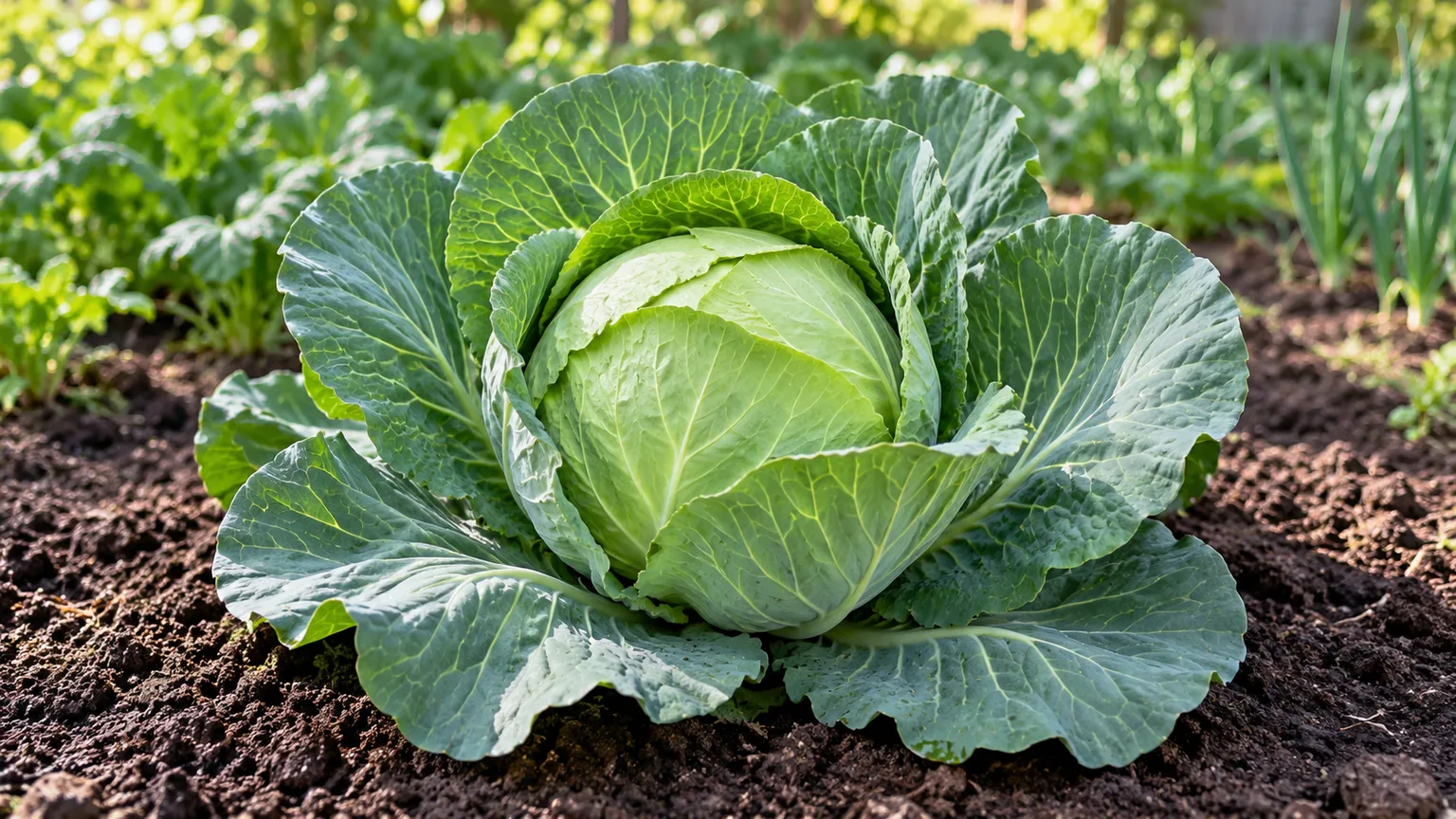
Fall cabbage does not have one reliable planting month for every garden. A gardener in a high-elevation valley may need to set out plants in midsummer, while someone with a long, mild autumn can start later. Your variety’s maturity time, your local first-frost pattern, and whether you are counting from seed or transplant matter more than a calendar label such as “August.”
Use the first frost date as a planning marker, not an automatic cabbage deadline. Many mature cabbage plants tolerate cool weather and a light frost, so the goal is usually to give the plant time to reach a useful size before prolonged cold and deep freezes arrive. The safest date is the one that leaves enough time for your chosen variety to establish and form a firm head in your own climate.
Start with the harvest target, not a fixed calendar date
Before you count backward, decide what you want to harvest. A small, tender head can be ready sooner than a large storage cabbage, and some gardeners are happy to pick leaves or immature heads while others want full-size, dense heads. “Ready” should reflect your kitchen and not just the largest size listed in a catalog.
For an average planning reference, cabbage often takes roughly 60 to 110 days to mature, depending on cultivar and conditions. Utah State University Extension lists varieties ranging from ‘Ruby Ball’ at 55 days to ‘Danish Ball Head’ at 100 days, with ‘Golden Acre’ at 65 days and ‘Savoy Ace’ at 80 days; those examples show why an average number is not enough. Check the packet or supplier listing for your exact cultivar, and use local extension calendars to refine the date. Utah State University Extension’s cabbage guide provides regional growing guidance and cultivar examples.
Read the days-to-maturity label carefully
The maturity clock may begin at sowing, emergence, or transplanting. Many cabbage seed listings count the number of days after setting out a transplant, while direct-sown crops may count from sowing; seed companies do not always use identical conventions. Look for wording such as “days from transplant” or “days from seed,” and contact the supplier if the listing is unclear.
This distinction changes the calendar by several weeks. If the packet’s 70 days begin when the transplant goes into the garden, you must start seeds early enough to grow a transplant before that date. University of Maryland Extension gives a useful example for fall brassicas: when cabbage needs a five-week seedling period and the field transplant date is August 7, indoor sowing begins around July 3. Treat that as a worked regional example, not a universal timetable. The University of Maryland Extension fall-planting guide explains how to combine transplant days and indoor seedling time.
Add a realistic fall buffer
Catalog days assume reasonably favorable conditions. Late summer can bring hot soil and heat-stressed seedlings; later, shorter days and cooler temperatures slow leaf production. A buffer helps absorb a slow germination, transplant setback, cloudy spell, or late start without pretending those factors can be predicted exactly.
Some fall-garden recommendations add about one to two weeks beyond the packet’s maturity period; others begin by choosing a harvest date one to two weeks after average first frost, especially for cold-tolerant crops. These methods express a similar caution but are not interchangeable if one source counts from sowing and another from transplanting. Use a modest buffer for a short-season, early cabbage and a wider one for slow or large-headed types, then compare the result with your local climate. Don’t add a blanket number twice if your seed packet or local extension calendar already builds in a fall allowance.
Count backward from frost without treating frost as a hard deadline
Find your average first fall frost date from a nearby weather station or county extension office, not a statewide zone chart alone. A USDA hardiness zone describes the coldest winter temperature expected over time; it is not a direct measure of when autumn frost usually starts. Elevation, distance from water, slope, and cold-air pooling can shift the first frost by weeks within the same broad region.
Next choose a target harvest. Cabbage can often remain in the garden after a light frost, so a grower may plan for heads to mature shortly after that first frost rather than demand a harvest before it. But a first frost and a prolonged hard freeze are different events. Your local fall calendar and the cultivar’s cold tolerance determine how much extra time is reasonable; do not assume a head can sit outside indefinitely through severe freezes.
Work through a planting-date example
Suppose your local average first frost is October 20, and you want to harvest a cabbage head around November 3, about two weeks later. Your chosen early cultivar lists 65 days from transplant. Count backward 65 days from November 3 to reach about August 30, then add the time needed to grow a transplant if you are starting from seed. If the seedling stage takes five weeks, begin indoors near July 26; if you purchase ready-to-plant starts, your garden planting target stays near August 30.
That calculation is a starting point, not a promise. If the cultivar’s label counts from sowing, do not add seedling time twice. If your garden usually freezes hard in late October, set the harvest target earlier or choose a faster cultivar. If you are in a warmer region with a long autumn, later timing may work; if your site is an exposed, elevated bed, plant earlier or rely on a suitable transplant rather than assuming the average date will protect it.
For a quick check, write four items on the seed packet: your intended harvest date, listed maturity days, when that clock starts, and your fall buffer. Count back in a calendar, then compare that planting date with the date you can actually sow or transplant. If the arithmetic says you are late, change the variety or harvest goal before you put seed in the ground.
Translate the calculation to your regional climate
“Plant in late summer” is useful only after you know what late summer means in your garden. Climate scenarios can orient you, but do not use USDA zones as exact planting-date prescriptions. The same zone may include a shaded high-elevation site and a warmer urban yard with very different frost and growing-season timing.
Short seasons and early fall freezes
Where autumn arrives early, plan backward from an early frost and hard-freeze date, and start cabbage well before the weather feels like fall. Northern gardens, mountain locations, and exposed inland sites may need seed started indoors in early or midsummer and transplants set out while summer is still warm. Choose fast, early cultivars and avoid long-season storage types unless a local extension schedule supports them.
For example, if your expected frost is in late September and the cultivar needs 65 days after transplant, a target head date near frost puts the transplant date in late July. Starting seed five weeks before that means sowing in late June. A short season makes the seedling calendar part of the decision; waiting until August to begin because the nights are cooler can leave too few days for the plant to size up.
If the crop is already behind, prioritize a modest harvest. An established transplant may still make a smaller head or useful leaves, while direct-sown cabbage may not. A low tunnel or floating row cover can moderate brief cold and wind, but protection cannot substitute for several weeks of missing daylight and growth.
Long autumns and moderate climates
In regions with a gradual fall and a first frost later in October or November, you may have more choices. A late-summer transplant can establish during warm soil and then form heads as conditions cool. Some growers can also make a second planting after an early crop comes out, but each sowing should still pass the same maturity check.
The University of Maryland example demonstrates why transplants are especially useful in the Mid-Atlantic: seedling growth takes place indoors during the hottest part of summer, and planting outdoors waits until the crop can establish under more manageable conditions. Use your own average frost date and local extension schedule to shift that example forward or backward. The RHS cabbage guide similarly separates autumn and winter cabbage types by their sowing and harvest seasons instead of treating all cabbage as a single calendar crop.
In a moderate climate, a late cultivar may fit if your autumn is long enough, but do not equate “cold-hardy” with “fast.” A cabbage plant can survive cool weather yet stop adding much size once days are short and the ground is cold. If you want large heads for storage, set them out earlier than a crop you plan to eat fresh at a smaller size.
Mild-winter and subtropical regions
In mild-winter areas, fall cabbage may be a cool-season planting rather than a race to the first frost. The main challenge can be lingering summer heat: seedlings exposed to hot sun or dry potting mix may wilt, stall, or fail to establish before the ideal growing weather arrives. Local calendars for coastal, southern, or subtropical regions often schedule cabbage later than northern calendars, so follow the closest regional extension guidance.
Start seedlings in a bright, ventilated place and protect them from harsh afternoon sun while the weather is hot. Once daytime heat eases, transplant into a sunny bed with reliable moisture. Avoid planting against a very warm wall or in a reflective patio corner if the seedlings already struggle with heat.
Where winters are mild, some cabbage may stand in the garden longer and mature through winter, but variety and local disease pressure matter. RHS classifies autumn and winter cabbages separately and notes that some winter types are selected to remain in good condition for an extended harvest. In climates with wet winters, good drainage and airflow matter as much as cold tolerance; use a local vegetable calendar for sowing windows rather than borrowing dates from a different latitude.
Choose seeds or transplants to match the time left
Starting from seed gives you more cultivar choice and control, but it requires planning. If the packet maturity is counted after transplanting, add the weeks needed to produce a healthy seedling; Utah State Extension notes that growing a transplant to a suitable size generally takes about six to seven weeks. University of Maryland’s example uses about five weeks for a fall brassica seedling, showing that the exact lead time depends on conditions and transplant size.
Buy transplants when the ideal seed-start date has passed or you lack space, light, or protection for indoor starts. Look for compact plants with several true leaves, sturdy stems, and roots that hold the plug together without circling densely. Avoid seedlings that are stretched, yellow, rootbound, or already forming a tiny head; they may take longer to recover than a smaller, vigorous plant.
Direct sowing can work in a sufficiently long season, especially when you can keep the seedbed consistently moist and protect new seedlings. Its main drawback in a late-summer window is exposure: seeds and tiny seedlings experience hot soil, drying winds, flea beetles, and weeds at once. Transplanting moves the vulnerable germination stage to a protected space, but it brings transplant shock and requires hardening off. Epic Gardening’s cabbage guide describes a four-to-six-week indoor seed-start period and broad maturity differences among early, midseason, and late cultivars; match those ranges to your own packet and local weather.
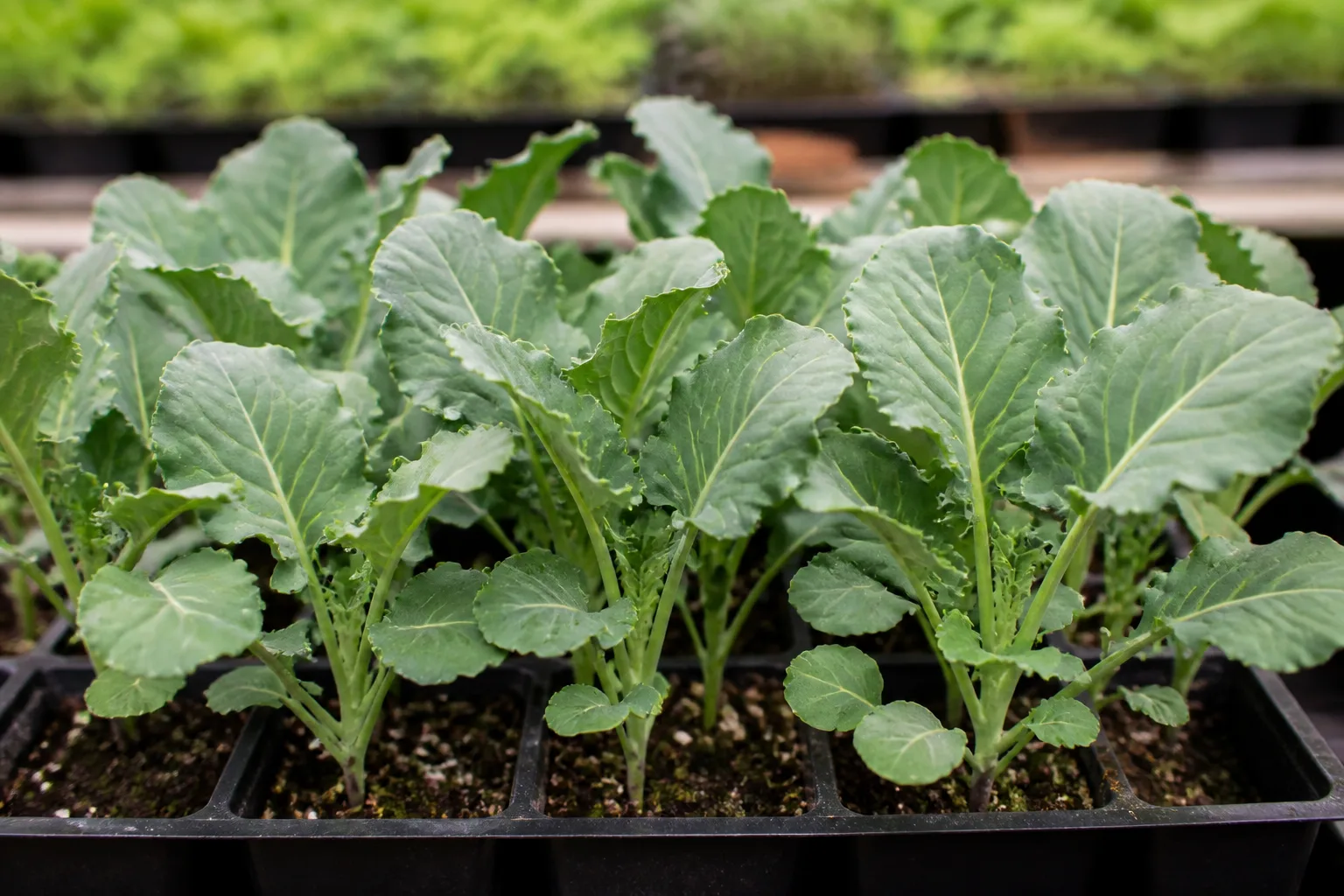
If your calculated outdoor date is only a few weeks away, buying starts is often more realistic than sowing seeds and expecting a full head. If local nurseries have no cabbage starts, ask whether another early cultivar is available or shift to a faster leafy crop. An indoor seed-starting setup can still help in a longer fall, but do not treat seedling time as free time.
Select a cabbage type that can mature in your window
Early cabbage is the practical choice for a short fall, but “early” is not one universal number. Compare actual cultivar listings, and check whether the days refer to transplant or sowing. Utah State Extension’s examples—‘Ruby Ball’ at 55 days, ‘Golden Acre’ at 65, ‘Savoy Ace’ at 80, and ‘Danish Ball Head’ at 100—span a 45-day difference. That gap can determine whether a full head fits before your hard-freeze season.
For a tight window, look for compact cultivars described as early or quick-maturing, then confirm the number with the seed company. Early Jersey Wakefield is a pointed early type often used for fresh eating; ‘Golden Acre’ is another early green cabbage listed by extension. Savoy cultivars usually have textured leaves and may differ in maturity and cold performance. Red, napa, and storage cabbages also vary widely, so don’t infer timing from color or head shape.
Choose based on the harvest you need. A small household may prefer compact heads that can be used soon after cutting. For storage, choose a variety advertised for keeping and allow it to reach full maturity; a fast fresh-market cabbage may not store as long. RHS notes that winter cabbage types often form larger, more robust heads and need more room, while many autumn types should mature before winter. Use the broader cabbage-growing guide for spacing, soil, feeding, and long-term care once the timing decision is made.
Get seedlings through late-summer heat
Fall cabbage starts during a season that can be too hot for comfortable gardening. Warm conditions can help seeds germinate, but seedlings in small cells dry out quickly and roots can overheat. A date on the calendar does not make the conditions suitable: check the seed-starting area and be ready to move trays away from harsh afternoon sun.
Protect the seedbed and time sowing well
For indoor starts, use clean seed-starting mix and a tray with drainage. Sow at the packet depth, keep the mix evenly damp rather than waterlogged, and move the young plants into bright light after they emerge. Cabbage seedlings become leggy when light is weak; if they stretch, they are less sturdy when you transplant them into wind and sun.
For direct sowing outdoors, choose a spot with morning sun or temporary afternoon shade during the hottest stretch. Keep the seed row damp until emergence, using gentle watering so the surface does not crust or wash the seeds away. Once seedlings are established, thin them to the packet spacing rather than allowing a crowded clump to compete for water and light.
If the heat is severe, sowing in modular trays can make watering easier and protect seedlings from soil pests. The RHS recommends modular trays to reduce root disturbance during transplanting and advises checking packet directions because sowing times differ by variety. Sow only the number of plants you can protect and space; a smaller, vigorous batch is easier to manage than dozens of stressed seedlings.
Establish transplants quickly in the garden
Harden indoor-grown plants gradually for about a week before planting, increasing their exposure to outdoor light and air rather than moving them directly from a sheltered room into full sun. Transplant in the late afternoon or on a cloudy day, water the root ball first, and firm soil gently around the roots. Keep the crown at the same depth it grew in its container; burying the stem deeply or leaving the root plug exposed can slow establishment.
Water immediately after planting and keep the root zone evenly moist while new roots grow into the bed. A thin layer of mulch can reduce evaporation, but keep it from pressing against the stem and do not let the bed become waterlogged. Space plants according to the cultivar: small early heads may need less room than large storage cabbages, and crowded plants do not reach their listed size reliably.
Rotate cabbage away from beds that recently grew cabbage, broccoli, cauliflower, kale, or other brassicas when possible. A fresh site reduces the chance of repeating soil-borne problems and gives the new crop a better start. Install insect mesh or a breathable row cover promptly if cabbage worms, flea beetles, or other pests are common in your garden; young leaves can be damaged before the plants have time to recover.
Keep growth steady as heads begin to form
Fall cabbage benefits from steady moisture, especially during rapid leaf growth and head formation. Check the soil below the surface rather than watering by a rigid weekly schedule; sandy beds and containers may dry faster than heavier soil, while rainy weather may supply enough. A sharp swing from drought to heavy watering can split mature heads, so consistency matters more than a single deep watering near harvest.
Give plants full sun where possible, but protect new transplants from heat stress during establishment. If hot weather continues, a temporary shade cloth can reduce afternoon intensity while plants root in, then come off when temperatures moderate. Remove or vent covers on warm afternoons so they do not trap excessive heat and humidity; the cover that helps against insects can become a heat trap if left closed.
Use a soil test or local extension recommendation to decide whether fertilizer is needed. Cabbage is a substantial feeder, but applying excess nitrogen late can encourage loose, leafy growth instead of firm heads. Utah State Extension recommends a nitrogen side-dressing about four weeks after transplanting and cautions against additional nitrogen once heads begin forming because it can contribute to loose heads and splitting. Follow the product label and local soil guidance instead of feeding every plant on an automatic two-week schedule.
Harvest firm heads and use frost protection wisely
Harvest when a head feels firm and compact for its expected size, not solely because the packet’s day count has arrived. Maturity figures help you anticipate the window, but plants can be early or late depending on weather, moisture, and variety. Cut with a clean knife below the head and leave wrapper leaves to protect it during handling; if the head is loose, give it more time while the forecast and plant condition allow.
A light frost does not automatically ruin cabbage, and cool fall weather can improve eating quality. However, cold tolerance varies with variety, maturity, acclimation, and duration. Utah State University Extension reports cabbage tolerating temperatures down to about 25°F under its growing guidance, while Epic Gardening describes cabbage tolerating temperatures near 20°F. Treat these figures as context, not a guarantee for a wet, exposed, immature plant or a multi-night freeze.
Use a breathable row cover for a forecast light frost, anchor it securely, and check the bed after the weather changes. A heavier cover or low tunnel may help in a brief cold snap, but remove or vent protection during sunny warm spells. If a severe freeze is coming and heads are already firm, harvest them rather than relying on a cover to carry an exposed crop indefinitely. For full care, storage, and troubleshooting beyond timing, see the site’s guide to growing cabbage; for other fall crops, use the separate fall vegetable planting guide.
Conclusion
The best time to plant cabbage for fall is the date that gives your specific variety enough days to establish and form the head you want before your garden’s hard-freeze period. Start with a local frost calendar, verify what the seed packet means by days to maturity, choose a harvest target, and count backward with a reasonable allowance for slow autumn growth.
Use early cultivars or healthy transplants when your season is short, and give seed-starting the extra weeks it actually needs. In a mild climate, late-summer heat may be the bigger challenge than frost; in a cold or exposed site, set plants out early and protect them when a freeze threatens. Once you replace a fixed “plant now” rule with local date math and a realistic cultivar choice, you can plan a fall cabbage crop that fits your garden instead of hoping the calendar works out.