What Do Plants Need to Grow? Five Essentials Explained
What do plants need to grow? Learn how light, water, air, nutrients and root space work together, plus the first checks for common houseplant problems.
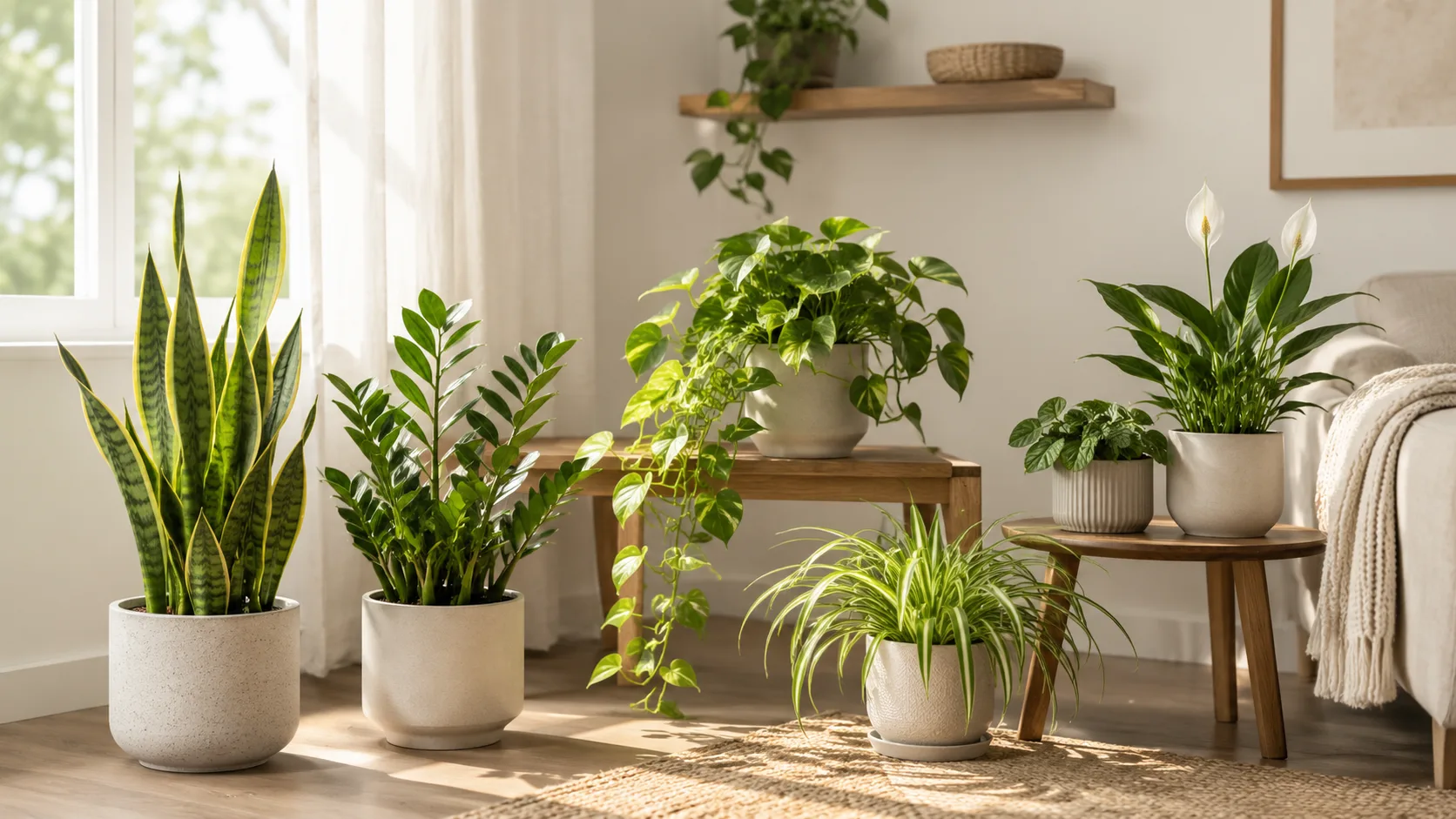
A houseplant can sit beside a window, receive regular water, and still produce smaller leaves or no new growth. That usually means one part of its growing environment is out of balance—or that the plant is resting, adapting, or growing so slowly that the change is easy to miss.
For most green indoor plants, growth depends on five connected essentials: light, water, air, mineral nutrients, and enough room for roots and leaves to function. These are not five products to buy. They are conditions to manage, and the right level varies by species, season, pot, and home. A useful way to think about the list is as a system: light powers food-making, water and air support it, nutrients help build and regulate tissue, and roots need a workable place to gather resources.
The five essentials work as a system
Plants make most of their own sugars through photosynthesis. In the presence of usable light, chlorophyll-containing tissues use carbon dioxide and water to build carbohydrates; minerals absorbed by roots help the plant construct cells and run essential processes. Roots also need oxygen for cellular respiration, while leaves exchange gases through tiny pores called stomata. The processes overlap, so a plant that cannot take up water because its roots are damaged may look thirsty even when its pot is wet.
The University of Illinois Extension lists room to grow, temperature, light, water, air, nutrients, and time among the conditions that affect indoor plant growth. This guide groups the underlying needs into five practical categories and treats temperature, humidity, and time as important modifiers. For example, the same pot can dry quickly in a warm, bright, breezy room and stay damp much longer in a cool, dim corner. University of Illinois Extension offers a useful overview of these indoor growing conditions.
Use the list as a diagnostic framework, not as a prescription to add more of everything. A plant with pale leaves does not automatically need fertilizer; poor light, root stress, pests, or a naturally light-colored leaf can look similar. Start by observing new growth and the root zone, then change one condition and give the plant time to respond.
1. Light supplies energy to build new growth
Light is the energy source for photosynthesis. A green plant uses light, carbon dioxide, and water to form sugars that fuel maintenance and new tissues; if usable light is consistently inadequate, adding water or fertilizer cannot replace the energy the plant lacks. Some plants tolerate dimmer rooms better than others, but “low light” means lower growth or survival tolerance, not an ability to thrive in darkness.
What counts as enough light depends on the species and on the light reaching its leaves. A bright window may still provide weak light several feet back, and a north-facing window in one climate can differ from a south-facing window in another. Trees, neighboring buildings, blinds, tinted glass, and seasonal sun angles all change the amount and duration of light indoors.
Read the light in your room, not the window label
Look at the plant’s actual position during the day. Notice whether the leaves receive direct sun, bright reflected daylight, or only a dim ambient glow; also consider whether the room is bright for a few hours or for most of the day. A phone light-meter app can help compare two spots, but many apps are not calibrated for horticultural measurements, so treat readings as relative clues rather than an exact plant prescription.
Plant growth gives another signal over time. New leaves that are smaller than older ones, long gaps between leaves, or stems leaning strongly toward a window can suggest insufficient light, particularly if watering and roots are otherwise sound. These signs are not proof: species naturally differ in leaf size and spacing, and a plant may stretch after a recent move or during a seasonal change.
Adjust light without shocking the plant
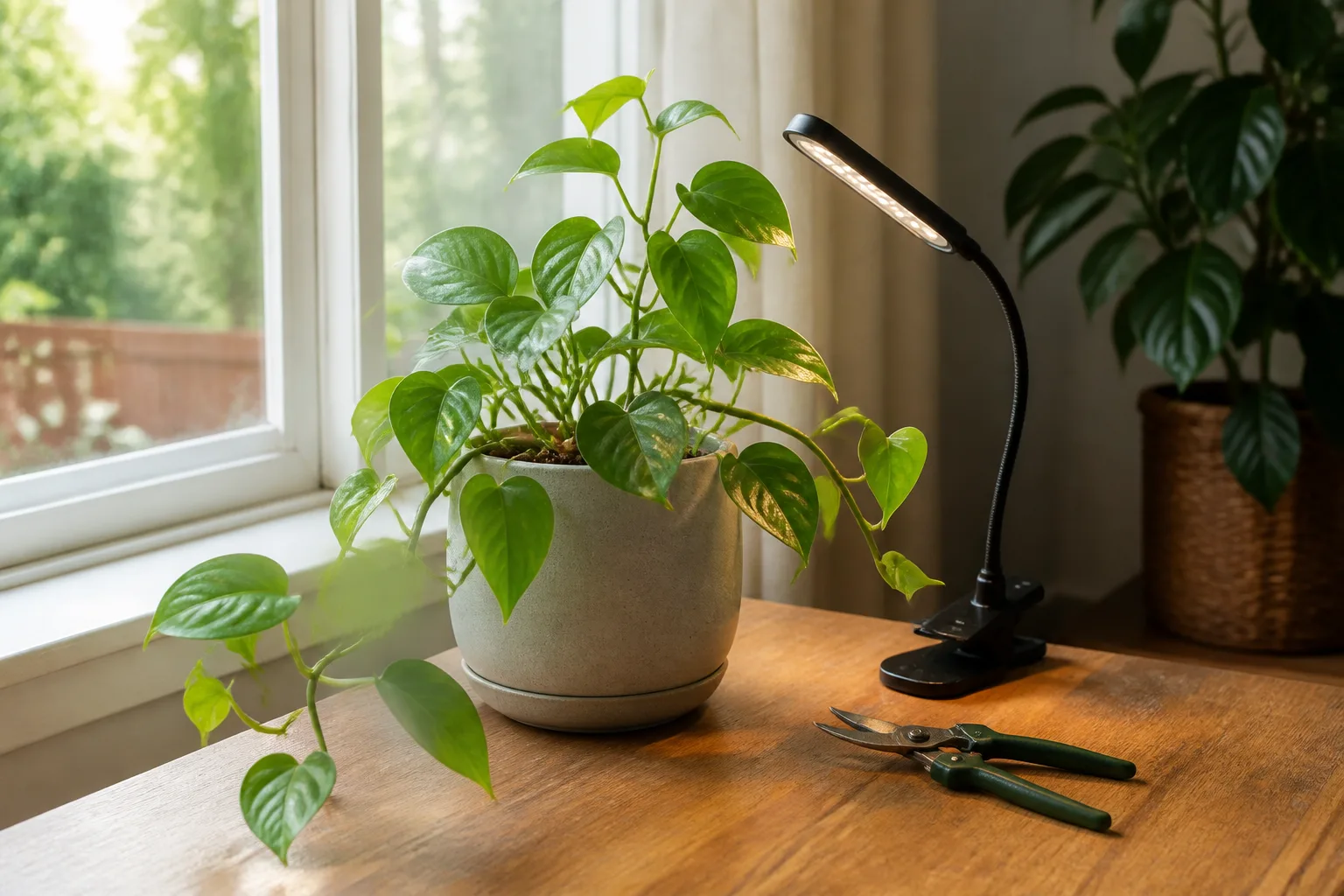
Move a plant in stages instead of shifting it abruptly from a dim room into strong afternoon sun. Start closer to the intended window or behind a sheer curtain, then observe new growth and any bleaching or dry, scorched patches over the following weeks. A plant bought from a shaded store may be especially unprepared for direct sun, even if the species eventually tolerates it.
A grow light can help when daylight is inadequate, but distance, beam spread, duration, and plant type matter more than the label’s wattage alone. Place the light so it reaches the foliage evenly, follow the fixture maker’s safety instructions, and use a timer for a consistent day-night cycle. A lamp across the room or a decorative bulb that is on only briefly may illuminate a corner for people without delivering useful light to leaves.
2. Water moves materials and keeps cells firm
Water is a working material inside a plant, not merely a drink. Roots absorb it from the growing medium; it carries dissolved minerals upward through xylem, supports cell structure, participates in photosynthesis, and is lost from leaves through transpiration. West Virginia University Extension explains these connected roles in its guide to West Virginia University Extension.
The amount and frequency a plant needs are shaped by its leaves, roots, pot, mix, temperature, light, and season. A succulent with water-storing tissues can tolerate a longer dry interval than a thin-leaved tropical plant, while a small nursery pot may dry faster than a large ceramic one. That is why a fixed weekly schedule often creates problems: it ignores the rate at which each root ball is actually drying.
Water by the root zone, not the calendar
Check the growing medium before watering. For many foliage plants, feeling the top layer and lifting the pot gives a useful first read; a wooden skewer inserted deeper can help when the container is large or the surface dries faster than the center. Follow species-specific care for plants that prefer consistently moist conditions or a pronounced dry period.
When the plant is ready, water the mix evenly until excess drains from the bottom, then empty the saucer or outer cachepot. This wets more of the root ball than a small sip at the stem and helps reveal whether water is moving through the pot. If water races down the sides while the center remains dry, the mix may have shrunk from the pot wall or become difficult to rewet; apply water slowly in passes, or briefly soak the nursery pot and let it drain completely.
Epic Gardening’s practical houseplant guidance also recommends checking the medium rather than relying on a calendar and allowing excess water to leave the pot. Those habits are more adaptable than a universal frequency because indoor conditions change through the year. Epic Gardening describe that kind of observation-based routine.
When wet soil acts like drought
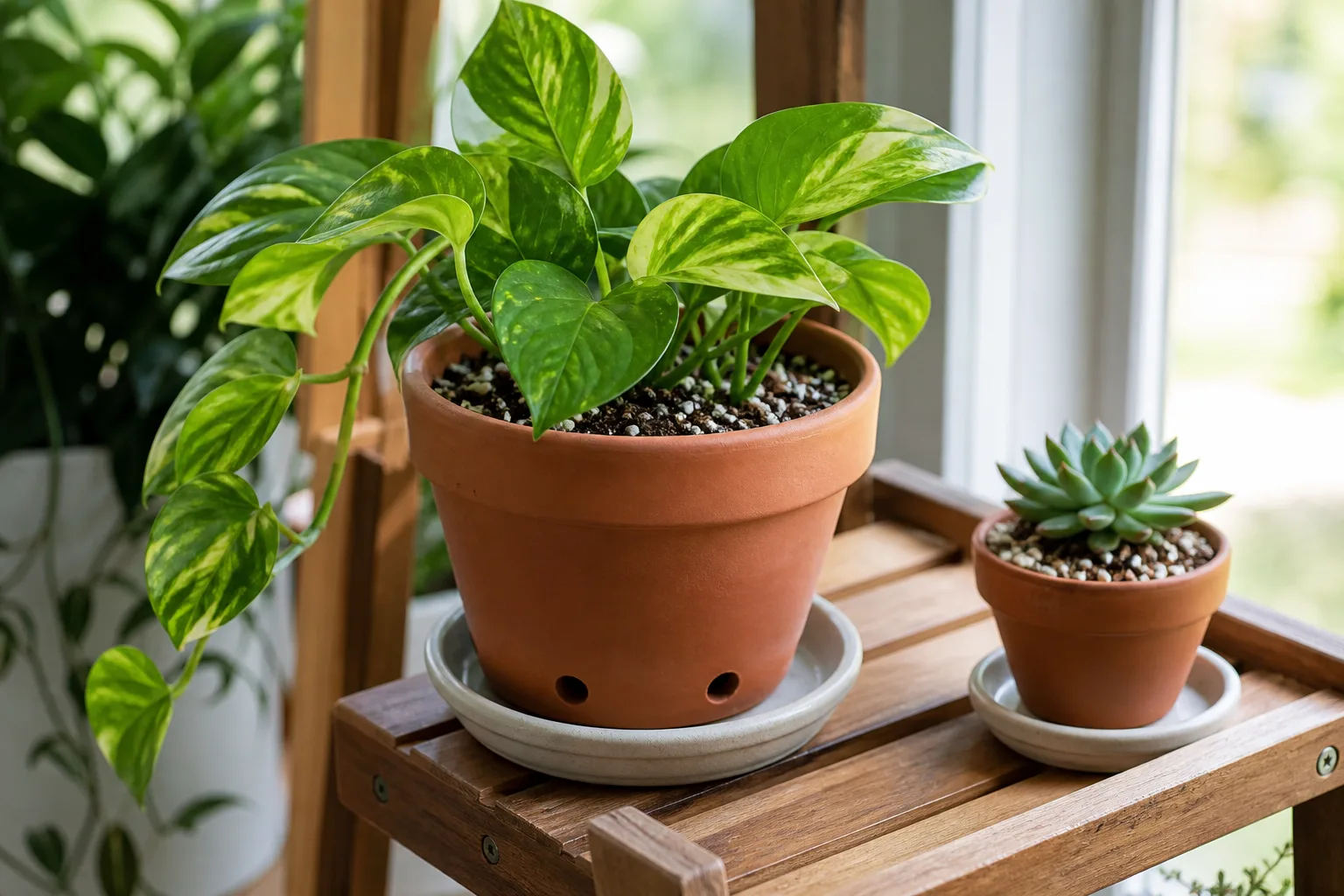
Roots need both water and oxygen. If a potting mix stays saturated, air spaces fill with water and roots may lose access to the oxygen they need; damaged roots then take up less water, so leaves can droop even while the mix feels wet. Adding another drink because the leaves look thirsty can deepen the root problem.
Check the mix several inches down, the pot’s drainage holes, and whether water is standing in a decorative outer pot. If a plant repeatedly wilts in wet mix, inspect roots for firm, light-colored tissue versus soft, dark, or foul-smelling sections; root appearance varies by species and medium, so use texture and odor alongside color. Correct drainage and watering conditions before reaching for fertilizer, and avoid repotting a healthy plant simply because its top layer looks dry.
Water quality can matter for sensitive species, but it is not the first explanation for every brown tip. Mineral buildup, fertilizer salts, drought cycles, low humidity, hot air, and root damage can all cause similar edges. Flush the mix only when its drainage is good and the plant tolerates that treatment; otherwise, address the underlying medium or care issue first.
3. Air feeds leaves and roots
Air supplies carbon dioxide for photosynthesis and oxygen for respiration. The plant uses carbon from atmospheric carbon dioxide to build much of its dry organic matter, while oxygen supports the energy-releasing process cells use to maintain themselves. The University of Hawaiʻi’s open biology textbook describes how plants take up water and nutrients through roots, exchange gases with their surroundings, and use mineral elements in nutrition. University of Hawaiʻi Pressbooks is a helpful reference for the difference between carbon from air and minerals from the root zone.
In ordinary homes, carbon dioxide is rarely the limiting factor for a houseplant. Buying a carbon-dioxide supplement or sealing plants into a cramped display is usually less useful than giving them adequate light, healthy roots, and sensible spacing. Air matters at two scales: leaves need access to room air for gas exchange, and roots need oxygen in the pores of a well-structured growing medium.
Carbon dioxide at the leaf; oxygen at the root
Stomata, microscopic pores mainly on leaves, open and close in response to conditions such as light and water status. Through them, carbon dioxide enters and water vapor exits. Plants also respire day and night, so they need oxygen even while photosynthesis is happening in daylight.
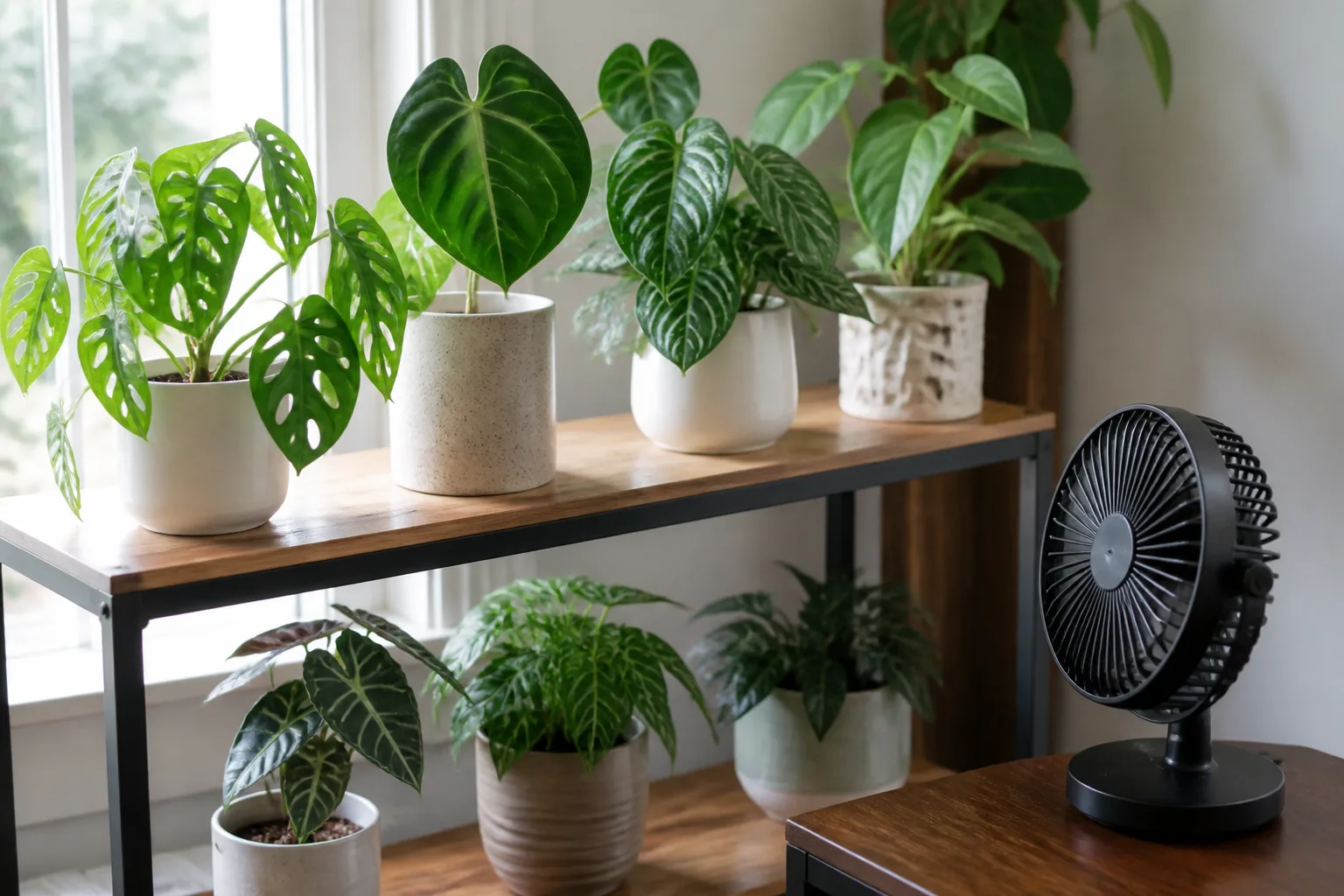
Indoor growers can support air exchange with gentle room circulation and by avoiding tightly packed, persistently damp foliage. A fan does not manufacture the carbon dioxide a plant needs, and it should not blast leaves continuously; a strong stream can dry foliage and mix, especially for plants already stressed by low humidity or heat. Dust on leaves can be wiped gently when it is visibly heavy, but routine polishing is not a substitute for proper light or root care.
At the root level, drainage and mix structure help maintain air pockets after watering. Dense garden soil packed into a small indoor pot can stay wet and poorly aerated; a suitable potting mix should hold enough water for roots while allowing excess to drain and air to return as it dries. The exact texture depends on the plant, but “more drainage material” is not automatically better if the mix then dries before roots can use the water.
4. Nutrients build tissue and regulate growth
Plants need mineral nutrients in small but essential amounts. Nitrogen supports proteins and chlorophyll; phosphorus participates in energy transfer and genetic material; potassium helps regulate water relations and other processes. Calcium, magnesium, sulfur, iron, manganese, boron, zinc, copper, molybdenum, chlorine, and nickel also have specific roles, though plants need some of these only in trace quantities. The University of Florida IFAS summarizes these elements and shows why no single fertilizer ingredient can stand in for all of them.
A crucial distinction gets lost when fertilizer is called “plant food”: green plants make sugars through photosynthesis. Fertilizer supplies mineral nutrients; it does not replace light, carbon dioxide, water, or functioning roots. The plant obtains much of its carbon, hydrogen, and oxygen from carbon dioxide and water, not from a bag of potting soil. Soil or another growing medium chiefly anchors roots and provides a water-and-air environment; it can also hold nutrients, but it is not a universal requirement.
What plant nutrition includes
Macronutrients are needed in relatively larger amounts, while micronutrients are required in smaller amounts. “Micronutrient” does not mean optional: a shortage can still restrict growth. Conversely, adding more than the plant can use may increase soluble salts in the potting mix, injure roots, or wash into runoff.
Not every yellow leaf signals a shortage. Nutrient symptoms can resemble low light, old age, pests, root problems, excess water, or unsuitable pH, which affects how available some minerals are to roots. The University of Florida IFAS reference notes that nutrient availability and plant symptoms need context; in crop production, tissue testing can help confirm suspected deficiencies rather than relying on appearance alone.
Use established potting mix and water reasonably before assuming a houseplant needs a particular mineral. Home test strips and visual charts may be useful clues, but they cannot always distinguish a nutrient shortage from a root-zone problem. Avoid adding a single nutrient such as phosphorus or magnesium unless a reliable diagnosis supports it; targeted amendments can create imbalances when the original issue is elsewhere.
What fertilizer supplies—and what it cannot fix
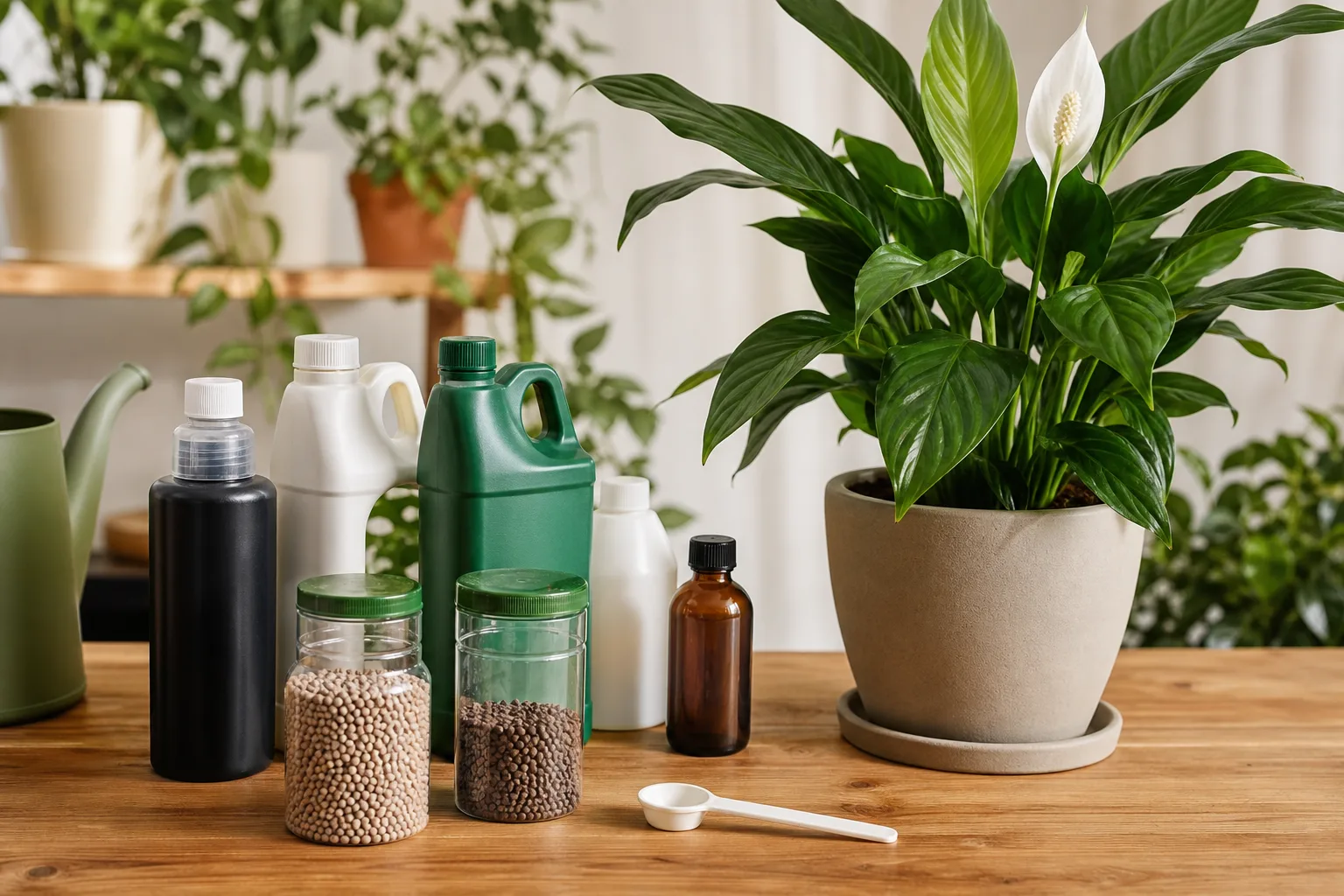
A complete houseplant fertilizer can replenish nutrients as a container plant uses them or as repeated watering leaches them from the mix. Follow the label for dilution and timing, and feed only when the plant is actively growing and can use the nutrients. Many plants slow down in low winter light, but indoor conditions differ: a warm room with grow lights may support continued growth, while a bright summer day does not guarantee that a stressed plant is ready for fertilizer.
Start conservatively if the label allows a range or if the plant is sensitive, and do not stack multiple products because leaves look pale. Salt crust on the mix, brown root tips, or worsening leaf-edge burn after feeding can be reasons to pause and review the dose, water quality, and drainage. Epic Gardening’s houseplant fertilizer overview discusses matching feeding to plant growth rather than treating fertilizer as an automatic fix.
5. Space gives leaves and roots room to function
A plant needs room for leaves to receive light and roots to access water, air, and minerals. Crowded foliage can shade itself and trap humid air; roots that have filled a container may leave less usable mix and cause the pot to dry unusually fast. But a larger pot is not always the answer: excess mix around a small root system can remain wet for too long, especially in a dim or cool room.
Space also includes the plant’s position in a room. Leave enough distance between grouped pots for leaves to dry and for you to inspect stems and leaf undersides. Climbers need room or a support to grow along; trailing plants need a shelf edge or hanging position that does not force stems against a hot window or heater.
Pot size, drainage, and a soil-free exception
Use a container with drainage holes, or keep a planted nursery pot inside a decorative cachepot and empty the outer pot after watering. A drainage hole does not make overwatering impossible, but it gives excess water a route out. The mix should suit the root type and watering pattern: a fine moisture-retentive mix may suit some tropical plants, while succulents generally need a faster-draining medium and longer dry-down.
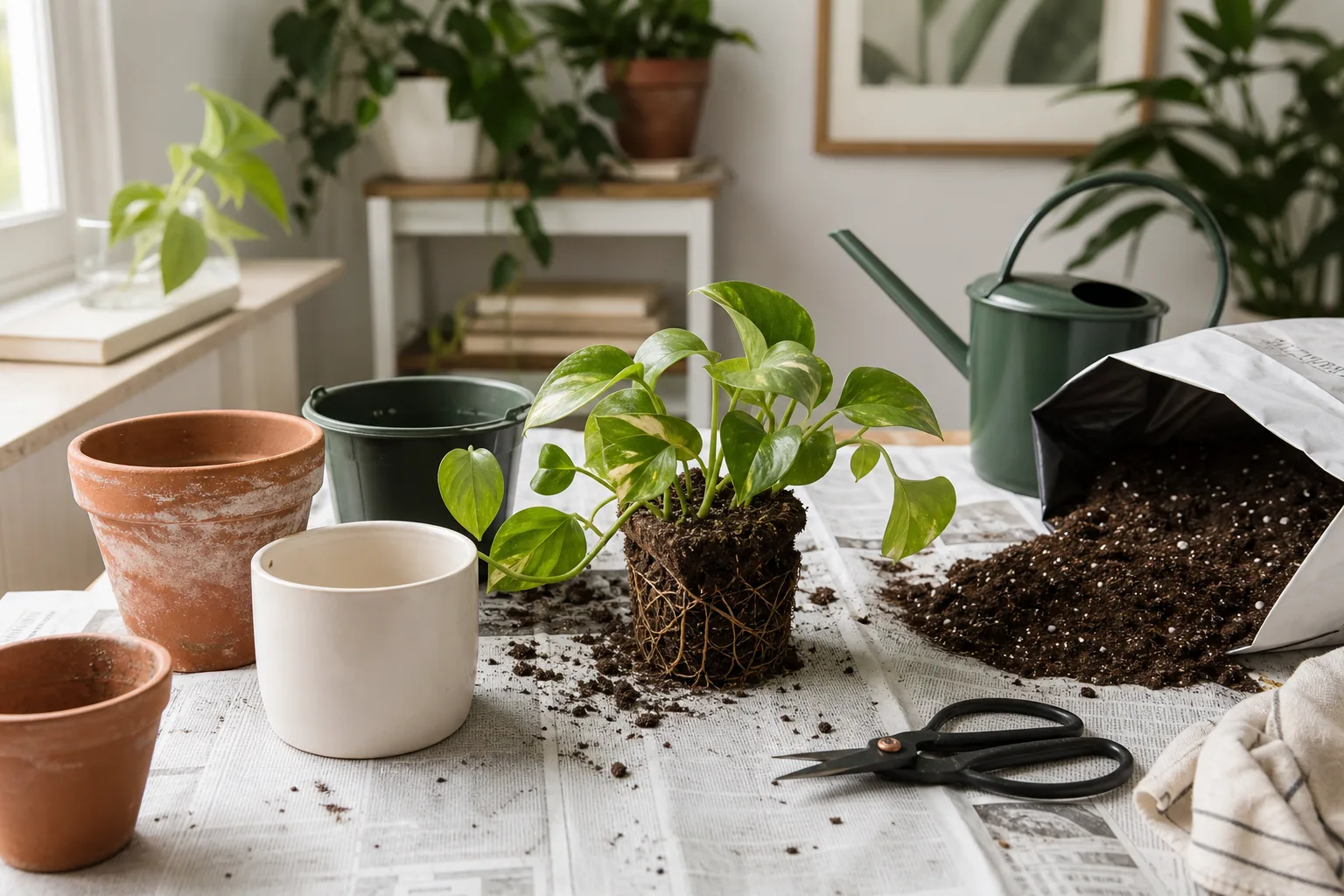
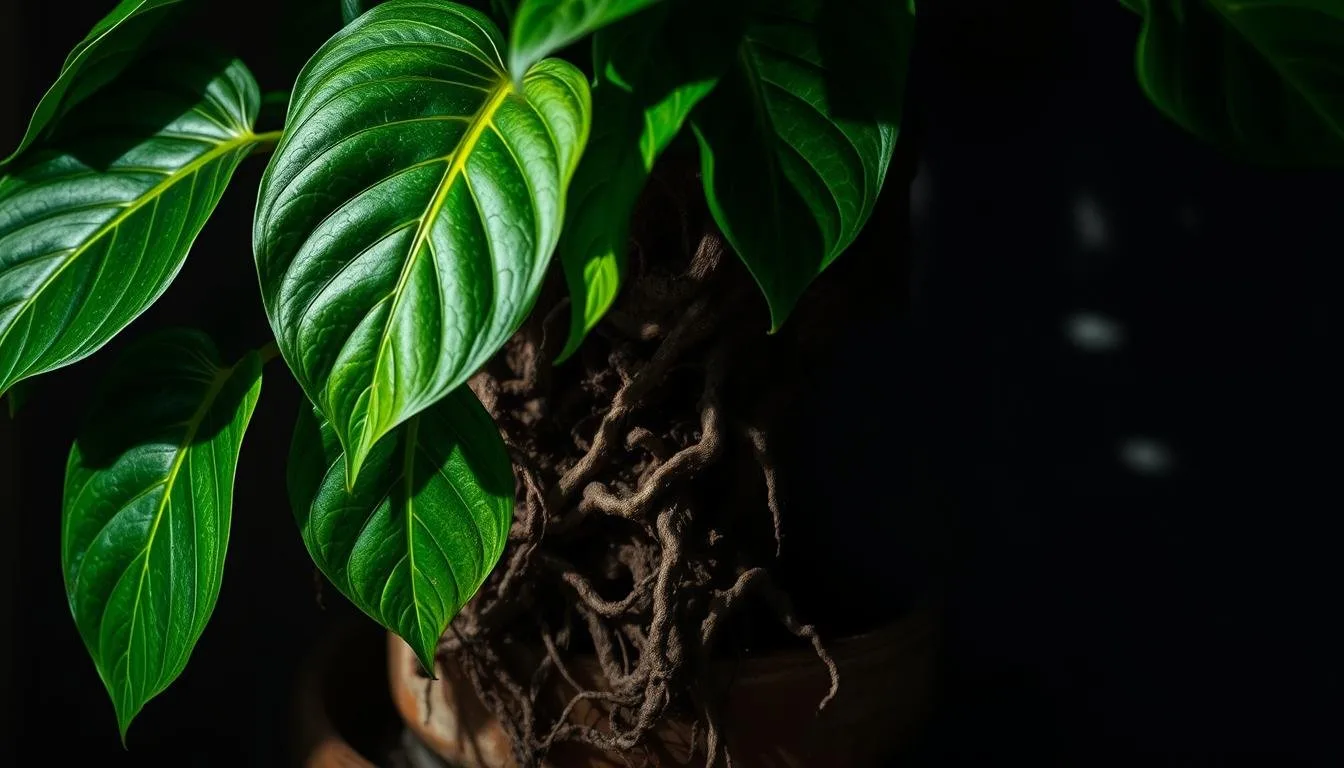
Repot when there is evidence that the current setup is constraining the plant: roots form a dense circle, the root ball lifts out as one mass, water cannot penetrate evenly, or the plant dries much faster than it used to despite stable conditions. One symptom alone is not conclusive. A healthy plant can tolerate roots that reach the pot wall, and repotting during a stressful period can create more work for damaged roots.
Soil is optional; a root environment is not. Hydroponic plants grow with roots in nutrient-bearing water or an inert medium, provided the grower manages water, oxygen, and mineral balance. Epiphytes such as many orchids naturally grow attached to other surfaces rather than in ordinary soil, but they still need a suitable anchor, moisture, air around their roots, and nutrients. For a typical potted houseplant, however, quality potting mix is simpler than maintaining a precise soil-free system.
Temperature, humidity, and time shape the result
The five essentials are not the whole environment. Temperature influences how quickly plants carry out growth and maintenance processes, and each species has a range it tolerates; sudden cold near glass, hot radiators, and heating or air-conditioning vents can stress leaves and roots. Instead of chasing a single temperature number for every houseplant, check the plant’s care needs and reduce sharp swings.
Humidity affects how quickly water leaves a leaf. In very dry air, some tropical plants may lose moisture faster than roots can replace it, especially near a heater or in strong airflow. Misting often changes leaf wetness briefly without reliably raising room humidity; grouping plants may modestly alter their immediate surroundings but should not create a stagnant, pest-prone cluster.
Time matters because plants grow in pulses, not at a constant rate. A newly purchased plant may pause while adapting to a different light, temperature, and watering pattern, and many species slow during shorter, darker days. The indoor-care guidance from Greenhouse Today also emphasizes that species adapt differently to limits in their environment; judge a plant against its own pattern and season rather than expecting visible growth every week.
A practical sequence for diagnosing slow growth
When a plant is not growing, resist the urge to change its location, watering, soil, and fertilizer all at once. A single change lets you see whether the plant responds and reduces the chance of adding stress to a root system that is already struggling. Take a photo of the newest leaves and note the date; old damage will not turn green again, so new growth is the better measure of improvement.
Work through these checks in order:
- Confirm the plant is due to grow. Check its species, recent move, season, and whether it is naturally slow or dormant. A short pause after repotting or bringing a plant home may be normal.
- Assess usable light. Look at how bright the leaves’ actual position is across the day, whether growth leans toward a window, and whether new leaves are getting smaller. Improve light gradually before increasing fertilizer.
- Check moisture below the surface. Feel or probe the root-zone mix, then inspect drainage. A dry core, persistently wet pot, and balanced moist-but-aerated mix call for different responses.
- Inspect the plant and roots. Look for pests, damaged roots, a blocked drainage hole, a tight root mass, and salt crust. Avoid pulling a stable plant from its pot unless the evidence justifies it.
- Review the room. Note cold glass, heat vents, strong drafts, extreme dryness, and crowding. Correct a clear environmental stress before adding supplements.
- Consider nutrition last. If light, water, roots, and temperature are suitable and active-season growth remains weak, check the mix and feeding history. Use a balanced product at its label rate rather than trying several concentrated remedies.
| What you notice | First check | Why it is not a diagnosis by itself |
|---|---|---|
| Long, weak stems or smaller new leaves | Light reaching the foliage | Natural habit, recent relocation, and pruning also affect shape |
| Wilting with dry mix | Moisture deeper in the pot | A dry surface can hide a damp root ball |
| Wilting with wet mix | Drainage and root condition | Waterlogged roots can fail to absorb water |
| Pale or yellow leaves | Age and pattern, then light, roots, pests, and nutrition | Many stresses produce overlapping color changes |
| White crust on the mix or pot rim | Fertilizer and water history | Deposits do not prove one specific nutrient excess |
| No visible growth in a dark season | Species and seasonal pattern | Slow growth can be normal if leaves and roots remain healthy |
Give each adjustment an appropriate observation window. A leaf that was scorched, yellowed, or stretched before the fix will not repair itself; look for firmer growth, normal-sized new leaves, and a more stable watering pattern instead. If symptoms spread quickly, roots smell rotten, or a pest is visible, address that immediate problem rather than waiting for a general growth experiment.
Conclusion
Healthy growth comes from balancing light, water, air, mineral nutrients, and usable root and leaf space. The details are species-specific, but the practical starting point is consistent: understand the plant, inspect the place where it is growing, and check the root zone before adding water or fertilizer.
If growth slows, change one likely constraint at a time and judge progress by new growth, not old damage. That approach helps you meet the plant’s actual needs without turning every pale leaf or dry pot into a reason to add another product.