18 Types of Oak Trees for Your Yard: Size and Site
Compare 18 types of oak trees by size, climate, soil, fall color, and wildlife value. Find a species that fits your yard and avoid a costly site mismatch.
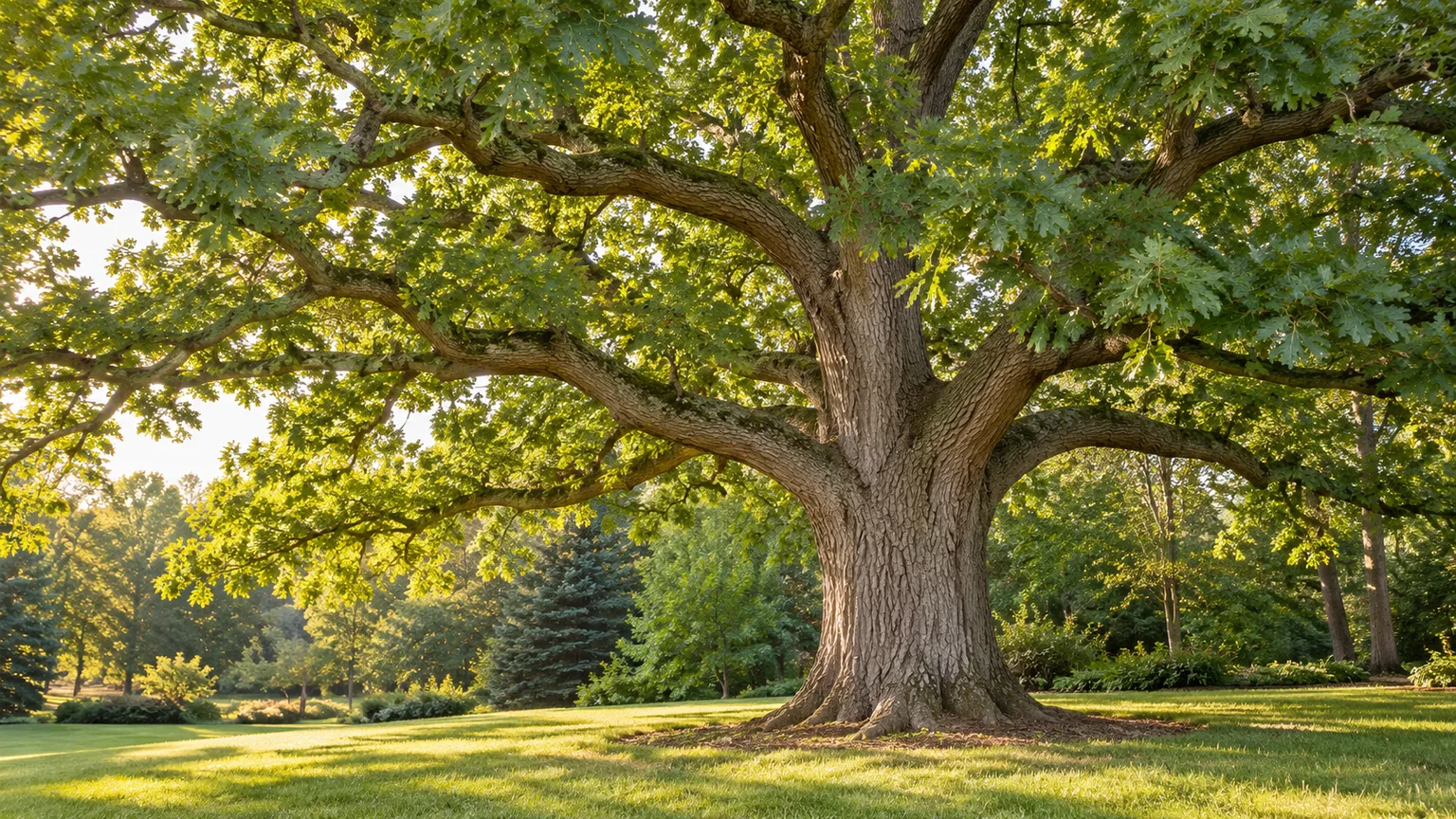
Oaks range from the wide-crowned live oak of the warm South to compact, irregular blackjack oak and cold-hardy bur oak. Some keep their leaves through winter; others give strong autumn color. That variety is useful only if the species fits your climate, soil, and the space it will occupy decades from now.
Use the table as a first-pass shortlist, not a final planting prescription. Mature dimensions are approximate, and named cultivars can differ from the straight species. A species’ hardiness zone also does not tell you whether it will tolerate your soil pH, summer drought, winter winds, or drainage. Local native plant lists and extension guidance can narrow the choice much better than a national zone number alone.
| Oak | A useful starting match | Main constraint |
|---|---|---|
| Black oak | Dry, well-drained sites; eastern and central U.S. | Large crown; does poorly in wet ground |
| Southern live oak | Warm coastal and southern landscapes | Very wide, low-spreading branches |
| Blackjack oak | Dry, acidic, rocky or sandy sites | Smaller and less symmetrical than a classic shade oak |
| Bur oak | Large yards, prairie edges, variable soils | Slow to establish and difficult to transplant |
| Chestnut oak | Dry uplands and acidic soils | Not a fit for persistently wet or alkaline ground |
| Chinkapin oak | Limestone, alkaline, or rocky sites | Still needs room for a broad crown |
| Cork oak | Mild-winter, Mediterranean-style climates | Cold-sensitive outside its adapted region |
| Engelmann oak | Appropriate Southern California sites | Narrow native range; not a general U.S. choice |
| Northern red oak | Broad eastern and central landscapes | Large mature size; wants drainage |
| Scarlet oak | Sunny, dry, acidic sites and autumn color | Alkaline or waterlogged soils cause trouble |
| English oak | Cool-temperate landscapes with ample space | Large spread; mildew can be troublesome |
| Holm oak | Mild-winter regions needing evergreen structure | Large, dense crown and leathery leaves |
| White oak | Spacious eastern or central yards | Slow growth, huge canopy, transplant-sensitive roots |
| Pin oak | Acidic soil with seasonal moisture | Alkaline soil can cause chlorosis |
| Post oak | Dry, open, often sandy uplands | Slow growing and intolerant of root disturbance |
| Shumard oak | Large yards needing shade and fall color | Needs a suitable regional climate and good drainage |
| Willow oak | Warm-region lawns and moist, well-drained sites | Tall tree; not a narrow-yard solution |
| Sawtooth oak | Only where locally recommended | Non-native and invasive in some regions |
Start with four questions: How wide can the mature crown spread? Does the site drain quickly, stay moist, or flood seasonally? Is the soil acidic, neutral, or alkaline? Which oaks are native and recommended in your county or region? The answers often rule out more species than appearance does. In a comparison for homeowners, Better Homes & Gardens groups oaks by wet, dry, alkaline, and small-space conditions, drawing on oak specialist Guy Sternberg; its practical point is that “oak” alone is not a soil recommendation. Better Homes & Gardens’ oak selection guide is useful context, but local extension advice should decide regional fit.
Do not shop by sapling height alone. A modest young tree is generally easier to move and establish than a large specimen, and careful root-ball handling matters; Harvest to Table’s oak-growing guide recommends transplanting young, dormant stock. Confirm the species and the nursery’s mature-size estimate before you bring the tree home.
Leaf shape can help you recognize a tree, but it is not a dependable way to choose one without a site match. Many red-oak-group species have pointed lobes with bristle tips, while many white-oak-group species have rounded lobes; chestnut-like, narrow, and holly-like leaves are important exceptions. Compare a nursery’s botanical label with the species name below, not a common name alone. The profiles include nonnative trees from the supplied list, but for wildlife and long-term landscape resilience, a locally native oak is usually the better first choice when it suits the site. Oaks support extensive food webs, including caterpillars that feed birds, as the Morton Arboretum’s oak overview explains.
Black Oak
Black oak (Quercus velutina) is a large deciduous tree native across much of the eastern and central United States. Its bristle-tipped lobes and dark, deeply furrowed bark help distinguish it from white-oak-group trees. It can reach roughly 50 to 60 feet in cultivation, and the mature crown needs room rather than repeated pruning to keep it small.
This is a reasonable candidate for a sunny, well-drained site that runs dry between rains, especially where acidic or sandy soils make some landscape trees struggle. It is more drought-tolerant than northern red oak once established, but drought tolerance is not a substitute for watering a newly planted tree. Black oak is a red-oak-group tree, so its acorns generally take two growing seasons to mature. Do not choose it for a low spot that stays saturated or for a small strip beside pavement.
Southern Live Oak
Southern live oak (Quercus virginiana) is a broadleaf evergreen or semi-evergreen oak of the southeastern coastal plain. In a warm climate, its dense crown and long horizontal limbs can make a dramatic shade canopy; the spread can equal or exceed the tree’s height. Some specimens grow 40 to 80 feet tall and spread 60 to 100 feet or more, according to Epic Gardening’s live oak profile, so check overhead wires, roofs, driveways, and neighboring property before planting.
It is most at home in warm-winter regions, particularly coastal landscapes where the species is locally adapted. It tolerates a range of soils, but the young tree still needs adequate moisture while roots establish and cannot sit in chronically waterlogged ground. Expect leaves to shed gradually rather than all at once in many climates. A live oak is a poor pick when you want a tidy, narrow tree or have no room for broad limbs; it is a long-term canopy tree, not a screen that can be clipped into place.
Blackjack Oak
Blackjack oak (Quercus marilandica) is one of the smaller oaks in this group, often reaching about 20 to 40 feet tall and wide. Its leathery, glossy leaves have a distinctive three-lobed outline, and the crown may look irregular rather than conventionally symmetrical. That form is a feature in a naturalistic planting, not a defect to correct through heavy pruning.
Choose it for a dry, sunny, acidic site with sandy, rocky, or otherwise lean soil where a large shade tree would be a mismatch. It can tolerate difficult upland conditions, but it is not a miniature patio tree: its branches and root zone still need open ground. Blackjack oak supports wildlife and can work well at the edge of a native planting. If your goal is a fast, polished lawn specimen with a broad, uniform crown, another species will likely suit you better.
Bur Oak
Bur oak (Quercus macrocarpa) is a large, long-lived white oak with a rounded crown and unusually large acorns whose caps have a fringed edge. It is one of the more adaptable choices for a roomy landscape: NC State Extension’s profile describes tolerance of dry, clay, rocky, and alkaline soils, along with drought tolerance and winter hardiness. It may reach roughly 60 to 80 feet tall and wide, so “adaptable” does not mean “small.”
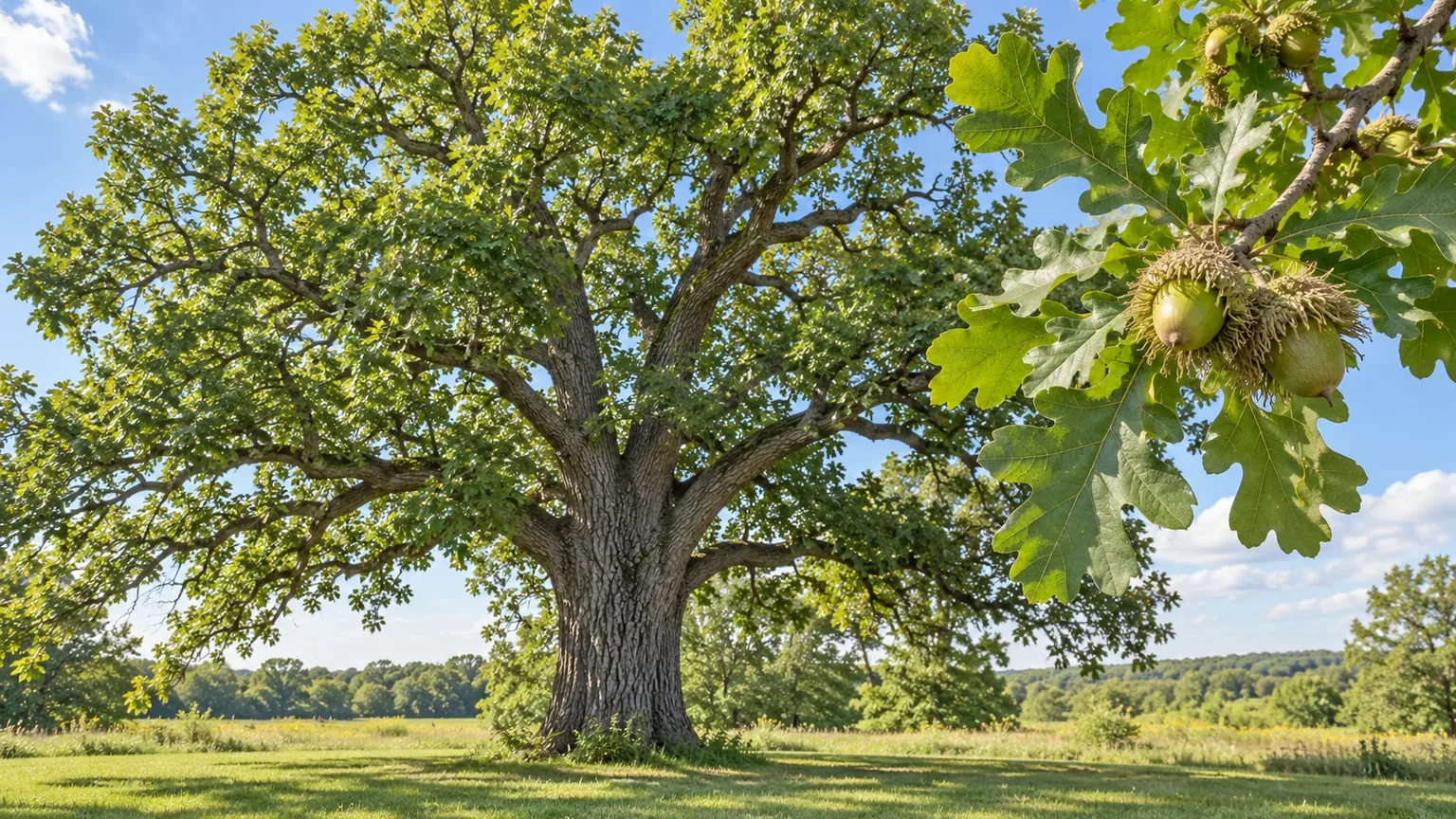
Bur oak can be a strong choice for a large lawn, prairie-edge garden, or site with variable soil where a less adaptable oak might falter. Give it full sun and avoid choosing a mature tree that will require frequent crown reduction. Its taproot makes established trees hard to transplant, so buy a healthy, modest-sized specimen and put it in its permanent place early. The NC State Extension profile also notes its wildlife value and long life, both reasons to protect the root zone from compaction.
Chestnut Oak
Chestnut oak (Quercus montana) has toothed, chestnut-like leaves rather than the deep lobes many people expect from an oak. It is a substantial deciduous tree, commonly around 60 to 80 feet tall and broad, native to upland woods in the eastern United States. Its furrowed bark, golden-to-brown fall foliage, and sturdy landscape presence suit larger properties and naturalistic plantings.
Its strongest match is a sunny, well-drained slope or upland site with acidic soil. It can handle dry conditions after establishment, but a wet depression or heavy alkaline soil is a poor bet. If you are planting for fall color, remember that weather and local climate can change the display from year to year. Chestnut oak is more useful as a long-lived shade and habitat tree than as a small ornamental centerpiece; it needs adequate crown clearance and a protected root area.
Chinkapin Oak
Chinkapin oak (Quercus muehlenbergii) is a white-oak-group tree with sharply toothed, chestnut-like leaves and a broad rounded crown. It typically reaches about 40 to 60 feet tall and 50 to 70 feet wide. Its unusually helpful trait is tolerance for alkaline soil: NC State Extension notes that it is adapted to a higher pH than most oaks and grows on limestone outcrops and rocky uplands.
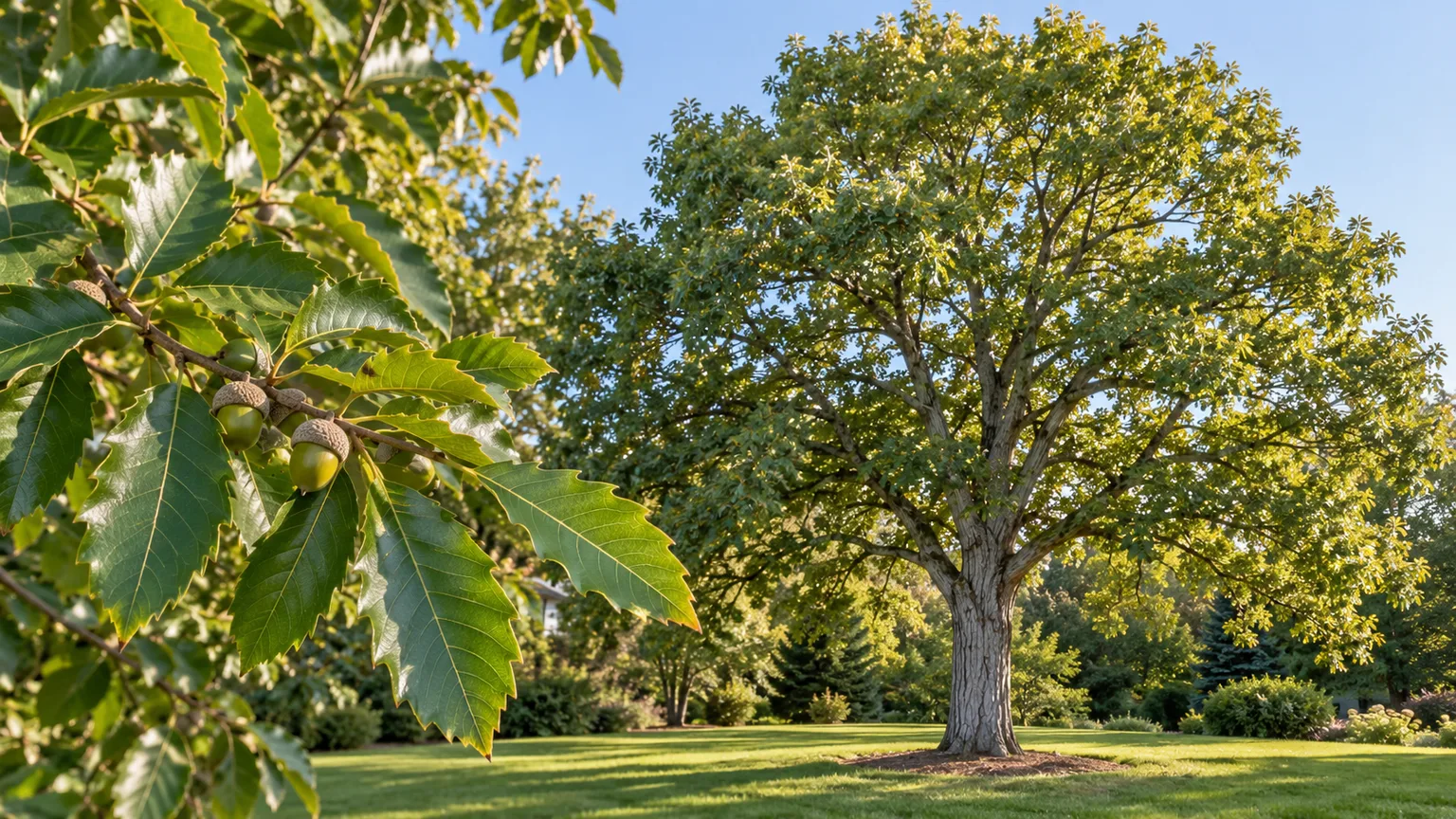
That makes chinkapin oak worth comparing when pin oak or other acid-loving trees would develop chlorosis in your soil. It prefers full sun and moist-to-dry, well-drained conditions; it does not solve a drainage problem. The long taproot makes transplanting difficult, and nursery availability may vary, so ask for the botanical name before buying. Use this species in a large yard or street planting where its eventual canopy fits. Its relative resistance to oak wilt does not make it immune to every disease or a reason to ignore local plant guidance.
Cork Oak
Cork oak (Quercus suber) is an evergreen Mediterranean species best known for the thick bark harvested for cork. That bark gives the tree a distinctive rugged trunk and has practical value, but in a home landscape its main appeal is year-round foliage and a durable, sculptural silhouette. It is a specialty choice for regions with mild winters and warm, dry summers, not a reliable all-purpose oak for colder parts of North America.
Before choosing it, compare the nursery’s hardiness information with your local winter lows and heat pattern. A zone label does not account for exposure, cold snaps, or the difference between a protected urban courtyard and an open, windy site. Cork oak needs sun and a well-drained root zone; persistent winter wetness can be a problem even where temperatures are suitable. Because this tree is nonnative in the United States and uncommon in many areas, buy from a reputable local nursery and confirm that it is appropriate for your region.
Engelmann Oak
Engelmann oak (Quercus engelmannii) is a distinctive evergreen-to-semi-evergreen oak native to a limited part of Southern California. Its muted green leaves and rounded form fit chaparral and oak-woodland landscapes far better than a generic irrigated lawn. It is most relevant to gardeners whose local climate and plant community fall within or near that native range.
This is not a universal drought-proof tree. A young oak needs establishment water, and even a regionally native plant can fail in compacted soil, a poorly drained basin, or a site with a very different exposure. Ask a local native-plant nursery or extension service whether the species is appropriate for your specific location and whether locally sourced stock is available. Outside Southern California, choose a locally native oak with a documented fit instead of treating a narrow-range species as an exotic landscape novelty.
Northern Red Oak
Northern red oak (Quercus rubra) is a large, deciduous shade tree known for red to russet autumn foliage and pointed, bristle-tipped leaf lobes. It grows across a broad swath of eastern and central North America and can reach about 50 to 75 feet tall and wide. In good conditions it can establish and grow faster than slower species such as white oak, which makes it attractive when a landscape needs shade sooner.
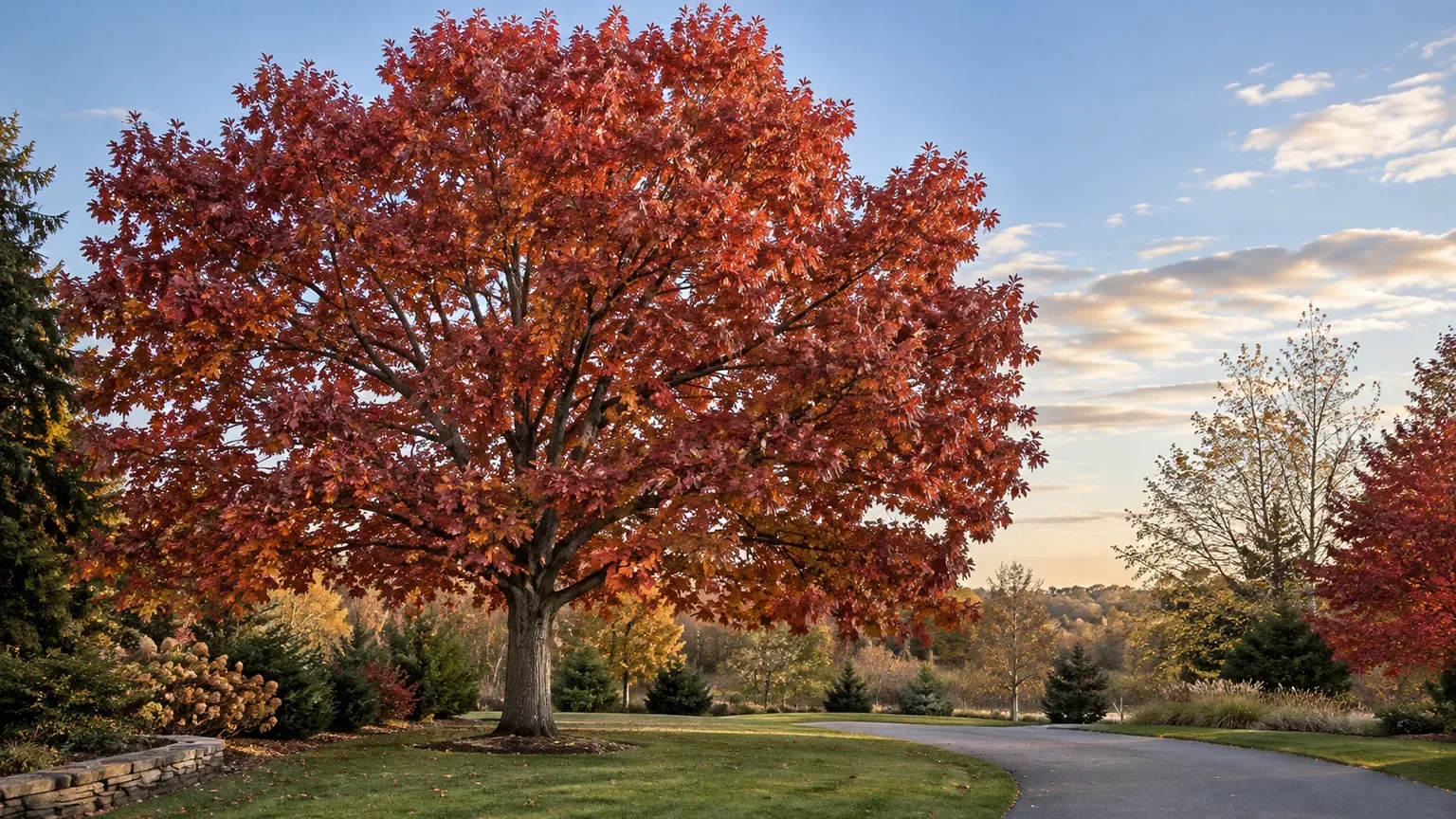
Plant it in full sun with enough root space and soil that drains well. The Morton Arboretum notes that northern red oak tolerates salt and air pollution and grows relatively quickly, useful traits for some urban sites. That does not make it suitable for every street tree pit: severe compaction, restricted roots, and reflected heat can still stress it. Its final size is large, so avoid planting it under wires or where future pruning would have to remove major limbs.
Scarlet Oak
Scarlet oak (Quercus coccinea) earns its name in places where cool autumn nights bring out strong red color. It is a medium-to-large deciduous tree, often around 50 to 70 feet tall, with deeply cut leaves tipped by bristles. The open crown allows light through, making it a less dense shade tree than some broad-crowned oaks.
This species is a better match for full sun, acidic soil, and a dry-to-medium, well-drained site than for soggy clay or alkaline ground. It is native to parts of the eastern United States, especially the Appalachian region and Southeast; use regional guidance to confirm it belongs in your local landscape. A soil test is worthwhile if pH is uncertain, because a red autumn display cannot compensate for persistent chlorosis or root stress. Leave room for mature branches and consider how acorns and leaves will affect paths and patios.
English Oak
English oak (Quercus robur), also called pedunculate oak, is a long-lived European species with a broad crown and stout, spreading branches. It can grow roughly 40 to 70 feet tall, and old trees may become substantially larger. Its rounded lobes and small clusters of acorns help identify it, but its mature footprint is the key landscape consideration.
It suits cool-temperate regions where winters and summers resemble its adapted climate and where the yard can hold a large tree. Some cultivars have a columnar habit and may fit narrower sites, but a narrow young plant can still grow tall and needs appropriate clearance; check the mature dimensions of the named cultivar rather than assuming the species is compact. English oak can also be troubled by powdery mildew in humid conditions. For wildlife value and regional resilience, compare it with a native oak before selecting an introduced species.
Holm Oak
Holm oak (Quercus ilex), often called holly oak or evergreen oak, is a dense evergreen tree from the Mediterranean region. Its leathery leaves may have smooth margins or spiny edges, especially on young growth, and its rounded crown creates year-round screening. It can reach roughly 40 to 70 feet tall and wide, so a “privacy tree” label should not obscure its eventual size.
Plant holm oak in a mild-winter climate with sun and well-drained soil. It is more useful where evergreen structure is genuinely needed than in a cold climate where winter injury or poor growth makes it a frustrating experiment. Young trees need regular establishment water even if mature plants can tolerate seasonal dryness. Because the crown is dense, leave enough space for air circulation, maintenance access, and neighboring plants rather than placing it tightly against a wall or property line.
White Oak
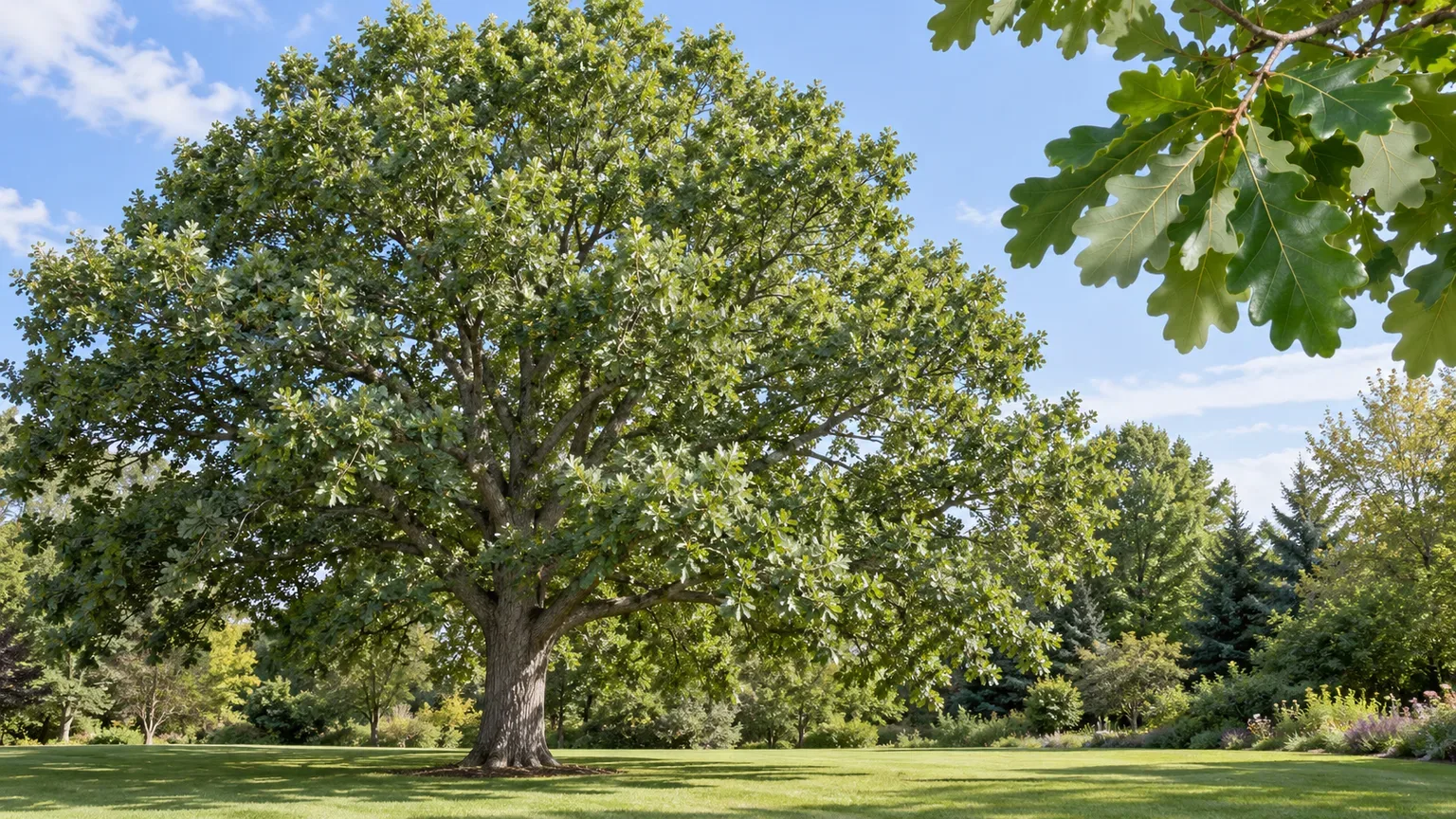
White oak (Quercus alba) is a slow-growing, very large North American shade tree with a broad, rounded mature crown. It often reaches 80 to 100 feet tall, with exceptional trees taller, and spreads roughly 50 to 80 feet. Its lobes are rounded and lack the bristle tips common on red-oak-group leaves. White-oak-group acorns generally mature in one growing season, while many red-oak-group acorns take two.
This tree is a rewarding choice for a spacious yard, park-like lawn, or naturalized area where it can remain for generations. NC State Extension’s white oak profile describes its deep taproot, preference for deep, well-drained soil, and difficulty transplanting. Avoid wet sites, soil compaction, and a location next to structures or pavement; protect the broad root zone as well as the crown. If a small specimen is the only one that fits, choose a smaller locally native tree rather than planning to keep white oak permanently undersized.
Pin Oak
Pin oak (Quercus palustris) is a fast-growing red oak with a pyramidal young form, deeply lobed leaves, and lower branches that often angle downward. It is associated with wet areas and can be useful in a landscape with seasonal moisture, provided the soil is acidic and still drains. Mature trees commonly reach 50 to 70 feet tall, with a spread that may approach 40 to 60 feet.
Soil chemistry is the catch. In alkaline soils pin oak can develop iron chlorosis, leaving leaves yellow with greener veins; test the soil before planting rather than trying to correct symptoms later. The Morton Arboretum advises planting pin oak only where soil testing confirms acidity. If a site is wet and alkaline, ask about a locally suitable alternative such as swamp white oak, a separate species with different requirements. Neither tree should be treated as a solution for permanent standing water without local verification.
Post Oak
Post oak (Quercus stellata) is a medium-sized, slow-growing tree native to the central and southeastern United States. Its tough, cross-shaped leaves and broad, rounded crown give it a recognizable profile. It often reaches roughly 35 to 50 feet tall and wide, though actual size depends on site and region. It can make a durable shade tree where the soil is dry and other oaks would need more moisture.
Choose a sunny, well-drained upland or sandy site, not a frequently irrigated low spot. Post oak’s tolerance of dry conditions is useful after establishment, but young trees still need attention through the first seasons. It grows slowly and does not respond well to a cycle of transplanting, construction damage, and heavy pruning. For the right open landscape, that slower pace is a trade-off for fitting a species adapted to leaner ground. For a small yard, its mature crown remains too substantial to call it a compact oak.
Shumard Oak
Shumard oak (Quercus shumardii) is a large red oak with lobed leaves and red-to-orange fall color. It is native to the south-central and eastern United States and is often used as a shade or street tree in suitable climates. Depending on growing conditions, it commonly reaches about 40 to 60 feet tall, with room needed for a substantial crown and root system.
It performs best in full sun and deep soil that can hold moisture without remaining saturated. Compared with pin oak, it can be a better candidate where the soil is not strongly acidic, but exact tolerance depends on the local soil and tree source. Check regional extension advice before using it outside its native range, especially in colder northern sites. When buying, verify that the tag says Q. shumardii; common “red oak” nursery labels can hide species differences that affect soil and climate fit.
Willow Oak
Willow oak (Quercus phellos) has narrow, willow-like leaves rather than the lobes most people associate with an oak. It is a large deciduous tree of the southeastern United States, often growing 40 to 75 feet tall and 25 to 50 feet wide. Its fine-textured canopy and relatively small acorns make it popular in parks and residential landscapes across its suitable region.
Give it full sun and room to mature. It is comfortable in moist, well-drained soil and can tolerate a range of conditions once established, but it is not a tree for a tight foundation bed or a tiny courtyard. The narrow foliage can make it look lighter than a broad-lobed oak, yet the height and root zone remain significant. If you want a graceful shade tree in a warm-region lawn, willow oak may fit; if the site is cold, dry, or very restricted, ask a local nursery for a native alternative.
Sawtooth Oak
Sawtooth oak (Quercus acutissima) is an Asian species with sharply serrated leaves that resemble chestnut foliage. It grows relatively quickly and can begin producing acorns earlier than many native oaks, traits that helped make it popular in some plantings. The same combination can allow it to seed beyond a yard, so fast growth and wildlife use are not enough to establish that it is a good ecological choice.
Check state and local invasive-species guidance before buying. In Louisiana, Greaux Native describes sawtooth oak as a Tier II invasive and recommends native oak alternatives; the status and risk can differ by region, so do not generalize that state’s designation to every location. Virginia Tech Dendrology confirms its distinctive bristle-toothed leaves and notes that it may seed into the landscape. If a locally native oak can meet the same shade or soil need, choose that instead.
Conclusion
The best oak is the one whose mature crown, roots, climate range, and soil needs match the planting site. Start with space and drainage, test pH when it could rule out a species, and favor a locally native oak when it can do the job. A correct fit matters more than a fast-growing nursery tree because an oak is a decades-long planting decision.
Before you buy, confirm the botanical name, compare the mature spread with wires and structures, and ask a local extension service or native-plant nursery about regional performance. Plant a young tree in its permanent location, water it while roots establish, and protect the surrounding soil from compaction. That short checklist prevents the most expensive oak-planting mistake: choosing by the sapling instead of by the tree it will become.



