8 Types of Landscaping Rocks and How to Choose
Compare eight landscaping rocks by drainage, stability, upkeep, and plant needs, then choose a material that fits your yard and how you use it.

Landscaping rock is sold by names that can blur together: gravel, crushed stone, river rock, flagstone, and more. The useful distinction is what the material does underfoot and in rain. Angular aggregate can lock together; rounded gravel rolls; a slab can bridge a muddy step; a boulder can anchor a slope but cannot fix it by itself. Choose for the job first, then narrow the options by appearance and budget.
A decorative stone layer is not automatically a drainage system, a weed-proof barrier, or a maintenance-free mulch. Your soil, slope, stone depth, edge restraint, and intended traffic determine whether it works. The table gives a quick starting point; the sections below explain the trade-offs that matter before you order.
Landscaping rocks at a glance
| Rock type | Best fit | What to expect | Main caution |
|---|---|---|---|
| Crushed stone | Compactable paths, base layers, crisp beds | Angular; can interlock when graded and compacted | Fine screenings and stone size change drainage and firmness |
| Pea gravel | Decorative paths and small courtyards | Rounded, comfortable-looking, easy to rake | Shifts under wheels and feet unless contained or stabilized |
| River rock | Dry-creek accents and visible drainage channels | Smooth, varied, usually sold in a range of sizes | Large stones can increase runoff; rounded stones are awkward to walk on |
| Lava rock | Lightweight-looking accents and dry gardens | Porous, textured, often red or dark | Color and sharp edges may be wrong for a play or walking surface |
| Flagstone | Stepping paths and patios | Flat slabs with natural variation | Needs a stable base and careful leveling; gaps affect access |
| Cobblestone | Edges, aprons, traditional paving accents | Dense blocks with durable, irregular joints | Rough underfoot and labor-intensive to install |
| Fieldstone | Informal walls, borders, and naturalistic accents | Local, irregular shapes and sizes | Structural walls need proper design, not just a pile of stone |
| Boulders | Focal points, large-scale accents, limited terracing | Heavy, visually dominant, long-lasting | Delivery, equipment, and placement are part of the cost |
The terms are commercial categories, not always precise geological labels. “River rock,” for example, describes a rounded shape and often a source or processing history; the actual stone can vary. Ask the supplier about size range, angularity, rock type, and whether the product is washed or contains fines. Those details predict performance better than a color name.
Eight landscaping rock types and what each does best
The same rock may work in more than one place, but a good choice depends on its scale and finish. A small angular aggregate can form a serviceable compacted path, while a bucket of polished pebbles is best treated as decoration. For the purposes here, each type is matched to its typical use and the trade-off a homeowner should consider.
1. Crushed stone: compactable aggregate and crisp edges
Crushed stone is mechanically broken rock with angular faces. Quarries sell it in graded sizes and blends, including products with a range of particles from coarse pieces down to fines. A well-graded blend can compact into a firmer surface than a single-size decorative stone, which is why crushed aggregate is useful for a path base or utility area. Smaller decorative chips can also make a clean-looking bed cover.
Do not assume every bag labeled “crushed stone” will make a good walkway. Ask whether it is a decorative top dressing, a base aggregate, or a compactable fines blend. Coarse, open-graded stone leaves larger voids; material with fines can lock together but may shed less water once compacted. For a frequently used path, choose the blend and installation method for firmness, then edge and compact it. For a planting bed, use a size that will not bury crowns or make hand-weeding difficult.
Rock mulch can be a reasonable fit for dry-climate plantings and some low-fertility gravel gardens—the RHS similarly notes that many Mediterranean-style plants suit sunny, well-drained gravel gardens—but it does not feed soil (RHS gravel-garden guidance). CSU Extension notes that research differs with particle size: small gravel has suppressed weeds and reduced evaporation similarly to wood chips in some studies, while pea gravel may improve infiltration in short intense rain and larger stones may increase runoff. That is not a promise for every soil or bed; it is a reason to choose by particle size and test how water behaves on your own site. Colorado State University Extension’s mulching guidance explains the distinctions.
2. Pea gravel: rounded stone for loose, low-profile surfaces
Pea gravel consists of small, rounded stones, often sold in a fairly narrow size range. Its smooth texture suits informal paths, patios, play areas designed for loose fill, and exposed soil between drought-tolerant plants. Small, similar-size pieces retain open spaces and create a soft visual transition between hardscape and beds. It is also easy to shovel into tight spots and can be purchased in bags for small projects.
The same roundness that makes pea gravel pleasant to look at is a liability on a route that needs to feel stable. The stones can roll under shoes, canes, strollers, and wheels, and they migrate into lawn edges unless restrained. On a slope they can creep downhill, especially where rainwater concentrates. If you want a path, consider a compactable angular blend instead, or use pavers or flagstones with gravel only in restrained joints. For wheelchair or walker access, a loose top layer should not be assumed firm and stable.
A gravel surface can let water reach the ground, but the soil below still has to absorb it. If heavy clay, a compacted construction layer, or a high water table blocks infiltration, pea gravel above it can simply hide a puddling problem. Observe the area after rain before selecting a material, and fix the soil or route the water appropriately rather than treating surface stone as a cure.
3. River rock: natural texture for accents and dry creeks
River rock is rounded and smoothed by abrasion, though landscape suppliers offer a wide spectrum from small pebbles to large cobbles. Its varied color and soft edges look convincing beside water, in a dry creek bed, or as a visible accent around a basin. A mix of sizes can make a channel read more naturally than a uniform strip, with larger stones near the sides and smaller gravel through the center.
A dry creek bed should have a real plan for where runoff enters, how it moves, and where it can safely spread or exit. A decorative layer of rounded stones over level soil may look like a creek but will not necessarily carry stormwater. Do not direct concentrated flow toward a foundation, neighboring lot, or public path. Where the problem involves recurring erosion, a steep slope, or significant roof runoff, consult local stormwater guidance or a qualified drainage professional before digging.
River rock is usually a poor primary walking material because the rounded pieces shift. It is also awkward to rake clean once leaves and twigs settle among the stones. Choose a size you can maintain with the tools you have and provide a clear edge that keeps the stones out of turf and drains. The stones are heavy by the load even when each one is hand-sized, so delivery access and distribution matter.
4. Lava rock: porous volcanic stone for contrast
“Lava rock” in landscape supply usually means scoria or another vesicular volcanic stone with a porous, lightweight structure. It is sold in red, brown, and dark colors, and its irregular texture can add contrast in a rock garden, around heat-tolerant plantings, or in a container display. Compared with a dense stone of similar volume, a porous product may be easier to handle, although a bulk order is still substantial and supplier products vary.
The broken surfaces can be sharp, so it is not a comfortable choice for a barefoot patio or a play route. Its open texture traps leaves and small debris, which can be hard to remove without scattering the stone. Dark material may heat in direct sun, and color fade or dust can alter its look over time. Treat it as a visible accent, not as a universal substitute for gravel or mulch.
Porosity also does not mean that the surrounding soil will drain better. A stone’s surface texture affects water held in its own pores, but the root zone’s drainage depends on soil structure, slope, and what lies beneath it. If the bed stays saturated, improve the underlying site conditions or select plants suited to that moisture rather than adding a layer of lava rock as a supposed drain.
5. Flagstone: broad slabs for paths and patios
Flagstone is a trade term for flat pieces of quarried stone, not a single rock type. Sandstone, slate, limestone, and quartzite are among the materials sold as flagstone. Slabs vary in thickness, color, edge shape, and how evenly they split. This variation gives a path a natural look, but means the pieces need to be sorted and fitted rather than placed blindly like identical manufactured pavers.
For a stepping path, choose pieces large enough to provide a comfortable landing, set them stable and nearly level, and keep the route’s joints consistent. For a patio or a route used frequently, the base and installation matter more than the label: an uneven slab can rock or create a trip edge, while an overly wide irregular joint can catch a cane or wheel. Flagstone with a flatter, more uniform surface is easier to traverse and sweep than thin, broken, or highly textured pieces.
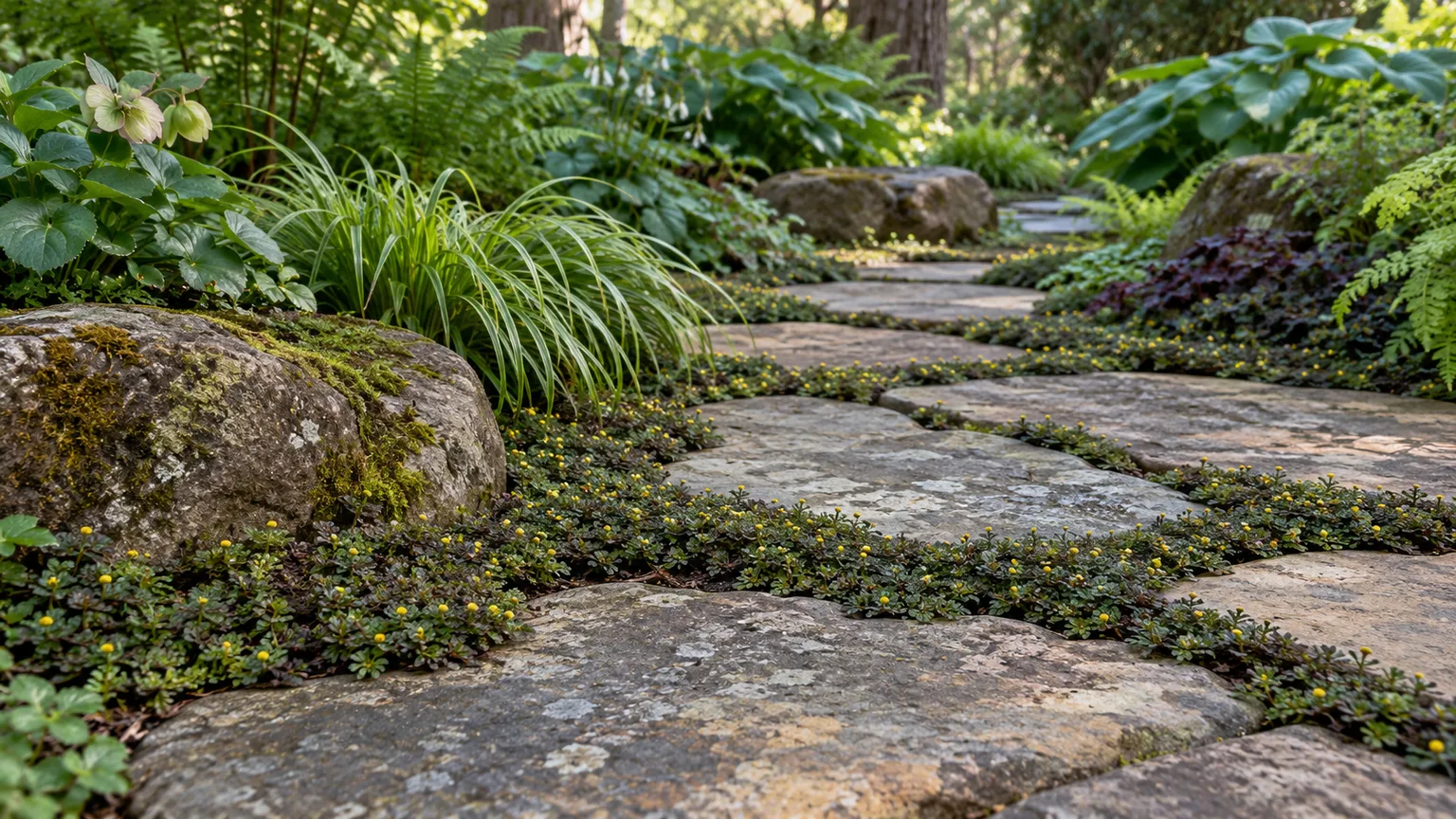
Flagstone is not necessarily expensive as a raw material, but labor can dominate the finished project because slabs need to be carried, arranged, leveled, and sometimes cut. Weigh the delivered material and installation quote together. For a small informal garden path, careful DIY placement may be practical; a large patio or a route that needs consistent elevations can warrant a skilled installer.
6. Cobblestone: dense blocks for borders and aprons
Cobblestone usually refers to a small, durable paving unit with a rounded or irregular top; “Belgian block” is often a squared granite or other hard-stone block. Suppliers use these names differently, so inspect a sample instead of relying on the label. The dense, substantial pieces can edge a gravel bed, define a driveway apron, or create a traditional paving detail that stands out against a smoother surface.
Expect a more uneven walking surface than a well-laid slab or concrete paver. The joints may collect soil and weeds, and snow shovels can catch on irregular edges. Cobblestones are heavy and labor-intensive to place; a stable base and tight, even setting reduce rocking. A border is often the best use when you want the look without turning a whole driveway or patio into a rough surface.
7. Fieldstone: irregular local stone for walls and naturalistic beds
Fieldstone is an informal term for stones collected or found in fields, not a mineral classification. It may be rounded, angular, layered, or mixed in size, depending on local geology and how it was gathered. Local fieldstone can make a landscape feel connected to its region and can be a practical material for low edging, informal garden walls, and accents in a naturalistic planting.
For a dry-laid low wall, flatter pieces are easier to stack securely than round ones. A wall that retains soil has to resist lateral pressure and handle water behind it; its height, soil, drainage, and footing determine whether a simple garden-wall approach is appropriate. Do not use an attractive pile of fieldstone as a substitute for an engineered retaining-wall design when a slope, structure, or public area is at risk. For larger or taller walls, get qualified local advice.
Fieldstone is often sold by weight or pallet, and the shapes can make coverage difficult to estimate. Visit the yard if possible, ask to see the actual range, and confirm that the load includes pieces suited to the job. Nearby stone can reduce transport distance, but “local” does not automatically mean low-cost: sorting, delivery, and access may be the bigger expenses.
8. Boulders: large anchors that shape a landscape
Boulders bring a visual scale that smaller gravel cannot. A single stone can anchor a garden entrance, break up a broad slope, frame a seating area, or make a planting feel established. They are most convincing when the shape, color, and setting relate to the rest of the property. Grouping a few stones in a deliberate composition often reads more naturally than scattering one isolated rock every few feet.
The installation is part of the material choice. Boulders may require a truck, lifting equipment, a clear access route, and a placement plan that accounts for buried utilities and future mowing. A heavy stone can settle or roll if placed on a steep, unstable surface; do not use it as a retaining structure without appropriate design. Ask the supplier or installer how the boulder will be unloaded and positioned before placing an order. Delivery and equipment can cost more than the stone itself.
Choose by job, drainage, access, and plant needs
Start by writing down the job in one sentence: “cover this dry bed,” “make a stable route to the shed,” “slow and guide runoff across this slope,” or “create a flat patio.” Then eliminate any material that cannot perform that job. Smooth river rock may suit a channel accent but not a compactable route; flagstone may create a comfortable step but does not replace a drainage outlet; a boulder may frame a terrace but cannot stabilize a failing slope.
Drainage has two meanings. A permeable surface allows water through its openings. Soil drainage is the ability of the soil profile to absorb and move that water. They are related but not interchangeable. CSU Extension’s findings on gravel mulch are explicitly size-dependent, and Colorado State’s soil-drainage guidance explains why a coarse layer under finer soil does not automatically draw water downward: the upper soil layer can remain saturated until it reaches the conditions needed for water to cross the boundary. If water stands after a storm, identify whether the cause is runoff, compaction, a low spot, or slow soil before buying rock.
Match the stone to plants. Rock cover adds no organic matter or nutrients, and it can complicate replanting. Light stone can reflect heat; dark stone can increase soil temperatures in some situations. The Virginia Cooperative Extension’s mulching guidance notes both temperature risks and that limestone-based gravel can be a poor match for acid-loving plants such as rhododendrons and azaleas. If you grow plants that need acidic soil, ask what the stone contains and avoid assuming every gray or tan product is chemically neutral. For beds that need richer soil, frequent amendments, or seasonal replanting, an organic mulch may be easier to work with.
Think about people and maintenance. For routes used by wheelchairs, walkers, strollers, or rolling bins, choose a firm, stable surface and test a sample under expected conditions. The U.S. Access Board’s guidance for covered outdoor recreation routes identifies compacted crushed rock with broken faces and a range of particle sizes as more stable than loose, rounded gravel; those technical requirements apply in specific settings, not automatically to every private garden, but the surface principles are useful. A level flagstone route or properly compacted aggregate may be easier to maintain than loose pea gravel. Fine Gardening’s gravel-path advice also emphasizes matching the aggregate and edging to the job rather than treating every gravel as interchangeable.
Plan the base, edging, quantity, and delivery
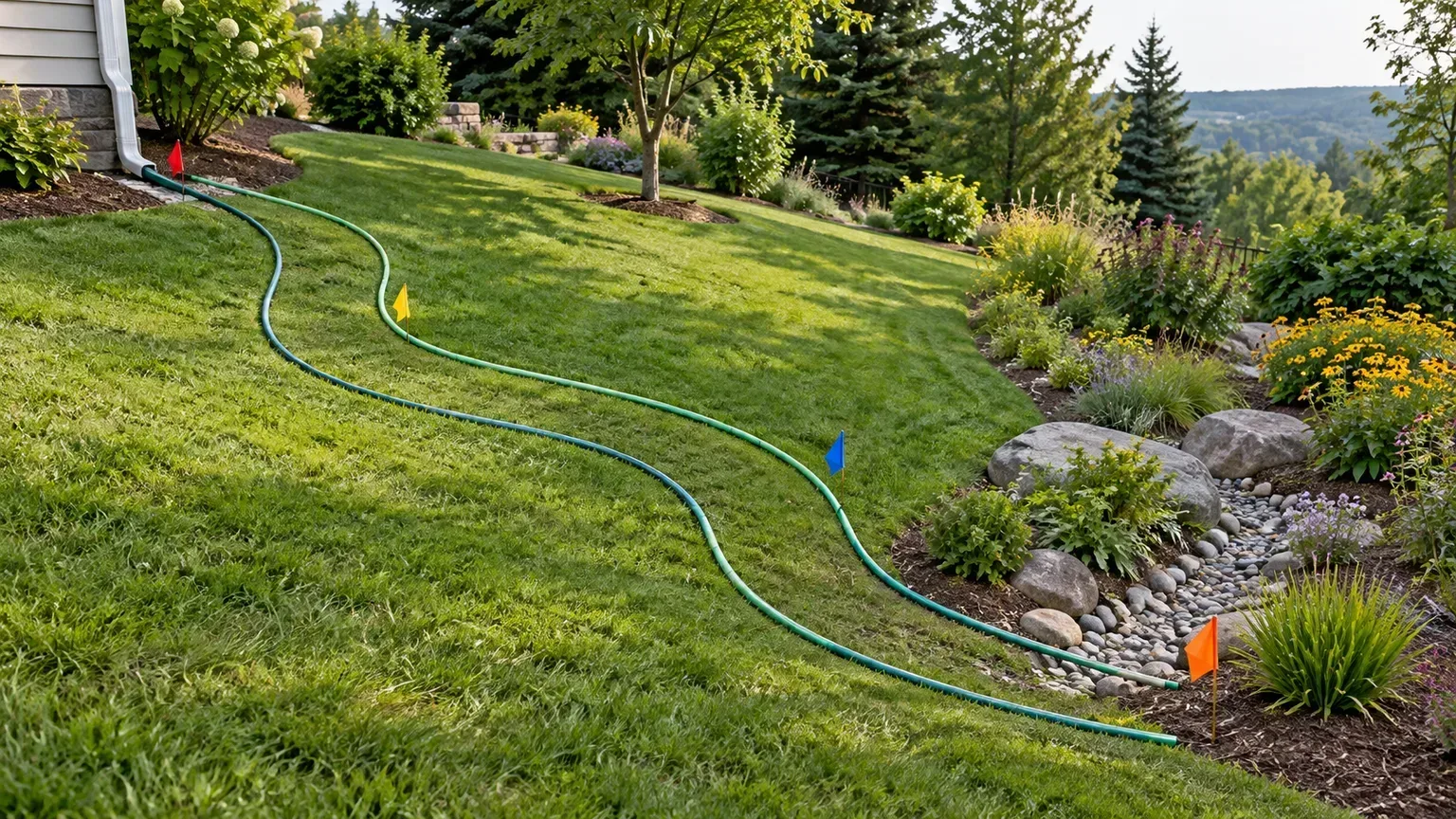
Before choosing a finish, mark the route or bed with a hose or stakes and observe it after rain. Check where water enters and leaves, how much sun the plants receive, whether a mower or wheelbarrow needs to cross it, and whether a downspout or utility line is nearby. Call the local utility-marking service before excavation; confirm local requirements for drainage work and retaining structures. A small project still benefits from a sketch that shows width, finished height, borders, transitions, and the destination of runoff.
Build the base for the intended load. A decorative cover over soil is different from a path that must resist foot traffic, a patio, or a driveway apron. Compacted crushed aggregate is commonly used as a base because particle shape and gradation can help it lock together. Rounded stones often need containment or a stabilizing system to stay in place. Slabs and blocks need consistent support so that they do not rock. A professional should assess substantial slopes, walls, repeated flooding, or loads near a building.
Edges control migration and depth. A restrained border can keep gravel out of turf, preserve a clean transition, and stop rain from washing a shallow layer downhill. Keep stone below siding and away from wood trim; leave access to drainage features and do not cover weep holes. Around trees, avoid piling material against trunks or burying root flares. Existing roots may limit how deeply you can excavate, so surface installation can be safer than cutting through a tree’s root zone.
Estimate loose stone by volume, then ask the supplier how that product is sold. For a uniform layer, multiply the area in square feet by the intended depth in inches and divide by 324 to get cubic yards: 300 square feet at 2 inches is about 1.85 cubic yards before allowance for uneven ground or settling. This is a planning estimate, not a guaranteed order quantity. Stone density varies, so tons do not convert to cubic yards identically from one product to another; get the supplier’s conversion and delivery minimums.
The delivered price depends on stone type, grade, location, quantity, distance, packaging, access, and installation. Compare quotes on the same basis: material name and size, delivered volume or weight, delivery fee, unloading method, and whether spreading or base preparation is included. Bagged stone may simplify a small accent bed and avoid a bulk drop; bulk delivery can make sense for a larger area, but only if the truck can reach the planned drop point. The least expensive stone at the yard may not be the least expensive project once hauling and labor are counted.
Keep the stone functional: upkeep and common mistakes
“Low maintenance” means less replacement, not no maintenance. Leaves and twigs settle between stones, and dust plus decomposed plant matter creates a shallow seedbed on top of the rock. In a small bed, a hand rake, leaf blower on a low setting, or careful hand removal can keep debris from accumulating. On a large site, avoid blowing stones into drains or neighboring areas; a border and a realistic cleanup plan matter as much as color.
Weeds can still sprout in dust above stone or grow through gaps from below. A fabric layer may help separate rock from soil in a path or reduce the mixing of gravel into a base, but it will not create a permanent weed-free bed. Seeds can germinate in organic matter on top, and planting or dividing perennials later becomes less convenient. Virginia Cooperative Extension describes both the persistence of debris and the possibility of rock movement into the soil. Use fabric selectively for a clear construction purpose, not as a guarantee that weeds will disappear.
Common avoidable mistakes include choosing large, loose rock for a route that needs a smooth surface; ordering by color without checking size; covering a heavy clay puddle with gravel and calling it drainage; putting limestone around acid-loving plants; leaving no edging; and overlooking how material will be delivered. Another is assuming stone will always reduce watering. Rock cover can affect evaporation and temperature in different ways depending on climate, color, and particle size, so keep checking soil moisture after installation and water according to the root zone rather than the appearance of the surface.
Use small samples on site before committing to a truckload. Lay them beside the house, existing pavers, and plants in both sun and shade, then wet them to see how color changes. Walk across any proposed path in the shoes or mobility device you expect to use. If the sample feels unstable, the full installation will not solve that problem by itself. A modest test patch can save you from an expensive material mismatch.
Conclusion
The best landscaping rock is the material that does the job your site actually needs. Choose angular, gradable crushed stone when firmness and compaction matter; use pea gravel for a contained decorative surface where movement is acceptable; reserve river rock for accents and channels designed to handle water; and use flat stone, blocks, fieldstone, or boulders where their shape and scale fit the structure.
Before ordering, check the soil and runoff, plant pH and heat needs, walking access, edge design, base, maintenance, quantity, and delivery. A rock layer can last a long time, but correcting a poor installation is heavy work. A measured plan and a sample on the ground are better safeguards than choosing by color alone.



