Topsoil vs. Garden Soil: Which One Fits Your Garden?
Topsoil fills and reshapes garden areas; garden soil is a blended bed product. Compare labels, raised beds, lawns, pots, and buying tips before you order.
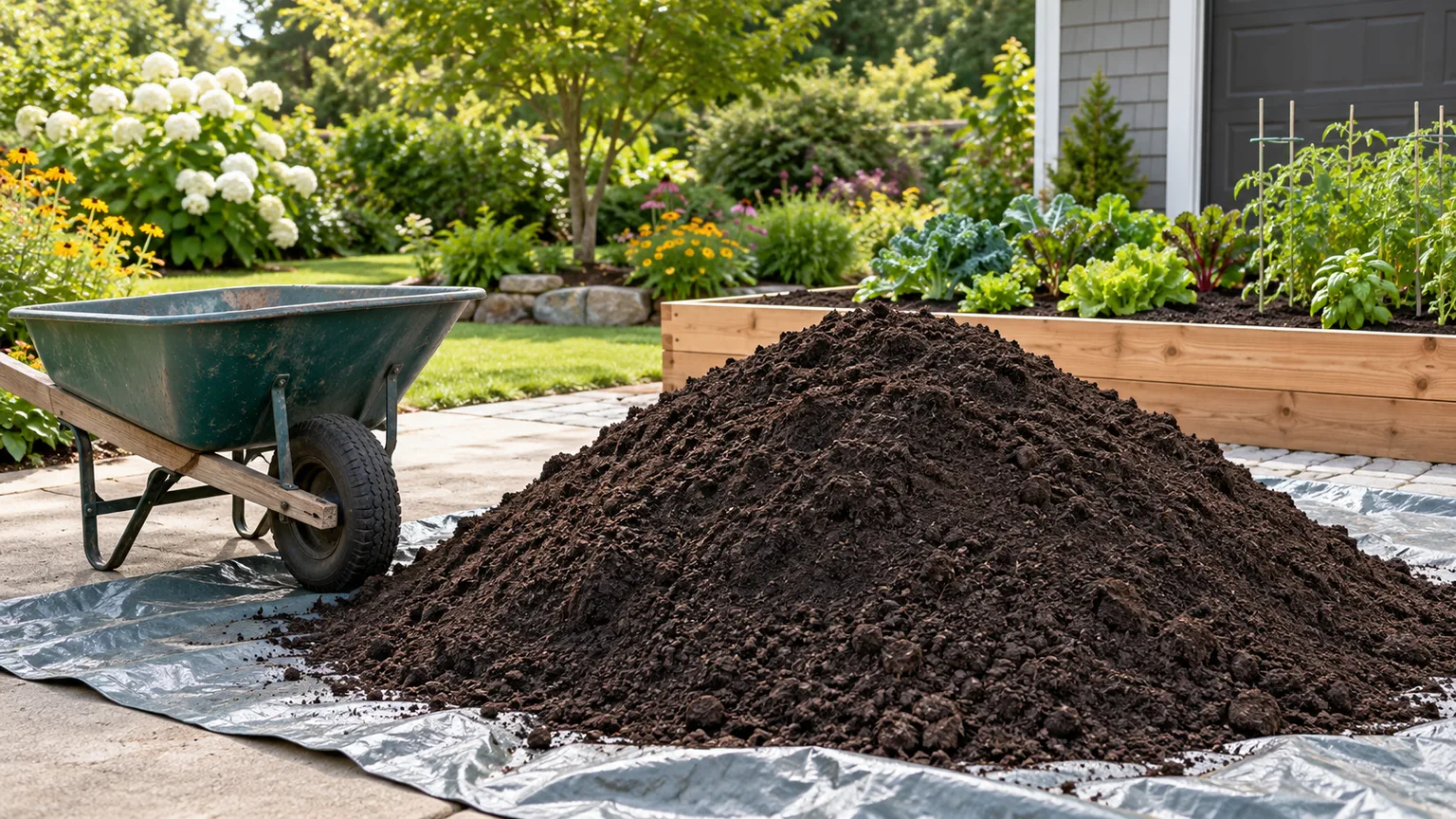
The short answer
Topsoil names the upper layer of a natural soil profile, or a material sold as that layer. Garden soil is a retail blend intended for outdoor planting beds. It may include topsoil, compost, bark, or other ingredients, but the name alone does not tell you the mix, nutrient level, drainage, or quality.
Choose based on the project and what is already on site. Topsoil adds depth and can reshape a broad planting area; garden soil is a convenient blend for starting or refreshing a bed.
Neither product is automatically superior. Neither belongs in pots by default; use a potting mix made for a confined root zone.
If you are improving an in-ground garden that already has workable soil, first ask whether you need to buy soil at all. A soil test and a modest, targeted amendment may solve the actual problem for less money than replacing the bed.
What topsoil means
In an undisturbed landscape, topsoil is the surface layer where mineral particles, organic residues, roots, water, air, and soil organisms interact. It is generally richer in organic matter and biological activity than deeper subsoil, but its thickness and texture vary with location, climate, parent material, drainage, and land use. Topsoil is a position in a soil profile, not a promise that the material is dark, fertile, weed-free, or ideal for vegetables.
The distinction matters when you buy it. A supplier may screen topsoil to remove stones and coarse debris, blend it with other materials, or sell it in different grades. Screening can make a product easier to spread and plant into, but it does not reveal the proportions of sand, silt, and clay or certify a nutrient balance.
NC State Extension cautions that the term does not guarantee quality and recommends choosing a reputable source when bringing topsoil onto a site (NC State Extension’s soil-modification guidance).
Why two topsoil loads can be different
One load may be sandy and quick to drain; another may be finer textured and hold water longer. A third may contain enough stones or large organic pieces to be unsuitable for a smooth lawn surface, even if it works as rough fill beneath a deeper planting layer. The source location and how the supplier handled the material matter more than a generic “topsoil” label.
Texture describes the relative amounts of sand, silt, and clay. Sand feels gritty and lets water move through relatively quickly; clay particles are much smaller and hold more water and nutrients, but poorly structured or compacted clay can drain slowly.
Loam is a texture class with a balanced combination of those mineral particles; it is not another word for compost, nor is every soil that looks crumbly or black a loam. NC State Extension distinguishes soil texture from structure and explains why texture is difficult to change at garden scale (North Carolina Extension Gardener Handbook: Soils and Plant Nutrients).
What “garden soil” means on a bag
Garden soil is generally a prepared product for outdoor beds rather than a single soil type with one universal recipe. Depending on the manufacturer, it might be screened topsoil blended with compost, composted bark, other organic matter, sand, fertilizer, or a mix of mineral soils. Some products are made to improve existing soil, while others are intended to provide a larger share of a new raised bed’s fill.
That variation is why two bags with the same front-panel label can behave differently. One could be dense and mineral-rich; another could be fluffy because it contains a high proportion of compost or bark.
Neither description by itself proves a product is good or bad. Look for the ingredients, intended use, and any analysis or application instructions on the back. Do not assume “garden soil” always means a fertile, well-draining loam.
What may be in the blend
Organic materials can help improve soil structure and moisture behavior, but they change as they decompose. A blend high in compost may lose volume over time; fresh or incompletely decomposed materials can settle more as they break down.
A bed filled only with compost is not the same as one filled with stable mineral soil and amended with finished compost. The RHS recommends filling raised beds mainly with soil because compost breaks down and can cause the bed to slump over time (RHS raised-bed guidance).
Fertilizer is another variable, and a garden-soil blend may contain a starter charge or no added fertilizer at all. Even when fertilizer is present, it does not replace a soil test or guarantee that pH and nutrient levels suit every crop. For an established garden, adding fertilizer because a bag promises “feeding” can stack nutrients that are already adequate.
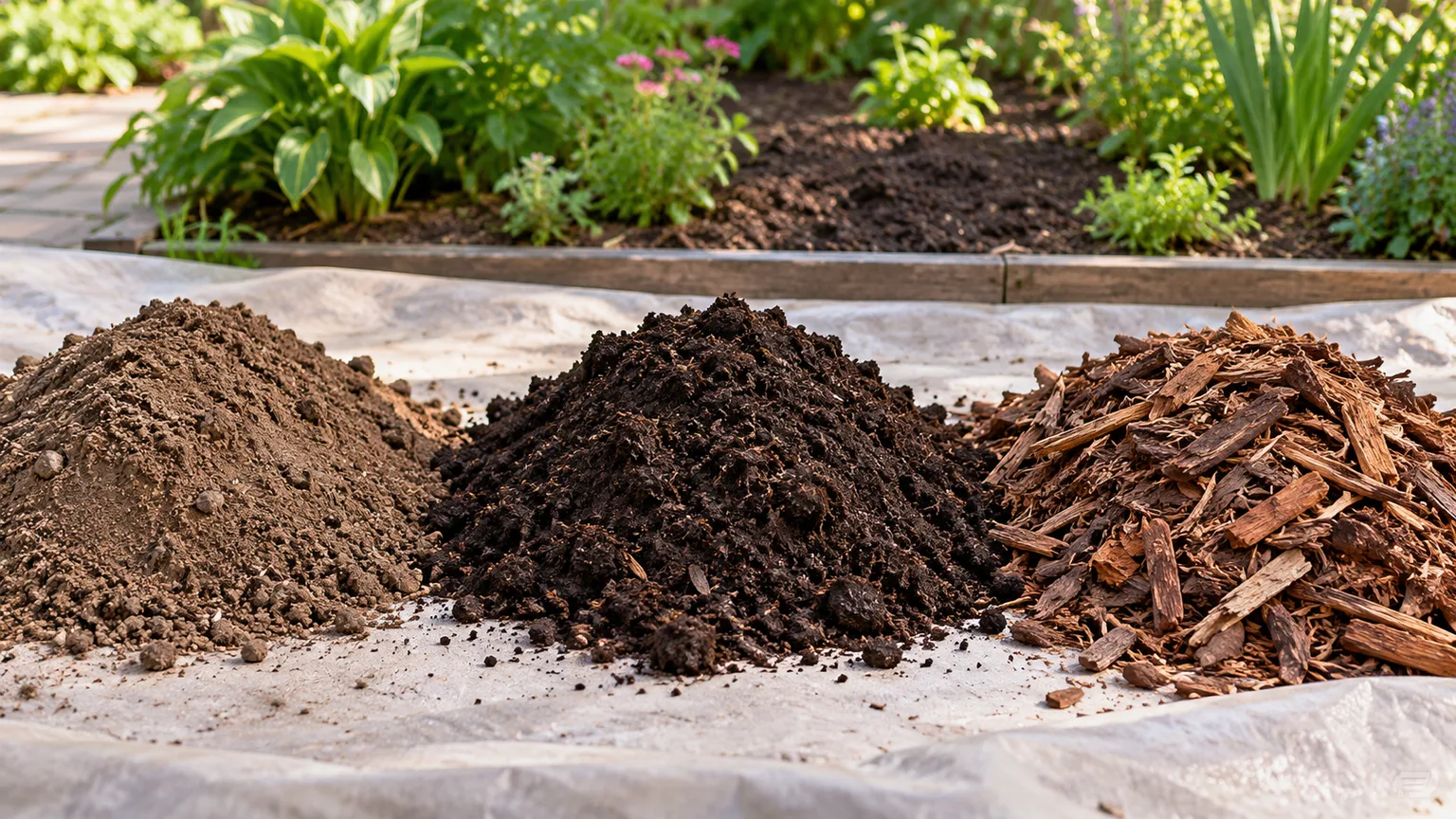
Compost, topsoil, garden soil, and mulch are related but not interchangeable. Compost is decomposed organic material used to add organic matter and improve soil; mulch is a surface covering; topsoil is a soil layer or a material sold under that name; garden soil is a blended product for beds. NC State’s community-gardening handbook makes this distinction and cautions against substituting topsoil or mulch when the job calls for compost (NC State Extension’s handbook on soil, plots, and planters).
Topsoil vs. garden soil at a glance
| What you are comparing | Topsoil | Garden soil |
|---|---|---|
| What the term describes | The upper soil layer, or material sold as it | A prepared blend intended for outdoor beds |
| Typical consistency | Varies by source; may be screened or unscreened | Varies by recipe, brand, and intended use |
| Possible ingredients | Sand, silt, clay, organic matter, stones or coarse debris | Topsoil or other mineral soil, compost, bark, fertilizer, or other amendments |
| What the name guarantees | No fixed texture, pH, nutrient level, or cleanliness | No single standardized recipe or guaranteed fertility |
| Common jobs | Adding soil depth, rough landscape grading, lawn repair, filling a bed | Starting or refreshing an outdoor planting bed when its blend fits the job |
| Main buying check | Source, texture, screening, and suitability for the project | Ingredients, intended use, texture, and whether fertilizer is included |
The practical difference is not “plain dirt versus better soil.” It is a variable soil material versus a formulated bed product. The best purchase depends on whether you need bulk depth, a planting blend, or an amendment for soil that already exists.
Which product fits the project?
Decide what the soil must do before comparing bags or delivery prices. A broad area needs an economical, stable material; a small raised bed needs a suitable root zone; an in-ground bed may need only a targeted amendment. Containers have different physical limits and call for a different product category.
Existing in-ground flower or vegetable beds
If the bed has workable soil and drains reasonably well, keep using it and improve it only where needed. A soil test can identify pH and nutrient issues and guide any lime or fertilizer decision; appearance alone cannot show that plants need those inputs. The University of Minnesota Extension describes testing as a way to get recommendations for the soil and crops in question and avoid unnecessary fertilizer (UMN Extension’s soil-testing guidance).
For a compacted or low-organic-matter bed, finished compost or another appropriate organic amendment may be a better purchase than a truckload of new soil. NC State Extension notes that adding composted organic material over time can improve soil structure and pore space; it also explains that simply placing a new layer on top of compacted ground may not fix the root-zone problem. Avoid working soil when it is wet enough to smear, and do not routinely dig around established perennial roots just to mix in a product.
If the site is new construction, exposed subsoil, or fill that is extremely hard, rocky, contaminated, or waterlogged, adding a suitable soil layer or using a raised bed may be reasonable. That is different from buying garden soil to “feed” an already healthy flower border. Match the fix to the cause: more depth will not by itself correct poor drainage below the planting layer.
New raised beds
First distinguish an open-bottom raised bed from a planter on legs, pavement, or a solid base. An open-bottom bed connects with native soil, so roots can explore below the frame and water can drain into the ground. A sealed-base planter acts more like a large pot and needs a medium selected for that contained environment.
For an open-bottom bed, use a stable soil-based fill as the bulk and blend in finished compost as an amendment rather than filling the entire frame with compost. Screened topsoil can be an economical base if the supplier’s material is suitable; a garden-soil or raised-bed blend can save mixing time if its label describes ingredients and use that fit your crops. Loosen the soil below the bed where appropriate so roots do not hit a hard, abrupt boundary.
The RHS notes that raised beds can dry faster than soil at ground level, so a light blend that drains freely may require more frequent watering. At the other extreme, a heavy or compacted fill can stay wet and restrict root-zone air. The target is neither the fluffiest nor darkest product; it is a stable, workable blend with a texture and organic-matter level appropriate for the bed’s drainage, climate, and plants.
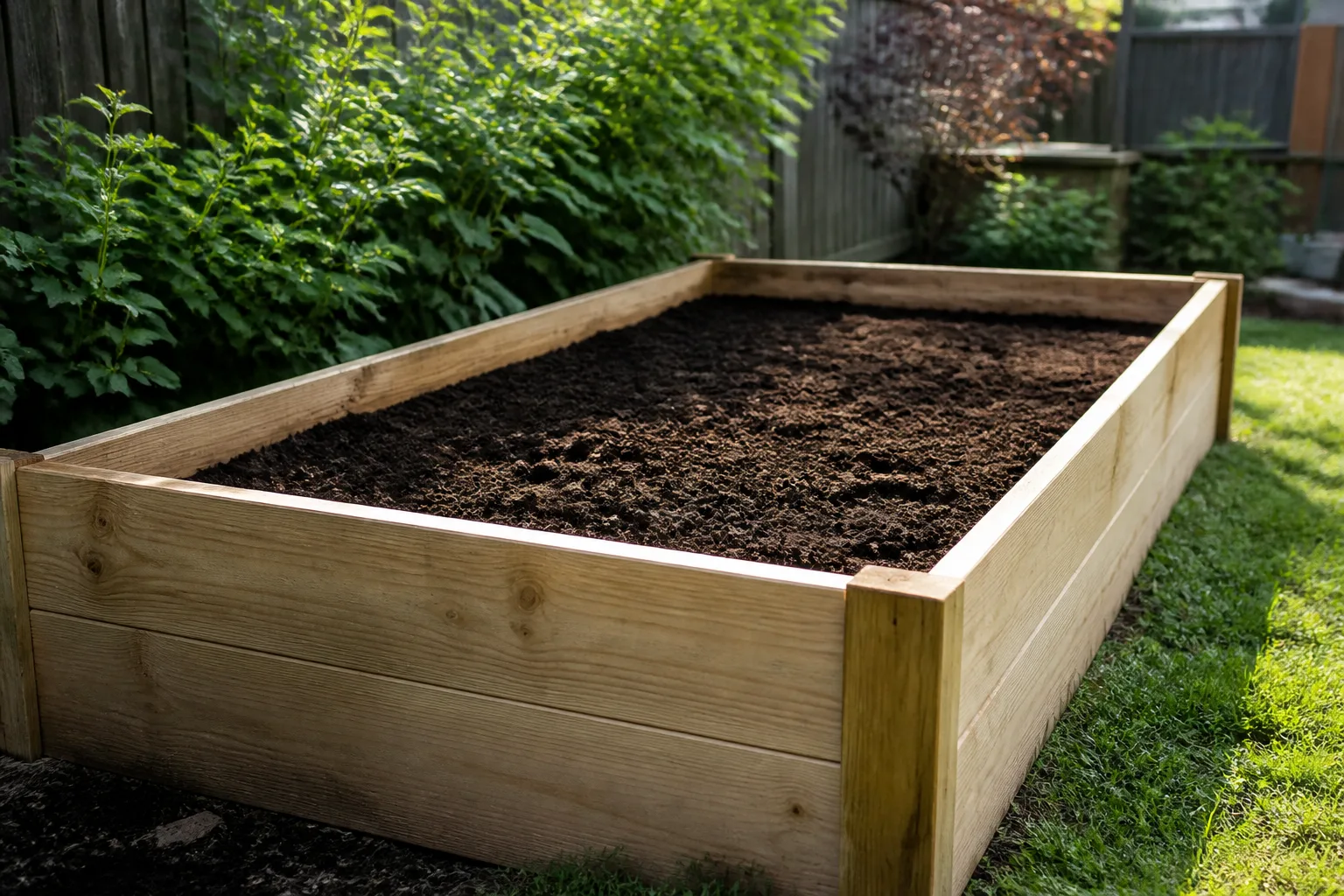
Depth should follow the crop and the bed’s connection to the ground. Many common vegetables can grow in a modest root zone if the soil below is open and workable, but root crops and deeper-rooting perennials need more usable depth. NC State Extension discusses 6 to 8 inches as a useful topsoil depth for many raised-bed plantings, not as a universal maximum for every crop or a guarantee that the soil below is suitable.
Lawn repair, grading, trees, and shrubs
For a thin, plantable layer over a broad area, bulk topsoil can be more practical than bagged garden soil. Ask whether it is appropriate for a finished surface: large rocks, sticks, or chunks may be acceptable for rough fill but can complicate seedbed preparation. For lawn topdressing or leveling, use a material close enough in texture to the existing soil that the new layer does not create a very different root and water environment.
Do not use compost as a substitute for a large volume of soil just because it is dark and easy to spread. Organic matter can be valuable as an amendment, but fresh material and compost-heavy blends settle as they decompose. If you are correcting a low spot or building up an area, use soil for the bulk and reserve compost for improving the planting layer.
For trees and shrubs, decide whether you are preparing a broad planting bed or just backfilling one planting hole. The larger soil area and the existing site conditions matter more than the product label: avoid making a small pocket of dramatically different material surrounded by compacted soil. If the native ground is suitable, use it as the base and correct only a diagnosed problem; if it is construction fill or drains poorly, improve the wider root area or choose plants adapted to those conditions.
Pots and planters
Do not fill ordinary pots or window boxes with topsoil or garden soil alone. A container has limited depth and no surrounding earth to help roots escape compacted or waterlogged material. Garden soil can settle into dense layers in that confined space, while potting mix is designed to hold water and nutrients yet retain air around roots after drainage.
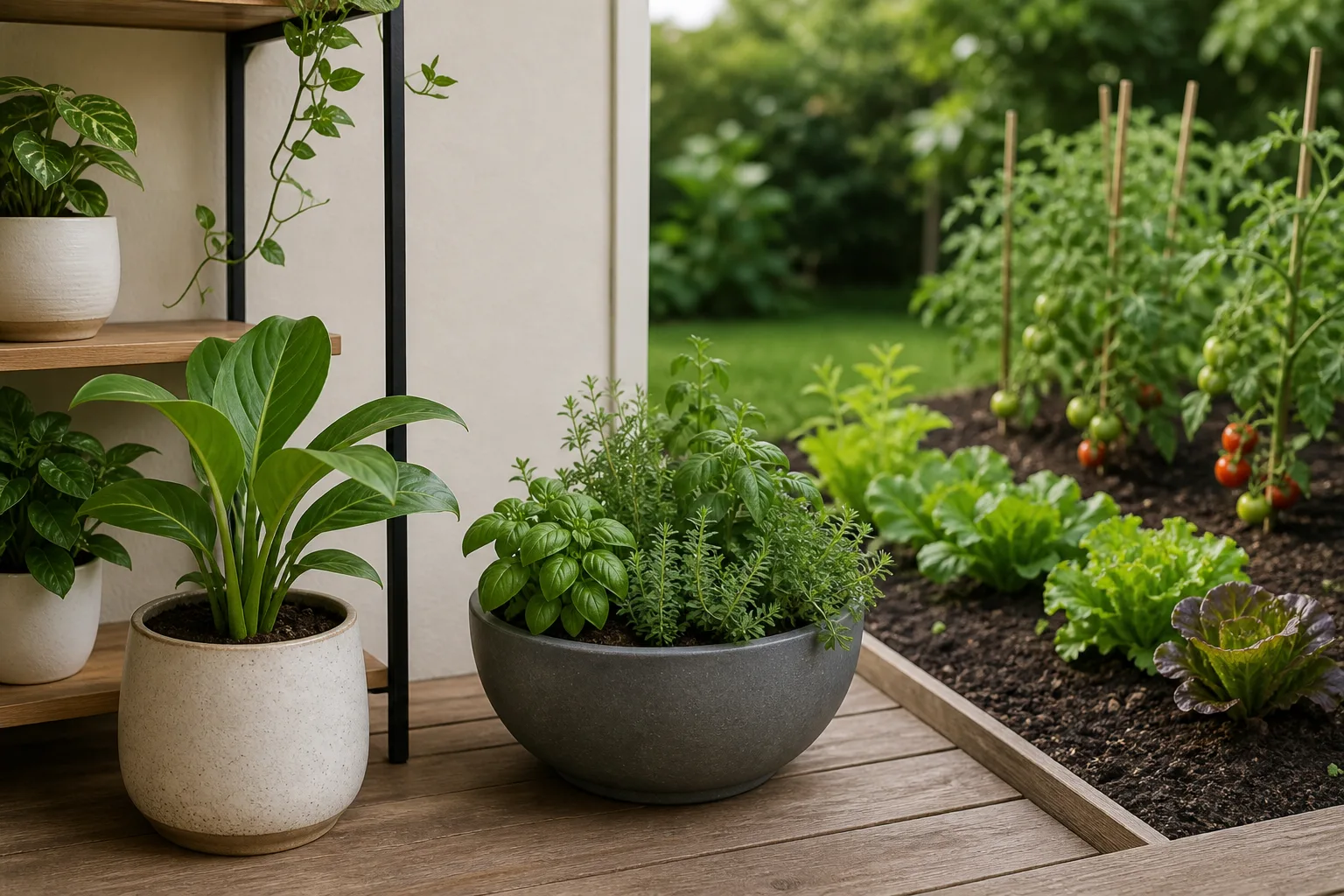
This also applies to elevated planters that sit on a deck or have a closed bottom. A large open-bottom raised bed is not a pot merely because boards surround it; a planter with a solid base is.
Use a product labeled for containers or a suitable potting mix, then follow the plant’s drainage and moisture needs. For more detail, see the existing guide to garden soil vs. potting soil.
Judge the soil before you buy
Treat the product name as a starting point, not a quality grade. A supplier’s answers and a small sample tell you more than a photograph of a black mound or a bold label. This matters most when you are ordering bulk: a disappointing delivery is difficult to return and expensive to move twice.
Read the label or ask the bulk supplier
For bagged garden soil, read the ingredient list and the stated use. Look for whether the product contains mineral soil, compost or bark, and added fertilizer; check any pH or analysis information if it is provided. A raised-bed label does not automatically mean that the product is all you need for every crop or that it can replace a container mix.
For bulk topsoil, ask where it comes from, whether it is screened, what screening removes, and whether it is blended with compost or other material. Ask for a sample or product analysis when possible, especially if you are filling a food garden or buying several cubic yards. NC State Extension specifically recommends reputable sources because product sold as topsoil may not be better than the site’s existing soil.
Be cautious about promises that are too broad: “perfect for every plant,” “all nutrients included,” or “organic” do not describe texture, pH, drainage, or the source of every ingredient. If the supplier cannot say what is in the mix, use the material only where uncertainty is acceptable, or choose a source that can provide clearer information.
Do a quick check when it arrives
Before the material is spread, look for construction debris, trash, large amounts of stones, visible weed roots, or a sour, anaerobic odor. Those signs do not tell you every chemical or nutrient property, but they can reveal that the load is unsuitable for its intended use. If the material looks very different from the sample or description, pause before unloading the whole order into a bed.
Moisten a handful and feel it between your fingers. A gritty feel suggests more sand; a smooth or silky feel suggests more silt; a sticky feel when wet suggests more clay. These are rough clues, not a laboratory diagnosis.
Fine Gardening describes a jar test that separates sand, silt, and clay into layers, while emphasizing the value of understanding texture; neither a hand test nor a jar can measure fertility or pH (Fine Gardening’s soil-texture guide).
Dark color is not proof of rich, well-drained soil. Organic matter can darken soil, but drainage and mineral composition affect color too. NC State Extension cautions that color alone is not a measure of soil quality; for nutrient questions, use a soil test rather than color or a fertilizer label to guess.
Calculate the quantity without overbuying
Measure the area and the depth you need to add, not just the full bed depth. If a bed already contains usable soil, subtract that depth before ordering. Convert inches to feet, multiply length by width by depth, and the result is cubic feet.
For a rectangular bed, use:
- Cubic feet: length in feet × width in feet × depth in feet.
- Cubic yards: length in feet × width in feet × depth in inches ÷ 324.
For example, a 4-by-8-foot bed that needs 12 inches of fill takes 32 cubic feet, or about 1.2 cubic yards. If you are adding only a 2-inch layer to the same bed, you need about 5.3 cubic feet. Round your order to the supplier’s bag or delivery size, but do not pay for a full bed depth when existing soil already supplies part of it.
Volume estimates assume a roughly even bed and settled depth. If the ground slopes, the frame is irregular, or the material is sold loose and fluffy, ask the supplier how they measure a yard and whether the delivered volume is estimated before or after settling. A small margin can be sensible; a large extra pile can be an expensive disposal problem.
Can you mix topsoil and garden soil?
Yes, if both materials are suitable for the same outdoor bed and the blend improves the root zone. A common practical arrangement is to use a stable soil as the main volume, then incorporate finished compost or a garden-soil blend into the planting layer. The right proportion depends on the existing soil, the ingredients, and the crop; there is no universal recipe that turns every topsoil into ideal garden soil.
Mixing is often preferable to stacking a thin layer of very different material over dense soil. Roots encounter the transition between layers, and water can move differently through materials with contrasting texture. NC State Extension recommends incorporating amendments into existing soil when appropriate to support water movement and deeper rooting; take care not to till wet soil or damage established roots.
If two bagged materials are both labeled garden soil, compare the ingredient lists before blending them. Combining two compost-heavy mixes may make the bed too organic and prone to settling; mixing a fine clay-rich soil with a small amount of sand will not reliably create a loose loam. In clay soils, NC State warns that changing texture with a little sand is ineffective and can produce a concrete-like mix; composted organic matter is the more practical long-term amendment for many home landscapes.
Common mistakes that waste money
Buying by color. Dark material may look rich, but the color does not tell you the soil texture, pH, nutrient balance, or whether it drains well. Check the ingredients and source, and use a soil test for the questions a visual check cannot answer.
Assuming screened means premium. Screening removes some large material; it does not correct poor texture, low fertility, or an unsuitable pH. Ask what size screen was used and inspect the load before spreading it.
Filling a bed with compost alone. Compost is useful, but a compost-only bed can lose volume as the organic matter decomposes. Build the bulk with stable soil and use finished compost as an amendment, following the bed’s needs rather than a fixed recipe.
Buying new soil for an established bed without a diagnosis. If plants are struggling, the cause may be compaction, poor drainage, shade, pH, pests, or watering—not a shortage of garden soil. Test and inspect first; replacing the whole root zone is costly and may not solve the problem.
Using outdoor soil in pots. A product suited to an open garden bed can compact when confined in a small container. Use potting mix for pots, and decide whether an elevated planter functions as a bed or a container by checking whether roots and water can move into the ground below.
Ordering before measuring. A few inches across a broad footprint add up to a surprising volume. Calculate the layer to add, subtract existing soil, and confirm the supplier’s unit before booking delivery.
Conclusion
Topsoil and garden soil are different kinds of labels: one describes a surface soil or material sold as one, and the other describes a variable blend intended for garden beds. Because either product can differ in texture, ingredients, and fertility, the project and supplier details matter more than the name on the bag.
For a sound in-ground bed, keep the native soil and amend it based on a test. For a new open-bottom raised bed, use stable soil for the bulk and finished compost as an amendment; use potting mix in containers. Before buying, inspect what you have, ask what the product contains, and measure the volume you truly need.



