Why Grass Seed Can Build a Better Lawn for Less Cost
Compare sod vs. seed by cost, timing, climate, grass type, slope, and first-year care. Use a practical checklist to choose and establish your lawn.
Quick answer: choose by your binding constraint
For most homeowners who can wait for a lawn to establish, grass seed is the better starting point: it costs less, gives you more control over the grass variety, and grows in the soil and conditions where it will remain. Sod earns its higher price when you need immediate ground cover, have a slope that is eroding, or cannot keep bare soil protected while seedlings develop.
That is the short answer, but “better lawn” can mean different things. If you mean lower material cost and a grass type selected for your site, seed has the edge. If you mean a green surface this week and reduced exposure to mud or runoff, sod is a practical shortcut. Neither method makes a lawn ready for heavy play as soon as it is installed; roots still need time to hold the turf in place.
Before buying either product, answer four questions: Which grass can thrive in your climate and sun exposure? Can you water reliably through establishment? How soon must the area look covered or tolerate traffic? Is the ground flat enough to hold seed in place? Your answers matter more than a blanket claim that one method always wins.
What each method actually puts in your yard
A comparison is useful only if it distinguishes the product from the work. Both approaches begin with site preparation, and both need moisture, good soil contact, and protection from traffic. Their main difference is whether you start with seed and grow the lawn in place or transplant a mat of already growing grass.
Grass seed starts at the site
With seeding, you spread selected grass seed over a prepared seedbed. The seed germinates, sends roots into your soil, and develops into turf under the same sun, drainage, and temperature conditions it will face as a mature lawn. This can be an advantage for choosing a cultivar suited to a shaded yard, a high-traffic play area, or the climate in your region.
Seed does not produce instant cover. Bare soil remains exposed while the seed germinates and the young plants fill in, so you must keep the surface moist without washing it away. Birds, weeds, heavy rain, dry wind, foot traffic, and missed watering can all thin the stand. The method asks for patience and attention in the early weeks, even though the material is inexpensive and easy to store until the right planting window.
Sod is transplanted turf
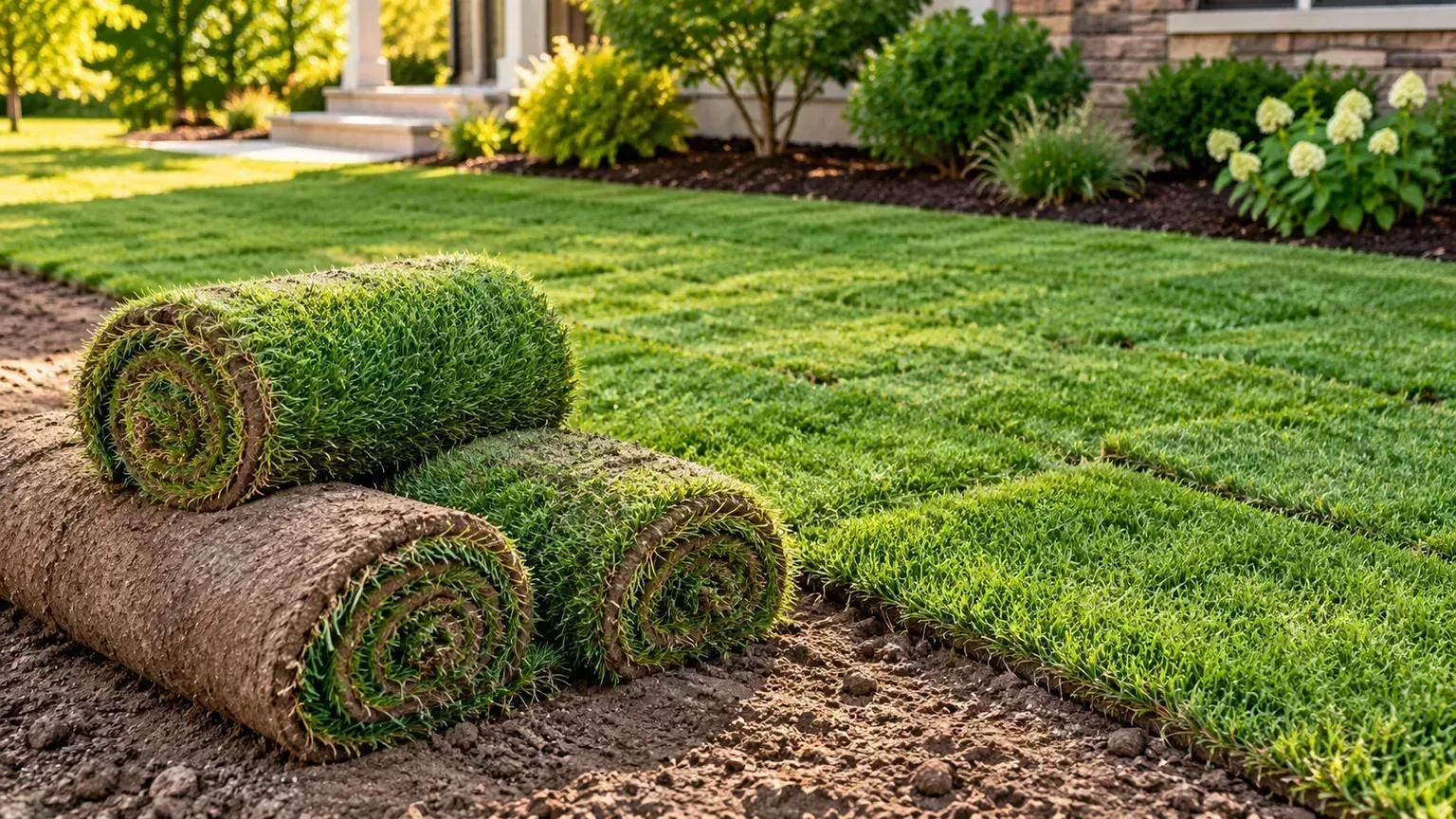
Sod is living grass cut with a thin layer of soil and roots, then delivered in rolls or slabs. It gives a finished green surface as soon as it is laid, but the roots are not yet anchored in your yard. They must cross the seam between the sod’s soil layer and your prepared soil before the lawn can handle routine use.
Sod also limits your choice to the varieties grown and sold by nearby farms. That is often fine for a common lawn grass, but it can become a constraint if your yard needs an unusual blend, a finer fescue for shade, or a warm-season grass selected for local water conditions. K-State Research and Extension notes that seed can offer access to species and cultivars that may not be available as sod in a region, while sod can establish faster and reduce erosion. K-State’s turf establishment guide explains how those trade-offs change by method.
Sod vs. seed at a glance
| Decision factor | Grass seed | Sod |
|---|---|---|
| Up-front material cost | Usually much lower | Usually much higher |
| Visible cover | Gradual; bare soil remains during grow-in | Immediate green cover |
| Grass selection | Broad choice of species, blends, and cultivars | Limited to local sod-farm inventory |
| Establishment challenge | Keep seedbed consistently moist and prevent washout | Keep sod and underlying soil moist while roots knit |
| First traffic | Wait until seedlings are well rooted and mowing has begun; avoid repeated use early | Wait until the sod resists a gentle lift and is rooted to the soil |
| Slope and erosion | More vulnerable before coverage; may need erosion control | Better immediate cover when correctly installed |
| Timing | Narrower window for the grass type and region | More flexible in some climates, but not during frozen or extreme conditions |
| Workload | Careful seedbed, spreading, watering, and re-seeding thin patches | Intensive preparation, fast delivery and installation, then frequent watering |
| Best fit | Cost control, exact grass choice, larger areas, and flexible deadlines | Fast cover, erosion risk, strict deadlines, and places where bare soil is a problem |
Treat the table as a decision aid, not a promise of exact timing or cost. Establishment depends on grass species, soil temperature, water, installation quality, and weather. For example, sod can look complete on day one and still pull up easily if its roots have not connected with the yard; seed can sprout quickly but remain too fragile for sports or regular shortcuts across the lawn.
Why seed often makes the better long-term lawn
The strongest case for seed is not just that a bag costs less than rolls of sod. Seed gives you more control over what grows, avoids transplanting a root mat across a soil boundary, and lets you schedule a large project around weather, budget, and labor. Those advantages matter when the goal is a durable lawn that suits the actual yard rather than a fast green surface.
You can choose a grass that fits the site
Grass is not interchangeable. A sunny, high-use yard in a warm region needs different turf from a cool, shaded lawn beneath mature trees. Seed catalogs generally offer more species, blends, and cultivars than a local sod supplier can produce, so seeding may be the only practical way to use the grass best suited to your conditions.
The label is more informative than the broad name on the bag. Look for the exact species and named cultivars, the seed’s germination percentage and purity, the lot or test date, and the weed-seed content. Prefer seed recommended for your region by a local university extension service. Avoid unlabeled mixes, vague “contractor blends,” and a bag selected only because it is inexpensive or promises fast green-up.
The right selection can reduce future frustration. If you sow a grass that suits the amount of sun and the amount of use the yard receives, you are less likely to spend later seasons patching thin areas or trying to force a sun-loving variety to survive in deep shade. If the location cannot support turf without excessive irrigation or constant repair, consider a shade bed, groundcover, or hardscape for that part of the yard instead.
The turf grows in the soil where it must live
A seedling forms its roots in the site soil from the beginning. Sod arrives with a thin layer of farm soil that must connect with your ground. K-State warns that differences between the soil beneath sod and the soil at the installation site can interfere with rooting and reduce the sod’s ability to tolerate stress.
That does not mean sod inevitably fails or that seed always develops deep roots. It means the transplant has a transition to make: roots must grow out of the sod layer and into the yard. If the surface below is compacted, too dry, poorly graded, or separated from the sod by air pockets, the turf can remain shallow-rooted even while the blades look green.
Seed also has a site-specific advantage when the area is uneven, shaded, or otherwise different from the sunny, irrigated farm where sod was grown. The same site conditions affect both methods, but the seed-grown plants do not need to cross that soil boundary. Good seed cannot overcome a bad site; it simply gives the selected grass the chance to establish directly in it.
Seed lowers material cost and lets you stage work
For a large lawn, the price difference between seed and sod can be substantial. Seed also avoids the tight delivery schedule involved in ordering a perishable product for a single installation day. You can compare blends, buy only what the measured area requires, prepare one section at a time, and keep a small amount of the same lot for filling thin spots if you store it according to the label.
A lower seed bill is not a guarantee that the project is cheaper overall. If you hire a contractor to prepare and seed a site, add labor, grading, soil amendments, irrigation, erosion blankets, and any follow-up seed. For a homeowner with a manageable yard, a spreader and careful watering can keep costs low; for a steep, difficult area, professional installation or temporary erosion protection can change the math.
Seed’s flexibility helps when you need to divide the job into affordable stages. It does not mean you should sow at any convenient time. Store unopened seed in a cool, dry place and use it while it remains within the label’s quality period; viability declines with time and poor storage. Plan the planting date around the grass type and weather rather than buying the bag months ahead and assuming it will remain perfect.
When sod is the better tool
Sod is a rational choice when time, erosion, or exposed soil is the limiting factor. It covers bare ground immediately, reduces dust and mud, and can begin stabilizing a slope sooner than seed. That matters around a new home, a drainage route, or a yard that needs a usable visual surface before a specific event, provided there is enough time and water for the sod to root.
It is also useful where seed is likely to move before it germinates. A slope, an area hit by runoff from a downspout, or a site that receives heavy rain may lose seed and develop uneven coverage. Sod is not a substitute for correcting drainage or stabilizing a steep bank, but it provides more immediate protection than bare soil while you address the cause.
Choose sod only after checking what the supplier actually has. Ask for the grass species and cultivar, how recently it was harvested, whether it was grown in soil similar to yours, and how soon it can be delivered. Do not assume that the thickest roll is the best match. The sod must suit the light, climate, soil, and intended use of your yard, and it must be installed promptly with enough water available for the grow-in period.
Timing depends on grass type and weather
There is no universal “best month” to seed or sod. Cool-season grasses such as tall fescue, Kentucky bluegrass, perennial ryegrass, and fine fescues generally establish best in late summer or early fall in many parts of the United States, when soil remains warm and air temperatures ease. Spring can work, but young grass may face strong weed competition and a short runway before summer heat.
Warm-season grasses such as bermudagrass and zoysiagrass are commonly established in late spring to early summer, when soil temperatures are rising and the grass can grow actively. Regional conditions differ, and not every grass is appropriate for every location. Check local extension recommendations for the species, planting window, and seeding rate before preparing a whole yard.
K-State reports that ideal germination times vary substantially by species: perennial ryegrass can emerge in several days, while Kentucky bluegrass may take 10 to 30 days under favorable conditions. These figures describe germination, not the point when a lawn can tolerate routine foot traffic. BBC Gardeners’ World Magazine’s seed guide also emphasizes timing seed sowing around suitable moisture and avoiding a prolonged dry spell or heavy rain that could wash it away.
Sod may offer a broader installation window because grass is already growing, but the roots still need mild conditions and water. Do not install during frozen-ground conditions, extreme heat, or a period when you cannot keep the root zone moist. In dry or water-restricted regions, confirm local irrigation rules and calculate how much water the new lawn will need before ordering sod or seed.
Prepare the site the same way for both
Site preparation is the work people most often try to shortcut, even though it determines whether either product can root. K-State outlines the same fundamentals for seed and sod: control weeds, rough-grade the site, test the soil, apply only needed amendments, blend them into the soil, and fine-grade the surface. BBC Gardeners’ World’s new-lawn preparation guide similarly treats preparation as essential for either sowing seed or laying turf.
Start by removing existing vegetation and perennial weed roots. Correct low spots and drainage problems before planting; avoid burying debris or creating a smooth, hard crust that sheds water. A soil test can tell you whether pH or nutrients need adjustment, so you are not adding lime or fertilizer by guesswork. Keep the final grade smooth, with water directed away from buildings rather than trapped in depressions.
Loosen compacted soil so roots can enter it, but do not work soil when it is saturated or sticky. Incorporate amendments only when the soil test or soil condition calls for them. Adding a thin layer of topsoil over hard subsoil without blending it can create a boundary where water and roots behave differently; it may make a new lawn look level while leaving the underlying root zone difficult to penetrate.
For seed, the final surface should be fine enough for seed-to-soil contact but not powdery. For sod, it should be firm and even, with no hollows under the strips. A well-prepared bed does not favor one method; it makes the comparison fair by giving both grass options a workable root zone.
How to seed a lawn for reliable establishment
Measure the lawn before buying seed. Use the rate on the package or local extension guidance for the exact species or blend; different seeds vary in size, weight, and recommended application rate. Applying too little leaves open soil, while applying too much can crowd seedlings and waste money.
Spread half the seed in one direction and the other half across it at a right angle. Lightly rake the seed into the top layer of soil and firm it gently so it contacts the bed without being buried deeply. A light, clean mulch can reduce drying and washout on exposed sites, but it should not form a thick blanket that blocks sunlight and air.

Water gently and often enough to keep the seed zone consistently moist while germination is underway. Do not flood the area or create puddles that float seed into low spots. Once seedlings have emerged and are growing, gradually reduce watering frequency while watering more deeply so roots follow moisture down into the soil. This transition matters: frequent shallow sprinkling is useful during germination, but it is not the long-term watering pattern for a mature lawn.
Expect uneven emergence if soil temperature, light, moisture, or seed contact varies across the site. Do not immediately dump more seed on every thin patch; check whether the first sowing has germinated, whether water is reaching it, and whether seed moved after rain. For a smaller repair in an existing lawn, overseeding can fit better than replacing intact turf. LeafyPixels’ guide to planting grass seed on an existing lawn covers that repair situation separately.
How to lay sod and help it root
Schedule sod delivery only after the site is ready and you have enough help to install it promptly. Sod is living, perishable turf; leaving rolls stacked in hot sun or allowing them to dry can damage the grass before it reaches the ground. Have the soil prepared, the tools available, and the irrigation set up before the delivery arrives.
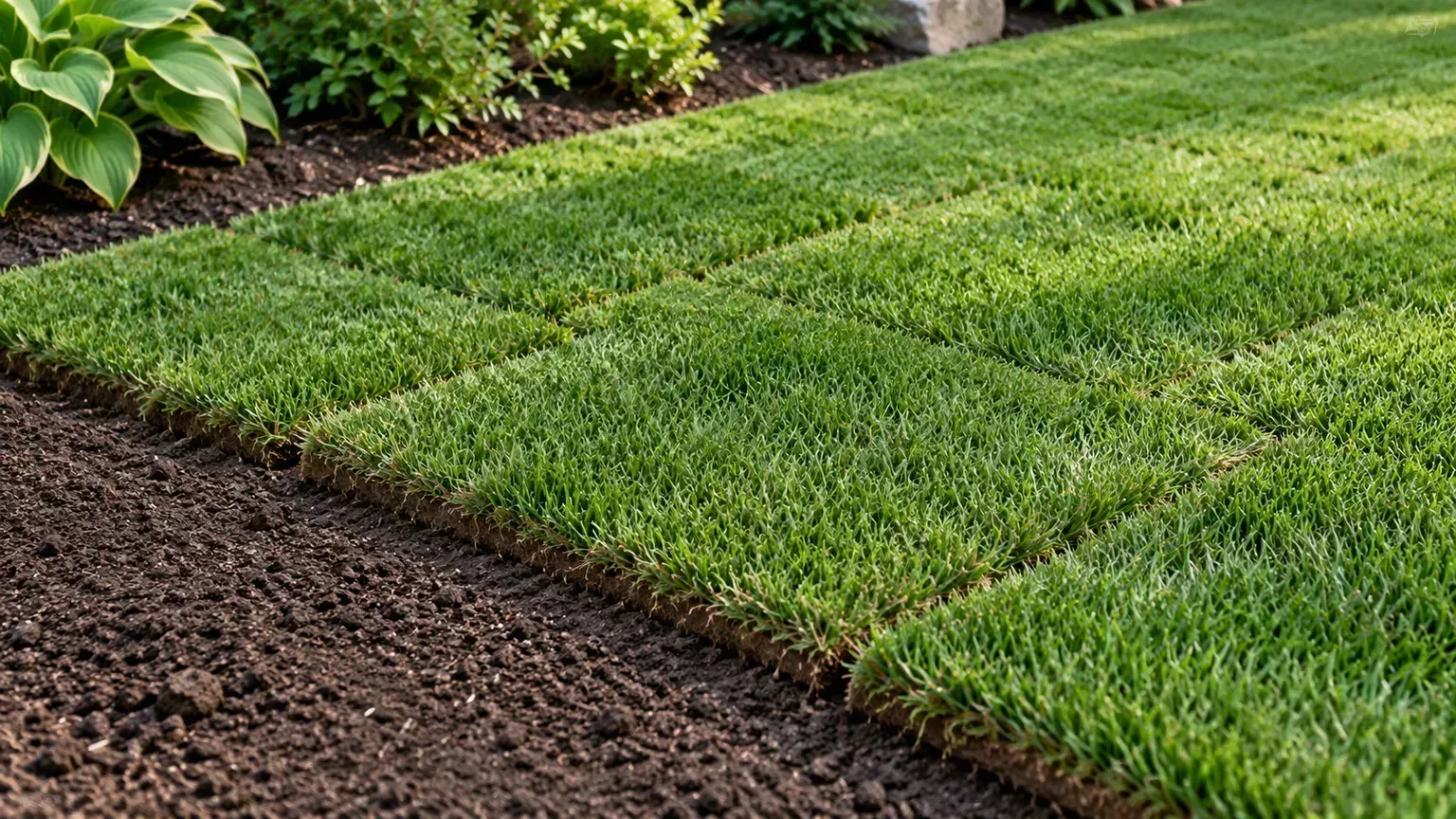
Lay strips tightly against one another in a staggered, bricklike pattern. Do not stretch them to bridge gaps; dry sod can shrink and leave joints open to weeds. Trim edges cleanly, fit the pieces to the grade, and avoid leaving air pockets beneath them. On a slope, secure pieces if necessary and direct water so it does not run beneath and lift them.
Water immediately after installation so moisture reaches through the sod and into the soil below. During the early rooting stage, check the underside and the soil at the seams rather than assuming that a green surface means the root zone is wet. K-State advises selecting fresh sod, planting promptly, and making close contact with the site soil; it notes that sod may begin rooting within about two weeks under good conditions, but weather and grass type change that timing.
Wait for evidence of rooting before treating the lawn like established turf. A gentle tug on a corner should meet resistance rather than lifting the strip freely. Once the sod is holding, reduce watering frequency gradually and avoid repeated foot traffic while the roots continue to knit into the ground.
First-year care: water, traffic, and mowing

The establishment schedule is different for seed and sod, but both are vulnerable to drying and compaction. Newly sown seed needs frequent light moisture at the surface until it germinates; newly laid sod needs enough water to keep both its thin root layer and the soil below from drying. After roots develop, shift toward deeper, less frequent watering appropriate to local rainfall and the grass species.
New seed is especially easy to damage when the ground is wet and soft. Keep people, pets, mowers, and sports off the area while seedlings are small; wait until the lawn has been mowed several times before allowing regular use. Newly laid sod can tolerate light access sooner only after it resists a gentle lift and the ground is firm enough to avoid footprints or shifting seams. “Green” is not the same as “rooted.” New Mexico State University Extension likewise advises keeping the seed zone moist without creating puddles, then reducing irrigation frequency as seedlings develop and shifting to deeper watering after several mowings. Its schedule is written for New Mexico conditions, so use it as a grow-in principle and follow your local extension recommendations for frequency and depth. NMSU Extension’s turfgrass establishment guide explains that transition.
For the first cut, use a sharp mower and wait until the grass is dry enough that equipment will not rut the soil or pull seedlings. Follow the recommended height for the grass type, and avoid removing more than one-third of the leaf blade in a single mowing. Gardeners’ World recommends waiting until the new grass reaches its first-cut height and avoiding heavy wear during the first season; the local extension schedule should take priority where climates differ.
Fertilizer timing also depends on grass type, soil test, and the product label. Do not add a heavy dose because the lawn looks pale; excess fertilizer can burn young turf, push weak top growth, or increase runoff. If you need to control weeds, check the exact herbicide label for new-seeding or new-sod restrictions. Products that prevent weed seeds from germinating can also block the grass seed you are trying to grow.
Compare the full project cost, not the material price
A fair sod-versus-seed budget separates materials from the work needed to make them succeed. Seed has the lower purchase price, but grading, soil testing, amendments, spreader rental, mulch, irrigation, erosion protection, and repair seed still belong in the estimate. Sod has a higher material and delivery cost, but it may save time or reduce the need for temporary cover in a problem area.
Create a simple estimate for the measured area:
| Cost item | Include it for seed | Include it for sod |
|---|---|---|
| Grass material | Seed quantity plus any reserve for patching | Sod area plus extra for cuts and edges |
| Site work | Removal, grading, soil test, amendments | The same site work |
| Installation | Spreader, labor, seed cover, erosion blanket if needed | Delivery, labor, tools, rolling, and fast installation |
| Water | Frequent germination irrigation, then transition care | Immediate soak and continued root-zone moisture |
| Risk allowance | Re-seeding areas where seed moved or failed | Replacing pieces that dry out or fail to root |
| Time | Several visits to water, inspect, and mow | A concentrated installation day plus watering checks |
Ask for two local estimates that use the same site-preparation scope. A sod quote that excludes removal or grading is not comparable to a seed quote that includes those tasks. For a small yard, your own labor may make seed’s savings obvious; for a slope that would need separate erosion-control work, sod’s added cost may buy valuable protection and time.
Avoid applying an old national price per square foot to your property. Prices change by region, grass type, season, delivery distance, and labor availability. Bob Vila’s sod-versus-seed overview is a useful homeowner comparison, but the number that matters is your current local quote for the full prepared-and-installed job.
Avoid the failures that erase the savings
The most expensive mistake is choosing a method before checking whether the site can support grass. Deep shade, compacted soil, poor drainage, a steep eroding bank, or no reliable establishment water can defeat both seed and sod. Fix the site constraint first, choose a grass suited to the conditions, or reduce the area that needs to be lawn.
Seed most often fails when the surface dries, heavy rain moves it, seed is buried too deeply, or weeds outcompete the young grass. Sod commonly struggles when it is installed late or allowed to dry, placed over uneven or compacted soil, stretched across gaps, or left without water before roots knit. The remedy is not to keep buying more product; identify whether the problem is the species, the soil, the timing, or the establishment routine.
A slope deserves special attention. Sod can provide immediate cover, but it must be secured and watered without letting runoff travel underneath it. Seed can work on a gentle slope if it is applied at the right time and protected against washout; for steeper grades or active drainage channels, ask a local turf or erosion-control professional whether turf is the right solution at all.
A seed-and-sod mix works for repairs, not as a shortcut
You can use sod for an exposed, high-risk strip and seed for a larger, level section where you have time to wait. You can also repair a small bare spot in an established lawn with matching seed rather than removing healthy turf to fit a sod patch. In either case, match the grass species and cultivar as closely as practical so the repaired area does not grow, color, or go dormant very differently from the rest of the yard.
Do not scatter seed over a newly laid sod surface and expect it to fill seams or rescue sod that is not rooting. Seed needs contact with exposed soil and light; a sod mat can block it from reaching the ground. If the sod has failed, lift the failed pieces, correct the moisture or soil-contact problem, and then decide whether to replace the sod or seed the repaired bare area at a suitable time.
Conclusion
Grass seed is often the better way to build a lawn when you can wait, want control over grass type, and can keep the seedbed moist through establishment. It starts the turf in the soil where it must live and usually costs less for the material, making it a strong choice for larger, reasonably stable areas.
Sod is worth considering when immediate cover matters, a slope is losing soil, or the schedule cannot accommodate a slow grow-in. The premium only pays off if the grass suits the yard, the site is prepared, and water is available until the roots connect with the ground.
Choose the method after you identify the grass type, soil condition, planting window, water plan, and deadline. If those pieces are right, seed can give you a better-matched lawn for less; if immediate cover is the priority, quality sod can be the more dependable tool.