Should You Leave Christmas Tree Lights on All Night?
Energy experts and NFPA data say turn Christmas tree lights off at night—or use a timer. See fire risk, LED vs incandescent costs, and a pre-bed checklist.
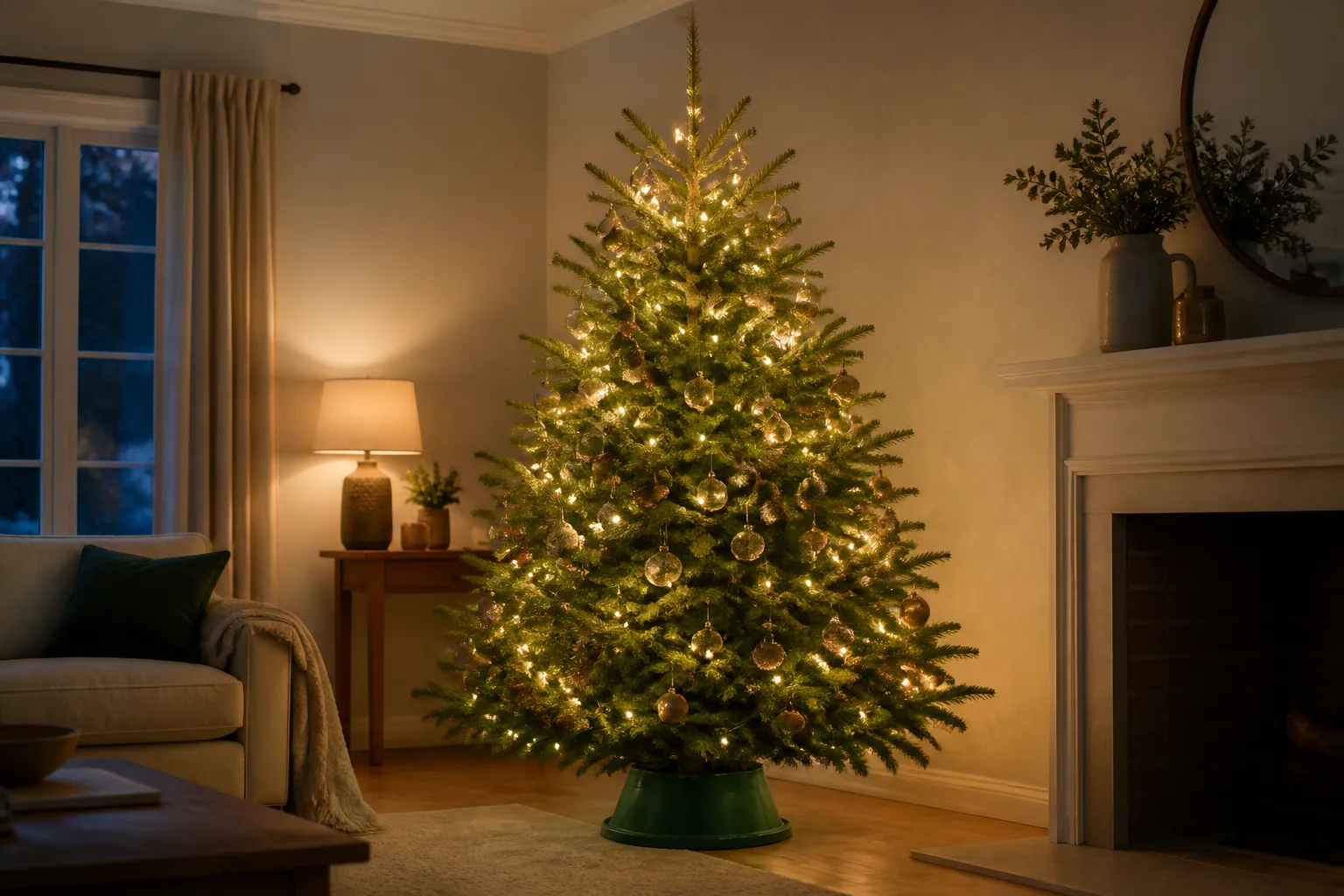
The glow from a decorated tree is one of the best parts of December—and once the switch flips on, nobody wants to walk back in and kill the mood. Leaving Christmas tree lights on all night is common. Energy and fire-safety experts still recommend you turn them off before sleep or automate a shutoff so lights do not run unattended for hours while the house is dark and you cannot react to a problem.
That is not holiday Grinch behavior. It is the practical stack of fire risk, electrical wear, tree dryness, and wasted power that builds when strings stay energized overnight every night for weeks. Modern LED sets shrink both heat and electric bills compared with vintage incandescent strings, but neither technology removes the need for a shutoff plan when you are not watching the tree.
The Short Answer: Turn Them Off (or Automate a Shutoff)
Turn Christmas tree lights off at night—or set a timer or smart plug to do it for you. The NFPA treats decorative lighting as a real holiday fire contributor: electrical distribution or lighting equipment is involved in two in five (40%) home decoration fires, and nearly one in four (24%) Christmas tree fires start with lamps or bulbs. Running lights while you sleep adds unattended heat and current next to branches that may be drying out indoors.
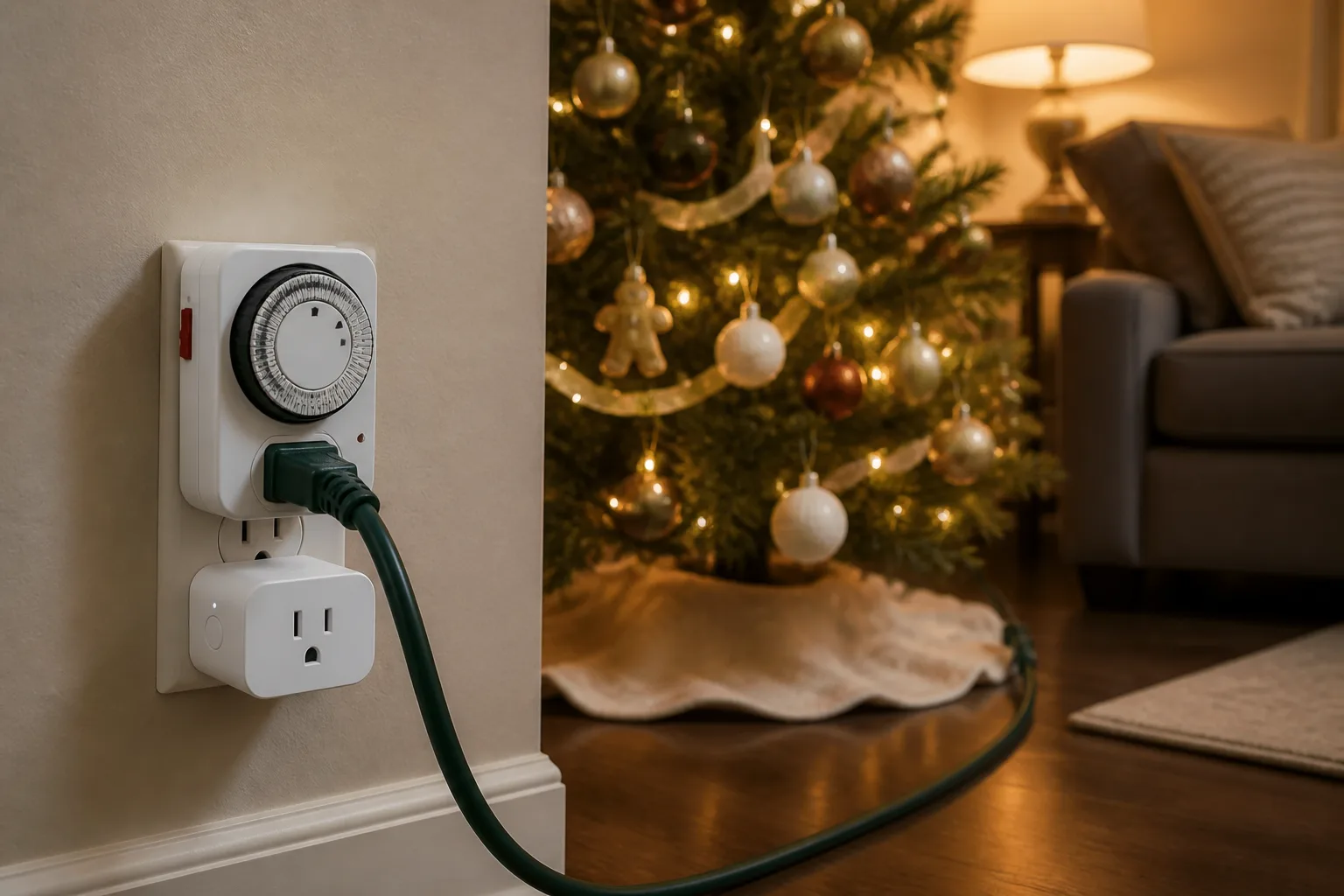
On the money side, overnight shutoff saves more with old incandescent strings than with efficient LEDs—but even a few dollars per season is electricity nobody is enjoying at 3 a.m. The habit that wins: lights on when people are in the room, off (or timed off) when the house goes quiet.
Can You Leave Christmas Tree Lights On Overnight?
Technically, yes—many people do. Plenty of households leave tree lights on until morning, especially during the first week when the tree still feels magical. Safety experts do not treat that as a best practice. The question is less “will the breaker trip?” and more “what happens if a cord fails, a bulb socket cracks, or needles dry out while nobody is awake to notice?”
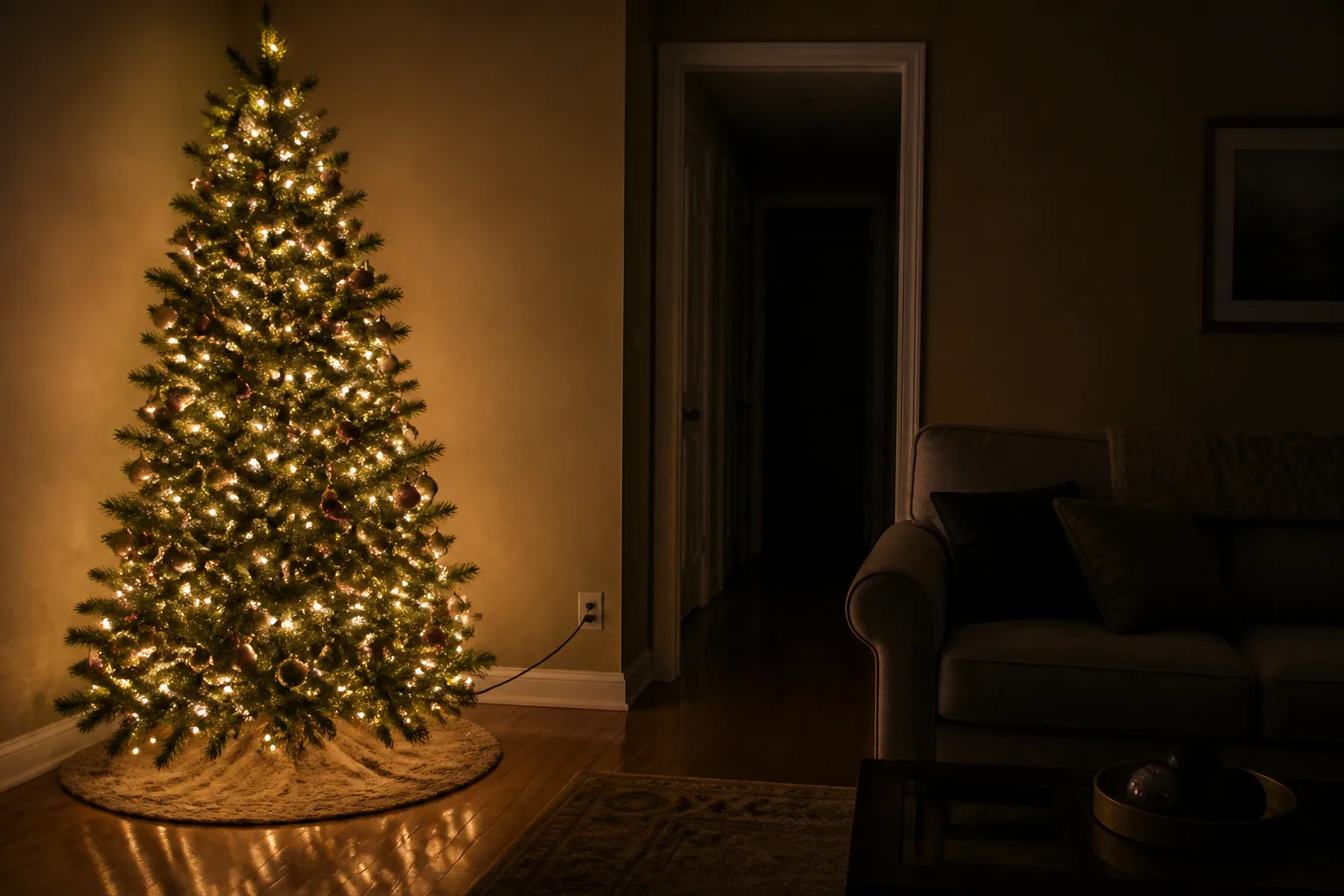
Fire officials frame it as risk management, not prohibition. A well-maintained UL- or ETL-listed LED string on a hydrated real tree, plugged directly into a GFCI-protected outlet without daisy-chained extension cords, is dramatically safer than a 2010 incandescent set buried under tinsel on a thirsty fir. None of those upgrades make 24/7 unattended operation the default recommendation.
What Actually Happens While You Sleep
When lights stay on overnight, three processes keep running without supervision. Heat continues at every bulb, plug junction, and inline transformer—even LEDs warm connection points. Electrical stress accumulates on insulation that has been bent around branches for weeks. On a real tree, needle moisture drops overnight as HVAC cycles and stand water slowly evaporates; a tree that looked fine at bedtime is drier by morning.
Martha Stewart’s electrical experts note that even modern LEDs can fail or develop faults if left unattended, especially when wrapped around dry branches or buried under garland where heat cannot dissipate. The overnight window also overlaps with when many households are deep asleep—the exact scenario where a smoke alarm, not a homeowner, is the first responder.
Fire Risk: What NFPA Data Shows
Christmas tree fires are uncommon but severe. Between 2020 and 2024, U.S. fire departments responded to an estimated 143 home structure fires per year that began with Christmas trees—causing an average of 7 civilian deaths, 13 injuries, and $15 million in direct property damage annually, according to NFPA research. Those numbers are small compared with cooking fires, but NFPA stresses that when tree fires occur, they grow fast.
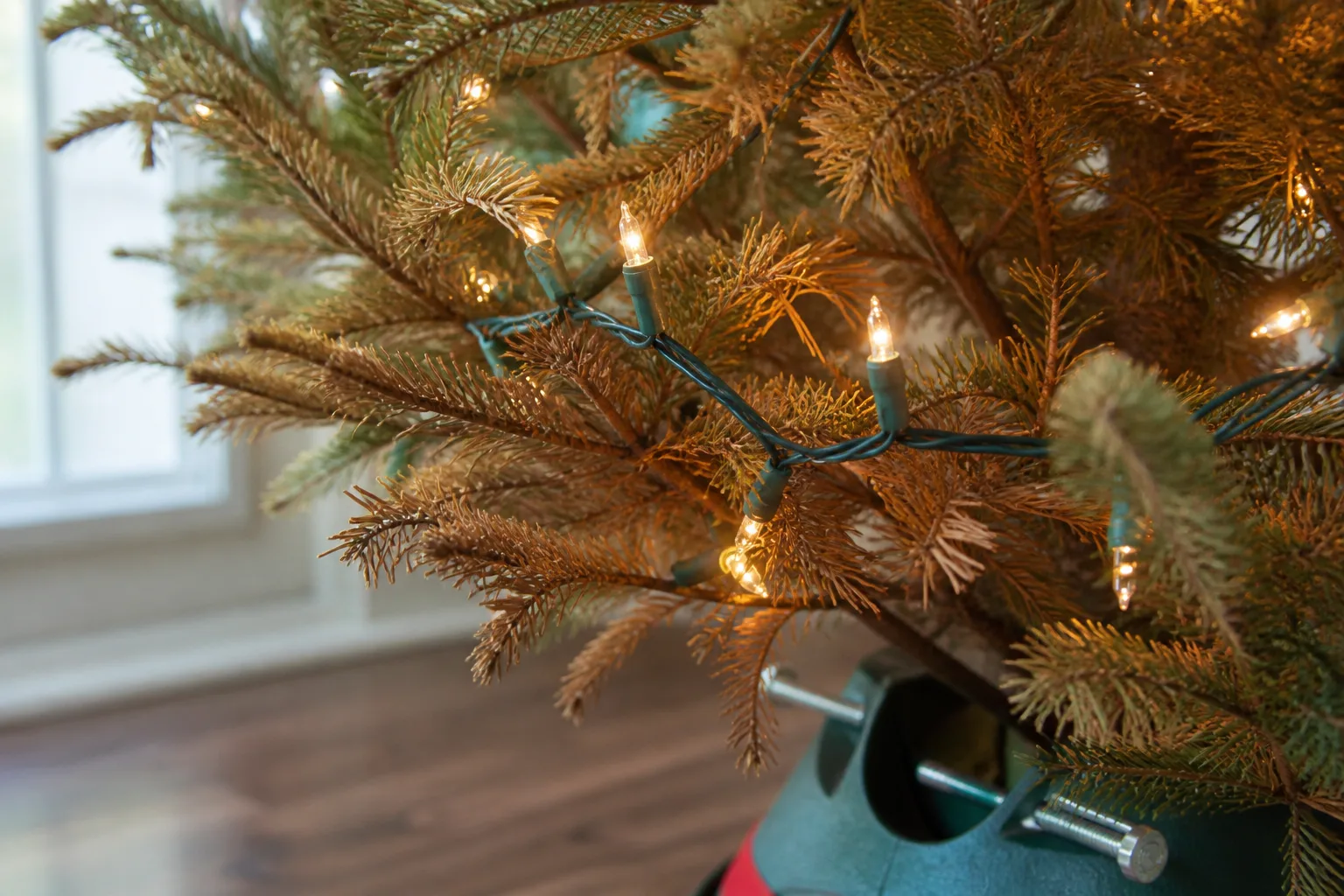
The NFPA also reports that 35% of Christmas tree home fires happen in January—often on trees that kept glowing through late December while drying out. Lights left on overnight every night accelerate that timeline by heating needles and speeding evaporation from the stand.
Dry Trees, Heat, and Unattended Wiring
NFPA’s side-by-side burn demonstrations show a well-watered tree resisting flame far longer than a dried-out tree, which can reach flashover in under a minute. Cut trees lose moisture indoors even with daily watering; Penn State Extension recommends keeping the stand filled so the trunk never sits above the water line. A dry tree plus sustained bulb heat is the combination fire marshals worry about—not a single ornament spark.
Heat sources too close to the tree cause nearly one in four Christmas tree fires, per NFPA. That includes space heaters and candles, but it also includes light strings in contact with brittle needles and overloaded cords wedged behind furniture where airflow is poor.
Electrical Problems Drive Nearly Half of Tree Fires
Nearly half of home Christmas tree fires are tied to electrical problems, NFPA reports. Decorative lighting failures—cracked cords, damaged plugs, counterfeit listing marks, too many strings on one outlet—sit in the same risk bucket as old incandescent bulbs. The NFPA holiday lighting guidance urges visual inspection of sockets, motors, and extension cords before each season: broken housings and cracked cord jackets expose conductors to physical damage.
Leaving lights on overnight every night turns a small wiring defect into a sustained load. Martha Stewart’s consulted electricians warn that adapter stacks and extension cords warming up on an overloaded socket can ignite surrounding materials—not because Christmas lights are uniquely dangerous, but because holiday setups often push convenience past code-intended limits.
LED vs Incandescent: Safety and Heat
Not all tree lights behave the same when left energized for 13 hours. The shift from incandescent mini bulbs to LED mini lights changed both wattage and surface temperature—but certification and cord condition still matter more than the label on the box.
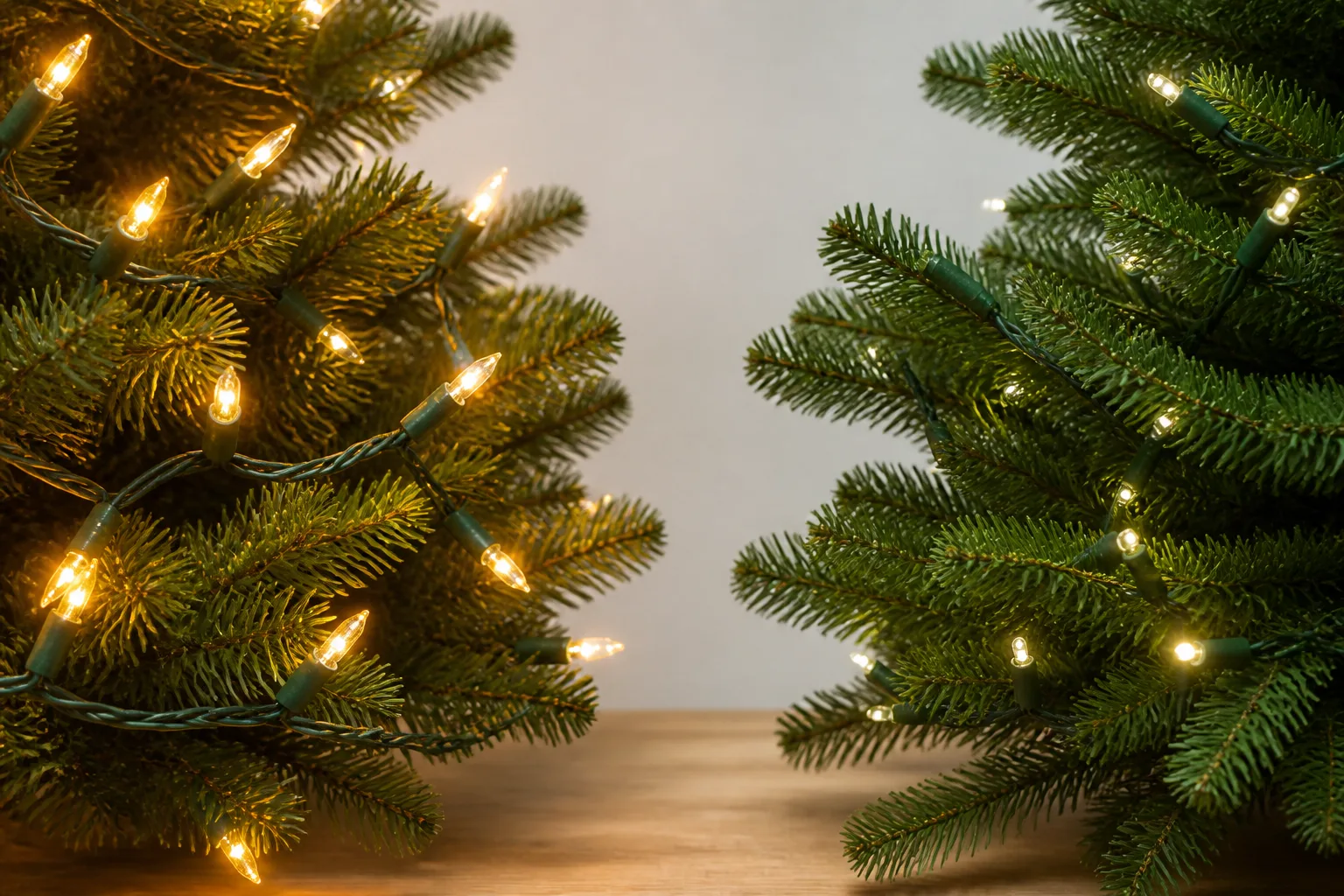
| Factor | Incandescent mini lights (typical) | UL-listed LED mini lights (typical) |
|---|---|---|
| Watts per 100 bulbs | ~40–60 W | ~4–7 W |
| Heat output | High; most energy becomes heat | Low; far less branch heating |
| Overnight fire risk on dry tree | Higher | Lower, not zero |
| Seasonal energy (700 bulbs, 13 hrs/night, 60 nights) | ~220–240 kWh | ~35–45 kWh |
| Typical cord stress | Insulation aging from heat cycles | Transformer/driver failures on cheap sets |
| Expert recommendation for overnight unattended use | Avoid | Avoid without timer; inspect annually |
Why Old Incandescent Strings Carry the Highest Risk
Incandescent mini lights convert most incoming wattage into heat, not light. A 7-foot tree dressed with ~700 bulbs can pull 250–350 watts—comparable to leaving several old incandescent lamps running inside the branches. That thermal load dries needles near sockets and ages insulation on cords that have been folded and unfolded for years.
If your attic still has pre-LED strings, treat them as display-only for short evening windows—not for overnight service. Martha Stewart’s experts echo what fire educators say: cooler LEDs reduce risk but do not eliminate short circuits, arcing, or plug failures when cords are damaged or overloaded.
LEDs Run Cooler—But They Are Not Risk-Free
LED Christmas tree lights are the right upgrade for anyone still running incandescent sets. They draw a fraction of the power and run markedly cooler at the bulb. They still generate heat at plugs, inline fuses, and bundled sections where dozens of wires meet. NFPA’s Dean Austin notes that holiday lights should carry authentic UL or ETL listing marks—counterfeit labels appear on discount imports that fail under continuous duty.
Budget LED strings without verified listing can have undersized drivers that overheat when left on for days. “LED” on the packaging is not a safety certificate. Look for the mark molded into the plug, discard sets with warm cords or discolored sockets, and replace any string older than seven seasons even if bulbs still glow.
How Much Money Turning Off Lights Actually Saves
Energy savings from nightly shutoff are modest with LEDs and meaningful with incandescents. The bigger financial win from turning off lights is often longer string life—bulbs and transformers last longer when they cool down nightly instead of running 780+ hours across November and December.
Worked Example for a 7-Foot Tree
Assume a 7-foot tree with 700 mini lights, running 5 p.m. to 8 a.m. (13 hours) for 60 nights—roughly mid-November through New Year’s. Using typical wattages and a residential rate of $0.15 per kWh:
| Light type | Est. total watts | kWh over 60 nights | Est. cost |
|---|---|---|---|
| Incandescent minis | ~280 W | ~218 kWh | ~$33 |
| UL-listed LED minis | ~49 W | ~38 kWh | ~$6 |
Turning lights off during the 13-hour sleep window saves 100% of that overnight slice—about $33 vs $6 in this example. If lights stayed on 24/7 for 60 days, incandescent cost could approach $60+ for the tree alone, before exterior roofline strings.
Your bill scales with local rates, bulb count, and how many hours you actually run displays. The U.S. Energy Information Administration publishes regional average electricity prices; multiply your string wattage by hours, divide by 1,000 for kWh, then multiply by your rate.
When the Savings Matter Most
Incandescent-heavy households see the clearest dollar argument for nightly shutoff—especially with multiple interior trees or older “always on” habits. LED households may save only a few dollars per season on the tree itself, but nightly shutoff still cuts fire exposure and component wear.
Environmental impact follows the same curve: fewer overnight kilowours mean fewer emissions, but the personal finance story is rarely dramatic for a single LED tree. The stronger motivator for most readers is not paying to light an empty room while accepting avoidable electrical risk.
Extension Cords, Outlets, and Overload Hazards
Holiday trees often end up on extension cords and adapter stacks because the nearest outlet sits behind a sofa. That convenience creates the failure mode electricians see every December: warm plugs, tripped breakers, and melted cord jackets.
The CPSC Holiday Safety Center advises consumers to never string together more than three sets of incandescent lights and to avoid overloaded electrical outlets. LED sets often allow more end-to-end connections on the packaging—follow that manufacturer’s limit, not a rule from a different bulb type.
Plug tree lights directly into a wall outlet when possible, not a daisy chain of cheap power strips. NFPA recommends GFCI protection for outlets feeding outdoor displays; indoor tree outlets benefit from GFCI too in older homes without bedroom protection. Test GFCI devices monthly. Never run cords under rugs where heat builds, and never use damaged cords “just for one more season.”
Real vs Artificial Trees: Different Fuel, Same Shutoff Rule
Real Christmas trees combine combustible needles with progressive drying indoors. Even with daily watering per National Christmas Tree Association guidance, displayed trees lose moisture over weeks. Lights left on overnight heat branches and accelerate needle drop near sockets—see our guide on what to put in Christmas tree water for the plain-water routine that keeps uptake steady.
Artificial trees remove the drying-fuel problem but not the electrical problem. NFPA notes that pre-lit artificial trees still carry permanent wiring that can degrade over years. PVC and PE branches melt and off-gas when overheated. Our artificial vs real tree guide covers display trade-offs; on safety, both types still need unplug when unattended.
Artificial trees with built-in lights should follow the same shutoff rule: off at night or on a timer. Inspect embedded wiring when you unfold the tree each year—look for exposed conductors, cracked clips, or warm sections after a 15-minute test plug-in.
Timers, Smart Plugs, and Safer Overnight Options
If manual shutoff feels like a buzzkill, automation is the compromise experts prefer over leaving lights on indefinitely. A reliable shutoff beats trusting memory after eggnog.
Mechanical Timers vs Smart Plugs
Mechanical dial timers are cheap and simple: set “on” for evening hours and “off” by midnight. They fail silently when internal gears stick—worth testing weekly by listening for the click and confirming lights actually darken. Replace mechanical timers older than three seasons.
Smart plugs add phone control, scheduling, and sometimes energy monitoring. You can set an 11 p.m. off rule, override for a late movie, and verify status from bed. Choose indoor-rated plugs listed for the load you are switching; do not exceed amp limits when multiple strings share one plug.
Smart bulbs are rarely practical on a tree already wired with string lights. Timers at the outlet are the usual fix. For exterior roofline lights, use outdoor-rated timers in weatherproof enclosures—not indoor kitchen timers dangling from a wet porch outlet.
Whichever device you use, the goal is identical: no unattended energized strings after the house goes to sleep.
Pre-Bed Checklist Before Lights Stay On Late
Run this 90-second check on nights you want the tree glowing later than usual—family still in the living room, movie night, overnight guests admiring ornaments:
- Stand water full — trunk submerged; see Christmas tree stand sizing if refills are constant.
- Cord visual scan — no cracks, fraying, tape repairs, or warm sections from a prior test.
- Plug condition — prongs straight; no melting, discoloration, or loose sockets.
- Clearance — lights and cords 3 feet from curtains, drapes, and furniture per NFPA holiday guidance.
- Load check — no more than three incandescent sets chained; respect LED manufacturer limits on the box.
- Timer verified — off time set for within an hour of bedtime, not “sometime overnight.”
- GFCI test — if your outlet has TEST/RESET, press TEST monthly.
- Decor audit — skip flammable outdated trimmings like shedding tinsel wrapped around hot bulbs; keep cats and climbing pets from cord-chewing zones.
If any step fails, turn lights off manually and fix the issue tomorrow—not after everyone leaves the room.
When Leaving Lights On Late Is More Acceptable
Absolute rules are rare. More acceptable overnight scenarios share traits: LED UL-listed strings, hydrated or artificial tree, people still awake nearby, timer set to shut off within hours, and no cord gymnastics.
A late December party with adults in the living room until 11 p.m. is different from lights blazing empty from 6 p.m. to 7 a.m. every night for six weeks. If children sleep in a room that shares a wall with the tree, bias earlier shutoff.
Battery-operated micro-LEDs on a small tabletop tree reduce cord risk but introduce battery leakage and overheating if cheap cells sit in warm rooms for weeks—swap batteries on schedule and do not mix brands. They are a poor substitute for a full-size plug-in tree’s electrical load, but fine for accent decor with an off switch.
When you travel, unplug the tree entirely—timers can stick on, and you will not smell a warm cord from another state. Before decorating, clear clutter from the tree zone per our pre-tree declutter checklist so cords are not pinched behind storage bins.
Conclusion
You should not leave Christmas tree lights on all night as a default habit. NFPA data ties decorative lighting to a large share of holiday fires, and nearly half of Christmas tree fires involve electrical problems—risks that do not disappear because bulbs switched from incandescent to LED. Nightly shutoff—or a verified timer shutoff—cuts unattended heat, slows cord aging, trims electric spend (especially on old strings), and aligns with what energy and fire educators recommend.
Upgrade to listed LED strings, keep real trees watered with plain stand water, plug into protected outlets without overload, and inspect cords every season. Enjoy the glow during the hours people are actually there to enjoy it. Flip the switch, tap the app, or let the timer do the work before the house goes quiet—that is how you keep the tradition without betting on an empty room at 2 a.m.