How to Grow a Coral Bark Maple: Sango Kaku Care Guide
Learn how to grow a coral bark maple: choose light and soil, plant at the right depth, water through establishment, and prune lightly for vivid winter color.
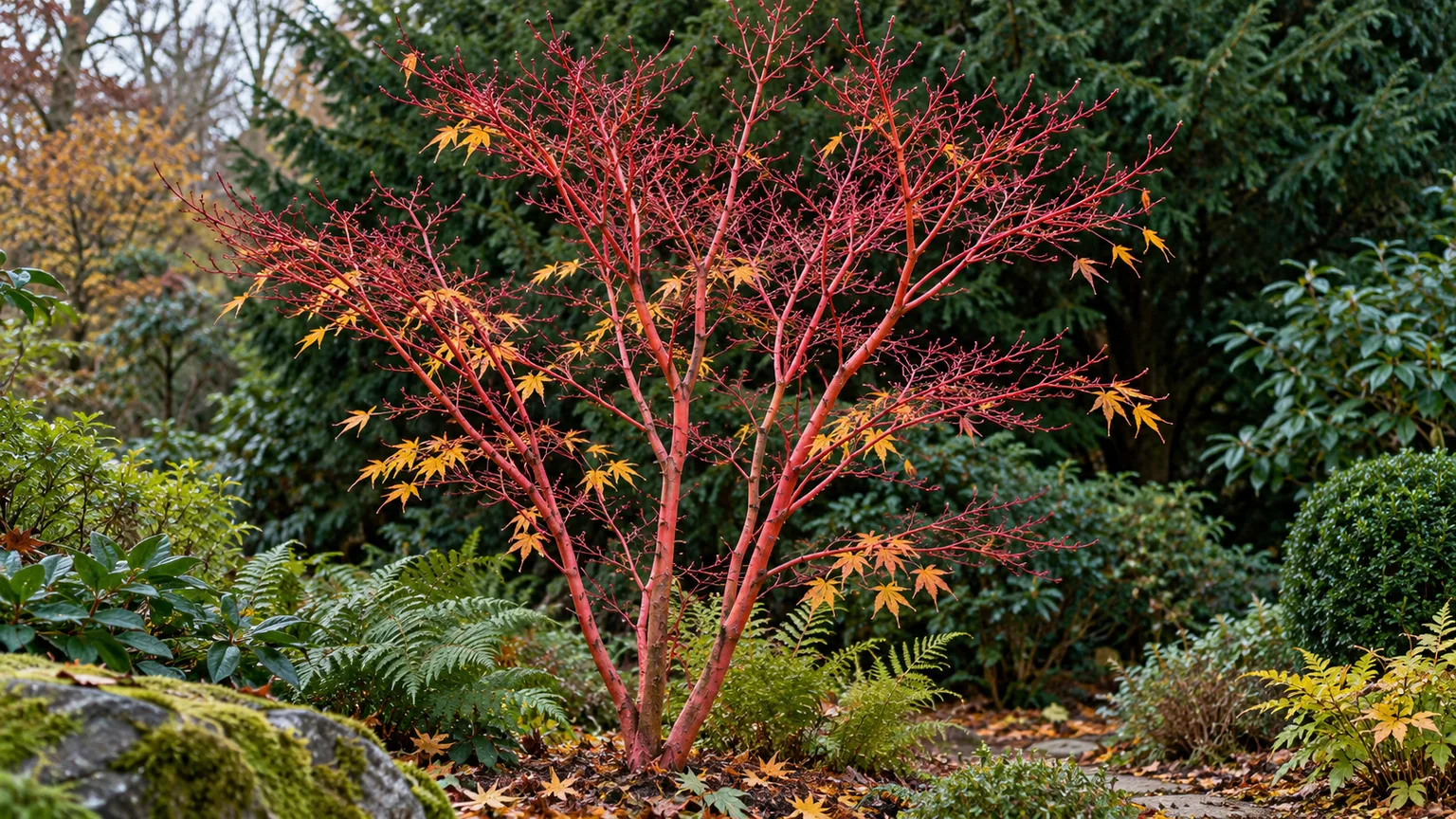
A coral bark maple is easy to recognize in winter, when its leafless twigs turn the garden into a display of salmon, coral, and reddish orange. The cultivar usually sold as ‘Sango Kaku’ is a Japanese maple, Acer palmatum, whose foliage also changes through the year: fresh spring leaves emerge light green, summer leaves mature to a deeper green, and autumn can bring clear yellow. Its small, layered canopy and colorful stems make it a strong specimen tree, but the best display comes from a tree that is healthy and correctly placed—not one pushed into full sun, overfed, or repeatedly cut back.
The botanical name is written as Acer palmatum ‘Sango-kaku’; you may also see ‘Sangokaku’ on nursery labels, and ‘Senkaki’ is an older synonym. NC State Extension’s cultivar profile lists the cultivar at about 20 to 25 feet tall and 15 to 20 feet wide, while other references give somewhat different ranges. Plan for a small tree rather than a dwarf shrub, and leave room for a naturally spreading crown. The core care decision is balancing enough light for good bark color with protection from the heat, wind, and root stress that can scorch Japanese maple leaves.
Understand what makes Sango Kaku distinctive
The name “coral bark” points to the young stems, which are often most vivid in the colder months. Color varies with age, weather, cultivar identity, and growing conditions; it may look coral, pink-red, salmon, or orange rather than the same bright red every winter. NC State Extension notes that the bark color intensifies in cold and is especially showy after the leaves drop. That timing matters when choosing a site: the tree is not only a summer foliage accent but also a winter structure plant.
This is a deciduous tree. It does not keep its leaves through winter, and it does not produce its strongest bark effect on every part of every branch equally. The newest growth tends to carry the clearest color, while older stems can become less vivid. A healthy, well-branched canopy gives you more young twig tips to enjoy, which is one reason light structural pruning is preferable to shearing or topping. The changing foliage adds a second season of interest, but the tree’s chief ornamental value is its colored bark.
NC State’s profile describes the cultivar as slow to moderately growing and gives a mature range of about 20 to 25 feet high by 15 to 20 feet wide. The Royal Horticultural Society’s cultivar profile lists a different height and spread range for UK conditions. That variation is normal: climate, soil, rootstock, exposure, and how long a plant has been in place all affect its final dimensions. Use the larger plausible size when deciding whether it fits near a house, path, overhead utility line, or neighboring tree. Do not buy it expecting routine pruning to hold it at a fraction of its natural size.
Its hardiness also needs a local check. NC State’s exact cultivar profile lists USDA zones 6a through 8b; a hardiness zone describes average winter minimums, not summer heat, wind exposure, spring frost timing, or drainage. A sheltered garden in the same zone can be gentler than an exposed site. If your property is colder or hotter than that range, ask a local extension service or experienced nursery whether the cultivar succeeds in your microclimate before investing in a specimen.
Choose a site that balances light, shelter, and space
Aim for a sheltered position with morning sun or bright partial shade, especially while the tree is young. Some direct light can deepen the contrast of the leaves and support good stem color, but hot afternoon sun can damage tender foliage when it combines with dry soil or wind. A useful placement question is not simply “sun or shade?” but “How hot is the direct sun at the time it reaches the tree, and can its roots stay evenly moist without remaining wet?”
In cooler summers, a site with more sun may be suitable if the soil drains well and the tree is not exposed to drying wind. In a hot-summer region, or beside a south- or west-facing wall, a position with afternoon shade is usually the safer starting point. A newly planted tree has not yet developed the root system of an established specimen, and a recently leafed-out canopy is vulnerable to sudden heat. If a very young tree is in a site that gets harsh early-season sun, temporary shade cloth can reduce exposure while it settles in; install it so air still circulates, secure it against wind, and remove it once the stressful period passes rather than treating permanent shade as a substitute for good siting.
Give young foliage protection from intense sun
Japanese maple leaves can scorch at their edges or between the veins when heat, wind, dry roots, or reflected light overwhelms the plant’s water supply. Sun exposure is a contributor, not the only possible cause. A tree can scorch in partial shade if a root ball dries out, and a tree in more sun may remain healthy in a cool, moist, sheltered garden. A University of Maine Cooperative Extension guide similarly emphasizes the sensitivity of Japanese maple roots and stems to environmental stress and describes sun and drought among the factors behind leaf damage.
Avoid placing the tree where heat bounces off paving, a light-colored wall, a driveway, or a large window. Leave enough space for its mature canopy so nearby plants do not force you to prune it into an unnatural shape. The winter coral stems show best against a dark evergreen backdrop, but keep enough distance that the maple receives air movement and isn’t crowded by roots or branches. A lawn can look like a convenient planting bed, yet turf competes for water; a mulched bed with a clear trunk zone makes establishment easier to manage.
Prioritize drainage and a lightly acidic to neutral soil
Sango Kaku prefers soil that holds moisture but drains freely. NC State reports tolerance for several soil textures, including sand and heavier clay, but tolerance does not mean a tree will thrive in a compacted basin that stays saturated. Japanese maple roots need oxygen as well as water. If water stands after ordinary rain, improve the broader site’s drainage or choose another location; adding a layer of gravel at the bottom of a planting hole will not correct a poorly draining landscape.
The RHS cultivar profile lists moist, well-drained soil with acid or neutral pH. Do not try to alter pH automatically. If the tree has a persistent growth problem and the surrounding soil is unusually alkaline or otherwise suspect, a soil test can establish whether pH or a nutrient issue is involved. Broad soil improvement across a planting bed is more useful than filling a deep hole with rich compost, which can settle and leave the root ball too low. Preserve the original soil structure as much as you can.
Plant it at the correct depth
Planting depth is one of the most preventable causes of trouble. Choose a cool period when the ground is workable and not waterlogged or frozen; in many climates, fall or early spring gives roots time to establish before intense summer heat. A container-grown tree can be planted at other times if you can reliably manage water, but summer planting raises the stakes because a new root ball dries quickly. Water the plant in its pot before removing it, and handle the root ball rather than pulling on the trunk.
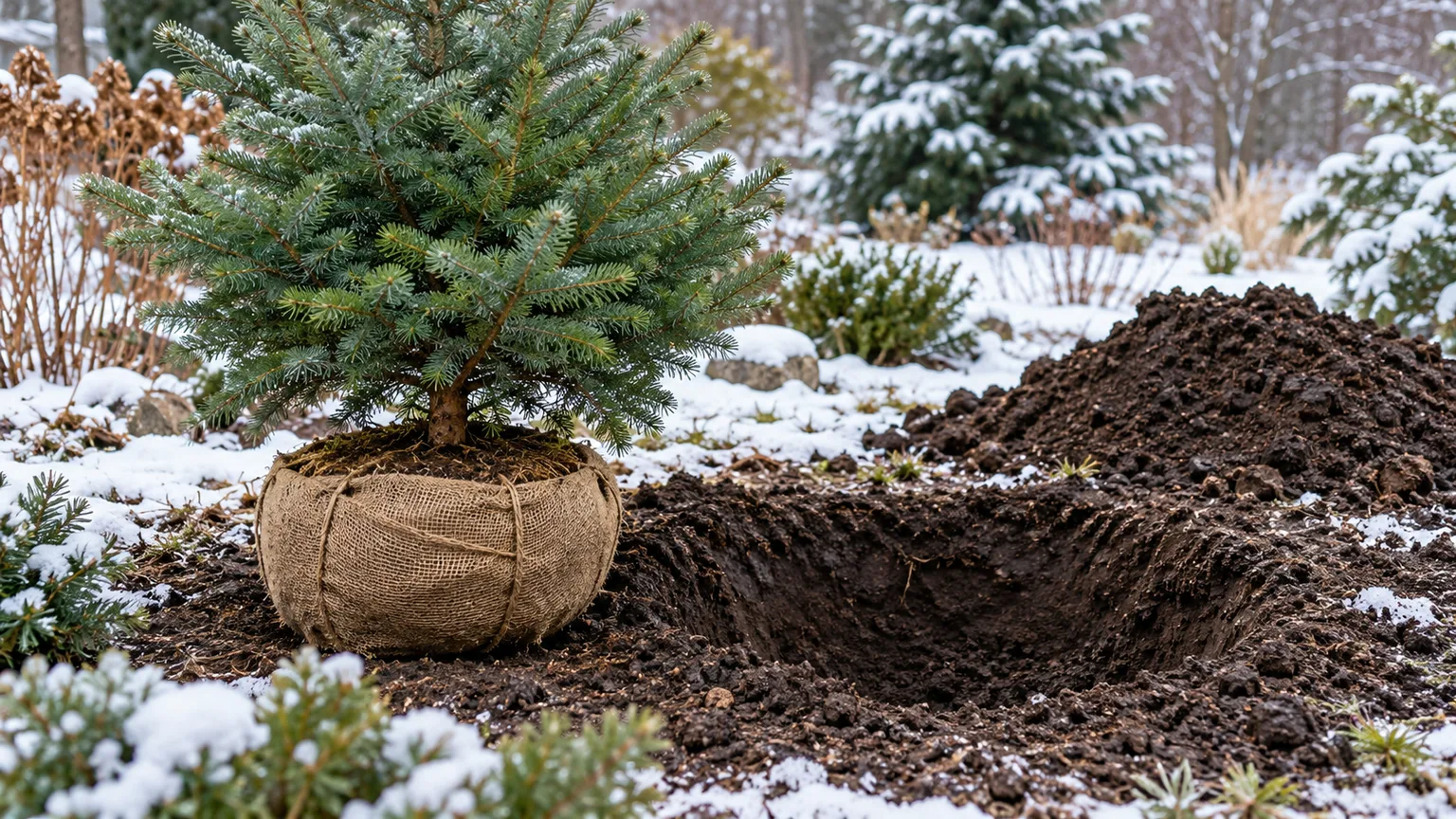
Dig a broad hole no deeper than the root system and loosen compacted soil across the surrounding area. The RHS tree-planting guide recommends a hole at least three times the root system’s diameter where space allows, along with a planting depth no greater than the roots. For an established nursery root ball, this means wider rather than deeper: a broad area of loosened soil helps roots move outward without creating a pocket of amended soil that behaves differently from the garden around it. If the site is waterlogged, stop and solve the drainage question before planting.
Find the root flare before backfilling
The root flare is the point where the trunk widens into the first main roots. It should finish at or just above the surrounding grade, not hidden several inches beneath soil or nursery potting mix. Gently remove loose potting mix from the top of the root ball until you can identify the first substantial roots; nursery containers sometimes bury the flare before the tree reaches the garden center. If the root ball is wrapped, remove packaging as appropriate and follow any grower-specific instructions before planting.
Set the tree upright, backfill with the excavated soil, and firm it gently so the plant is stable without tamping the ground into a hard mass. Water slowly to settle soil around the roots and fill large air gaps. A small tree may not need staking; if the root ball moves in wind, stake it temporarily and check ties so they do not constrict the trunk. Keep a wide planting area free from turf and weeds while roots establish. The exact-root-flare placement matters more than a thick dose of fertilizer or compost at planting.
Water for establishment, not by a fixed calendar
Water deeply enough to moisten the nursery root ball and nearby soil, then check before watering again. A calendar can remind you to inspect, but it cannot account for a week of rain, heavy clay, a sandy slope, wind, or a heat wave. Use a trowel to feel the soil a few inches down near the edge of the root ball: if it is still damp, wait; if it is beginning to dry, water slowly. The aim is even moisture, not a permanently saturated root zone.
During the first growing season, inspect the soil regularly and water when the root ball begins to dry. Continue to check through the next season or longer if the tree is growing in a hot, windy, or dry site. Newly planted trees are especially vulnerable because their roots occupy a small volume of soil; rain that wets the surrounding bed may not soak the potting mix in the root ball. A slow soak helps water reach the roots rather than running off the surface. Adjust the volume to the soil and tree size, and stop if water pools or drains very slowly.
Once established, the tree can tolerate brief dry spells better than a newly planted one, but “drought tolerant” does not mean “never water.” During extended heat or drought, check the root zone and give a deep soak if it is drying. Frequent shallow sprinkling encourages roots to remain near the surface, while repeated saturation can suffocate roots and mimic drought symptoms. If leaves wilt in the afternoon but recover overnight, check soil moisture before reacting; if the ground is wet, adding more water is the wrong fix. When conditions stay wet, improve drainage and reduce irrigation.
Mulch without burying the trunk
A two- to three-inch layer of organic mulch helps moderate soil temperature, slow evaporation, and suppress grass and weeds around the shallow-rooted tree. Spread it in a broad ring over the root area, expanding the ring as the canopy grows. Keep mulch several inches away from the trunk so the bark and root flare stay exposed to air. A mound piled against the trunk can retain moisture against the bark and conceal rodents or other damage.
Do not cultivate deeply around a Japanese maple to remove weeds. Its roots can run close to the surface, so shallow hand-weeding or replenishing mulch is safer than digging or hoeing aggressively beneath the canopy. Keep lawn fertilizer and herbicide applications away from the root zone when practical, and avoid compacting soil with foot traffic or vehicles. These small choices protect the roots that support both summer leaves and the next season’s colorful twig growth.
Skip routine fertilizer unless a real need is found
An in-ground Sango Kaku generally does not need an annual fertilizer dose simply because it is an ornamental tree. The RHS growing guide says ground-planted Japanese maples do not need feeding, and its general planting guidance advises against fertilizer at planting. If the tree is growing in decent soil and produces normal leaf and twig growth, feeding adds cost without solving a problem. Excess nitrogen can drive soft, vigorous shoots that are more prone to damage and may create a tree that needs more corrective pruning; it does not make the bark reliably brighter.
If growth is weak, first check planting depth, root-ball moisture, drainage, competition from grass, reflected heat, and recent construction or compaction. Those are more common explanations than a simple lack of fertilizer. A soil test is the sensible next step when the tree is persistently underperforming or the site’s nutrient history is unknown. Only correct a documented deficiency, following the test’s recommendation and the product label. Container plants are different: nutrients wash out of potting mix faster, so a modest, labeled feed in spring can be considered after the plant has been established for a year, provided the tree is actively growing and not stressed.
Prune lightly to keep the natural layered shape
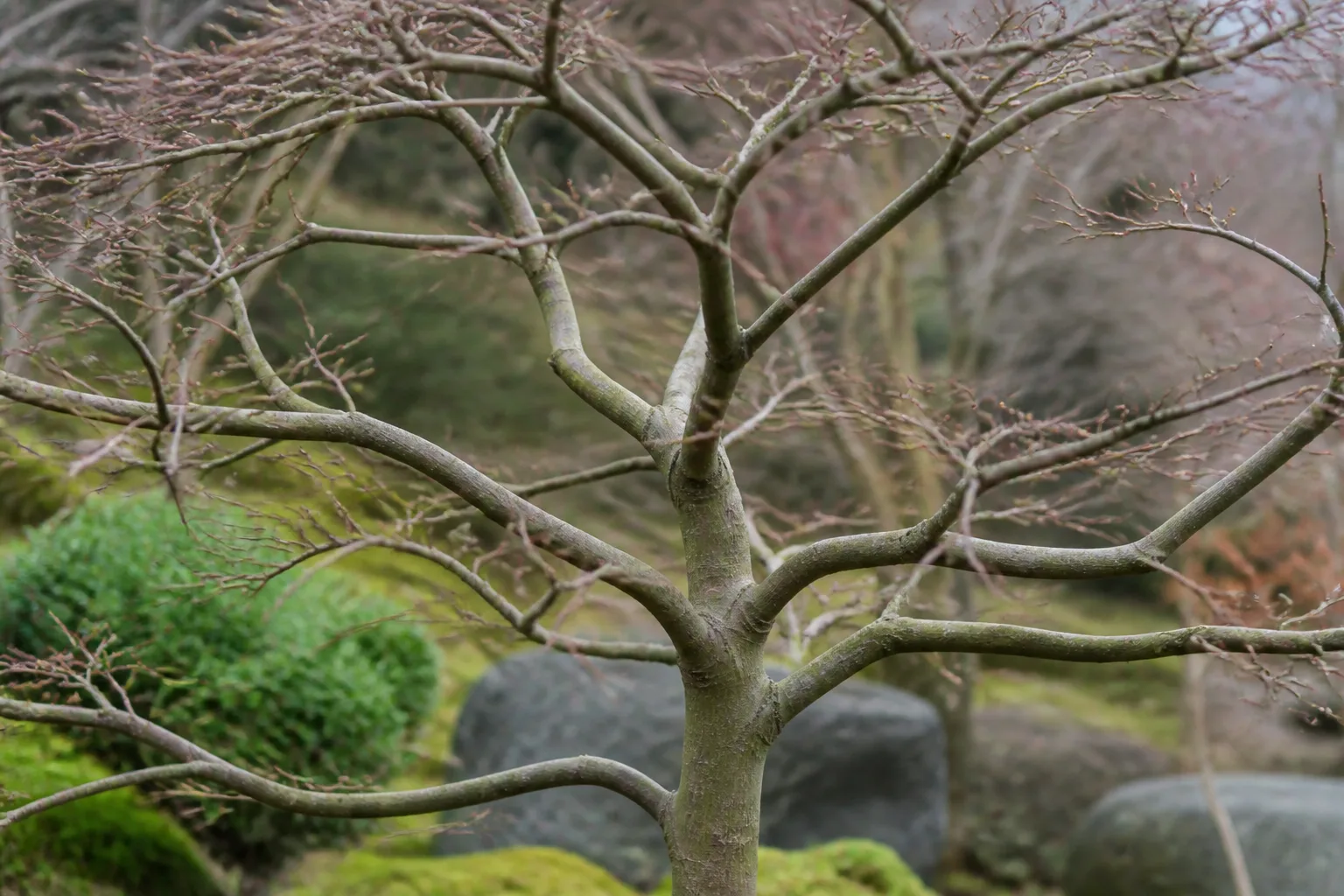
A Japanese maple’s branching structure is part of its character. Sango Kaku often develops a rounded, spreading canopy with visible layers, so the goal is to reveal its structure rather than force it into a tight ball or formal hedge. Remove dead, broken, diseased, crossing, or strongly inward-growing branches, and thin congested spots selectively so light and air can move through the canopy. Start by stepping back and identifying what actually needs to change; random tip-cutting produces many visible stubs without solving the underlying problem.
Use sharp, clean bypass pruners for small branches, loppers for branches within their rated capacity, and a pruning saw for larger limbs. Make a proper cut just outside the branch collar, the slight swelling where a branch joins the trunk or a larger limb. Do not cut flush against the trunk, leave a long stub, or seal the wound with paint. If two branches rub, remove the weaker or less well-placed one at its point of origin rather than shortening both at random. Avoid taking off a large share of the canopy in one year; Better Homes & Gardens offers 30 percent as a practical upper limit for routine pruning, but a smaller amount is safer for a stressed or newly planted tree.
A tree that has outgrown its space is not a good candidate for repeated topping. Topping removes large portions of the crown between branch junctions, leaves poor cuts, and stimulates weak shoots that often need more pruning. Structural reduction requires cuts back to suitable lateral branches and a clear understanding of the tree’s framework. If the desired height reduction involves major limbs, work above shoulder height, or a canopy close to a building or utility line, hire a qualified arborist. If the space cannot accommodate the mature tree, relocation while it is still small or choosing a smaller plant is often kinder than maintaining it in an endless cycle of severe cutting.
Choose pruning timing for your climate and task
There is not one universal pruning month for every region. The RHS suggests pruning Japanese maples from July through January to limit sap bleeding; a Better Homes & Gardens pruning guide favors late winter, when the branch structure is visible. Both perspectives point toward avoiding heavy cuts during active spring growth. In a cold climate, do not make substantial cuts just before a hard freeze; in a mild climate, late winter may arrive well before the tree begins pushing sap. Local timing and the tree’s condition matter.
Remove a hazardous broken branch promptly, regardless of season, using a clean cut; do not leave a safety risk in place to wait for an ideal calendar date. For planned shaping, choose a dry period when you can see the structure and avoid stressful heat, active leaf expansion, and severe cold. Make a small number of considered cuts, then reassess the result before continuing. Fine Gardening’s Japanese maple pruning guidance also emphasizes selective removal and maintaining the tree’s natural framework. If you are uncertain which branch to remove, a consultation with an arborist can prevent a permanent mistake.
Read the tree through the seasons
In spring, protect newly opening leaves from late cold snaps and watch for sudden dry wind or intense sun. A late frost can mark tender leaves even when the woody tree remains healthy; wait and see whether new growth replaces the damaged foliage before pruning live branches. Summer is the season to monitor root-zone moisture and heat exposure. Keep mulch in place, and avoid late-season nitrogen that would encourage tender growth before colder weather.
Autumn brings yellow foliage, with color varying by local weather and exposure. After the leaves drop, the coral stems become the focal point; a dark evergreen in the background can make them easier to see. Stem color often intensifies in cold, but the result depends on the tree and its site. If the bark looks less vivid than expected, consider how much new twig growth the tree produced, whether it receives some useful light, and whether older branches dominate the view. Do not prune heavily just to force more red stems: restore healthy growth conditions first and let the tree renew naturally over time.
Grow Sango Kaku in a container only with a care plan
A coral bark maple can grow in a container, but its natural mature size makes this a long-term horticultural commitment rather than an easy way to keep a large tree small. Start with a sturdy, frost-resistant pot large enough to hold the root ball and provide drainage holes. Use a quality, free-draining container medium, set the root flare at the surface, and keep the pot on a stable base where excess water can escape. A decorative cachepot without drainage is risky if water is allowed to collect around the roots.
Container soil dries and heats more quickly than garden soil, especially in wind or full sun. Check moisture frequently in warm weather and water thoroughly when the top of the mix begins to dry, letting excess water drain away. Do not keep the pot standing in water. In winter, roots in a pot are more exposed to freezing than roots in the ground; place it in a sheltered location and insulate or protect the pot during severe cold. The exact protection required depends on the local climate and the hardiness of the cultivar.
As the tree grows, it may eventually need repotting or expert root pruning. Do not simply move it into a container only slightly larger every year or cut back major roots without knowing how the tree will respond. If you cannot provide seasonal watering, winter protection, and a way to manage increasing size, plant it in the ground where it has adequate room or choose a smaller Japanese maple suited to container life.
Troubleshoot scorch, pests, and dieback methodically
Brown leaf edges do not automatically mean a fungus. First consider when the damage appeared and where it occurs: damage on the sun-exposed side after a hot, dry, windy spell suggests environmental scorch; leaf damage after late frost suggests cold injury; widespread wilting with wet soil raises concern about root stress or poor drainage. Check moisture at the root ball, look for compacted soil or buried flare, and note whether nearby pavement or walls reflect heat. Correct the underlying stress and watch new growth before reaching for a spray.
Anthracnose can cause irregular dark lesions, distortion, and leaf loss, particularly in cool, wet weather. Remove fallen diseased leaves when practical, water at soil level rather than repeatedly wetting foliage, and improve airflow by removing only necessary congested branches. A fungicide is not a cure for tissue already damaged and is not a substitute for correct identification. If symptoms spread, recur, or involve branch dieback, photograph the leaves and whole tree and consult your local extension diagnostic service or an arborist.
Aphids, scale, leafhoppers, leafrollers, and caterpillars may appear, but a few insects do not justify broad pesticide use. Inspect leaves and stems, determine whether the population is increasing, and consider whether the plant is suffering actual damage. A strong water spray can dislodge aphids on an accessible young tree; scale or persistent defoliation may require a more specific diagnosis. Follow local extension advice and product labels if intervention is necessary, and avoid spraying pollinators or beneficial insects. A persistently wilting maple in wet soil, rapid dieback, or damage to the trunk deserves prompt professional evaluation because root disease or structural damage may be involved.
Match symptoms to likely causes before treating
If the leaves scorch mostly on the afternoon-facing side, assess hot sun, reflected heat, wind, and dry soil together. If the entire crown wilts while the soil is soaked, stop adding water and investigate drainage or root health. If only a few older inner leaves yellow while the canopy is otherwise vigorous, seasonal aging or ordinary shade may explain it. Look at the pattern across the whole tree and compare it with recent weather rather than diagnosing from one leaf.
For a young tree, check that the root flare remains visible and the mulch is not against the trunk. A nursery root ball can dry while the soil just beyond it remains moist, so test both zones. Make one sensible correction at a time—such as adjusting irrigation or removing turf competition—then observe fresh growth. This avoids stacking unnecessary fertilizer, pruning, and pesticide treatments on a tree whose real problem may be a dry root ball or poor drainage.
Propagate the named cultivar with realistic expectations
A seed from a Sango Kaku tree may germinate into a Japanese maple, but it will not reliably reproduce the named cultivar’s coral bark, growth form, or foliage. Named cultivars are maintained vegetatively so the offspring preserve the selected traits; commercial trees are commonly grafted onto compatible rootstock. The RHS also cautions that named Japanese maple cultivars do not come true from seed and notes that many are propagated by grafting or other specialist methods.
Semi-ripe cuttings can be attempted by experienced gardeners, but success is variable and rooting is not guaranteed. Temperature, humidity, timing, rooting medium, and cutting maturity all matter, and even a rooted cutting needs careful aftercare. If you want a tree that matches the cultivar label, buying a well-labeled, healthy nursery specimen is usually the dependable route. Inspect the graft union and overall structure, avoid plants with damaged stems or a pot-bound root mass, and ask the seller how the cultivar is identified.
Conclusion
Grow Sango Kaku where its roots can stay evenly moist but well aerated, its young leaves get relief from brutal afternoon heat, and its mature canopy has room to spread. Set the root flare at grade, water by checking the root zone rather than following a rigid schedule, mulch broadly without touching the trunk, and skip routine fertilizer unless a soil test or clear diagnosis shows a need. These basics give the tree a better chance to produce healthy leaves and the coral winter stems that make it special.
Keep pruning selective and preserve the natural layers; seek an arborist’s help when the job involves major height reduction or unsafe limbs. Expect the display to change with age, weather, and season instead of demanding the same shade of red every year. When your site is a good match and the tree is allowed to grow naturally, Sango Kaku can deliver foliage, structure, and color across far more than one season.



