Septic Safe vs. Unsafe Plants Near a Drain Field
Learn which plants are safe over septic tanks and drain fields, which trees clog pipes, and why vegetables and raised beds are a bad idea—plus planting distances that protect your system.
A septic drain field is not ordinary garden soil. It is a shallow, perforated pipeline network buried just below the surface, designed to let wastewater trickle through gravel and soil while microbes and oxygen finish cleaning it before it reaches groundwater. The plants you choose can either help that process—or clog pipes, block evaporation, and turn a quiet backyard into an expensive repair job.
The winning strategy is simple: shallow roots, low maintenance, minimal soil disturbance, and no extra water. Everything else—color, texture, wildflowers, even cautious shrubs—fits around those rules.
How a Septic Drain Field Actually Works
After solids settle in the septic tank, liquid effluent flows into a series of perforated pipes laid in trenches. Those trenches are typically filled with gravel or aggregate and covered with soil. Effluent seeps through the perforations, moves down through the soil profile, and evaporates from the surface while soil microbes break down remaining contaminants.
According to Clemson Cooperative Extension and UF/IFAS, drain lines are often only 6 inches below the soil surface, trenches may be 18 to 36 inches wide, and parallel lines are commonly spaced 8 to 10 feet apart—though every system differs. That is why deep digging, rototilling, and large woody roots are so risky: you may be working directly above pipe.
The field also needs oxygen at the soil surface. Beneficial bacteria in the drain field perform better in uncompacted, aerated soil. Heavy traffic, thick mulch mats, added topsoil, and dense shade all reduce the evaporation and gas exchange the system depends on.
Why Plant Choice Matters More Than Aesthetics
Landscaping over a drain field is not only about curb appeal. A appropriate plant cover reduces erosion, helps pull moisture from the soil through transpiration, and keeps the surface stable so pipes stay protected. The wrong plants send roots toward moisture and nutrients in the trenches, where they can enter perforations, wrap pipes, and restrict flow.
When that happens, effluent may pond on the surface, back up into the house, or contaminate nearby water. Repair costs routinely run into thousands of dollars—and you may be without a working bathroom until the field is fixed. Plant selection is infrastructure protection dressed up as gardening.
Best Plants to Grow Over a Septic Tank and Drain Field
Herbaceous plants—grasses, groundcovers, bulbs, and perennials with shallow, fibrous roots—are the safest category for planting directly on the field. Woody trees and large shrubs belong farther away, with distance based on mature size and root behavior.
If your field is the only sunny spot on the property or sits front-and-center by the driveway, you can still make it attractive. Start with the safest layers (turf or low groundcover), then add perennials between trench lines—not on top of them.
Lawn Grasses and Ornamental Grasses
Turfgrass is the default recommendation from extension services nationwide. It holds soil, tolerates foot traffic better than most alternatives, and its fibrous root system rarely threatens pipes when mowed at normal heights. UF/IFAS lists St. Augustinegrass, bahiagrass, zoysiagrass, and bermudagrass as acceptable over drain fields in Florida; in cooler regions, tall fescue, Kentucky bluegrass, and fine fescue blends perform the same job.
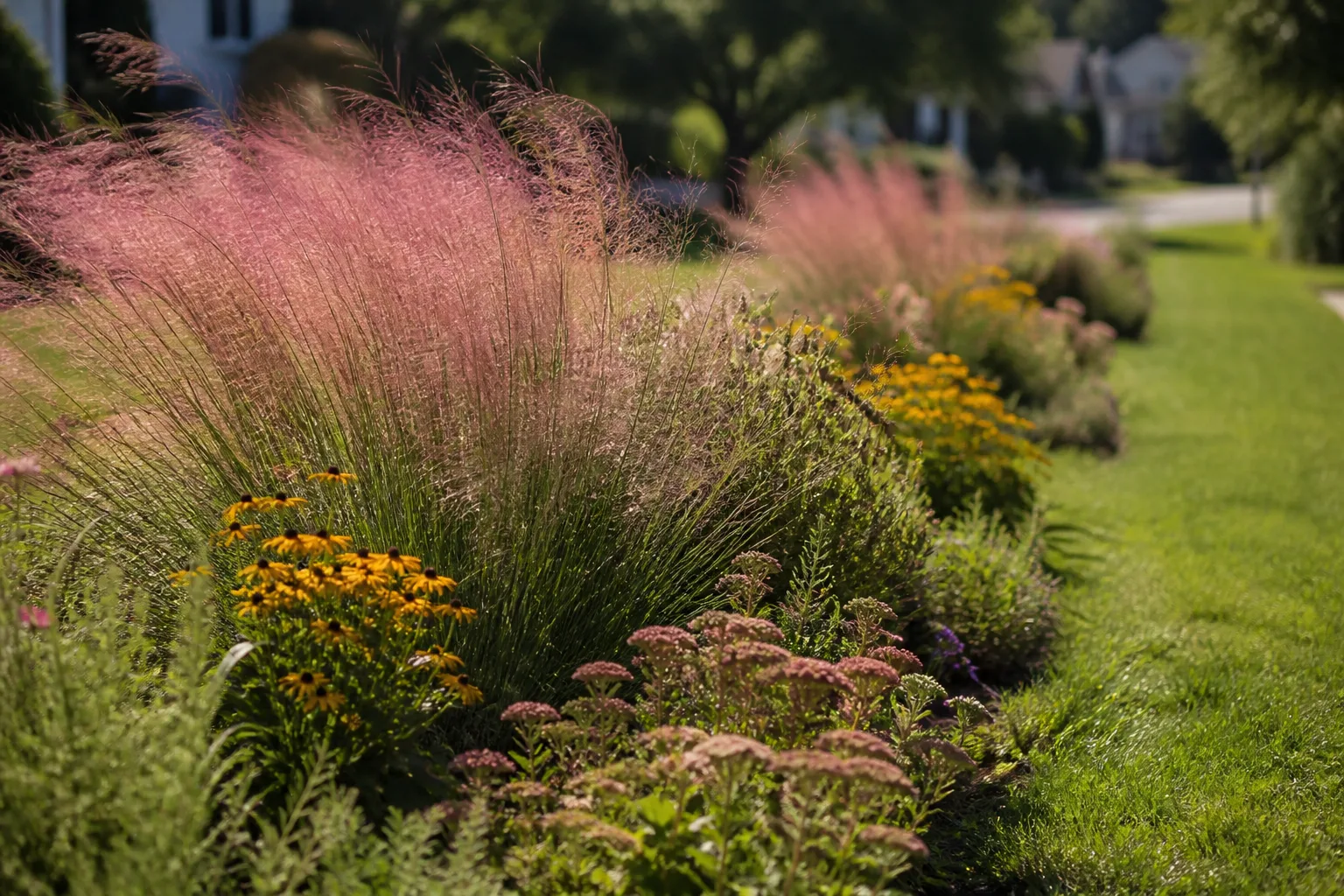
Ornamental grasses add height and movement without the root mass of trees. Good choices include little bluestem, switchgrass, sideoats grama, pink muhly grass, prairie dropseed, and low sedges. Avoid giant miscanthus, pampas grass, bamboo, and any grass marketed as “screening” or “giant” varieties—their root systems are disproportionately large.
Do not fertilize grass over the drain field. Extra nitrogen and phosphorus load the soil and groundwater downstream of the field—the opposite of what the system is designed to filter. Mow regularly, but skip spring weed-and-feed products on this zone. For lawn alternatives that still respect shallow roots, see no-grass backyard ideas and ornamental grasses that return bigger every year.
Groundcovers and Low Perennials

Groundcovers spread horizontally with shallow roots—ideal between trench lines. Strong options include sedum, creeping phlox, sweet woodruff, wild ginger, barrenwort, coral bells, and low native sedges. Our sedum ground cover for sunny locations and best low-maintenance ground covers guides list species that stay short and do not build a thick, moisture-trapping canopy.
For color, choose perennials that tolerate occasional moisture swings without demanding constant irrigation: daylilies, yarrow, black-eyed Susan, coreopsis, lavender (in well-drained spots), bee balm, hollyhocks, wild violets, and cardinal flower in wetter zones. Bee balm growing guide covers a pollinator-friendly perennial that handles damp soils when the system is functioning normally.
Wildflower mixes work when they are shallow-rooted, adapted to your rainfall, and not dominated by tall grasses. Native mixes designed for your state are preferable to generic “meadow” blends that include large bunch grasses. Skip species that need dividing every year—you want minimal shovel work over pipes.
Bulbs (daffodils, crocus, grape hyacinth, ornamental onions) are generally safe because they root shallowly and stay herbaceous. Plant them between lines, not in a dense band atop a known trench.
Shrubs You Can Plant With Caution
Woody plants carry more risk than grasses and perennials. If you need shrubs near the field—not on it—choose shallow-rooted, slower-growing species and keep them at extension-recommended distances.
Clemson HGIC suggests boxwood, holly, and arborvitae toward the drier ends of drain lines, never closer than 10 feet from the field for shrubs and 20 feet for small, less aggressive trees. Dogwood, Japanese maple, eastern redbud, and flowering cherry are sometimes listed as lower-risk small trees, but only when planted at mature height distance from the field—if a tree will reach 25 feet tall, plan for at least 25 feet of clearance, and consider more.
Plant shrubs between trench lines, not directly over them, using your system layout diagram if you have one. Widen the planting hole on the side away from the drain field so roots find an easier path outward rather than toward wet pipes. Root barriers buried 2 feet deep can help along the field edge, but they must run the length of the field—never circle a tree’s root ball—and stay at least 5 feet from drain lines.
For screening without planting on the field itself, use privacy in the yard strategies on the property perimeter, well outside the setback zone.
Trees and Shrubs to Avoid Near Septic Systems
Some roots actively hunt water. Those species are catastrophic near perforated pipe.
Water-Hungry Trees and Aggressive Root Systems

Never plant on or immediately beside a drain field:
- Willows (weeping willow, pussy willow, Japanese willow)—legendary water seekers
- Poplars and Lombardy poplar—fast, aggressive roots
- Silver and red maples (most maples except carefully placed Japanese maple far from the field)
- River birch, paper birch, and beech
- Elm and ash
- American sweetgum and tulip tree
- Aspen—colony-forming roots spread wide
- Bamboo—even “clumping” types are a gamble
These trees develop roots that mirror canopy width two to four times the branch spread—or one to three times tree height, depending on which extension formula you use. UF/IFAS notes a 30-foot-wide tree planted within 20 feet of a field is a recipe for failure.
Large evergreen screens—unpruned leyland cypress hedges, Norway spruce, white pine—also belong outside the setback zone. If you need evergreens for privacy, plant them beyond the calculated root radius and keep the drain field itself in grass or groundcover.
Matching Plants to Sun, Moisture, and Soil Conditions
Drain fields are not uniform environments. A line may be sun-baked on a south slope while a lower corner stays damp after rain. Match plants to each micro-zone rather than forcing one species across the whole area.
Full sun: prairie perennials, sedum, lavender, ornamental grasses, and turf blends rated for your zone.
Part shade: Pennsylvania sedge, hosta (shallow roots but avoid dense mats), ferns, coral bells, and woodland phlox.
Dry spots: sedum, yarrow, lavender cotton, and drought-tolerant grasses—without adding irrigation.
Deer pressure: choose from deer-resistant perennial ground covers for edges of the field, but remember deer still browse septic zones; repellents and perimeter planting may be needed.
Wet Ground, Salt, and Effluent Effects on Planting
A persistently soggy drain field may signal system failure—not a wetland garden opportunity. If plants show chronic water stress from too much moisture, schedule a septic inspection before redesigning the landscape.
Under normal operation, effluent adds moisture and can shift soil pH and salinity. Household cleaners and detergents often raise pH; sodium from water softeners can accumulate. Clemson HGIC recommends soil testing for pH and salt, then choosing adaptable species. Salt-tolerant options include bee balm, hollyhock, daylily, and many native grasses; avoid salt-sensitive species if tests show high sodium.
Do not pour chemicals down drains to “fix” planting problems—that changes effluent chemistry and can kill tank bacteria. Fix the planting palette instead.
What Not to Do on a Drain Field
Treat the drain field like sensitive infrastructure, not a blank flower bed.
Do not:
- Add topsoil beyond minor erosion repair—a few inches maximum. Raised soil restricts evaporation (Virginia Cooperative Extension; UNH Extension).
- Rototill or double-dig. Pipes may sit 6 inches down.
- Apply thick mulch—bark, rock, rubber, or landscape fabric. UF/IFAS explicitly discourages mulching the drain field because it blocks evaporation and oxygen exchange. If you mulch paths beside the field, keep mulch thin and away from trench lines. See what is mulch for depth rules elsewhere in the yard.
- Irrigate the field. Redirect sprinklers so heads stay at least 10 feet away (Clemson HGIC; UF/IFAS). Roof and gutter runoff should also drain away from the field.
- Drive, park, or store heavy equipment on the field—compaction smothers soil microbes.
- Dig deeper than 6 inches with shovels or aerators.
Always wear gloves when working soil over a drain field to limit exposure to pathogens.
Vegetables, Raised Beds, and Edible Crops
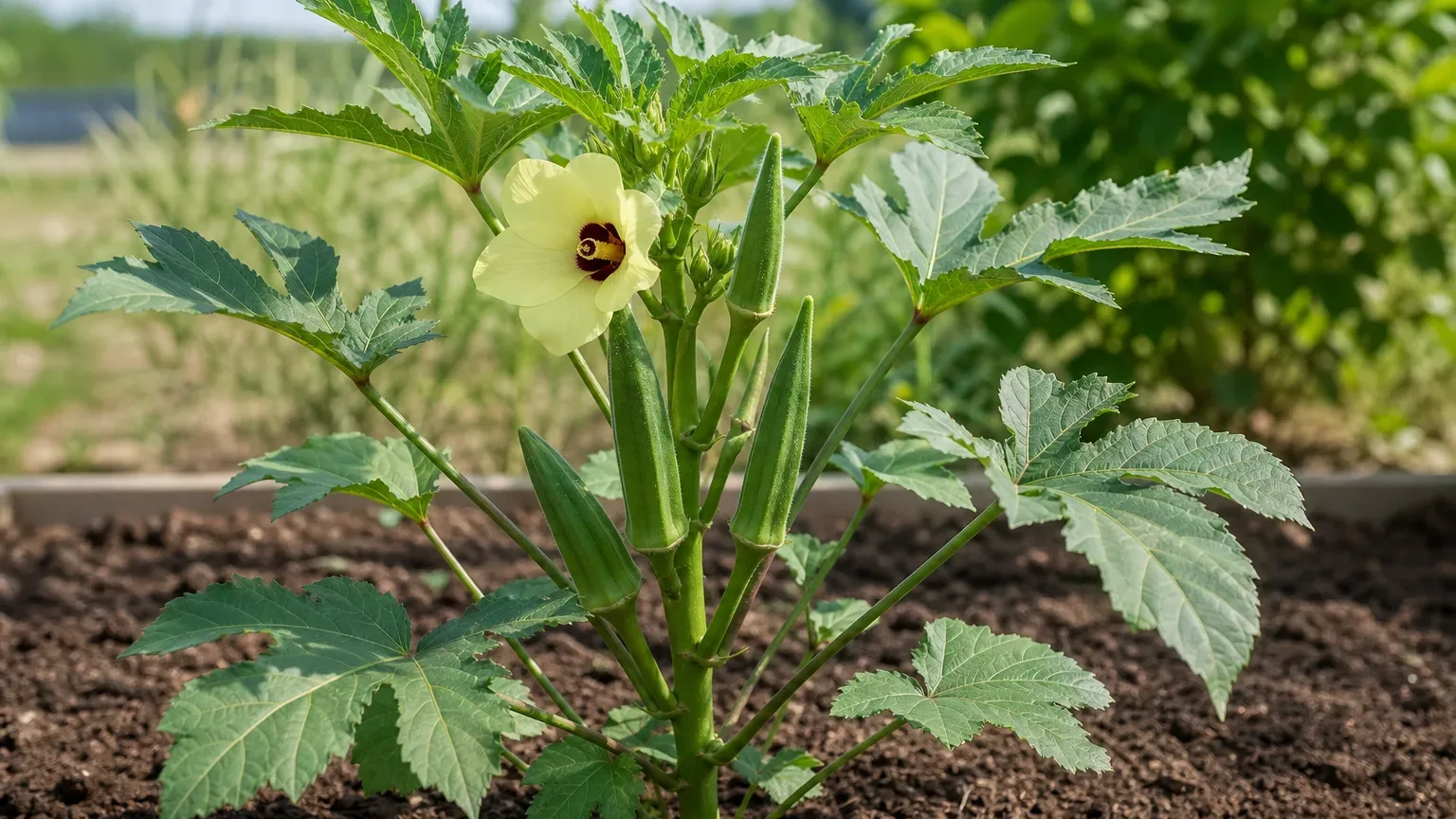
Do not grow vegetables or fruit over a septic drain field. Even well-filtered soil cannot guarantee removal of all bacteria and pathogens from effluent. Root crops (potatoes, carrots) are especially risky because edible tissue contacts contaminated soil. Leafy greens and herbs face splash and soil adhesion risks.
Frequent cultivation, fertilizer, and irrigation—the normal vegetable garden toolkit—also stress the system. Clemson HGIC and UF/IFAS both reject vegetable gardening on drain fields for health and operational reasons.
Raised beds are equally unsuitable. The added soil weight and height interfere with evaporation—the same process that removes moisture from the trench zone. UNH Extension warns that raised beds over leach fields compromise system effectiveness. If you need a food garden, place it upslope or well away from the field and tank, following local setback codes.
Safe Planting and Maintenance Rules
When you plant on the field, work gently:
- Locate trenches using your as-built diagram, probe carefully, or ask your installer before digging.
- Plant between lines, not directly over perforated pipe.
- Use small holes—barely deeper than the nursery pot—for perennials and groundcovers.
- Skip species that need dividing every year or that form dense, wet-thatch mats.
- Keep traffic light—a mowed path is fine; daily dog sprinting across the field is not.
- Leave tank and distribution box access clear for pumping and inspection.
Distance Guidelines for Trees and Shrubs
Use this extension-backed framework:
| Plant type | Minimum distance from drain field / lines |
|---|---|
| Herbaceous grasses, groundcovers, perennials | On field, between trench lines |
| Shrubs (boxwood, holly, dwarf forms) | 10 feet minimum; farther for large shrubs |
| Small, less aggressive trees (dogwood, redbud) | 20 feet minimum; prefer height × 1–3 |
| Large or aggressive trees (willow, maple, poplar) | Beyond mature canopy spread; often 50+ feet |
| General rule for any tree | At least mature tree height from field edge |
These are minimums, not targets. When the system is older or records are missing, widen setbacks. The cost of extra lawn is always less than pipe replacement.
Planning a Septic Field Landscape
Start with function, then layer aesthetics:
- Obtain or draw a layout showing tank, distribution box, and trench lines with dimensions.
- Cover the field with turf or low groundcover as the default.
- Add perennials and ornamental grasses between lines for seasonal color.
- Place shrubs and trees outside setback zones—use height and canopy formulas.
- Route downspouts and irrigation away from the field.
- Mark tank lids if buried—landscaping over lids must be removable.
A drain field in full sun can support a polished front-yard look with grasses and wildflowers without a single tree root in the trench zone. Sloped fields benefit from erosion-control grasses first; color comes second.
Tank Covers, Access, and Record-Keeping
Septic tanks need pumping every 3–5 years (varies by household size and tank volume). If lids are buried under sod, perennials, or shallow mulch, every service visit becomes a digging project—and installers may damage plants you hoped to keep.
Keep lids accessible: use removable pavers, light gravel, or a clearly marked grass-free pad. Do not set heavy planters, statues, or permanent rock on lids. Anything planted from tank inlet to outlet may need temporary removal when the tank is pumped (Miller Library / WSU guidance).
Store your system diagram, pump dates, and installer contact with household records. Future owners—and future you—will need those numbers before planting a single shrub.
Conclusion
Septic-safe landscaping is a compatibility problem: shallow roots, open soil, and minimal added water align with how drain fields function; thirsty trees, extra topsoil, thick mulch, and vegetable gardens fight the system. Cover the field with turf or low groundcovers, add shallow-rooted perennials for interest, and push woody plants beyond extension setbacks calculated from mature size.
Before you buy plants, spread your system map on the table and mark no-dig zones. That five-minute step prevents the repair bill that no perennial border can justify. When conditions stay wet, salty, or smelly despite careful planting, treat it as a system problem first—call a septic professional, then adjust the garden.