Normal Houseplant Red Flags: When Not to Panic
Yellow leaves, wilting, and leggy stems look alarming — but five common houseplant "red flags" are often normal. Learn the pattern that tells harmless from harmful.

You notice one yellow leaf, a crispy tip, or a pothos that collapsed like it lost a fight — and your brain goes straight to plant parent failure. Most of the time, that guilt is misplaced. Houseplants are evergreen indoors, but individual leaves still age out. Tropical species react dramatically to dry air. Climbers sulk without something to climb. The scary part is rarely the symptom itself. It is not knowing whether you are watching normal plant biology or the early stage of a care problem that will keep spreading.
This guide walks through five common red flags that look worse than they are, with clear thresholds for when each one is harmless and when it signals real stress. For full troubleshooting on any one symptom, use our houseplant symptom checker — but start here if you need reassurance before you repot, prune, or drown a plant that was only thirsty for an hour.
Quick Answer: Read the Pattern Before You Panic
Normal houseplant symptoms are usually limited, slow, and positional: one old leaf yellowing at the base, a few brown tips after winter heat kicks on, a peace lily drooping before a scheduled watering, new growth stretching toward a window, or a climber sending bare runners when it has no support. Worrisome symptoms are widespread, fast, or paired: many leaves yellowing at once, young top growth fading, wilting that does not perk up after a proper soak, brown patches in leaf centers, or a smell of rot from the soil.
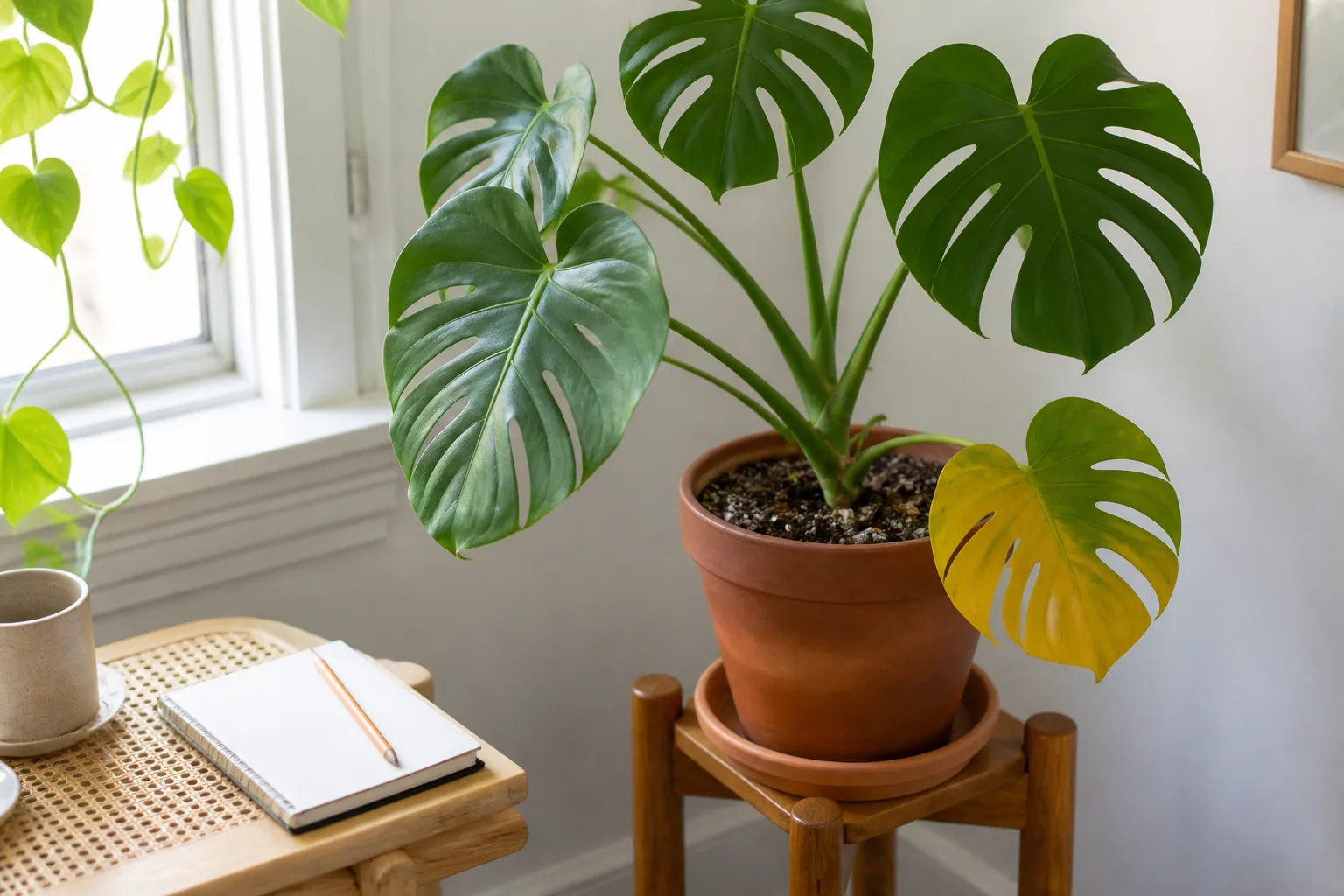
The RHS notes that older leaves on healthy houseplants naturally turn brown and die back over time as the plant matures — and that wilting, yellowing, browning, and leaf drop are common signs of poor health when conditions are wrong, but many plants recover quickly once growing conditions improve (RHS leaf damage on houseplants). The trick is reading which leaves, how many, and how fast the change is happening.
The 60-Second Normal-vs-Worry Framework
Before you change watering, fertilizer, or pots, run the same three questions on every symptom. They take a minute and prevent the most expensive mistake in houseplant care: fixing the wrong problem with enthusiasm.
Three Questions That Separate Harmless from Harmful
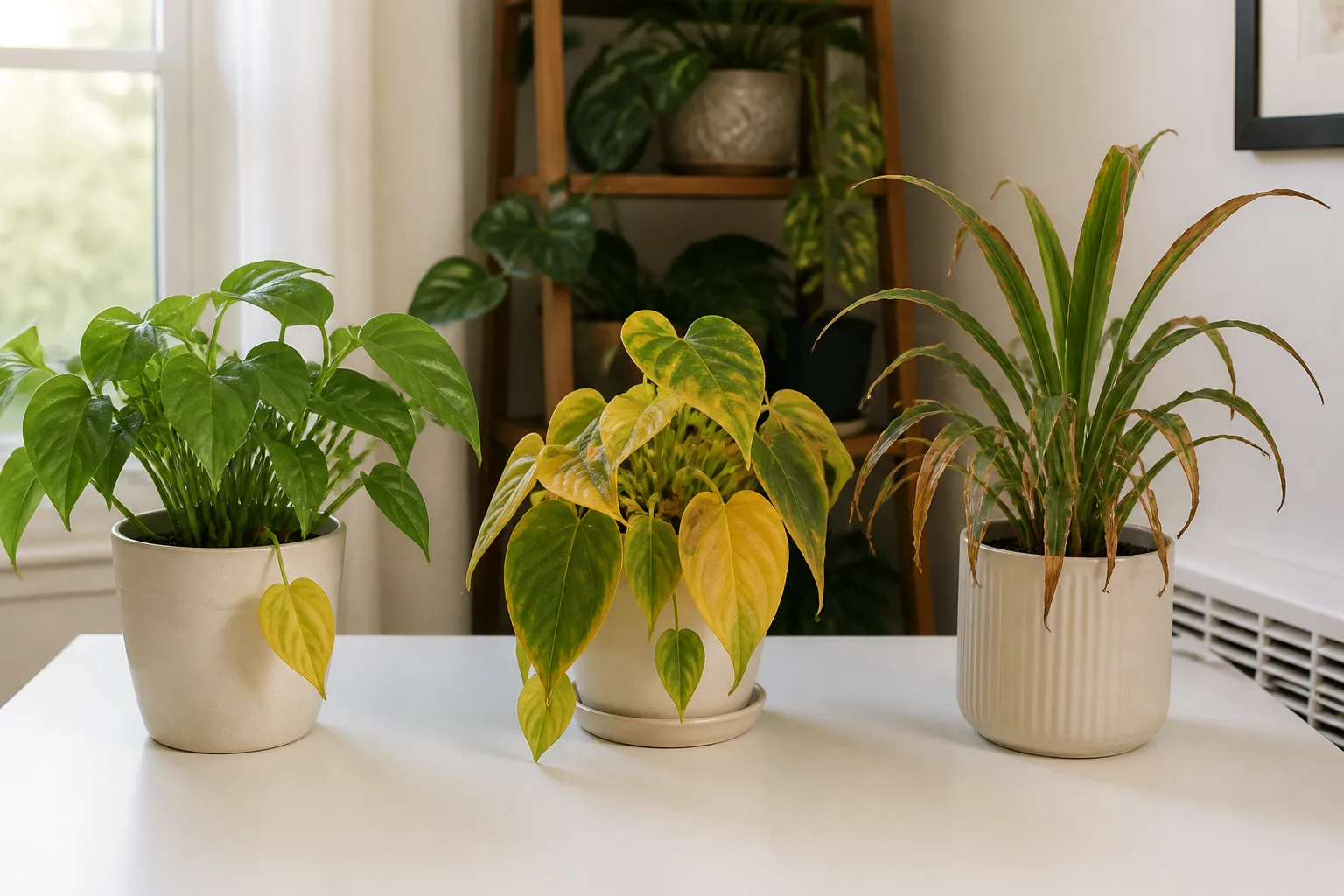
Which leaves are affected? Bottom, oldest foliage yellowing one at a time usually means senescence — the leaf completed its job and the plant is reclaiming mobile nutrients before drop. Yellowing on new growth, or yellow spreading up the plant from multiple nodes at once, points to stress: water imbalance, light shock, temperature swing, pests, or root trouble.
How fast is it spreading? A single symptom that stays stable for two weeks while new growth looks healthy is different from a symptom that doubles its footprint in a week. Slow, isolated changes favor “watch and tweak.” Rapid, climbing damage favors “stop watering, inspect roots, isolate from other plants.”
Where is the plant sitting? Drafty doors, AC vents, radiators, and south-facing summer glass change the story. Brown tips after you moved a fern beside a heating vent are an environment problem, not a mysterious disease. Leggy stretch on a “low-light tolerant” plant three feet from the only window is etiolation, not a nutrient crisis.
When the Same Symptom Needs Action Today
Escalate immediately when you see any of these alongside the red flag: soft, mushy stems; blackened roots; soil that stays wet for weeks; sticky residue plus distorted new leaves; mold on the soil surface; or wilting with wet soil that does not improve after you correct drainage. Those patterns are not “normal drama.” They are active decline. Our indoor plant yellow leaves guide and wilting houseplants guide go deeper on the failure modes that mimic harmless symptoms.
Why Evergreen Houseplants Still Shed Old Leaves
Outdoor deciduous trees drop leaves in autumn as a seasonal strategy. Indoor tropicals do not get that synchronized cue. Instead, each leaf has its own lifespan. An evergreen philodendron or ficus keeps a canopy year-round while quietly retiring the oldest leaves at the base — one at a time, over months.
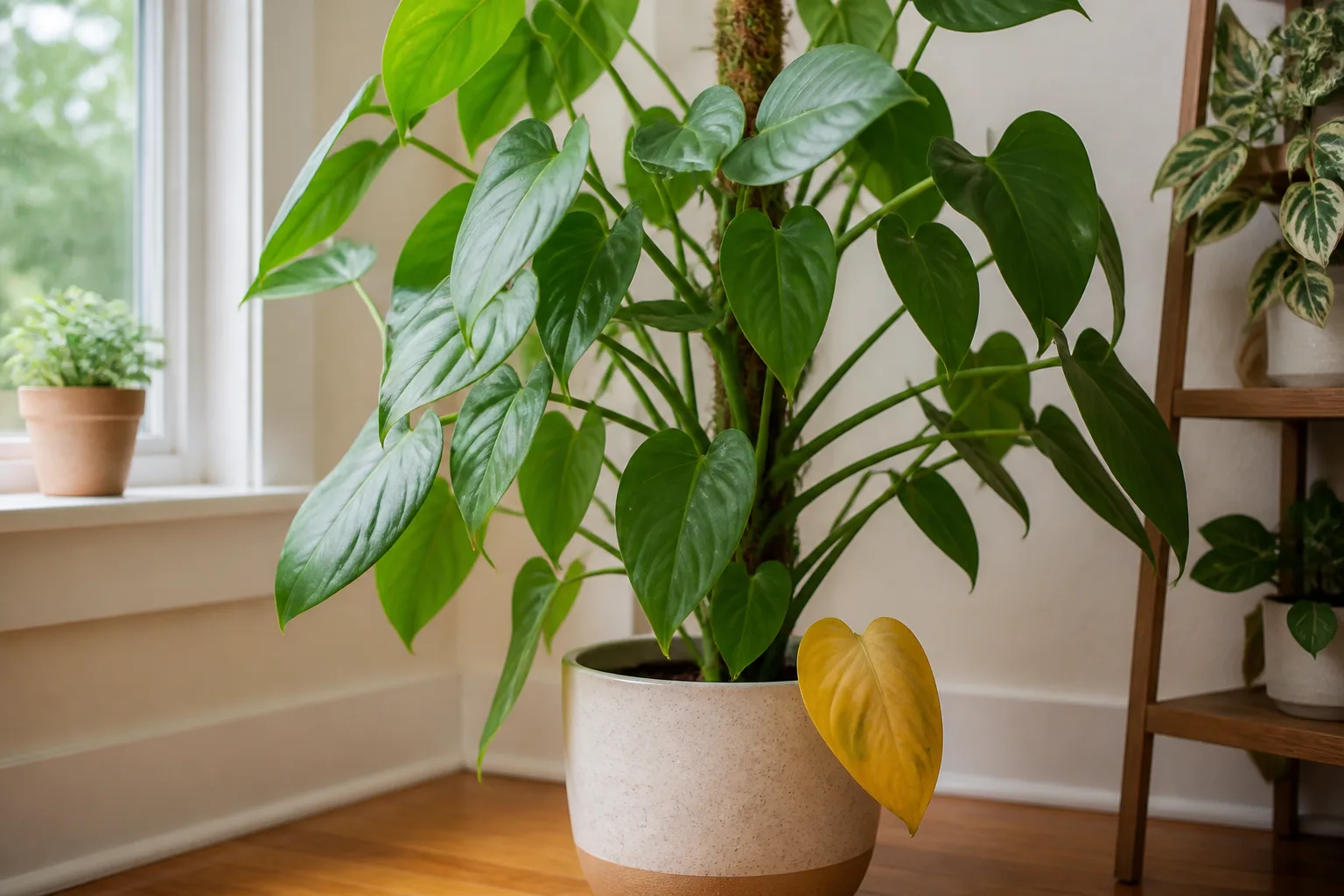
The Royal Horticultural Society is explicit: it is normal for the odd lower leaf on a mature plant to yellow and fall (RHS leaf damage on houseplants). That is senescence, not neglect. What is not normal is large-scale yellowing, especially when new leaves are involved, the soil profile does not match your watering, or the plant sits in a position that is too dark, too cold, or too drafty for weeks on end.
Understanding senescence saves you from two bad reflexes: ripping off every yellow leaf the moment you see it (sometimes the plant is still moving nutrients out), and assuming the plant is dying because one leaf aged out while the rest of the canopy is firm and green.
Red Flag 1: A Single Yellow Leaf at the Base
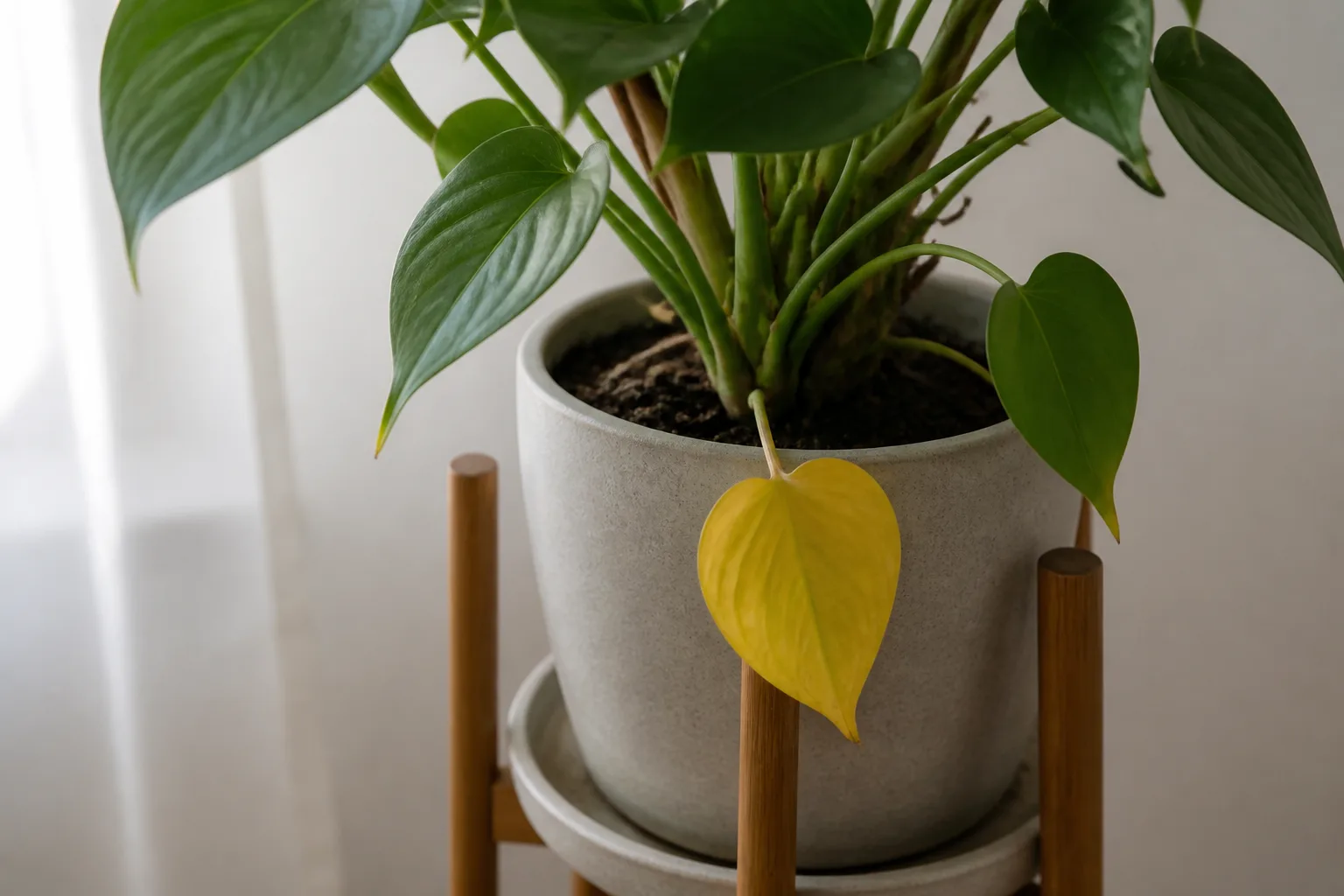
A lone yellow leaf on the lowest node, often on the oldest stem, is the most common “emergency” that is not an emergency. The leaf may go fully yellow, then brown, then drop — and the plant otherwise looks fine. That is the houseplant equivalent of shedding last season’s foliage without announcing a calendar change.
Senescence vs Stress Yellowing
Senescence pattern: one leaf at a time, always the oldest first; yellow may start at the tip or edge and move inward; remaining leaves are firm; new growth at the top is normal size and color; change takes weeks, not hours.
Stress pattern: multiple leaves yellow together; young leaves pale or yellow; soil stays soggy or has been bone-dry for so long roots cannot recover; yellow appears after a move, repot, or heating season shift; you see brown spots with yellow halos (possible disease) or fine webbing (pests).
Acclimation counts as temporary stress. A plant fresh from a humid greenhouse may yellow a few lower leaves in the first two to four weeks at home while it adjusts to lower humidity, different light, and your watering rhythm. If new growth keeps arriving and only older leaves are exiting, you are usually watching adaptation — not collapse.
What to Do — and What Not to Do
Do: note the date, check soil moisture at finger depth, confirm the window is appropriate for the species, and wait for the leaf to finish yellowing before you remove it if it is more than half green. Do not: repot “just in case,” double your fertilizer, or start watering daily because one leaf changed color. If yellowing spreads to several leaves within a week, switch to our full yellow leaves diagnostic and inspect roots when soil moisture does not explain the pattern.
Red Flag 2: Brown, Crispy Tips and Leaf Edges
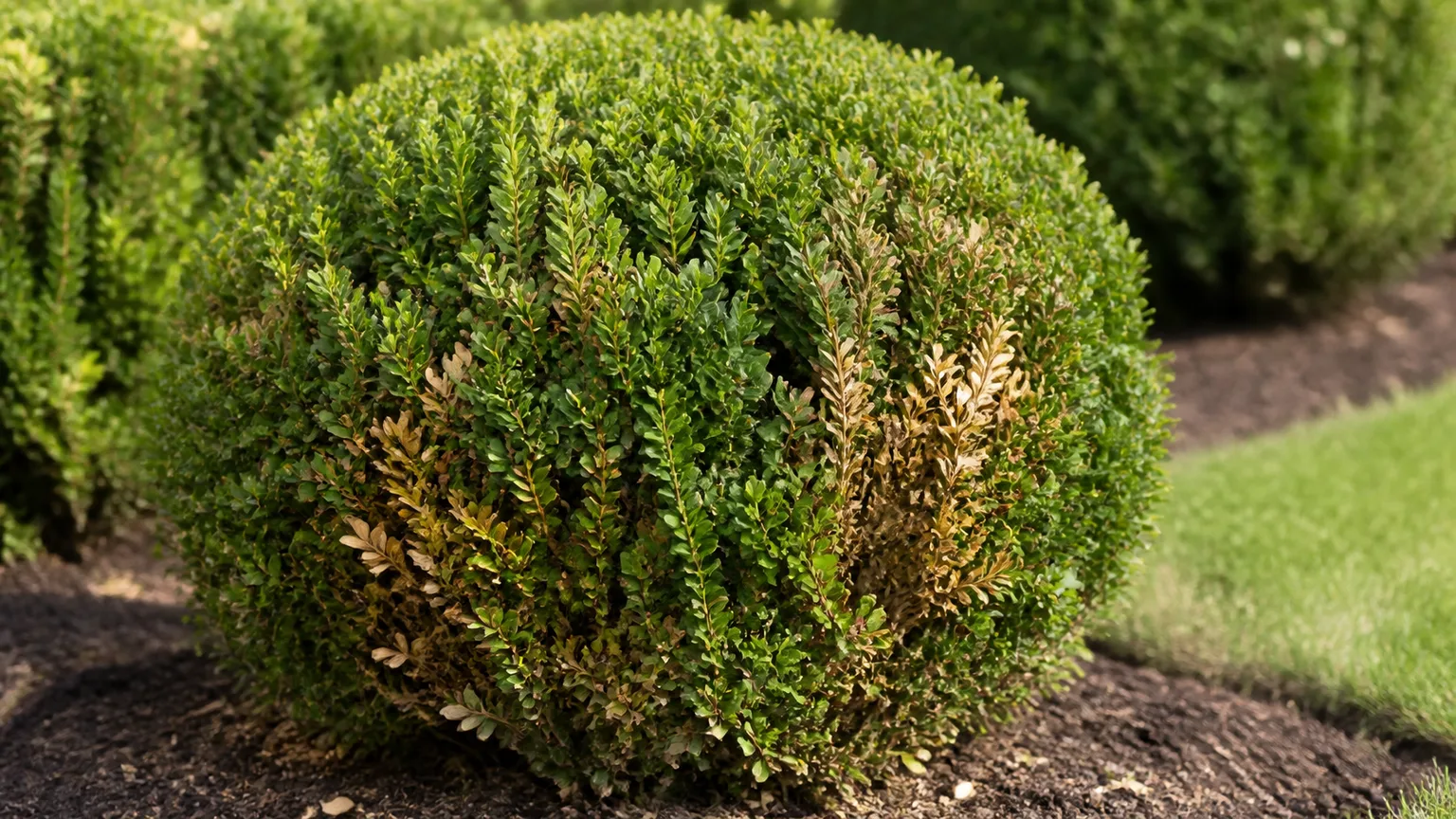
Brown, papery tips look like dehydration — and they can be. But on many thin-leaved tropicals, crispy margins are the first sign that air humidity or air movement is harsher than the leaf can tolerate, especially in heated winter rooms. The damage is cosmetic on old tissue; new leaves can emerge clean once conditions improve.
Drafts, Heating Vents, and Dry Winter Air
The RHS lists brown tips and margins as a classic sign of too dry an atmosphere, and notes that draughts can cause leaf yellowing and dry edges (RHS how to help a poorly houseplant). Hot or cold drafts from exterior doors, old windows, and HVAC vents pull moisture from leaf edges faster than roots can replace it — even when the pot is adequately watered.
Winter compounds the problem. Relative humidity in heated homes often drops into the 30–40% range, far below the 60%+ many rainforest understory plants evolved with. Ferns, calatheas, and many aroids show tip burn first because their leaf margins transpire heavily. Accumulated salts from tap water or over-fertilizing can also concentrate at leaf tips, burning edges on species sensitive to mineral buildup.
Humidity Fixes That Hold Up
Move the plant out of the draft path first — that alone stops new damage on some specimens. Then raise humidity where the plant actually lives: a humidifier set for stable room humidity beats occasional misting for thin-leaved plants; grouping pots creates a shared microclimate; a pebble tray works when the pot sits above the waterline on stones, not in standing water.
Trim fully brown tips with clean scissors if they bother you aesthetically; the tissue will not green up again. Focus on preventing the next leaf from arriving crispy. For species-by-species edge burn patterns, see brown tips on houseplants.
Red Flag 3: Sudden Dramatic Wilting
Few sights trigger faster panic than a whole plant folding overnight. Yet some houseplants are built to lose turgor pressure quickly when soil moisture dips slightly — then refill cells within hours of a drink. The wilt looks lethal. The recovery is often theatrical.
Drama-Queen Plants That Bounce Back Fast
Peace lilies (Spathiphyllum), fittonia (nerve plant), polka-dot plant (Hypoestes), and some waffle plants (Hemigraphis) are famous for this. Their thin leaves have less water storage than a succulent; when the root zone dries even modestly, leaves droop to reduce surface area and water loss. Give a thorough soak until a little water exits the drainage holes, let the pot drain fully, and many specimens stand back up within a few hours.
That is normal if wilting was brief, soil was dry an inch or two down, and the plant regains firmness after watering. It is your plant’s blunt reminder to check soil on its schedule, not the calendar.
Wilting That Does Not Recover After Watering
Worry when wilting persists more than 24 hours after a proper soak, happens while soil is still wet, or returns every few days despite consistent care. Those patterns suggest root damage, poor drainage, or a pot that holds water in the bottom while the top feels dry. Overwatering is the classic trap: roots rot, the plant cannot absorb water, leaves wilt anyway, and owners add more water.
Lift the pot. Light, dry soil plus limp leaves may still be drama-queen thirst. Heavy, wet soil plus limp leaves is a root inspection situation. Our wilting houseplants guide walks through the soak-test and drainage checks that separate the two.
Red Flag 4: Leggy, Stretched Stems
Long internodes, pale new leaves, and a plant leaning hard toward glass look unhealthy — and they do signal a problem. But the problem is usually insufficient usable light, not imminent death. The plant is doing exactly what botanists call etiolation: stretching to capture more photons.
Etiolation vs Normal Trailing Growth
University of Maine Cooperative Extension defines etiolation as elongated, spindly stems with pale leaves from low-light growth (UMaine Bulletin #5059). Genetics and overwatering do not drive this pattern; light does. Compare recent internodes to older ones on the same vine. If the new run is longer and leaves are smaller, you are seeing stretch — not a natural trailing habit.
A pothos with plump leaves spaced evenly on a hanging vine is normal. A pothos that used to be compact and now sends thin runners with coin-sized leaves toward a dim corner is etiolating. UF/IFAS emphasizes that even “low-light” houseplants need enough intensity for healthy structure — often more than a far corner provides (UF/IFAS light for houseplants).
Fix Light First, Then Shape the Plant
Move the plant closer to a bright window, add a grow light, or rotate it weekly before you reach for pruners. Existing stretched internodes do not shorten once light improves; only new growth compacts. After you see shorter nodes on fresh leaves, prune above a node to encourage bushier shoots — or propagate the cuttings. Full step-by-step recovery is in how to fix a leggy plant and our leggy plants hub.
Red Flag 5: Bare Stems on Climbing Houseplants
A pothos, monstera, or scindapsus sending long, leafless runners can look like the plant is giving up. Often it is shifting into runner growth — a habit seen when vining species lack vertical support and enough light to produce leaves along the stem.
Runner Growth Without a Support
Climbing aroids evolved to attach to tree bark and produce larger leaves as they ascend. Indoors, a vine left to sprawl on a shelf may grow internodes without foliage while it searches for structure. The plant is not diseased; it is responding to geometry. The RHS notes weak, spindly growth and poor leaf spacing when light is insufficient — support and brightness work together (RHS poorly houseplant guide).
Cut Back, Support, and Wait for New Leaves
Trim the bare runner back to the last node that still carries healthy leaves. Install a moss pole, trellis, or wall-mounted hooks so new growth has something to climb. Bright, indirect light plus support usually restarts leaf production within one or two nodes. For support choices and installation timing, see plant leaning and climbing habits and our moss-pole comparisons in related guides. Do not fertilize heavily on a bare vine hoping for magic — fix light and structure first.
Acclimation Stress After You Bring a Plant Home
Nursery conditions are not your living room. Higher humidity, stronger supplemental light, and automated watering in a greenhouse produce lush plants that shed a few leaves after you unbox them. Lower-leaf yellowing, one or two dropped leaves, or slight tip crisping in the first month is common while roots and leaves recalibrate.
Treat the first 14–28 days as observation, not overhaul. Keep watering conservative until you learn how fast this pot dries in your humidity. Avoid repotting immediately unless roots are circling and dry out in a day. Avoid direct south sun on a shade-grown fern until you harden it off over a week. If decline accelerates past the first month — especially on new growth — move from “normal acclimation” to full diagnosis.
When Multiple Symptoms Stack Up
One benign red flag is manageable. Several at once usually mean an environmental baseline is off. Yellow lower leaves plus crispy tips often implicate dry, drafty winter air and occasional underwatering. Leggy stretch plus pale new leaves almost always mean light. Wilting with wet soil plus yellowing from the bottom up points to roots, not thirst.
Stack symptoms by timeline. Did everything start the week you turned on central heat? Did it begin after you moved the plant to a new room? Seasonal and positional clues beat guessing. When three or more warning signs from the framework section appear together, pause routine watering and work through the houseplant symptom checker before adding fertilizer or pesticides.
Your 7-Day Watch-and-Adjust Plan
Day 1–2: Photograph the plant. Note which leaves are affected. Check soil moisture at two inches. Confirm distance from vents and window orientation.
Day 3–4: Make one change if needed — move out of a draft, shift closer to light, or adjust watering after a soil check. Do not repot and fertilize the same week.
Day 5–6: Re-check. Drama-queen wilt should recover after watering. Tip burn should not spread to the newest leaf if humidity improved. Yellow senescence should remain a single leaf.
Day 7: If the symptom is stable or improving and new growth looks normal, continue watching. If it spread, worsened on young leaves, or paired with wet-soil wilt, escalate to targeted guides or root inspection.
This week-long lens prevents both neglect and panic-driven over-care — the two fastest ways good intentions kill houseplants.
Conclusion
Five houseplant red flags — a lone yellow leaf, crispy tips, dramatic wilting, leggy stretch, and bare climbing stems — frighten owners because they look like failure on fast-forward. In isolation, each often reflects normal leaf aging, dry winter air, thirsty drama queens, low light, or missing support — not a doomed plant. Read which leaves change, how fast damage spreads, and where the pot lives before you repot, flood, or prune.
When symptoms stay limited, slow, and positional, tweak environment and wait a week. When they multiply, hit new growth, or pair wilting with wet soil, switch from reassurance to diagnosis. You are not a bad plant parent for noticing problems early. You become one only when every symptom gets the same aggressive cure — regardless of what the plant is actually saying.