How to Grow and Care for Paper Birch
Paper birch needs cool summers and a moist, cool root zone. Use this practical guide to site, plant, water, prune, and protect *Betula papyrifera*.
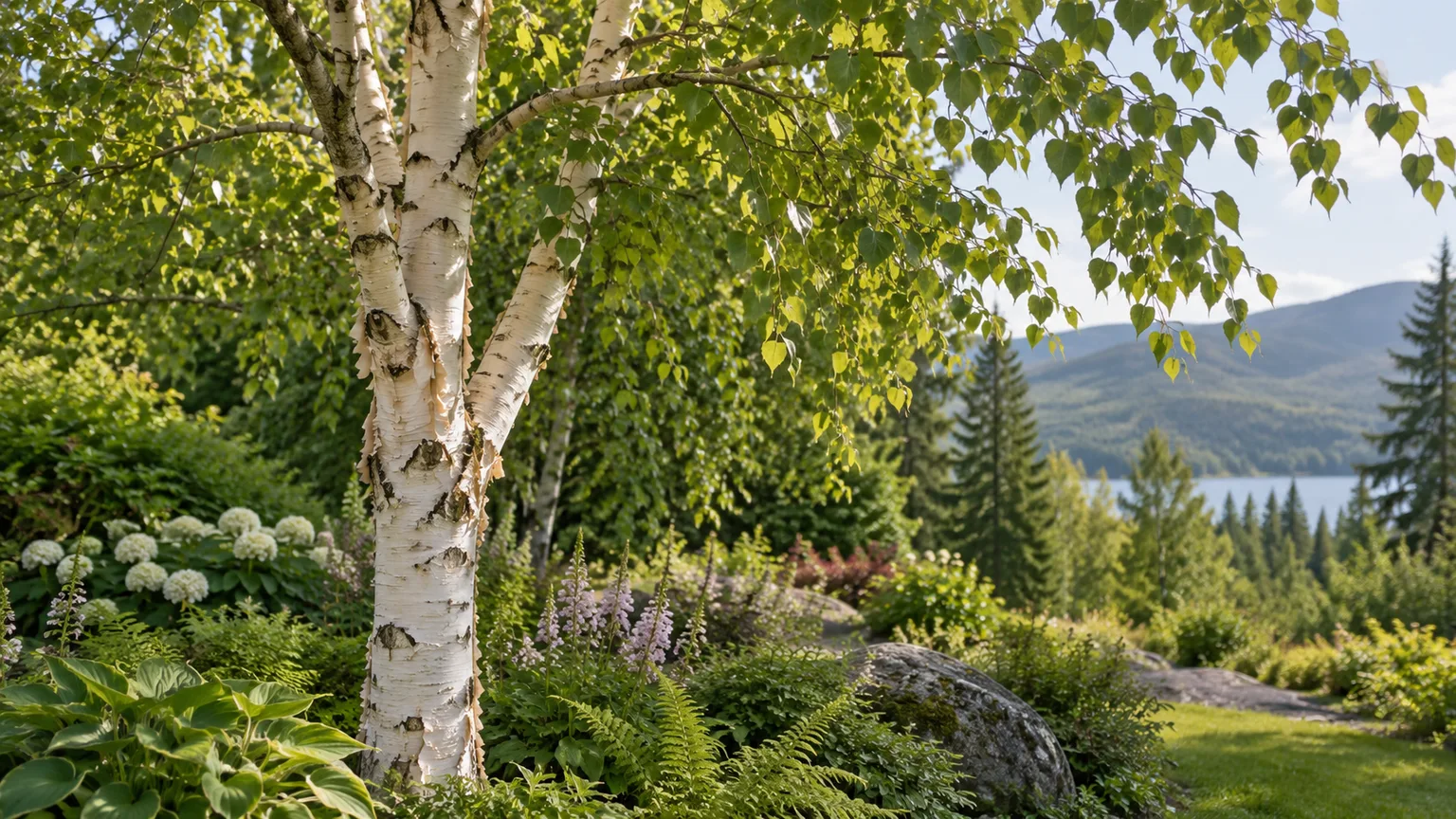
Paper birch (Betula papyrifera), also called canoe birch or white birch, is loved for bark that turns bright white and peels in thin layers. It can make a striking specimen, but the deciding factor is not the bark: it is whether your site can keep the tree’s shallow root zone cool and supplied with moisture through summer. A paper birch planted beside hot pavement in a dry lawn may survive for a while yet decline early; a cool northern site with well-drained, moisture-retentive soil gives it a far better start.
Use this guide as a planting decision first and a care checklist second. If your summers are routinely hot and humid, or you cannot irrigate during long dry spells, consider a more heat-tolerant birch such as river birch instead of trying to compensate for a poor match with extra fertilizer.
Paper birch at a glance
| Feature | What to plan for |
|---|---|
| Botanical name | Betula papyrifera |
| Mature size | Commonly about 50–70 feet tall and 20–45 feet wide, with regional and site variation |
| Climate | Best suited to cool northern regions; heat and drought shorten landscape performance |
| Light | Full sun in cool climates; afternoon shade can reduce heat load in warmer sites |
| Soil | Moist, well-drained, preferably acidic soil; tolerates a range when moisture and drainage are suitable |
| Water | Consistent moisture while establishing and during prolonged drought |
| Main risks | Heat stress, drought, compacted soil, bronze birch borer, and leafminer damage |
| Routine care | Wide mulch ring, measured watering, minimal pruning, and no automatic fertilizer |
Paper birch is a medium-to-large deciduous tree with an airy crown and yellow fall foliage. Mature size varies with climate, provenance, competition, and whether it is trained as a single-trunk or multi-trunk specimen. The Morton Arboretum’s paper birch profile lists mature trees around 50 to 70 feet tall and 19 to 45 feet wide, so do not treat a young nursery specimen as a compact ornamental.
The species is native across much of northern North America and occurs in several regional forms. The USDA Forest Service Silvics account describes it as a fast-growing tree of cool, moist sites, especially well-drained sandy loams. That natural range is a useful clue: good drainage matters, but a dry, hot root zone is not the same thing as healthy drainage.
Is paper birch a good fit for your climate?
Paper birch is most dependable where winters are cold and summers stay comparatively cool. Extension references often describe the best sites as northern climates where summer temperatures rarely exceed about 75°F; use that as a sign of the species’ preference, not as a strict cutoff that determines success on one particular property. The North Carolina Extension Gardener Plant Toolbox notes that it performs best in cool climates and can benefit from afternoon shade where summer heat and humidity are greater.
Hardiness zones describe how cold a region gets in winter, not how hot the root zone becomes in July. Paper birch is listed across roughly Zones 2 through 7 in some landscape references, but the warmer end of that range can be misleading: a tree may survive winter and still struggle with repeated heat, drought, humidity, or urban heat reflected from pavement. The NDSU paper birch profile likewise emphasizes cool northern climates and consistently moist soil.
Before buying, ask three practical questions. Does your region have a track record of healthy paper birches? Can the planting site stay moist without remaining waterlogged? Can you keep lawn, construction, and reflected heat away from the roots? If the first answer is uncertain and the latter two are no, choose another species. A beautiful trunk is not worth years of irrigation and pest monitoring for a tree that is fundamentally mismatched to the climate.
For warm or humid areas, river birch (Betula nigra) is often a more suitable native alternative because it handles heat and humidity better. A Fine Gardening comparison of bark-interest trees notes that paper birch needs consistently moist soil and a northern climate, while river birch tolerates heat, humidity, and some drought. River birch has warmer-toned exfoliating bark rather than the classic white sheets of paper birch, so the visual effect is different, but the better climate match usually matters more than matching a photograph.
Choose the planting site before buying
Give paper birch room for its mature spread, overhead canopy, and roots. A single-trunk tree tends to grow taller with a rounded crown; a multi-trunk tree is often shorter and broader. Keep the mature crown away from utility wires, rooflines, driveways, and narrow property edges. Before digging, contact your local utility-marking service and check local setbacks or shoreland rules if the site is near a water body.
Light is flexible within limits. Full sun helps produce strong foliage and a balanced crown in cool regions, but a hot site can benefit from afternoon shade. A position that receives morning sun and shade during the hottest late-afternoon hours may be easier on the roots than an exposed south- or west-facing lawn bordered by concrete. Do not plant it directly against a foundation or beside asphalt simply because the trunk is small today.
Soil should hold usable moisture yet drain after heavy rain. Paper birch grows in sandy or rocky loam and can tolerate a range of soils, but chronic standing water in compacted ground can suffocate roots. High-pH soils may trigger yellowing from chlorosis; a soil test can help distinguish pH-related nutrient availability from drought, root injury, or normal seasonal color change. The University of Massachusetts Amherst’s birch culture guidance stresses deep, moist, slightly acidic soil with good drainage and warns against hot, dry urban sites.
Select a tree form and cultivar
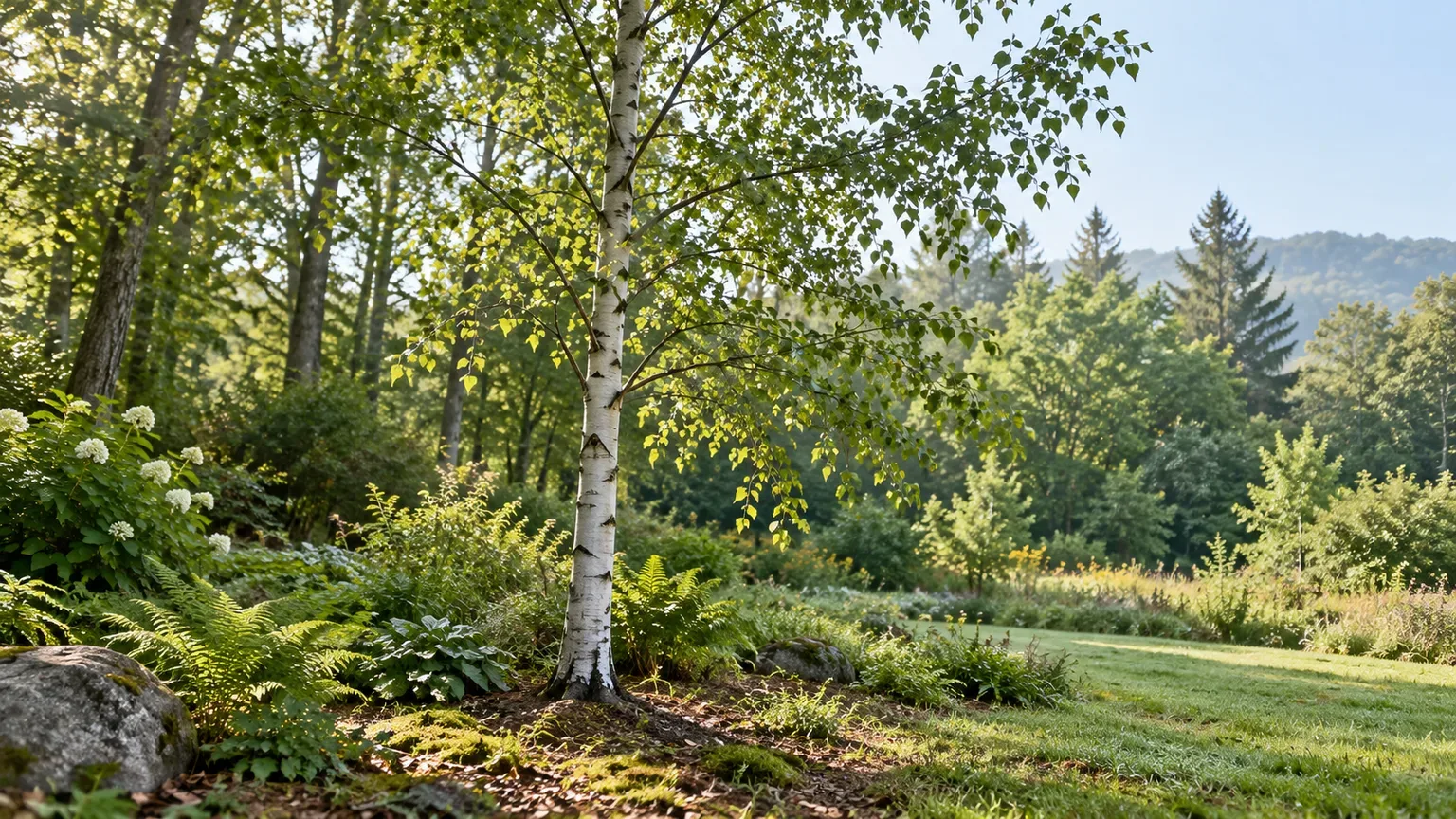
Choose the form that fits the space rather than trying to reshape it later. A single leader gives a more upright tree and a defined trunk; a multi-stem planting offers several pale trunks and a lower, wider silhouette. Neither form is inherently healthier. The key is a strong structure with well-attached stems and enough space for the crown to spread without constant clearance pruning.
Cultivar names can help, but read them as selection traits rather than guarantees. The University of Saskatchewan’s gardening resource describes ‘Prairie Dream’ as a paper birch selected from a drier part of the species’ range and reported as more stress-tolerant and resistant to bronze birch borer. It also describes ‘Reflection’ (‘Renci’) as a narrow, fast-growing selection developed from a tree that survived a borer epidemic. The Morton Arboretum likewise calls ‘Reflection’ resistant to bronze birch borer while warning that it does not tolerate drought or pollution well.
Those traits do not make either cultivar immune to stress. Ask a regional nursery or extension office which selection is proven locally, and verify that the tag gives the botanical name and cultivar. A resistant cultivar planted in hot, dry, compacted ground can still decline; a species-level recommendation from a local expert is more useful than a national catalog claim.
Planting paper birch step by step
Plant a container or balled-and-burlapped tree in spring or fall when the soil is workable and temperatures are moderate. Dormant bare-root trees should be planted during their local dormant season, usually early spring or fall, and kept from drying out before they go into the ground. Avoid planting during hot, dry weather, when roots and foliage face high water demand before the tree has established.
- Water the root ball before planting and inspect for circling roots, buried stems, or damaged branches.
- Locate the root flare before setting the tree; nursery media may cover it.
- Dig a wide, shallow hole that lets the roots spread naturally.
- Position the root flare at or just above finished grade to allow for settling.
- Backfill with native soil, water slowly to settle it, and keep the tree upright.
- Mulch broadly, leave the trunk clear, and set a watering schedule based on soil moisture and weather.
The University of Minnesota Extension’s tree planting guidance emphasizes matching the tree to the site, exposing the root flare, and backfilling with the original soil. A small, amended planting hole can behave like a pot within the surrounding ground and hold water differently from the soil outside it, so improve the broader site when needed rather than filling the hole with a rich, unfamiliar mix.
Find the root flare and set the grade
The root flare is where the trunk widens and transitions into the main roots. If you cannot see it, remove excess loose soil from the top of the root ball until the trunk widens; do not assume the top of the nursery potting mix is the correct planting depth. The hole should be wider than the root system but no deeper than the distance from its base to the flare. Setting the flare above grade is safer than burying it, especially in soil that may settle after watering.
If roots circle tightly around the container, tease out small roots and make clean cuts through severe circling roots rather than leaving them to constrict the trunk later. For balled-and-burlapped stock, remove twine from the trunk and fold back burlap from the upper part of the ball after the tree is positioned. Ask the nursery how to handle a wire basket if present; do not pull or destabilize a heavy root ball just to remove buried material.
Backfill, water, and mulch without overdoing it
Return the native soil in layers and water as you backfill so it settles around the roots. Firm it gently by hand; stamping hard can compact the soil and reduce air spaces roots need. Do not add fertilizer to the hole, and do not create a deep basin that traps water against the trunk. A temporary low berm at the outer edge of the root ball can help direct irrigation during establishment, but remove or flatten it if rainwater ponds there.
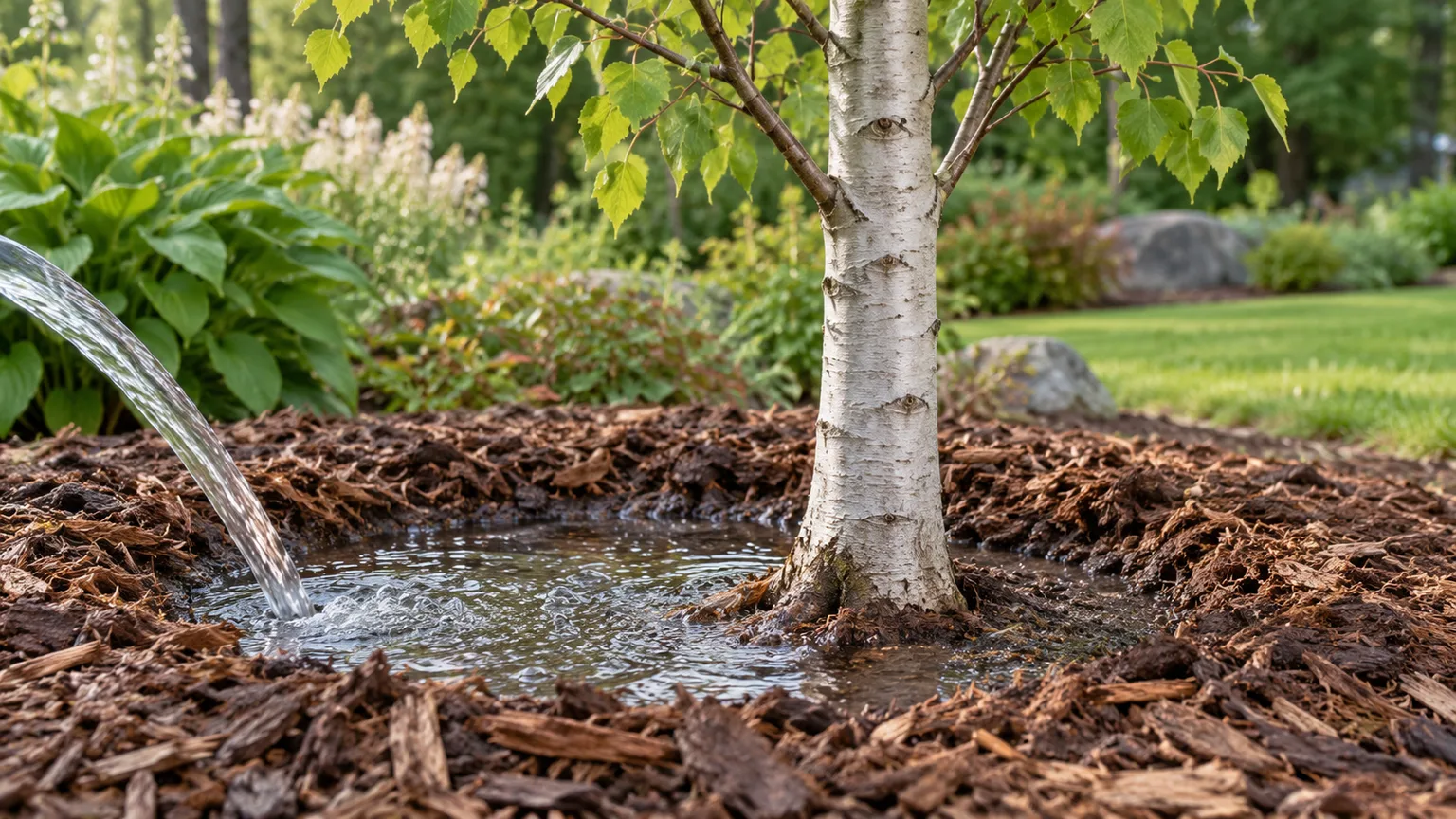
Spread two to three inches of organic mulch over as much of the future root zone as you can manage, extending well beyond the planting hole. Leave a clear gap of several inches around the trunk and keep the root flare visible. The University of Minnesota Extension’s mulching guidance explains that mulch limits evaporation, buffers soil temperatures, and reduces competition, while excessive depth can restrict oxygen or keep poorly drained ground too wet.
A stake is needed only if the root ball rocks, the tree cannot stand upright, or exposure makes movement likely. Use flexible ties low on the trunk, allow slight trunk movement, and inspect them during the growing season. Remove the support once the root ball is stable; a forgotten tight tie can injure the trunk as it expands.
Water consistently while roots establish
Water deeply enough to wet the original root ball and nearby backfill, not just the mulch surface. In the first weeks, check soil moisture several inches down at the edge of the root ball. If the soil is still cool and damp, wait; if it is beginning to dry, water slowly until the root zone is moist. Rainfall, wind, temperature, soil texture, and root-ball size all affect how often you need to irrigate, so a fixed calendar is only a starting point.
As one regional reference, Minnesota Extension’s new-tree watering schedule suggests daily checks and watering during the first one to two weeks, every two to three days during weeks three through twelve, then weekly until roots establish, with adjustments for substantial rain and site conditions. It recommends about one to one-and-a-half gallons per inch of trunk caliper per watering for newly planted trees. Caliper is the trunk diameter measured near the base; those volumes are a benchmark, not a reason to soak saturated clay.
Use a slow hose trickle or soaker hose that reaches the root ball and the surrounding soil. Expand the watered area as roots grow rather than pouring the same amount against the trunk. Newly planted trees can take more than one season to establish, especially if they are large at planting. Continue to check during dry spells after the first year; paper birch is particularly vulnerable when drought stress combines with heat or other root damage.
Keep the root zone cool and uncrowded
Paper birch has relatively shallow roots, so the ground beneath and around the canopy is part of the tree’s care system. Grass competes for water in the same upper soil layers, and mowing or string trimming can wound thin bark. Keep turf and weeds away with a wide mulched bed, and avoid raising or lowering the grade over roots when renovating the yard. The USDA Forest Service account describes the species’ preference for cool, moist sites; Minnesota Extension notes that heat, compaction, drought, and physical injury increase borer vulnerability in birches.
Do not assume that planting beside a pond solves watering. A tree needs moisture in the root zone, but waterlogged soil can still be harmful if oxygen is displaced for long periods. Check how quickly water drains after rain, and keep mulch from forming a dam around the trunk. If soil is dry on one side and soggy on another, correct drainage or irrigation distribution before adding more water.
Mulch also protects the trunk from mowers and moderates root-zone temperature, but the bark itself should not be wrapped in wet mulch or covered with soil. Keep the flare exposed, avoid piling leaves and compost into a trunk cone, and protect a young trunk from repeated equipment contact. A few feet of visible mulch may look less formal than lawn up to the stem, but it helps prevent the maintenance injuries and turf competition that quietly weaken trees.
Fertilizer and soil pH: less is usually more
Do not feed a paper birch automatically each spring. Slow growth, pale leaves, or a thin crown can result from heat, drought, poor drainage, compacted soil, excess planting depth, or root damage rather than a nutrient shortage. Fertilizer does not correct those conditions and may stimulate growth that increases water demand. The Royal Horticultural Society’s birch guide says established birches generally need no fertilizer.
If leaves yellow between green veins or the tree struggles in alkaline soil, test the soil before changing pH. High-pH ground can make iron less available, but adding sulfur or an acidifying product without a test can create a different nutrient imbalance. Likewise, do not use lawn “weed and feed” around a tree; broadleaf herbicides can injure woody plants. Correct confirmed deficiencies according to a soil laboratory or local extension recommendation, not a generic schedule.
Prune with structure and sap flow in mind
Paper birch needs little routine pruning once it has a sound framework. Remove dead, broken, rubbing, or hazardous branches and retain a natural crown; do not shear the canopy or repeatedly shorten leaders just to keep a large tree small. For a young specimen, identify one main leader if a single-trunk form is desired, or preserve several well-spaced stems if you prefer a multi-trunk silhouette. Avoid removing a large share of live foliage in one season.
Birches can release a conspicuous flow of sap from cuts made in late winter or early spring. This “bleeding” is generally more of a nuisance than a sign that a correctly pruned tree is dying, but it is easy to avoid by choosing another time. The University of Massachusetts birch culture sheet advises waiting until leaves are fully expanded, while the RHS birch guide recommends pruning dead or damaged branches after dormancy begins in early winter. In North American sites with bronze birch borer, local pest timing also matters; some extension guidance favors fall pruning when adult beetles are inactive.
Make a clean cut just outside the branch collar, the slight swelling where a branch joins the trunk. Do not cut flush into the trunk, leave a long stub, or apply wound paint as a routine fix. If a high branch, large limb, storm crack, or utility conflict requires work, hire a qualified arborist rather than climbing or cutting above shoulder height.
Diagnose stress before it becomes decline
A few yellow leaves in autumn, a small patch of leafminer damage, or sap bleeding from a pruning cut does not by itself mean the tree is dying. Look for patterns: Is thinning concentrated at the top? Did symptoms start after a heat wave or construction? Is the soil dry several inches down, or does it remain saturated? Did a mower strike the trunk? A short record of weather, watering, and symptom progression can make a local extension or arborist diagnosis much more accurate.
Paper birch has some natural resistance to bronze birch borer compared with many imported white-barked birches, but stressed trees can still be attacked. The University of Minnesota Extension’s borer guide explains that drought, poor planting sites, compaction, root damage, and trunk wounds increase vulnerability. The best first response is to reduce preventable stress and identify the actual cause rather than applying a pesticide on the basis of one symptom.
Bronze birch borer
Bronze birch borer larvae feed beneath the bark and disrupt the tissues that move water and nutrients. Early signs can include thinning or yellowing in the upper crown, branch-tip dieback, and later decline moving downward. Look for raised ridges or serpentine galleries beneath bark and small D-shaped exit holes on branches or the trunk. These signs can be difficult to see from the ground, and other problems can produce similar canopy symptoms.
The University of New Hampshire Extension fact sheet identifies paper birch as a preferred host and describes D-shaped exit holes, galleries, and crown decline as clues. It recommends prevention through tree vigor and consulting local specialists for chemical controls. Do not strip bark to search for larvae, inject a systemic product, or spray on a calendar without a diagnosis; pesticide effectiveness depends on timing and the stage of decline, and applications have label and pollinator constraints. If the crown is thinning rapidly or large limbs are dying, consult an arborist or county extension office promptly.
Leafminers and other common issues
Birch leafminers feed within the leaf and create pale, brown, or blistered patches that may merge into scorched areas. That differs from bronze birch borer, which affects branches and often starts as upper-crown thinning. The Penn State Extension leafminer guide notes that heavy defoliation can add stress and contribute to secondary pests, but leaf damage alone does not prove a borer infestation.
Cankers, leaf spots, and chlorosis can also occur. A canker is a localized dead or sunken area on a branch or trunk; dieback beyond it may mean the affected limb needs removal. Yellowing may follow drought or root injury, or may relate to high soil pH. Photograph the whole tree and close-ups, note when symptoms appeared, and compare the pattern with an extension diagnostic resource before treating. A correct diagnosis matters because watering a saturated tree more can worsen root trouble, while a drought-stressed tree needs a slow, deep soak rather than a spray over the leaves.
Grow paper birch from seed (and why cuttings are difficult)
If you want to grow the species rather than reproduce a named cultivar, seed is the practical home-garden method. Paper birch produces small winged seeds in catkin-like clusters that ripen toward the end of the growing season. Collect mature seeds when the clusters begin to brown and loosen, then sow fresh or store them cool and dry until the next sowing window. The RHS birch propagation guide recommends sowing birch seed fresh in autumn or keeping it refrigerated for sowing in February.
Sow thinly on the surface of a fine, free-draining seed mix and cover only lightly. Keep the medium evenly damp, not waterlogged, and give seedlings bright light after germination. Pot them on once they can be handled and protect young roots from drying. Seedlings vary genetically; a seed-grown tree may not keep the exact bark, form, or pest-resistance traits of a named cultivar.
Softwood cuttings are possible but less predictable for a home grower. The RHS notes that commercial nurseries regard about a 50 percent success rate as good for birch cuttings, which is a useful reminder that a failed cutting is not necessarily a care mistake. If a named selection matters, buy a correctly labeled nursery tree or use a specialist propagation source; do not assume a cutting will root quickly in ordinary garden soil.
Winter care and long-term expectations
Paper birch is cold-hardy within its range, so mature trees in suitable northern sites generally need little special winter protection. For a newly planted tree, maintain the mulch ring, keep it clear of trunk tissue, and water during a dry autumn until the ground freezes. Snow cover naturally insulates roots in many northern habitats; where winter is unusually dry and the ground remains unfrozen, a slow watering may help, but never irrigate frozen or saturated soil.
Protect young trunks from rabbits, deer, and mower damage with an appropriately loose guard that does not rub or trap moisture. Remove it or adjust it as the trunk grows. Avoid wrapping the whole trunk in material that remains wet or tight. After a heavy snow or ice event, inspect for broken limbs and have hazardous damage evaluated rather than cutting large branches from a ladder.
Longevity varies too much by climate and site for a single lifespan number to be a reliable promise. The USDA Forest Service account describes the species as short-lived relative to many forest trees, while northern conditions and low competition can support much longer survival than a hot, stressful urban planting. Plan for the mature canopy and eventual replacement, and do not place a short-lived pioneer species where the yard depends on it as the only permanent shade tree.
Conclusion
Paper birch is a rewarding tree when the climate and root zone suit it: cool summers, room for a broad crown, moist but draining soil, and protection from turf, pavement heat, and mechanical injury. Check those conditions before you buy, plant with the root flare visible, and use slow, soil-aware watering while the tree establishes. Then keep fertilizer and pruning modest, and treat upper-crown decline as a reason to investigate stress and borers rather than a cue to spray blindly.



