How to Grow and Care for Black Gum Trees (Tupelo)
Plan a black tupelo for long-term beauty: choose moisture and light, plant at the root flare, water through establishment, and manage fruit and fall color.
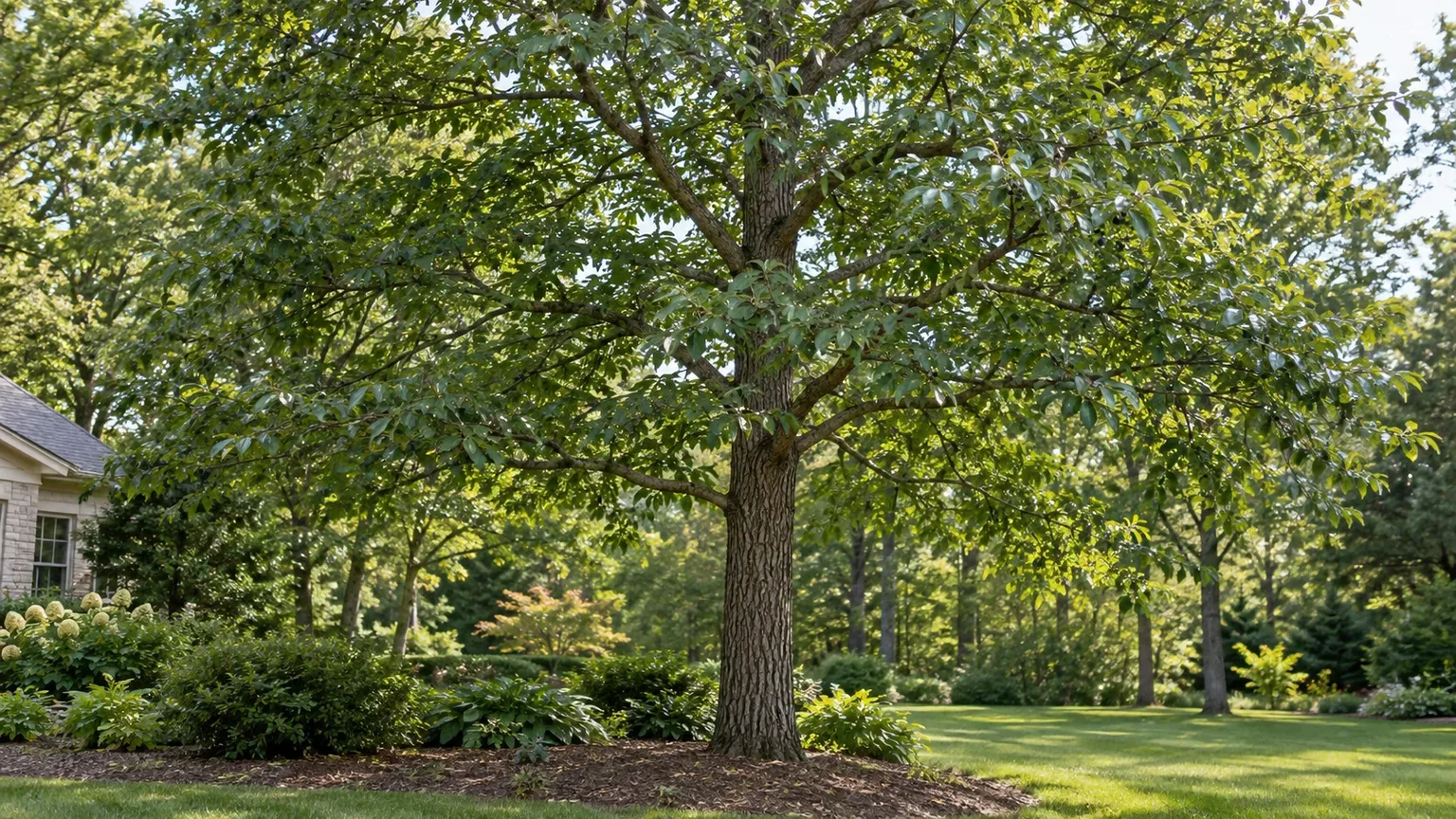
Black gum (Nyssa sylvatica), also called black tupelo or sour gum, is a native eastern North American tree prized for glossy summer leaves, deeply patterned mature bark, wildlife value, and fall color that can shift from gold and orange to scarlet, burgundy, and purple. It is also a tree to choose deliberately: black gum grows slowly, develops a deep root system, and does not welcome being moved after establishment.
The best care decision happens before planting. Give it a permanent site with room for its eventual crown, moisture that does not leave the root ball chronically waterlogged, and enough light for a strong shape and dependable autumn color. Once established in a suitable location, the tree usually needs less attention than the first-year sapling does.
Black gum at a glance: size, hardiness, and habit
Black gum is a deciduous tree that starts out narrowly pyramidal and develops a broader, more irregular crown with age. A useful landscape planning range is roughly 30 to 50 feet tall and 20 to 30 feet wide, but published estimates vary: some trees remain smaller in cultivation, while old specimens can become much larger. Check the expected dimensions of the cultivar you are buying rather than treating one size figure as a guarantee. NC State Extension and the Missouri Botanical Garden describe this variation in mature size and habit.
Black gum is generally listed for USDA hardiness zones 4 through 9, with the exact lower limit varying among references and cultivars. Its native range spans a wide set of eastern North American habitats, but that adaptability should not be read as immunity to poor planting or severe drought. Growth is slow; the UT Gardens cites an estimate of about 12 to 15 feet over 10 to 15 years in landscape conditions. Plan for a tree that rewards patience, not one that quickly fills a bare corner.
Pick a permanent site before buying
Look up and down before choosing the spot. Allow for the mature canopy above, and check for overhead wires, rooflines, sidewalks, driveways, underground utilities, and the location of nearby trees. A young nursery specimen can look modest, but a black gum is a long-term shade and specimen tree; crowding it against paving or a structure creates pruning and root conflicts years later.
Also consider what you want from the tree. A sunny, open lawn edge gives the crown room and usually makes fall color easier to appreciate. A woodland edge can work where some afternoon shade is acceptable, while a rain garden or naturally moist low area may suit the tree if the soil still supports establishment. If the only available position is a narrow foundation strip, choose a verified narrow cultivar or select a genuinely smaller species instead of relying on frequent pruning to hold black gum in an unsuitable space.
Match soil moisture and drainage to the tree
Black gum occurs in both wet places, such as bottomlands and swamp margins, and drier upland woods. In a home landscape, it is most useful to think of it as tolerant of a wider moisture range than many trees, not as a plant that must stand in water. Average, moisture-retentive soil that drains between rains is a reliable target. NC State Extension and the Penn State Extension black gum profile describe tolerance for wet conditions and occasional flooding as well as some dry soils.
If water remains in the planting hole long after rain, or the ground is compacted and airless, do not assume the tree’s wetland associations solve the problem. Roots need oxygen as well as water, and a newly planted root ball that stays saturated can decline. Conversely, avoid a hot, dry slope where irrigation is unreliable, especially during the first growing seasons. Matching the site to the young tree’s actual root zone matters more than trying to amend an unsuitable hole with a pocket of compost or gravel.
Set light, soil, and spacing expectations
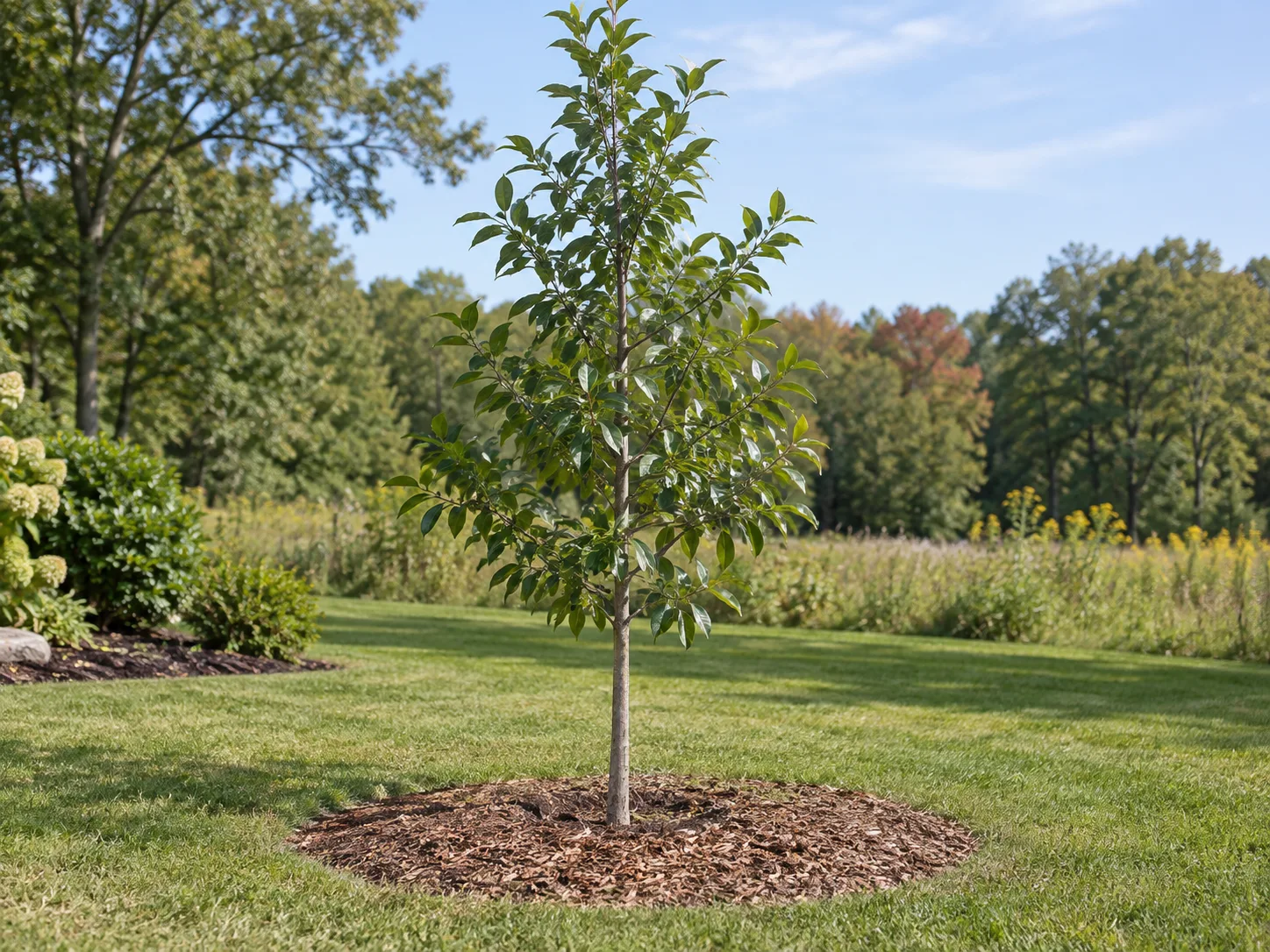
Full sun to part shade is suitable. More direct light generally supports a denser crown and vivid fall display, while light afternoon shade can protect a young tree in a hot, exposed yard. A heavily shaded spot may still keep the tree alive, but it can produce a more open form and less showy autumn color. Aim for several hours of sun and leave enough horizontal room for branches to develop naturally.
Black gum prefers moist, acidic soil, but it tolerates clay, loam, and sandy textures if the site does not keep its root zone waterlogged or bone-dry for long periods. It is not a good choice for strongly alkaline soil; if the pH is uncertain, use a soil test before trying to lower it. Do not make the planting hole dramatically richer than the surrounding ground. A sharp change in texture or fertility can hold water differently from the native soil and does not fix compaction or poor drainage.
Before purchase, ask the nursery whether the tree is a straight species or named cultivar, its mature height and width, and whether it was container-grown or field-dug. Because black gum is difficult to transplant once its root system is established, a smaller, healthy nursery tree is often a better investment than a large specimen that has lost a significant portion of its roots. The Missouri Botanical Garden’s plant profile flags the deep root system as a reason established trees are hard to move.
Plant a nursery tree at the right depth
Plant in spring or early fall when the ground is workable and hot, drying weather is not imminent. The hole should be broad enough for the roots to spread outward but no deeper than the root ball measured from the root flare. The root flare is the widening point where the trunk begins to transition into the main roots; it should sit at the finished soil surface or slightly above it, not disappear under backfill.
If a container-grown tree has circling roots, loosen or redirect small ones before planting. For a balled-and-burlapped tree, expose the upper root ball enough to locate the flare, then remove the rope and as much of the upper wrapping and wire basket as can be done safely after the tree is stable in the hole. Backfill with the excavated soil, water slowly to settle it, and do not stamp it into a hard layer. A wider hole encourages outward roots; an overly deep hole buries the trunk and can cause problems that are not obvious in the first season. Davey Tree’s root-flare guidance explains why planting depth is a lasting structural issue.
Avoid adding fertilizer at planting unless a soil test and local recommendation identify a specific need. Water the root ball thoroughly after planting, then spread a shallow mulch ring over the surrounding soil while keeping mulch several inches away from the trunk. Stake only if the site or root ball cannot keep the tree upright; remove or loosen supports once the tree can stand securely so they do not constrict the trunk.
Water through establishment, then check the soil
The first priority is keeping the root ball and the soil immediately beyond it evenly moist while new roots grow outward. Water slowly and deeply enough to wet that zone, then let excess drain. Do not decide on a rigid weekly schedule: sandy soil, wind, summer heat, rainfall, and the size of the nursery container all change how quickly the root ball dries.
Check moisture a few inches down near the edge of the original root ball. If it feels dry, water; if it is already damp and cool, wait and check again. This simple check prevents two common errors: watering a calendar rather than the tree, and assuming a wet-looking surface means the deeper root ball is moist. A newly planted tree may need more frequent checks through its first growing season and during dry spells in the next one or two seasons.
Once established, black gum can tolerate some dry soil, but drought tolerance is not a reason to let it wilt through an extended hot, rainless period. Irrigate during prolonged drought, especially if the tree is still young or growing in sandy soil. If leaves droop while the root zone is wet, do not keep adding water; inspect drainage, mulch depth, and the root flare, then seek local extension help if the decline continues. Black gum’s ability to occupy wet and dry native habitats does not make a transplanted tree instantly drought-proof.
Mulch and fertilize with restraint
Maintain a broad, modest mulch layer to conserve moisture and reduce competition from turf. Keep mulch about 2 to 3 inches deep and pull it several inches away from the trunk. Extend the ring as the tree grows when practical. A mulch volcano against the bark hides the root flare, traps moisture at the trunk, and can encourage roots to grow where they may later girdle the stem.
Do not fertilize automatically every fall. A healthy tree with normal leaf color and steady, if slow, growth often needs no extra fertilizer; turf fertilizer or decomposing organic mulch may already supply nutrients. Virginia Cooperative Extension advises against fertilizing healthy shrubs and trees simply because a calendar says it is time. If foliage becomes unusually pale or small, growth is stunted, or the tree has other persistent symptoms, first check water, planting depth, pests, and soil pH. A soil test can identify whether a nutrient is actually low; follow its recommendation and the product label rather than applying a generic dose around the trunk. Colorado State Extension also advises minimizing fertilizer during root establishment because excess nitrogen can favor canopy growth over the roots a transplant needs to settle in.
Prune for structure, not size
Black gum generally needs light pruning: remove dead, broken, or crossing branches and preserve a strong central leader while the tree is young. Make cuts just outside the branch collar, the slightly raised tissue where a branch joins the trunk. Do not top the crown to keep a tree that has outgrown its location; topping creates weak regrowth and does not solve the underlying space problem.
Prune in dry weather with clean, sharp tools, and avoid removing large limbs yourself. If the tree needs structural corrections beyond small branches, consult a qualified arborist who can assess the branch unions and make appropriate cuts. Pruning cannot correct a poor site, and removing healthy lower limbs just to make the tree look more mature can reduce its natural form before it has developed.
Flowers, fruit, and fall color explained
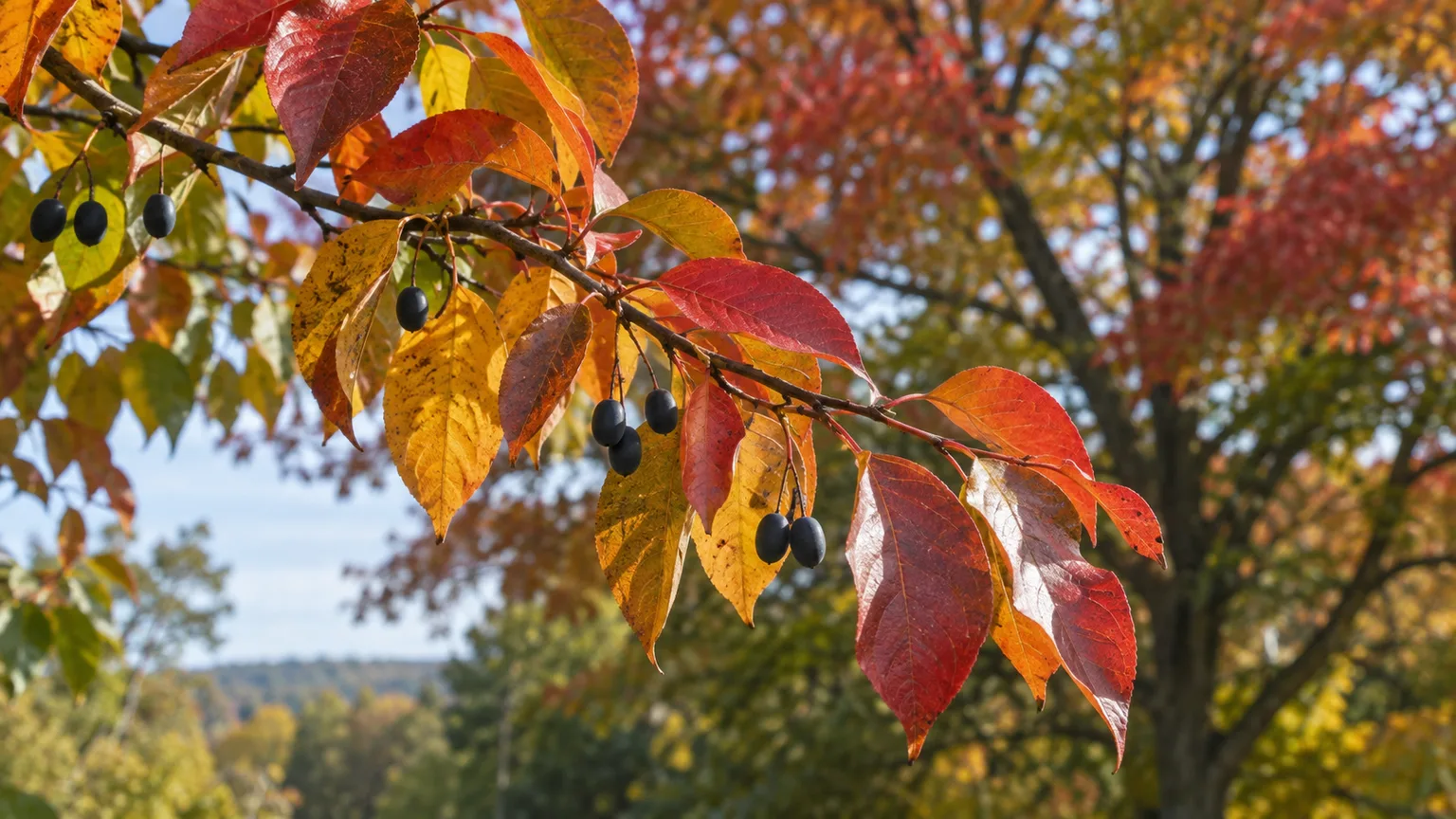
Spring flowers are small and not especially showy, but they provide nectar for bees. Black gum is mostly dioecious: individual trees tend to have predominantly male or predominantly female flowers. Female trees can set the small, oval blue-black fruits when pollinated by a compatible male nearby, though some trees bear a few flowers of both sexes. That is why one black gum may carry fruit while a nearby one does not. The Penn State Extension profile describes the separate-sex flowers, pollination, fruit, and wildlife value.
The fleshy fruits are drupes, not the hard, spiky seed balls of sweetgum. Birds and other wildlife eat them, so fruiting can be a benefit if you want a native food source. A few drupes may still fall on paving or a patio; if that cleanup matters, keep the tree away from the busiest seating or walking surface, or ask a nursery about the fruiting characteristics of the specific cultivar.
Autumn foliage is the tree’s signature, but color varies with genetics, sunlight, weather, and local growing conditions. Red, orange, yellow, and purple tones may appear on the same tree or even among branches; no tree can promise the same vivid shade every fall. Use fall color as a strong reason to plant black gum, not as the only measure of its health. Its glossy summer leaves, textured bark, branching form, spring nectar, and wildlife fruit add interest outside the color peak as well.
Choose a cultivar for the space and effect
Named cultivars help narrow a choice when mature shape or foliage timing matters. They do not remove the need to check the nursery’s local size estimate, planting distance, and fruiting information. Availability and performance can also differ by region.
- ‘Tupelo Tower’ has a narrow, upright form and is useful where a broad crown would be a poor fit; UT Gardens describes it as roughly 10 to 15 feet wide.
- ‘Autumn Cascades’ is a weeping female selection with orange-red fall color and the potential to bear fruit when pollinated.
- ‘Zydeco Twist’ has contorted, twisting branches that make its winter outline a feature.
- ‘Wildfire’ is known for reddish-bronze new growth that changes as the foliage matures.
- ‘Firestarter’ is selected for early, vivid red autumn color and a narrower habit than the straight species.
Descriptions of color are expectations, not guarantees. If you are choosing between a straight species and a cultivar, decide first whether canopy width, weeping or upright shape, fruit, or foliage timing is most important. The UT Gardens cultivar notes and NC State Extension’s cultivar list give helpful starting points, but confirm the plant’s label and mature dimensions before purchase.
Propagation: why a nursery tree is usually simpler
Black gum can be grown from seed, and horticultural references also describe propagation from softwood or semi-hardwood cuttings. In a home garden, seed-grown plants take patience, and the offspring will not necessarily keep the parent’s exact crown shape, timing, or fall-color intensity. The Gardenia profile outlines seed and cutting methods, but a named cultivar is usually more predictable when purchased from a nursery.
If you try seed, collect ripe drupes from a known tree and use a reputable propagation reference for cleaning, stratification, and sowing; germination is not an instant route to a landscape-sized tree. Cuttings require careful moisture and temperature control and may root inconsistently. For most homeowners, spending effort on selecting a healthy, appropriately sized nursery tree and planting it well offers a better chance of success than moving or propagating a mature specimen later.
Diagnose wilt, leaf spots, and dieback
When the tree looks stressed, start with the pattern rather than changing several care conditions at once. Check whether symptoms affect one branch or the whole canopy, whether the soil is dry or saturated, whether the root flare is buried, and whether damage appears on leaf surfaces or bark. A recently planted tree with dry soil needs a different response from an established tree with wet soil and progressive branch dieback.
Small leaf spots may appear during a wet season and do not automatically mean the tree is in danger. NC State Extension lists leaf spots, cankers, rust, leaf miners, and scale among possible problems, but symptoms can overlap. Look for repeated spotting, premature leaf drop, sunken areas on branches, dead twigs, or decline that progresses over more than one season. Photograph the leaves and affected branches, note the watering and weather history, and ask your local extension office or a certified arborist to identify the cause before applying a pesticide or fertilizer.
Separate normal autumn leaf drop from stress
Black gum is deciduous, so a broad color change followed by leaf drop in autumn is expected. A few yellow leaves during the growing season can reflect ordinary turnover, but widespread early yellowing, limp foliage, or browning across multiple branches deserves a closer check. Soil moisture is the first useful clue: dry soil points toward a need for deep watering, while saturated soil suggests that more water could worsen root stress.
If symptoms begin on one branch, inspect its bark and branch union for injury or canker-like damage. If the whole tree declines, revisit planting depth, drainage, root disturbance, and drought history. A mature tree that is dying back is not a candidate for guesswork; get a diagnosis before pruning major limbs or applying a treatment.
Monitor pests and disease before treating
Leaf miners may leave pale winding trails inside leaves, while scale insects can appear as small, fixed bumps on twigs or leaf undersides. Check a few leaves and branches closely before deciding an insect is responsible; isolated feeding damage is different from a rapidly expanding infestation. If you find a pest, identify it and ask an extension specialist whether management is warranted for a mature landscape tree.
Cankers and fungal leaf diseases are more concerning when they coincide with branch dieback or repeated canopy decline. Keep the tree healthy with correct planting depth, adequate establishment water, and mulch that does not touch the trunk. Do not spray a broad-spectrum product based on a photo alone; treatment depends on the organism, timing, and label directions, and some tree declines remain unexplained even when spots or cankers are present.
Black gum and sweetgum are different trees
The names sound alike, but black gum (Nyssa sylvatica) and American sweetgum (Liquidambar styraciflua) are different species. Black gum has simple, oval leaves with mostly smooth edges and small fleshy drupes. Sweetgum has star-shaped, lobed leaves and hard, spiky seed balls that can collect on lawns and paths.
If you want brilliant autumn color without sweetgum’s spiky fruit, black gum is worth considering, though a female tree may still drop a modest crop of soft fruit. Check the botanical name on the nursery tag: “black gum,” “black tupelo,” and “sour gum” refer to Nyssa sylvatica, while “sweetgum” refers to Liquidambar styraciflua.
Conclusion
Black gum is a rewarding native shade tree when its slow growth, mature footprint, and deep root system fit the yard. Choose the permanent site first, favor moist soil that does not stay airless, and plant a healthy nursery specimen with its root flare visible at the finished grade. Those choices prevent more problems than a schedule of routine pruning or fertilizer.
Water consistently while the tree establishes, then respond to actual soil moisture and prolonged drought. Keep mulch off the trunk, prune only for sound structure, and treat fall color, fruiting, and cultivar descriptions as variable traits rather than promises. With patience and a site that suits it, black tupelo grows into a long-lived landscape tree that offers shade, seasonal color, and food and shelter for wildlife.