Bradford Pear Problems: Invasiveness, Smell and Risks
Learn why Bradford pears spread, smell and split, what state restrictions mean for existing trees, and how to choose a safer native replacement.
A Bradford pear can look like an easy win: fast growth, a compact crown, clouds of white spring flowers, and vivid autumn color. The trouble appears later, when a tight, weakly attached canopy starts dropping large limbs and fruit from supposedly sterile trees produces invasive seedlings beyond the yard. That does not mean every mature Bradford pear is about to fall or that every homeowner is legally required to remove one; it does mean the species deserves a more careful decision than “pretty tree” or “bad tree.”
The useful way to judge a Bradford pear is to separate four questions: what tree you have, whether it is producing or spreading seed, whether its structure puts people or property at risk, and what current local rules require. Those answers guide whether to monitor it, have it assessed, remove it, and replace it with a tree suited to your property and region.
The quick answer: why this popular tree became a problem
Bradford pear is one cultivar of Callery pear (Pyrus calleryana), an Asian tree introduced to the United States and widely planted as an ornamental. Its spring flowers can smell unpleasant, its upright branch unions are prone to splitting as the tree grows, and Callery pear offspring can spread into natural areas where they compete with native vegetation. Purdue Extension traces the tree’s early use to efforts to find pear material resistant to fire blight; its vigor and tolerance of urban conditions later helped make it a common landscape choice. (Purdue Extension)
If a Bradford pear is already in your yard, start with the tree itself rather than a headline about bans. Check your state agriculture or natural-resources agency for current rules, then assess the tree’s condition and the targets beneath it. A large tree with no visible defect may be a candidate for professional monitoring while you plan a replacement; a cracked trunk or large hanging limb over a frequently used area deserves prompt attention from a qualified arborist.
What is a Bradford pear, and how can you identify one?
Bradford is a cultivar of Callery pear
“Bradford pear” is the name of a cultivated form of Callery pear, not a separate species. Other ornamental forms include Cleveland Select, Chanticleer, Aristocrat, and Autumn Blaze. That distinction matters because rules and ecological guidance often apply to the wider Callery pear species, while a homeowner may know only the cultivar name on an old nursery tag. NC State Extension’s plant profile lists Pyrus calleryana as an invasive tree in North Carolina and describes the species’ flowers, fruit, leaves, and structural weaknesses. (NC State Extension Plant Toolbox)
A typical Callery pear is a medium-size deciduous tree with a dense, upright-to-rounded crown. Mature size varies with cultivar, site, and growing conditions, but trees commonly reach several dozen feet, so an old specimen can affect roofs, driveways, sidewalks, and overhead space even if it began as a small ornamental. A narrow upright shape can make the tree look tidy when young; it does not guarantee strong branch attachments as the crown gains weight.
Flowers, leaves, fruit and thorns offer seasonal clues
In early spring, before or around the time many other trees leaf out, Callery pears produce clusters of five-petaled white flowers. The leaves are glossy and oval to broadly egg-shaped, with fine teeth along the margins; they turn red, purple, or bronze in fall. Small, hard, roundish fruits may appear later in the season, especially where another compatible Callery pear is flowering nearby. NC State describes the species’ fruit as having little practical or ornamental value beyond attracting birds.
Older trees can develop sharp spurs or thorny growth, especially when they arise outside cultivation. Those thorns are a useful warning when handling seedlings or working around a wild stand, but they do not provide a foolproof way to distinguish every cultivar in a landscape. Flower color and leaf shape also overlap with other ornamentals. If identification affects a removal grant or a legal requirement, photograph the full tree, leaves, flowers or fruit, and trunk, then ask a local cooperative extension office or qualified plant professional to confirm it.
Why a once-sterile cultivar became invasive
Cross-pollination lets Callery pears make viable fruit
The first Bradford pears were selected in part because they were considered sterile and lacked the sharp spurs found on wild forms. “Sterile,” however, was not a permanent safety feature for the landscape. As nurseries and cities planted different Callery pear cultivars near one another, pollen from one compatible tree could fertilize flowers on another. The resulting fruit can carry viable seeds. Purdue Extension describes how cross-pollination among varieties helped drive the spread, while NC State Extension notes that cultivar crossings and rootstock sprouts can contribute to wild Callery pears. (Purdue Extension; NC State Extension)
This explains why one Bradford pear in a yard may have little or no fruit in one year while another nearby tree is covered with it. Flowering overlap and pollen availability matter; the absence of fruit on a single tree does not make all surrounding Callery pears ecologically harmless. Nor does a “sterile” label on an older nursery record establish that a tree cannot contribute to seed production now.
Birds spread seed into fields and woodland edges
Birds eat the small fruits and disperse seeds in their droppings. Seeds can germinate along fence lines, roadsides, abandoned fields, utility corridors, and forest margins—places where mowing or dense shade might otherwise limit young trees. A seedling that appears well away from a planted tree is therefore not necessarily a different species; it may be a Callery pear offspring carried by wildlife.
The ecological problem grows when many seedlings establish together. Young wild pears can form dense, thorny patches that shade or crowd other plants and complicate access for people and wildlife. The practical takeaway is to watch for seedlings near the parent tree and at property edges, especially where birds perch. Pulling a small seedling while the soil is moist is easier than dealing with a woody, thorny volunteer later; for larger growth, identify it first and choose a removal method appropriate to its size and local rules. Horticulture reporting reviewed by a certified arborist also emphasizes follow-up monitoring after removal because seedlings can appear later. (Birds & Blooms)
What a state ban does—and does not—mean
Ohio, South Carolina and Pennsylvania regulate different activities
There is no single, simple national rule that says “Bradford pears are banned” in the same way everywhere. A state may restrict commercial sale or distribution, list the plant as noxious, prohibit planting or propagation, or support local removal programs. Those are different policies, and headlines often compress them into the word “ban.”
Ohio State University Extension reports that Ohio’s invasive-plant rules prohibit buying and planting Callery pear beginning in 2023. North Carolina Cooperative Extension reports a South Carolina sales restriction and notes that it does not make residents remove trees already planted. Pennsylvania’s Department of Agriculture lists Callery pear as a Class B controlled plant and states that listed noxious weeds may not be sold, transported, planted, or propagated in Pennsylvania. (Ohio State University Extension; NC Cooperative Extension; Pennsylvania Department of Agriculture)
These examples show why it is better to check the actual state agency page than rely on a national list copied from an old article. Regulations can change, and county or municipal ordinances, public-tree rules, grants, and replacement programs may add separate local requirements or incentives. If you are buying nursery stock, ask whether a plant sold as an ornamental pear is a Callery pear cultivar and verify that it is legal where you live.
An existing tree is a separate legal and ecological question
A restriction on selling or planting new trees does not automatically prove that a private homeowner must remove an established specimen. The Pennsylvania rule, for example, explicitly covers sale, transport, planting, and propagation; it should not be stretched into a removal mandate without checking the relevant law. South Carolina’s extension guidance likewise distinguishes its sales restriction from trees already planted. For a site-specific answer, contact the state department of agriculture or natural-resources office and ask about existing private landscape trees, removal, disposal, and any local incentives.
Legality and stewardship are also different decisions. A mature Callery pear can provide shade today, and removing it all at once may leave a hot, exposed yard. At the same time, a tree can contribute to invasive seed spread even when it is structurally sound. You can weigh both concerns: confirm the tree’s condition, look for fruit and seedlings, learn the local rules, then decide whether staged replacement makes sense. Do not let a vague headline force an unsafe weekend removal or convince you that a healthy tree poses no ecological cost.
Why the flowers smell—and how long the odor lasts
Callery pear flowers have a pungent odor that many people describe as fishy, sour, or reminiscent of decay. The experience varies with distance, wind, temperature, and individual sensitivity; one person may notice it intensely while another finds it faint. The bloom period is relatively brief, but because the tree flowers early and often blooms heavily, a row of trees can make the smell hard to avoid during that window. Ohio State Extension and horticulture experts quoted by Birds & Blooms describe the odor as a recognizable drawback of Callery pear blooms. (Ohio State University Extension; Birds & Blooms)
The odor is not a reliable sign that a tree is diseased or dying. It is associated with the flowers themselves, so pruning a few dead twigs will not change the scent of a full bloom. If the smell makes an existing tree unpleasant near a patio or window, that is a reasonable quality-of-life factor in a replacement plan, but it should be balanced with shade, structural risk, local law, and the time needed to establish a new canopy.
Why the canopy splits in wind, snow and ice
Narrow branch unions concentrate stress
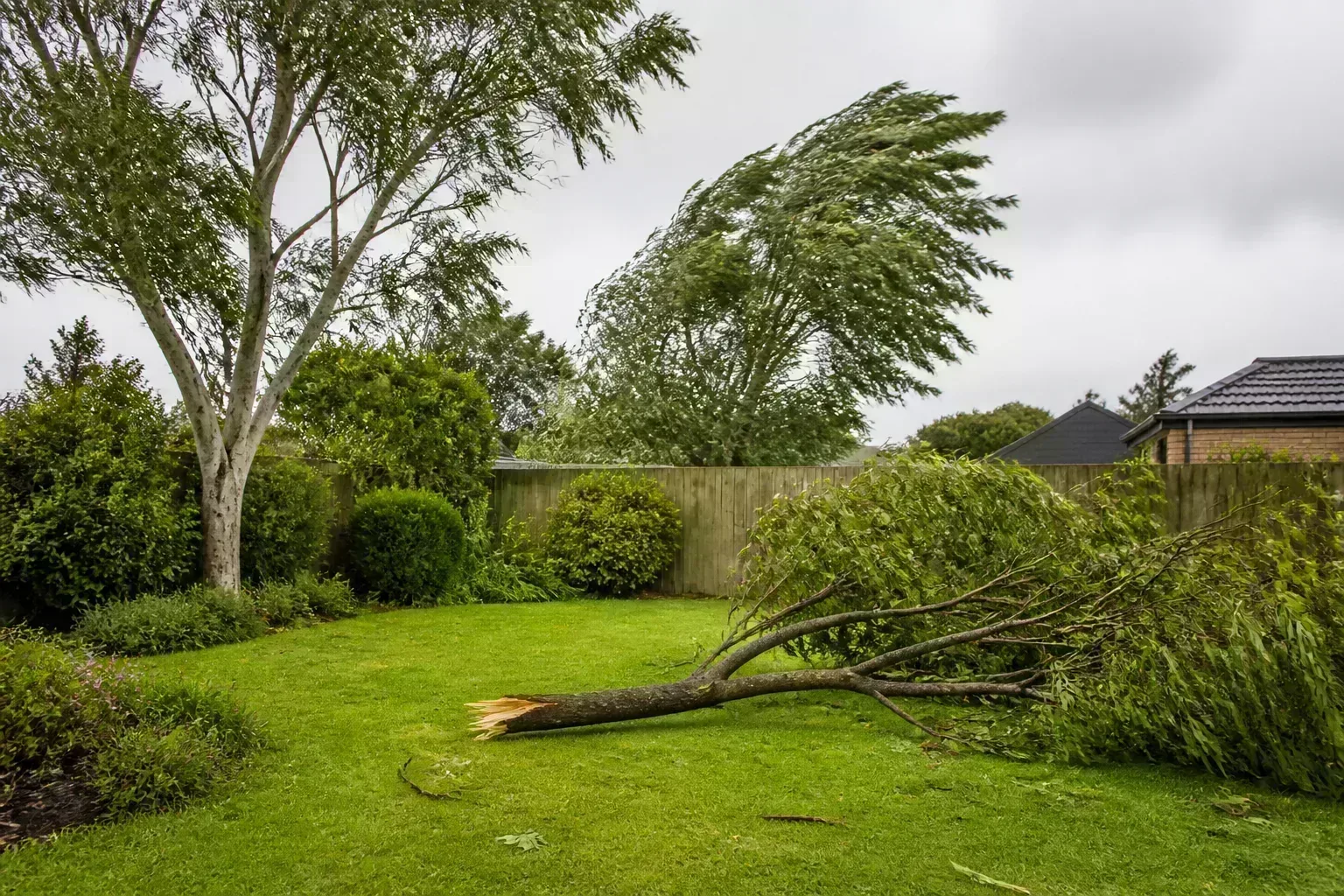
A young Bradford pear often grows with several upright stems emerging close together, making a tight V-shaped fork. As the stems thicken, bark can become trapped between them rather than forming a strong wood-to-wood attachment. The two leaders then behave less like one integrated branch and more like separate poles pressed against each other. Weight from leaves, wet snow, ice, or wind can pry the union apart, especially if the tree is crowded or has grown rapidly.
Purdue Extension identifies the upright branching and weak unions as a structural concern, and the horticulture reference Better Homes & Gardens notes that many Bradford pears begin splitting as they mature. (Purdue Extension; Better Homes & Gardens) The exact timing is not a countdown: site exposure, prior pruning, branch attachment, storm history, and cultivar all matter. A tree that has stood through many storms can still develop a crack; a tree with a weak fork is not guaranteed to fail tomorrow.

Walk around the tree from the ground and look for a fresh vertical crack where leaders meet, a hanging limb, new lean, bark tearing, or a large dead branch over a place people use. Also note the “target”: a sound defect over an empty wooded edge has different consequences from the same defect over a bedroom, play area, driveway, or public sidewalk. Do not climb the tree, cut a large limb from a ladder, or work near power lines to investigate. If the defect is substantial or the target is occupied, arrange an assessment by an ISA-certified arborist.
Separate storm damage from fire blight
Not every blackened branch is fire blight. A limb torn in a storm may have a sharp break, exposed wood, and leaves that wilt after the injury; a tree can also have deadwood for several unrelated reasons. Fire blight is a bacterial disease of pear and other susceptible plants. NC State Cooperative Extension describes early symptoms on blossoms and shoots that wilt, darken, and remain attached, with infected shoot tips sometimes curling into a shepherd’s crook. (NC State Cooperative Extension)
That pattern can help you decide when to seek a diagnosis, but appearance alone is not enough to prescribe treatment. Document whether symptoms started at flowers or shoot tips, whether damage is spreading, and whether the weather has been warm and wet; then share photos with your cooperative extension office or arborist. If you see orange, rust-like lesions or unusual fruit growth, ask for a separate identification rather than assuming it is fire blight. Avoid moving suspected diseased cuttings around the landscape, and follow local guidance for disposal and pruning timing.
Deciding whether an established tree should stay
When to call an arborist and what to ask
A Bradford pear is not automatically an emergency just because it is old, large, or unpopular. A useful assessment considers structural defects, the size and likelihood of a branch or stem failing, and what it could hit. Ask an ISA-certified arborist to inspect the root flare, trunk, main unions, deadwood, and crown balance. Tell them whether a crack is new, whether branches have already broken, and which parts of the home or yard are under the canopy.
A good evaluation should leave you with options rather than a bare “keep it” or “cut it” verdict. Ask whether the risk is immediate or can be reduced through appropriate pruning, whether the tree is structurally poor enough that removal is the safer course, and what maintenance would be needed over the next few years. Tree work near roofs, roads, or utility wires is a professional job; municipal permits may apply to street trees, and electric utilities handle clearance near energized lines. Get more than one opinion if the recommendation is expensive and the hazard is not urgent.
Removal, stump follow-up and seedling control
Removing a large tree is not a casual chainsaw project. A mature Bradford pear may have heavy limbs, a split crown, and unpredictable loading; felling it yourself can injure people, damage a house, or strike a wire. Hire a qualified tree-care company for large trees, ask for proof of insurance and credentials, and establish what happens to the stump and debris. If local law or a grant program applies, confirm approval and documentation requirements before work begins.
How to handle the stump depends on its size, location, equipment access, and whether resprouting occurs. Grinding, pulling, or a labeled stump treatment are not interchangeable and may be governed by local pesticide rules; consult a qualified contractor or extension office rather than applying a product by guesswork. After the main tree is removed, inspect the area during the growing season for stump shoots and new seedlings. Small seedlings are easier to pull when young, but roots can break in dry or compacted soil; remove the whole root when practical and check the spot again rather than assuming one pass solved it.
Plan the replacement before the site becomes a bare patch. Mark underground utilities before planting, check mature crown width, and consider where shade falls on the house and garden. If the original tree shaded a south- or west-facing wall, a small ornamental replacement will not recreate that cooling immediately. Purdue Extension cautions that removing mature trees can mean a significant loss of existing canopy, so replacement is part of the ecological and property decision, not an afterthought. (Purdue Extension)
Choosing a native replacement that fits your site
Pick a replacement for the conditions you actually have, not only for a similar flower color. First check which trees are native to your county or ecoregion, then compare mature height and spread, sun exposure, soil drainage, space from pavement and utilities, and how much maintenance you want. A tree can be native somewhere in the United States and still be a poor local choice; provenance and regional adaptation matter. Missouri Botanical Garden’s native-alternative guide and Purdue Extension both offer examples such as serviceberry, flowering dogwood, redbud, and crabapple, but the best option depends on site and region. (Missouri Botanical Garden; Purdue Extension)
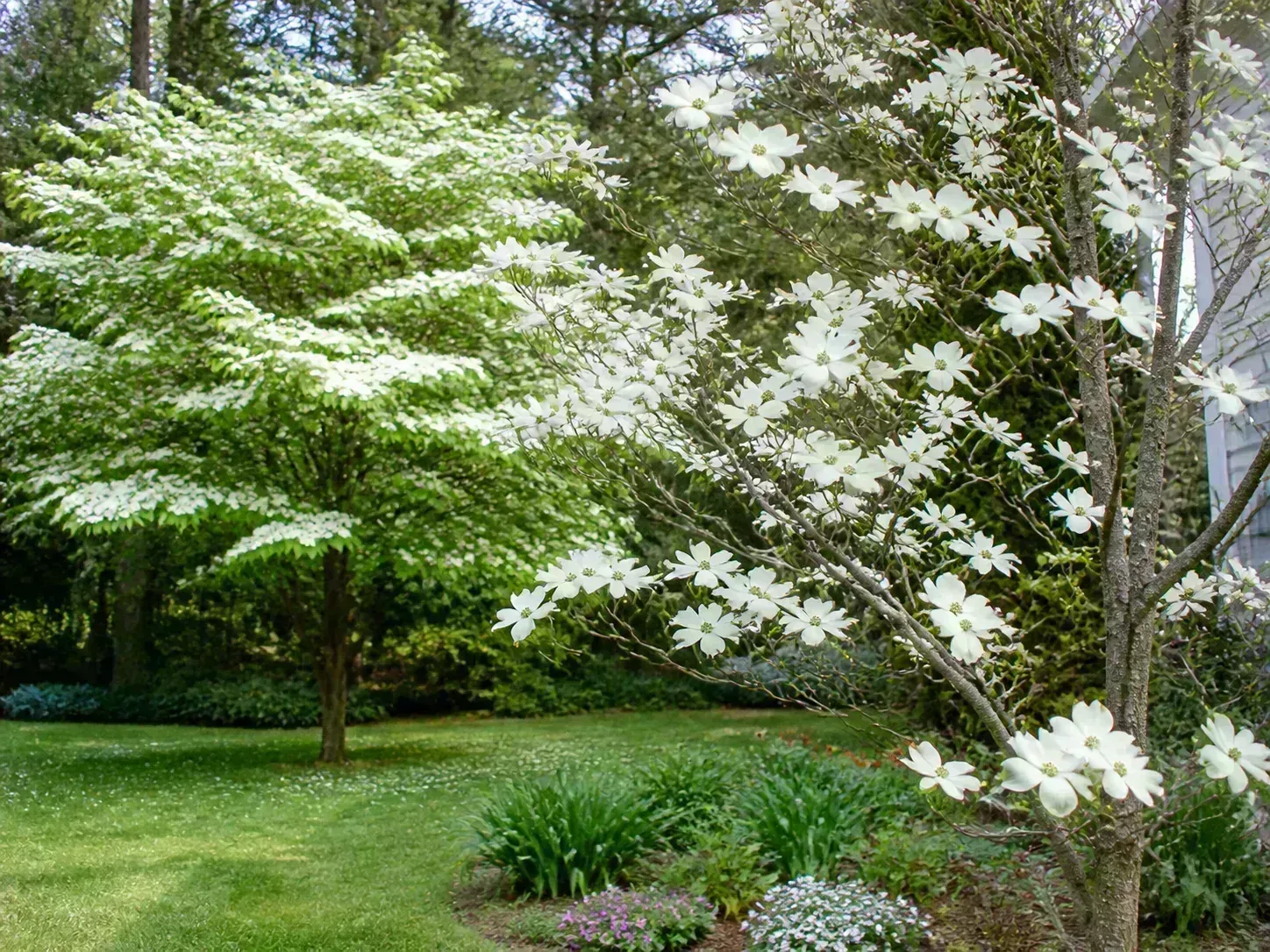
Flowering dogwood can suit a woodland edge or part-shade setting, particularly where the soil is not waterlogged. It offers spring bracts, layered branching, and fruit that supports wildlife, but it will not mimic the rapid growth or full-sun tolerance of every pear site. Match the species to your region and check for local disease pressures before planting.

Serviceberry species range from large shrubs to small trees and often offer spring flowers, edible-quality berries for people where properly identified, and fruit valued by birds. They can be a practical fit where you want a smaller tree or a multi-stem form, but birds may eat the fruit before you do. Eastern redbud adds early pink-purple flowers and can tolerate some shade; it is often best used as a smaller understory or lawn tree rather than a direct replacement for a large canopy. Native crabapples and hawthorns can provide flowers and wildlife food, but check mature size, thorniness, fruit drop, and disease-resistant local selections.
Spacing matters as much as the species. Give roots and canopy room, keep the trunk away from driveways and overhead wires, and avoid planting right against a foundation simply because the young tree fits there today. Water a new tree deeply during establishment according to local extension guidance, protect the trunk from mower and string-trimmer damage, and mulch broadly without piling mulch against the bark. If removal has exposed an area to strong sun, choose a species that tolerates the new light rather than copying the old tree’s placement blindly.
Conclusion
Bradford pear problems come from a combination of invasive Callery pear offspring, pungent flowers, and weak branch unions—not from one simple flaw that makes every existing tree equally dangerous. Identify the tree, check current state and local rules, look for fruit and seedlings, and have an arborist evaluate meaningful structural defects or an occupied target. If removal makes sense, plan the stump follow-up and replacement together, choosing a locally appropriate native tree that fits the sun, soil, space, and canopy role. That approach reduces future spread without turning a nuanced yard decision into a rushed or unsafe job.