9 Low-Maintenance Ornamental Grasses for Your Yard
Compare nine low-maintenance ornamental grasses by sun, soil, size, and spread risk, then learn which native clump-formers fit your yard.
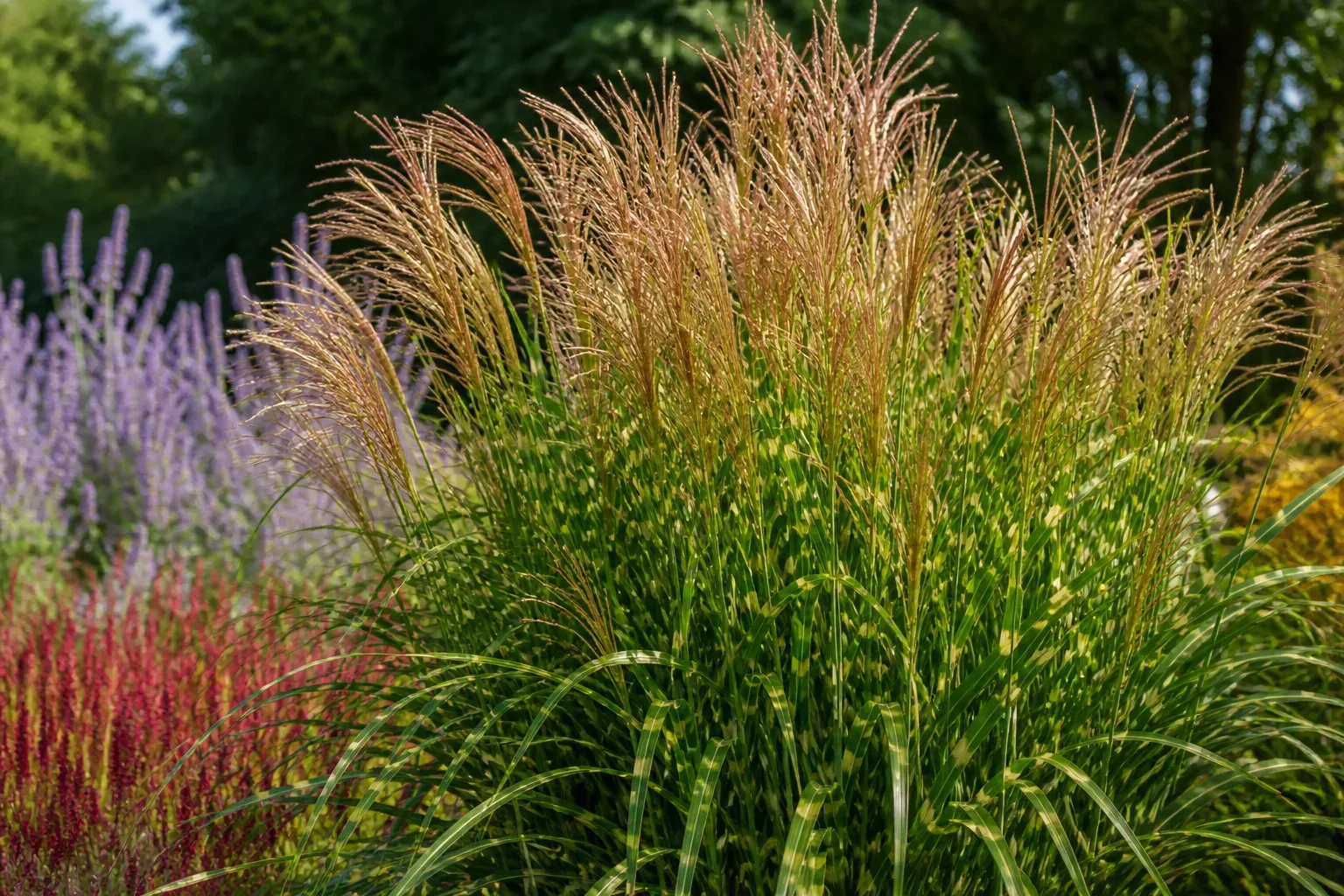
Ornamental grasses solve a problem that flowers alone rarely fix: they carry a border through the whole year with movement, seedheads, and winter structure. The trick is choosing grasses that match your light and moisture—and understanding that “low maintenance” describes a plant after it is established, not the week you bring it home from the nursery.
The nine grasses below are strong performers when the site fits. Most are native to North America, clump-forming or slow-spreading, and rated low maintenance by extension references. A few need honest caveats: river oats and Indian grass can cover more ground than a small bed allows, and Japanese sedge is a moisture-loving sedge, not a drought-tough prairie grass. Start with your conditions, then pick the plant—not the other way around.
What “Low Maintenance” Actually Means for Ornamental Grasses
Low maintenance does not mean zero care. It means the grass does not need frequent division, heavy fertilizing, staking, or constant watering once its roots are settled. Colorado State University Extension groups ornamental grasses as some of the most adaptable perennials for Colorado landscapes, noting that many tolerate lean soil and drought after establishment. That adaptability is real, but it depends on putting the right grass in the right place.
Most of the grasses on this list need only three recurring jobs: water regularly during the first season, cut back or comb out old foliage at the correct time of year, and divide only when the crown outgrows its space. Skip the weekly feedings, constant deadheading, and disease sprays that high-maintenance perennials demand.
Clumping grasses versus rhizomatous spreaders
Clump-formers expand slowly from a central crown. Pink muhly, little bluestem, prairie dropseed, and bottlebrush grass stay where you plant them, which makes them easier in mixed borders and near paths. Rhizomatous spreaders send stems underground and can colonize open soil. Indian grass and river oats fall into this category. They are excellent for erosion control and large naturalistic plantings, but they need room—and river oats can also self-seed freely, according to the NC State Extension profile for river oats.
Before you buy, read the label for “clumping,” “spreading,” or “colonizing.” In a 4-foot-wide foundation bed, a clump-former is almost always the safer choice.
Warm-season and cool-season timing
Warm-season grasses—including switchgrass, little bluestem, pink muhly, and Indian grass—green up in late spring, peak in summer heat, and often hold color into fall. Cool-season grasses such as bottlebrush grass and tufted hairgrass start growth earlier in spring and may slow or go dormant during hot, dry midsummer.
That distinction matters for pruning. Warm-season grasses are usually left standing through winter and cut back in late winter or very early spring. Cool-season grasses may need a lighter touch and earlier cleanup if new blades are already emerging. Savvy Gardening’s ornamental-grass pruning guide recommends waiting until late winter for most deciduous grasses so seedheads feed birds and stems protect the crown from freeze-thaw cycles.
Match Sun, Soil, and Mature Size Before You Shop
Color sells plants at the garden center. Sun hours, drainage, and mature width keep them alive afterward. Count how many hours of direct sun the planting strip receives between April and September. Dig or probe after rain: does water sit for hours, or drain within a day? Finally, measure the bed and compare it to the mature spread on the tag—not the size of the pot.
Full-sun, drought-tolerant choices
For open beds, parking strips, and south-facing borders, prioritize switchgrass, little bluestem, pink muhly, prairie dropseed, and Indian grass (in large spaces only). These grasses develop their best color and stiffest stems in full sun. NC State Extension’s little bluestem profile lists high deer resistance, clay tolerance, and low maintenance as key traits—provided the site is sunny and well drained.
Pair these with drought-tolerant perennials and skip the sprinkler-heavy lawn approach. Our guides on ornamental grasses for yard borders and grasses that return bigger every year cover complementary picks when you want mixed textures in the same bed.
Partial-shade and moist-soil choices
Shaded yards are not out of luck, but the palette shifts. River oats, bottlebrush grass, tufted hairgrass, and Japanese sedge handle partial shade; several prefer steady moisture. Tufted hairgrass needs more water as sun exposure increases. Japanese sedge (Carex morrowii) is technically a sedge, not a true grass, and thrives in moist, dappled shade near ponds or downspouts.
Do not plant pink muhly or little bluestem in deep shade and expect the same performance. They may survive while growing thin, floppy, and flowerless—a common reason gardeners conclude that “grasses are high maintenance” when the real issue was placement.
Quick Comparison: Nine Grasses at a Glance
| Grass | Best light | Water need | Mature height | Spread habit | Main caution |
|---|---|---|---|---|---|
| Switchgrass | Full sun | Low to moderate | 3–6 ft | Slow clump; some cultivars spread | Can flop in shade or rich, wet soil |
| Little bluestem | Full sun | Low | 2–4 ft | Clumping | Needs sun and drainage for upright form |
| Pink muhly | Full sun | Low | 2–3 ft | Clumping | Bloom is the show; weak in shade |
| Prairie dropseed | Full sun to part shade | Low to moderate | 2–3 ft | Slow clump | Slow to size up; worth the wait |
| Indian grass | Full sun | Low to moderate | 5–7 ft | Rhizomatous | Too large and spreading for small yards |
| River oats | Part sun to shade | Moderate | 2–5 ft | Rhizomes + self-seeding | Can spread aggressively in small beds |
| Bottlebrush grass | Part shade | Low to moderate | 2–4 ft | Clumping | Cool-season; may brown in summer heat |
| Tufted hairgrass | Part shade | Moderate | 1–3 ft | Clumping | Needs more water with more sun |
| Japanese sedge | Part to dappled shade | High | 12–18 in | Clumping sedge | Not drought-tolerant; moist soil |
Use the table as a filter, not a shopping list. Two or three well-placed grasses usually look more intentional than nine crammed into one bed. If you are designing a new bed from scratch, sketch three layers: a back row for height (switchgrass or Indian grass in large sites), a middle band for color and plumes (little bluestem, pink muhly, prairie dropseed), and a front edge for fine texture or shade-tolerant fillers (Japanese sedge, tufted hairgrass). That layering keeps maintenance low because each plant occupies a role instead of competing for the same space.
Best Low-Maintenance Grasses for Full Sun

Full-sun grasses anchor sunny borders, meadow strips, and low-water front yards. Group them in odd-numbered drifts—three or five plants of the same species—so the repetition reads as design rather than random dots.
Switchgrass, little bluestem, and pink muhly
Switchgrass (Panicum virgatum) stays upright when many grasses collapse in winter, with yellow fall foliage and airy panicles above the blades. Native to much of the eastern and central United States, it tolerates clay, occasional flooding, and drought once established. NC State Extension lists heights from 3 to 7 feet depending on cultivar and conditions, with low maintenance and wildlife value for birds and skipper butterflies. Use it as a vertical screen or back-of-border plant. Compact cultivars such as ‘Heavy Metal’ and ‘Shenandoah’ stay narrower than wild-type plants and are easier to fit beside a walkway; tall selections work better as a living screen at the property line.
Little bluestem (Schizachyrium scoparium) is the workhorse for hot, dry borders. Silvery-blue summer foliage turns copper and purple in fall, and the narrow clumps fit smaller spaces than switchgrass. It grows in poor soil, resists deer browsing, and needs little beyond an annual late-winter cutback. It is one of the best native grasses for no-grass backyard ideas where you want texture without a traditional lawn.

Pink muhly grass (Muhlenbergia capillaris) is the showpiece. Feathery pink plumes in late summer and fall float above fine green foliage, and the clumps stay compact. The Missouri Botanical Garden Plant Finder describes it as a clump-forming warm-season grass that does not spread by rhizomes, with excellent drought tolerance in full sun. Plant it where backlighting—morning or late-afternoon sun—can shine through the plumes.
Prairie dropseed and Indian grass
Prairie dropseed (Sporobolus heterolepis) is the slow, refined choice. Fine, arching leaves smell faintly of coriander when crushed, and the airy flower panicles hover above the foliage in late summer. It is slow to reach full size but lives for decades with minimal division. Full sun to light shade and average to dry soil suit it; it is one of the few true grasses that tolerates a bit of shade without collapsing.
Indian grass (Sorghastrum nutans) belongs in large meadows, prairie restorations, and wide open borders—not a 6-foot-wide strip next to the driveway. Golden stems and bronze seedheads reach 5 to 7 feet, and rhizomes gradually widen the stand. If you have acreage and want native height with low water needs after establishment, it delivers. In a typical suburban lot, switchgrass or little bluestem gives similar color at a more manageable scale. Named cultivars such as ‘Indian Steel’ and ‘Sioux Blue’ offer more predictable height and form than straight species seedlings, which is worth specifying if you are planting a formal border rather than a restoration meadow.
Best Low-Maintenance Grasses for Partial Shade
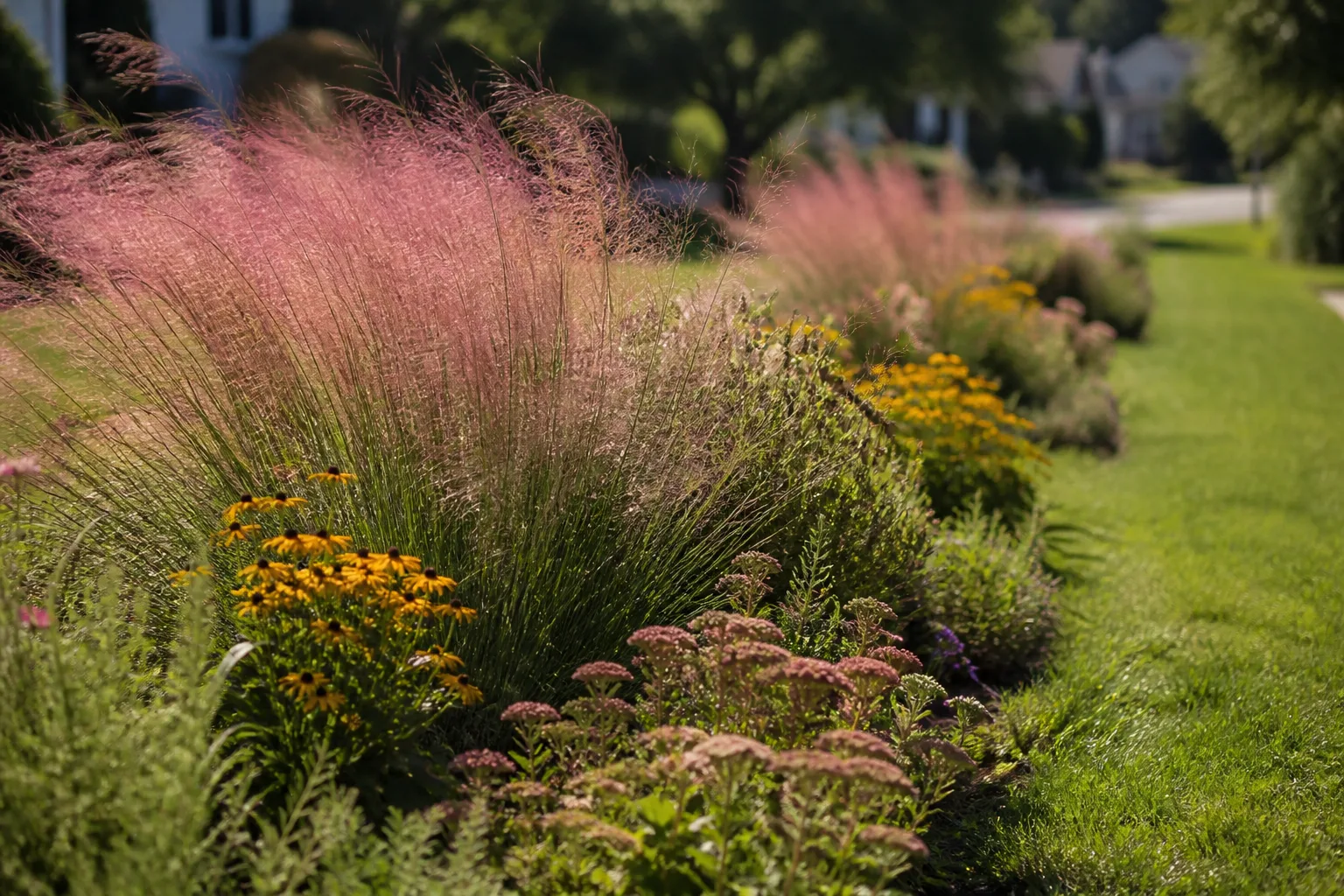
Shade does not mean boring. These grasses and sedges add seedhead shimmer, fine texture, and erosion control where turf struggles.
River oats, bottlebrush grass, and tufted hairgrass
River oats (Chasmanthium latifolium) is unmistakable: flat, dangling seedheads tremble in the slightest breeze. It tolerates shade better than most ornamental grasses and stabilizes soil on slopes and stream banks. The trade-off is spread. NC State warns that river oats may spread aggressively by rhizomes and seeds and can become weedy through easy self-seeding. Plant it where you welcome a naturalistic colony—along a wooded edge or rain-garden swale—not in a tidy 3-foot foundation bed.
Bottlebrush grass (Elymus hystrix) is a cool-season native of eastern and central North America. The bristly seed spikes look like bottle brushes, and the plant prefers woodland edges with dappled light. It may go quiet during summer heat, which is normal for cool-season grasses—not a sign that it needs rescue fertilizing.
Tufted hairgrass (Deschampsia cespitosa) forms cloud-like tufts of fine foliage and airy flowers in partial shade. More sun means more irrigation. In dry shade it struggles; in moist, bright shade it is one of the most elegant fillers for woodland gardens. Cultivars such as ‘Goldtau’ and ‘Schottland’ are widely sold for their profuse flower clouds; they perform best where soil stays evenly moist and air can circulate through the clump.
Japanese sedge for moist, shaded edges
Japanese sedge (Carex morrowii) is a grass-like sedge with arching, evergreen to semi-evergreen leaves that shimmer in the breeze. It excels in partial shade and moist soil near ponds, water gardens, or irrigated shade borders. Treat it like a moisture-loving perennial, not like little bluestem. Shear out damaged leaves rather than cutting the whole plant to the ground. For container shade combinations, see ornamental grasses for containers.
Planting, Spacing, and the First Growing Season
Plant ornamental grasses in spring or early fall so roots establish before extreme heat or freeze. Dig a hole as deep as the root ball and twice as wide. Set the crown level with or slightly above the surrounding soil—burying it too deep is a common cause of rot.
Space by mature width, not pot size. A grass listed at 2 to 3 feet wide needs roughly 2 to 3 feet center-to-center for a seamless drift, or more if you want distinct clumps with airflow between them. Epic Gardening’s ornamental-grass design guidance emphasizes repeating the same species in groups rather than planting one of everything; the repetition is what makes grasses look intentional.
Water deeply once or twice a week through the first growing season whenever rain is scarce. The top inch of soil can dry between waterings, but the root zone should not bake dry for weeks. Mulch with 2 inches of shredded bark, keeping mulch off the crown. Skip high-nitrogen fertilizer; soft, floppy growth is the usual result. A soil test is smarter than a blanket spring feeding.
On heavy clay, improve drainage by planting on a slight mound rather than tilling in excessive compost that can hold too much winter moisture against the crown.
In regions with cold winters, spring planting gives a full growing season for root development. In mild climates, early fall planting can work well if hard frosts are still weeks away. Container-grown grasses can be planted whenever the soil is workable, but avoid planting immediately before a heat wave or a week of saturated soil. If you are replacing turf with ornamental grasses, remove existing sod and loosen compacted soil so new roots can penetrate. A light starter application of balanced slow-release fertilizer at planting is optional; heavy feeding at install time often produces weak, floppy stems.
Year-Round Maintenance Without Extra Work
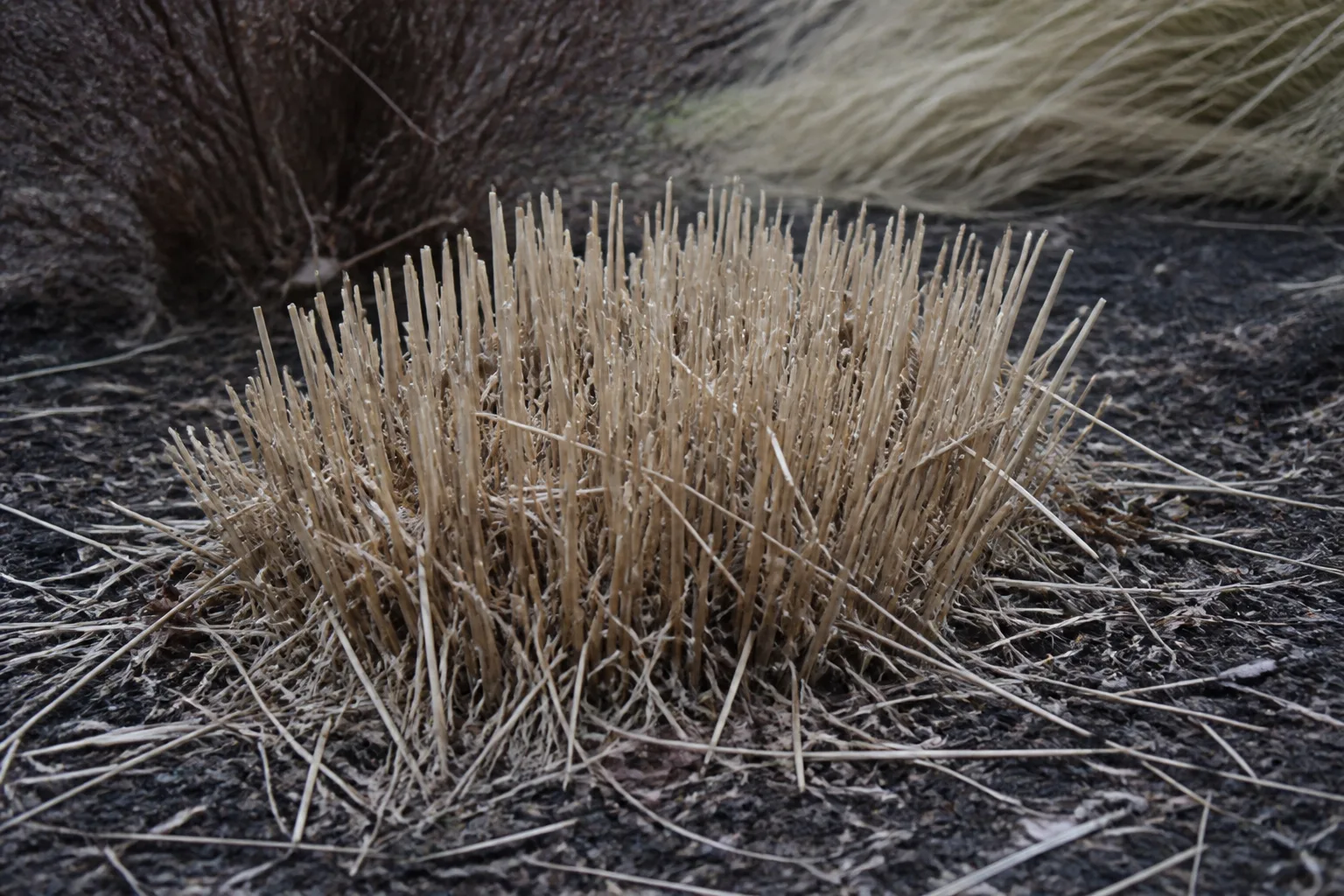
After establishment, most of these grasses need only seasonal cleanup:
- Late winter to early spring: Cut warm-season grasses such as switchgrass, little bluestem, and pink muhly to 4 to 6 inches before new shoots emerge. Leave the debris as mulch or compost it unless diseased.
- Cool-season grasses: Comb out dead leaves on bottlebrush grass and tufted hairgrass; avoid scalping if green growth is already present.
- Sedges: Trim damaged Carex foliage selectively instead of shearing the entire plant.
- Summer: Remove seedheads on river oats if self-seeding becomes a problem; deadhead before seeds mature.
- Fall: Enjoy seedheads and foliage color; this is the payoff season for pink muhly and little bluestem.
- Fire-prone regions: Cut and remove dry grass debris before peak fire season if local guidance recommends it.
Division is occasional, not annual. Split congested clumps in early spring when the center dies out or the plant lifts out of the ground. Replant vigorous outer sections and compost the woody core. If a grass flops every year despite full sun, check for excess nitrogen, overwatering, or shade encroachment from maturing trees before reaching for stakes. Moving the clump to a drier, brighter spot is often cheaper than fighting the same problem season after season.
For septic fields and other sensitive zones where shallow roots matter, low clump-formers such as little bluestem and pink muhly are safer choices than large spreading grasses—see safe plants near drain fields for placement rules.
Conclusion
Low-maintenance ornamental grasses are not one-size-fits-all plants. They are site-matched tools: upright switchgrass and copper little bluestem for sunny, dry borders; pink muhly for fall drama; prairie dropseed for fine texture; river oats and bottlebrush grass for shade and erosion; Japanese sedge for moist, sheltered edges; and Indian grass only where space allows.
Get the light, drainage, and spread habit right in year one, and these grasses repay you with movement, wildlife value, and winter structure for years with little more than a single annual cutback. Pick two or three that fit your yard, plant them with room to mature, and let repetition—not constant tinkering—do the design work.