Japanese Pagoda Tree Care: Planting, Watering & Pruning
Plan a Japanese pagoda tree for a sunny, well-drained site. Get practical planting, watering, pruning, fertilizer, bloom-age, and seedpod guidance for a healthy tree.
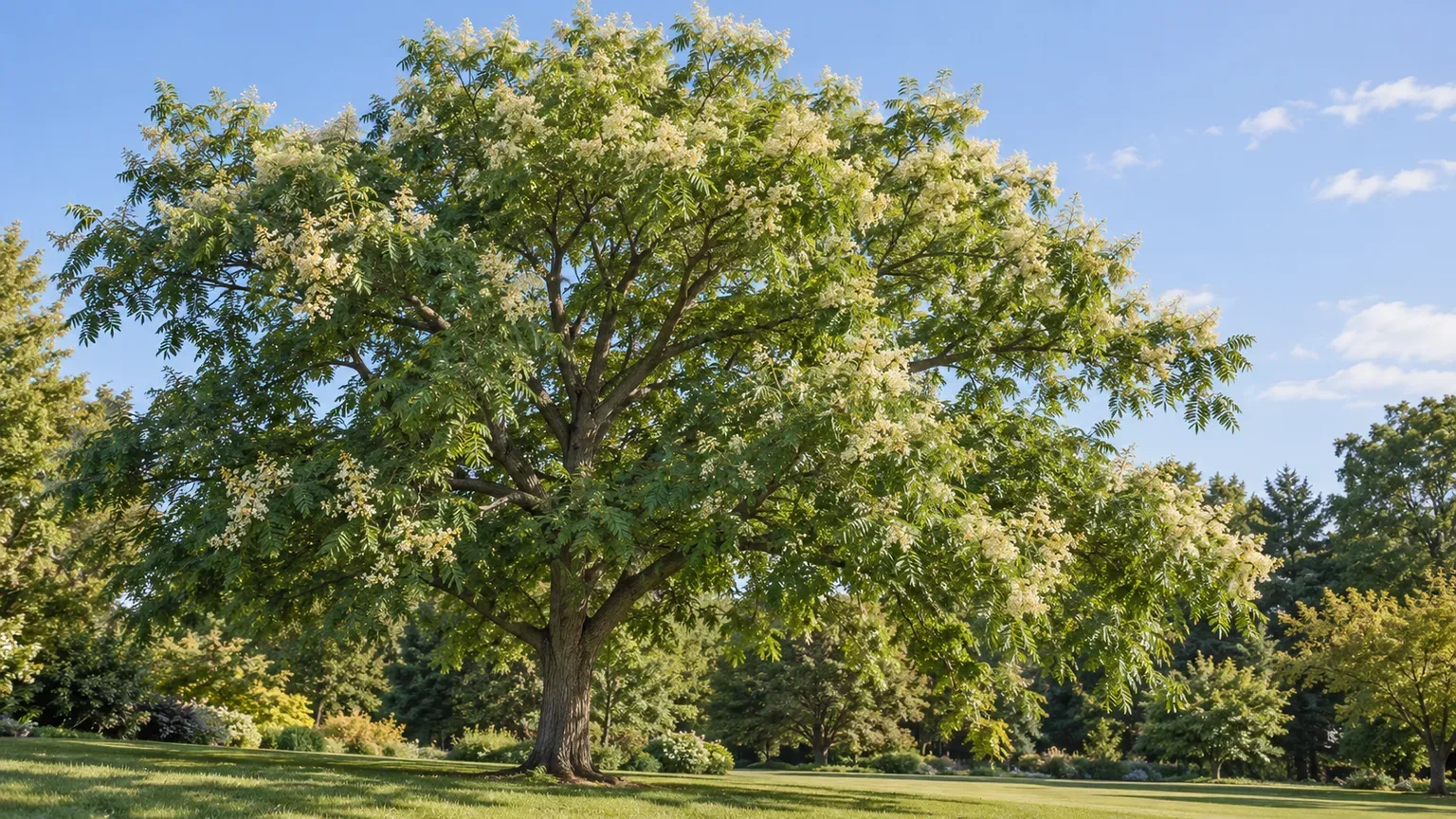
The Japanese pagoda tree, or Styphnolobium japonicum, is a long-lived deciduous shade tree with a broad crown, compound leaves, midsummer flower panicles, and strings of beadlike pods. Older references and nursery labels may call it Sophora japonica or Chinese scholar tree. Its name is misleading: the species is native to China, not Japan.
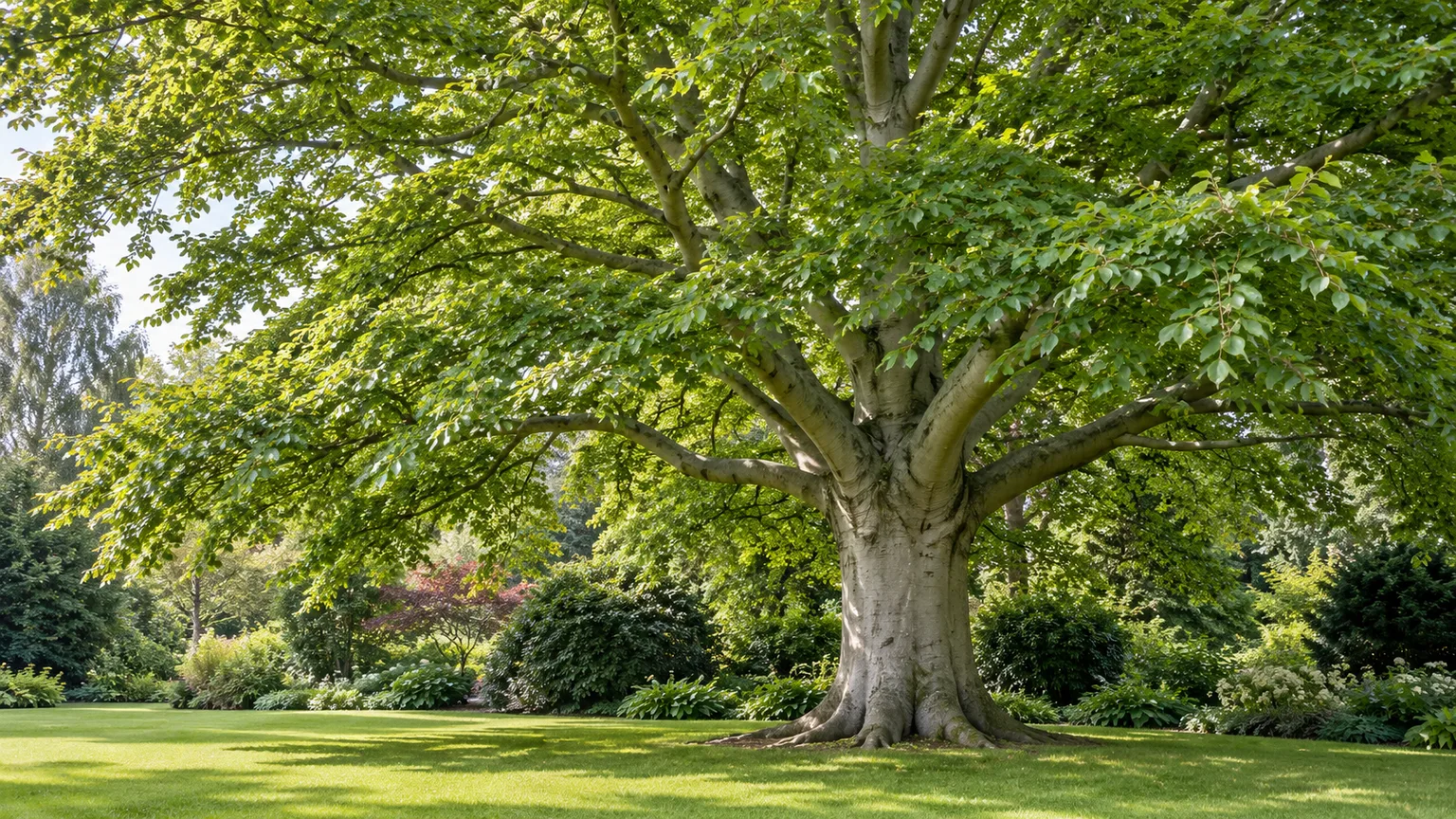
The first care decision is whether you have room for a tree that can reach about 50 to 75 feet tall and similarly wide. Give it full sun for the best chance of flowering, soil that drains after rain, and steady attention while its roots establish. Its wood is relatively weak, so young trees benefit from thoughtful structural pruning. Mature trees can tolerate heat and some drought, but a new planting still needs regular moisture. Flowers may not appear for many years, and the seedpods persist after bloom.
Is It the Right Tree for Your Site?
Japanese pagoda tree care begins before planting. This is a large landscape tree for an open lawn, park, or spacious planting strip, not a compact ornamental for a narrow side yard. Decide whether the mature crown can spread without reaching a roof, overhead wires, neighboring trees, or a place where you need a clear, low-maintenance walkway.
Give its eventual canopy room
North Carolina State Extension lists the species at about 50 to 75 feet tall and wide. That range describes a mature tree, not the size you will buy from a nursery. Its crown can start relatively low and grow broad when the tree has room, so check the space both above and around the trunk. Leave room for branches and roots rather than setting the root ball beside a wall or beneath utility lines and expecting pruning to keep the tree small.
The tree is used in urban landscapes because it tolerates heat, pollution, and some drought once established. That tolerance does not make a crowded planting spot suitable. A site with compacted, waterlogged soil, or no room for a broad crown, still creates avoidable problems. NC State’s NC State Extension species profile describes the mature dimensions, growing conditions, and weak wood.
Think about how the space will be used after the tree matures. A lawn gives the crown room and makes flower or pod cleanup easier than a narrow strip between a house and a sidewalk. If the only open spot is near paving, leave enough clearance to sweep fallen flowers and seedpods without working beneath a low limb. Do not rely on repeated crown reduction to solve an undersized planting site: each large cut leaves a wound and encourages regrowth where you do not want it.
Consider blossoms, pods, and wood strength
Flower panicles open in summer, usually around July and August, depending on local conditions. Creamy blossoms make a striking display, but they fall and can cover the ground. The tree then forms narrow pods pinched between seeds, which may remain on the branches into winter. If the tree will overhang a patio, driveway, or pale paving, plan for seasonal cleanup.
The wood is also vulnerable to breakage in strong weather and under heavy snow. That is not a reason to avoid the species everywhere; it is a reason to choose an open site, build a sound framework while the tree is young, and inspect mature limbs periodically. Avoid planting a weak-wooded tree over a heavily used seating area or where a broken limb could damage a structure.
Choose a sunny, well-drained site
Choose a location with full sun if flowers are a priority. The species tolerates partial shade, but shade can reduce bloom and may slow growth. Allow enough open space for air to move through the crown. Avoid a low spot that stays saturated after rain: Japanese pagoda trees tolerate a range of soils, but roots need oxygen as well as water.
Work with your existing soil
Moderately fertile soil that drains well is a practical target. The tree tolerates urban conditions and some poorer soils, so you usually do not need to replace the soil or enrich the entire planting area. If water sits for a day or more after ordinary rain, address drainage or choose another site rather than trying to correct a persistently wet hole with gravel.
Check drainage over a broad area, not only inside the planting hole. A hole in heavy clay can behave like a basin if the surrounding ground is compacted. If you are unsure, observe the site after rainfall or ask a local extension service to help interpret the soil. The Royal Horticultural Society profile lists full sun and moderately fertile soil among its growing conditions; UC ANR IPM notes the tree’s tolerance of urban conditions and its moderate water needs.
Plant so the root flare stays above grade
Plant in a cool part of the growing season when the ground is workable and the tree can be watered reliably. Avoid planting during a heat wave or when the soil is frozen or saturated. Before digging, locate underground utilities and confirm that the site leaves enough clearance for the mature crown.
Dig a hole two to three times as wide as the root ball, but no deeper than the distance from its bottom to the root flare. The flare is where the trunk widens and the first major roots begin. If the nursery has buried it under potting mix, brush that mix away until you can see the trunk widening; set that flare at or a little above surrounding grade. A tree planted too deeply may settle further and keep the trunk base wet.
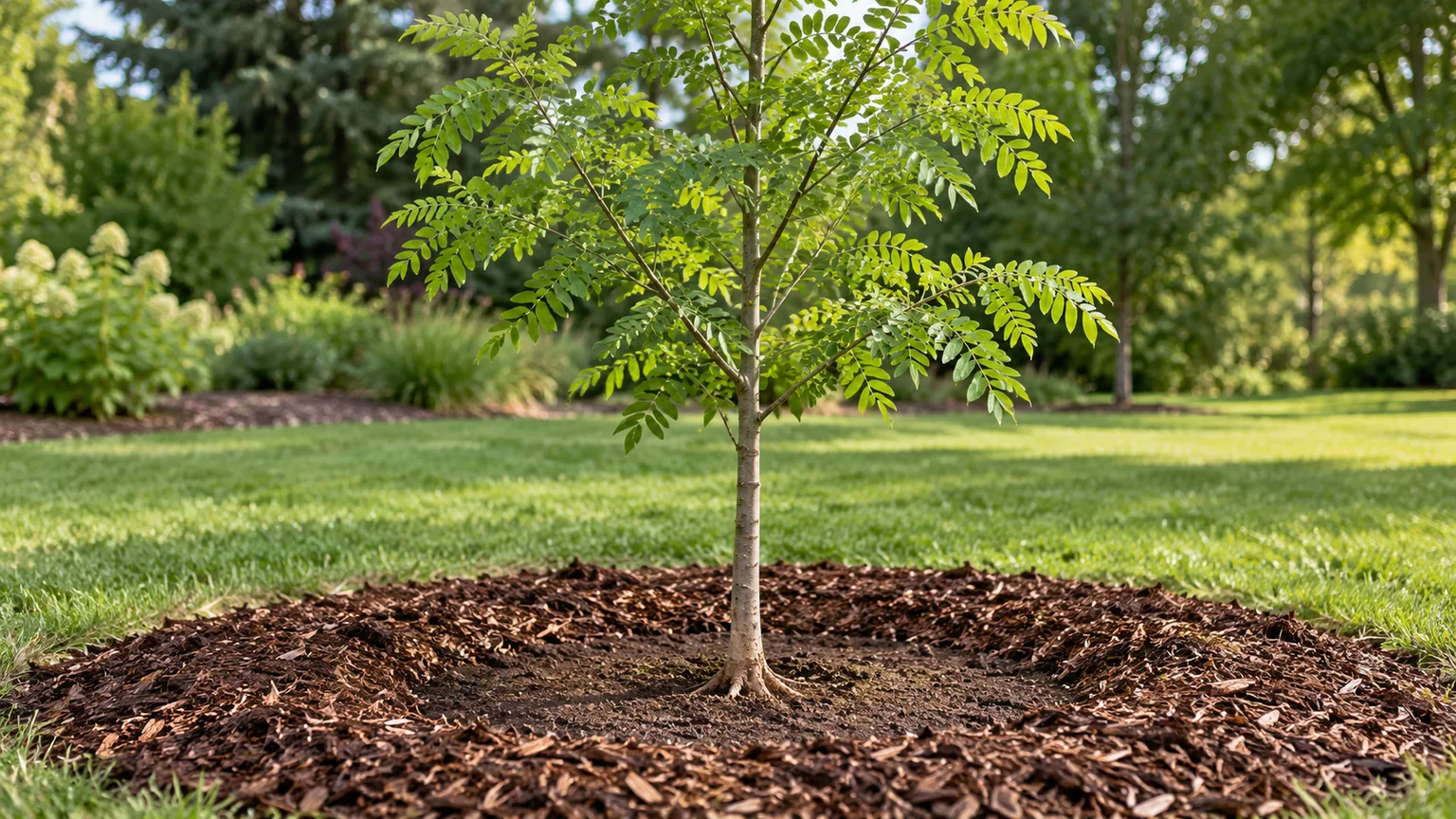
Set the tree upright, loosen circling roots at the outside of a container root ball, and backfill with the soil you removed. Do not pack fertilizer or a thick layer of rich amendment into the planting hole. Water slowly after backfilling so soil settles around the roots; add a little more soil if settling exposes a large gap, but keep the root flare uncovered. Penn State Extension’s new-tree watering guide recommends watering the whole root zone and keeping the root ball and surrounding soil consistently moist during establishment.
Before lowering the tree into the hole, turn it so its best-looking side faces the main view and check that the trunk is straight. If roots circle tightly around the outside of a container, loosen the outer layer and redirect roots outward rather than leaving them to continue circling. Do not pull a tree upward by its trunk after planting to correct depth; lift the root ball, add or remove soil below it, and set it again. These small checks are easier before the hole is filled.
Mulch broadly but keep it off the trunk
Spread organic mulch over the root area in a broad, even layer, generally no more than 2 to 3 inches deep. Extend the layer beyond the root ball where practical, then leave a clear ring around the trunk. Penn State Extension advises keeping mulch about 3 inches away from the trunk and using no more than 3 inches of mulch. A mulch volcano traps moisture against bark and hides the root flare, so pull it back if it has been piled against the tree.
Water steadily while roots establish
Regular water during the first growing season helps a newly planted pagoda tree grow roots into surrounding soil. Water the root ball and nearby backfill rather than wetting only the trunk or nearby lawn. A slow soak is more useful than a quick splash that runs off the surface.
Penn State Extension offers a starting schedule for newly planted trees: daily for the first one to two weeks, every two to three days for weeks three through twelve, then weekly until the first frost. Treat that as a baseline to adapt, not a calendar that overrides the soil. Hot, windy weather and sandy soil may dry the root zone sooner; cool weather, rain, heavy clay, and compacted ground may mean watering less often.
Check moisture before you irrigate
Check the soil about 6 to 9 inches deep near the root ball. If it is still moist, wait and check again instead of watering automatically. If the soil is dry at that depth, water slowly until the root zone is moist. Penn State advises adjusting after substantial rain; its guide uses about an inch of rain over 24 hours as a point at which a scheduled watering may be skipped. A rain gauge is more reliable than guessing from a brief shower.
Do not leave the soil continually saturated. Overwatering is especially likely in clay or compacted ground and can limit oxygen available to roots. Once established, the tree can withstand periods of drought better than a young planting, but long dry spells can still stress it. During extended heat or drought, check the soil under the mulch and provide a deep soak if it has dried through the root zone. Keep the sprinkler schedule for the lawn separate from the tree’s needs; frequent shallow lawn watering may not wet the tree’s full root area.
As the tree grows, move the watering check outward beyond the trunk so you are checking soil where fine roots are spreading. After the first season, reduce watering only as the tree demonstrates new, healthy growth and the root zone holds moisture between checks. Continue watching it through hot spells, particularly if it is planted in a paved or windy spot. A newly planted tree can look settled above ground while it is still relying heavily on the original root ball below.
Prune early to build a durable crown
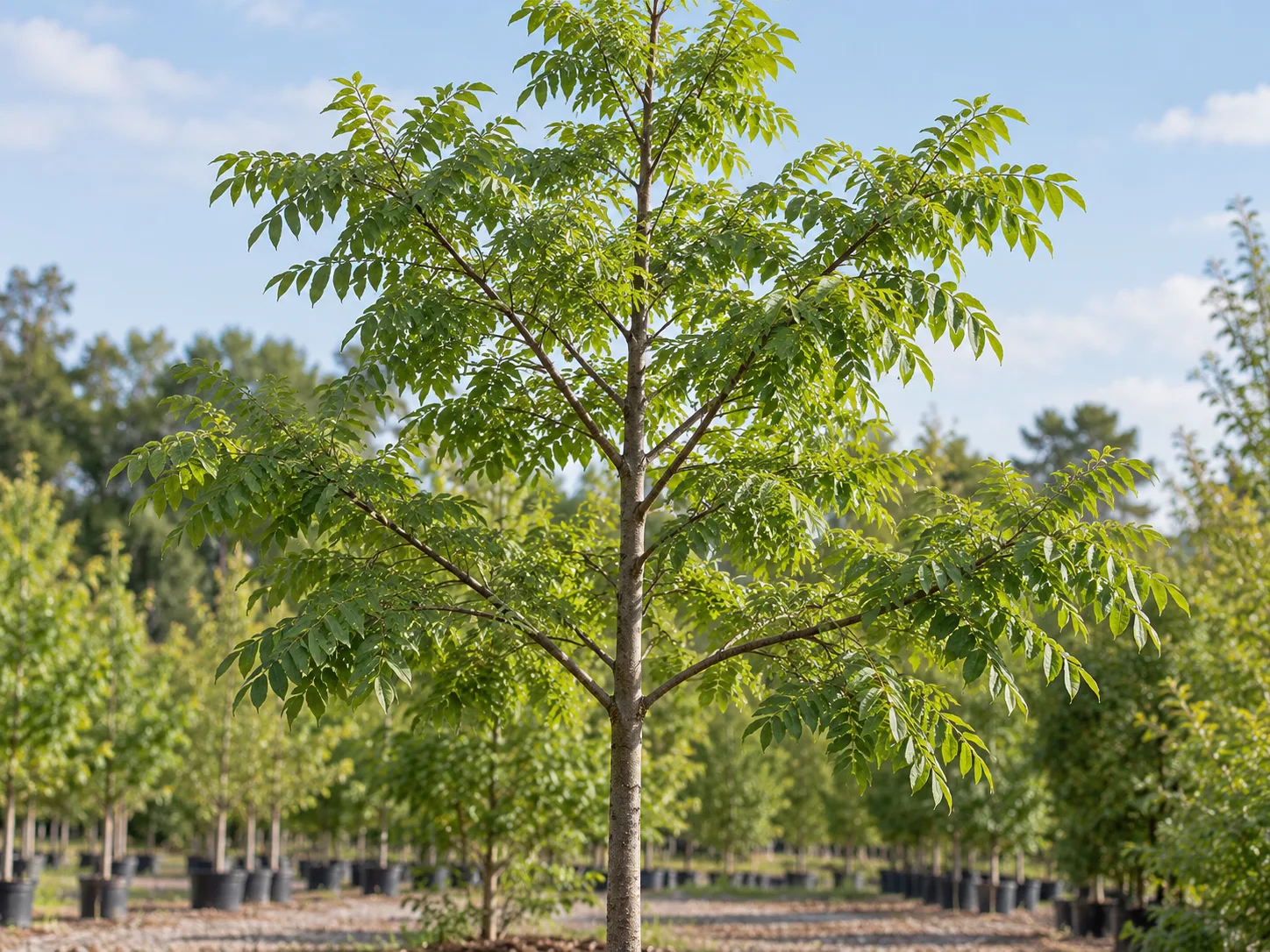
Japanese pagoda tree wood is weak enough that early structure matters. Structural pruning is most effective while the tree is young, when small cuts can direct growth without removing large limbs. The goal is a balanced crown with one main leader and well-spaced scaffold branches, not a tight, sheared shape.
Keep a central leader and strong attachments
In the first few years, inspect the tree when its branching is visible. Look for two upright stems competing to become the trunk, branches that rub or cross, broken limbs, and branches attached at narrow, weak angles. Preserve one straight central leader if the tree has a clear one. Favor branches distributed around the trunk with broad attachment angles; a scaffold branch should remain smaller than the trunk at the union.
Make changes gradually. Removing too much live canopy at once reduces the tree’s ability to make food and can trigger a flush of weak regrowth. The structural-pruning guidance from Colorado State University Extension and Fine Gardening, written by a University of Tennessee plant-sciences faculty member, both emphasize shaping young shade trees around a strong leader and well-spaced, securely attached branches.
Do not let several large branches emerge at nearly the same point on the trunk. A framework with branches distributed up and around the leader can spread load more evenly than a cluster of heavy limbs. Keep a branch you may need later rather than removing it simply because it hangs low; small, gradual adjustments give the trunk time to increase in diameter. Revisit the structure each year while the tree is young, especially after a storm or a season of fast growth.
Late winter before new growth begins is often a convenient time for structural pruning because the branch framework is easy to see. Remove dead or broken twigs when you notice them, but do major pruning when the tree is not under drought stress and when the timing fits your local climate and disease concerns. If a tree has storm damage, an unfamiliar disease, or multiple competing trunks already larger than a few inches, get an arborist’s advice before cutting.
Avoid large cuts and topping
Use sharp, clean tools appropriate to the branch size. For a branch that needs removal, cut just outside the branch collar, the slightly swollen area where it joins the trunk or a larger limb. Do not cut flush against the trunk, leave a long stub, or cover the wound with paint. Large limbs need a controlled three-cut method to prevent bark tearing; if the branch is overhead, heavy, or beyond safe reach, hire a qualified arborist.
Never top the tree to control its height. Topping removes the crown abruptly and encourages weakly attached shoots, which is a poor tradeoff for a species already known for vulnerable wood. If a mature tree is too large for the site, talk to an arborist about selective pruning and future management. Pruning cannot make a 60-foot shade tree permanently fit under a power line.
Fertilize only when a soil test shows a need
Do not fertilize a Japanese pagoda tree simply because it is not blooming or because growth seems slow during establishment. First check whether it receives enough light, whether the root flare is buried, whether the soil stays too wet or dries out, and whether the tree is old enough to flower. Fertilizer cannot compensate for a poor site or a juvenile tree.
If leaves show a persistent growth problem, get a soil test and follow its recommendations rather than guessing at a product or nutrient ratio. Excess fertilizer can produce soft growth that is more vulnerable to stress and does not strengthen weak branch attachments. A wide mulch ring, regular moisture during establishment, and undisturbed roots are usually more useful routine care than a yearly feeding.
Understand when flowering starts
The species flowers in summer, often in July or August, with creamy-white pea-like flowers arranged in long clusters. Timing shifts with weather and location. A tree with a full-sun position and a long, warm summer is more likely to flower well than one growing in shade or a cooler microclimate.
Patience is part of growing this tree. Some specimens may begin flowering after roughly a decade, while a mature, abundant display can take 30 years or longer. NC State Extension notes that the species can take 30 to 40 years to flower at its best, and the RHS also describes flowering as a feature of mature trees. A young tree that has grown leaves and branches but no flowers may be developing normally. Avoid heavy nitrogen feeding or severe pruning in an attempt to force bloom; those choices do not make a young tree mature sooner.
Select a cultivar for size and habit
Nurseries may offer named selections as well as seedlings. Choose by the expected mature form and size, not just a tag promising earlier flowers. NC State lists several cultivars, including ‘Pendula,’ a broadly weeping form. Ask the nursery what mature dimensions to expect in your region, whether the tree is grafted, and how the cultivar differs from the species in growth habit and flowering. A small specimen at purchase is not evidence that it will remain small.
If there is no reliable local description of a selection, assume it needs the space of the species and confirm before buying. A named cultivar propagated by grafting will retain its selected traits more consistently than a seedling. The RHS propagation profile lists seed and grafting among propagation methods.
Ask to see the cultivar’s mature dimensions in writing if your space is limited. Labels can be brief, and a weeping habit describes branch form rather than guaranteeing a miniature tree. Also ask whether flowers are expected on that particular selection; do not infer that a cultivar will bloom early unless the nursery can explain the claim and its local basis. A well-labeled tree is easier to plan for than an anonymous seedling if a specific form matters to your design.
Propagate from seed or buy a named selection
You can raise a Japanese pagoda tree from seed, but a seedling may differ from a named parent and can take many years to flower. Growing from seed makes sense if you have room for a large tree and do not mind waiting to see its mature habit. If you want a particular crown shape, buy a correctly labeled nursery tree rather than expecting seed to reproduce that selection.
Named cultivars are commonly maintained through vegetative propagation, including grafting. Ask the nursery how the plant was propagated and whether the label refers to the rootstock or the top growth. That detail is useful if you are buying a weeping or other selected form. Do not collect pods from a tree and plant them where children could mistake the seeds for food; the seeds should not be eaten.
Watch for common pests and diseases
Serious pest and disease problems are uncommon, but leafhoppers may feed on foliage. NC State Extension also lists rust, powdery mildew, blight, canker, and Verticillium wilt among possible problems. Seeing one discolored leaf does not identify a disease: drought, excess water, root damage, and normal seasonal changes can look similar.
Start with the pattern. Note whether symptoms affect one branch or the whole crown, whether leaves are spotted or coated, and whether the soil has been unusually wet or dry. Photograph the affected growth and consult a local extension diagnostic service or qualified arborist before applying a pesticide or fungicide. A product aimed at the wrong problem wastes money and may harm beneficial insects. Remove clearly broken or dead branches with clean cuts; leave major disease pruning to someone who can diagnose the cause and handle the canopy safely.
Handle seedpods carefully
After flowering, the tree forms green pods that mature to yellow-brown and may remain visible after the leaves fall. Each pod narrows between seeds, creating a string-of-beads shape. The seeds are reported toxic and should not be ingested, so keep pods and seeds away from small children and do not use them in crafts or food.
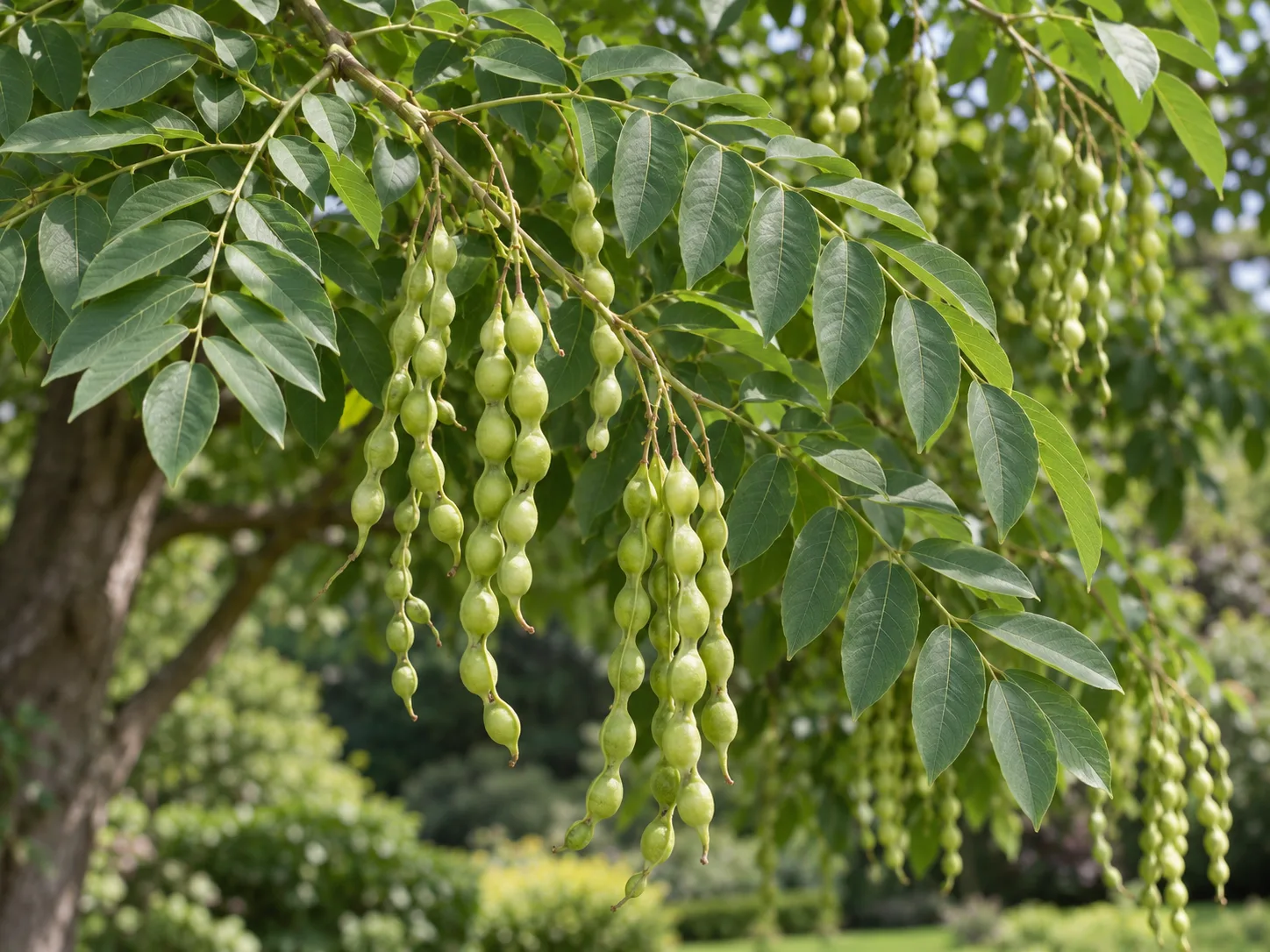
Fallen flowers and pods can add litter under the canopy, and flowers or pods may stain paving. The UC ANR IPM species guide notes this cleanup issue. If the tree shades a driveway or path, plan to sweep or rake after bloom and collect pods where children play. Do not assume that a tree is low-maintenance simply because it tolerates city conditions.
Conclusion
Plant a Japanese pagoda tree only where its mature 50- to 75-foot canopy has room, the soil drains, and summer litter is manageable. Keep the root flare at grade, water the whole root zone regularly while the tree establishes, and mulch without piling material against the trunk. Train young branches gradually around a strong leader because the wood can break in severe weather. Give the tree full sun and time: a mature, showy bloom may take decades. If you can accommodate its size, patient establishment, and persistent pods, it can become a broad shade tree with a distinctive summer flower display.