Houseplant Collection Ideas for Real Homes and Routines
Plan a houseplant collection around real light, watering time, pets, and display space. Get a room audit, buying checklist, and troubleshooting routine.
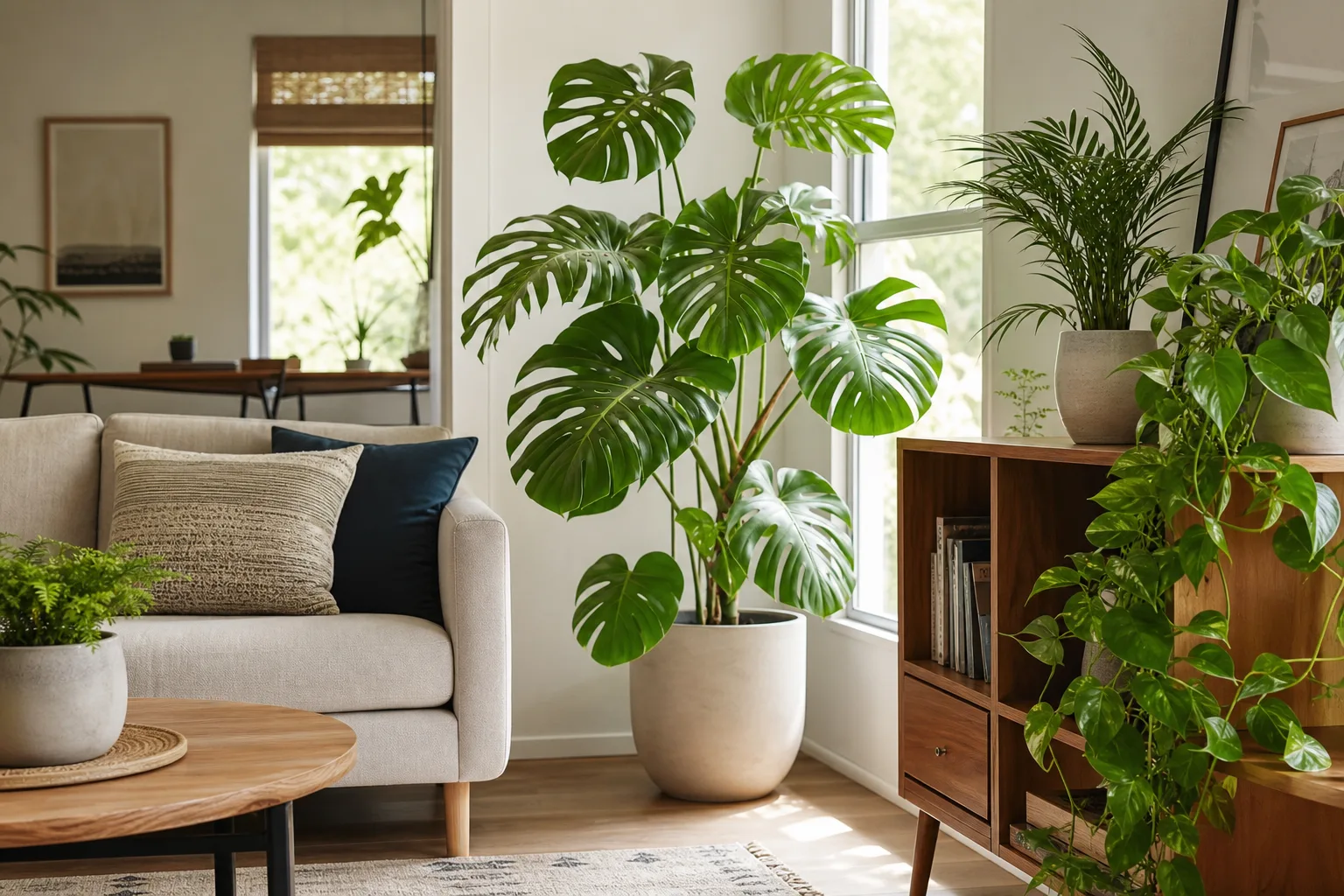
A room full of healthy houseplants can look effortless in a home tour. The useful lesson is rarely “own more plants.” It is the way a person matches plants to the light, space, and daily habits of that particular home. A dramatic shelf may depend on a bright window just outside the frame, a humidifier, careful watering, or years of trial and error.
You can borrow those decisions without copying the collection. Start by auditing your rooms, choose display spots that meet plants’ needs and stay easy to reach, then add only as much care as your week can hold. The result can be three well-placed plants or a growing indoor jungle; the number matters less than whether the setup works for you.
Take inspiration from plant tours, not someone else’s plant count
Home tours are good at showing color, texture, scale, and the small creative choices that make a room feel personal. They are much less reliable as care instructions. A photograph cannot tell you how long direct sun reaches a window, whether plants are rotated between rooms, how often the owner checks soil, or how much time goes into pest inspection.
That difference matters when a person’s collection includes dozens or hundreds of plants. A large collection may reflect a specific home, years of experience, a compatible climate, or a care routine that is not visible in the image. It is not a benchmark that another household needs to match. Treat a tour as a prompt: Which display idea solves a problem in my room, and can I give the plants in it the conditions and attention they need?
Inventory your rooms before buying another plant
Before shopping, make a quick map of the places where plants could live. Note the window, the distance from it, the hours when sunlight reaches the spot, anything that blocks it, and whether a plant can be watered there without moving furniture. Mark shelves and stands only after checking that they are stable and do not interfere with doors, walkways, or everyday use.
A simple room audit is more useful than a vague label such as “bright living room.” A sunny window may be bright at the glass and much dimmer across the room; an overhang, neighboring building, tree, sheer curtain, or deep sill changes what a plant receives. If you rent or rearrange frequently, favor lightweight, movable displays and containers that can be carried to a sink or draining area.
Map light at the exact place a plant would sit
Check light where the leaves will be, not only at the window. For several days, notice when direct sun touches the proposed spot and how bright it remains after the sun moves. A phone photo taken from the plant’s position at the same times of day can help you compare a windowsill, a nearby table, and a shelf farther back.
Window direction is a clue, not a complete diagnosis. Trees, buildings, latitude, glass, curtains, and season all change exposure. Extension guides describe houseplant light needs alongside placement and duration; Purdue’s indoor-plant guide is a useful reference when matching plants to indoor light. “Low light” still means enough light to support growth, and it does not mean a dark corner can sustain every foliage plant indefinitely.
Make a small location map with one entry for each actual shelf, sill, or stand rather than one entry for an entire room. Note the window direction, whether direct sun reaches the plant’s position, what time of day it does, and the season when you observed it. Repeat the check as daylight changes; rooms do not receive exactly the same light all year.
If natural light is insufficient for a plant you want to grow, supplemental lighting may help when the fixture is suitable and positioned for the plant. Purdue’s guide discusses indoor lighting options, including LEDs and fluorescent lamps. Follow the fixture’s directions, keep cords secure, and check the plant’s new growth over time instead of treating a lamp’s brightness to your eyes as proof that it is receiving enough light.
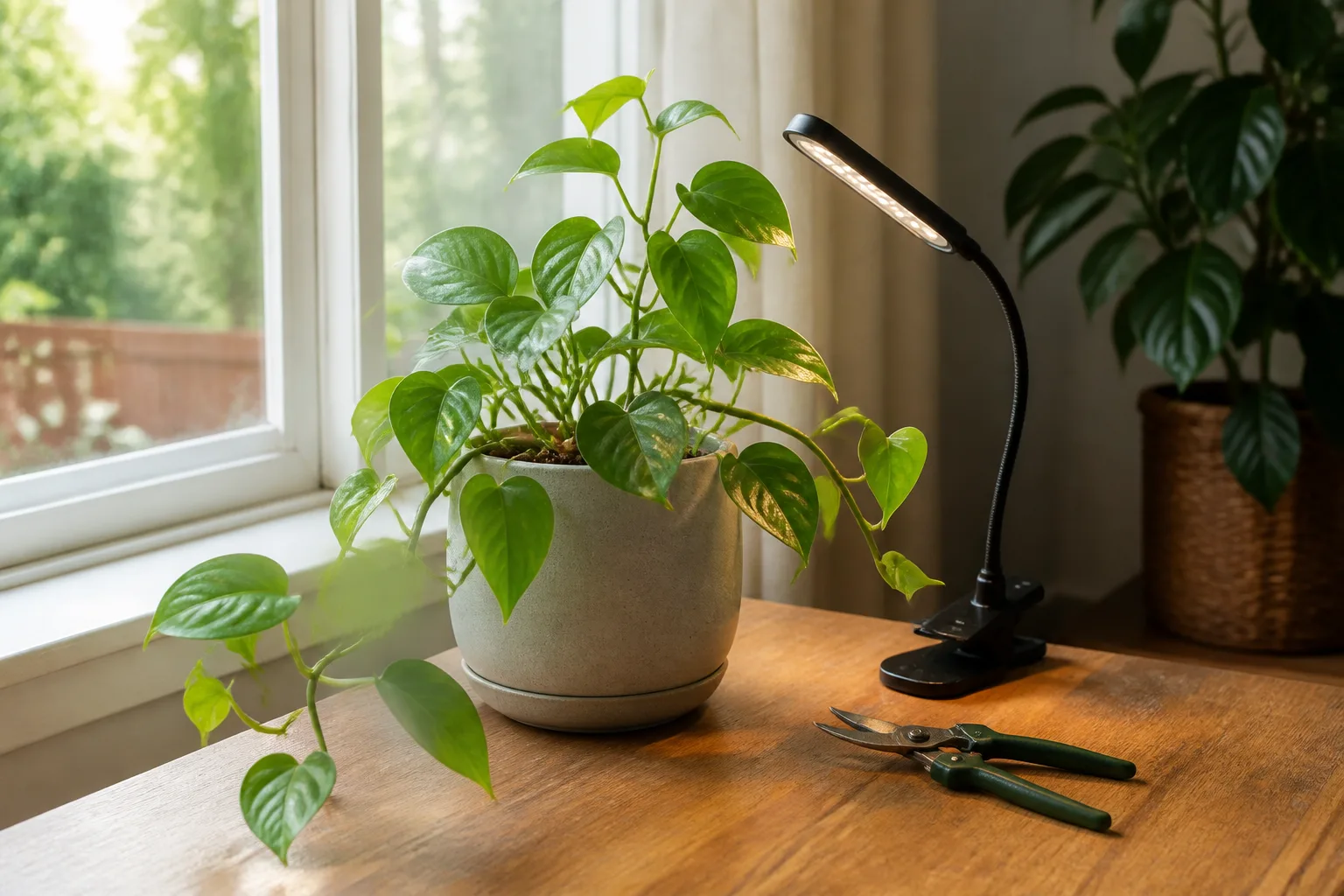
Write down the light conditions for each usable zone in plain language: direct morning sun, bright indirect light most of the day, or lower ambient light away from windows. Then shop for plants whose care guidance fits those conditions. Texas A&M AgriLife notes that east-facing windows often provide gentler morning exposure, while south- and west-facing windows can be more intense; treat that as a regional starting point and observe your own room.
Note drafts, heat, humidity, pets, and daily traffic
Light is only one part of a location. A plant placed against cold glass, above a radiator, beside an air-conditioning vent, or in a drafty entry may face stress that does not show up in a staged photo. Check how temperatures and airflow change over a normal day before placing a sensitive plant there.
Also ask who uses the space. Can a child pull the pot down? Can a cat reach the trailing leaves? Will a tall plant narrow a walkway or block a window latch? Make room for watering and inspection, too. If you need to unstack books, move a lamp, and lift a heavy cachepot every time you check one plant, the display may look finished but become difficult to maintain.
Design displays around plant needs
Good plant styling does not require a single shelf with every pot lined up. Use height and leaf shape to create a composition, but preserve enough space for air to move, leaves to be checked, and water to drain. A tall floor plant can anchor a corner, while smaller plants can fill a table or sturdy shelf; avoid packing foliage so tightly that you cannot inspect stems and leaf undersides.
Think of the room as a series of small growing zones instead of one decorative plant wall. The closest window positions may suit plants with higher light needs, while a shelf farther back is only appropriate for plants that tolerate that lower exposure. If a spot works aesthetically but has unsuitable light, choose a different plant or adjust the light rather than expecting appearance to compensate for biology.
Group plants by compatible conditions
Grouping plants can make a display feel intentional and can make care easier, but only when the plants have reasonably similar needs. Put plants that prefer brighter conditions in the brighter zone, and keep drought-tolerant plants apart from plants that need consistently more moisture. A grouping does not make every pot share the same watering needs; inspect each plant and each container separately.
Keep pots separate even when they sit together. Individual nursery pots make it easier to lift a plant, check drainage, isolate a pest, or move one specimen when the light changes. If you use decorative cachepots, remove the inner pot to water or empty trapped runoff promptly. Avoid letting decorative groupings hide saucers with standing water.
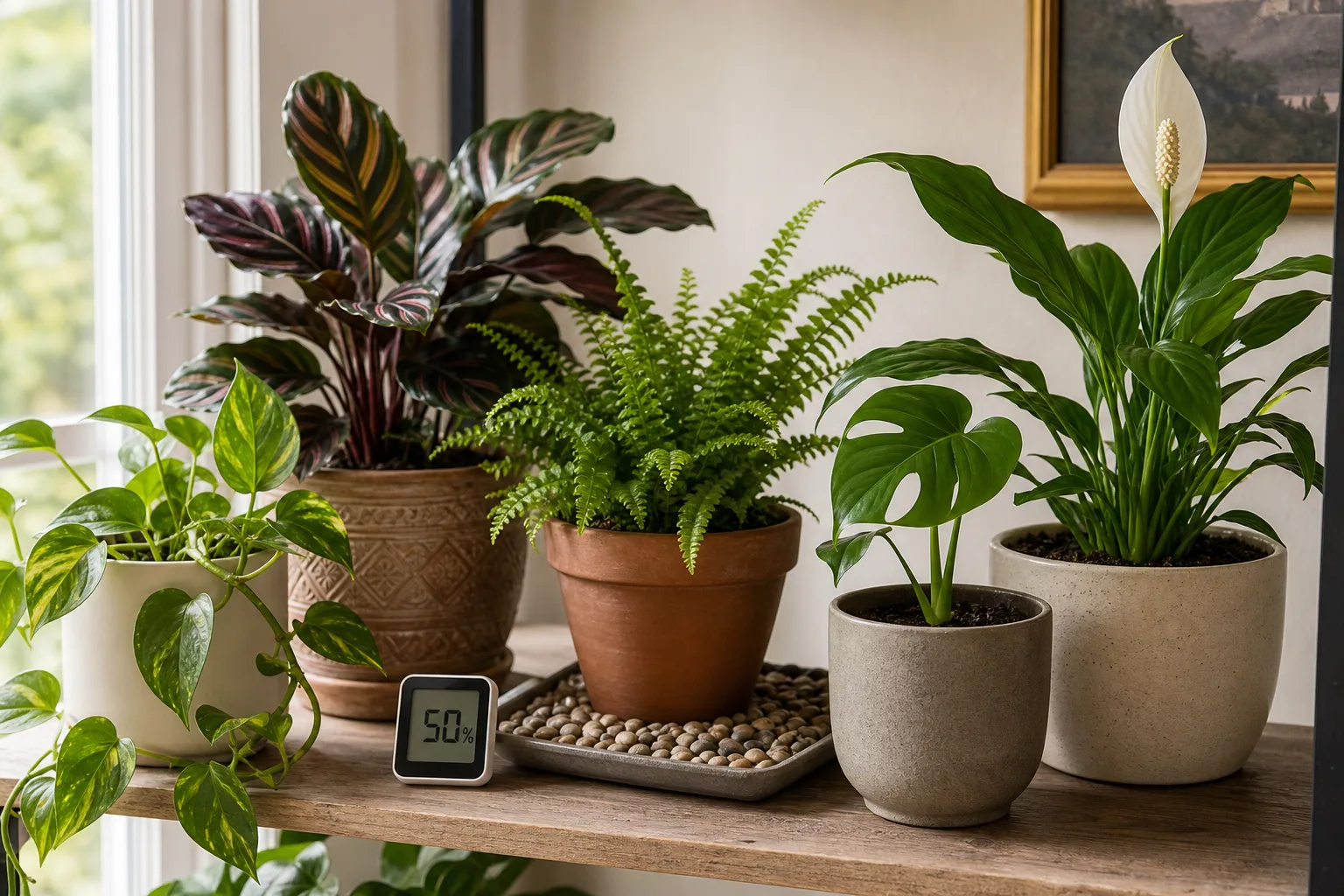
You can group for a visual effect without making unsupported promises about humidity. Several plants close together may create a more cohesive display, but a shelf is not a substitute for species-specific care or room-level humidity control. If you are trying to grow plants that need more humidity, measure the conditions and choose a suitable humidifier setup rather than assuming that any cluster will solve the problem.
Keep shelves stable, bright, and reachable
Check a shelf’s load rating and how it is secured before setting heavy pots on it. Water-saturated mix makes containers heavier, and top-heavy plants can tip if a stand wobbles or a trailing vine catches on clothing. Use a stable surface, protect furniture from water, and keep cords for grow lights or humidifiers routed where people and pets will not trip over them.
Make the plants you need to inspect easy to reach. Hanging baskets and high shelves can free table space, but they can make watering messy and conceal pest symptoms. If a hanging plant is difficult to take down, place a removable drip tray beneath it and set a recurring visual reminder to inspect it. A display should support care, not turn every watering into a ladder task.
Build a collection around the time you can give it
There is no universal number of houseplants that counts as “too many.” The useful limit is the point where regular watering checks, cleaning, pruning, repotting, and pest monitoring become a burden or start getting skipped. A dozen plants with very different needs can demand more attention than a larger group of durable plants sharing the same room conditions.
Before expanding, try a two-week care log for the plants you already own. Record which plants needed a check, how often you moved pots, whether watering caused a mess, and how long routine tasks took. If the routine regularly slips, simplify first: reduce duplicate plants, improve access, choose plants with compatible needs, or remove a display that is hard to reach.
Create a watering route, not a watering schedule
A weekly walk-through is useful; a weekly command to water every plant is not. Soil dries at different rates depending on plant type, pot size, pot material, mix, light, temperature, and season. Check each plant according to its own needs before watering. For many foliage plants, feeling the growing medium below the surface and lifting the pot can help; a heavy pot often still contains moisture, while a lighter pot may be ready for a closer check.
When a plant needs water, water the root zone thoroughly and let excess drain from the container. Empty saucers and cachepots rather than leaving roots in runoff unless that plant’s care requirements specifically call for a different method. Wisconsin Extension and Texas A&M AgriLife both emphasize that houseplant water needs vary and that drainage matters; practical watering guidance for indoor plants also explains checking moisture and allowing excess water to drain.
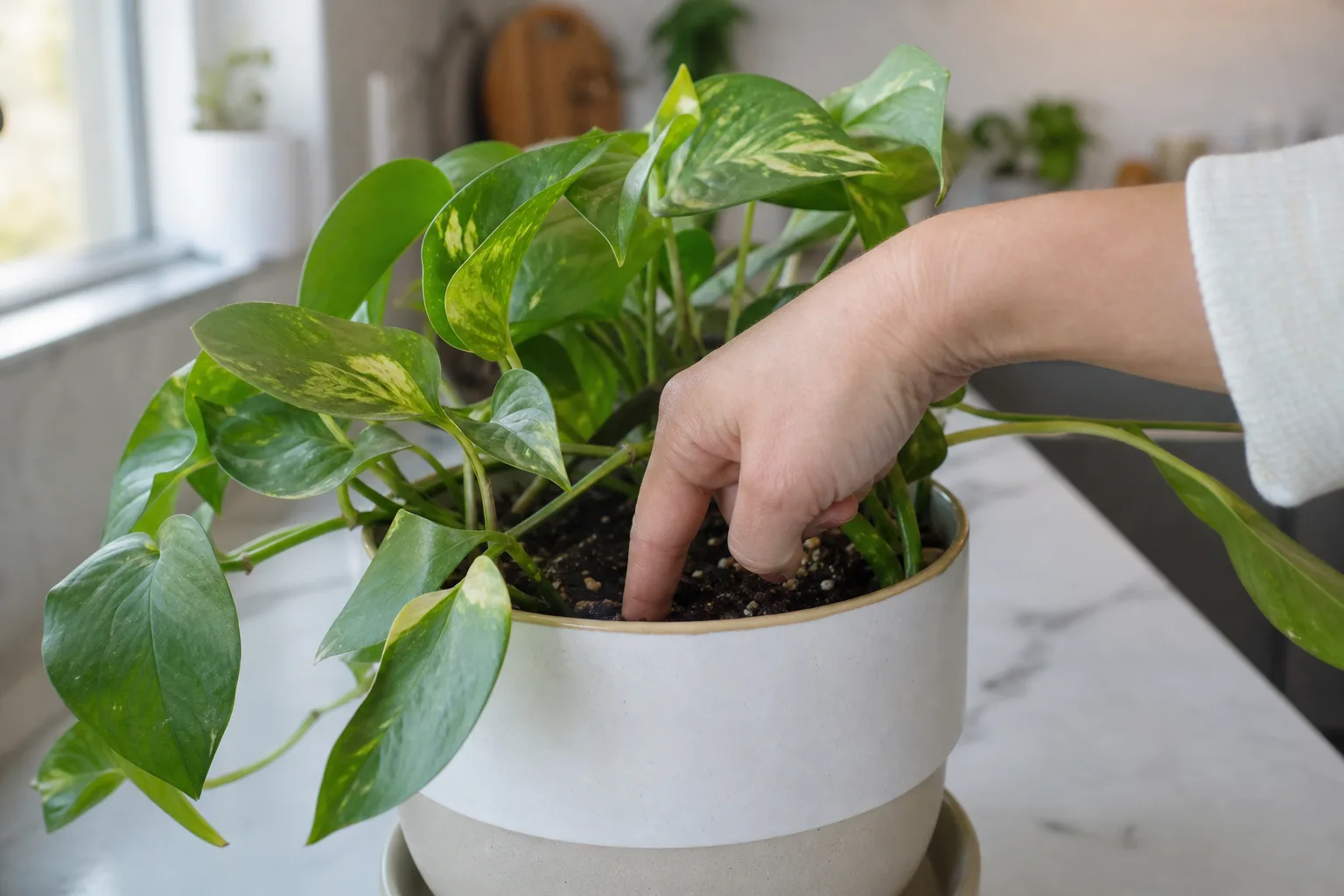
Make the route convenient: carry a narrow-spout can, a small towel, and a tray; work from one room to another; and note which plants were checked rather than watering on autopilot. For a large collection, a simple list divided by room or plant group can prevent missed pots. Still confirm the soil or medium before each watering. A checklist should prompt an inspection, not replace one.
Inspect as you care and quarantine new arrivals
Use each plant-care pass to look at leaf undersides, stems, new growth, and the soil surface. Early pest signs are easier to manage when a new plant is still isolated and when leaves are not crowded together. Wisconsin Extension recommends inspecting new plants and keeping them separate from the rest of a collection for one to two weeks; an interview with houseplant journalist Jane Perrone also stresses quarantine and checking leaf undersides.
Put new arrivals in a separate room if possible, and inspect them more than once during that interval. If you see insects, webbing, sticky residue, or suspicious spotting, do not move the plant into the main display. Identify the problem and keep it isolated while you decide on a treatment. Do not spray the entire collection “just in case”; correct identification and label directions matter, especially where children or pets may be exposed.
Protect pets and children with plant-level decisions
Do not assume that an attractive plant is harmless because it is common, or that “non-toxic” means edible. The ASPCA’s plant database says it is not all-inclusive, asks users to identify a plant by name, and notes that eating any plant material can cause gastrointestinal upset. Check the exact plant, ideally by botanical name, before buying it for a home with a pet.
If you already have plants, make a list of their botanical names and verify each one against an animal-poison-control resource. Texas A&M AgriLife also advises pet owners to research species before bringing plants home. A hanging basket or high shelf may reduce casual contact, but it is not a safety guarantee for a climbing cat or a plant with trailing foliage. For a plant that presents unacceptable risk in your household, choose a safer option or keep it in a room the animal cannot enter.
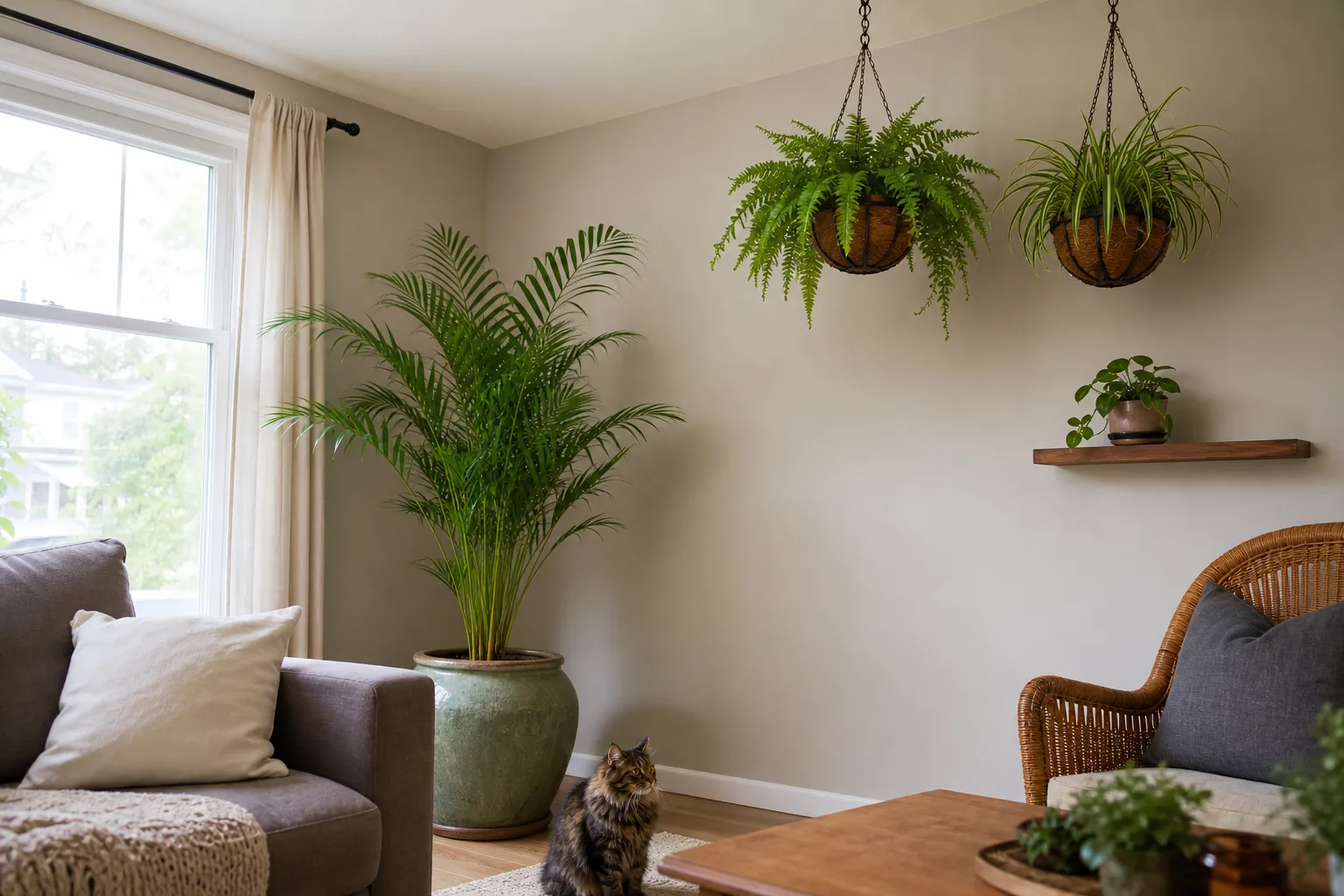
Secure tall pots so they cannot be knocked over, keep fertilizers and pest products in closed storage, and do not leave pruning scraps where animals can chew them. If you suspect a pet has eaten a plant, contact a veterinarian or animal poison-control service promptly and provide the plant’s exact name if known. The ASPCA advises contacting a veterinarian or its poison-control line when an animal is ill or may have ingested a poisonous substance.
Read a home tour as a set of questions
When a display catches your eye, translate it into decisions instead of shopping for the same species or furniture. Ask what makes the arrangement work: Is it using vertical space? Does a tall plant balance a low cabinet? Are plants grouped by light, or arranged mainly by leaf color? Does the display leave enough access to a window and a watering path?
Then look for information the image cannot supply. What window exposure does the room have? Are the plants newly arranged for a photograph or established in that spot? Does the owner use supplemental lighting? How are heavy pots watered? If you cannot answer those questions, copy only the visible design principle, such as staggered heights or repeating pot colors, and test it with a plant whose needs you know.
Before copying a feature, run it through four checks: conditions (will the spot suit the plant?), care (can you reach and water it?), safety (can a pet or child access it?), and cost (does the setup require equipment or furniture you do not already have?). If it fails one check, adapt the idea rather than abandoning it. A shorter shelf, fewer plants, or a different species can keep the design idea while making it work in your home.
Use your own constraints as the filter. A renter might use a freestanding plant stand rather than drilling into a wall. Someone with limited light might make one bright-window group the focal point and use the rest of the room for plants verified to tolerate lower light. A household with pets may build a secure display around species checked for those animals rather than relying on a photo’s apparent high placement.
Buy thoughtfully: choose the right plant and seller
Before purchasing, choose the actual spot where the plant will live and confirm that its light, size, and temperature needs fit. If the seller cannot identify the plant or explain basic care, pause and verify its name elsewhere. The horticultural interview with Jane Perrone recommends choosing plants that fit the home’s conditions and researching unfamiliar sellers, rather than buying a fashionable plant without a placement plan.
Inspect a plant in person for pests, damaged growth, and waterlogged or very dry mix. Check leaf undersides and growing points, and look at the pot’s drainage. Online, review the seller’s plant identification, shipping practices, recent customer experience, and return or damage policy. A low price is not a bargain if the plant arrives in poor condition or requires conditions your home cannot provide.
Set a spending limit that includes more than the plant. A support pole, grow light, sturdy stand, pot with drainage, or safe placement may be part of the real cost. For an unusual or high-priced specimen, ask how it was propagated and whether its origin is clear; favor transparent sellers and nursery-grown plants. Do not let scarcity language pressure you into buying before you have a safe location and realistic care plan.
Troubleshoot before changing everything
A collection will have occasional yellow leaves, stalled growth, or pests. A single symptom rarely identifies one cause by itself. Start with the plant’s recent history: Did it move? Did the season change? Was it watered more often, repotted, or placed next to a heat source? Is the problem limited to one older leaf, or is new growth also changing?
Make one evidence-based correction at a time unless there is an urgent hazard such as a spreading pest infestation or a plant that may be unsafe for a pet. Changing the light, watering, fertilizer, and soil all at once makes it difficult to learn what helped. Photograph the plant before and after a change so you can judge new growth rather than expecting damaged leaves to become perfect again.
Triage the plant from leaf to root zone
Check the pattern first. Scorching concentrated on the window-facing side suggests reviewing exposure; soft yellow leaves and persistently wet mix make drainage and watering worth checking; fine stippling, webbing, or sticky residue point toward a pest inspection. These are clues, not guaranteed diagnoses, so compare them with the plant’s species-specific needs and recent conditions.
If symptoms continue, inspect the roots only when there is a reason, such as a sour smell, a pot that stays wet unusually long, or persistent wilting despite damp soil. Healthy roots are generally firm; mushy or dark roots can indicate decay, but root appearance depends on the plant. Wisconsin Extension notes that both insufficient and excessive water can cause decline, which is why watering should respond to the root-zone condition rather than the leaf symptom alone.
Keep a small record that makes care easier
A plant list does not need to become a database project. For each plant, record its name, room and exact location, approximate purchase date, pet-safety check, and any care detail that changes how you handle it. A quick phone photo of the room and plant label is often enough to remember what you bought and where you placed it.
For plants that need closer attention, add a short note when you water, repot, move, or notice a symptom. This creates context: if leaves yellowed after a move, you can compare the old and new light; if a pot now dries in three days instead of ten, you can investigate growth, roots, temperature, or a seasonal change. Use reminders for inspections and follow-up, not for automatic watering.
Review the collection once each season. Remove plants that no longer fit your space, move specimens whose light has changed, check that stands still feel secure, and decide whether your current routine remains enjoyable. A successful collection can grow, shrink, or stay the same; keeping it workable is the point.
Conclusion
The best houseplant collection is built around the conditions and routines of the home where it lives. A tour can show you how someone uses shelves, repeats shapes, or turns a corner into a growing space, but your light, family, pets, budget, and schedule should make the final decisions.
Map the room, start with a manageable number of plants, keep displays accessible, and inspect each pot before watering. Confirm pet safety by exact plant name, quarantine new arrivals, and change care based on evidence. Once the routine feels sustainable, add a plant because it fits your space and interests—not because someone else’s home has more.



